Fate vs. free will
Featured Artworks
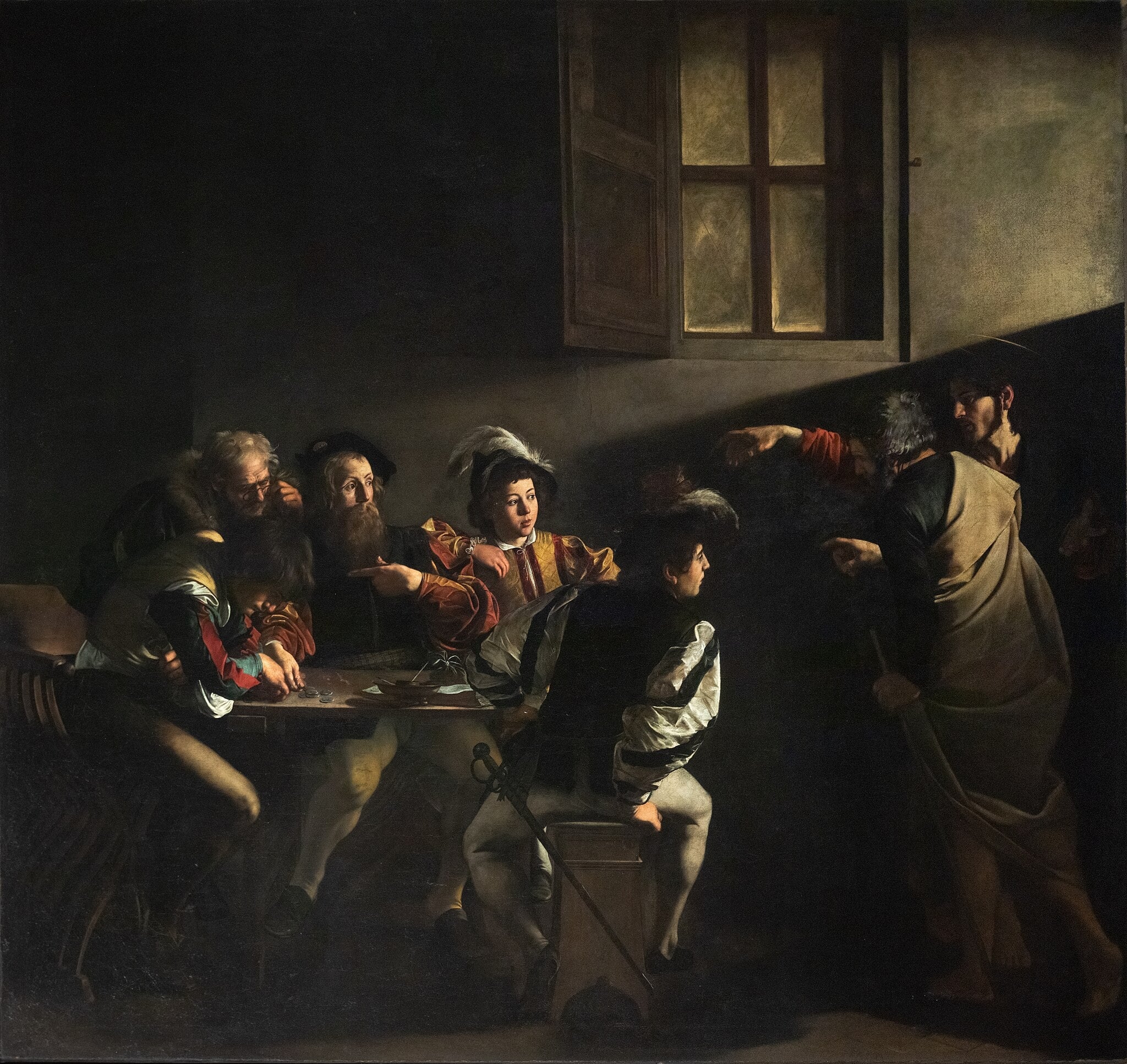
The Calling of Saint Matthew
Caravaggio (1599–1600)
Caravaggio’s The Calling of Saint Matthew stages the instant when <strong>divine grace</strong> pierces ordinary life. A diagonal <strong>beam of light</strong> and Christ’s <strong>Sistine‑echoing hand</strong> single out Matthew at a money table, suspending time between hesitation and assent <sup>[2]</sup><sup>[3]</sup>. The painting fuses Baroque <strong>tenebrism</strong> with contemporary dress to dramatize conversion as a public, present-tense event <sup>[1]</sup><sup>[2]</sup>.
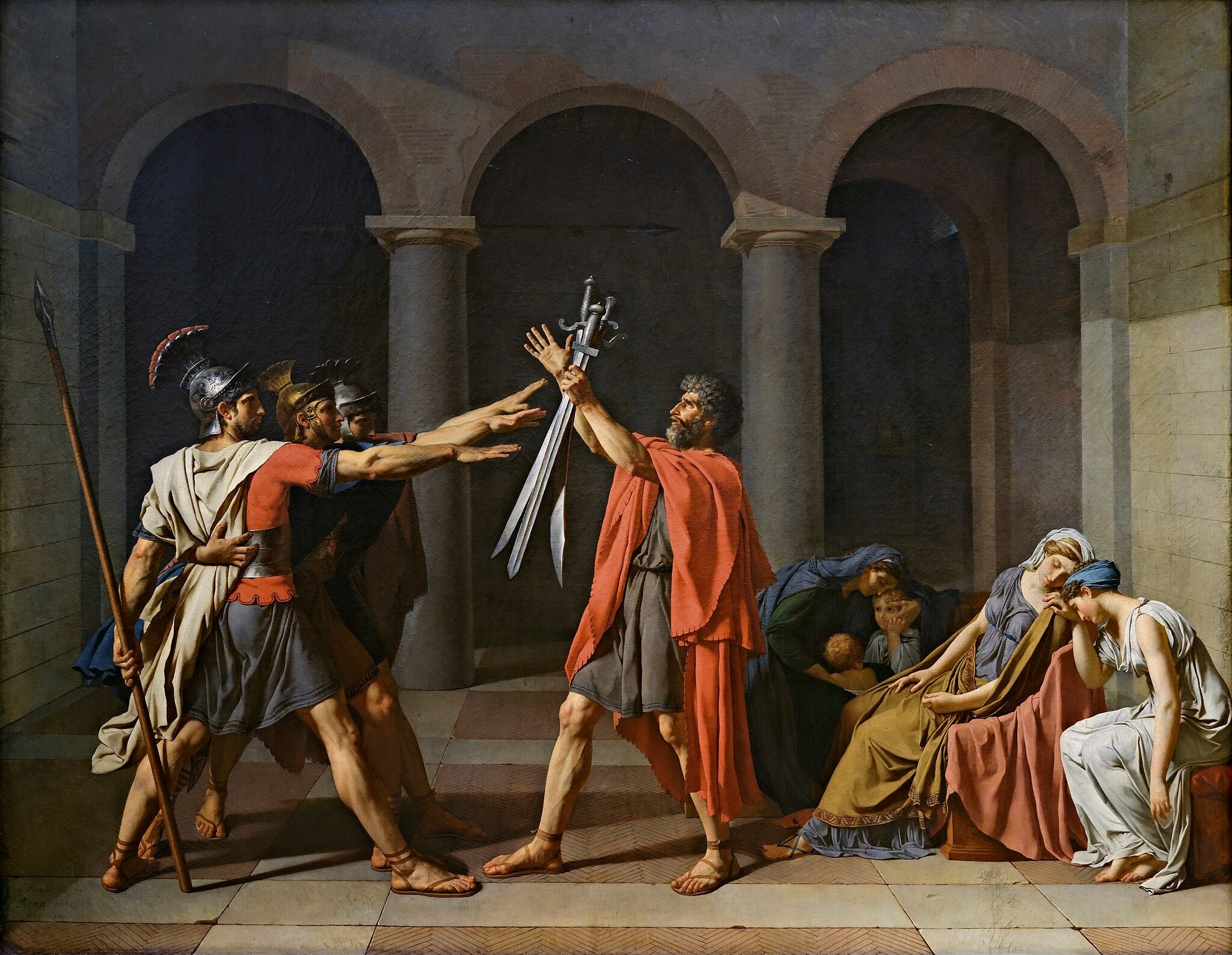
The Oath of the Horatii
Jacques-Louis David (1784 (exhibited 1785))
In The Oath of the Horatii, Jacques-Louis David crystallizes <strong>civic duty over private feeling</strong>: three Roman brothers extend their arms to swear allegiance as their father raises <strong>three swords</strong> at the perspectival center. The painting’s severe geometry, austere architecture, and polarized groups of <strong>rectilinear men</strong> and <strong>curving mourners</strong> stage a manifesto of <strong>Neoclassical virtue</strong> and republican resolve <sup>[1]</sup><sup>[2]</sup><sup>[3]</sup>.

The Creation of Adam
Michelangelo (c.1511–1512)
Michelangelo’s The Creation of Adam crystallizes the instant before life is conferred, staging a charged interval between two nearly touching hands. The fresco turns Genesis into a study of <strong>imago Dei</strong>, bodily perfection, and the threshold between inert earth and <strong>active spirit</strong> <sup>[1]</sup><sup>[2]</sup>.
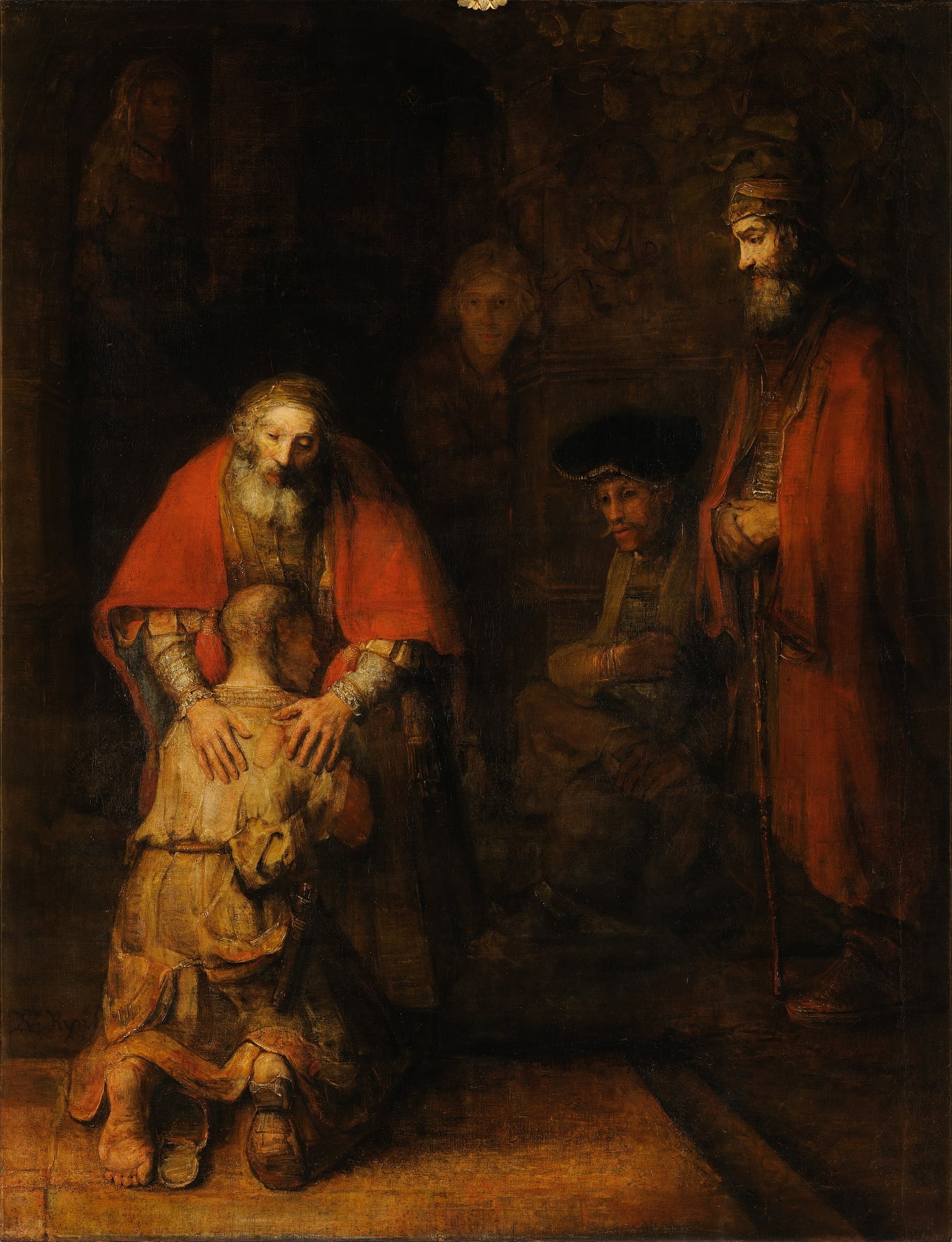
The Return of the Prodigal Son
Rembrandt van Rijn (c. 1661–1669 (probably completed by 1669))
Rembrandt van Rijn’s The Return of the Prodigal Son is a late-life meditation on <strong>mercy</strong>, <strong>homecoming</strong>, and <strong>restored dignity</strong>. In a hush of dusk-like light, a ragged son kneels into his father’s <strong>embrace</strong>, while an upright elder brother holds back in shadow. The image concentrates meaning in illuminated <strong>faces, hands, and feet</strong>, turning a parable into a timeless human reckoning. <sup>[1]</sup><sup>[2]</sup>
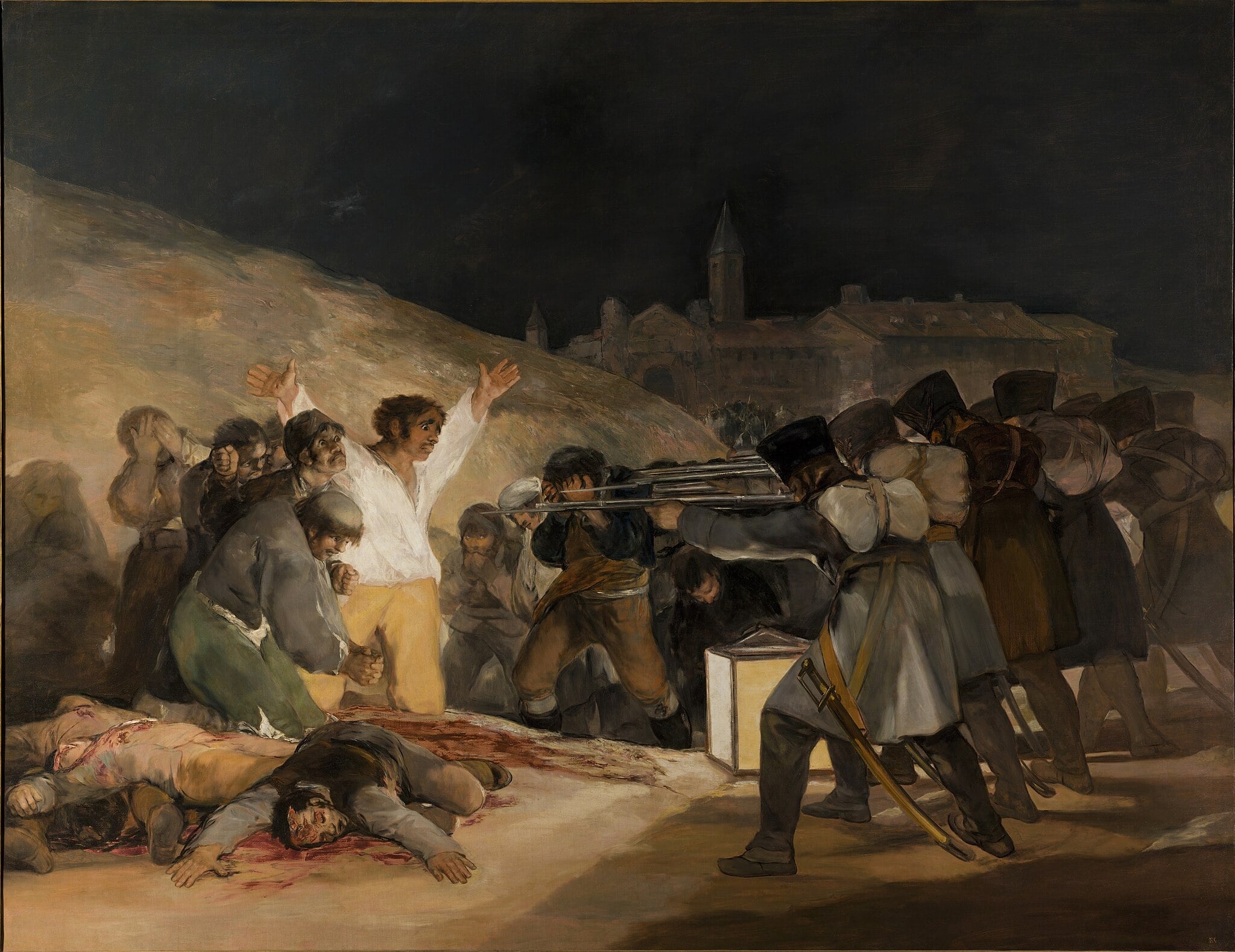
The Third of May 1808
Francisco Goya (1814)
Francisco Goya’s The Third of May 1808 turns a specific reprisal after Madrid’s uprising into a universal indictment of <strong>state violence</strong>. A lantern’s harsh glare isolates a civilian who raises his arms in a <strong>cruciform</strong> gesture as a faceless firing squad executes prisoners, transforming reportage into <strong>modern anti-war testimony</strong> <sup>[1]</sup><sup>[2]</sup>.
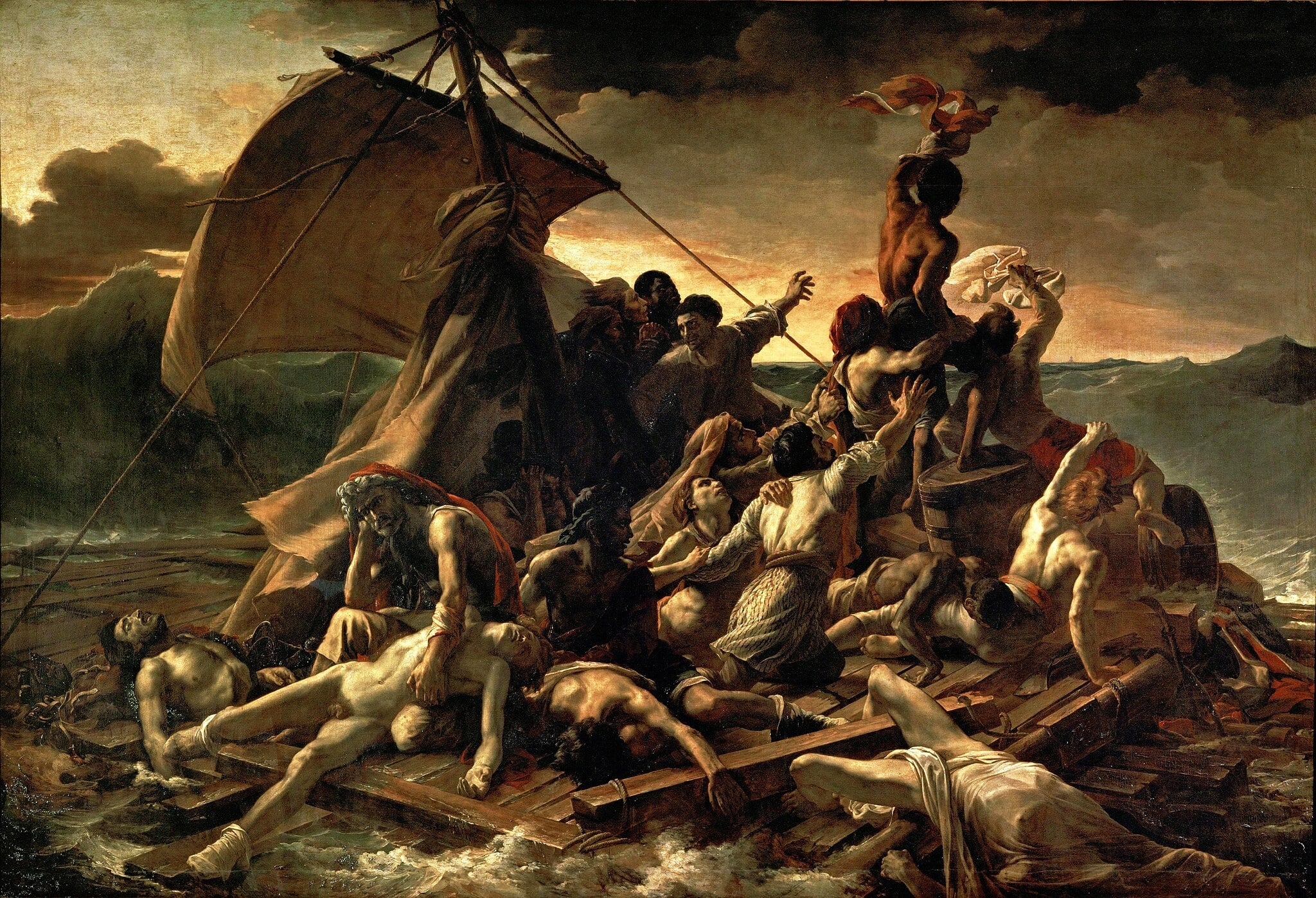
The Raft of the Medusa
Theodore Gericault (1818–1819)
The Raft of the Medusa stages a modern catastrophe as epic tragedy, pivoting from corpses to a surge of <strong>collective hope</strong>. The diagonal mast, torn sail, and a Black figure waving a cloth toward a tiny ship compress the moment when despair turns to <strong>precarious rescue</strong> <sup>[1]</sup><sup>[2]</sup>.
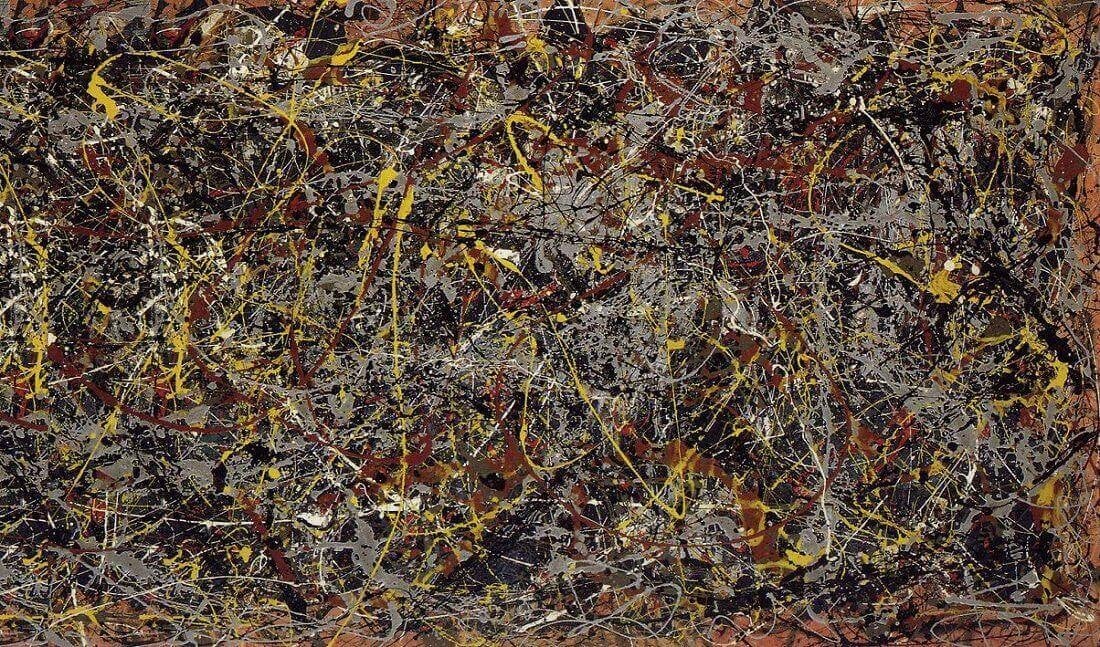
No. 5, 1948
Jackson Pollock (1948)
<strong>No. 5, 1948</strong> is a large, floor‑painted field of poured enamel where tangled skeins of black, gray, umber, and bursts of yellow span the entire support. Its <strong>all‑over</strong> structure rejects a central motif, turning the painting into a record of motion and material behavior. The result is a charged surface that reads as both <strong>image and event</strong> <sup>[1]</sup><sup>[2]</sup><sup>[3]</sup>.
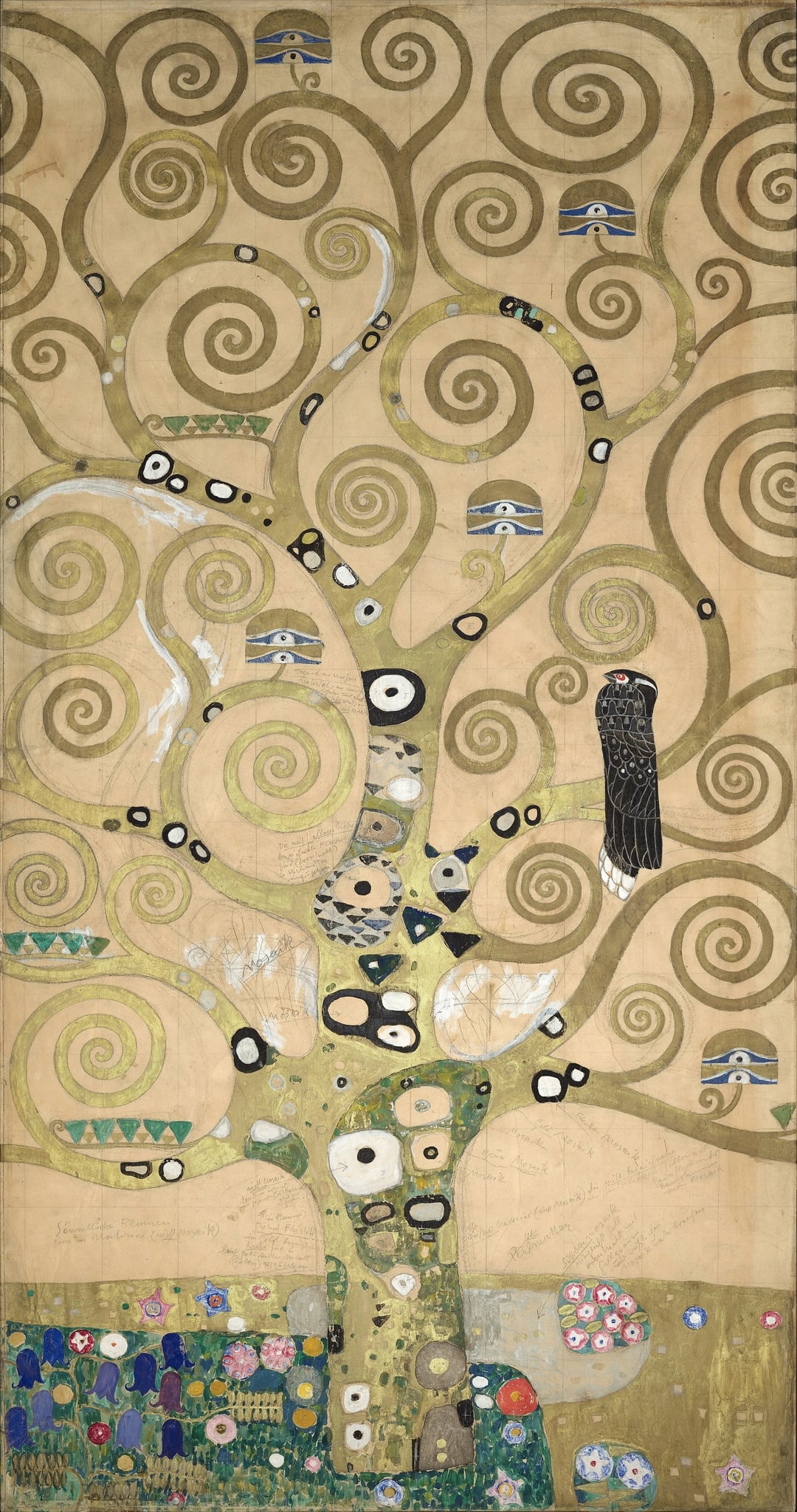
The Tree of Life
Gustav Klimt (1910–1911 (design; mosaic installed 1911))
Gustav Klimt’s The Tree of Life crystallizes a <strong>cosmological axis</strong> in a gilded ornamental language: a rooted trunk erupts into <strong>endless spirals</strong>, embedded with <strong>eye-like rosettes</strong> and shadowed by a black, red‑eyed bird. Designed as part of the Stoclet dining‑room frieze, it fuses <strong>symbolism and luxury materials</strong> to link earthly abundance with timeless transcendence <sup>[1]</sup><sup>[2]</sup>.
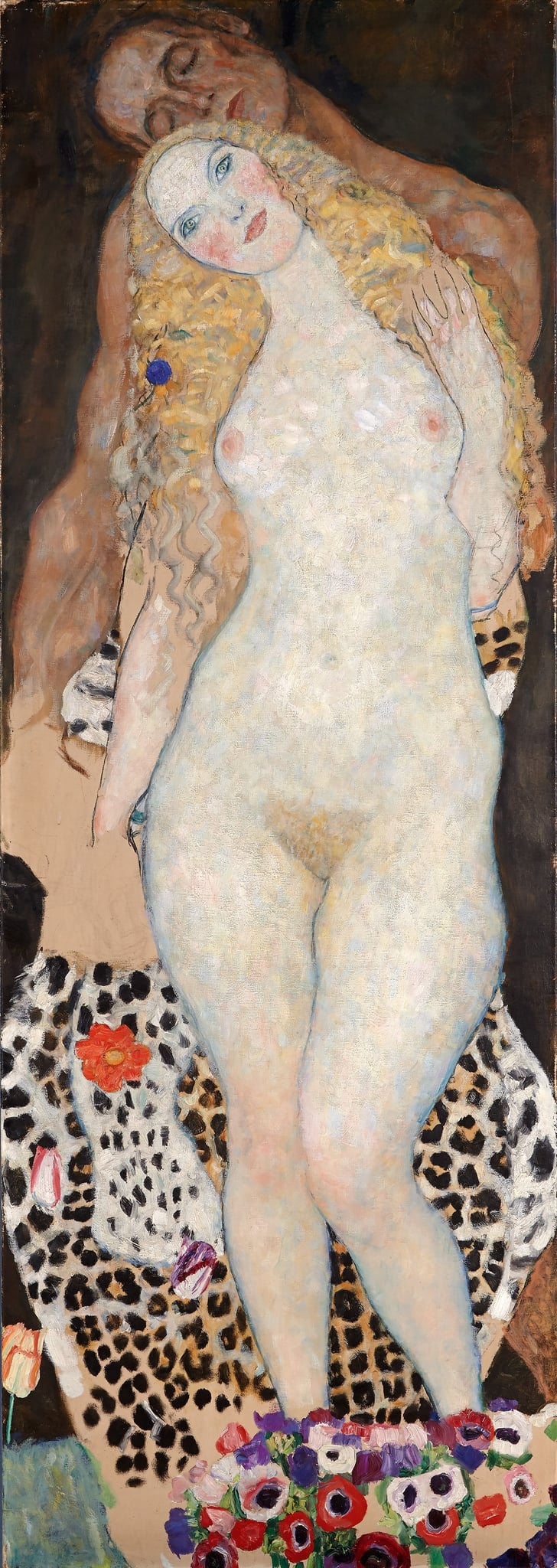
Adam and Eve
Gustav Klimt (1916–1918 (unfinished))
Gustav Klimt’s Adam and Eve recasts the biblical pair as a <strong>sensual, timeless allegory</strong> rather than a didactic tale. Eve’s <strong>luminous, opalescent body</strong> and direct gaze dominate, while Adam recedes in shadow, enfolding her amid a <strong>leopard pelt</strong> and a <strong>carpet of anemones</strong> that signal erotic vitality and fertility <sup>[2]</sup><sup>[3]</sup>.
The Storm (Seascape)
Ivan Aivazovsky (1850)
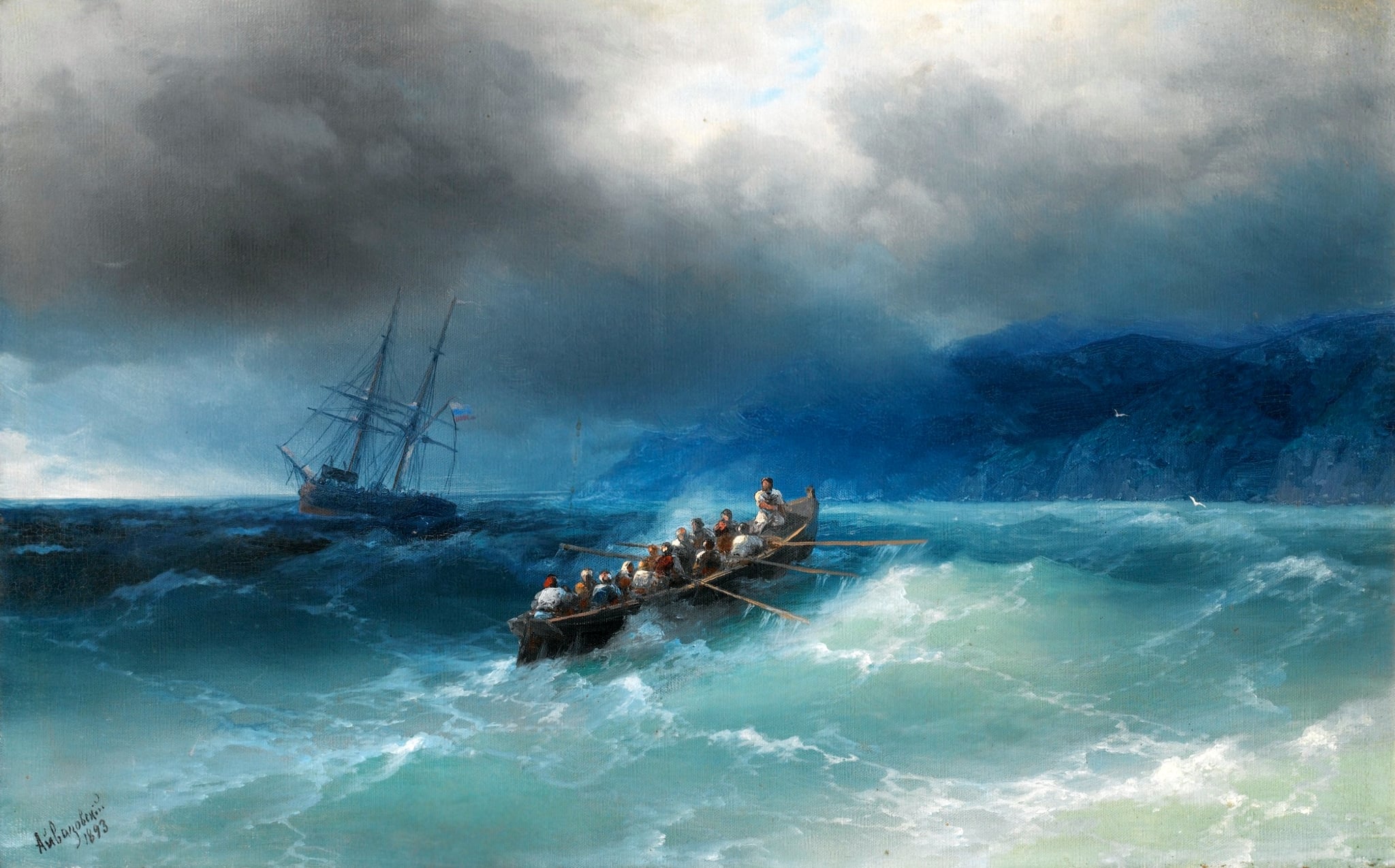
In The Storm (Seascape), Ivan Aivazovsky forges a drama of <strong>human resolve</strong> against the <strong>Sublime sea</strong>. A crowded lifeboat claws up a green-blue swell toward a <strong>break of light</strong>, while a tall-masted ship lists behind and a <strong>rocky coast</strong> looms to the right. The painting crystallizes peril and hope in a single, surging moment.
The Ninth Wave
Ivan Aivazovsky (1850)
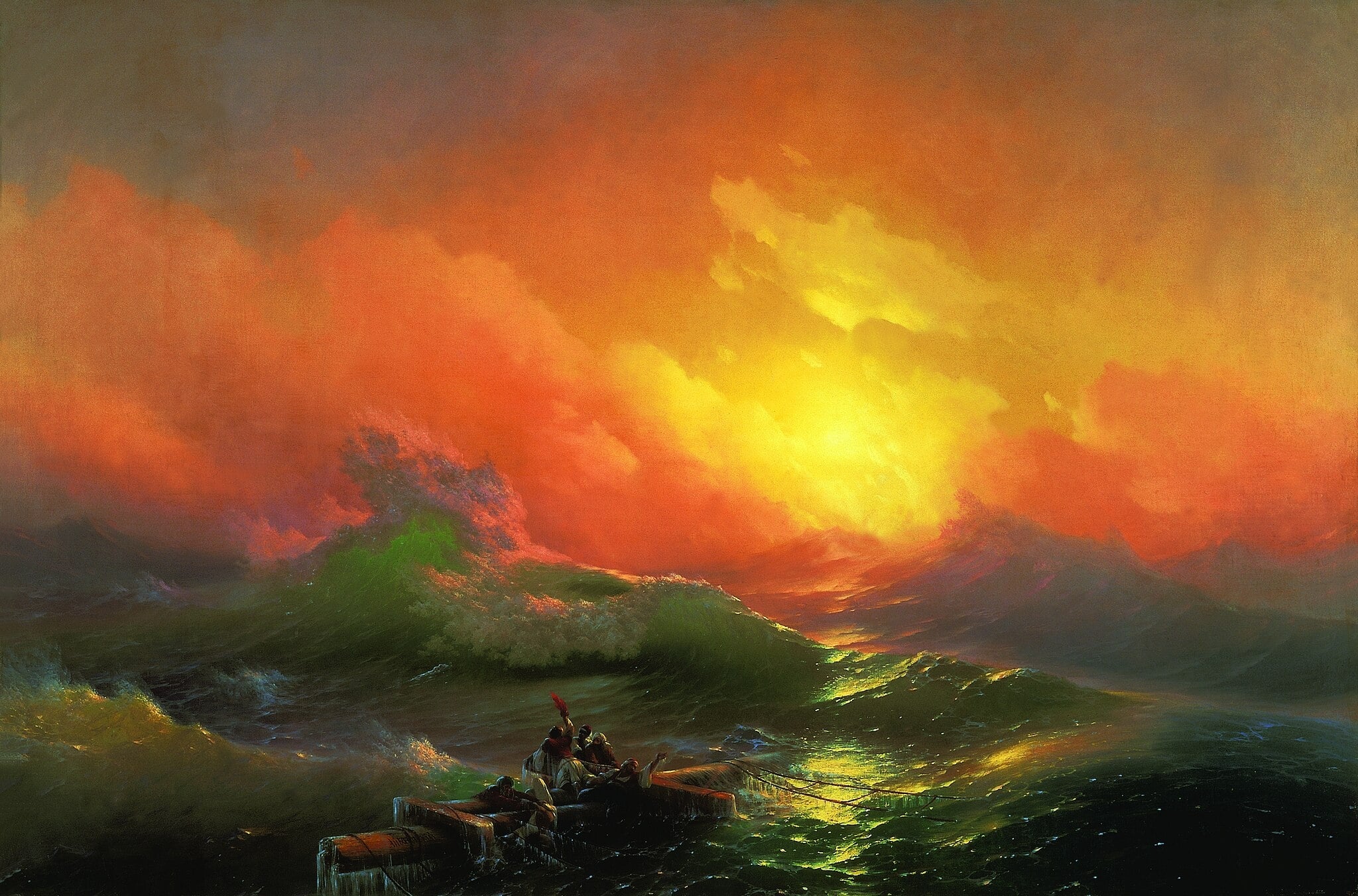
The Ninth Wave stages a struggle between annihilation and deliverance on a heaving sea, where survivors cling to a cross‑shaped raft under a <strong>molten dawn</strong>. Aivazovsky turns light into a <strong>redemptive force</strong>, cutting a golden path across emerald waves that both threaten and guide the castaways <sup>[1]</sup><sup>[3]</sup>.
The Tribute Money
Masaccio (c. 1425–1427)
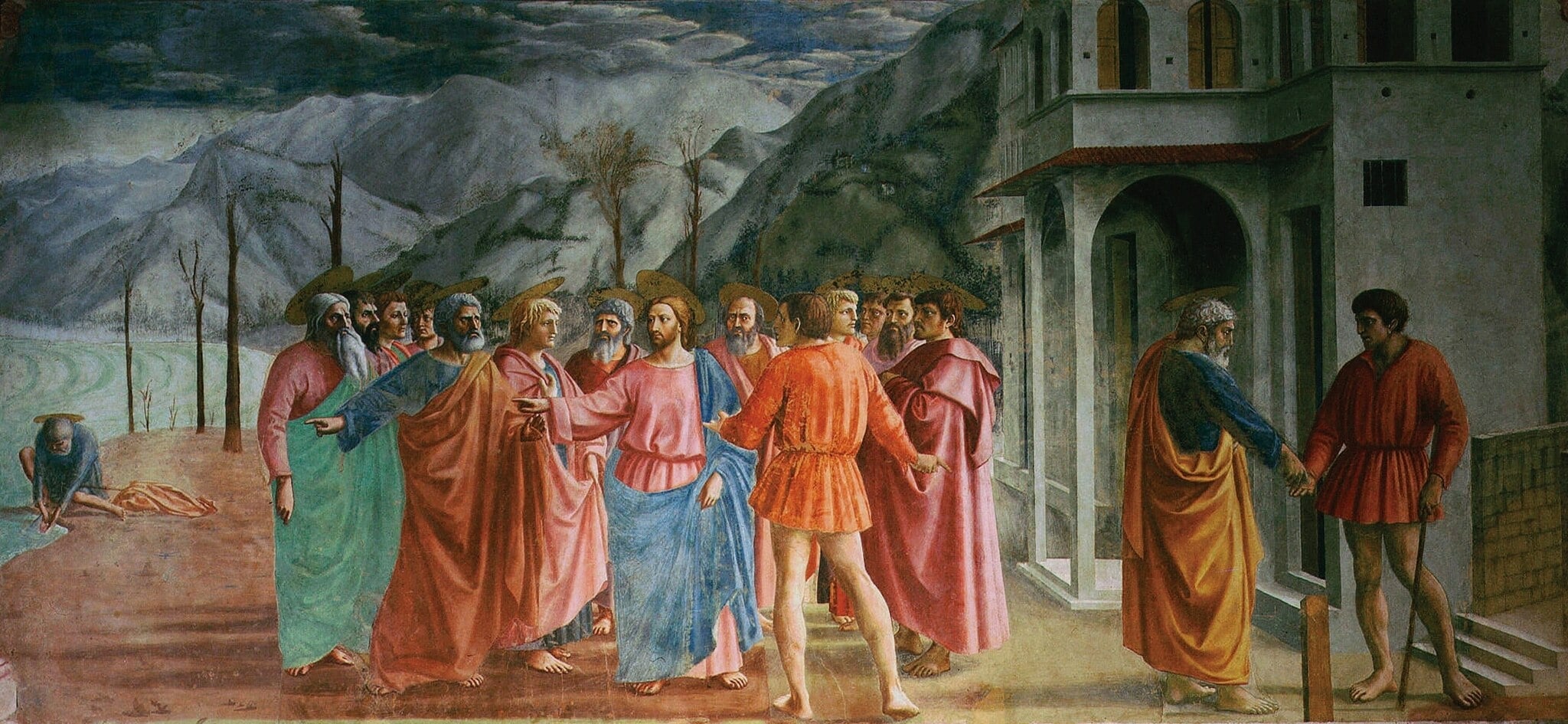
Masaccio’s The Tribute Money unifies three Gospel moments into one rational space, using <strong>continuous narrative</strong>, coherent <strong>light from the right</strong>, and strict <strong>linear perspective</strong> to dramatize Christ’s directive to Peter about the temple tax. The red-clad tax collector confronts the group at center, Peter retrieves the coin at the lake on the left, and he pays the dues at the portico on the right, all bound by emphatic pointing hands and a shared illumination <sup>[2]</sup><sup>[3]</sup>.
Josef Lewinsky as Carlos in Clavigo
Gustav Klimt (1895)
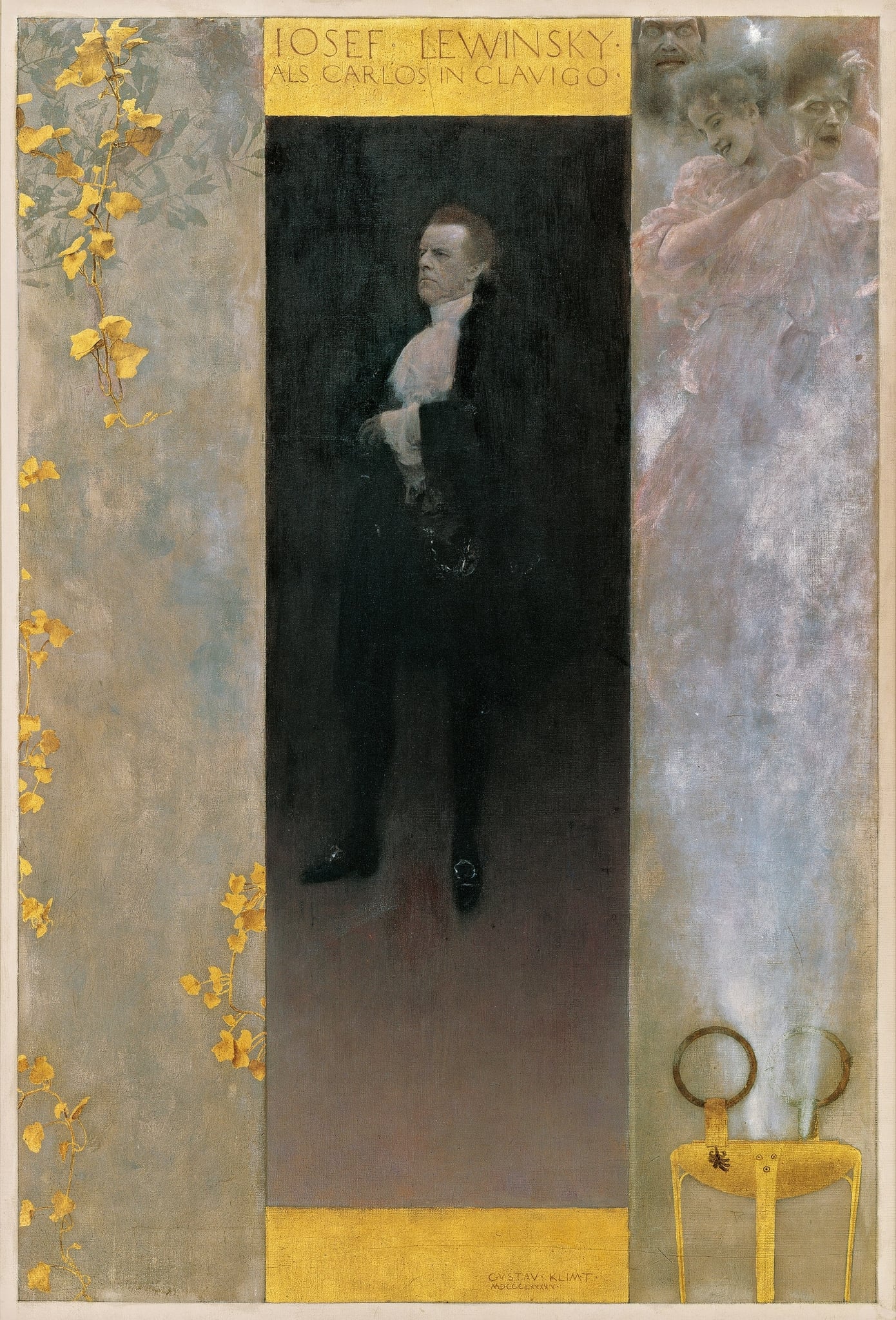
A stark, triptych-like design turns the actor’s upright silhouette into a test of <strong>will</strong> against a surrounding chorus of <strong>masks</strong>, <strong>laurel/ivy</strong>, and a smoking <strong>antique tripod</strong>. Klimt fuses <strong>portrait</strong> and <strong>allegory</strong> to stage the psychic weather of Goethe’s drama while previewing his turn toward <strong>Symbolism</strong> and ornamental modernity <sup>[1]</sup><sup>[2]</sup>.
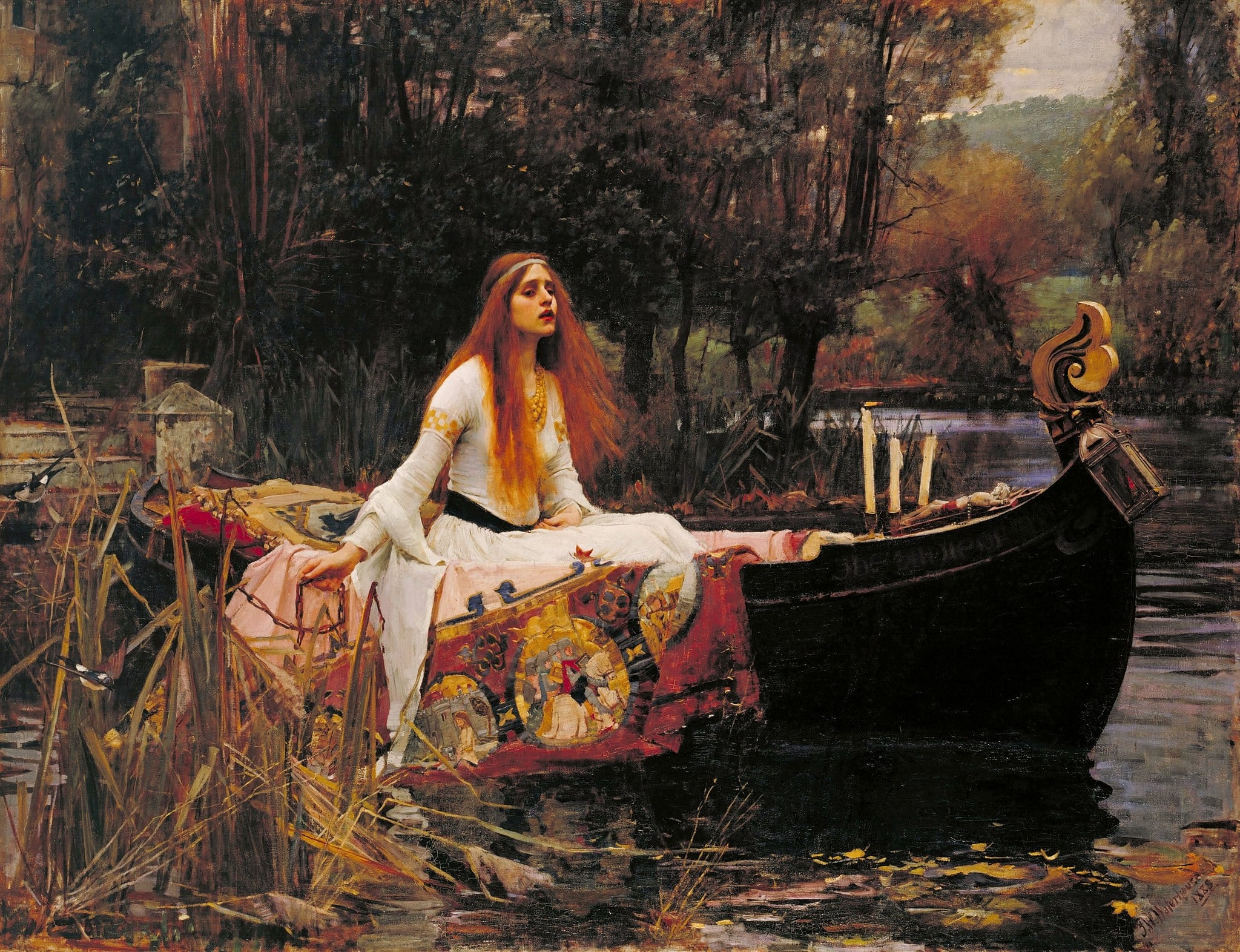
The Lady of Shalott
John William Waterhouse (1888)
John William Waterhouse’s The Lady of Shalott fixes the tragic instant when the cursed Lady chooses to loose her mooring and drift toward Camelot. The released <strong>chain</strong>, the guttering <strong>candles</strong>, and the tapestry spilling over the boat narrate a passage from sheltered artifice to fatal reality. Waterhouse fuses late <strong>Pre-Raphaelite</strong> symbolism with elegiac atmosphere to stage beauty caught between <strong>agency</strong> and <strong>doom</strong> <sup>[1]</sup><sup>[2]</sup><sup>[3]</sup>.
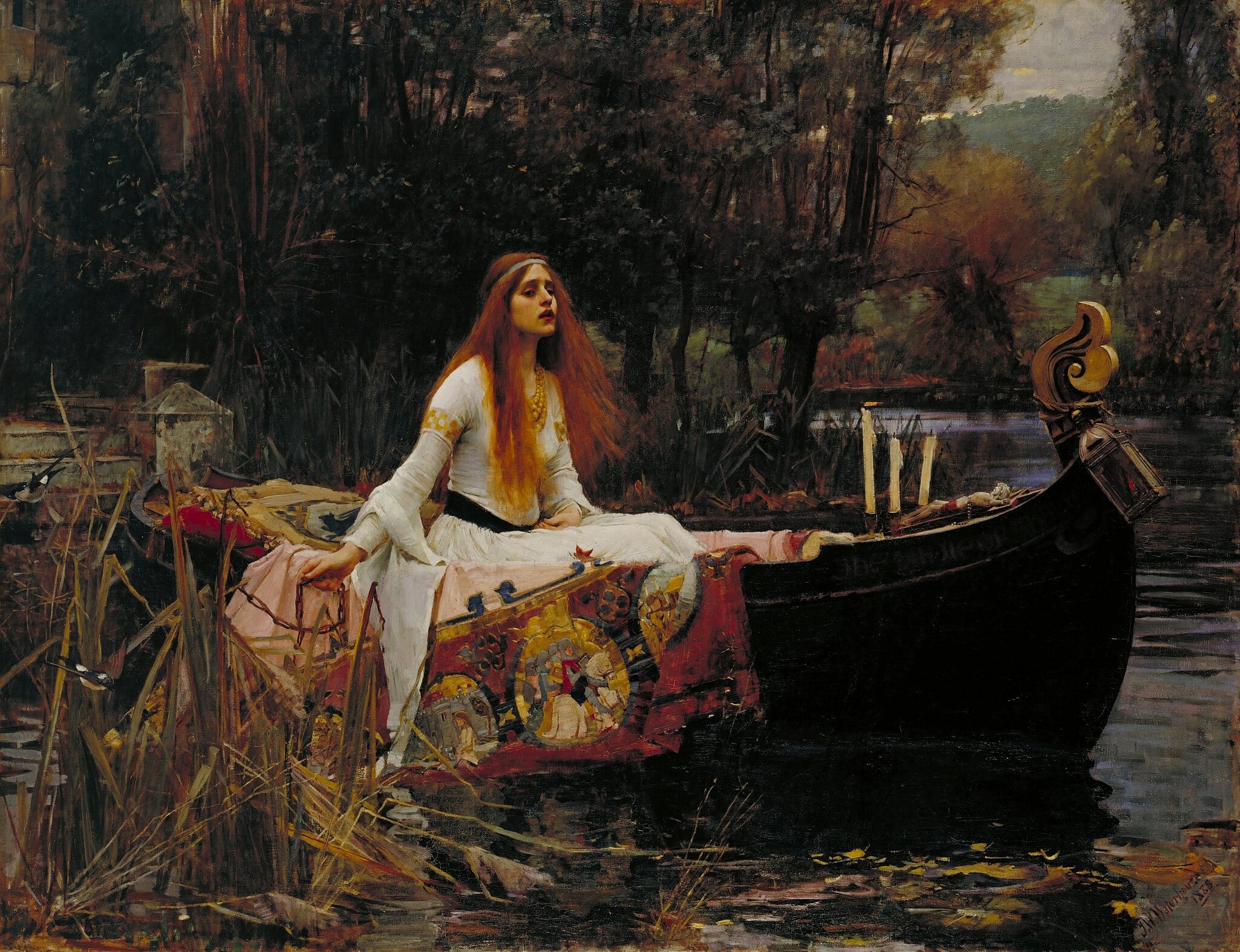
The Lady of Shallot
John William Waterhouse (1888)
John William Waterhouse’s The Lady of Shallot (1888) fixes on the instant the cursed heroine releases her chain and sets her black, coffinlike boat adrift. The extinguished candles, the small crucifix, and the tapestry trailing into the water stage a <strong>funerary voyage</strong> toward Camelot and a choice of <strong>experience over enclosure</strong> <sup>[1]</sup><sup>[2]</sup>.