Loss, grief, and consolation
Featured Artworks

The Artist's Garden at Vétheuil
Claude Monet (1881)
Claude Monet’s The Artist’s Garden at Vétheuil stages a sunlit ascent through a corridor of towering sunflowers toward a modest house, where everyday life meets cultivated nature. Quick, broken strokes make leaves and shadows tremble, asserting <strong>light</strong> and <strong>painterly surface</strong> over linear contour. Blue‑and‑white <strong>jardinieres</strong> anchor the foreground, while a child and dog briefly pause on the path, turning the garden into a <strong>domestic sanctuary</strong> <sup>[1]</sup><sup>[2]</sup>.
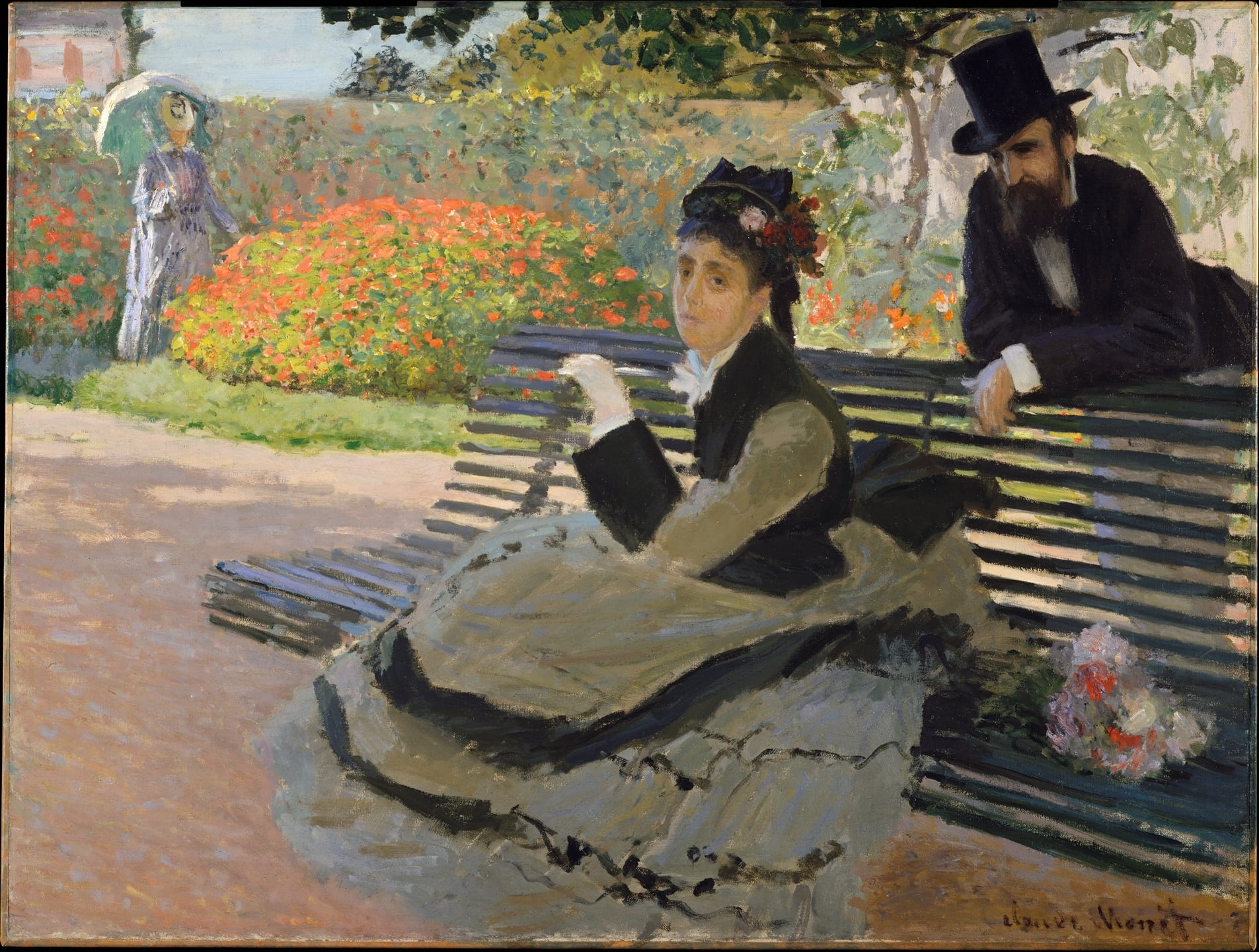
Camille Monet on a Garden Bench
Claude Monet (1873)
Claude Monet’s Camille Monet on a Garden Bench (1873) stages an intimate pause where <strong>light, grief, and modern leisure</strong> intersect. Camille, shaded and withdrawn, holds a letter while a <strong>top‑hatted neighbor</strong> hovers; a bright bank of <strong>red geraniums</strong> and a strolling woman with a parasol ignite the distance <sup>[1]</sup>. Monet converts a domestic garden into a scene about <strong>psychological distance</strong> amid fleeting sunlight.
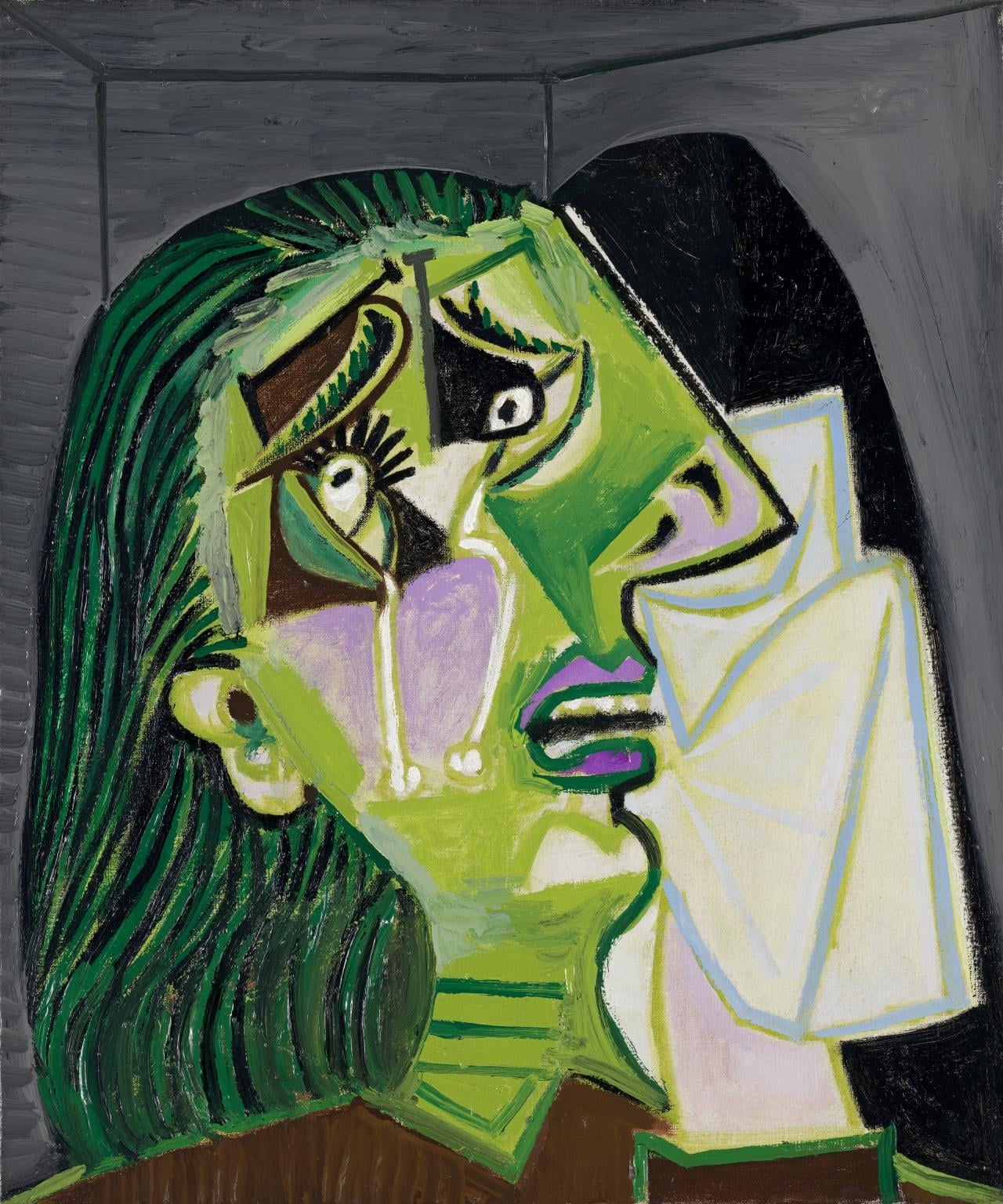
The Weeping Woman
Pablo Picasso (1937)
Picasso’s The Weeping Woman turns private mourning into a public, <strong>iconic emblem of civilian grief</strong>. Shattered planes, <strong>acidic greens and purples</strong>, and jewel-like tears force the viewer to feel the fracture of perception that follows trauma <sup>[1]</sup><sup>[2]</sup>.

The Two Fridas
Frida Kahlo (1939)
The Two Fridas presents a doubled self seated under a storm-charged sky, their opened chests revealing two hearts joined by a single artery. One Frida in a European dress clamps the vessel with a surgical <strong>hemostat</strong> as blood stains her skirt, while the other in a <strong>Tehuana</strong> dress steadies a locket and the shared pulse. The canvas turns private injury into a public image of <strong>dual identity</strong> and endurance <sup>[1]</sup><sup>[2]</sup>.
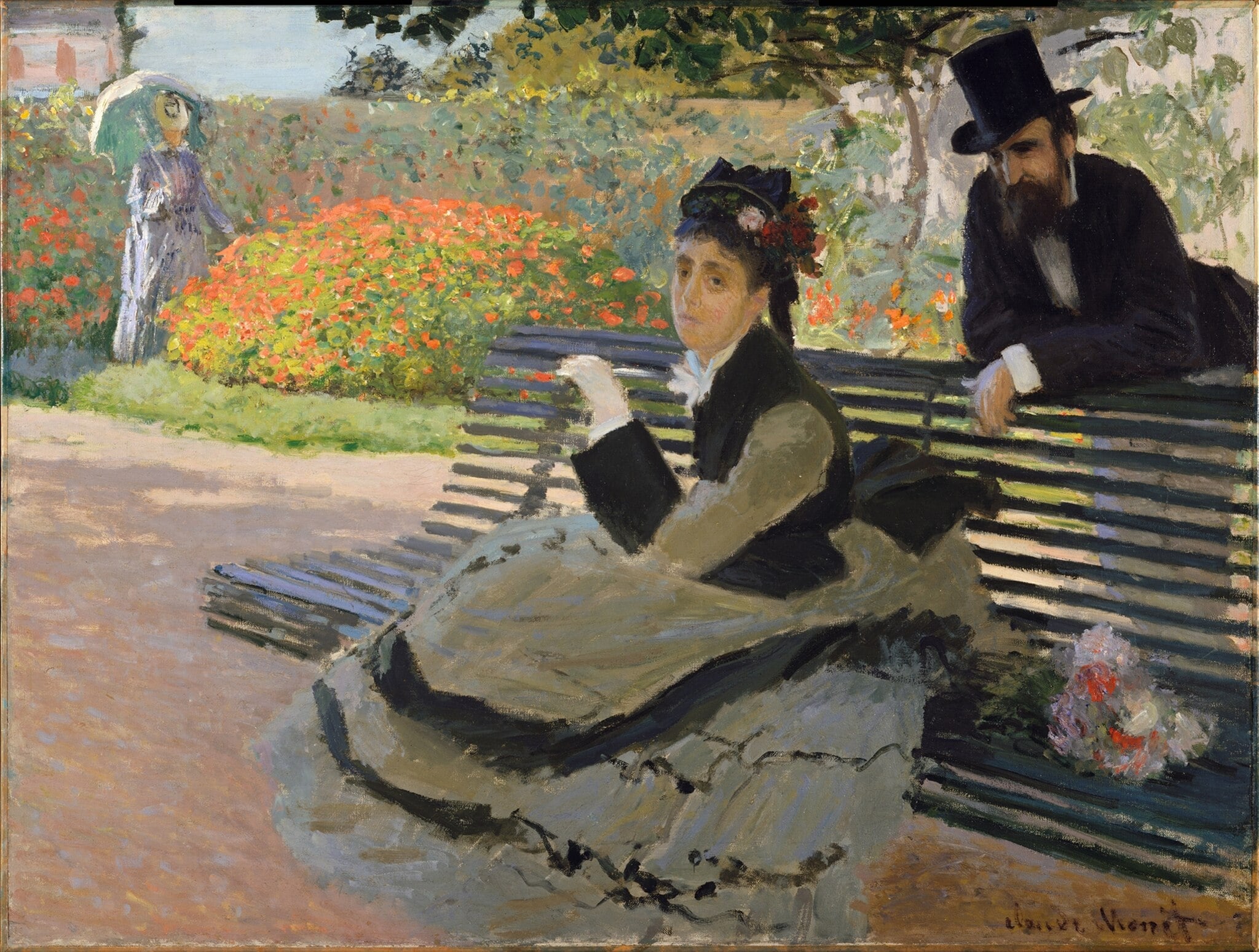
Camille Monet (1847–1879) on a Garden Bench
Claude Monet (1873)
Monet stages a modern garden drama along the <strong>diagonal bench</strong> that slices the foreground, setting Camille’s poised figure against a blaze of <strong>geraniums</strong> and dappled light. A <strong>top‑hatted neighbor</strong> leans over the slats as a second woman with a <strong>parasol</strong> wanders among blooms, while a <strong>note</strong> and a slightly tumbled <strong>bouquet</strong> cue a moment interrupted. Light, not contour, builds the scene, suspending private feeling within public leisure <sup>[1]</sup><sup>[2]</sup>.
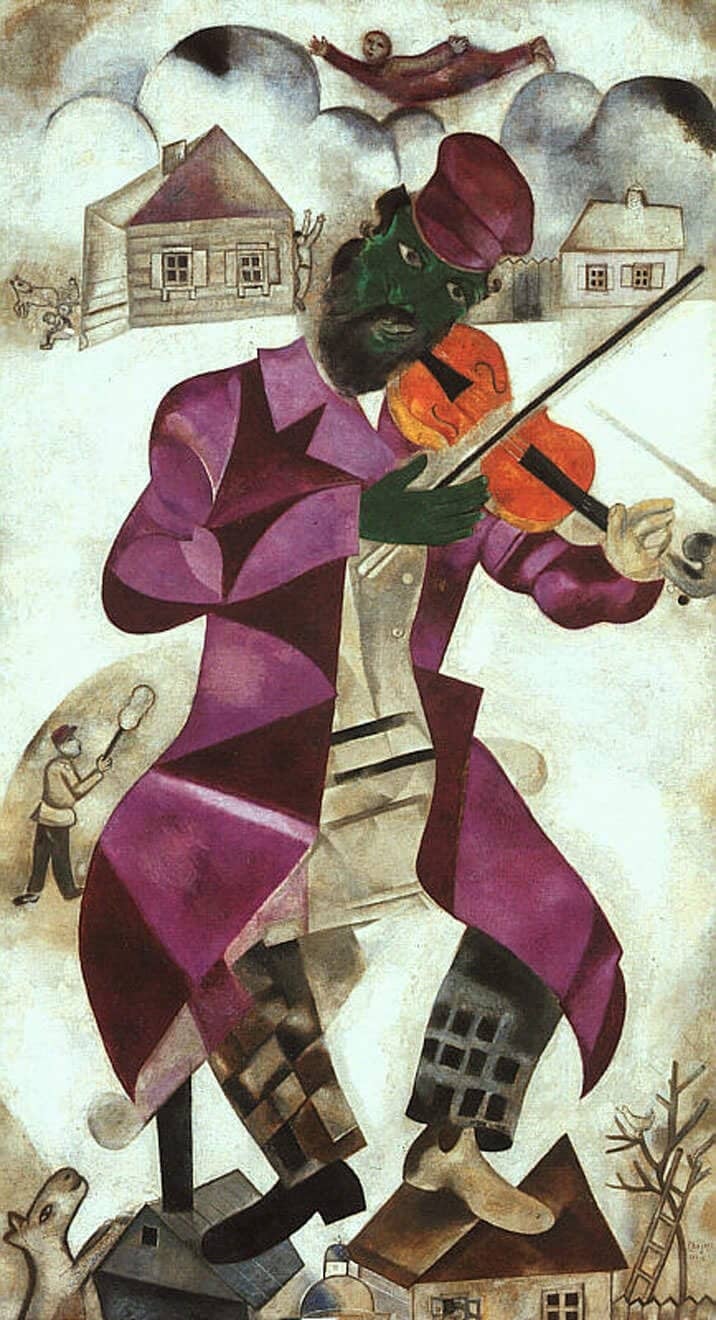
The Green Violinist
Marc Chagall (1923–1924)
The Green Violinist magnifies a village fiddler into a sky‑bridging guardian, his <strong>green face</strong> and <strong>purple coat</strong> turning him into a spiritual emissary rather than a mere entertainer. Striding across crooked <strong>rooftops</strong> without crushing them, he binds the shtetl’s houses, tree, clouds, and wandering figures into one continuous chord. Chagall fuses folkloric memory with modernist facets to assert music as the community’s sustaining force.
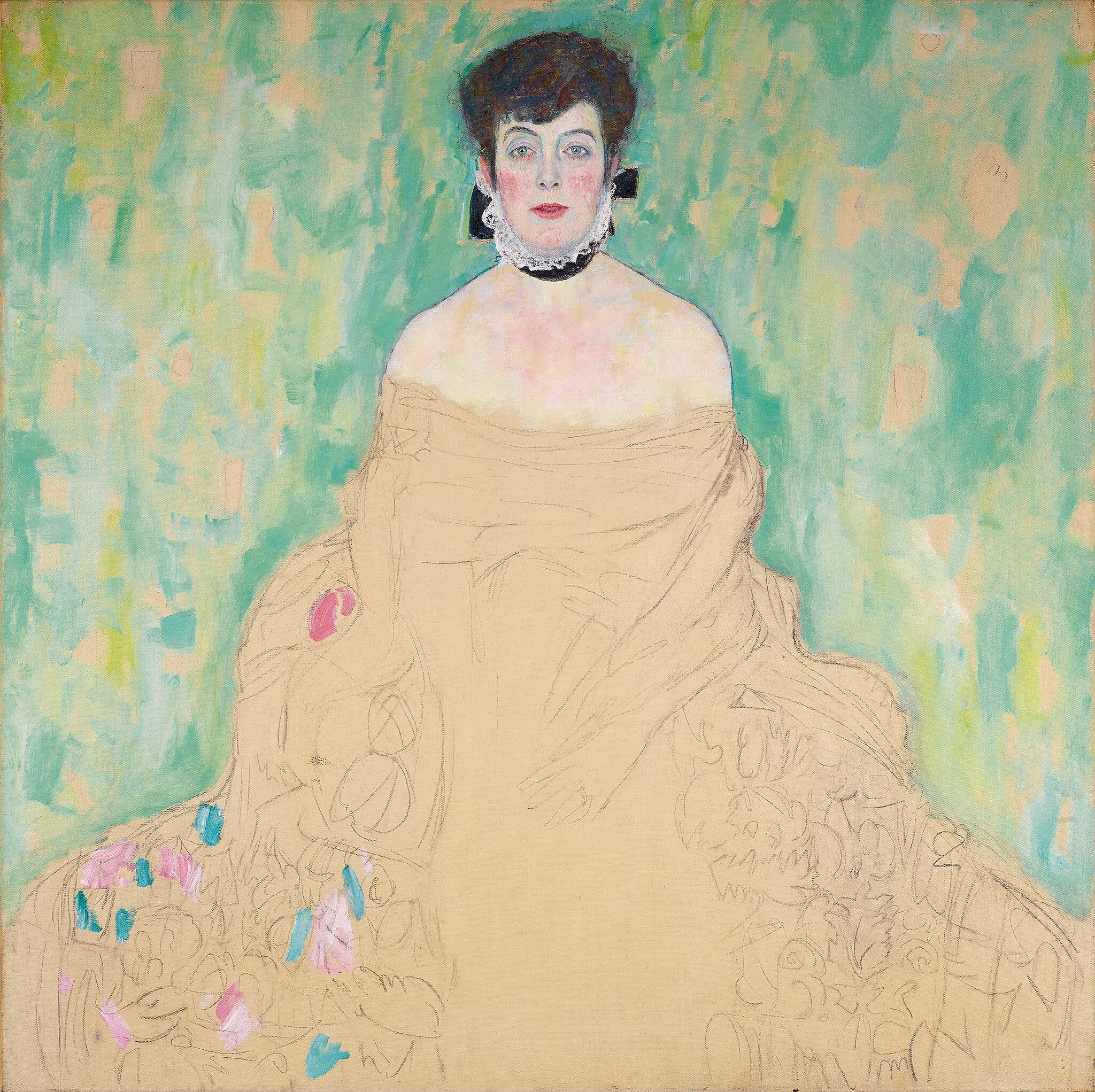
Amalie Zuckerkandl
Gustav Klimt (1917–1918)
Gustav Klimt’s Amalie Zuckerkandl is an <strong>unfinished</strong> late portrait in which a fully realized head and shoulders float above a gown left as <strong>skeletal graphite and washes</strong>. Set against a mottled, cool <strong>green ground</strong>, her flushed face, direct gaze, black <strong>choker</strong> and crisp lace collar stage a drama of poise, sensuality, and restraint <sup>[1]</sup><sup>[6]</sup>. The painting’s incompletion becomes the work’s meaning: a vivid selfhood <strong>emerging</strong> while ornament remains <strong>in potential</strong>.