Caravaggio Paintings in Naples — Where to See Them
Naples matters for experiencing Caravaggio because it was one of the cities where he worked after 1606, leaving a handful of intensely realistic, chiaroscuro-driven canvases that immediately reshaped local painting and are still encountered in their original religious and civic contexts. Approximately three of his paintings are on permanent display across three museums — Museo e Real Bosco di Capodimonte (1 painting), Pio Monte della Misericordia (1 painting), and Gallerie d'Italia - Palazzo Zevallos Stigliano (1 painting) — each offering a different, close-up view of his late style and its impact on Neapolitan visual culture.
At a Glance
- Museums
- Museo e Real Bosco di Capodimonte, Pio Monte della Misericordia, Gallerie d'Italia - Palazzo Zevallos Stigliano
- Highlight
- See Caravaggio's dramatic Tenebrism at Pio Monte della Misericordia.
- Best For
- Lovers of Baroque art and dramatic chiaroscuro.
Museo e Real Bosco di Capodimonte
Capodimonte matters for experiencing Caravaggio because it holds one of his major Neapolitan canvases, The Flagellation of Christ, which illustrates how Caravaggio reworked Roman models into a darker, more theatrical Neapolitan idiom and influenced local painters. Seeing this painting in Capodimonte lets you compare Caravaggio’s handling of light, flesh and dramatic composition with other Neapolitan works in the same collection that were directly inspired by him. ([capodimonte.cultura.gov.it](https://capodimonte.cultura.gov.it/comunicato_stampa/flesh-and-blood-italian-masterpieces-from-the-capodimonte-museum/?utm_source=openai))
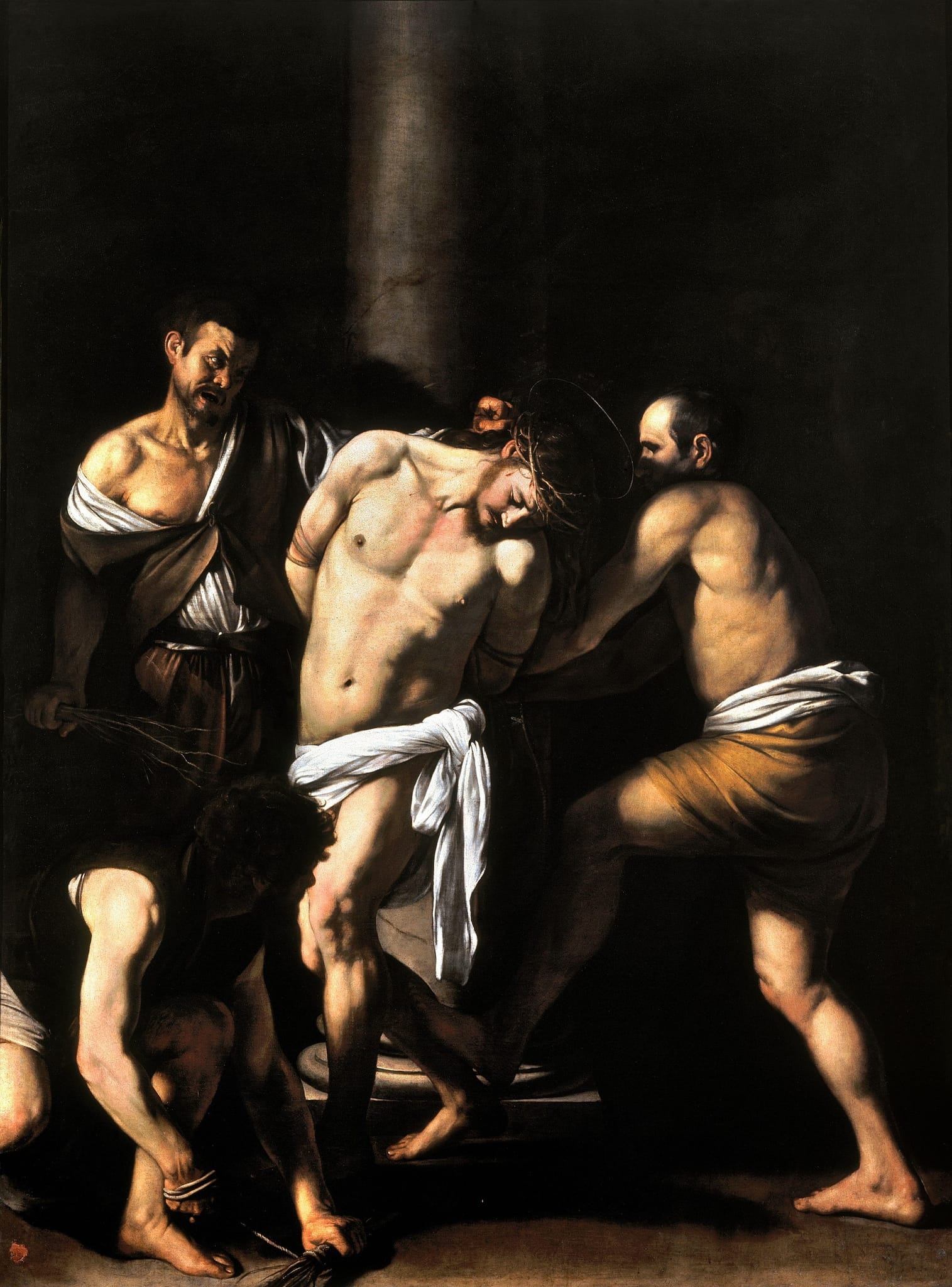
Flagellation of Christ
1607
Caravaggio’s Flagellation of Christ shows Christ bound to a column as brutalized torturers beat him; the composition compresses the figures into a shallow, claustrophobic space that heightens the violence. Significant for its stark naturalism and dramatic tenebrism, the work marks Caravaggio’s break with idealized martyrdom by emphasizing bodily suffering and human cruelty—viewers should look for the sharp contrasts of light and shadow across Christ’s torso, the tense, realistic musculature and wounds, and the anonymous, indifferent faces of the executioners that make the scene disturbingly immediate.
Must-seePio Monte della Misericordia
Pio Monte is essential because it is the original and still-primary setting for Caravaggio’s The Seven Works of Mercy (1607): the altarpiece was painted for this church and remains installed above the altar, offering the original devotional and spatial context for the work. Experiencing the painting in situ lets you observe how Caravaggio tailored scale, composition and theatrical lighting to the confraternity’s theological program and the church’s architecture. ([piomontedellamisericordia.it](https://piomontedellamisericordia.it/en/caravaggio/?utm_source=openai))
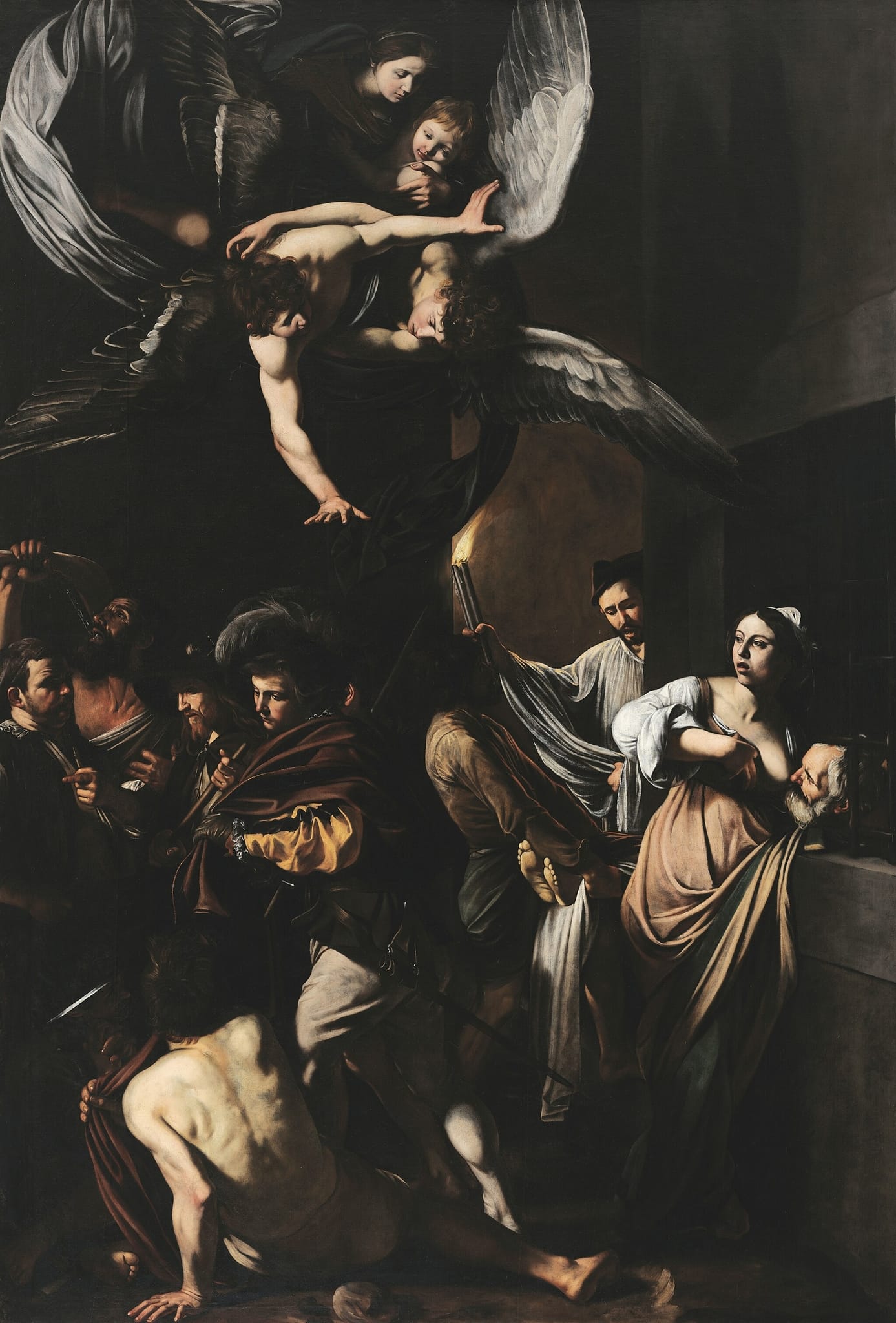
The Seven Works of Mercy
1606-1607
A large, dramatic group scene that combines the seven corporal works of mercy into a single cinematic composition — feeding the hungry, giving drink to the thirsty, clothing the naked, sheltering the traveler, visiting the sick and imprisoned, and burying the dead — centered on a robust, maternal Madonna-and-child figure who subtly mediates the action. Its significance lies in Caravaggio’s fusion of devotional program and everyday realism: he stages sacred charity as urgent, physical, and compassionate street-life, using tenebrism and unidealized figures to make mercy immediate and tangible. Viewers should look for the theatrical contrasts of light and shadow, the way gestures and glances link separate acts into a single narrative web, and the striking details (the overturned basket, the bandaged wound, the infant’s grasp) that connect the spiritual message to ordinary human needs.
Must-seeGallerie d'Italia - Palazzo Zevallos Stigliano
Zevallos Stigliano matters because it houses what is widely considered one of Caravaggio’s last great works, The Martyrdom of Saint Ursula (c.1610), allowing visitors to trace late stylistic shifts—compressed space, heightened psychological immediacy, and a different handling of color and surface. The gallery’s recent reinstallation emphasizes the painting’s placement and lighting, highlighting how this late composition engages the viewer directly and contrasts with his earlier Roman pieces. ([en.wikipedia.org](https://en.wikipedia.org/wiki/The_Martyrdom_of_Saint_Ursula_%28Caravaggio%29?utm_source=openai))
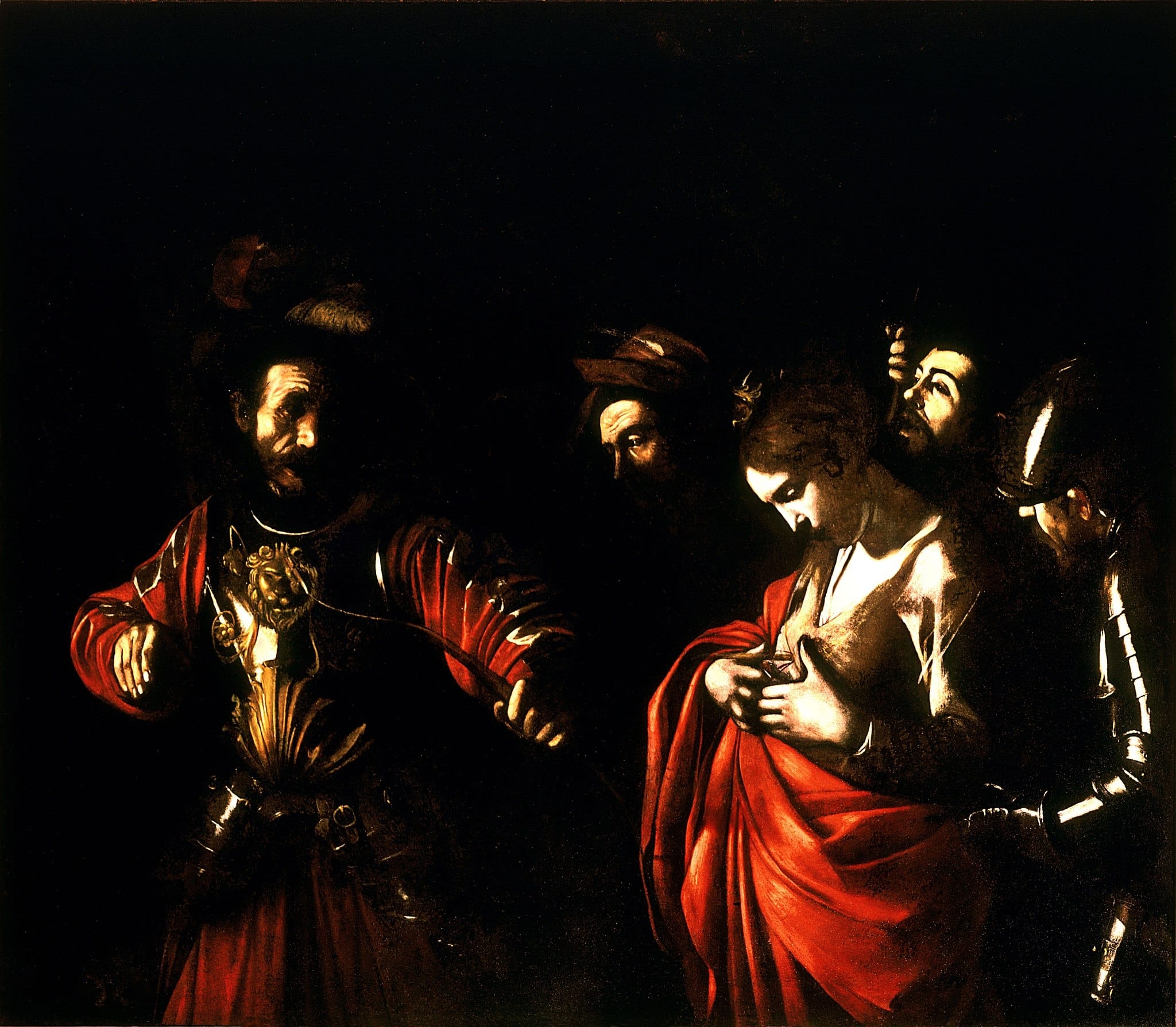
Martyrdom of Saint Ursula
1610
Caravaggio shows the moment of Saint Ursula’s execution: a serene, kneeling female figure about to be struck by a soldier, with attendants and a compact, tense crowd framing the scene. The work is significant as one of the master’s late paintings, combining his mature chiaroscuro and psychological realism to humanize a hagiographic subject and emphasize the intimacy of martyrdom rather than heroic spectacle. Viewers should look for the dramatic contrast of light and shadow on Ursula’s face and hands, the restrained but expressive gestures of the figures, and the close, almost theatrical composition that pulls the observer into the event.
Must-see