Caravaggio Paintings in Rome — Where to See Them
Rome is home to approximately 15 Caravaggio paintings on permanent display across five museums: Galleria Borghese (6), Gallerie Nazionali di Arte Antica — Palazzo Barberini & Palazzo Corsini (4), Galleria Doria Pamphilj (2), Musei Capitolini — Pinacoteca Capitolina (2), and the Musei Vaticani (1). That concentration matters because in Rome you can trace Caravaggio’s artistic arc from early commissions to mature masterpieces within papal and private collections—seeing his signature chiaroscuro and dramatic narratives in the very palaces and institutions that shaped his career.
At a Glance
- Museums
- Galleria Borghese, Gallerie Nazionali di Arte Antica (Palazzo Barberini & Palazzo Corsini), Galleria Doria Pamphilj, Musei Capitolini (Pinacoteca Capitolina), Musei Vaticani (Vatican Museums)
- Highlight
- Must-see Caravaggio group at Galleria Borghese—masterful chiaroscuro and dramatic realism.
- Best For
- Baroque art lovers, chiaroscuro enthusiasts, and art-history travelers.
Galleria Borghese
The Borghese matters because it houses one of the densest, most carefully hung groups of Caravaggio paintings anywhere, which lets you compare his use of dramatic light, intimate scale, and psychological intensity across multiple works in a single visit. The collection’s placement in small, richly decorated rooms creates an almost theatrical encounter with each canvas—you get a sense of how these pictures functioned in private Roman collections and how viewers of Caravaggio’s day would have experienced their emotional immediacy.
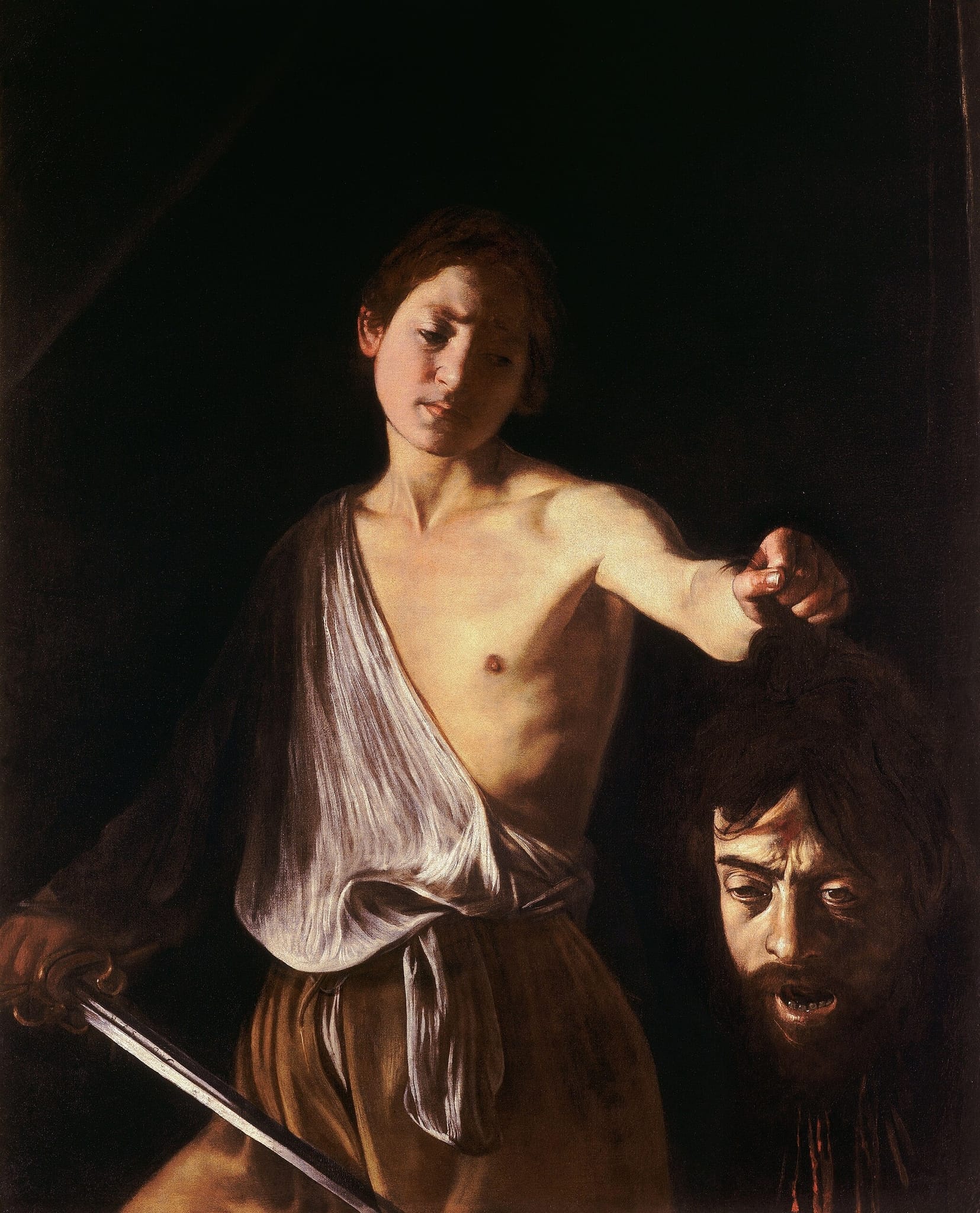
David with the Head of Goliath
1610
Shows the young David holding the severed head of Goliath — a stark, intimate moment after victory rather than the battle itself. Significant as one of Caravaggio’s late, personal works that many interpret as a symbolic self-portrait and an exploration of repentance and mortality. Look for the dramatic chiaroscuro, the realistic, wounded expression on Goliath’s face, and David’s ambiguous, almost triumphant-yet-sorrowful gaze.
Must-see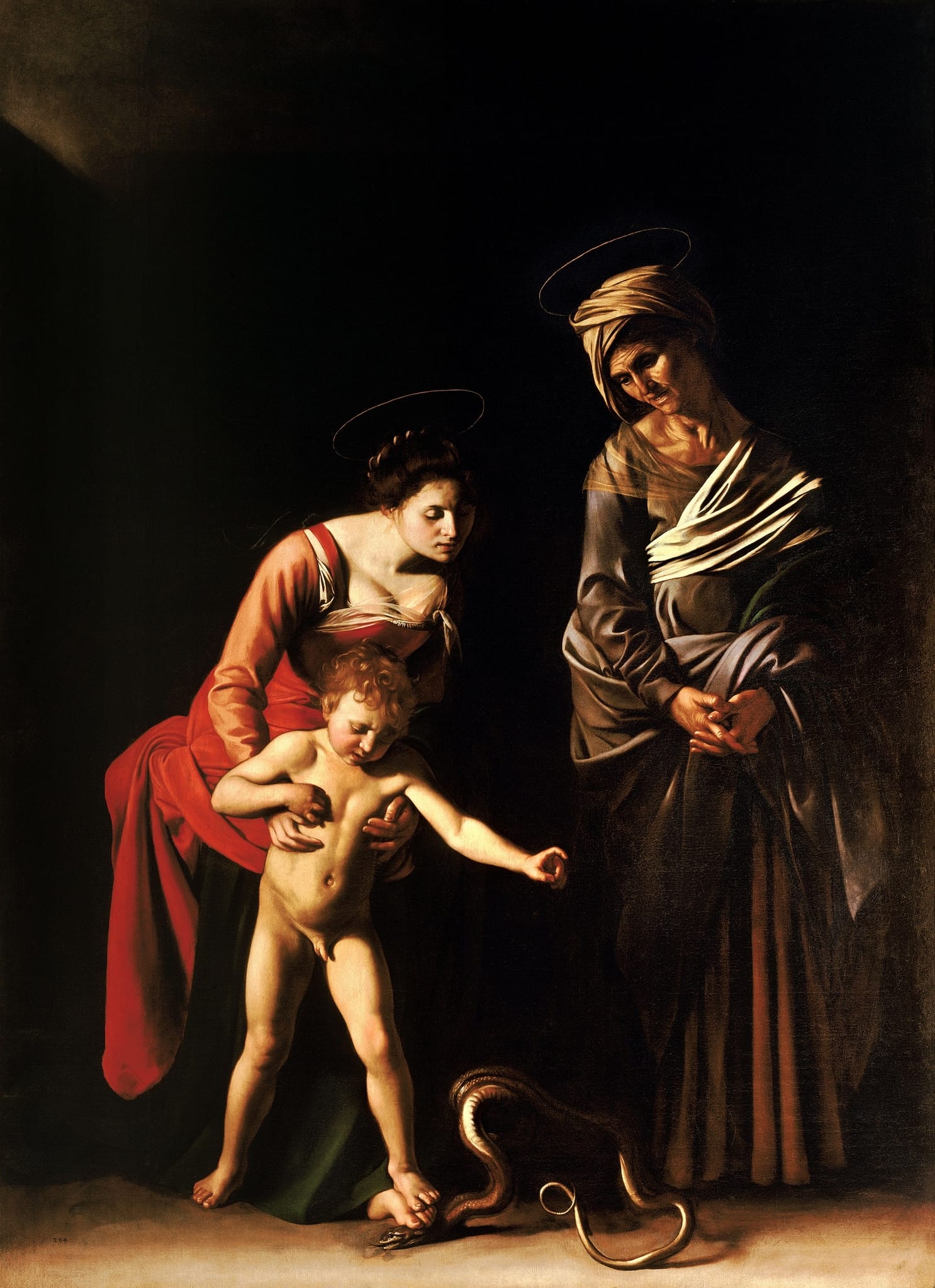
Madonna and Child with Saint Anne
1605-1606
Depicts the Virgin Mary seated on Saint Anne’s lap with the Christ Child in a tender domestic grouping, rendered with striking realism. Significant for Caravaggio’s rejection of idealized holy figures in favor of humanized, emotionally immediate saints that bring sacred subjects into everyday life. Notice the naturalistic gestures, the plain setting, and the contrast between the soft child and the more worn, earthly features of Anne and Mary.
Must-see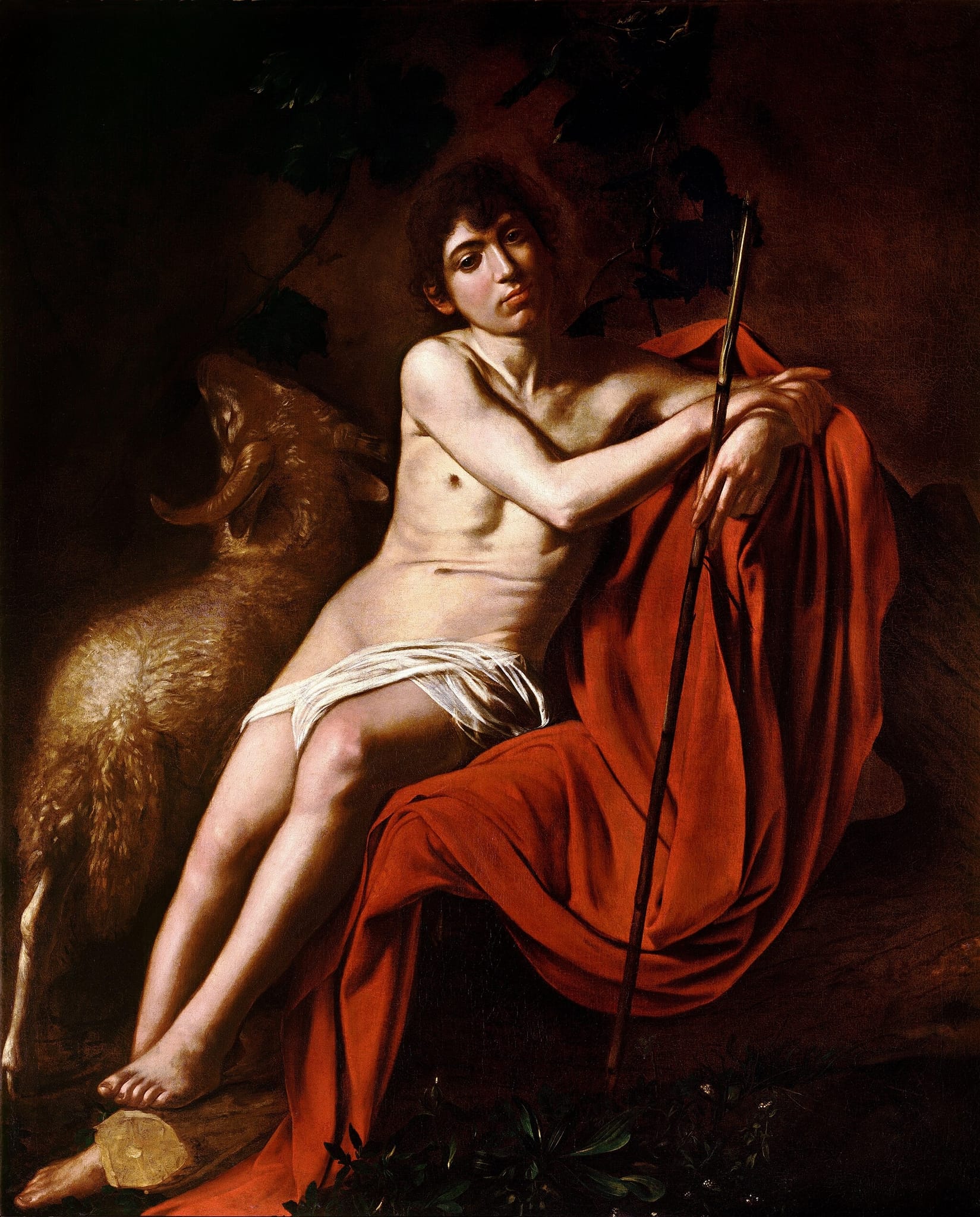
John the Baptist
1609
Presents Saint John the Baptist as a contemplative, solitary youth often shown half-clad and pointing or holding a reed cross, suggesting his prophetic role. Important as an example of Caravaggio’s late style that blends spirituality with physical vulnerability, making the saint approachable and psychologically complex. Look for the strong light modeling the body, the introspective expression, and the tactile realism of skin and drapery.
Must-see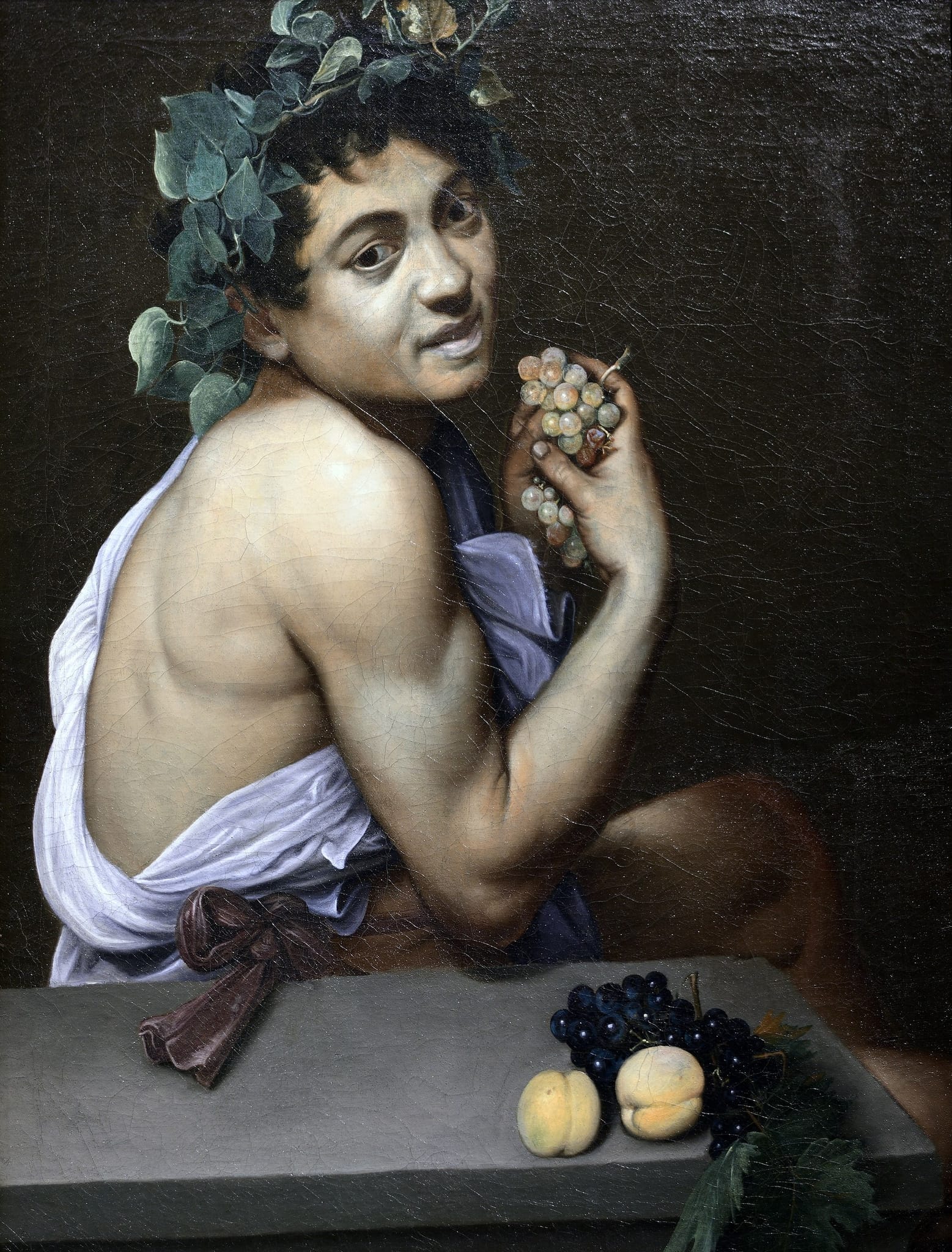
Young Sick Bacchus
1593-1594
Shows a youthful Bacchus reclining with a goblet and a basket of fruit, appearing languid and slightly ill rather than exuberant. Significant as an early work that demonstrates Caravaggio’s interest in painting real, unidealized figures and his skill with still-life detail that carries symbolic meaning about decadence and transience. Observe the careful depiction of fruit textures, the slightly greenish pallor of the skin, and the way the light isolates the figure from the dark background.
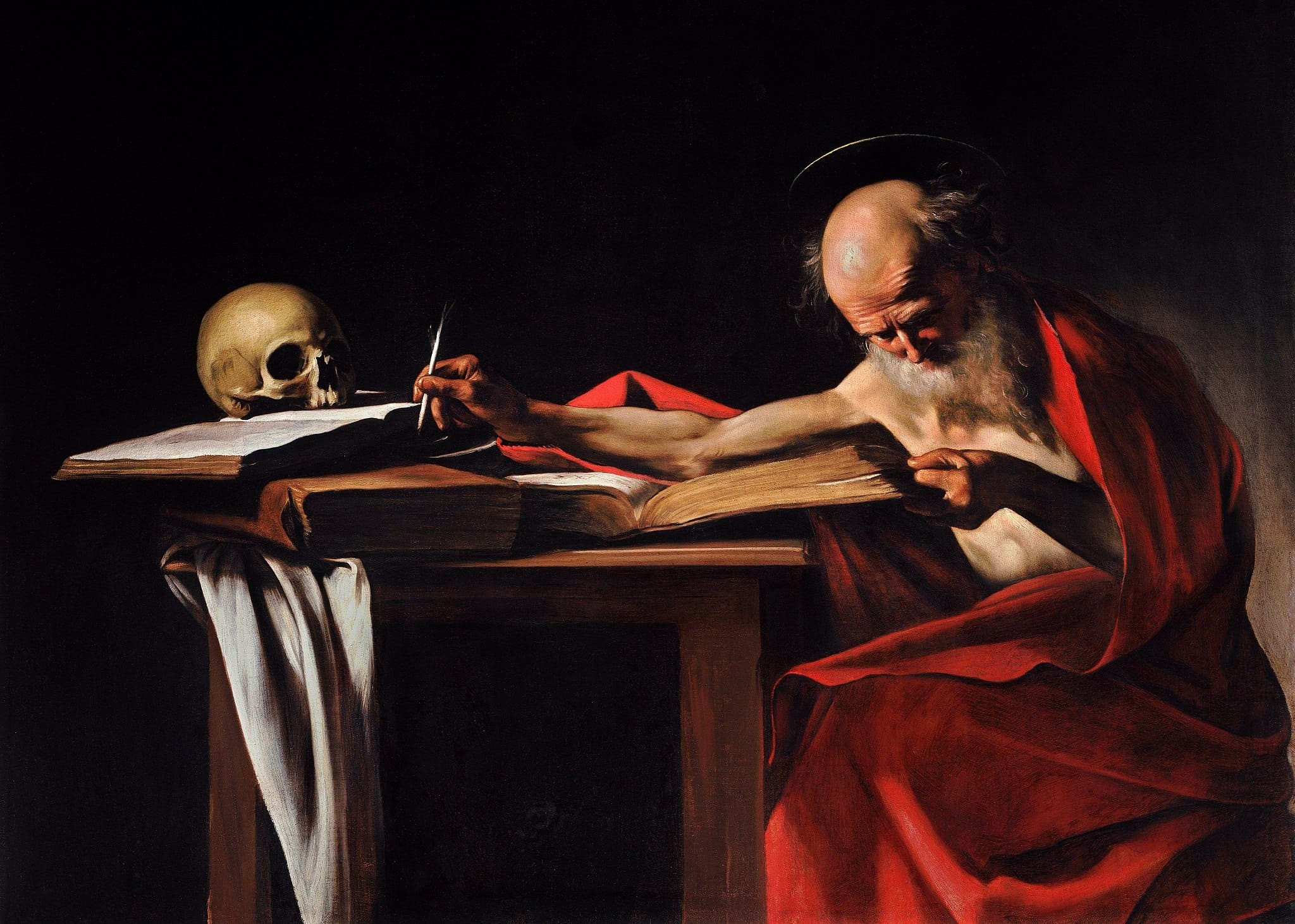
Saint Jerome Writing
c. 1605-1606
Depicts the scholarly Saint Jerome at work, bent over a book with the lion nearby, captured in a moment of concentrated labor. Significant because Caravaggio combines devotional seriousness with a plain, humanized saint, using naturalism to convey intellectual and spiritual intensity. Pay attention to the textures of the parchment and leather, the concentrated pool of light on Jerome’s hands and face, and the quiet dignity of the composition.
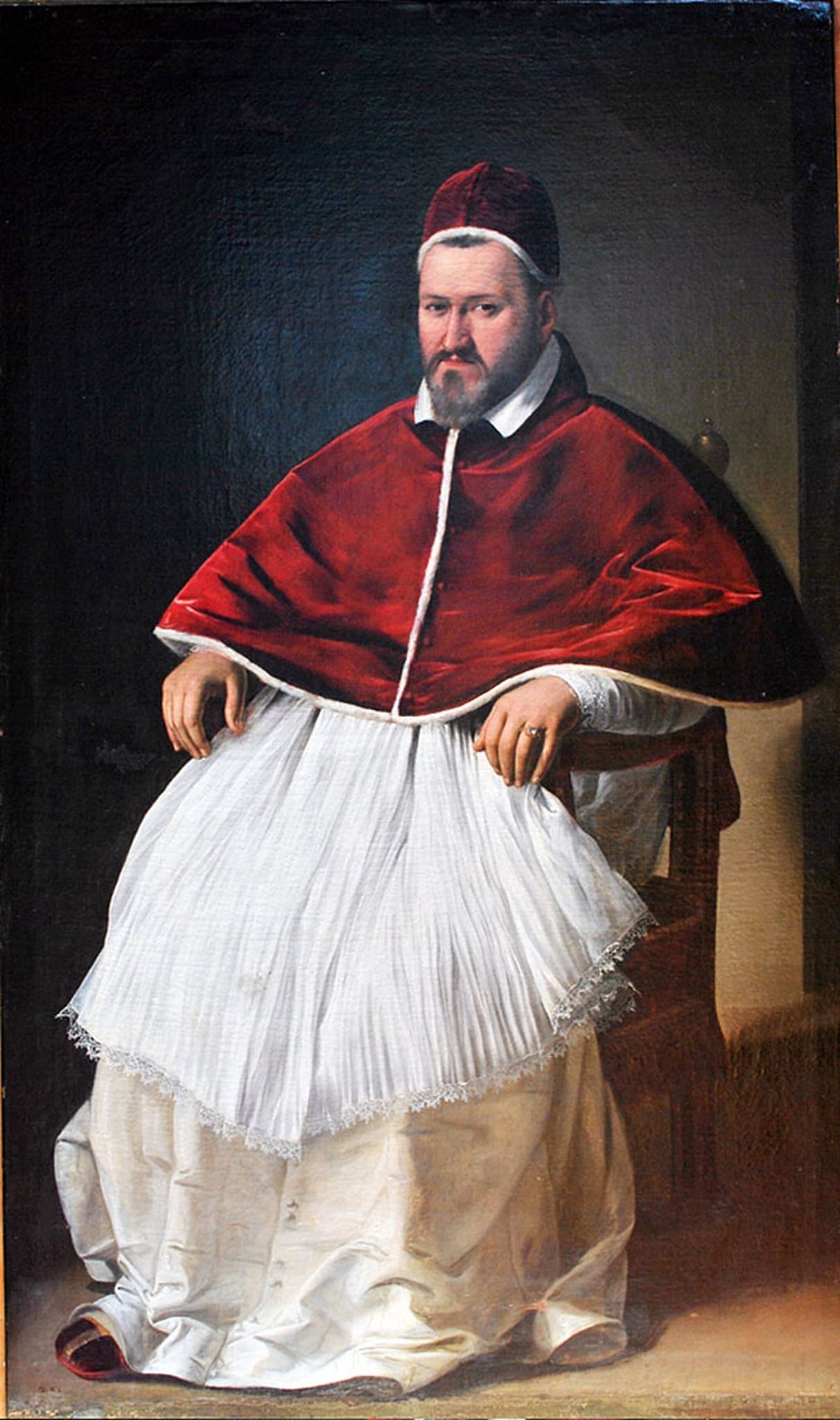
Portrait of Pope Paul V
c. 1605-1606
A formal portrait showing Pope Paul V in pontifical robes, rendered with sober realism and psychological presence. Significant as an example of Caravaggio’s ability to convey authority and character without flattery, reflecting both the sitter’s status and the artist’s unembellished approach. Look for the meticulous treatment of fabrics and insignia, the directness of the pope’s gaze, and the contrast between the rich vestments and the plain, unidealized flesh.
Gallerie Nazionali di Arte Antica (Palazzo Barberini & Palazzo Corsini)
The two palazzi together matter because they preserve Caravaggio works within the grand narrative of Roman Baroque patronage—Palazzo Barberini’s holdings show how his art circulated in elite, papal-affiliated contexts, while Palazzo Corsini’s display highlights different aspects of his technique and thematic range. Seeing Caravaggio in these palatial collections helps you read his paintings against other contemporary artists and the interiors that originally framed such masterpieces.
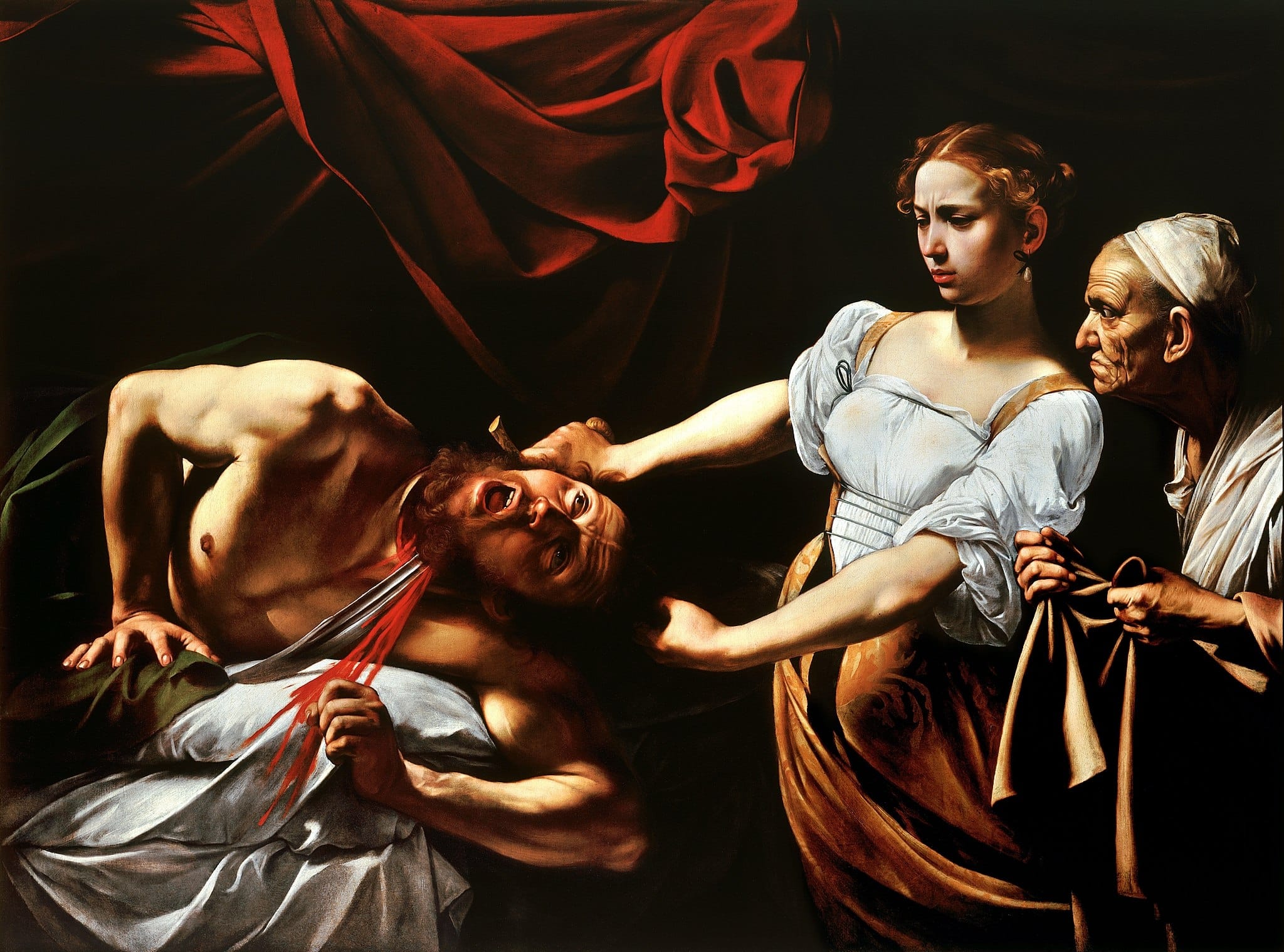
Giuditta e Oloferne
1599
Caravaggio shows the biblical moment when Judith, aided by her maid, beheads the Assyrian general Holofernes — a tense, close-up scene of action and grim physical detail. The work is significant for its unflinching realism and dramatic chiaroscuro that helped define Baroque painting and for how Caravaggio humanizes both victor and victim. Viewers should look for the intense facial expressions, the stark contrasts of light and shadow, and the vivid rendering of blood and hands that focus attention on the violent act. ([en.wikipedia.org](https://en.wikipedia.org/wiki/Judith_Beheading_Holofernes_%28Caravaggio%29?utm_source=openai))
Must-see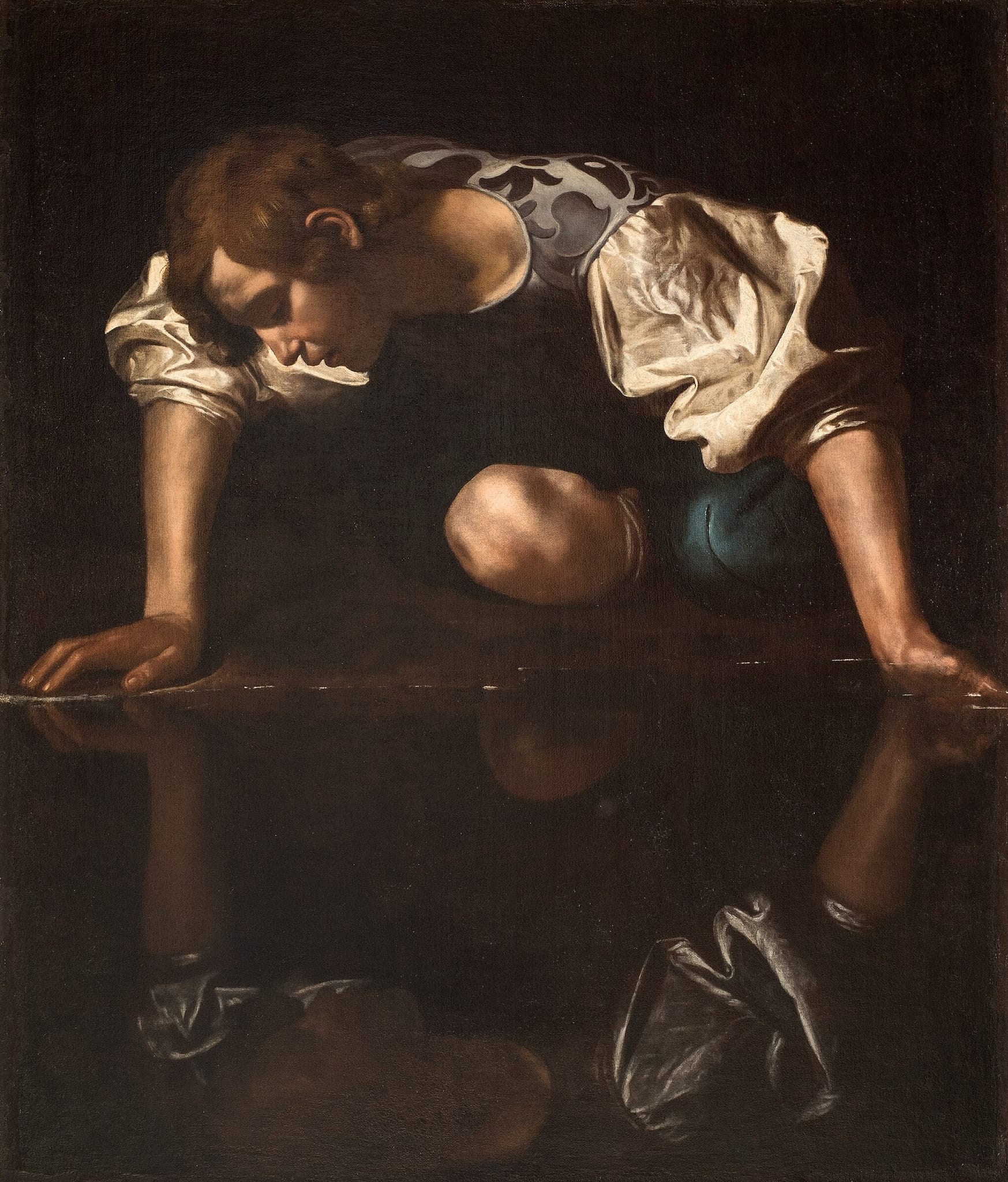
Narciso
This intimate painting depicts the myth of Narcissus staring at his reflected image in water, composed so the figure and his reflection form a compact, almost mirror-card arrangement. It is significant for Caravaggio’s psychological reading of the myth and for the careful observation of surfaces and reflection that blur selfhood and image. Look for the tight framing, the doubled pose (figure/reflection), and the subtle play of skin tones and rippled water that make the subject’s absorption palpable. ([barberinicorsini.org](https://barberinicorsini.org/en/opera/narcissus/?utm_source=openai))
Must-see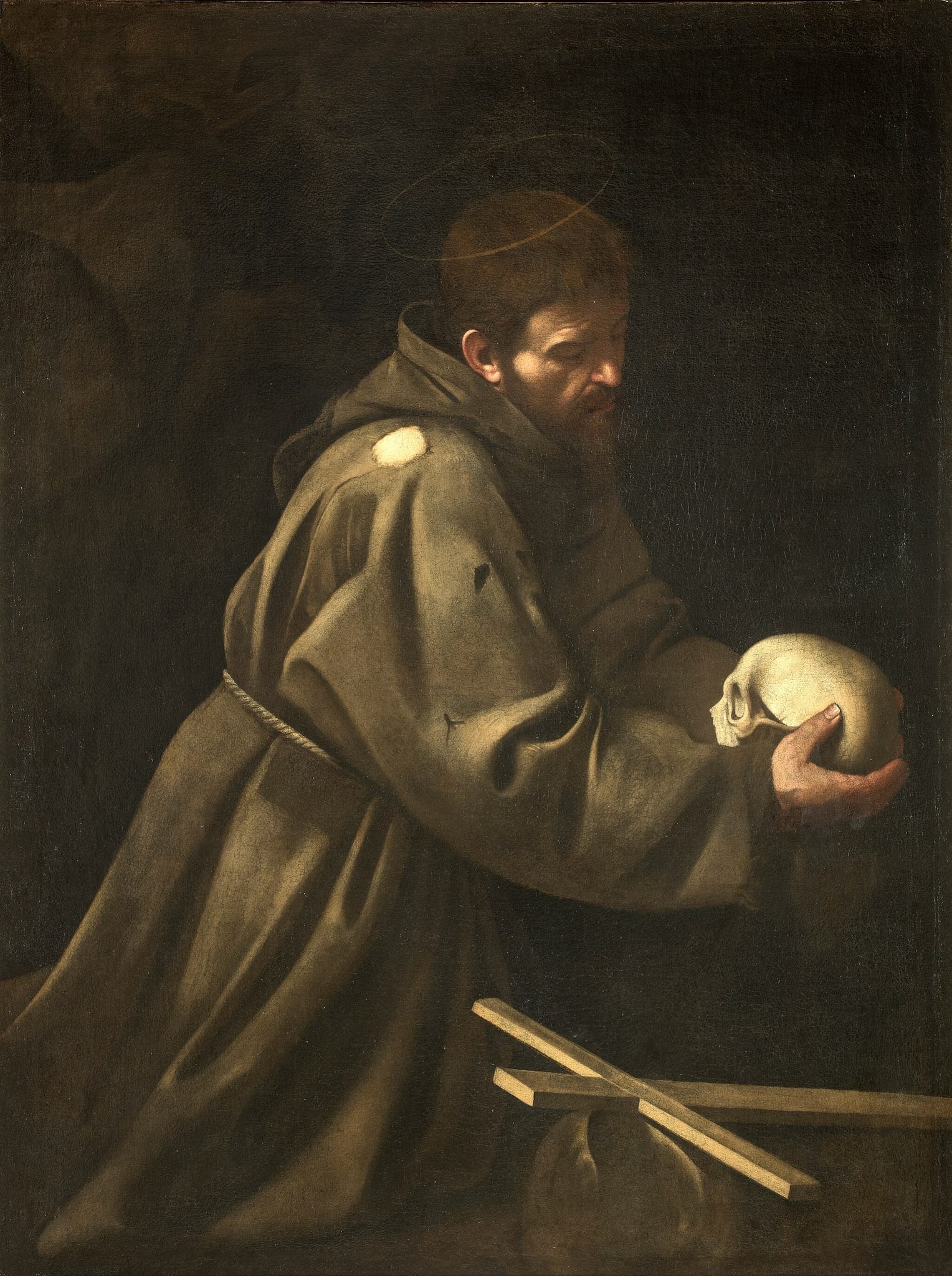
San Francesco in meditazione
Caravaggio portrays Saint Francis alone in contemplation, often shown with a skull or simple devotional objects that emphasize humility and mortality. The painting’s significance lies in its quiet spirituality and the way Caravaggio applies his naturalistic style to a religious subject, making the saint’s introspection immediate and human. Viewers should note the spare composition, the earth-toned palette, and the way light isolates the saint’s face and hands to convey inward focus. ([it.wikipedia.org](https://it.wikipedia.org/wiki/San_Francesco_in_meditazione_%28Caravaggio_Roma%29?utm_source=openai))
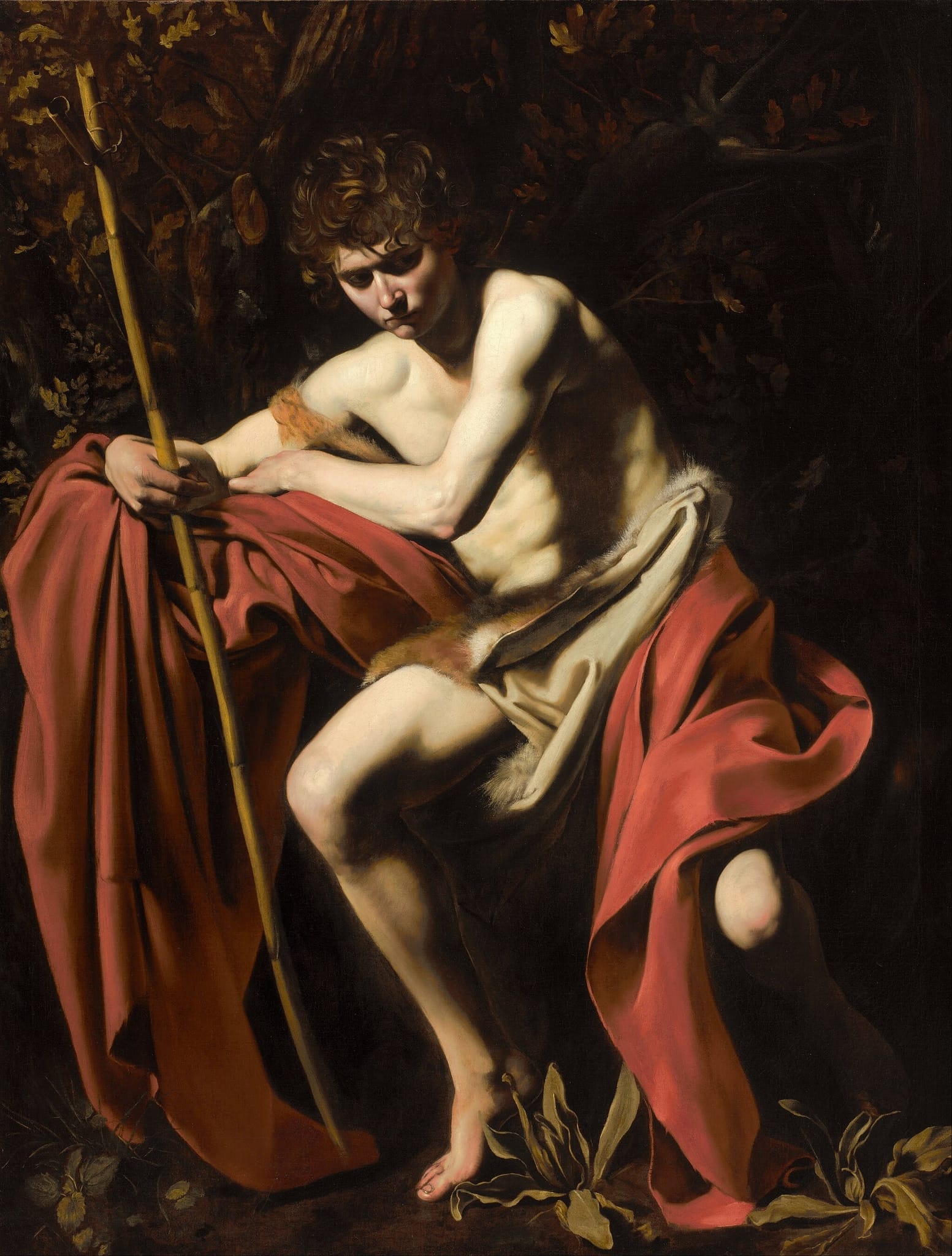
San Giovanni Battista
This work depicts a youthful St. John the Baptist in a moment of restful solitude, often shown semi-nude with the cross-staff and a faint allusion to his ascetic life in the desert. It’s important for Caravaggio’s reworking of saintly iconography into a human, approachable figure and for the sensual handling of flesh combined with spiritual suggestion. Look for the relaxed pose, the muted but warm lighting on the torso and face, and the near-absence of narrative props so that the figure himself becomes the painting’s devotional focus. ([barberinicorsini.org](https://barberinicorsini.org/opera/san-giovanni-battista/?utm_source=openai))
Must-seeGalleria Doria Pamphilj
Doria Pamphilj matters because Caravaggio’s works here are part of an intact private-gallery atmosphere—paintings remain displayed within the family palazzo’s original sequence, which preserves the historical context of private devotion and collecting that shaped Caravaggio’s reputation. That setting emphasizes how his religious and genre scenes functioned within aristocratic domestic spaces rather than in museums, revealing the scale and intimacy he favored.
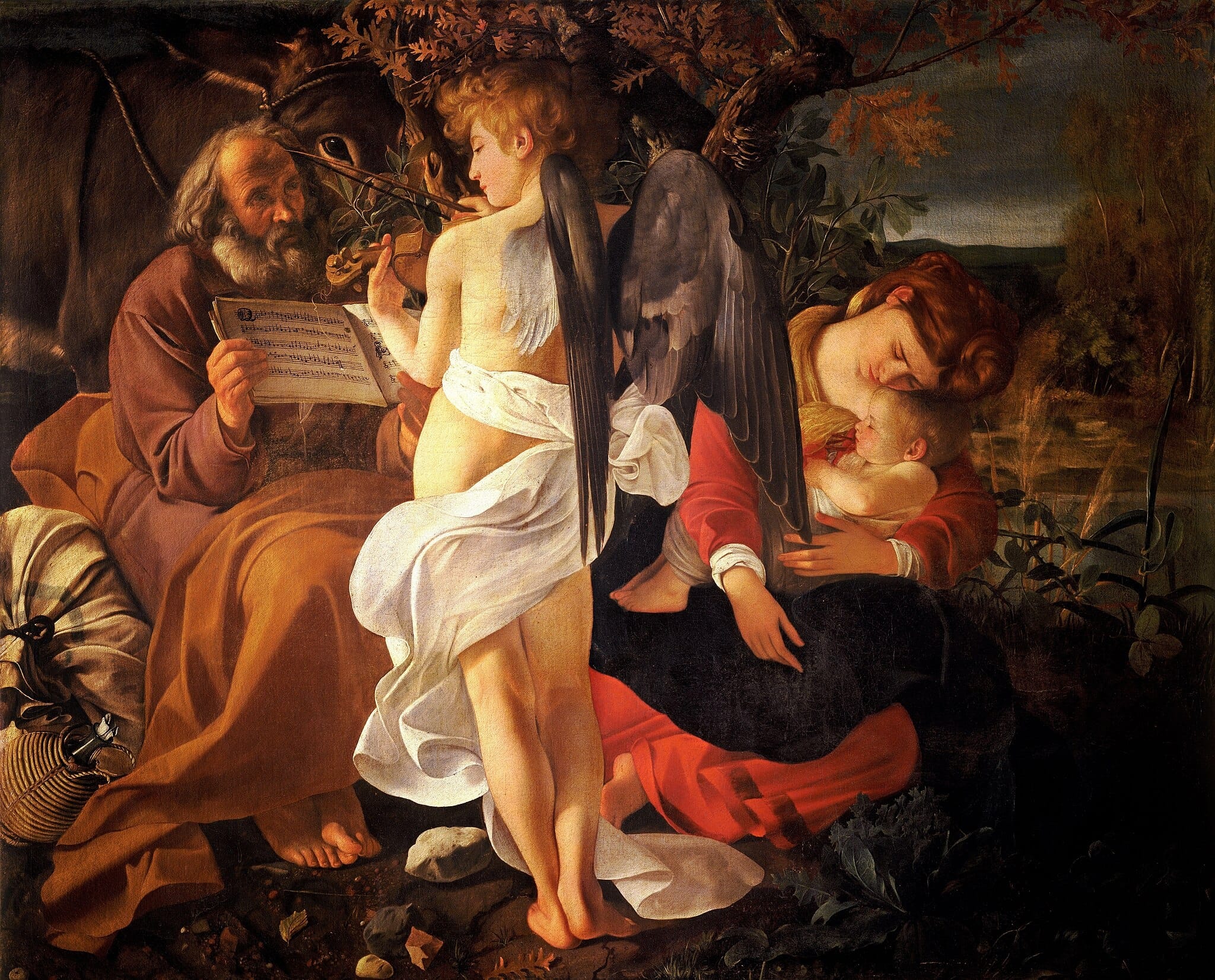
Rest on the Flight into Egypt
1597
Caravaggio shows the Holy Family paused in a humble landscape as the Christ child playfully reaches toward a small tree, while Joseph looks on—an intimate, everyday moment rather than a grand devotional tableau. Significant for its naturalism and tender humanization of sacred figures, the work marks Caravaggio’s break with idealized Mannerist conventions and his attention to ordinary light and texture. Look for the strong chiaroscuro that models the figures, the unidealized faces and hands, and the small, quietly symbolic details (the tree and the child’s gesture) that transform the scene into a believable domestic episode.
Must-see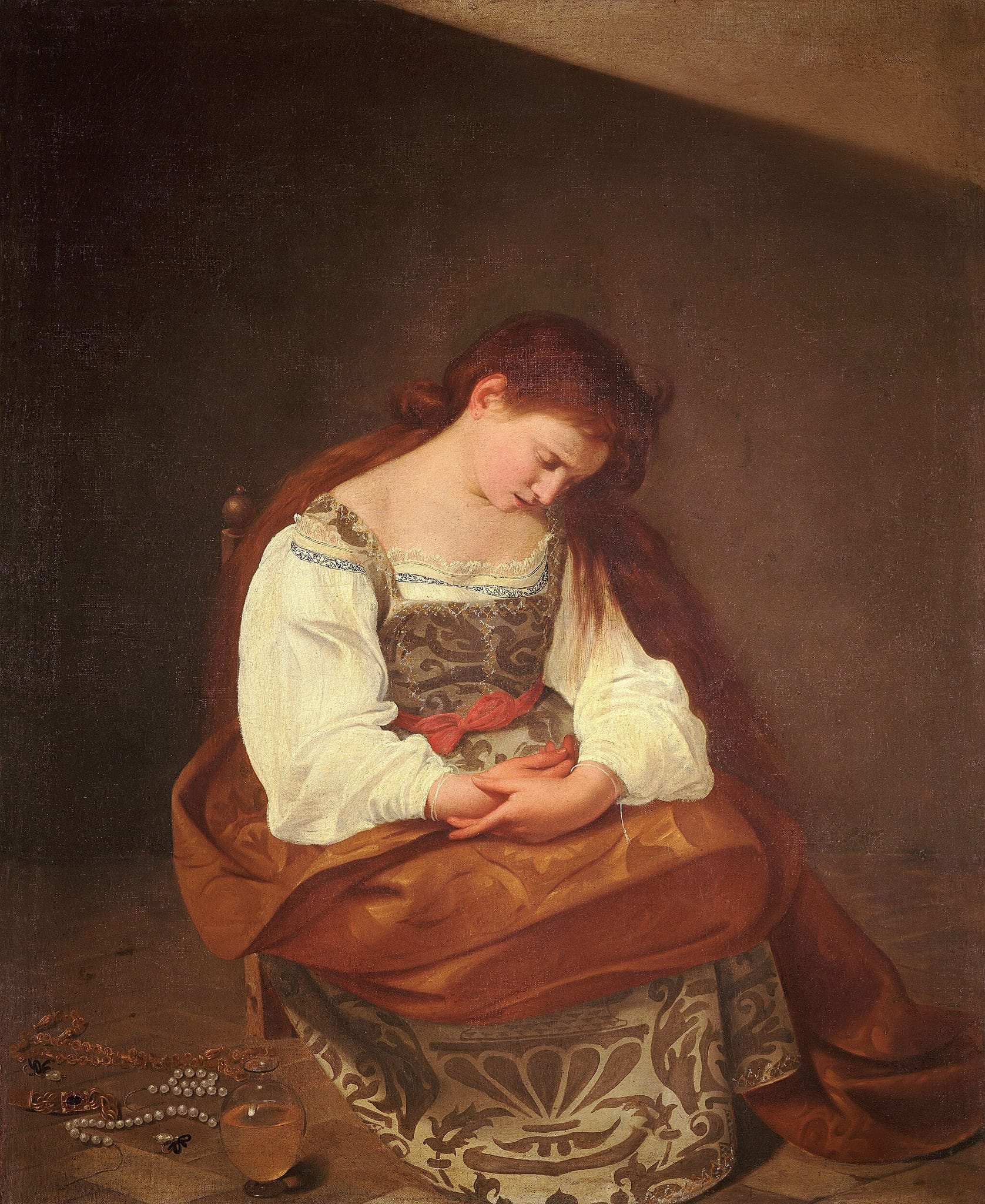
Penitent Magdalene
1597
This painting depicts Mary Magdalene in a moment of private repentance: she sits in simple dress, head bowed and tearful, holding a small flask of ointment—her worldly beauty subdued by sorrow and reflection. Its significance lies in Caravaggio’s portrayal of psychological realism and emotional immediacy, making penitence palpable rather than theatrical. Observe the warm, focused light that isolates her from the dark background, the realistic rendering of her face and hands that convey shame and humility, and the modest props (the ointment flask, discarded jewelry) that suggest a renunciation of former life.
Must-seeMusei Capitolini (Pinacoteca Capitolina)
The Pinacoteca matters because it presents Caravaggio within Rome’s civic and public-collection history—his works here are woven into the Capitoline narrative of art that shaped the city’s identity. The museum’s placement of Caravaggio among older and later Roman works lets you trace local influences on his subjects and how municipal collections helped canonize him after his death.
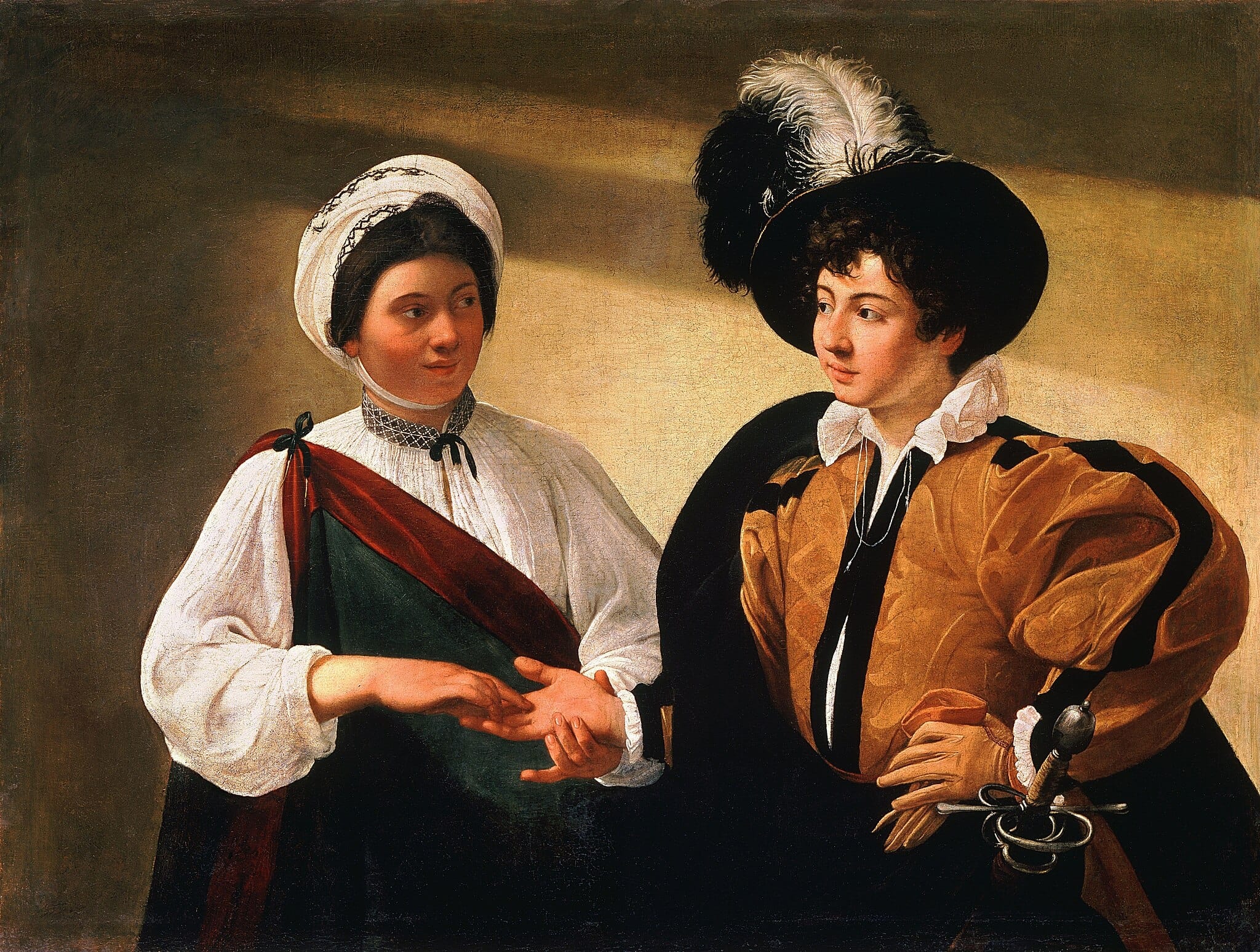
The Fortune Teller
1594
Shows a young man having his palm read by a Romani fortune-teller who slyly slips a ring from his finger; Caravaggio captures a moment of deception with naturalistic detail and theatrical lighting. Significant as an early example of his use of everyday subjects, psychological realism, and chiaroscuro to tell a narrative without idealization. Viewers should look for the contrast between the figures’ expressions, the careful rendering of hands (which carry the story), and the way light models faces while leaving the background ambiguous.
Must-see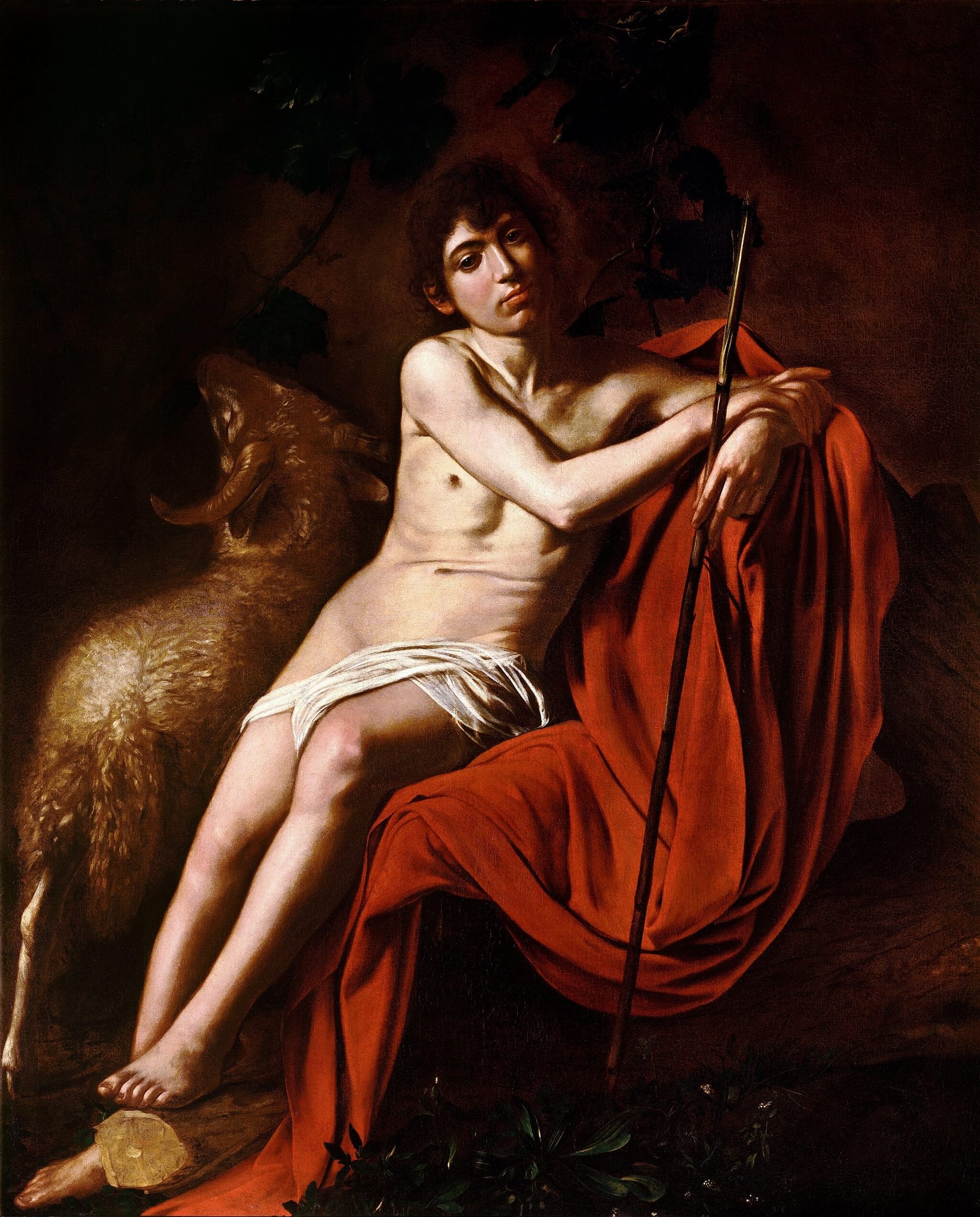
Saint John the Baptist
1602
Depicts a contemplative, half-length John the Baptist as a youthful, solitary figure, often shown with a reed cross and a subtle, enigmatic smile. Important for its mature Caravaggesque handling of light and shadow and its humanized, introspective approach to a religious subject that emphasizes spiritual interiority over grandeur. Notice the warm, tactile flesh tones, the dramatic single-source lighting that sculpts the body, and the humble, plain setting that focuses attention on the saint’s expression and gesture.
Must-seeMusei Vaticani (Vatican Museums)
The Vatican Museums matter because the single Caravaggio in their holdings sits within one of the most important institutional collections in Christendom, highlighting how his art intersected with ecclesiastical commissions, tastes, and controversies. Seeing Caravaggio in the Vatican context underscores the tension between his naturalism and the Church’s visual program—an instructive counterpoint to works in private collections.
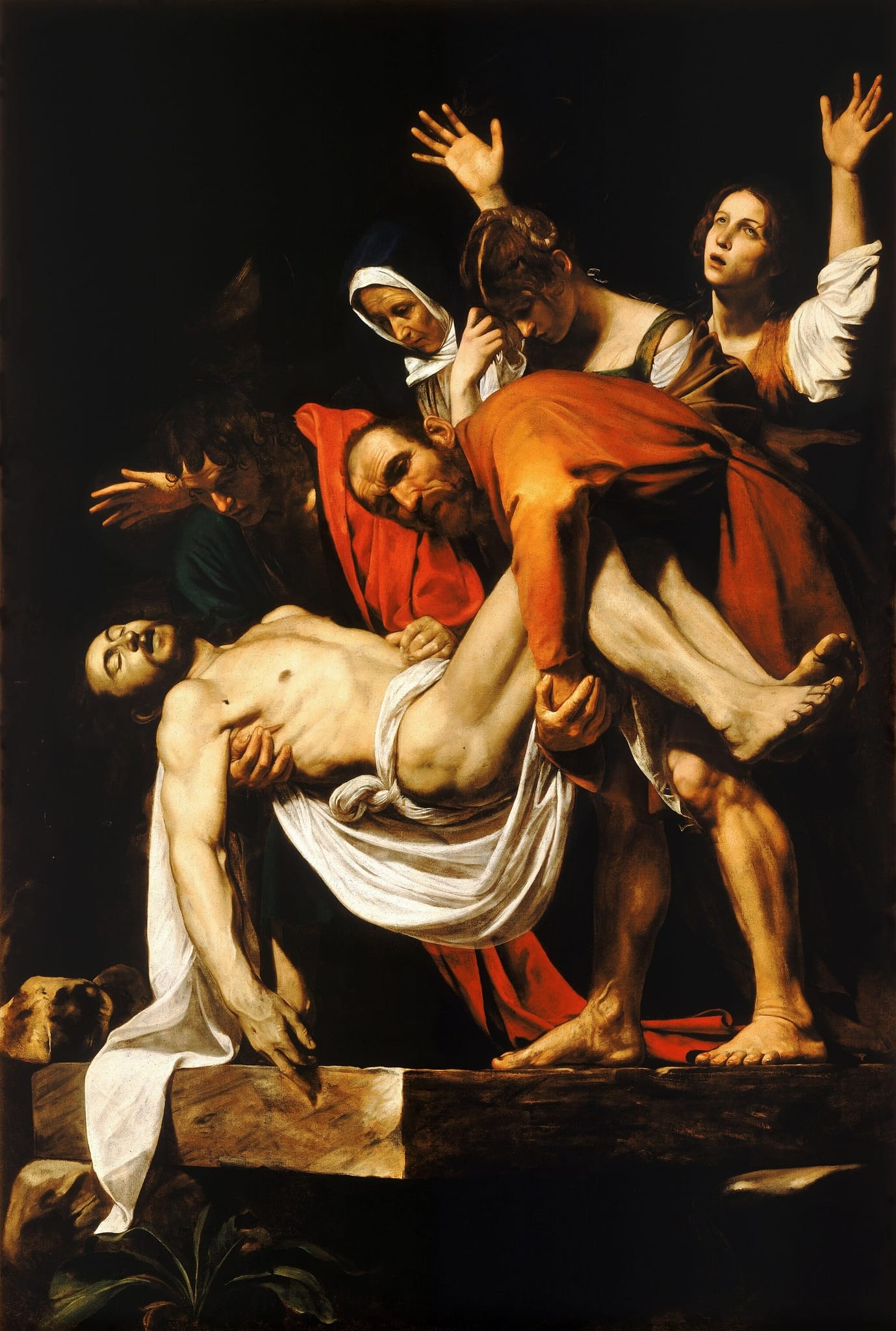
The Entombment of Christ
1603
Caravaggio’s The Entombment of Christ shows the dead Christ being lowered into a tomb by grieving figures — a stark, theatrical composition that places the viewer almost inside the scene. It is significant for its raw naturalism, strong chiaroscuro, and emotional immediacy, marking a break from idealized Mannerist funerary images and helping define Baroque religious painting. Notice the dramatic contrast of light and shadow, the weight and realism of the bodies (especially Christ’s limp form and the straining carriers), and the subtle gestures and faces that convey private grief rather than heroic solemnity.
Must-see