Paul Cézanne Paintings in London — Where to See Them
London matters for experiencing Paul Cézanne because you can see approximately 18 of his paintings on permanent display across just two museums: the Courtauld Gallery (6 paintings) and the National Gallery (12 paintings). Together they form a concentrated, complementary program—the Courtauld’s intimate rooms let you study his brushwork and still lifes up close, while the National Gallery presents larger, canonical canvases and places Cézanne in direct conversation with other European masters, making a short visit unusually revealing about his development.
At a Glance
- Museums
- The Courtauld Gallery, The National Gallery
- Highlight
- See Cézanne's intimate studies at The Courtauld Gallery
- Best For
- Art lovers interested in Post-Impressionism and painterly technique
The Courtauld Gallery
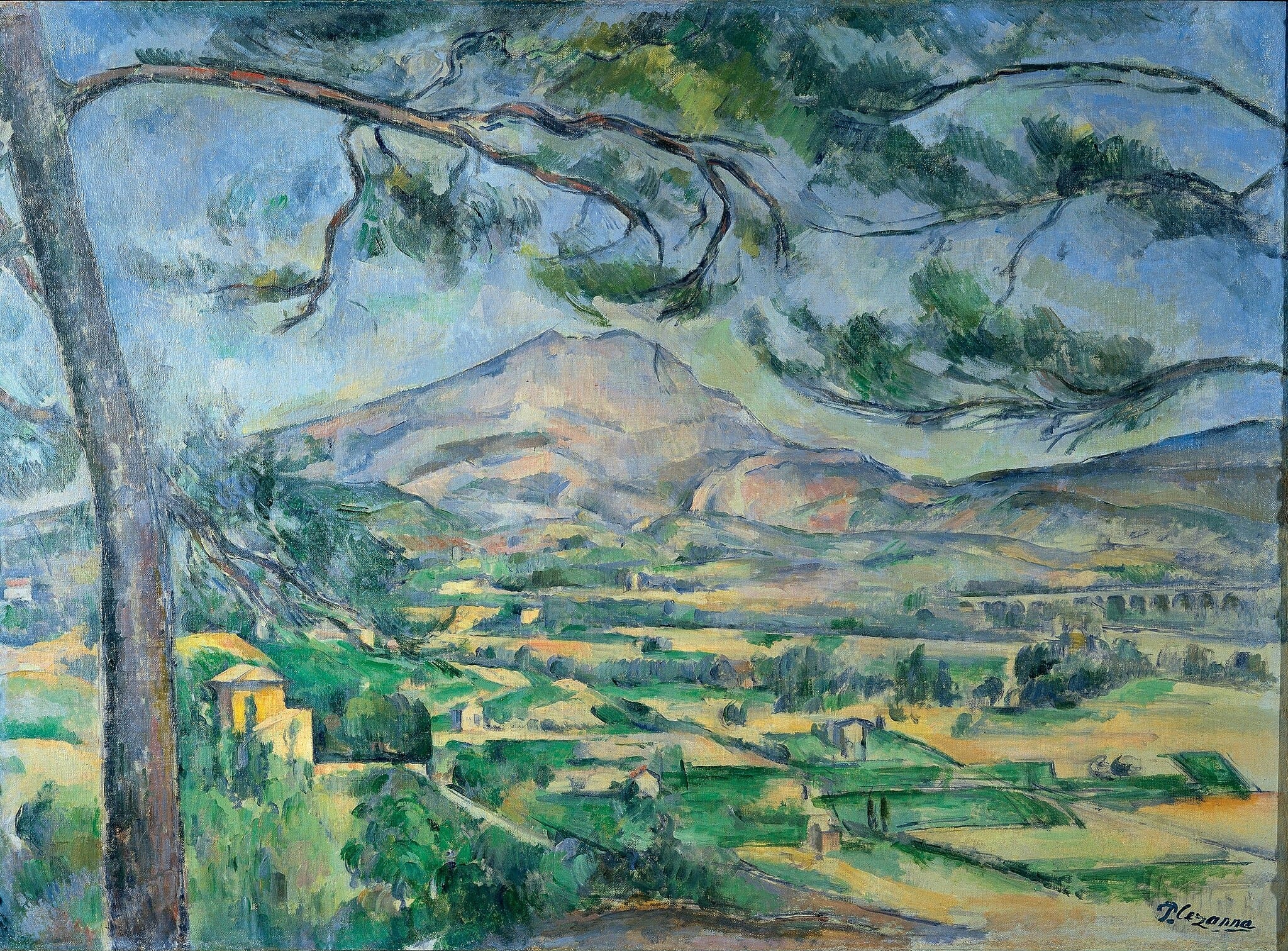
Montagne Sainte-Victoire with Large Pine
c.1887
A sunlit view of Montagne Sainte-Victoire framed by a prominent pine in the foreground, reducing the landscape to broad planes of color and simplified forms. Significant as one of Cézanne’s explorations of the mountain motif that prefigured modernist structure—look for his modulation of color to build volume, the tilted planes, and the rhythmic brushstrokes that unify foreground and background.
Must-see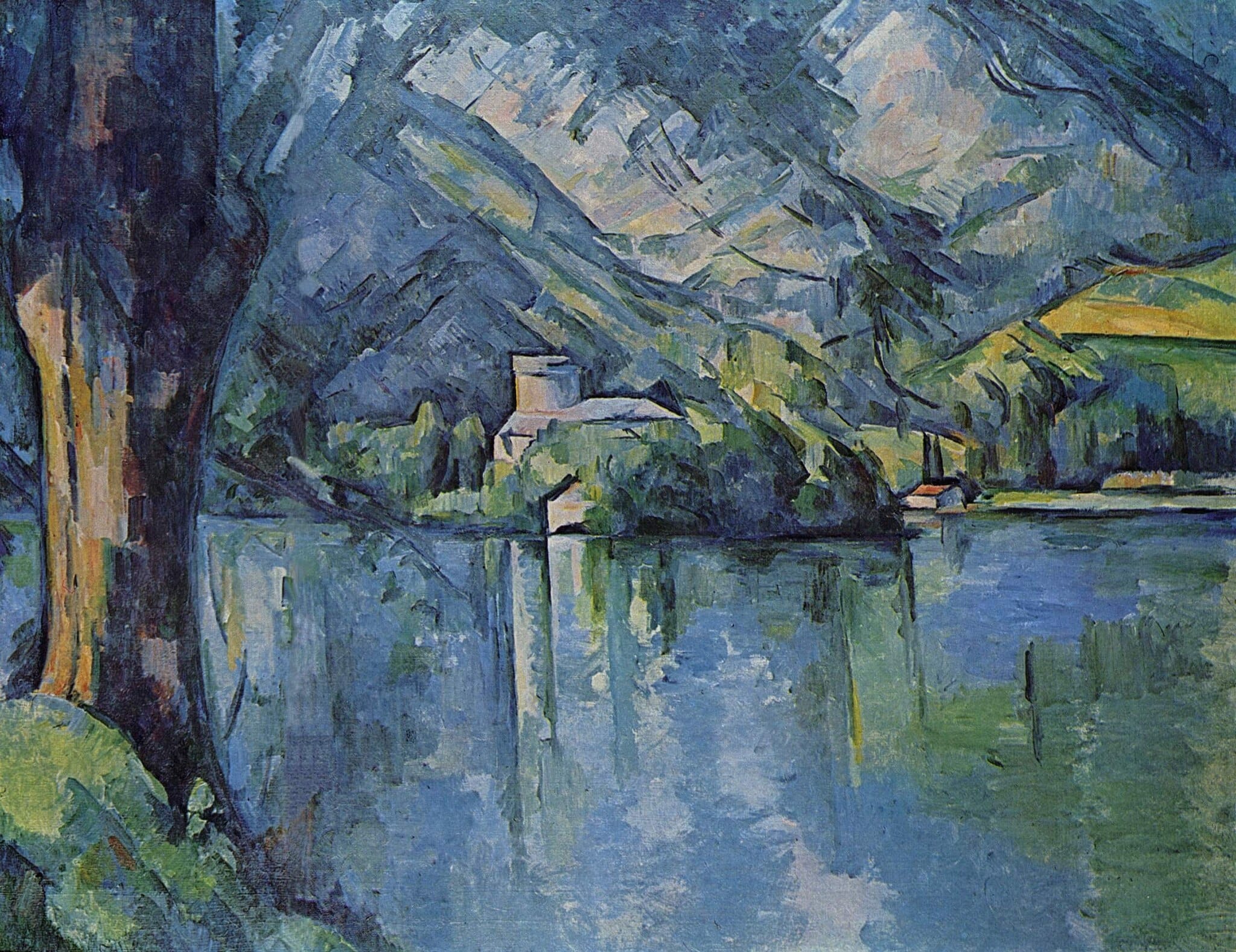
Lac d'Annecy (Lake Annecy)
1896
A calm lakeside scene showing the reflective water of Lake Annecy bordered by trees and distant hills, rendered with subtle shifts of tone. Important for Cézanne’s late approach to harmonizing nature through color and geometry—notice the deliberate, patch-like brushstrokes that form the water’s surface and the way reflections are treated as structural elements rather than literal mirrors.
Must-see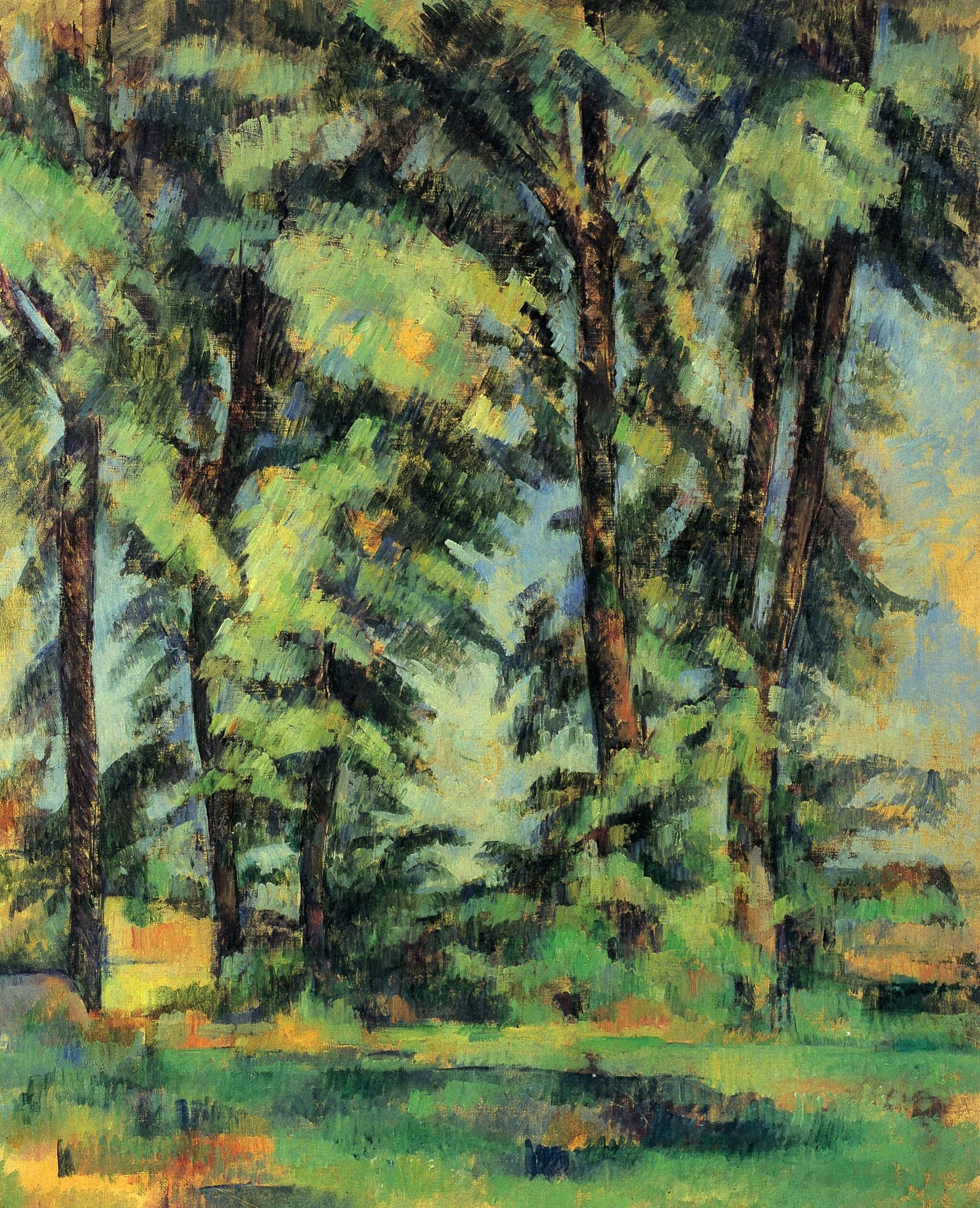
Tall Trees at the Jas de Bouffan
c.1883
A vertical composition of towering trees at Cézanne’s family estate, Jas de Bouffan, where trunks and foliage create an interlocking pattern of light and shadow. This work reveals his early move toward simplifying natural forms into architectural masses—observe the solidity of the trunks, the patterned handling of leaves, and how negative space between branches structures the picture plane.
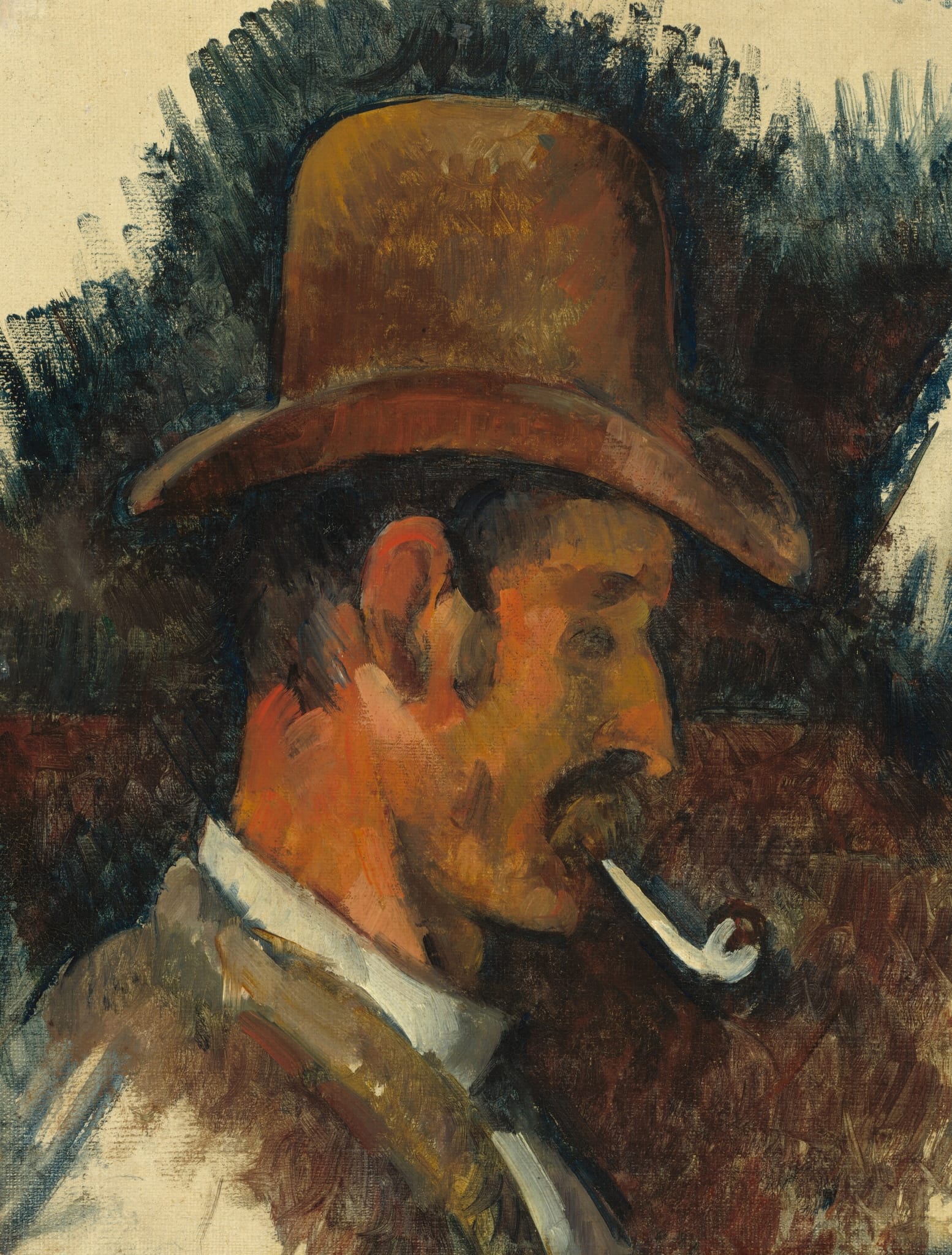
Man with a Pipe
c.1892-1896
A portrait of a seated man holding a pipe, rendered with measured, planar modeling that emphasizes construction over anecdote. Significant for Cézanne’s portrait practice that treats the figure as a volume within a pictorial architecture—look for the flattened planes of the face and clothing, the tight geometric composition, and the subtle color shifts that convey mass and presence.
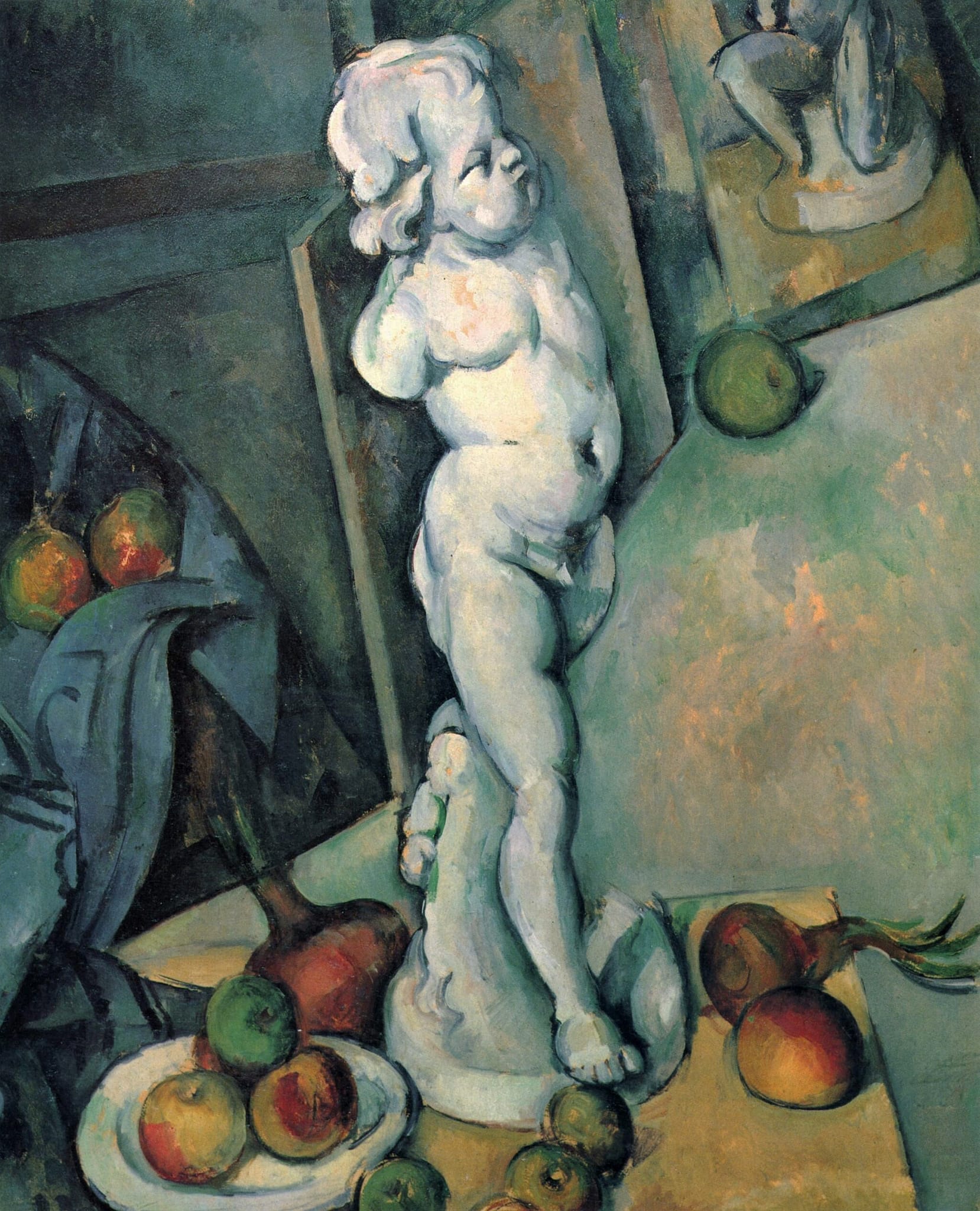
Still life with Plaster Cupid
c.1894
A carefully arranged still life featuring a small plaster cupid alongside fruit and tabletop objects, composed with an almost sculptural solidity. Important as a demonstration of Cézanne’s claim that still life can reveal the underlying order of nature—focus on the interplay of tactile surfaces, the weight and placement of objects, and the brushwork that turns ordinary items into facets of a constructed space.
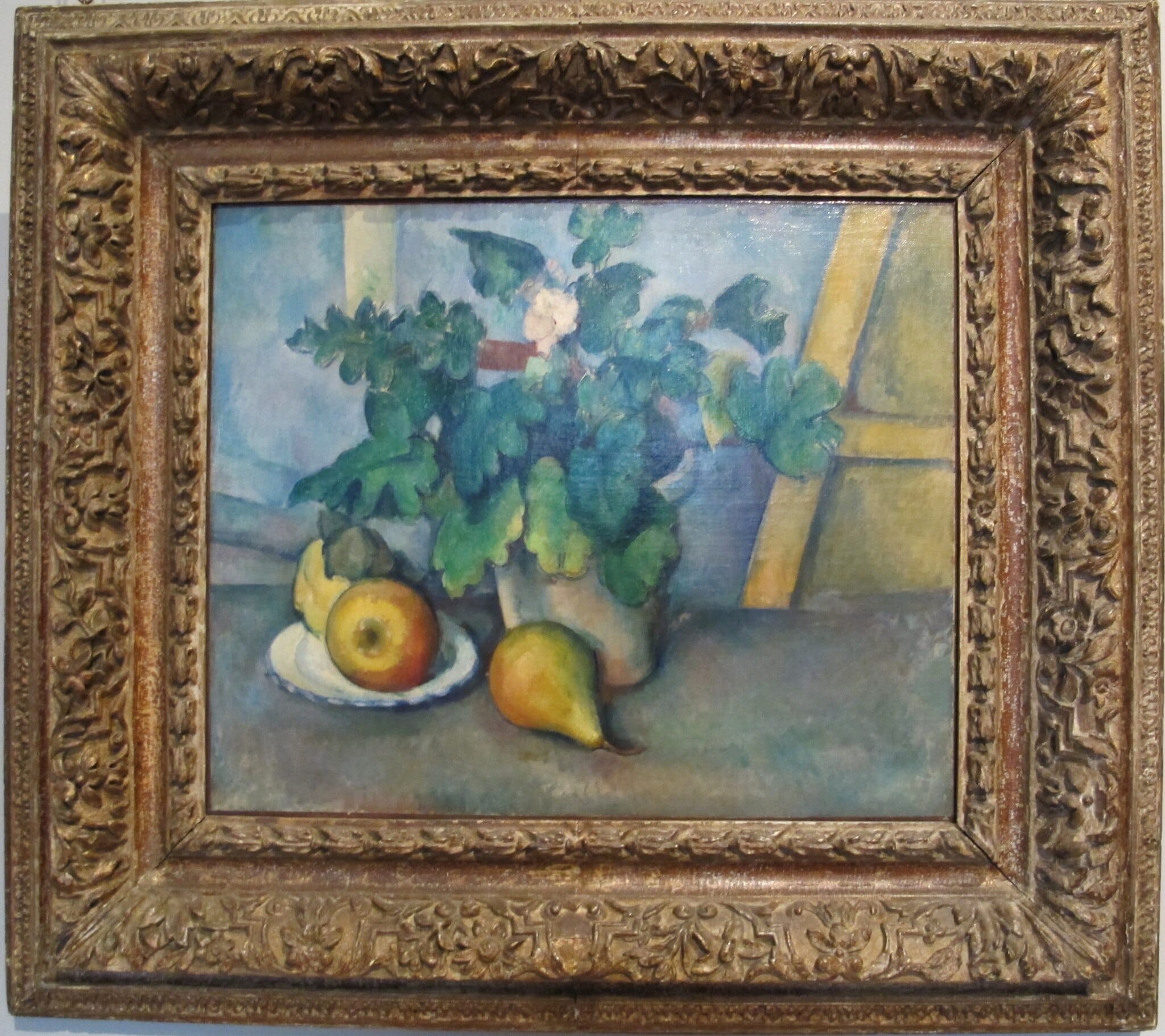
Pot of Flowers and Fruit
c.1888-1890
A traditional still life of a flowering pot set beside bowls of fruit, unified by deliberate color harmonies and spatial compression. The painting is significant for how Cézanne reduces forms to color blocks to investigate pictorial structure—notice the cadence of brushstrokes, the way tabletop edges tilt against the picture plane, and the balance between detailed observation and compositional abstraction.
The National Gallery
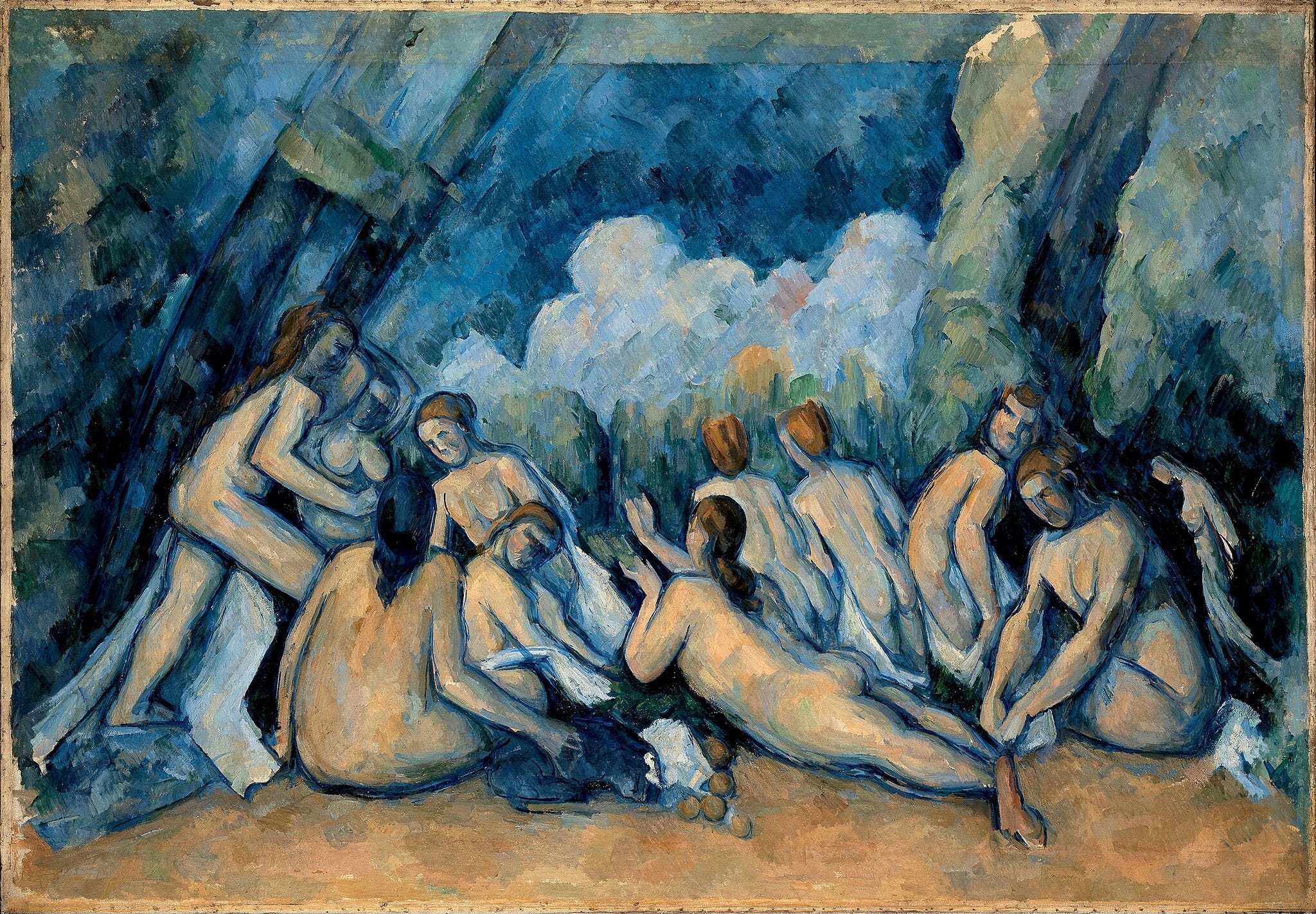
Bathers (Les Grandes Baigneuses)
about 1894-1905
A group of monumental nude figures gather beside a riverbank, their forms simplified into solid, sculptural masses that interlock with the landscape. This late work is significant for Cézanne’s move toward structural abstraction—balancing figure and environment to explore underlying geometry rather than naturalistic detail. Look for the way broad planes of colour and modulated brushstrokes build volume, and how the figures act as architectural elements within the composition.
Must-see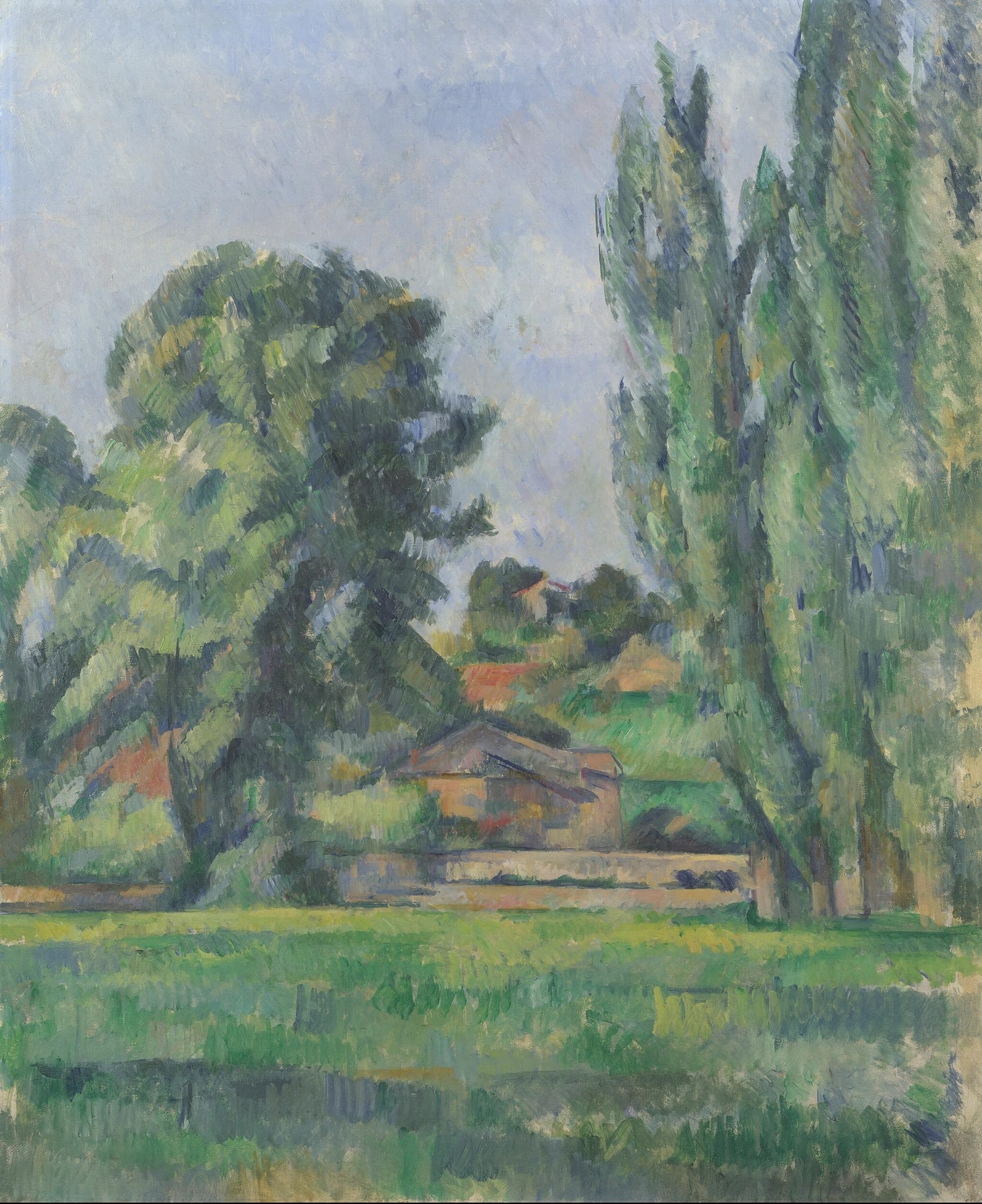
Landscape with Poplars
about 1885-1887
A quiet rural scene organized around tall, vertical poplars that punctuate a gently receding landscape of fields and distant hills. The painting is important for Cézanne’s investigation of rhythm and repetition in nature, using recurring motifs to unify picture space. Notice the measured brushwork, the subtle shifts in tone across the planes, and how the tree trunks create a cadence that guides the eye into depth.
Must-see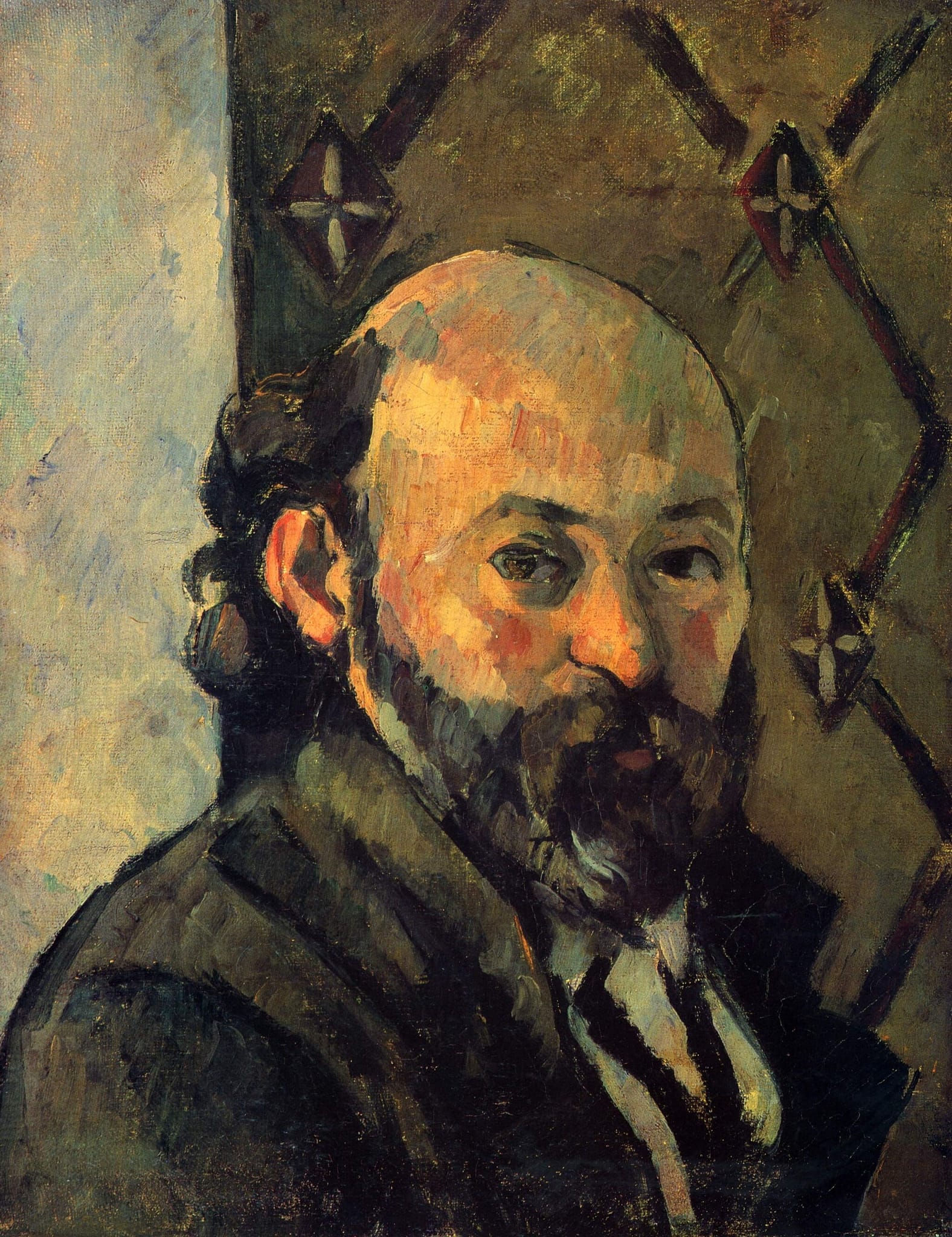
Self Portrait
about 1880-1881
A direct, sober likeness showing Cézanne at close range, with a steady gaze and simplified modelling of face and clothing. The portrait is significant because it reveals his emphasis on composition and solidity over theatrical expression, offering insight into his methodical approach to form. Observe the restrained palette, the compact, block-like handling of features, and how negative space around the head shapes the sitter’s presence.
Must-see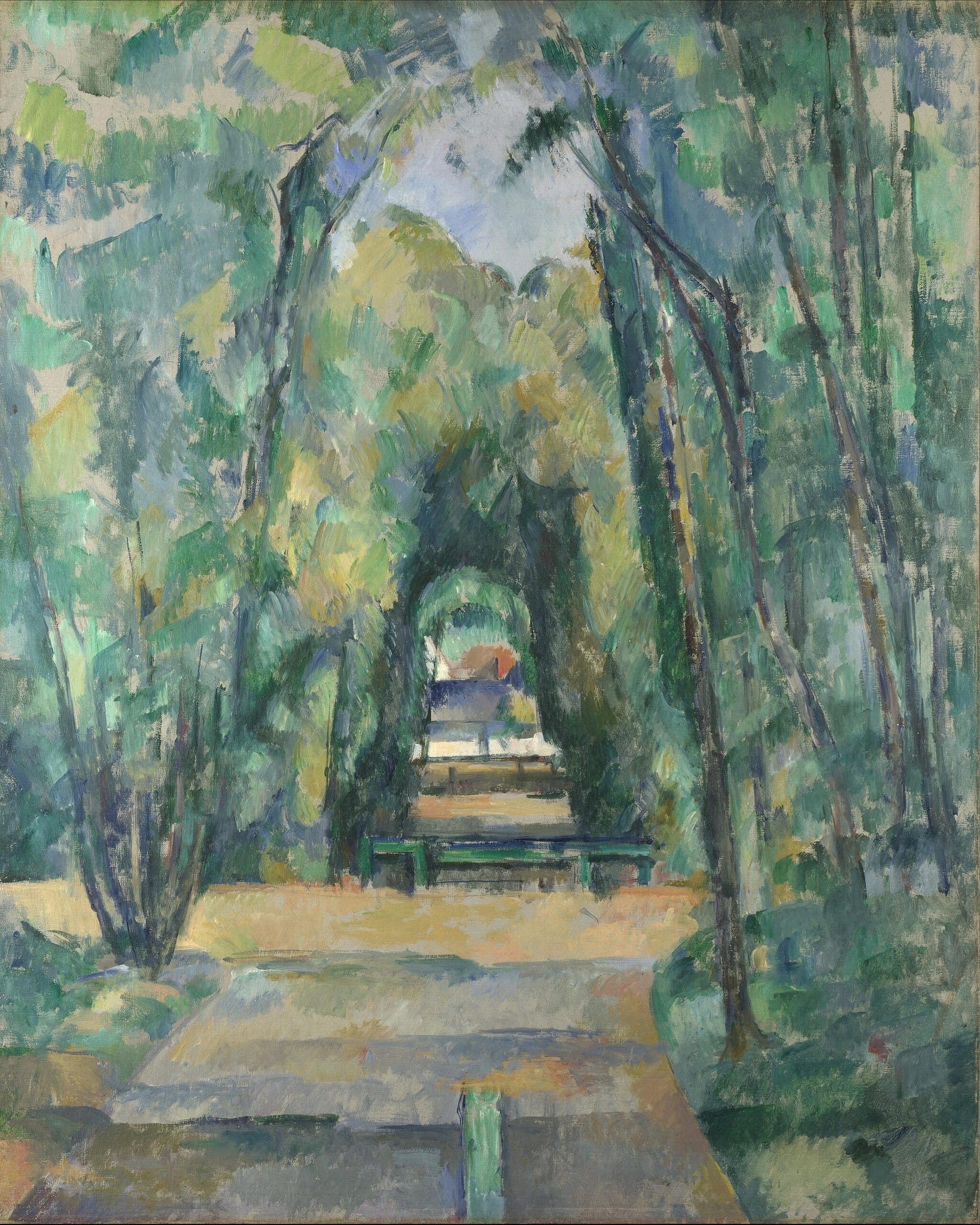
Avenue at Chantilly
1888
A tree-lined avenue stretches away from the viewer, the receding trunks and dappled light establishing a strong sense of perspective and rhythm. Painted during Cézanne’s mature period, the work highlights his interest in organizing nature into a coherent, geometric order. Focus on the regular verticals of the trees, the pattern of light and shadow on the path, and how the surface treatment reinforces the scene’s structural harmony.
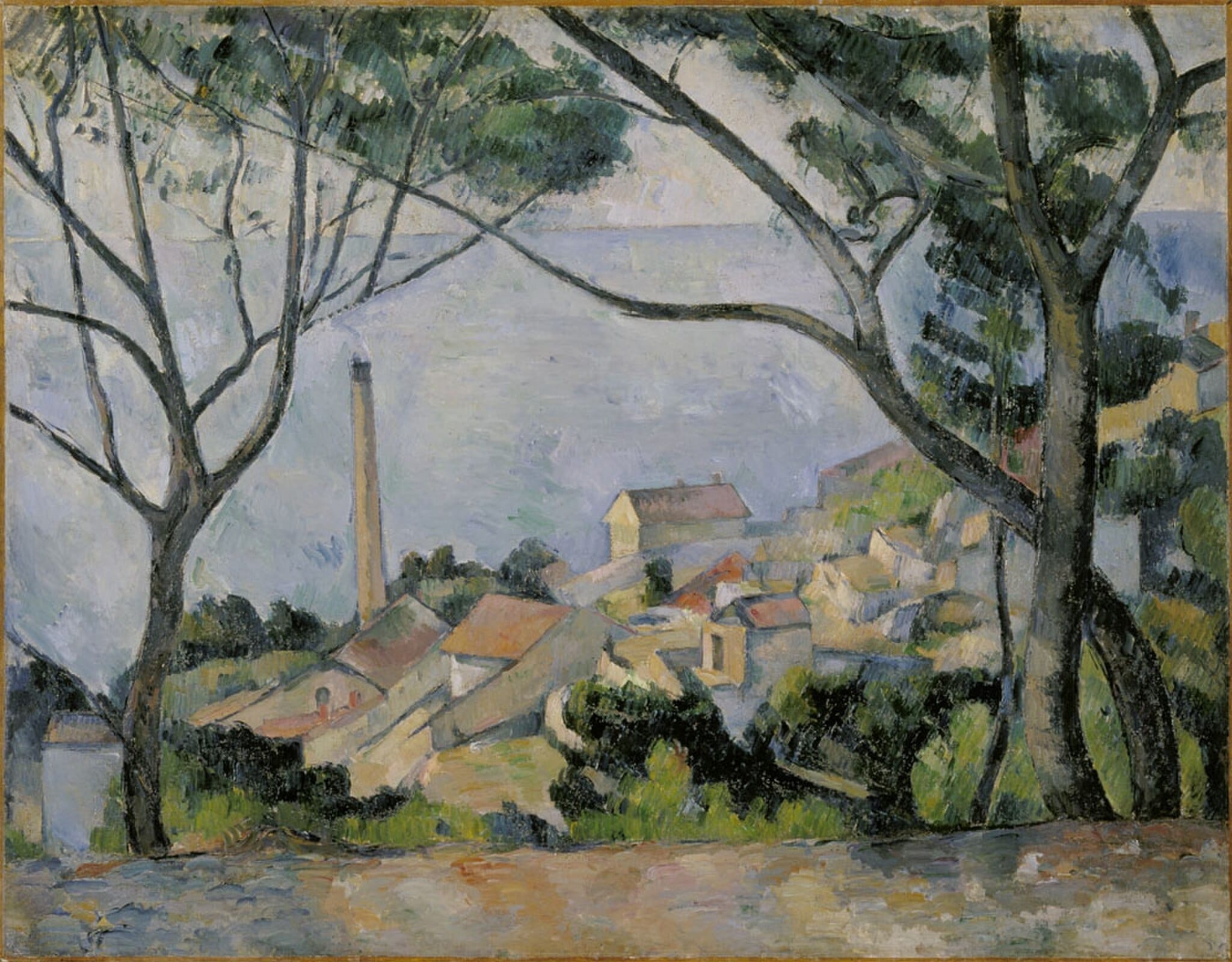
The Sea at L'Estaque
1876
A coastal view of L'Estaque featuring the sea, shoreline and nearby houses rendered in simplified, flat planes of colour and strong contour. This early landscape is significant as a precursor to Cézanne’s later explorations of form and for its influence on younger artists—its flattened perspective and emphatic outlines helped bridge Impressionism and Post-Impressionism. Look for the bold colour blocks, the way foreground and background interlock, and the pronounced edges that define masses rather than details.
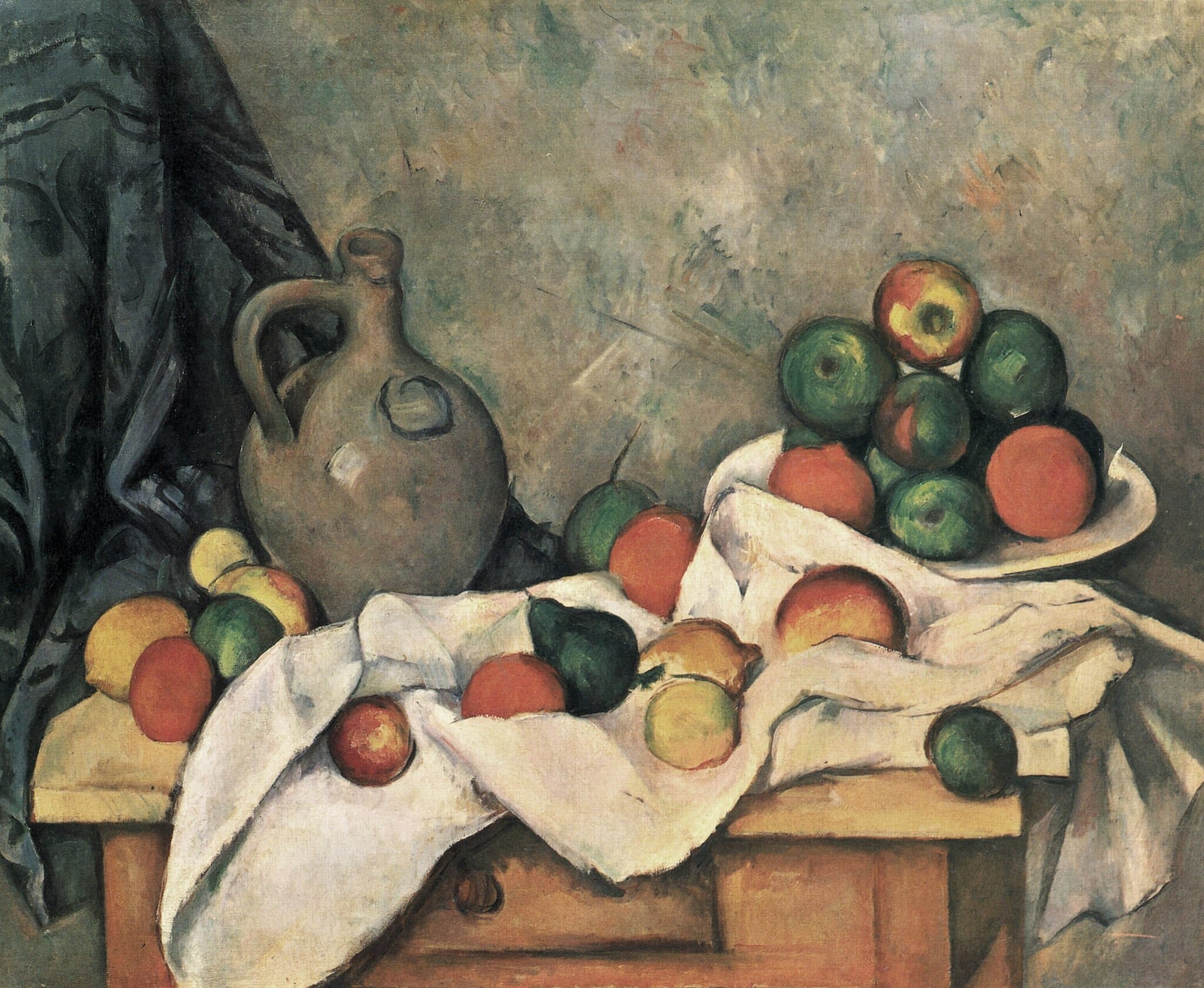
Curtain, Jug and Dish of Fruit
about 1890-1893
A still life in which a draped curtain, a ceramic jug and a dish of fruit are arranged to emphasize volume and spatial relationships rather than illusionistic depth. The painting is significant for exemplifying Cézanne’s method of building form through colour modulation and for treating everyday objects as elements in an organized pictorial architecture. Attend to the interplay of shapes, the subtle shifts of hue that model the objects, and the slightly tilted planes that challenge conventional perspective.
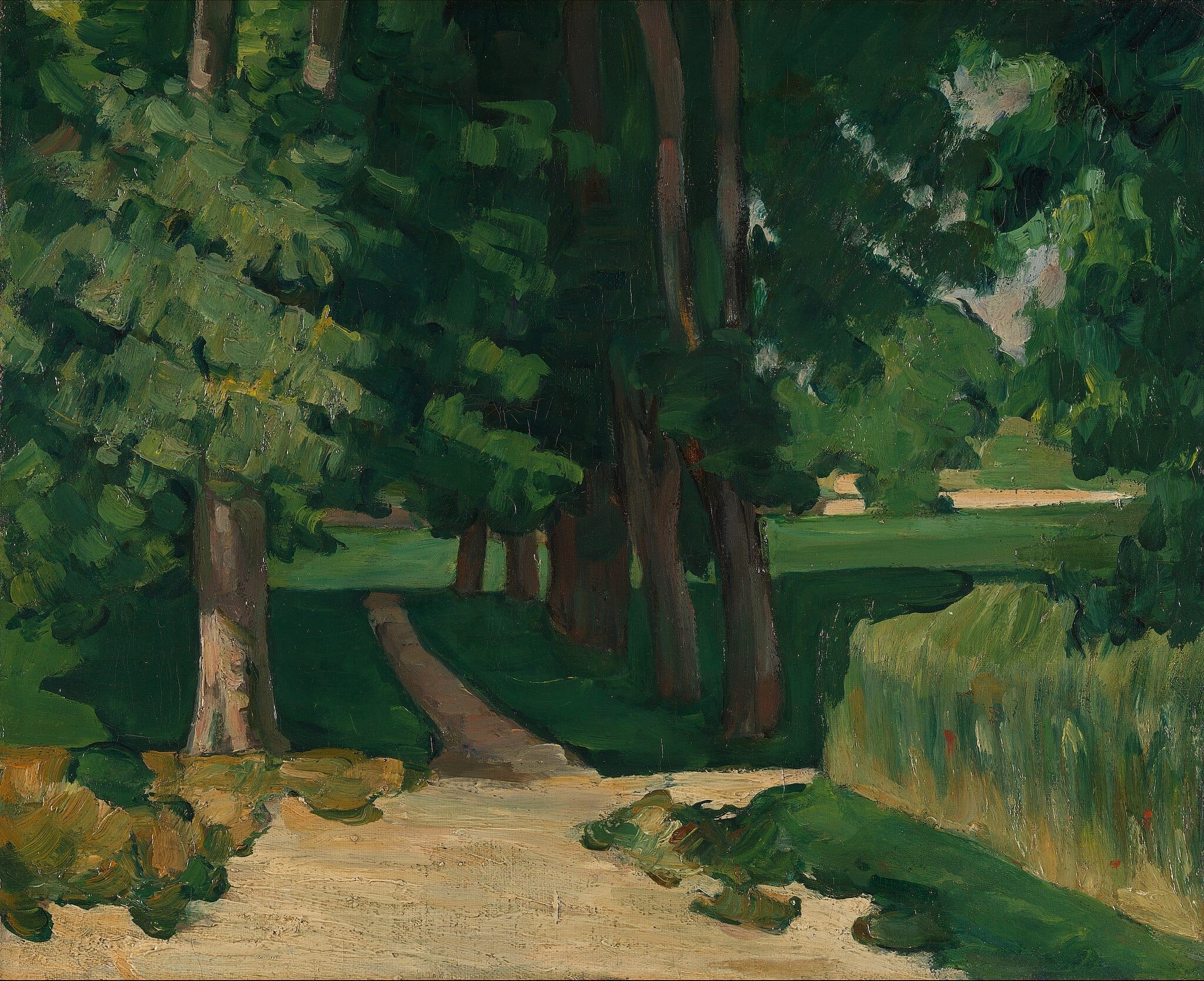
The Avenue at the Jas de Bouffan
1868-1870
An early landscape depicting the tree-lined drive of Cézanne’s family estate, with a strong sense of linear rhythm and a sunlit, summery atmosphere. Important as a youthful work, it shows his developing command of composition and his attachment to Provençal subjects that recur throughout his career. Look for the repetition of trunks, the dappled foliage, and the balance between sunlit patches and shadowed undergrowth that structures the scene.
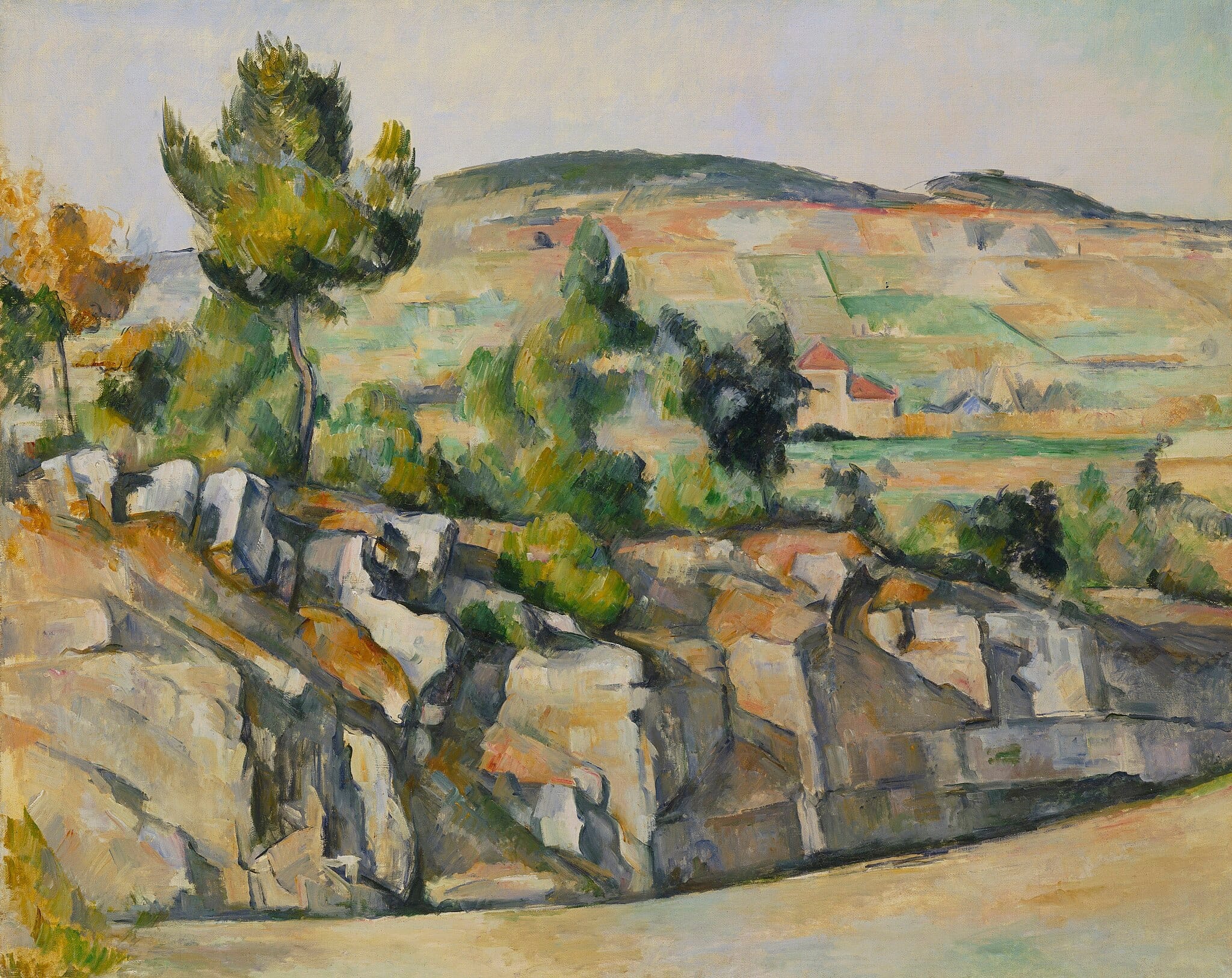
Hillside in Provence
about 1885
A view of a sun-drenched Provençal slope with scrub, rocks and distant hills composed in broad, planar strokes. The work is significant for demonstrating Cézanne’s evolving treatment of landscape as a construction of interrelated shapes and colours rather than a mere record of appearance. Notice the patchwork of tonal planes, the palpable weight of each stroke, and how colour is used to suggest mass and spatial recession.
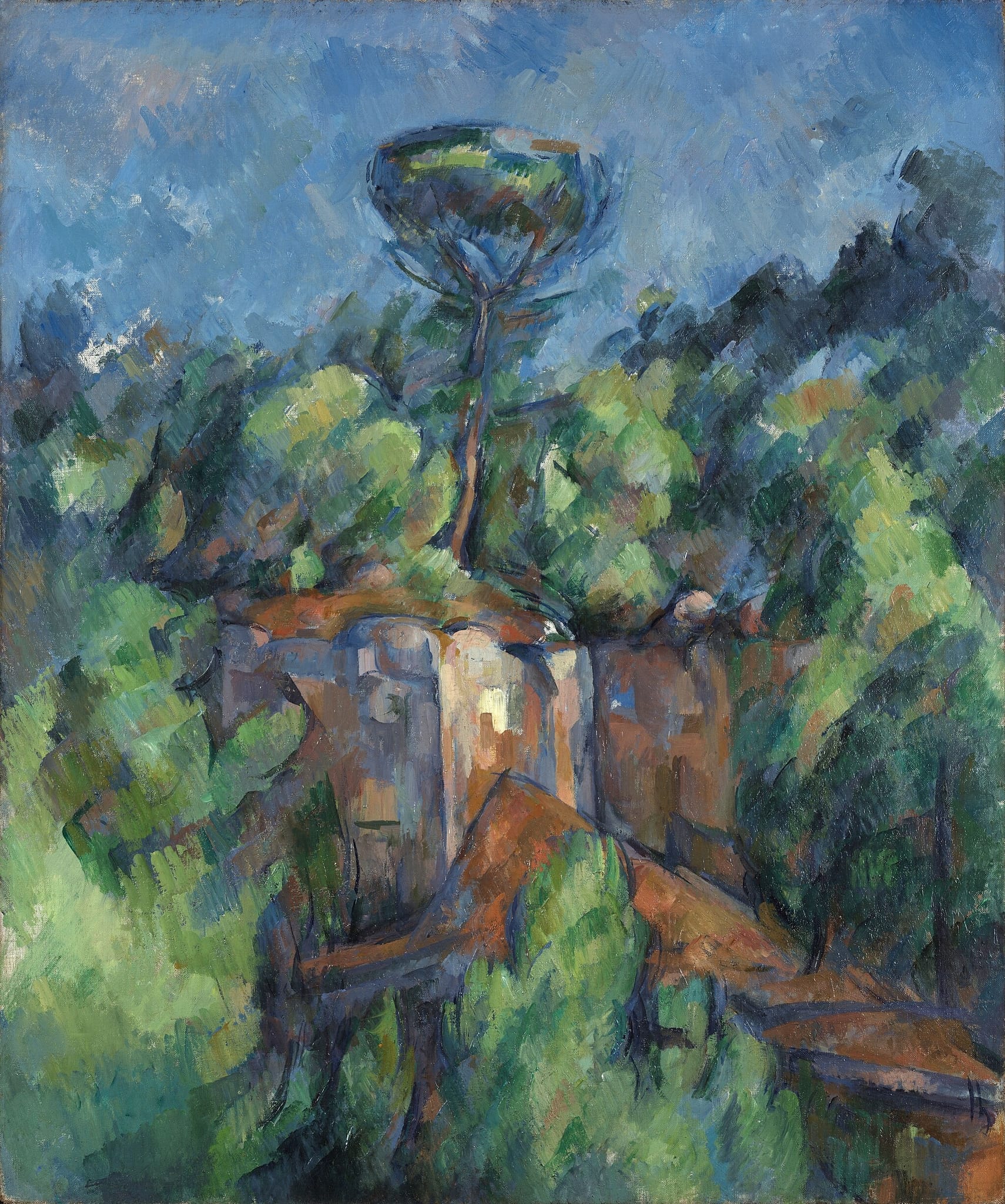
In the Bibémus Quarry
about 1895
A rugged scene of the Bibémus limestone quarry where rock faces, ruined structures and sparse vegetation are rendered as geometric masses of colour. This subject is significant because the quarry’s raw forms allowed Cézanne to push his study of volume, texture and structure in a near-abstract manner. Look for the faceted treatment of rock, the interlocking planes that create depth, and the austere palette that emphasizes materiality over detail.
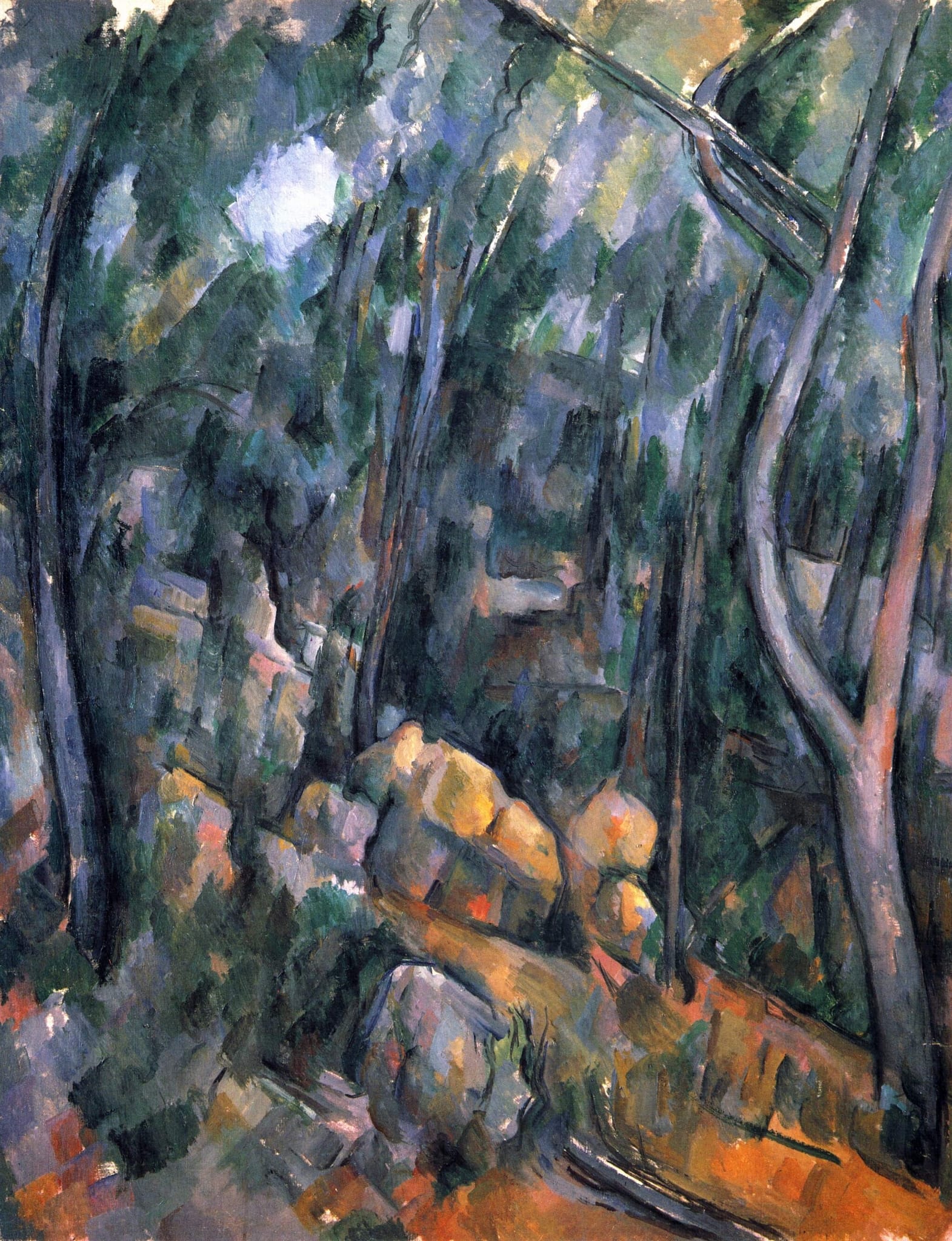
The Grounds of the Château Noir
about 1900-1904
A view of the terrain around the Château Noir where trees, walls and pathways are distilled into interrelated blocks of colour and rhythmically arranged forms. This late work is significant for its mature synthesis of Cézanne’s investigations into spatial order and painterly construction—landscape as architecture. Observe the measured brushstrokes that build planes, the way foreground structures lead the eye, and the harmonic balance between colour and form.
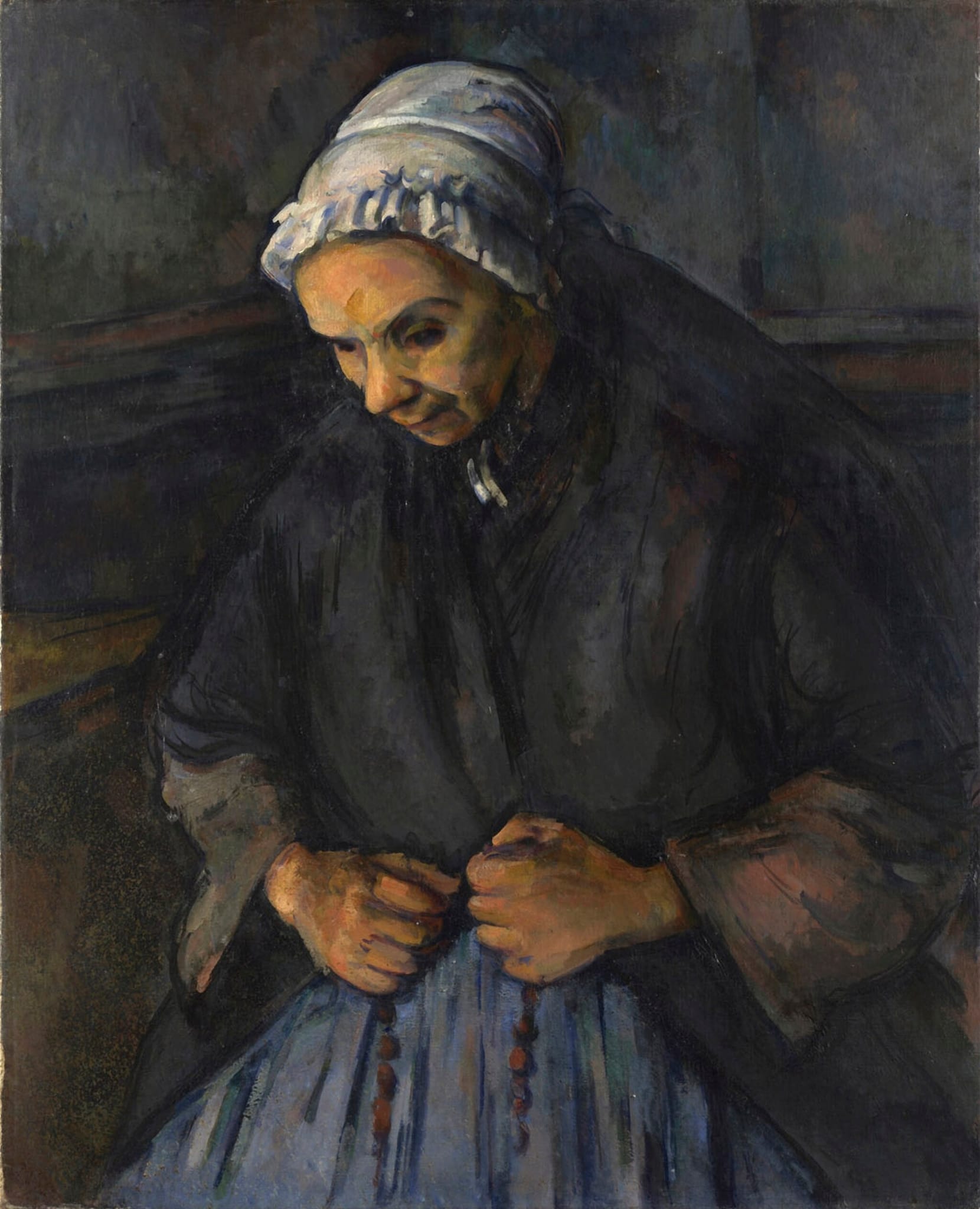
An Old Woman with a Rosary
about 1896
A poignant portrait of an elderly woman clutching a rosary, her features simplified into robust planes that convey presence and gravity. The painting is significant for its psychological directness combined with Cézanne’s sculptural handling of form, merging human character with his formal concerns. Pay attention to the solidity of the head and hands, the restrained palette that underscores mood, and the emphasis on mass rather than fine detail.
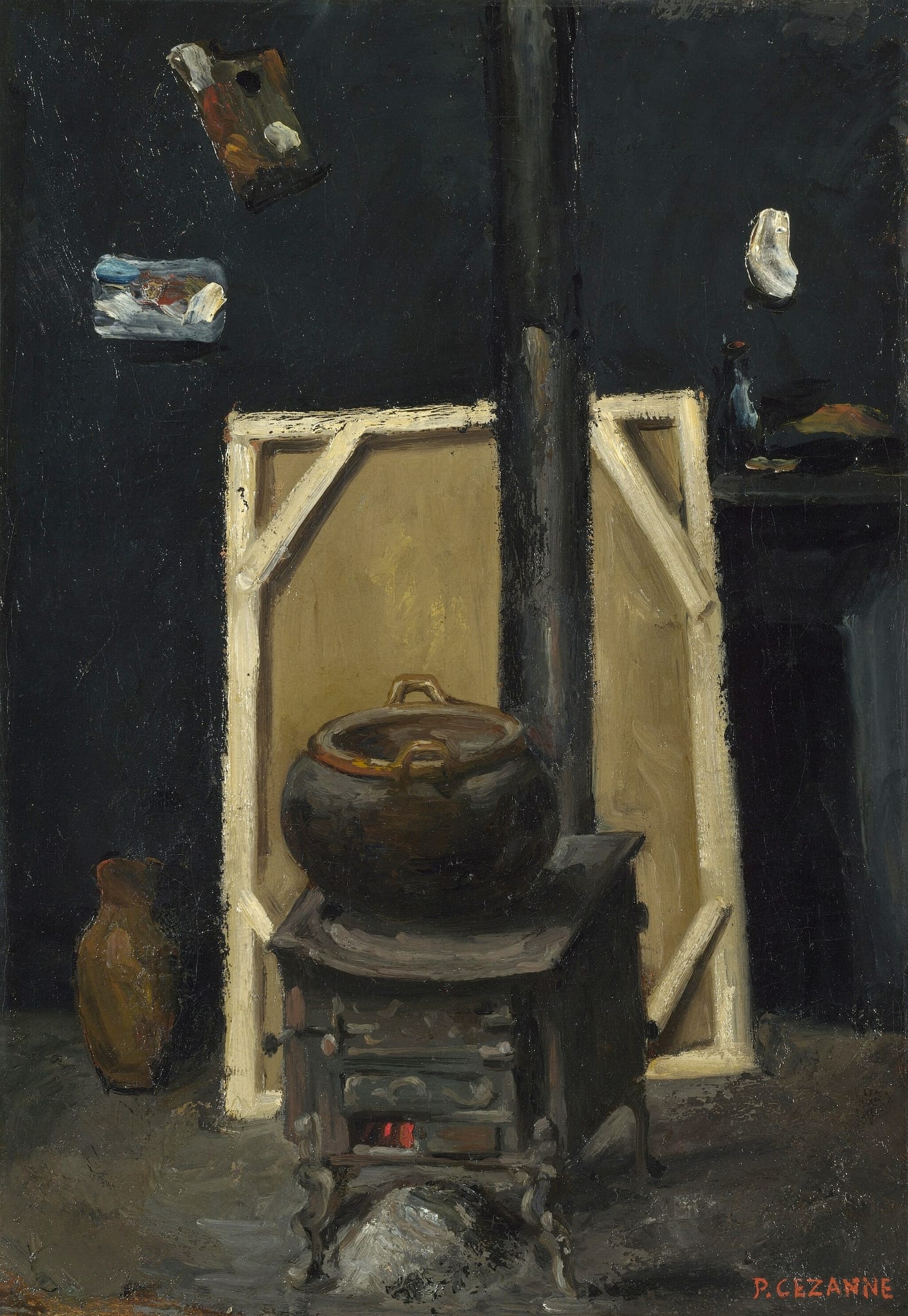
The Stove in the Studio
about 1890s
An interior view centered on a studio stove surrounded by domestic objects, rendered with an economy of means that highlights shapes and spatial tensions. The work is significant as an example of Cézanne’s still-life/interior approach—transforming everyday items into elements of a rigorous pictorial structure. Look for the compressed space, the way objects are modeled through tonal planes, and the subtle shifts in angle that challenge straightforward perspective.