Paul Cézanne Paintings in New York — Where to See Them
New York is home to approximately 15 Paul Cézanne paintings on permanent display across four museums: The Metropolitan Museum of Art (10 paintings), the Museum of Modern Art (MoMA) (5 paintings), the Brooklyn Museum (0 paintings), and The Morgan Library & Museum (0 paintings). Because the Met and MoMA together hold nearly all of the city’s Cézannes, New York offers a rare opportunity to compare his evolving treatment of form, color, and composition in person within a compact visit rather than having to travel between multiple countries.
At a Glance
- Museums
- The Metropolitan Museum of Art, The Museum of Modern Art (MoMA), Brooklyn Museum, The Morgan Library & Museum
- Highlight
- See Cézanne masterworks at The Met — largest New York collection.
- Best For
- Art lovers and Post-Impressionism enthusiasts seeking canonical Cézanne works
The Metropolitan Museum of Art
With ten Cézanne paintings in its collection, the Met lets you trace the artist’s formal development within a single encyclopedic setting — from his experiments with still life and portraiture to the denser brushwork and structure of his later landscapes. Seeing multiple works together at the Met highlights how Cézanne revised composition and color across subjects, and how his practice connects to older academic painting and to the museums’ wider holdings that inspired later modern artists.
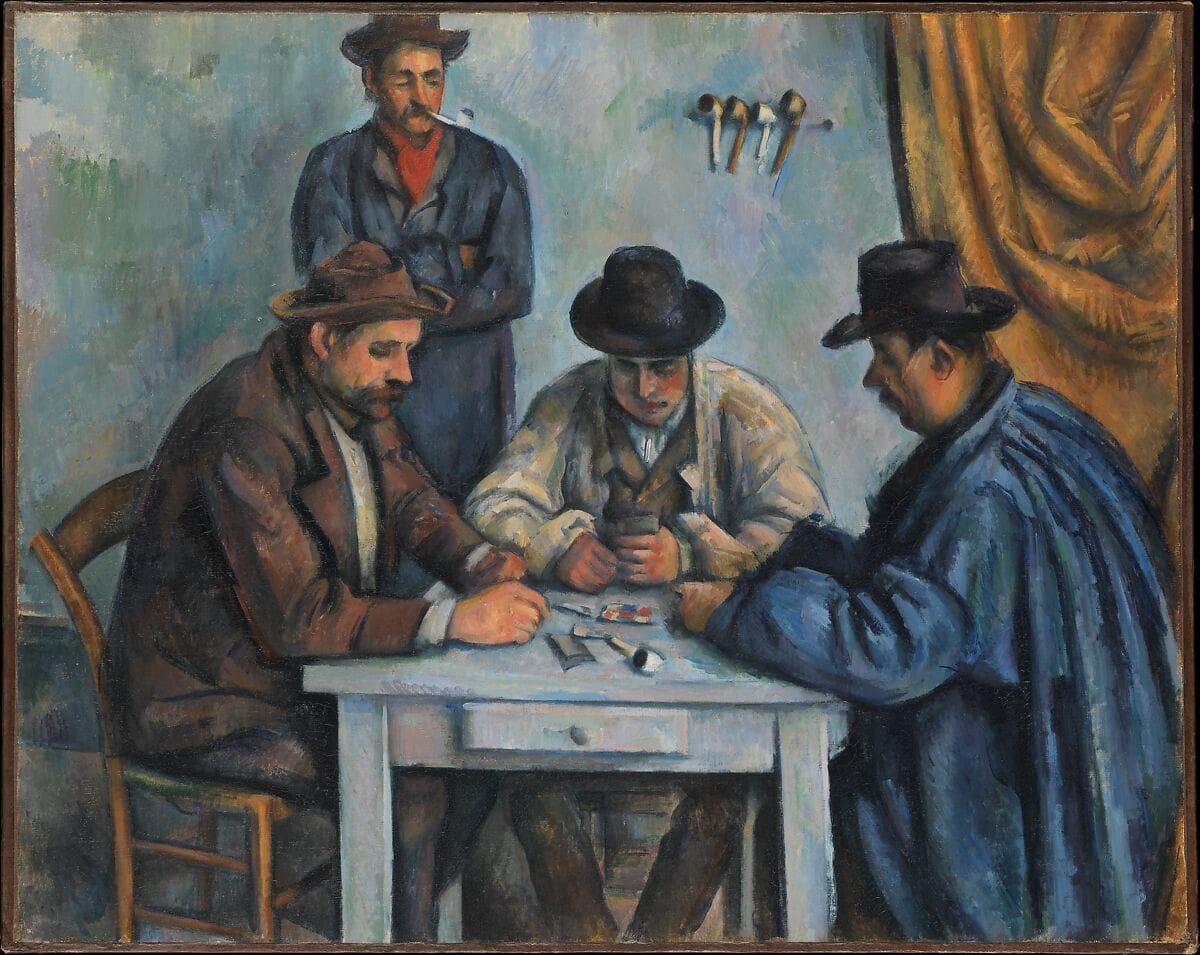
The Card Players
Depicts two Provençal peasants seated at a table, absorbed in a quiet game of cards—spare in detail and concentrated on the figures’ posture and relation to the table. It’s significant as one of Cézanne’s most famous series that bridges realism and the structural approach that led to modernism; note the solidity of forms, the muted palette, and how the table and bodies create a compact, architectural composition. ([dailyartmagazine.com](https://www.dailyartmagazine.com/paul-cezanne-card-players/?utm_source=openai))
Must-see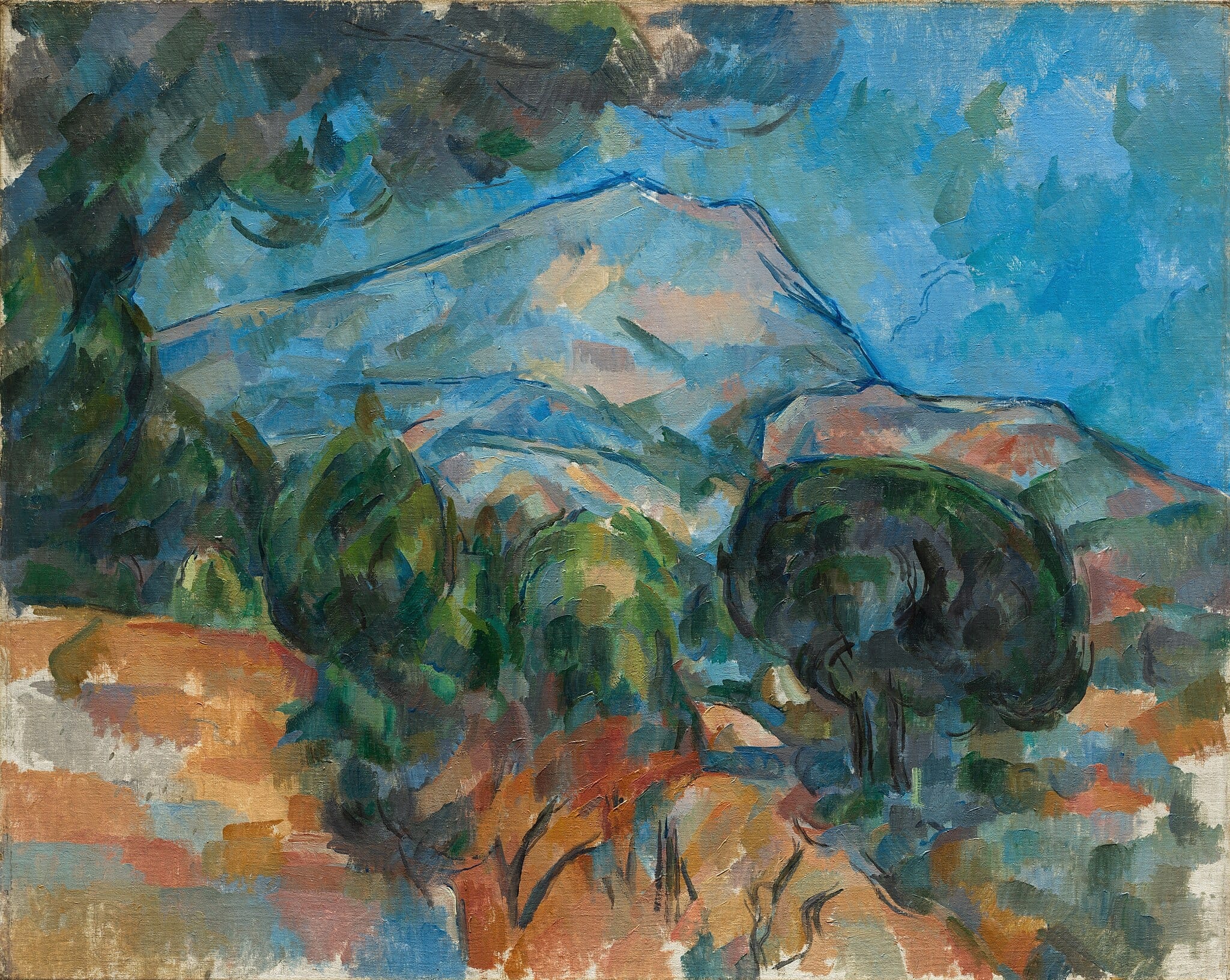
Mont Sainte-Victoire
Shows Cézanne’s beloved mountain near Aix-en-Provence rendered as a study in planes of color and shifting perspective rather than a photographic view. The painting is important as an example of his late landscapes that simplify nature into geometric facets—look for the stacked bands of color, the rhythmic brushstrokes, and how foreground elements push and pull against the mountain. ([artheonmuseum.org](https://www.artheonmuseum.org/artwork/mont-sainte-victoire-435878?utm_source=openai))
Must-see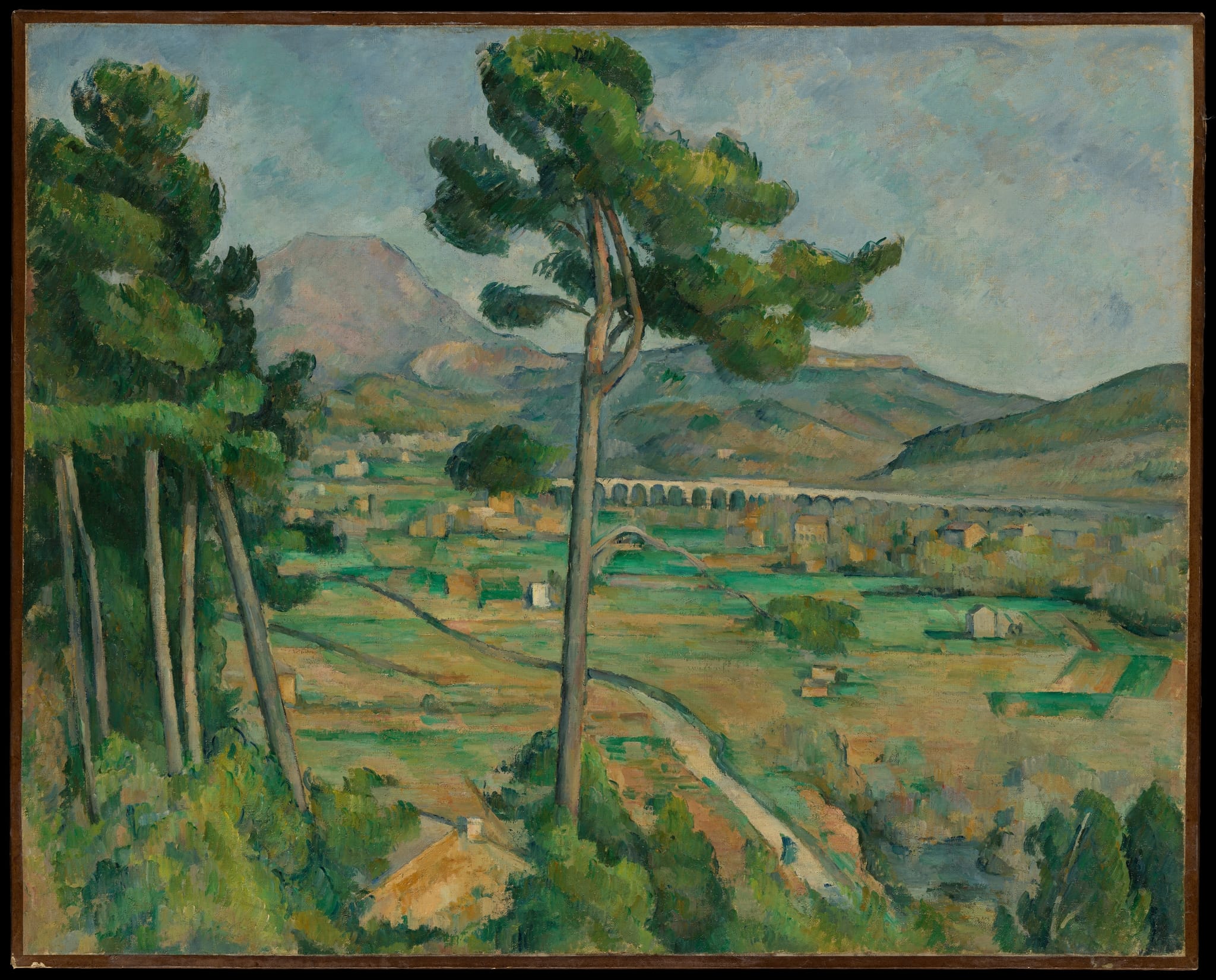
Mont Sainte-Victoire and the Viaduct of the Arc River Valley
A landscape that places Mont Sainte-Victoire within a broad valley pierced by a white railway viaduct, combining natural and man-made elements. Significant for its early experiment in flattening space and treating hills, trees, and the viaduct as interlocking planes; observe the pale, almost chalky viaduct, the simplified tree shapes, and how Cézanne builds depth through color shifts rather than linear perspective. ([metmuseum.org](https://www.metmuseum.org/art/collection/search/110000310?utm_source=openai))
Must-see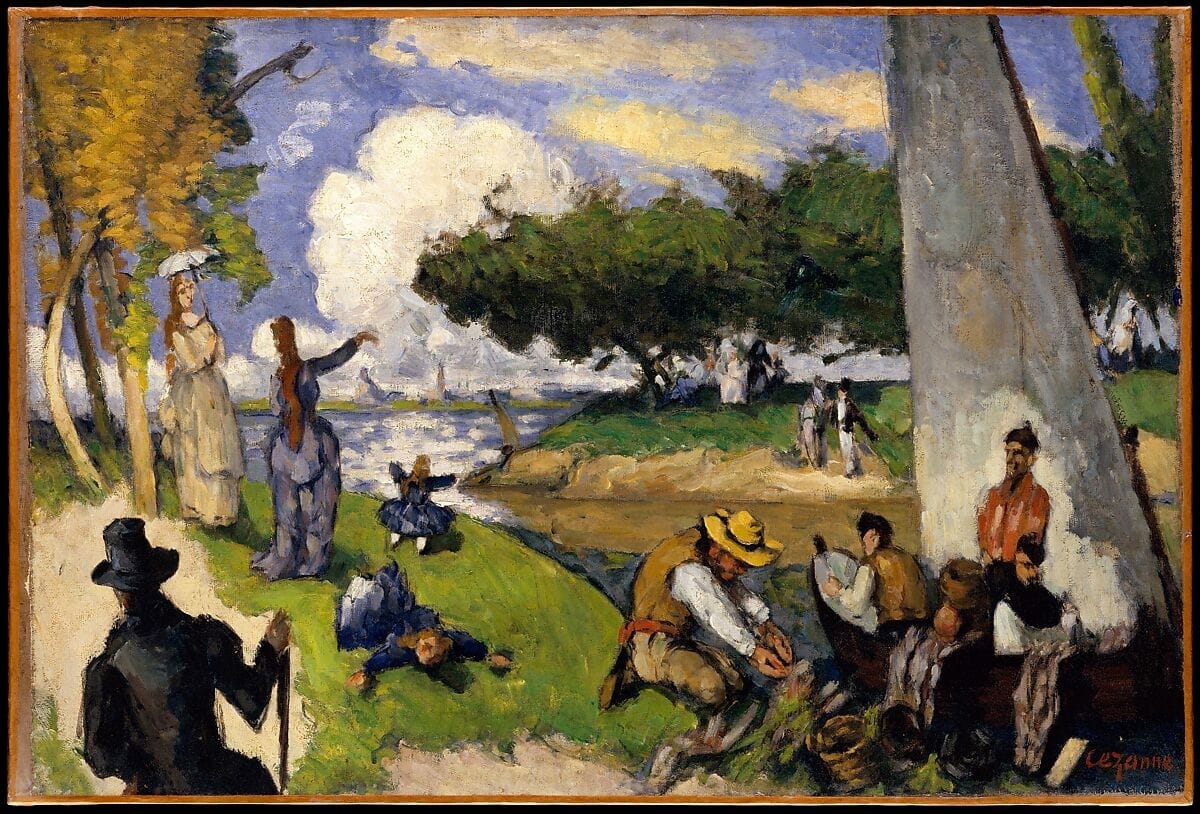
The Fishermen (Fantastic Scene)
A more imaginative composition showing figures and a landscape with an ambiguous, dreamlike quality that departs from Cézanne’s strictly observed views. Its significance lies in Cézanne’s occasional flirtation with narrative and theatrical arrangement—look for the unusual figure poses, compressed space, and a sense of staged drama compared with his quieter still lifes and pure landscapes.
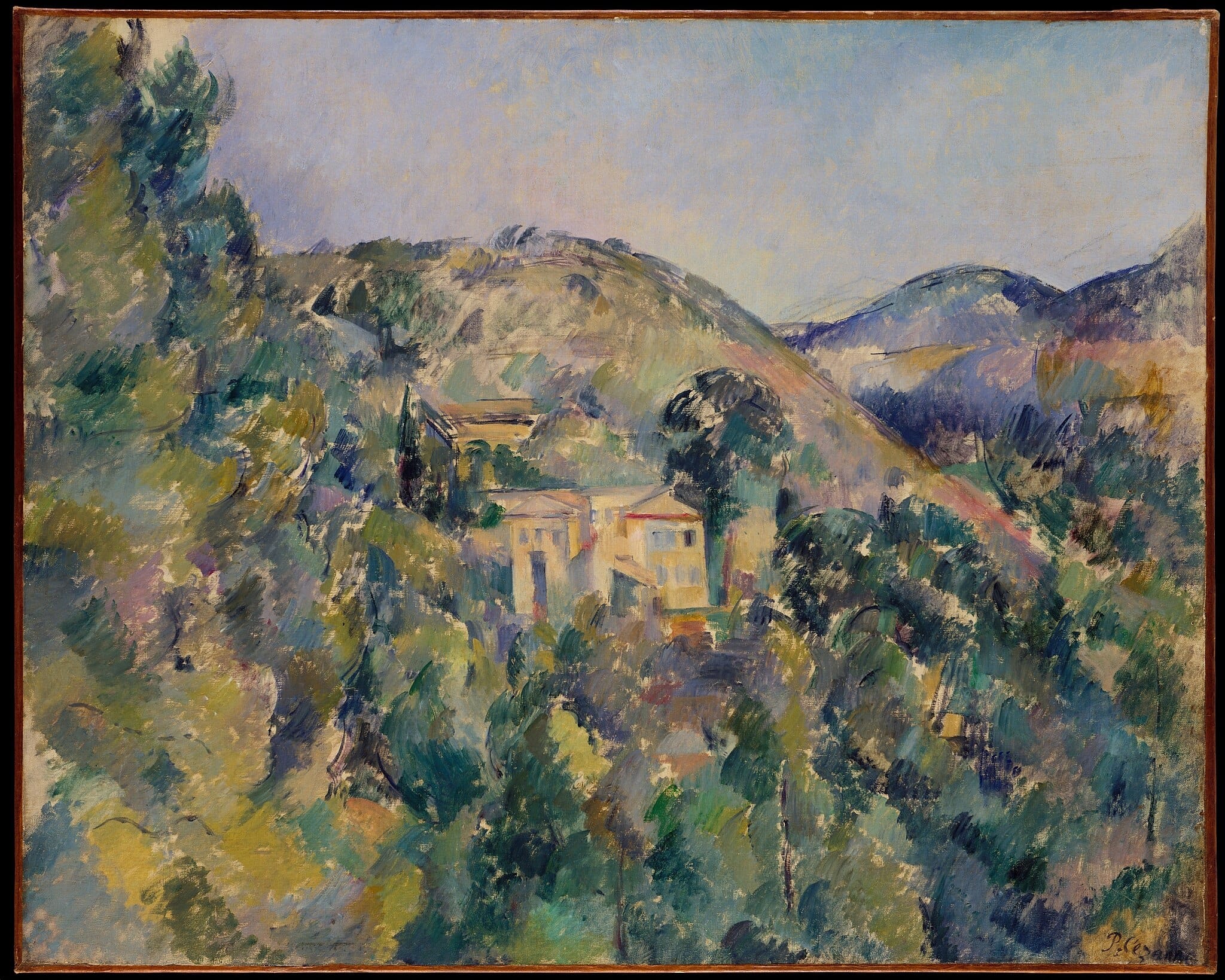
View of the Domaine Saint-Joseph
A sunlit Provençal view of an estate and surrounding fields rendered with broad planes of color and brisk brushwork. Important as part of Cézanne’s practice of painting familiar local sites repeatedly to explore structure and color relationships; notice the way rooftops and rows of trees form geometric motifs that unify foreground and distance. ([en.wikipedia.org](https://en.wikipedia.org/wiki/View_of_the_Domaine_Saint-Joseph?utm_source=openai))
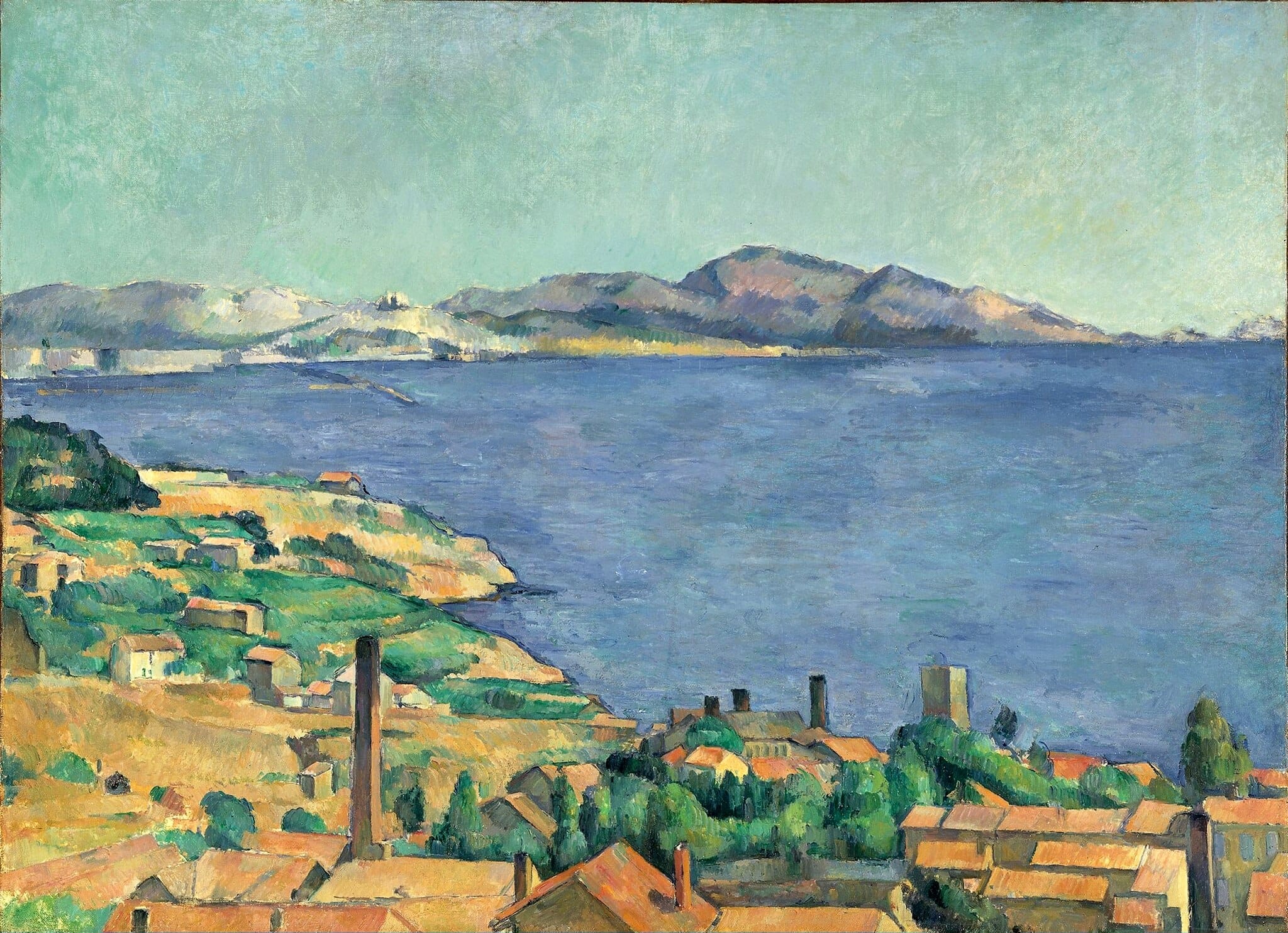
The Gulf of Marseille Seen from L'Estaque
Depicts the Mediterranean coastline seen from the small port of L’Estaque, reduced to clear color zones and simplified shapes of land, sea, and sky. This work marks Cézanne’s move away from fleeting Impressionist effects toward a more ordered, geometric mapping of the scene—look for flattened planes, strong horizontals, and how color masses define the spatial structure. ([thevimu.com](https://thevimu.com/the-bay-of-marseille-seen-from-lestaque-1885/?utm_source=openai))
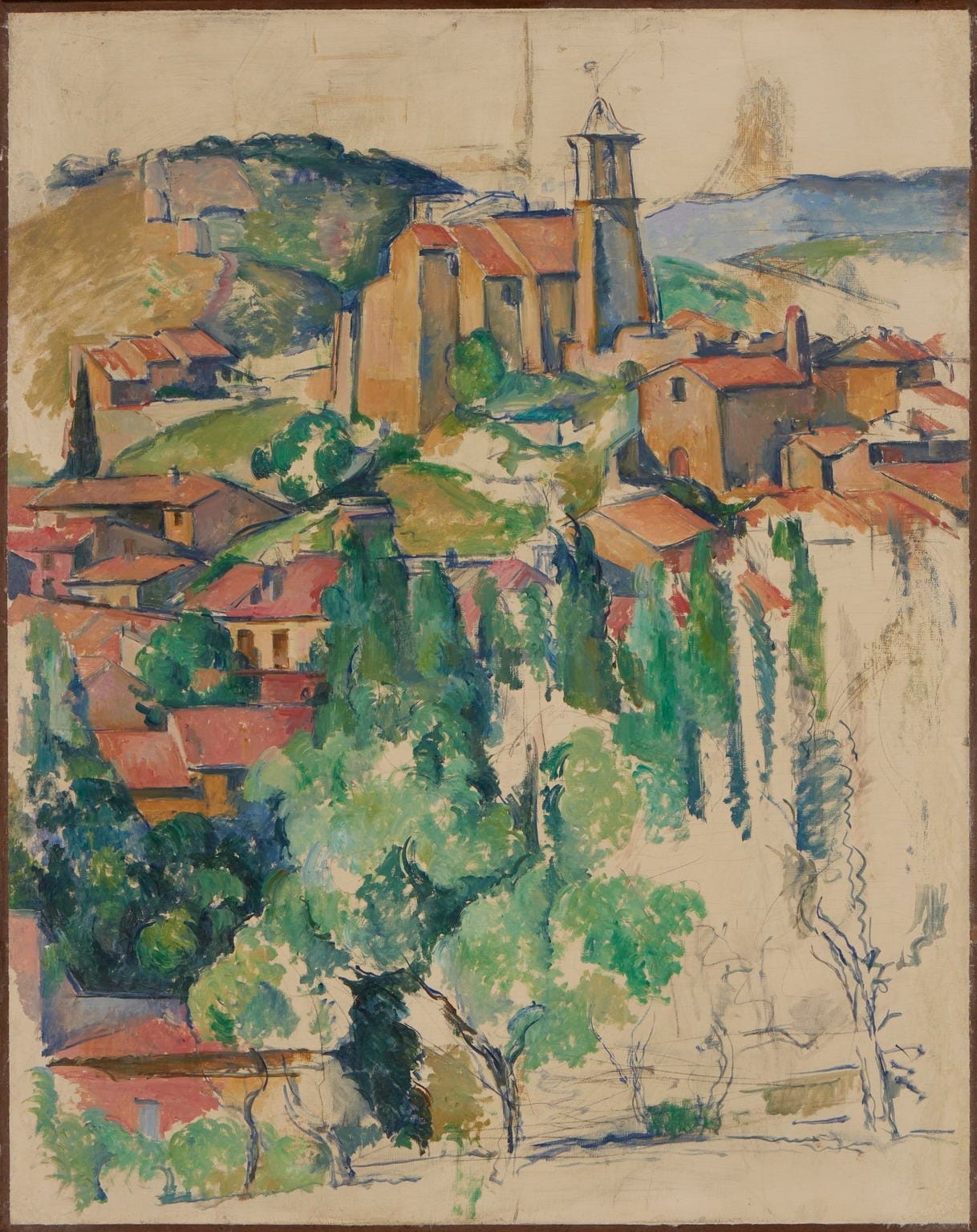
Gardanne
A landscape view of the town of Gardanne and its surrounding Provençal countryside, rendered through layered patches of color and angular brushwork. Significant as another instance of Cézanne’s sustained exploration of how to represent depth and form through color modulation; pay attention to the tiling of fields, the compacted village masses, and subtle shifts in tone that organize space.
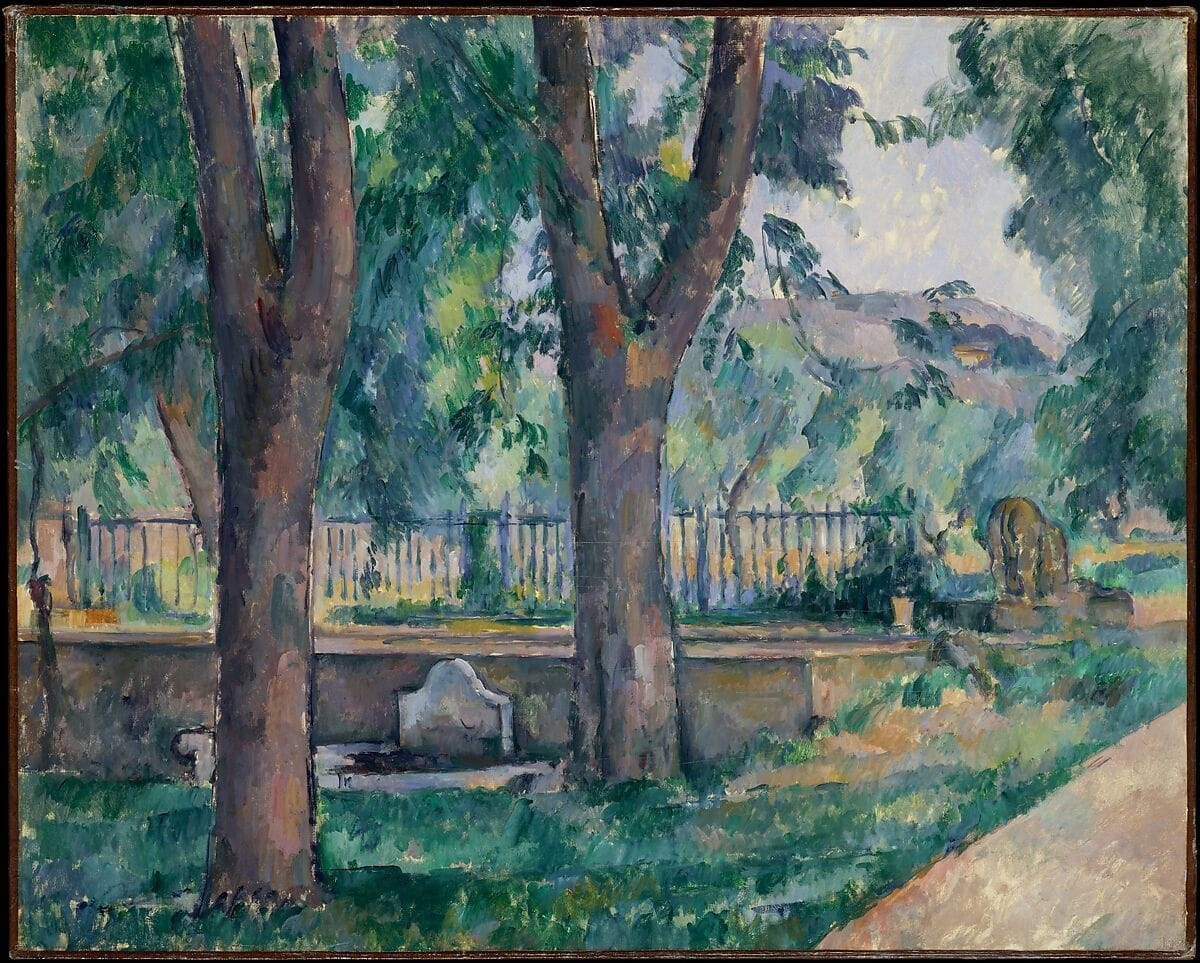
The Pool at Jas de Bouffan
Shows a reflective pool set within the grounds of Cézanne’s family estate, with trees and architecture arranged around the water’s surface. Important because Jas de Bouffan was a formative place for the artist and this painting demonstrates his interest in reflection, surface, and the geometric simplification of natural forms—look for mirrored shapes in the water, the rhythmic repetition of tree trunks, and the careful modulation of greens. ([app.fta.art](https://app.fta.art/artwork/de6dbfa216b72dd30c43cfad0de6038f819b10f1?utm_source=openai))
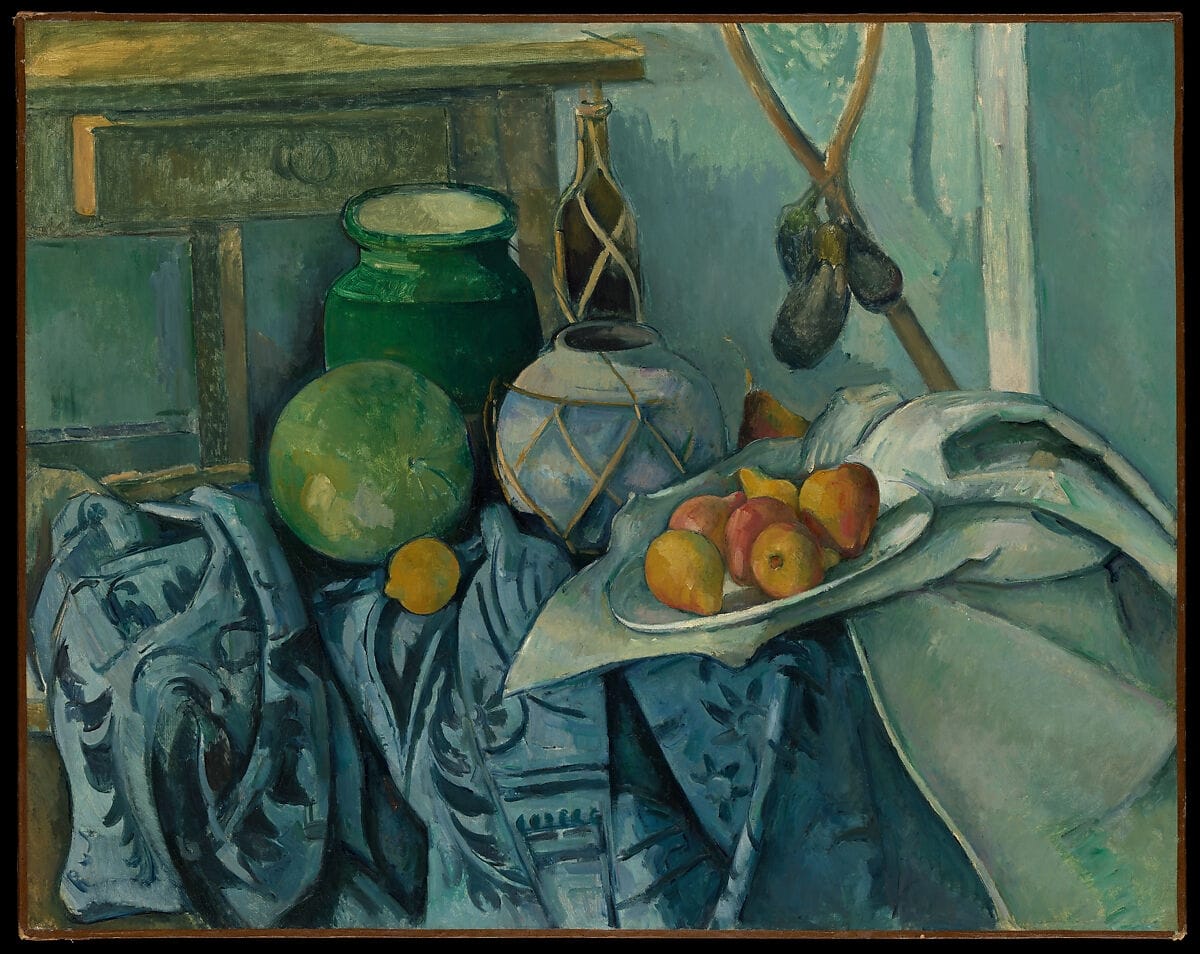
Still Life with a Ginger Jar and Eggplants
A tabletop still life that groups a ginger jar, eggplants, and other objects into a compact, carefully balanced arrangement. Significant as an example of Cézanne’s revolutionary still-life method—treating everyday objects as volumes in space to be analyzed through brushstrokes—so look for the solidity of the forms, the way planes of color interlock, and the subtle shifts in perspective around the table edge. ([harvestmoonbyhand.blogspot.com](https://harvestmoonbyhand.blogspot.com/2020/04/artistpicture-study-paul-cezanne.html?utm_source=openai))
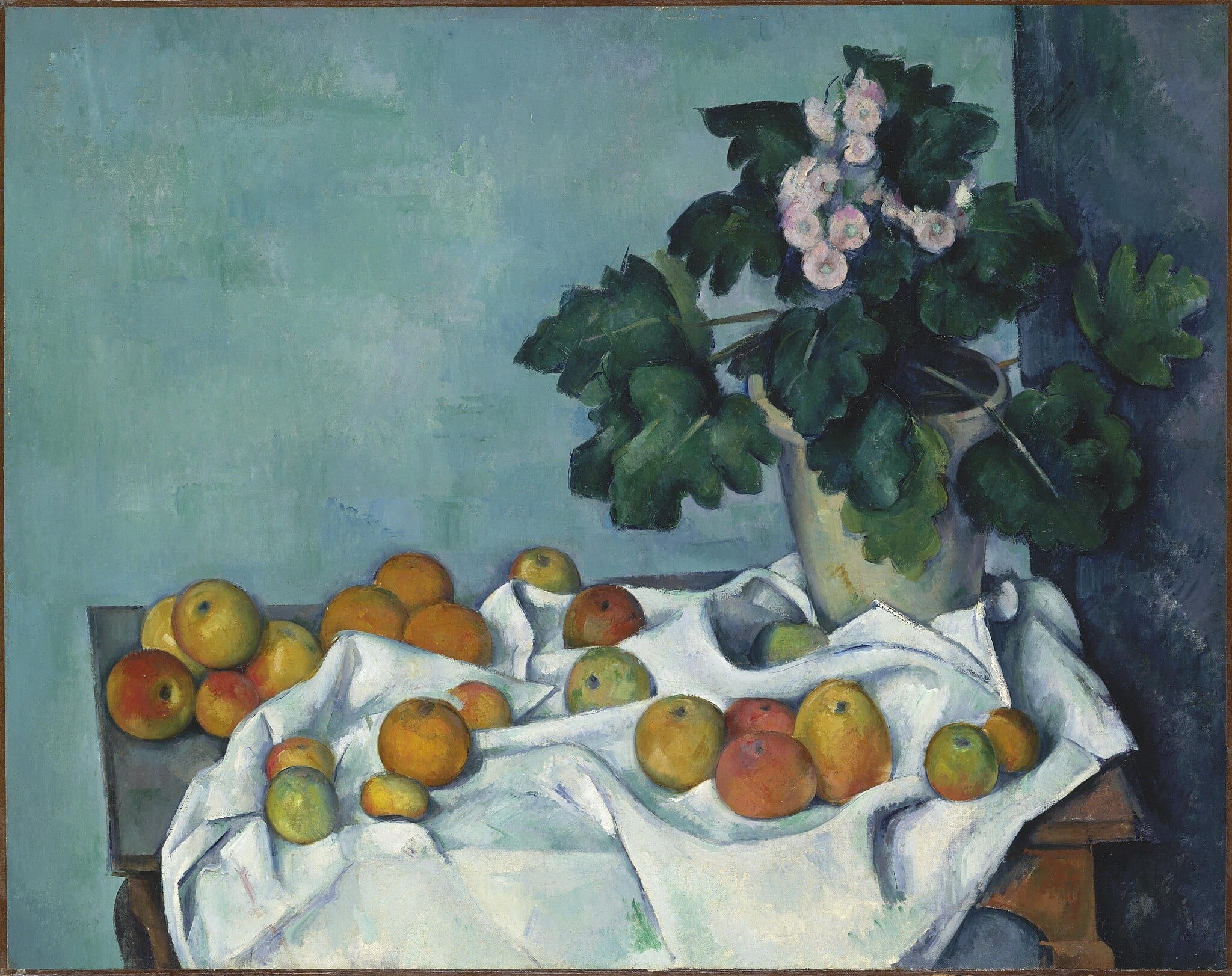
Still Life with Apples and a Pot of Primroses
Depicts apples, a pot of primroses, and related objects on a table in a harmonious, deliberately composed grouping. The painting is significant for how Cézanne transforms humble motifs into investigations of form and color that influenced 20th-century artists; viewers should note the careful placement of objects, the tactile brushwork that models volume, and the gentle tensions of perspective that give the scene its structural cohesion. ([resources.metmuseum.org](https://resources.metmuseum.org/resources/metpublications/pdf/Impressionists_in_the_Metropolitan_The_Metropolitan_Museum_of_Art_Bulletin_v_27_no_1_Summer_1968.pdf?utm_source=openai))
The Museum of Modern Art (MoMA)
MoMA’s five Cézannes are presented within a narrative of modernism, so the museum shows not only the paintings themselves but also Cézanne’s central role as the ‘father of modern art’ for generations of 20th‑century artists. Placed near works by Picasso, Matisse and the Cubists, these Cézannes make visible the formal debts later movements paid to his geometric structuring of form and radical rethinking of perspective.
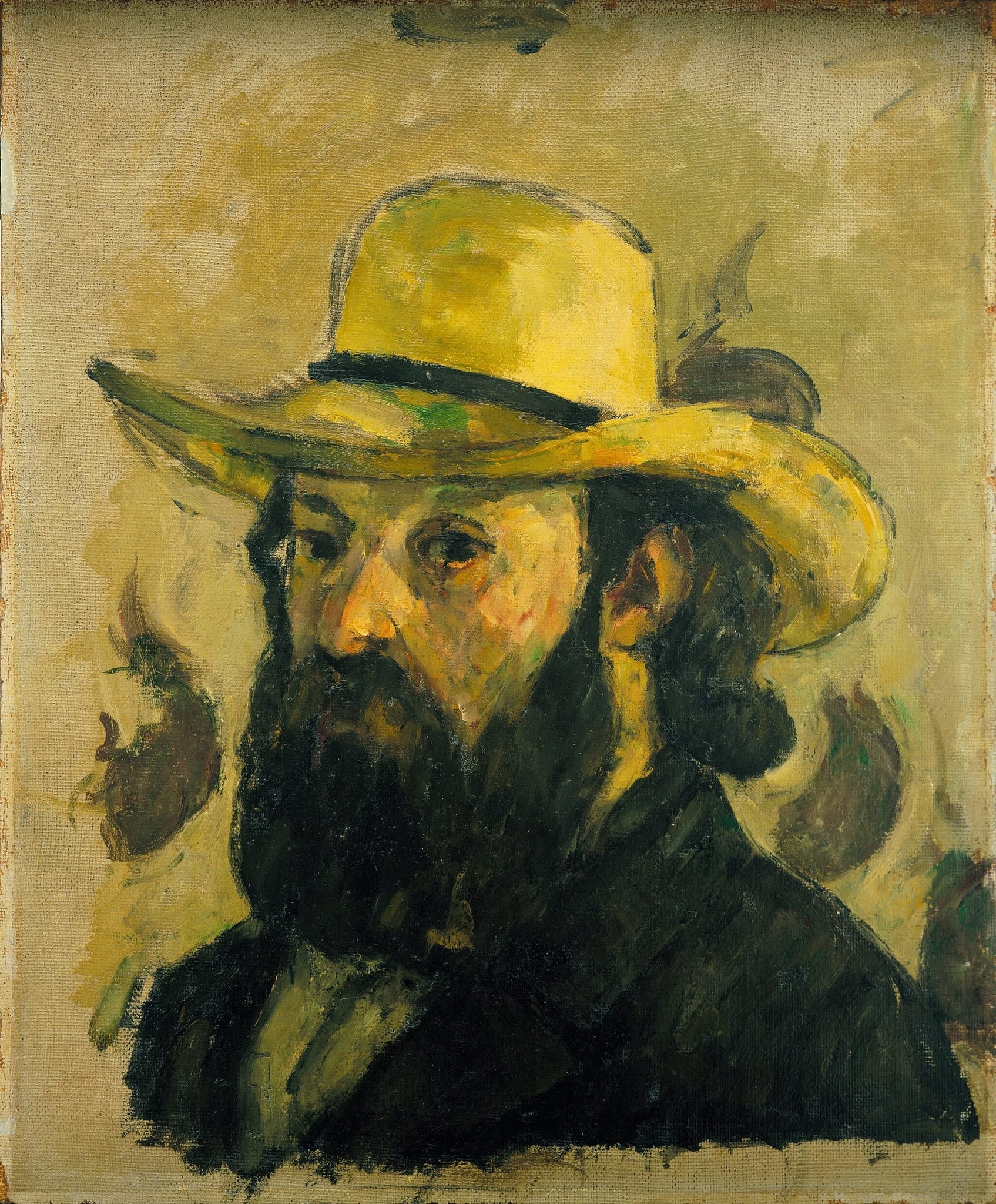
Self-Portrait in a Straw Hat
1878-79
A small, intimate oil self-portrait showing Cézanne at three-quarter view wearing a straw hat; the face is modeled with short, structural brushstrokes that emphasize form over fleeting expression. It’s significant as an example of Cézanne’s move away from romanticized portraiture toward a more analytical, constructive approach to painting; look for the way planes of color build the head and the economy of detail in the hat and background. ([moma.org](https://www.moma.org/collection/works/83368))
Must-see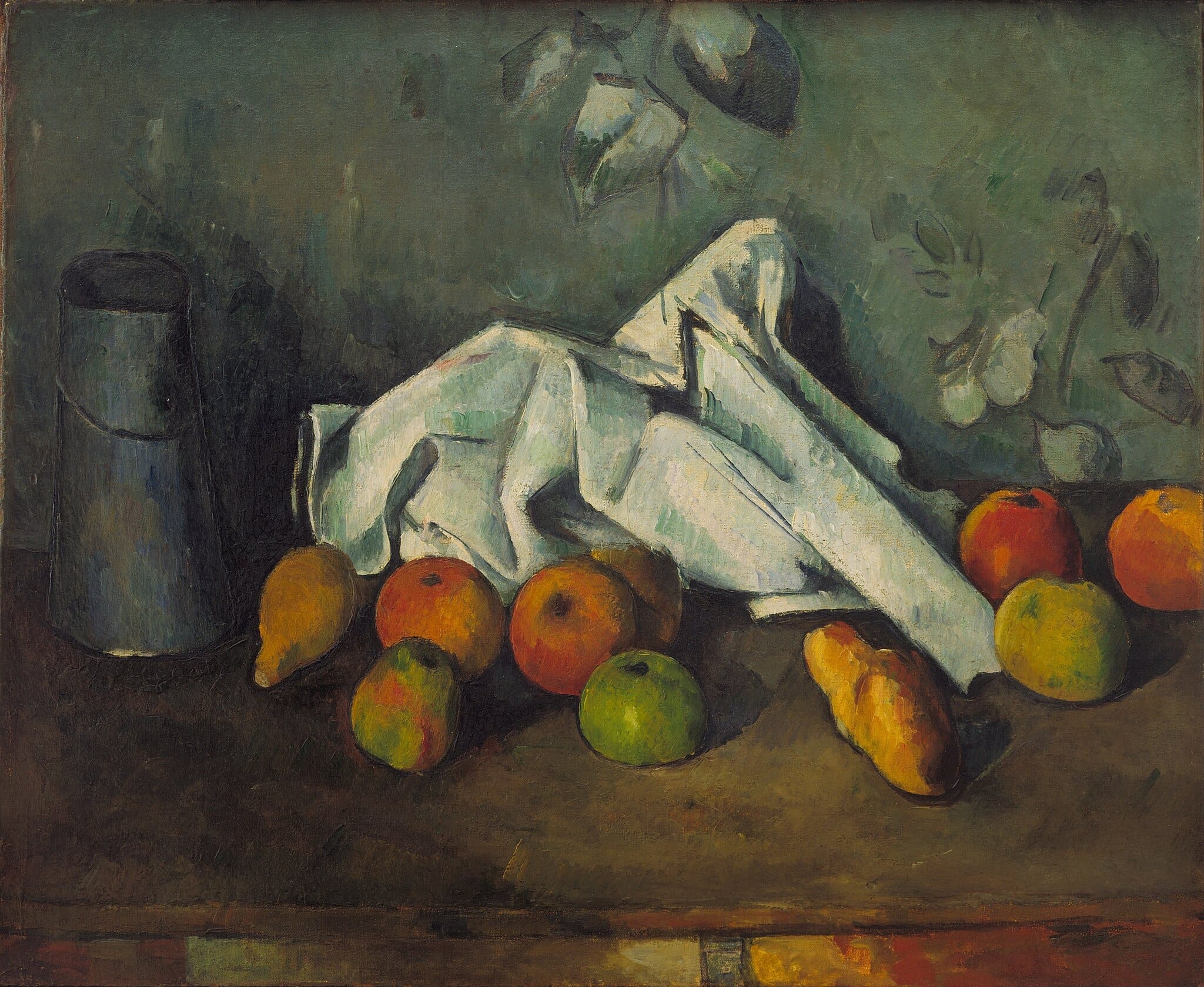
Milk Can and Apples
1879-80
A compact still life of a milk can and clustered apples on a tabletop rendered with broad, deliberate strokes and a muted, harmonious palette. The work is important for showing Cézanne’s early experiments in organizing form and space through color relationships—rather than illusionistic perspective—and viewers should note the palpable solidity of the objects created by layered, modulated brushwork. ([moma.org](https://www.moma.org/collection/works/83370))
Must-see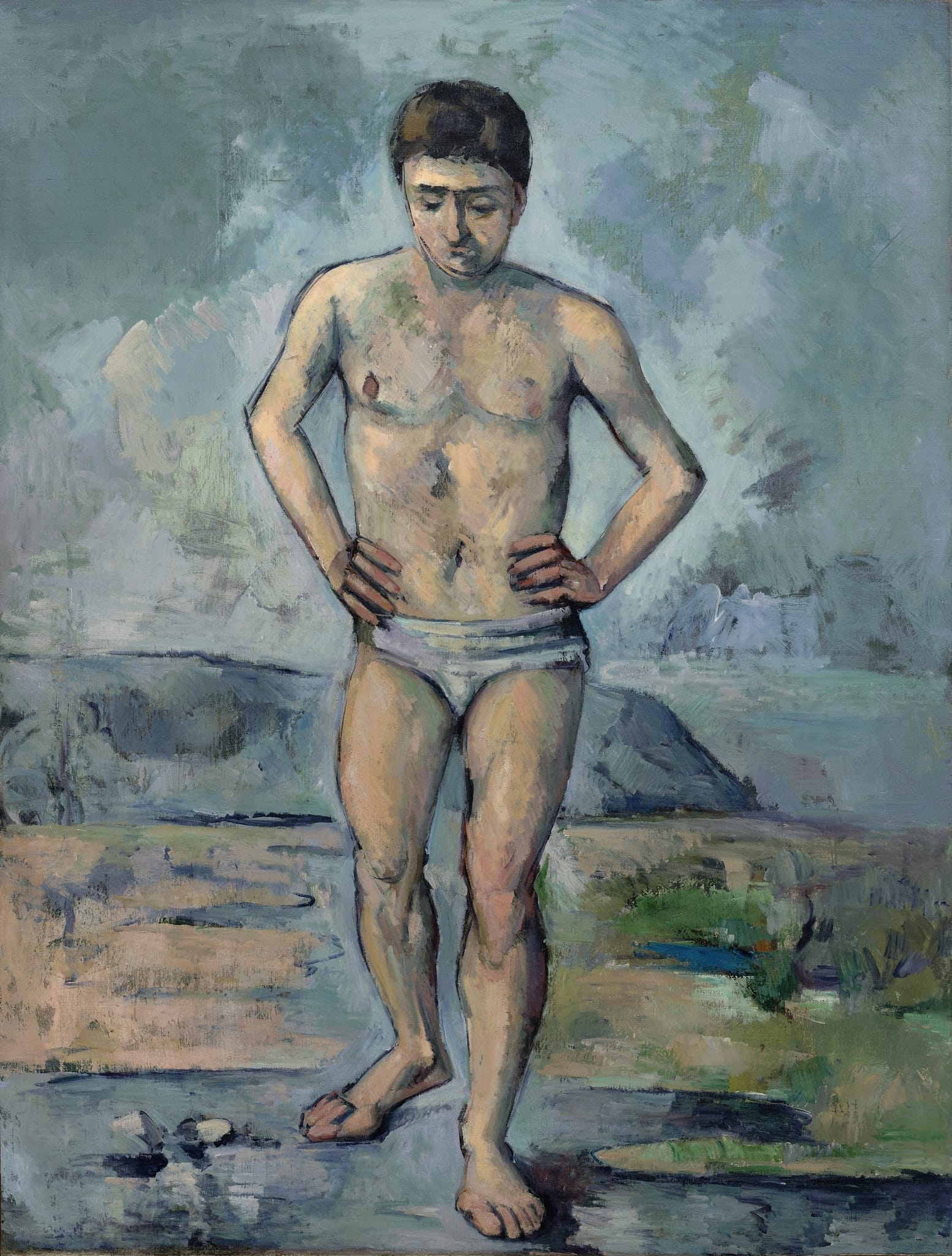
The Bather
c. 1885
A figure bathing—rendered with simplified, sculptural volumes—set against a spare landscape, where the human form is integrated into the surrounding geometry. This painting marks Cézanne’s interest in reconciling classical subjects with a modern structural approach; focus on the volume-building brushstrokes and how the body’s planes echo the shapes in the background. ([moma.org](https://www.moma.org/audio/125))
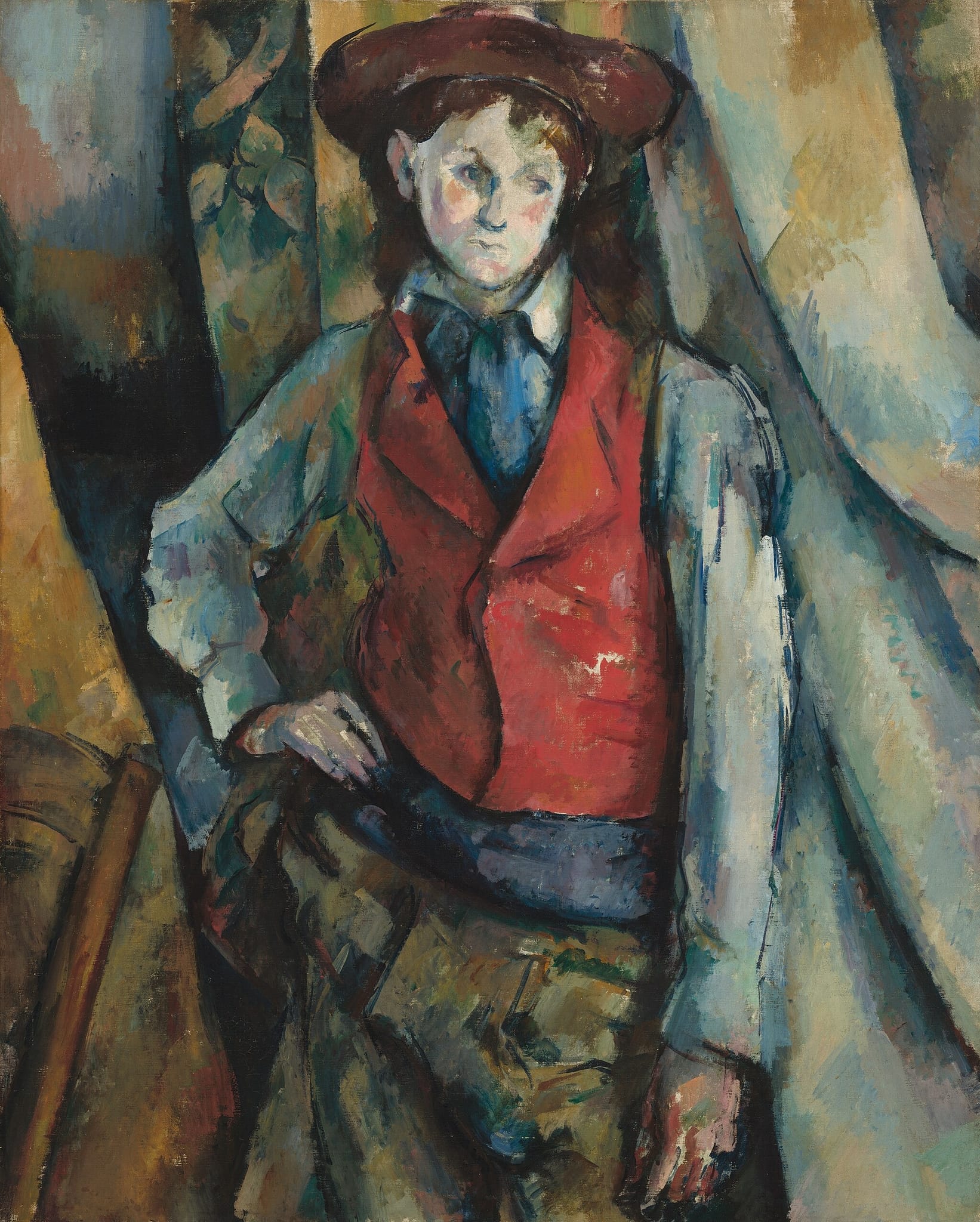
Boy in a Red Vest
1888-90
Portrait of a young Italian model seated in profile wearing a striking red vest, painted with a careful balance between observed detail and painterly construction. The work is significant as one of a series in which Cézanne studied the relationship between figure and space—look for the taut composition, the rhythmic blocky brushstrokes, and how the vivid vest both anchors the figure and interacts with the more subdued surrounding tones. ([moma.org](https://www.moma.org/collection/works/79086?sov_referrer=theme&theme_id=5695&utm_source=openai))
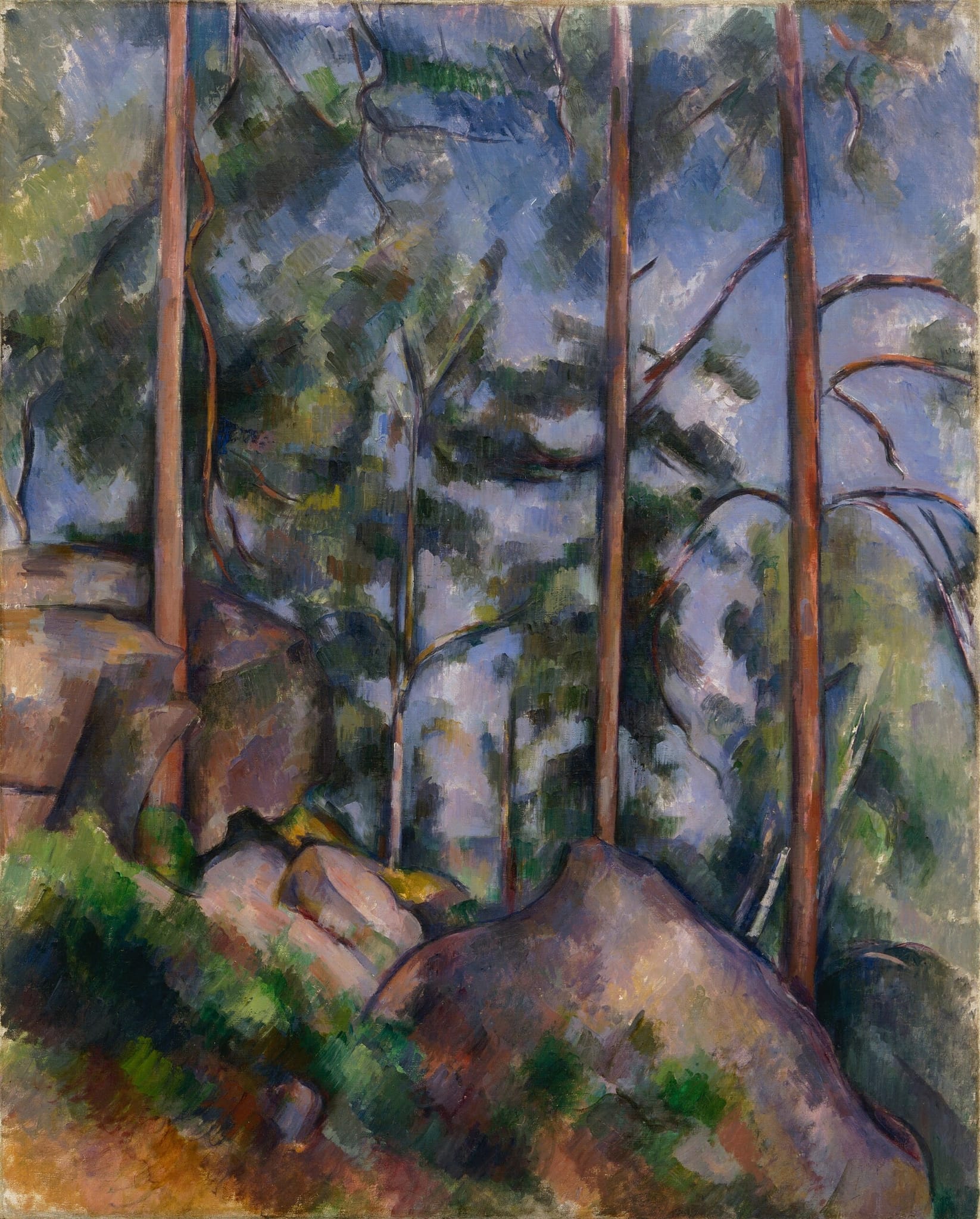
Pines and Rocks (Fontainebleau?)
c. 1897
A landscape of vertical pines rising above heavy, textured rocks, composed with a strong emphasis on structural forms and chromatic modulation. The painting is notable for Cézanne’s late-career exploration of the landscape as a system of interlocking planes; viewers should attend to the way color and brushwork establish depth and solidity rather than relying on traditional atmospheric perspective. ([moma.org](https://www.moma.org/collection/works/78454))
Brooklyn Museum
Although the Brooklyn Museum doesn’t hold Cézanne paintings, it matters for experiencing his work because the museum mounts focused exhibitions, loans, and comparative displays that situate Cézanne among Post‑Impressionists and artists he influenced. Brooklyn’s strengths in thematic and pedagogical displays mean visitors can encounter curated dialogues—photography, prints, or contemporary works—that illuminate how Cézanne’s approach to form and space echoed across media and communities.
The Morgan Library & Museum
The Morgan doesn’t collect Cézanne paintings, but it’s an important stop for anyone researching or deepening their understanding of him because the institution specializes in drawings, letters, and archival material that provide documentary context for artists of the period. When the Morgan mounts displays of 19th‑century manuscripts or exhibition catalogues, those materials can reveal how Cézanne’s work was received in his lifetime and how contemporaries wrote about his techniques and ideas.