Raphael Paintings in Florence — Where to See Them
Florence houses roughly 15 Raphael paintings on permanent display across two museums—six works in the Uffizi Gallery and nine in the Galleria Palatina at Palazzo Pitti—making it one of the best places to trace his development outside Rome. What makes Florence distinctive is that these works concentrate on his Florentine phase and intimate portraits and Madonnas, many shown in palace rooms and alongside contemporaries, so you can study his evolving composition, color and figure work in direct comparison with his Renaissance peers.
At a Glance
- Museums
- Uffizi Gallery, Galleria Palatina (Palazzo Pitti)
- Highlight
- See Raphael masterpieces at the Uffizi and Galleria Palatina.
- Best For
- Art lovers and Renaissance enthusiasts seeking concentrated Raphael works.
Uffizi Gallery (Gallerie degli Uffizi)
The Uffizi matters for experiencing Raphael because it brings together several of his Florentine-period and devotional paintings in direct dialogue with works by Leonardo and Michelangelo, so you can see how Raphael absorbed and transformed Florentine ideals of composition and color. Seeing his Madonnas and small devotional panels in the same itineraries where Botticelli and the High Renaissance masters hang makes it easier to trace the specific shifts in his approach to space, figure grouping, and serene expression.
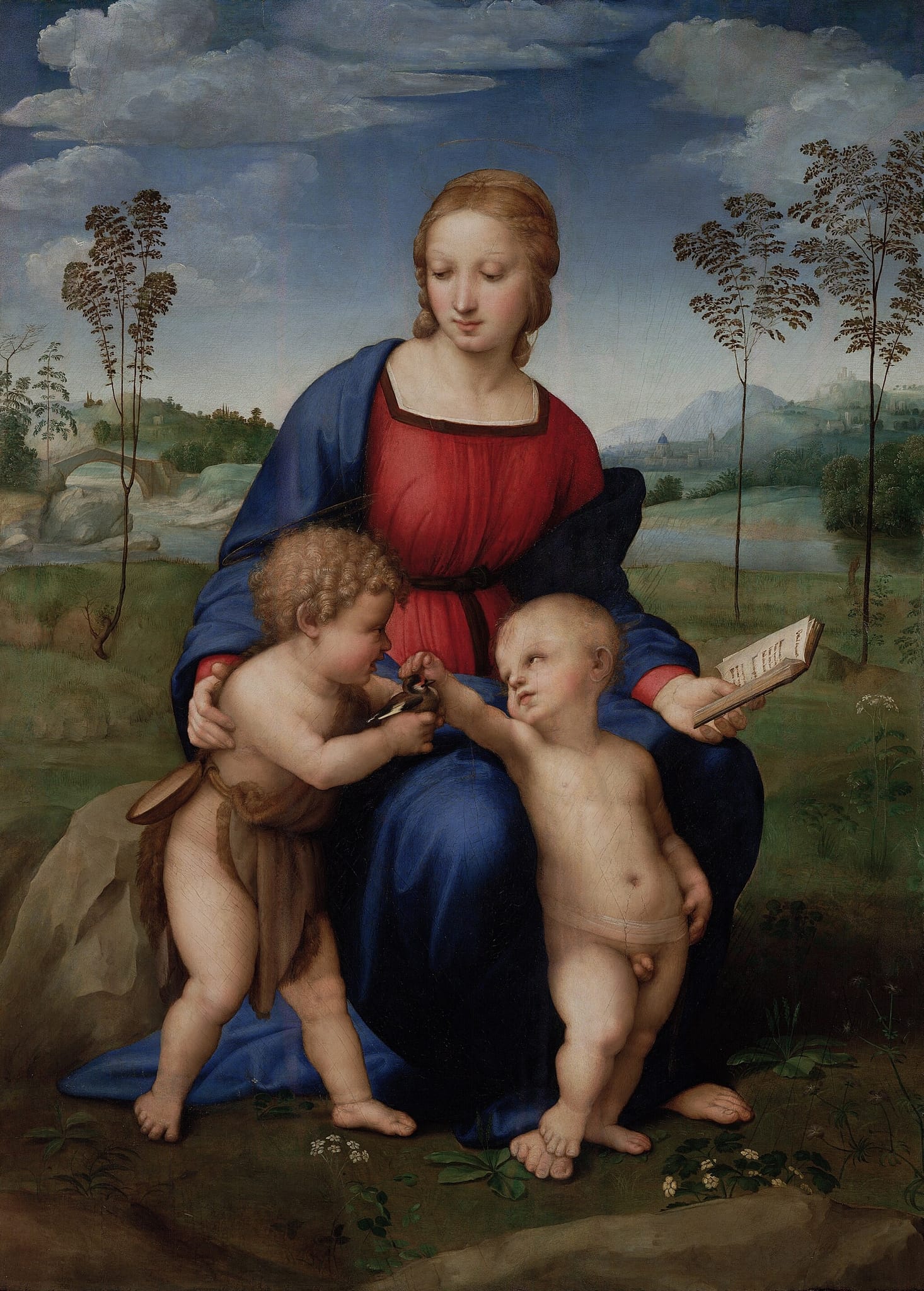
Madonna of the Goldfinch
1506
Key early Raphael work showing tender interaction between Mary, Christ, and young John the Baptist.
Must-see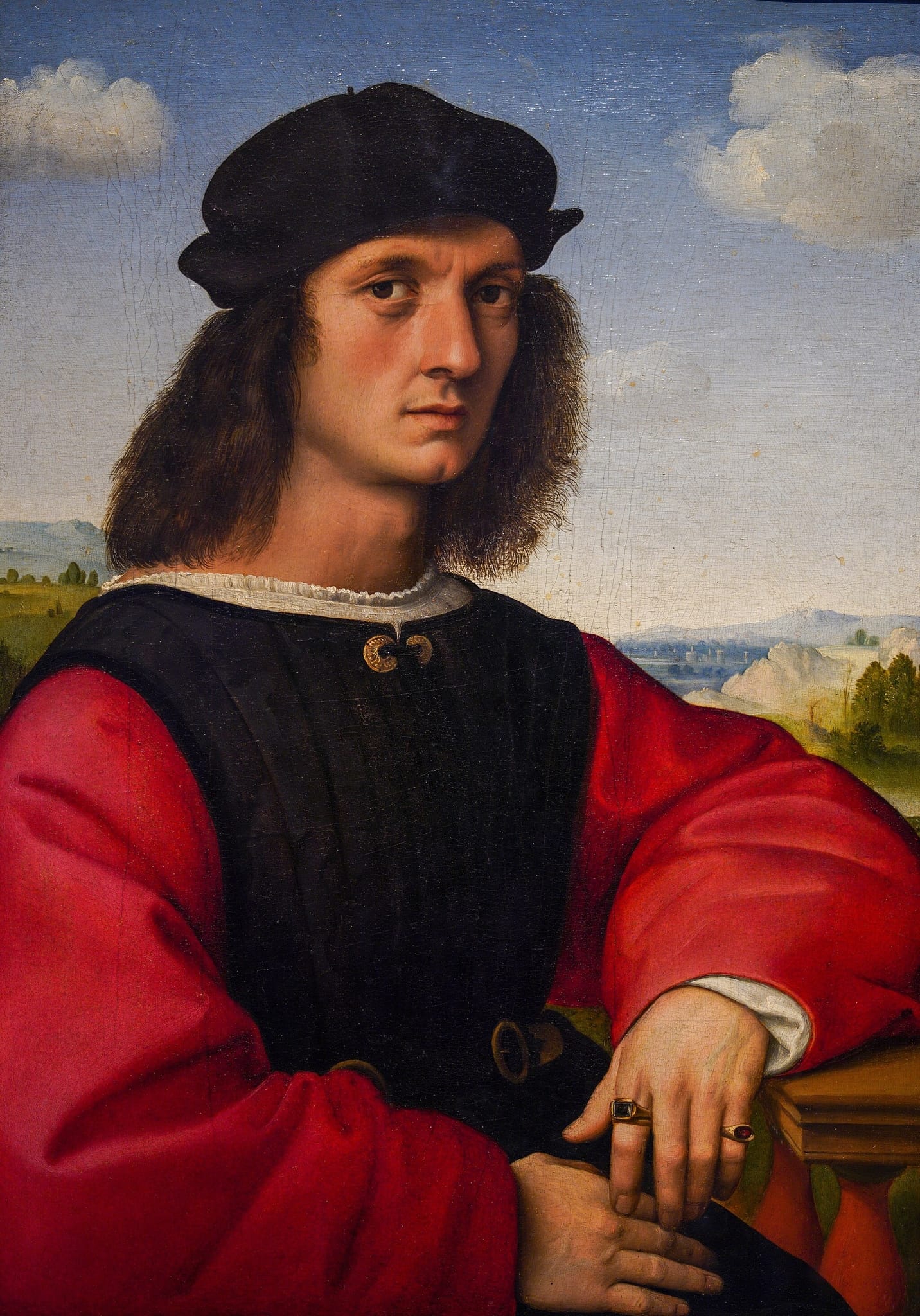
Portrait of Agnolo Doni
1506
A three-quarter portrait of the wealthy Florentine merchant Agnolo Doni set against an open landscape, showing him in sober, dignified clothing and a direct, composed stare. Important because it demonstrates Raphael’s mastery of individual characterization and the integration of figure with landscape, reflecting the influence of Leonardo and the Florentine portrait tradition. Notice the crisp modeling of the face, the precise rendering of hands and costume, and how the distant landscape echoes and balances the sitter’s posture.
Must-see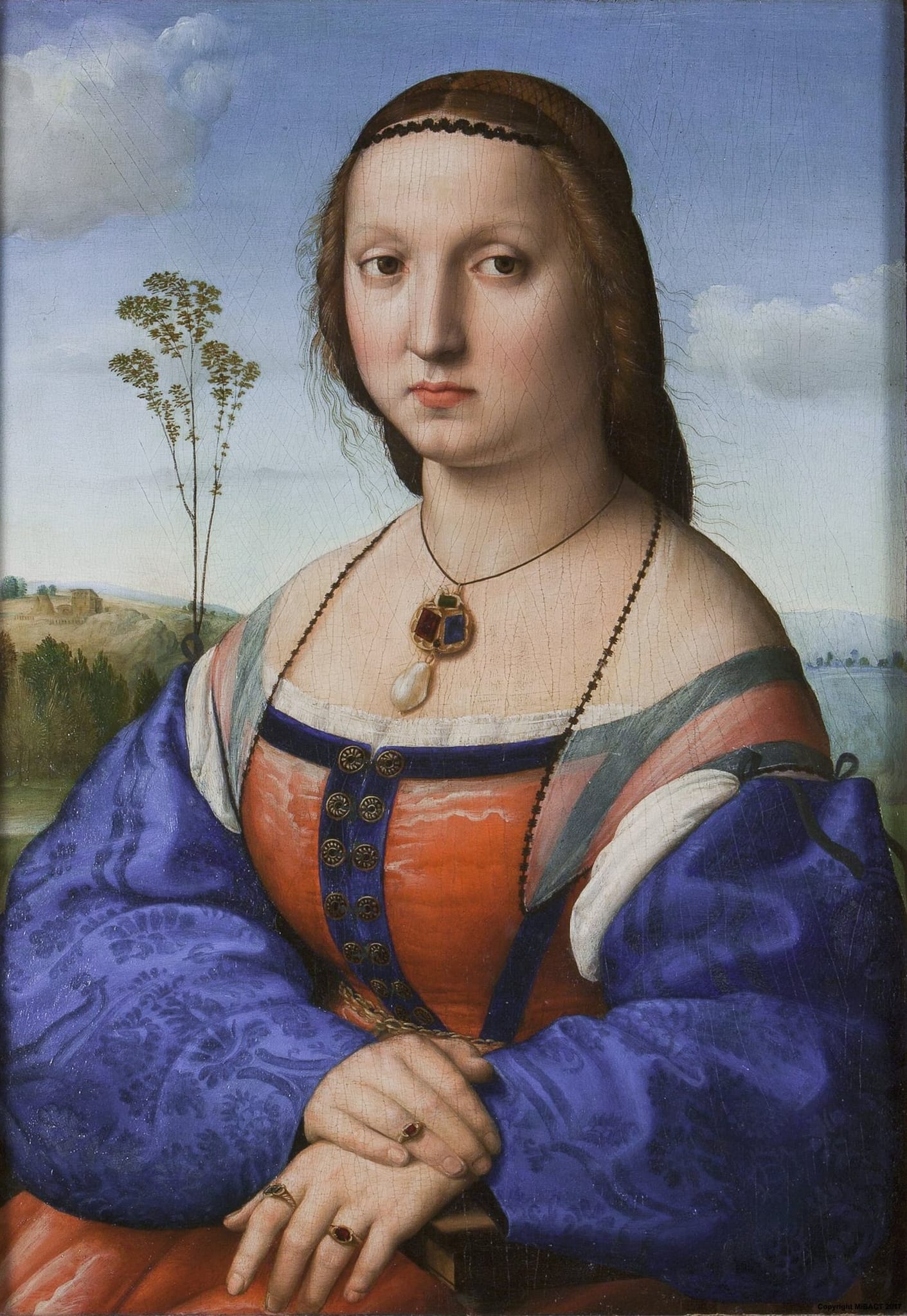
Portrait of Maddalena Doni
1506
A formal, profile-turned portrait of Maddalena Strozzi Doni, presented with refined costume and an elegant coiffure against a muted backdrop and a glimpse of landscape. Significant as the companion to Agnolo Doni’s portrait — together they show Raphael’s ability to create paired portraits with visual harmony and subtle psychological presence. Look for the sculptural clarity of her profile, the delicate detail in her dress and jewelry, and the soft atmospheric recession in the background that links the two Doni portraits.
Must-see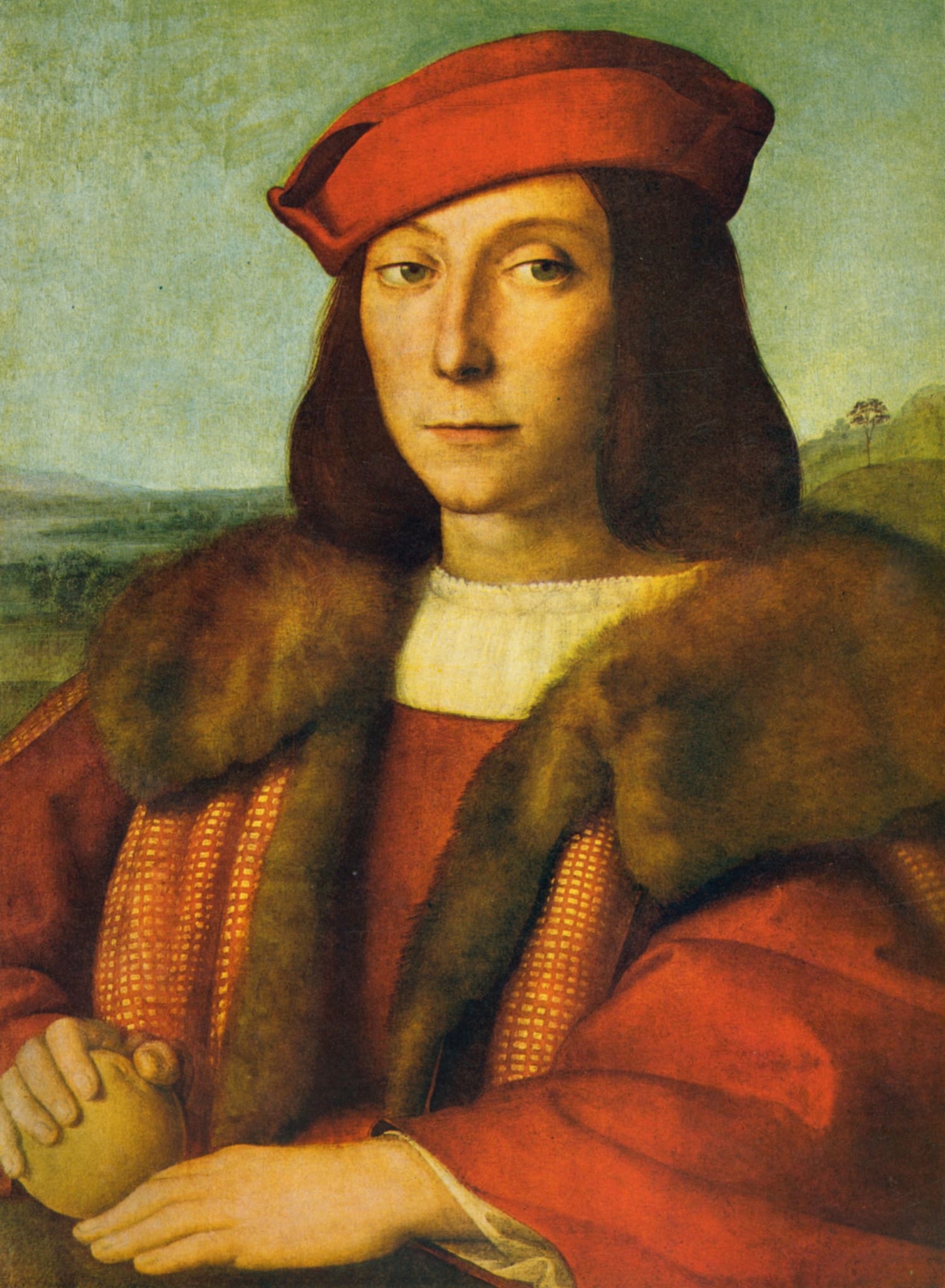
Young Man with an Apple
c. 1505–1506
Depicts a well-dressed young man turned toward the viewer while holding an apple, his expression poised between introspection and self-confidence. This work is notable for its enigmatic character study and for illustrating Raphael’s early mastery of portraiture and subtle psychological presence. Observe the refined rendering of skin and hair, the expressive use of the hand and apple as a compositional device, and the interplay between sitter and shallow landscape behind him.
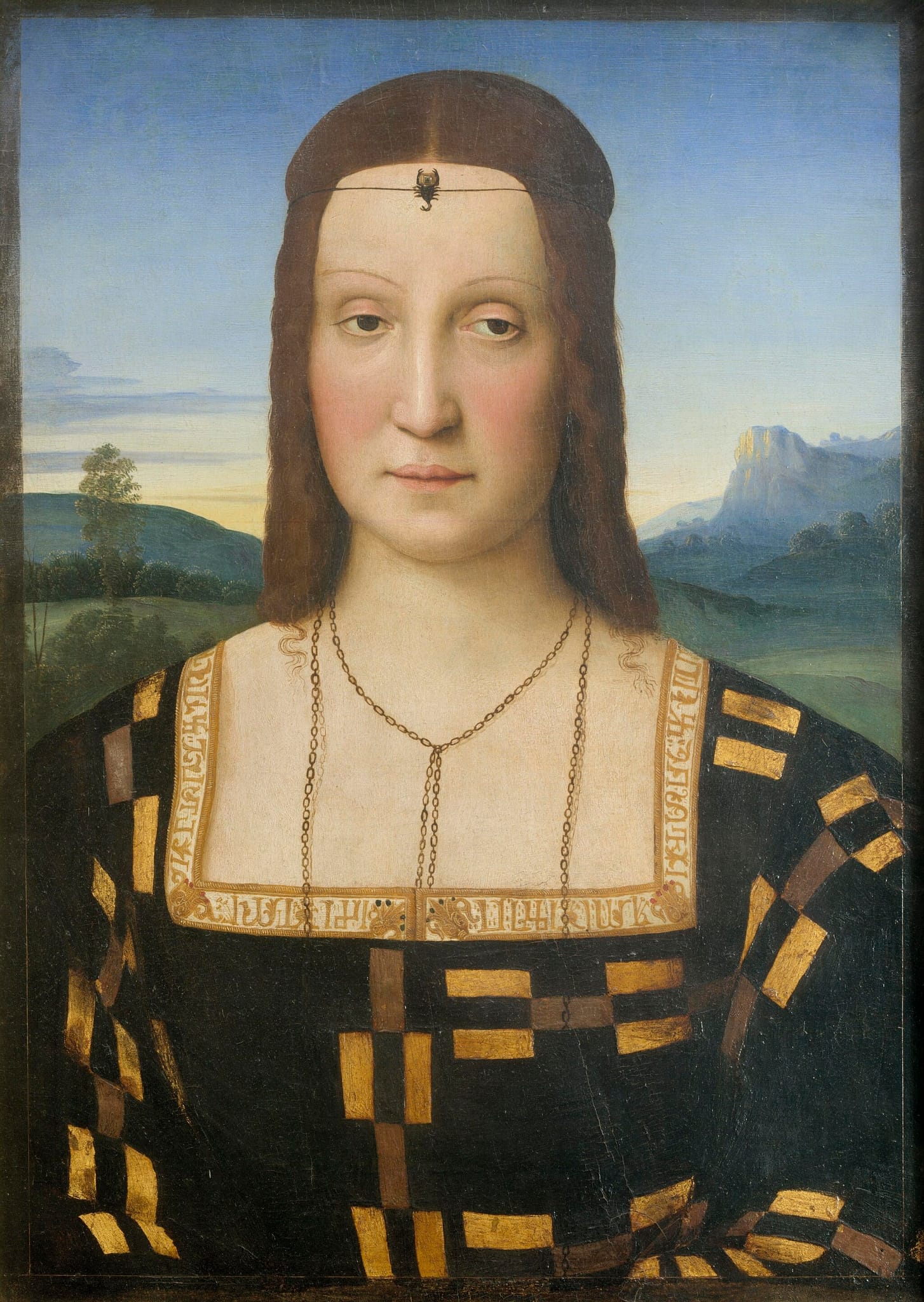
Portrait of Elisabetta Gonzaga
1504–1505
A courtly portrait of Elisabetta Gonzaga, duchess of Urbino, shown in three-quarter view wearing rich dress and a high forehead — the idealized, noble profile of a Renaissance lady. Its significance lies in its probable connection to Raphael’s Urbino roots and in the portrait’s elegance and restraint, which convey status more than overt personality. Look for the refined linear profile, the sumptuous but controlled costume detail, and the delicate handling of light on the face that creates a serene, dignified presence.
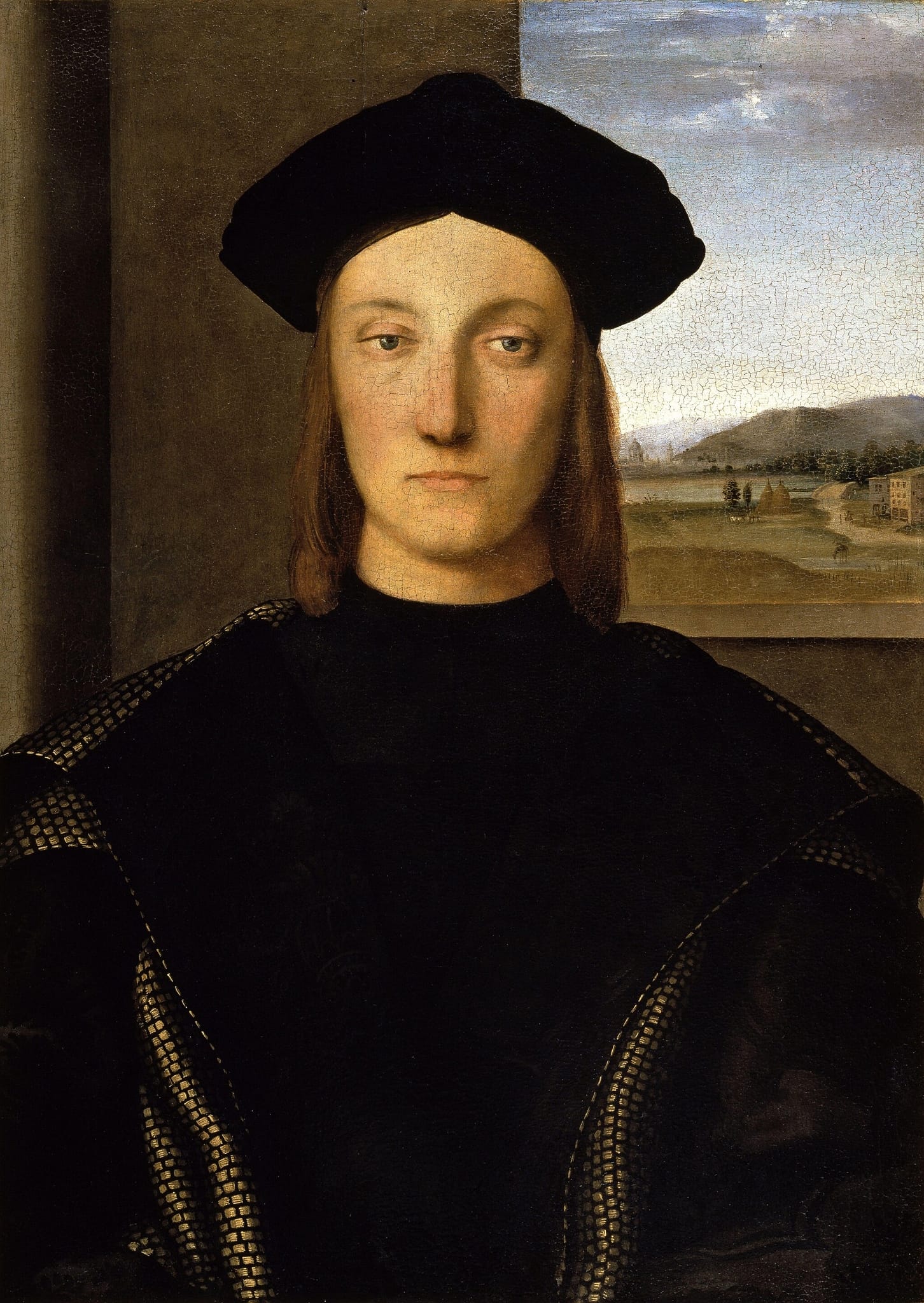
Portrait of Guidobaldo da Montefeltro
c. 1506
A portrait of Guidobaldo da Montefeltro, depicted in profile with armor and a cap, presenting a composed, aristocratic bearing against a plain background. Important because it links Raphael to the courtly portrait tradition of Urbino and shows his ability to blend formality with lifelike detail. Pay attention to the careful modeling of the face, the attention to armor and costume as status markers, and the calm, measured profile that emphasizes lineage and rank.
Galleria Palatina, Palazzo Pitti
The Galleria Palatina matters because it preserves a large, concentrated group of Raphael’s works within a historic princely collection, especially his portraits and mature easel paintings collected by the Medici and later patrons. In this setting you encounter Raphael’s refined portrait style and grander compositions together in salon-like rooms, which helps you appreciate how his paintings functioned as courtly display and private devotion rather than isolated museum pieces.
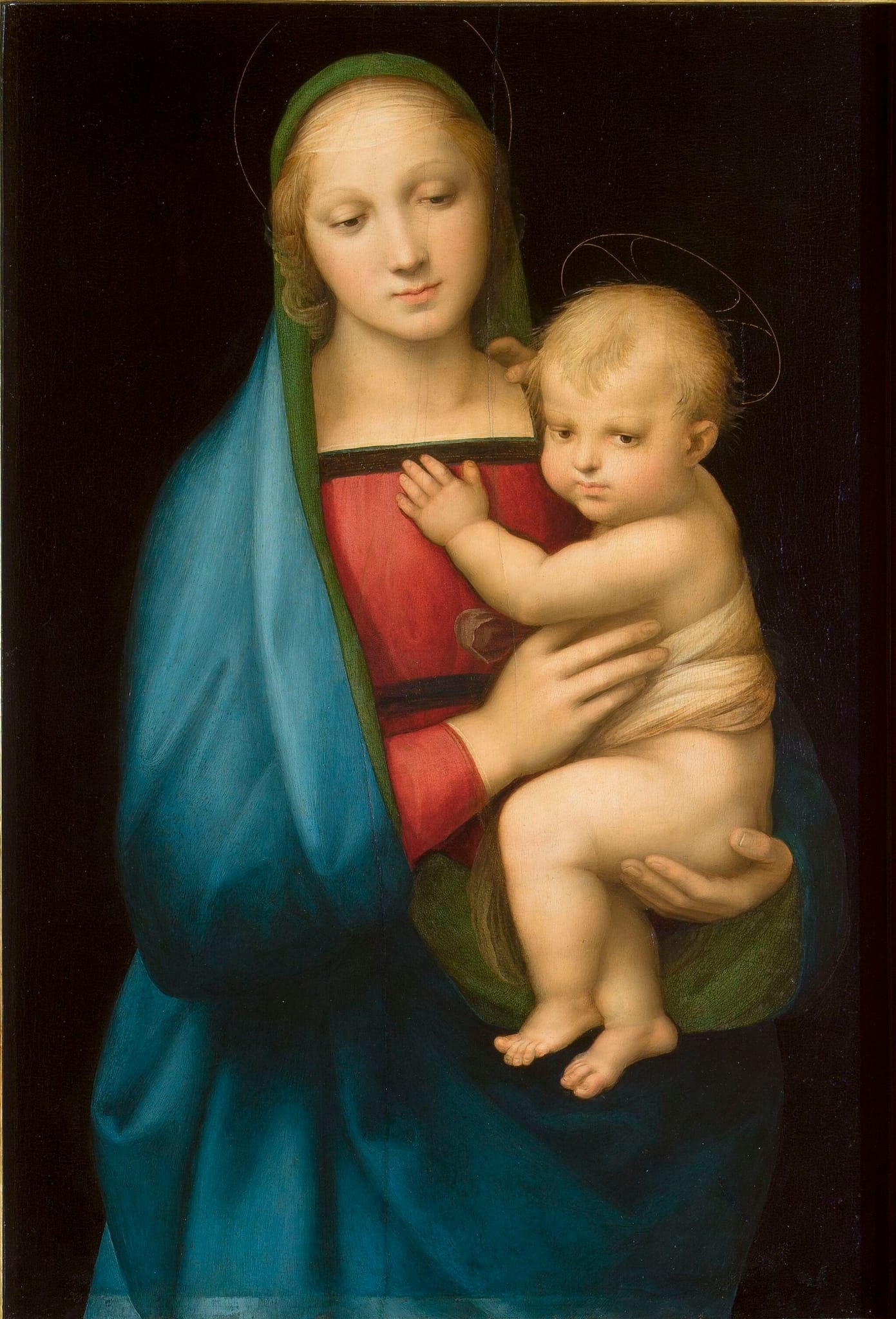
Madonna del Granduca
c. 1504
Shows the Virgin Mary seated three-quarter turned, holding the Christ Child who reaches out with a lively, intimate gesture; the dark, neutral background focuses attention on the figures. Significant as an early Raphael work where his clarity of form and tender humanism begin to replace the more decorative tendencies of his youth. Look for the soft, clear modeling of faces, the elegant S‑curve of Mary’s posture, and the careful, delicate rendering of hands that convey relationship and emotion.
Must-see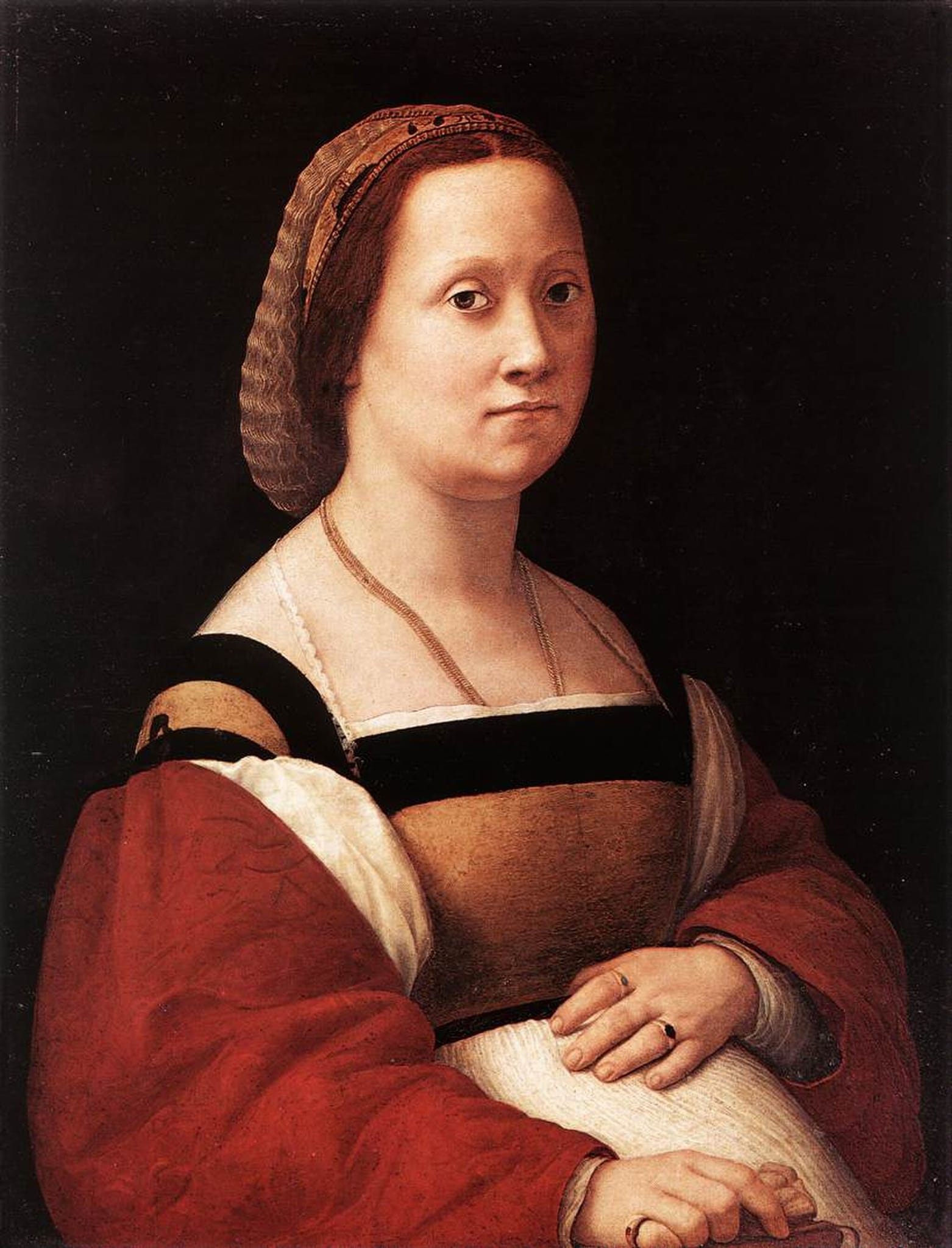
La Gravida
c. 1505–1506
Depicts a pregnant woman — unusual for Renaissance Madonna subjects — shown in serene profile with a simple, domestic air and finely observed costume. Important because it demonstrates Raphael’s interest in naturalism, everyday humanity, and careful attention to costume and physiognomy outside strictly religious iconography. Notice the subtle modeling of the abdomen and hands, the quiet dignity of the sitter, and the painterly balance between intimate realism and idealized beauty.
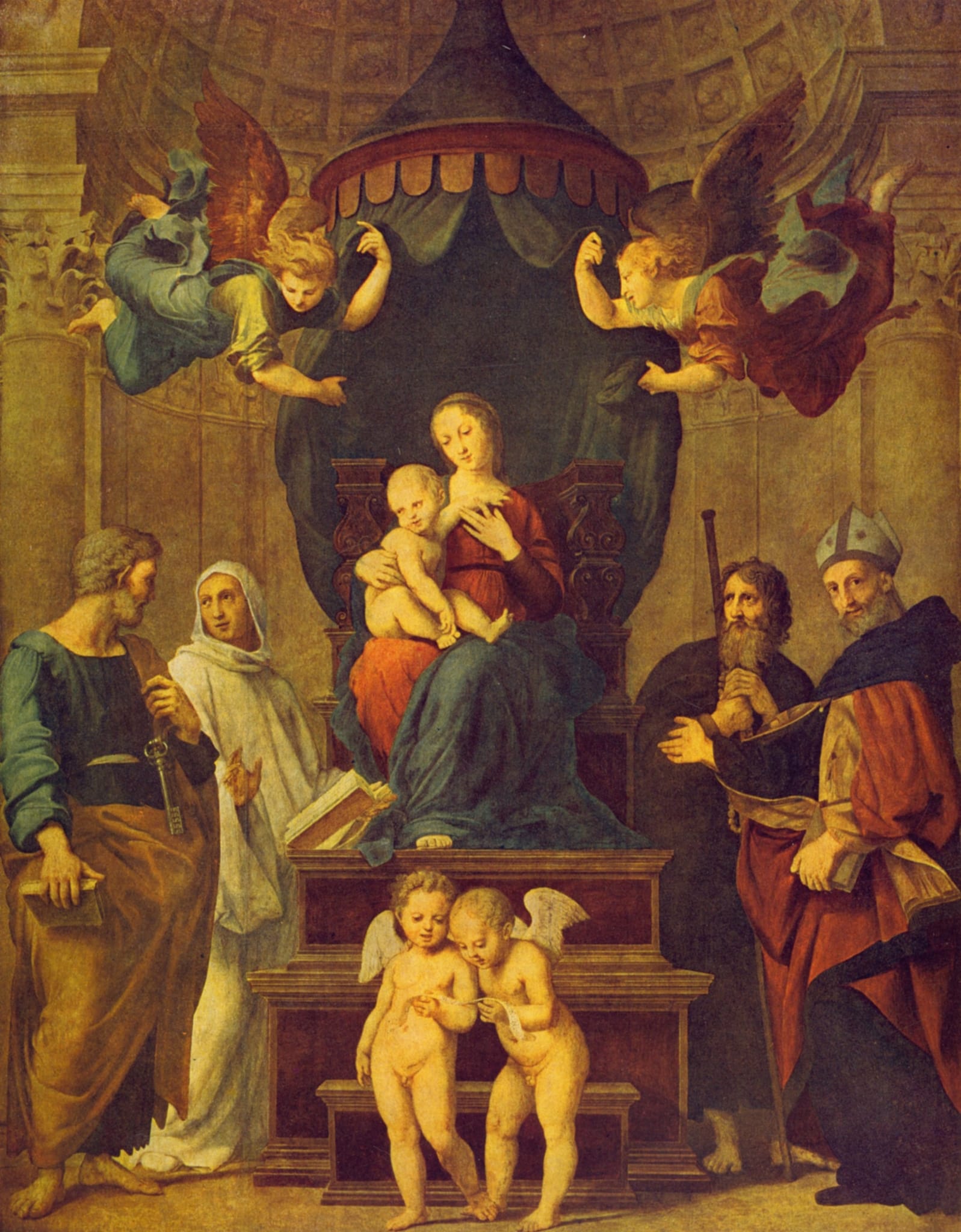
Madonna del Baldacchino
c. 1507–1508
Presents the Virgin and Child enthroned beneath an ornate canopy (baldachin), surrounded by saints in a balanced, pyramidal composition that blends architectural grandeur with devotional intimacy. A milestone in Raphael’s development toward monumental, harmonious compositions inspired by his study of classical architecture and Perugino, marking his move to more complex spatial organization. Observe the interplay of vertical canopy lines with the triangular grouping, the calm, idealized faces, and the measured perspective that unifies figures and space.
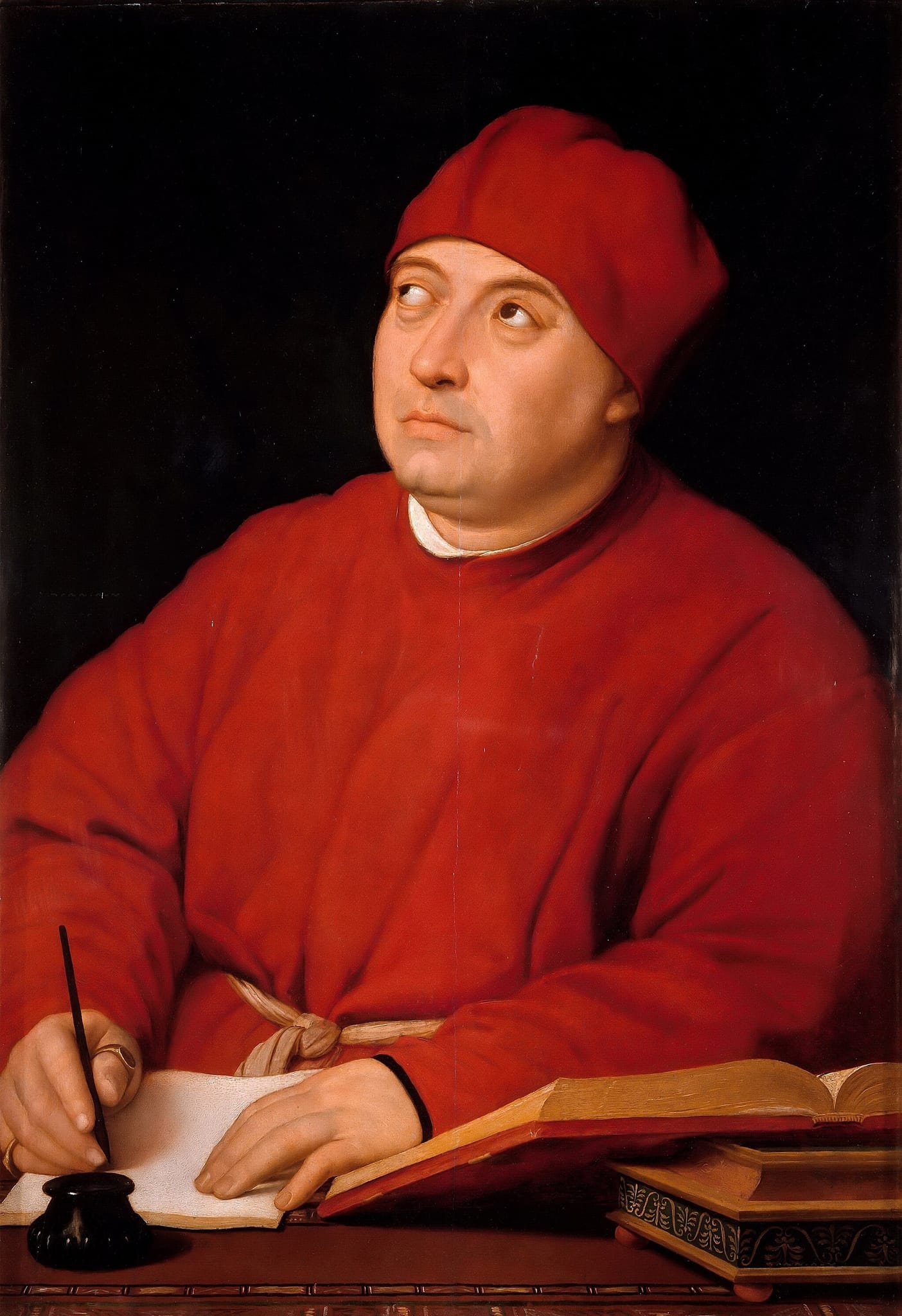
Ritratto di Fedra Inghirami
c. 1509
A refined portrait of a young noblewoman shown in profile against a plain ground, emphasizing her serene expression and elegant costume. It is significant as an example of Raphael’s sensitive portraiture, combining Florentine attention to drawing and Roman poise to create a dignified, individualized likeness. Look for the precise line of the profile, the quiet monumentality of the head, and the meticulous depiction of hair, jewelry, and textiles that signal social status.
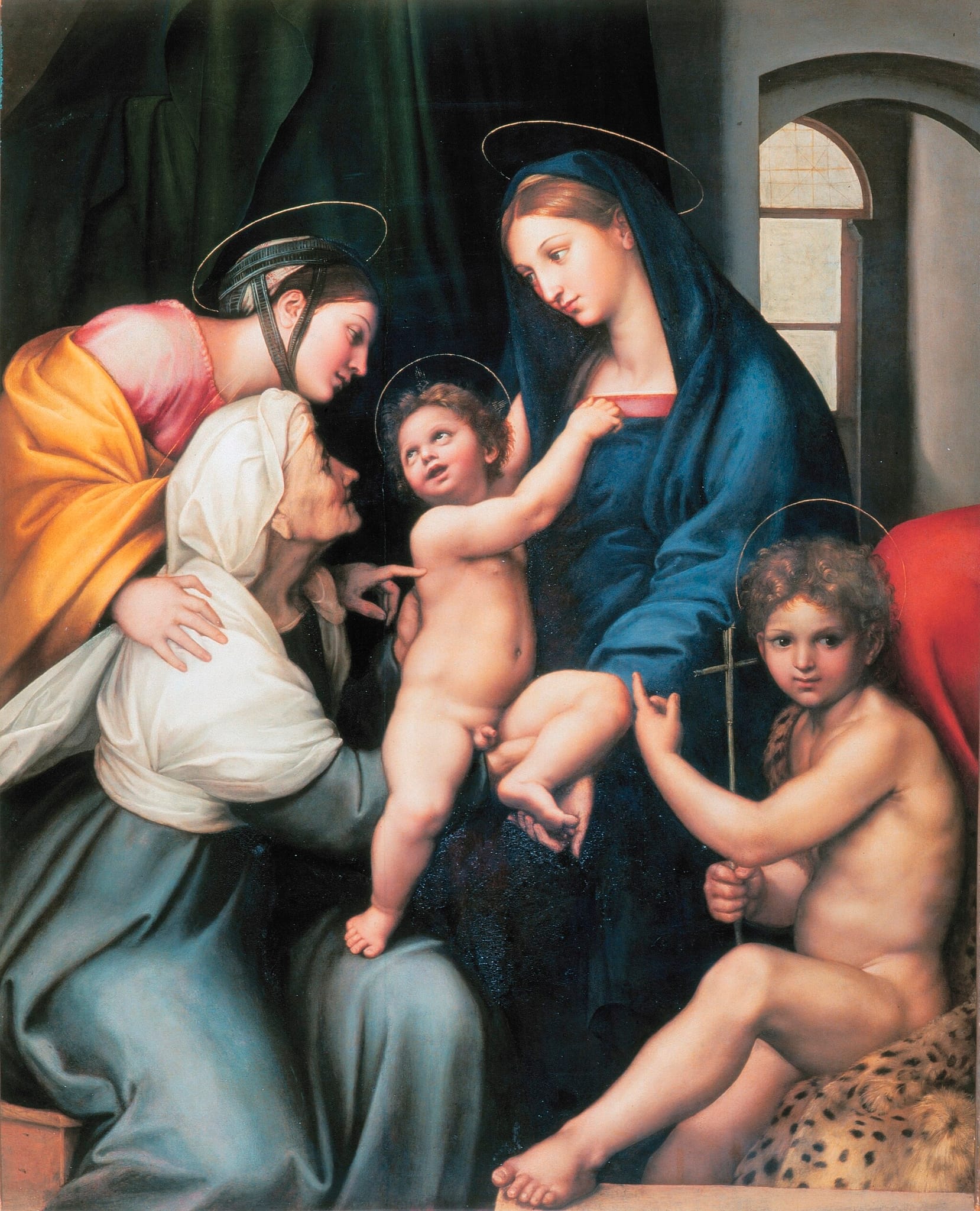
Madonna dell'Impannata
c. 1513–1514
Shows the Virgin nursing the Child in an intimate, domestic interior framed by a simple window (the ‘impannata’), with saints and a landscape glimpsed beyond. Significant as a later Raphael composition that fuses warm intimacy with refined compositional balance, integrating landscape and figure in a unified, atmospheric whole. Notice the soft sfumato transitions, the tender interaction between mother and child, and the careful window framing that creates depth and a quietly luminous setting.
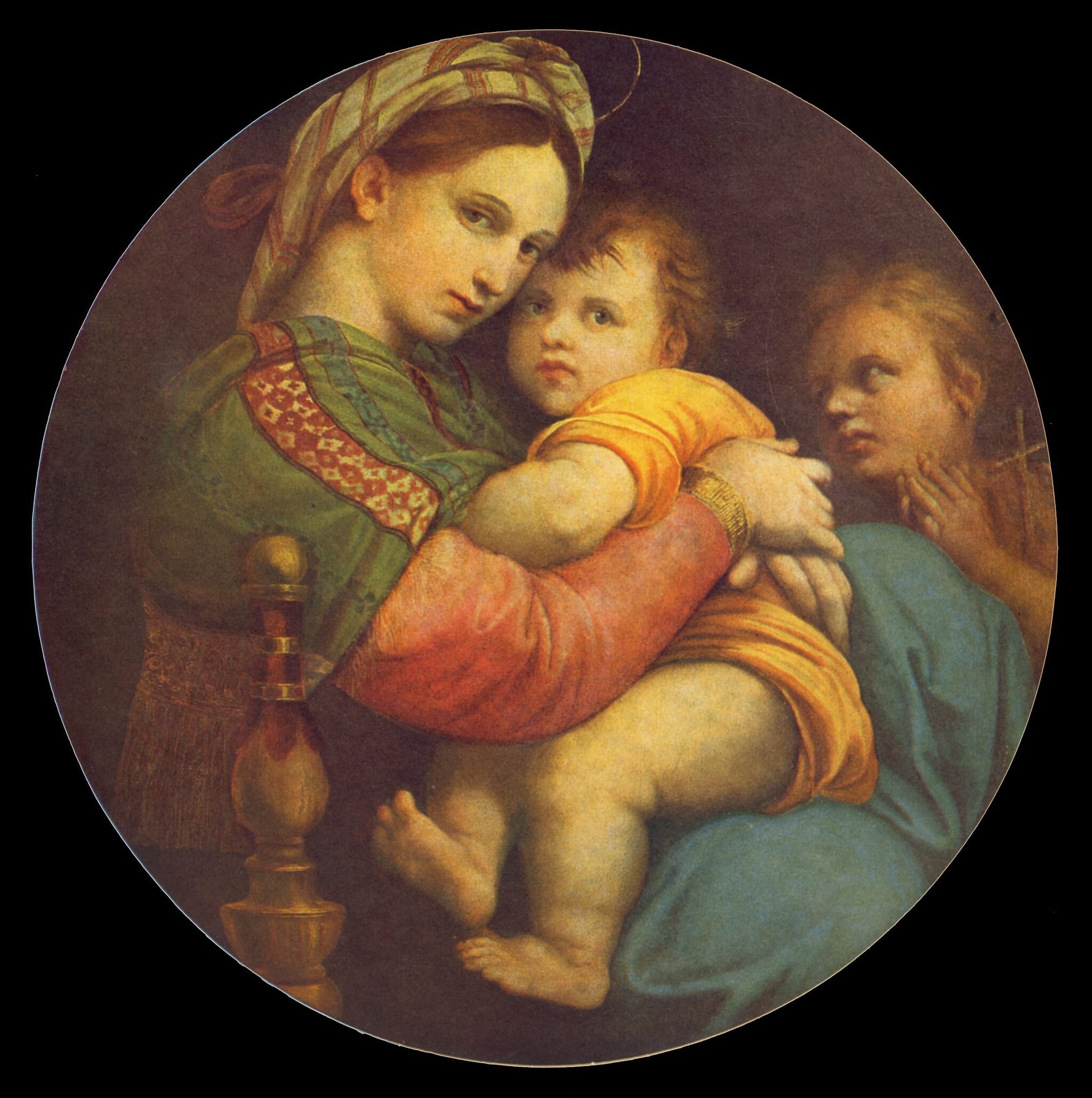
Madonna della Seggiola
c. 1513–1514
An intimate circular (tondo) image of the Virgin embracing the Child, who looks over her shoulder while Saint John the Baptist presses close; the figures form a compact, swirling embrace. Celebrated as one of Raphael’s most tender and harmonious compositions, it exemplifies his late graceful ideal of maternal affection and perfect circular composition. Look for the warm, tactile modeling of skin and drapery, the emotional closeness of the figures, and the compositional rhythm that leads the eye around the tondo.
Must-see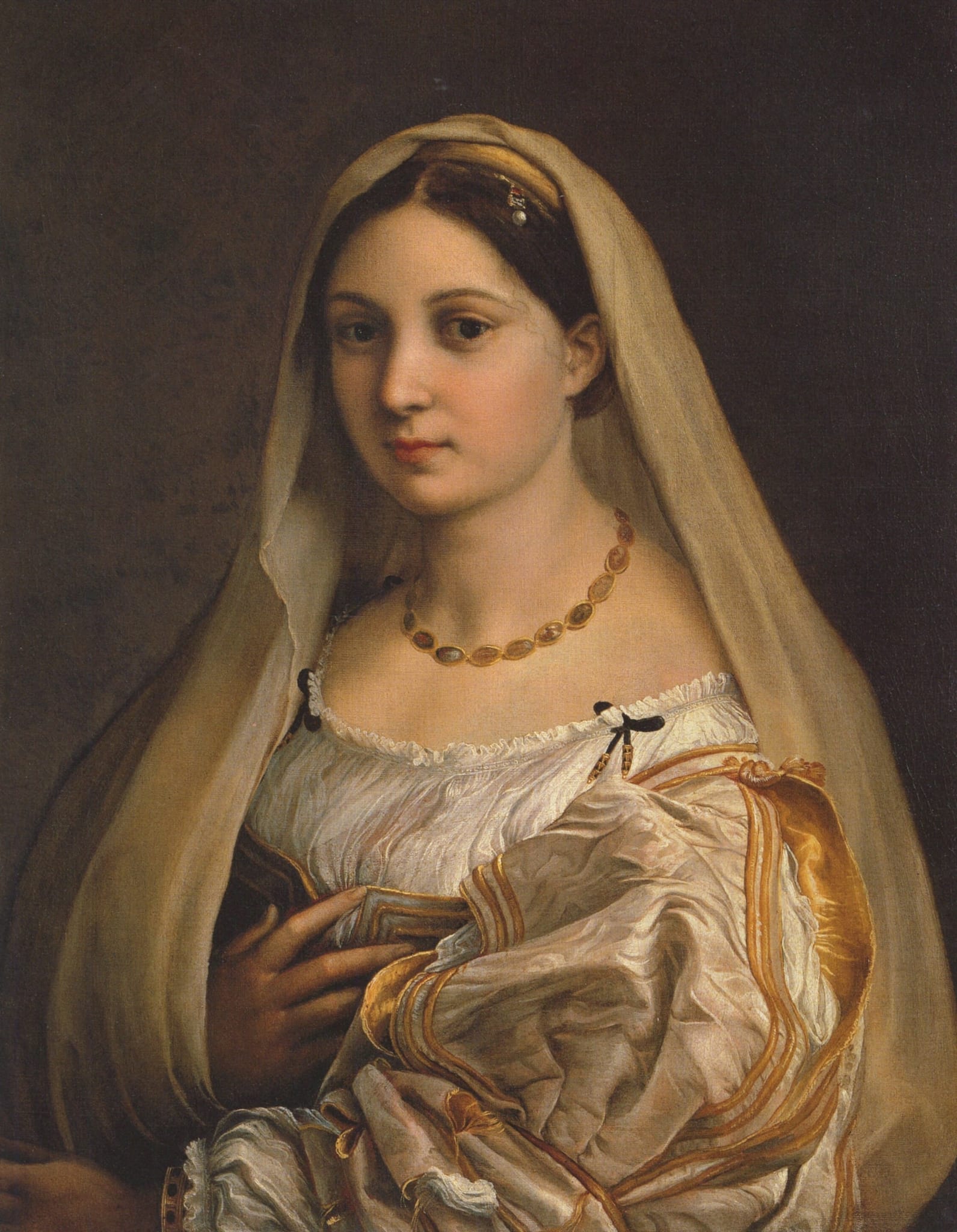
La Velata
c. 1514–1516
A sumptuous portrait of an elegant woman (often identified as a noblewoman) wearing a diaphanous veil and rich costume, shown three‑quarters with a confident, slightly enigmatic expression. Important as a showcase of Raphael’s late portrait style: refined psychological presence, luxurious textures, and effortless grace. Attend to the shimmering treatment of the veil, the subtle play of light on pearls and brocade, and the sitter’s calm but direct gaze that conveys inner poise.
Must-see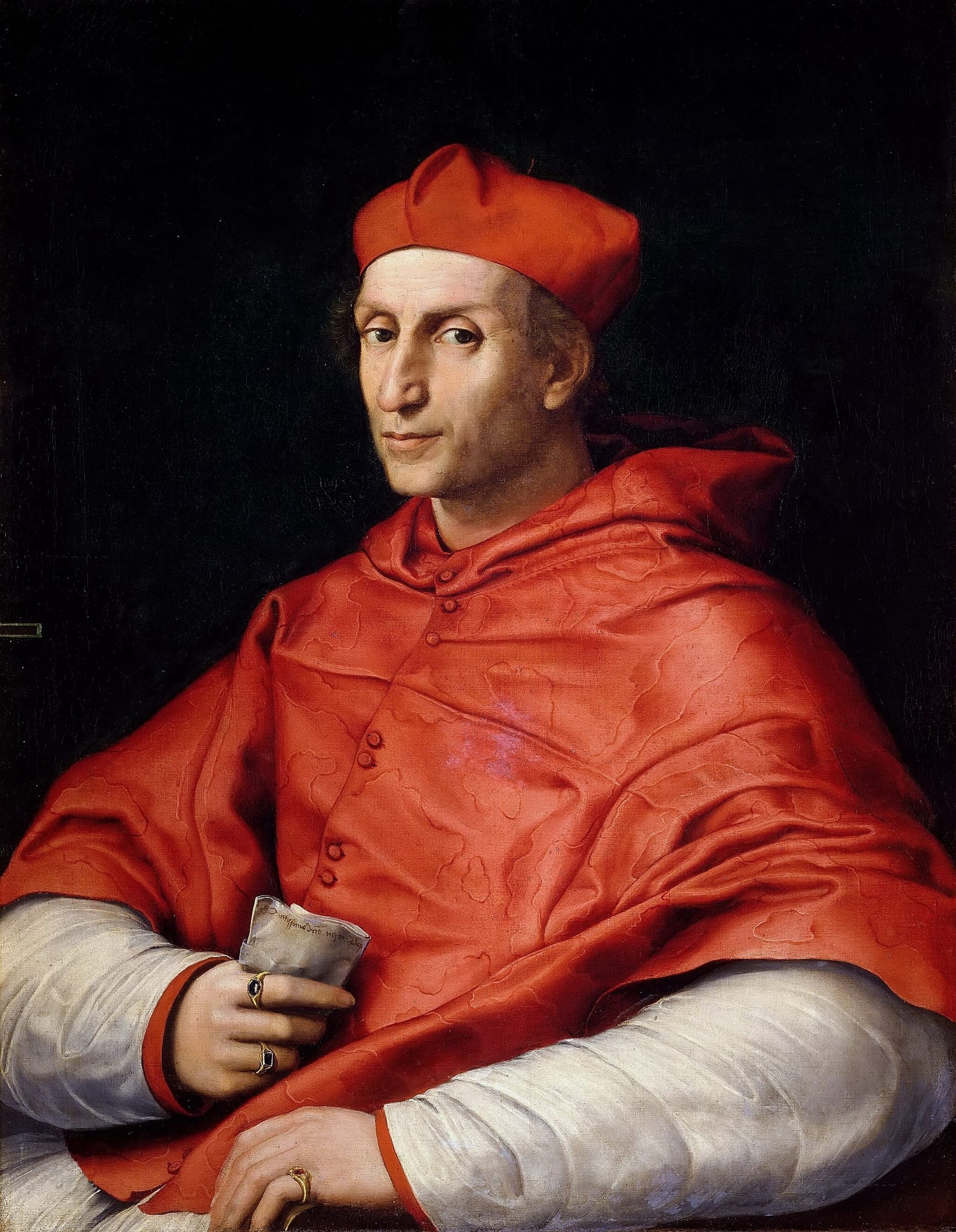
Ritratto del cardinal Bibbiena
c. 1516
A dignified portrait of Cardinal Bibbiena shown in three‑quarter view wearing cardinal’s robes, conveying clerical authority together with personal warmth. The painting is significant as an example of Raphael’s mature ability to combine status portraiture with subtle characterization and nobility of bearing. Look for the restrained but detailed rendering of the red robes, the composed, introspective expression, and Raphael’s refined modeling of flesh and fabric that confer presence and gravitas.
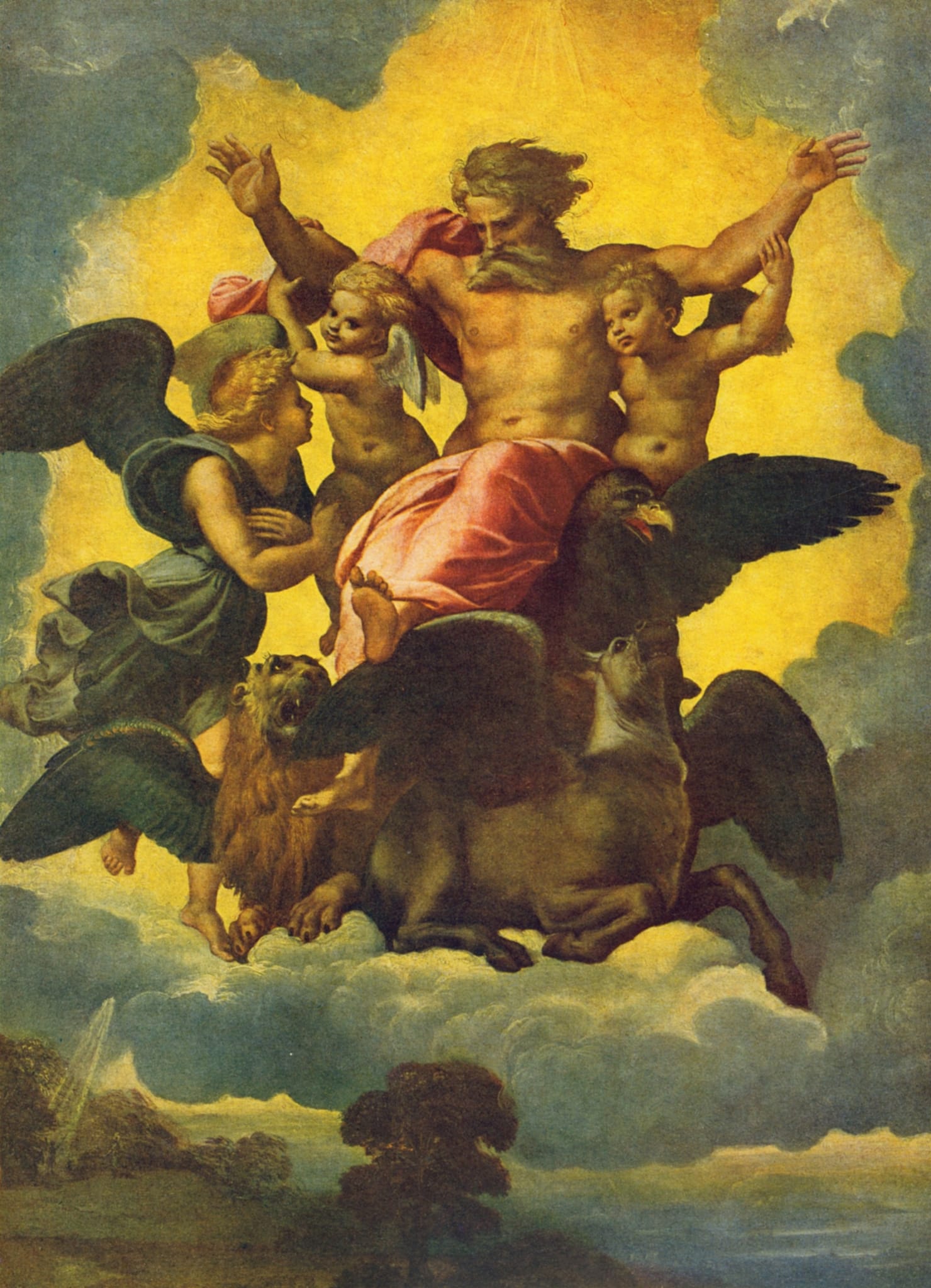
Visione di Ezechiele
c. 1518
Depicts the prophet Ezekiel in a visionary moment, often shown receiving divine revelation, with a dynamic arrangement of figures and a heightened emotional tone. Significant as a late, more complex religious composition where Raphael explores dramatic narrative, bodily expressiveness, and spiritual intensity. Observe the strong gestures, the expressive anatomy, the theatrical use of space and light, and any symbolic elements (angels, scrolls, or visionary imagery) that signal the prophetic revelation.