Raphael Paintings in London — Where to See Them
London is home to approximately eight Raphael paintings on permanent display across four institutions: the National Gallery (six) and Dulwich Picture Gallery (two), while the V&A and Hampton Court Palace’s Royal Collection currently show no Raphaels on permanent display. What makes London distinctive is the concentration of major works at the National Gallery—letting you compare Raphael’s compositional and stylistic development in one visit—paired with Dulwich’s intimate hangings that reveal the finer, devotional scale of his technique.
At a Glance
- Museums
- The National Gallery, Dulwich Picture Gallery, Victoria and Albert Museum (V&A), Hampton Court Palace (Royal Collection)
- Highlight
- View Raphael masterworks at The National Gallery
- Best For
- Renaissance art lovers and history-focused museum-goers
The National Gallery
The National Gallery’s six paintings by Raphael let visitors compare multiple phases of his career in one visit — from his refined Florentine Madonnas to the monumental Roman compositions — so you can watch how his handling of color, composition and figural grace evolves. Seeing several authentic Raphaels side-by-side also makes it easier to spot workshop participation and subtle changes in technique that a single-picture encounter can’t reveal.
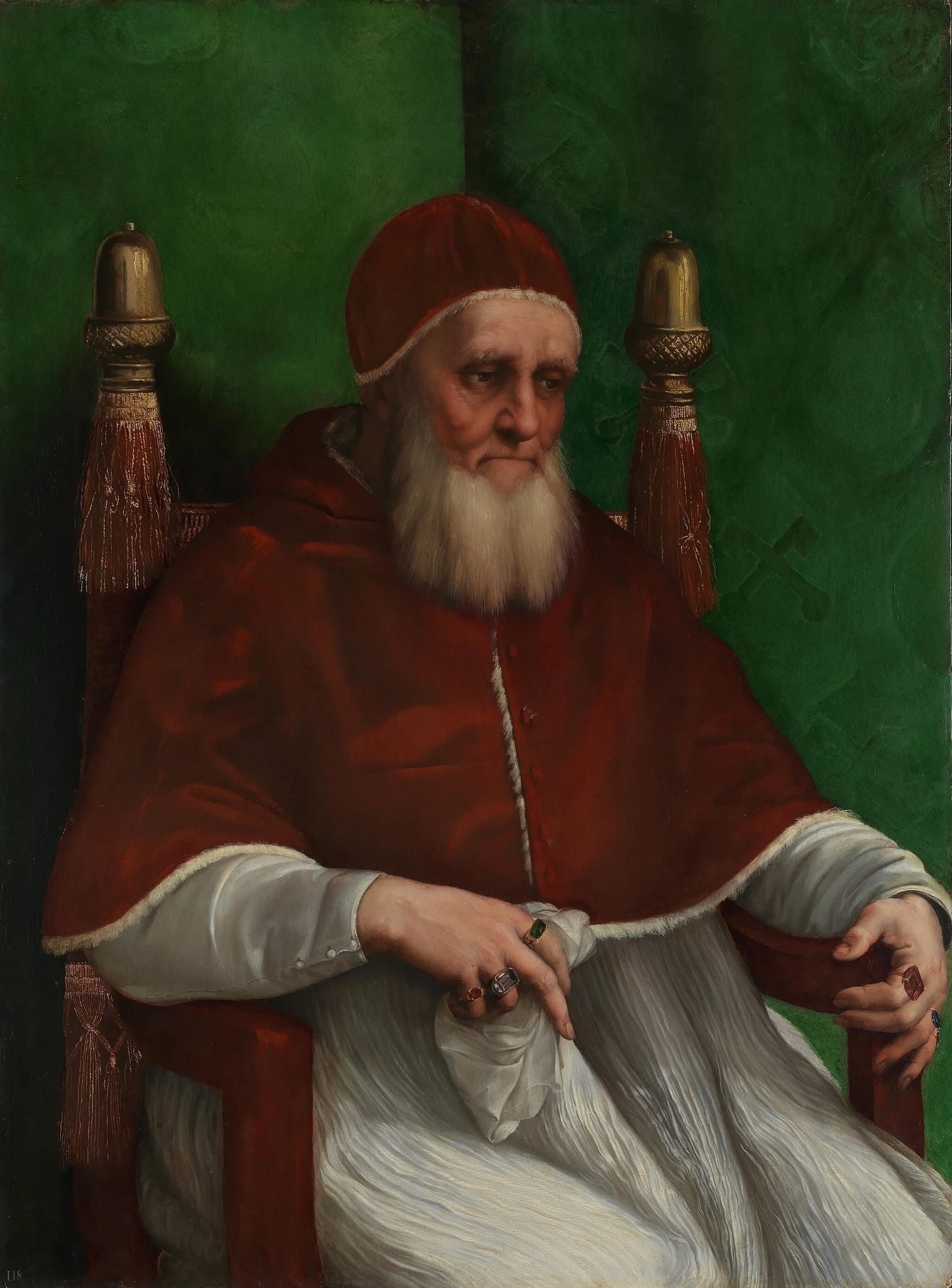
Portrait of Pope Julius II
1511
A sober, half-length portrait showing Pope Julius II seated in red papal robes, his hands clasped and gaze turned slightly away. It is significant for capturing the psychological intensity and authority of one of the Renaissance's most powerful patrons and for Raphael’s development of dignified, character-driven portraiture. Look for the restrained composition, the truthful rendering of age in the pope’s face, and the subtle modelling of light on the hands and robes that convey inner life and status.
Must-see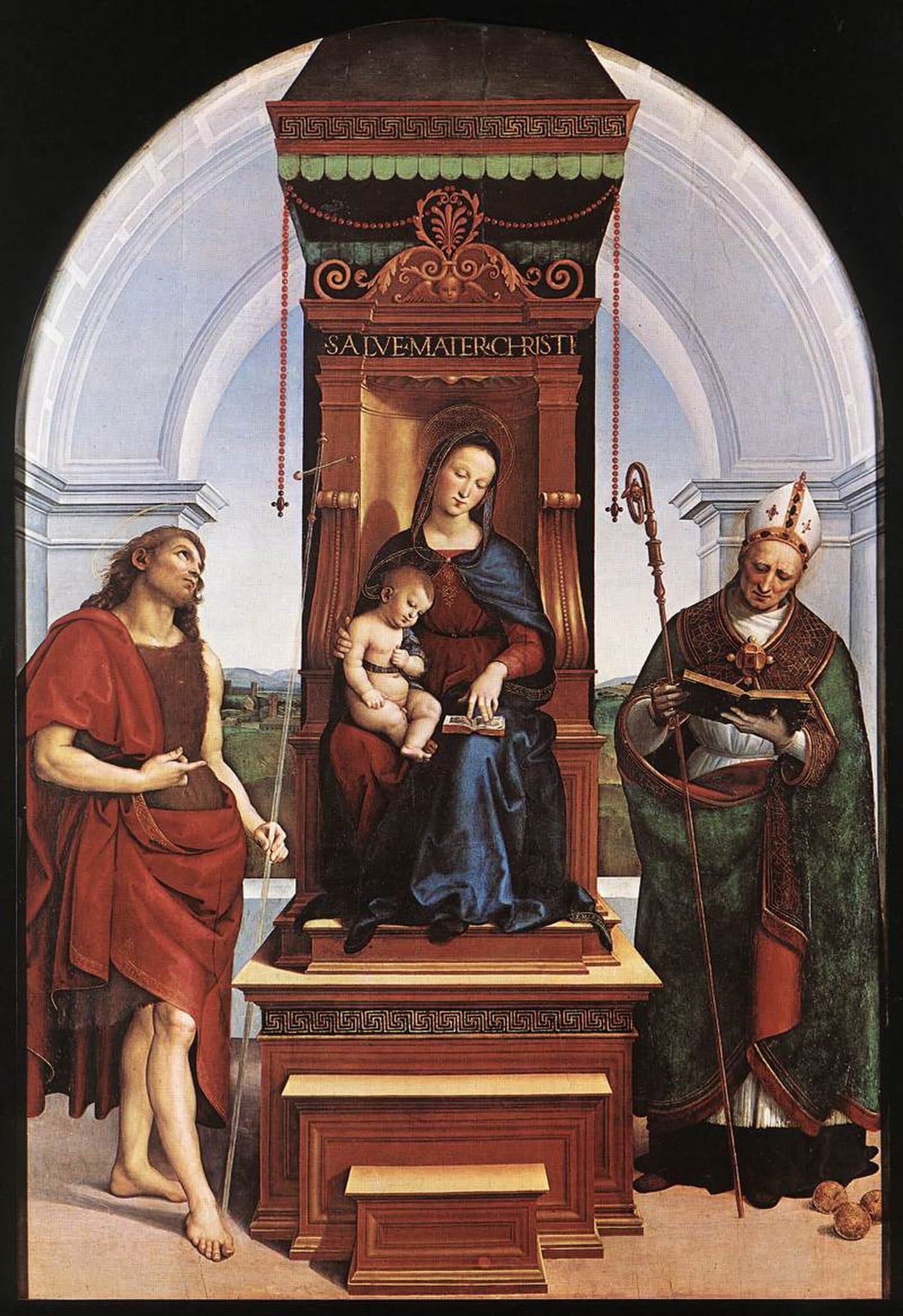
The Madonna and Child with Saint John the Baptist and Saint Nicholas of Bari ('The Ansidei Madonna')
1505
A serene sacra conversazione with the Madonna and Child enthroned, flanked by Saint John the Baptist and Saint Nicholas of Bari, set against an architectural niche. The painting is significant as an early mature work showing Raphael’s synthesis of Perugino’s calm, balanced compositions with a clearer spatial setting and refined figures. Notice the harmonious pyramid arrangement, the delicate expressiveness of the faces, and the careful use of light and perspective that focus attention on the Christ child.
Must-see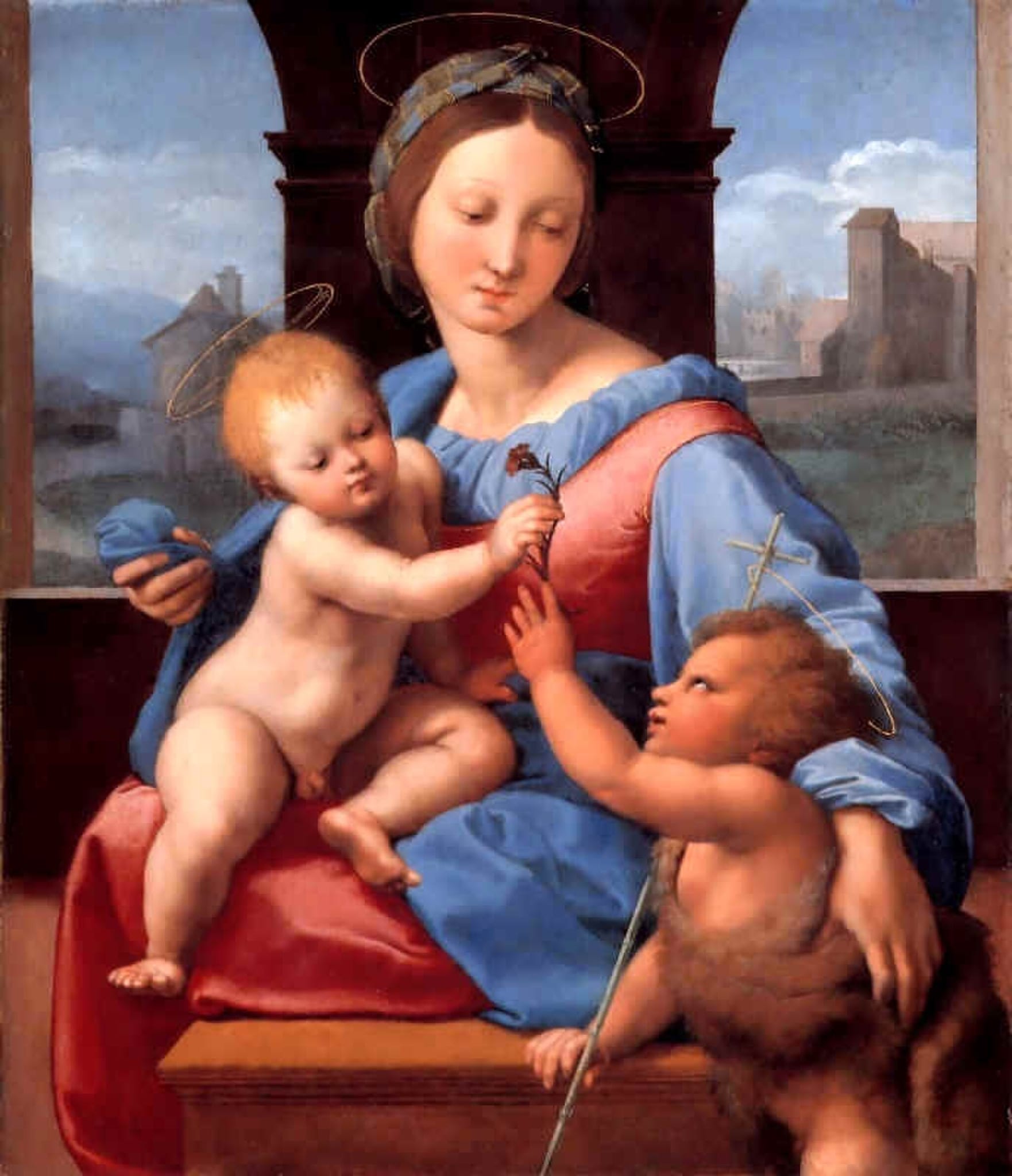
The Madonna and Child with the Infant Baptist (The Garvagh Madonna)
1510
This intimate scene depicts the Virgin holding the Christ child while the infant Saint John the Baptist looks on, creating a tender triangular grouping. It is important for its warm humanism and Raphael’s graceful handling of gesture and expression, reflecting his mature ability to combine devotional warmth with compositional clarity. Observe the gentle interaction between the children, the soft modelling of skin tones, and the elegant drapery folds that guide the eye through the composition.
Must-see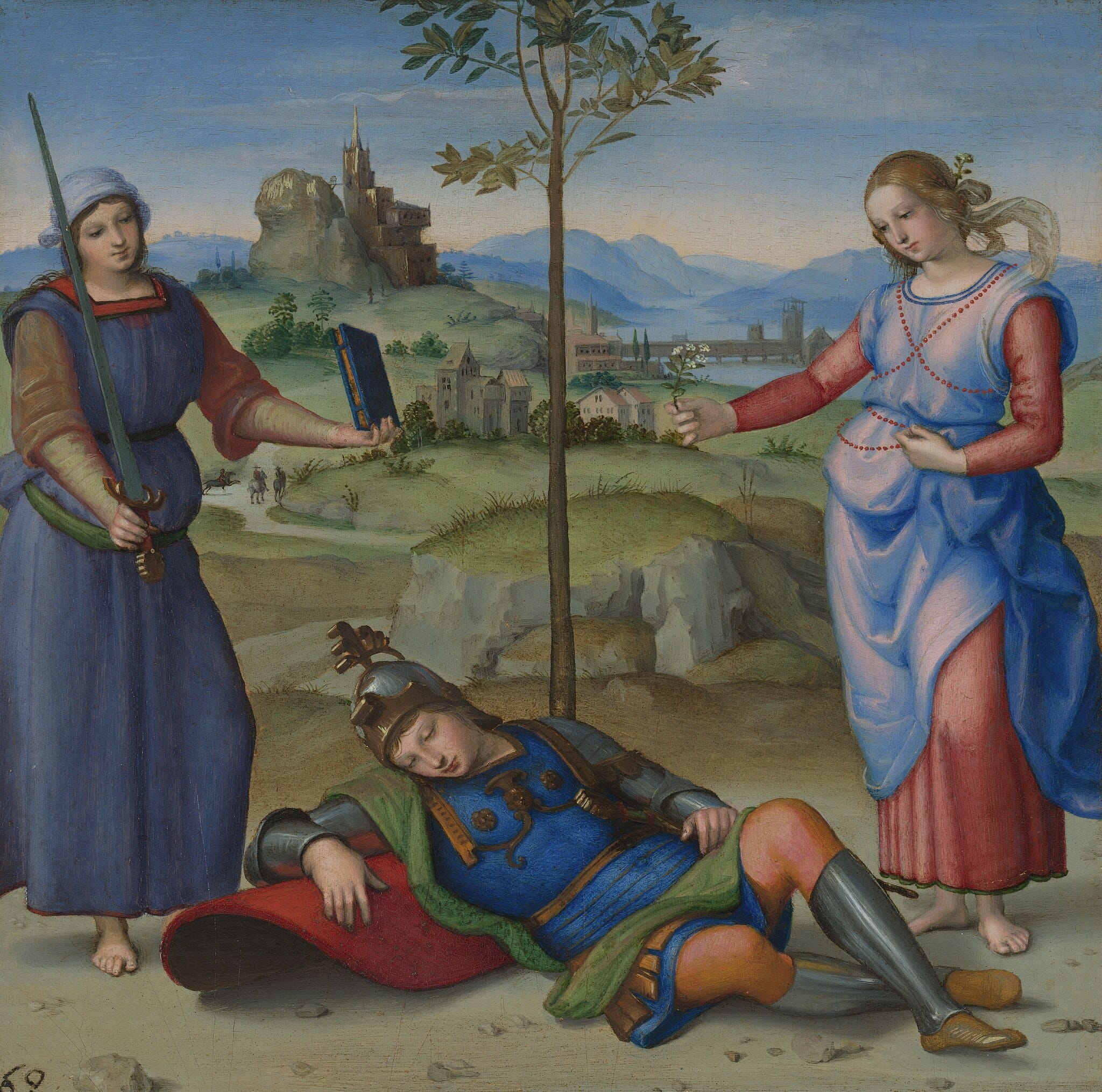
The Dream of a Knight
1504
An allegorical panel showing a sleeping young knight on a bed with two idealized female figures offering him the choices of Virtue and Pleasure above him. Significant as an example of Raphael’s early interest in classical allegory and poetic narrative, it demonstrates his facility for concise storytelling and balanced arrangement. Look for the contrast between the dream figures and the solid, restful realism of the knight, the symbolic poses of the women, and the clarity of line that gives the scene a lyrical calm.

Saint John the Baptist Preaching
1505
Saint John the Baptist is shown in animated gesture, preaching in the wilderness, with a landscape opening behind him. The work is significant for its dynamic figure drawing and the expressive use of gesture that anticipates Raphael’s increasingly sophisticated treatment of narrative scenes. Pay attention to the forceful, rhythmic pose of John, the energetic handling of drapery, and the way the landscape recedes to create depth and context for the sermon.
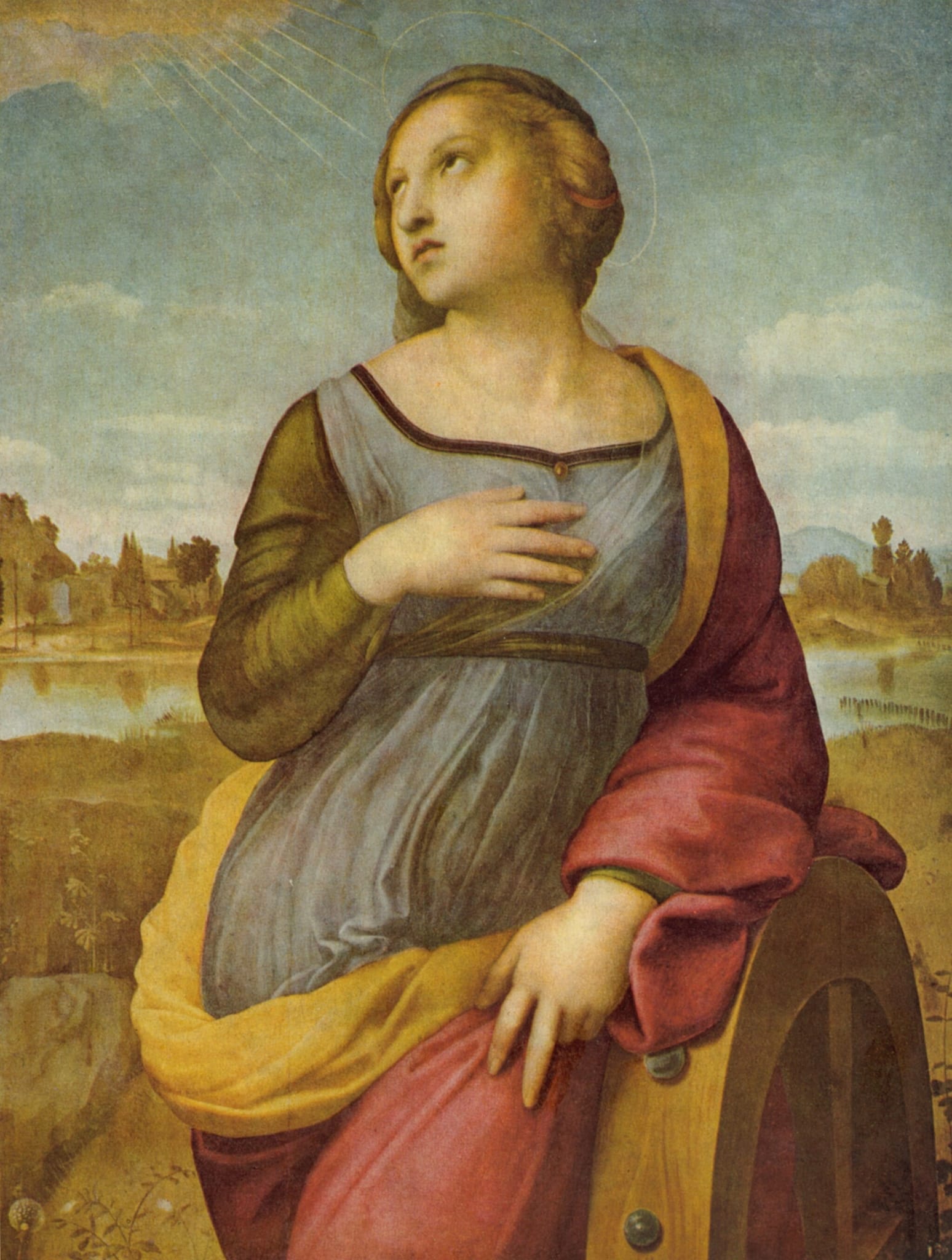
Saint Catherine of Alexandria
1507
Saint Catherine is presented as an elegant, aristocratic figure, holding her attribute (the wheel) and often shown with a contemplative expression. This painting is significant for Raphael’s graceful idealization of female saints and his refinement of facial type, combining devotional presence with courtly beauty. Look for the serene, oval face, the refined hairstyle and costume details, and the calm, poised posture that exemplify Raphael’s gift for idealized, lucid portraiture.
Dulwich Picture Gallery
Dulwich’s two Raphaels are important because they present the artist on a more intimate, devotional scale than the large public commissions — they showcase his gift for tenderness, delicate coloring and the domestic scale of many of his Madonnas. In a small, quiet setting like Dulwich you can study brushwork and facial expression closely, giving a clearer sense of Raphael’s draftsmanship and finishing than under the glare of busier national museums.
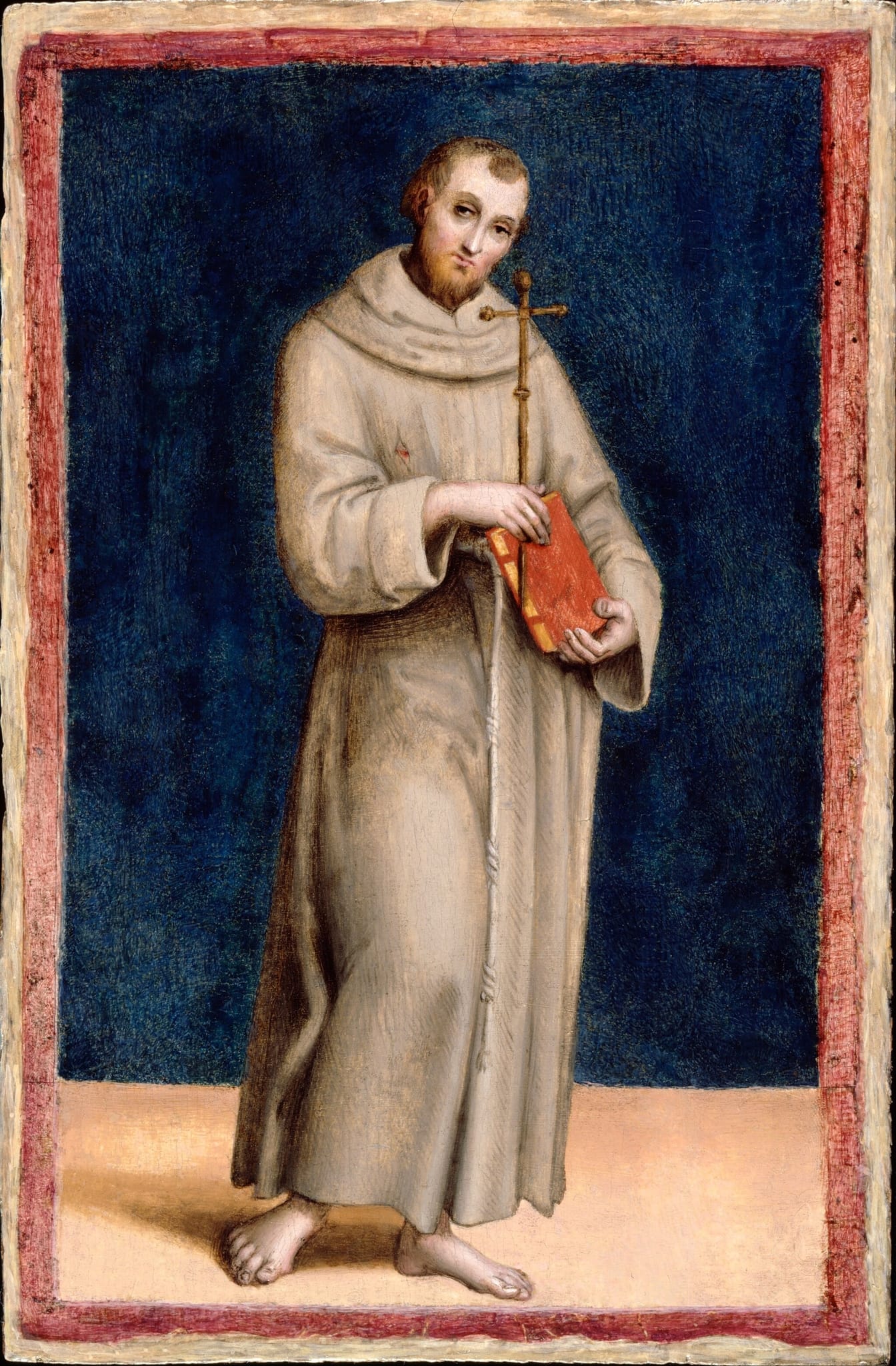
Saint Francis of Assisi
c.1502
A small predella panel showing Saint Francis in his simple Franciscan habit in a contemplative, prayerful pose set against a restrained landscape; Raphael renders the saint with calm dignity and sensitive modelling. This work is significant as an early Raphael piece from the predella of the Colonna Altarpiece (c.1502), demonstrating his developing gift for intimate expression and refined handling of paint. Viewers should look for the delicate modelling of the face and hands, the warm tonal gradations in the drapery, and how Raphael suggests character and devotion within a very small scale. ([dulwichpicturegallery.org.uk](https://www.dulwichpicturegallery.org.uk/explore/explore-the-collection/saint-francis-of-assisi/?utm_source=openai))
Must-see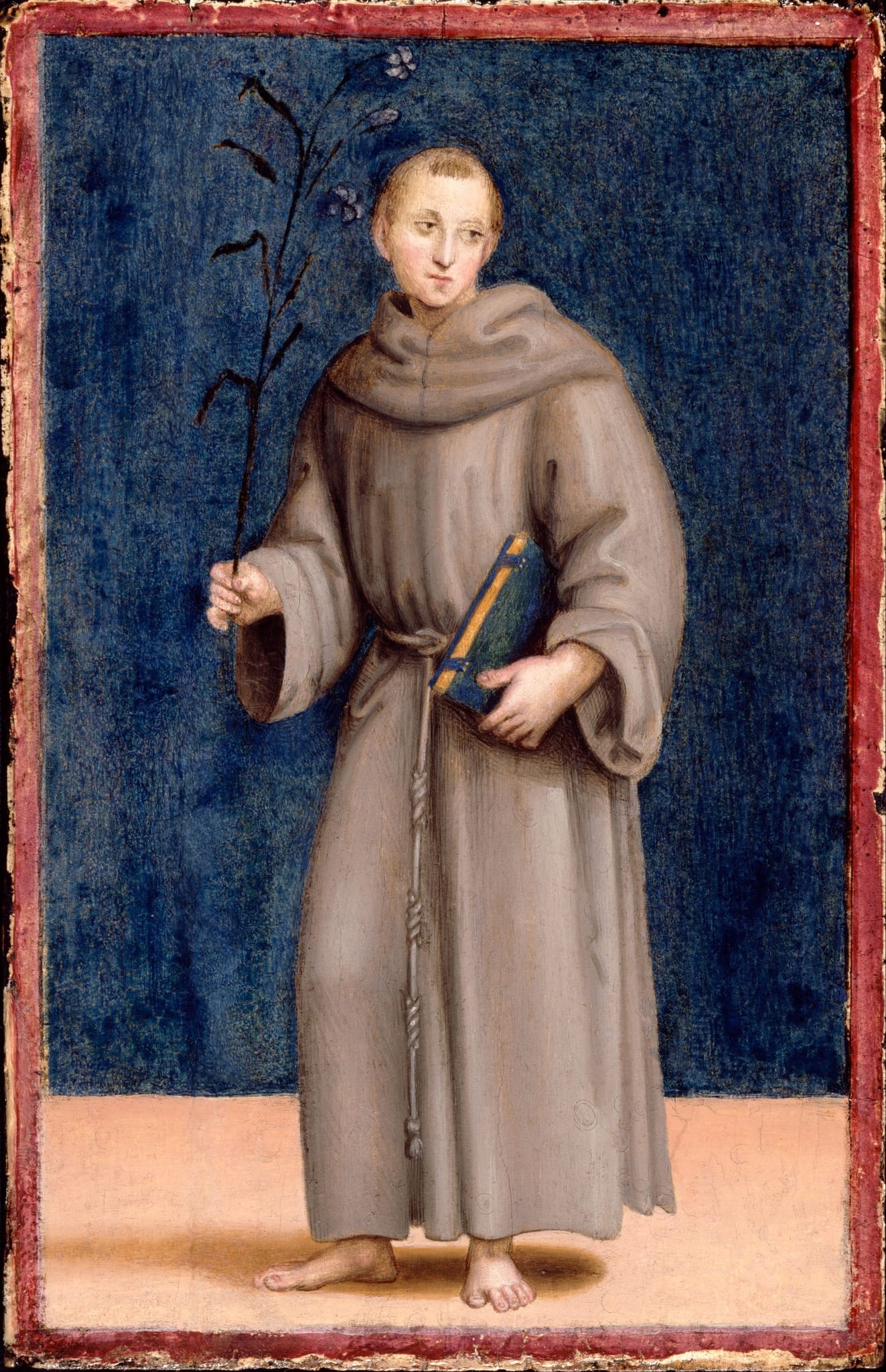
Saint Anthony of Padua
c.1502
Depicts Saint Anthony of Padua in Franciscan habit, identified by his attributes (the book and lily), portrayed with a quiet, devotional presence against a deep, clear ground; the figure is one of the small standing-saint panels that flanked the predella. Its significance lies in being another early Raphael predella panel from the Colonna Altarpiece, showing his ability to create a concentrated, dignified portrait of a holy figure and to harmonize figure and iconography at a miniature scale. When looking, notice the clarity of the silhouette, the careful attention to attribute details (book and lily), and the subtle play of light on the face and robes that reveal Raphael’s early mastery. ([dulwichpicturegallery.org.uk](https://www.dulwichpicturegallery.org.uk/explore/explore-the-collection/saint-anthony-of-padua/?utm_source=openai))
Must-seeVictoria and Albert Museum (V&A) - South Kensington
Although the V&A holds no paintings by Raphael, it is essential for understanding him because it preserves his large-scale cartoons/tapestry designs and related drawings and textiles that show how Raphael conceived monumental images for public and liturgical settings. These works reveal his design process, scale-thinking, and how his drawings translated into woven and architectural media — vital context for appreciating his painted compositions.
Hampton Court Palace (Royal Collection display)
Hampton Court matters for experiencing Raphael because it displays items from the Royal Collection — including drawings, preparatory sheets and works that once circulated among collectors — which illuminate Raphael’s working methods and the collecting tastes that elevated him in later centuries. Seeing Raphael material in a palace setting also places his art in the context of princely patronage and display practices that shaped how his work was preserved and interpreted.