Raphael Paintings in Rome — Where to See Them
Rome matters for seeing Raphael because it preserves about six of his paintings on permanent display across three sites that reflect the contexts he worked in: Galleria Nazionale d'Arte Antica – Palazzo Barberini (1), Galleria Borghese (3), and Villa Farnesina (Accademia Nazionale dei Lincei) (2). Visiting these paintings in palaces and villas lets you trace how Raphael adapted his painting to private and public commissions in the city—how his figures relate to architectural settings and elite patrons—so you get a more complete sense of his Roman practice than from isolated works in distant museums.
At a Glance
- Museums
- Galleria Nazionale d'Arte Antica - Palazzo Barberini, Galleria Borghese, Villa Farnesina (Accademia Nazionale dei Lincei)
- Highlight
- Must-see: Raphael's masterpieces in the Galleria Borghese.
- Best For
- Renaissance art lovers and history enthusiasts
Galleria Nazionale d'Arte Antica - Palazzo Barberini
Palazzo Barberini matters for experiencing Raphael because its single Raphael painting is displayed within a collection and setting that emphasize his role in the Roman circle of the 16th century — the surrounding Baroque and papal collections help place that work in the exact artistic and patronage context Raphael was working toward. Seeing this Raphael in situ at Barberini lets you compare his balanced composition and color sense directly with later Roman responses to his style in the same galleries, which sharpens appreciation of his influence on subsequent generations.
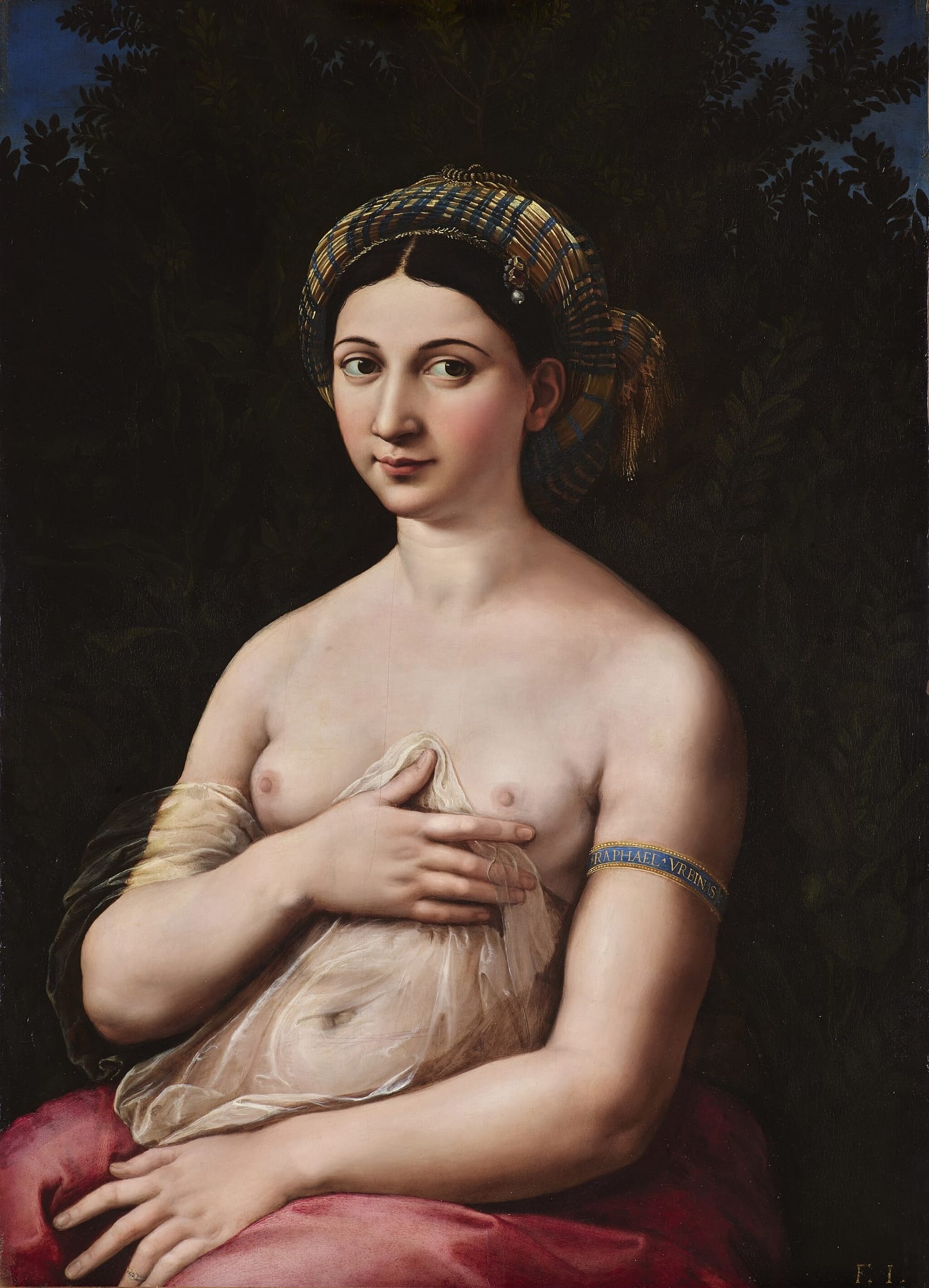
La Fornarina
1520
A sensuous portrait of a young woman shown half-length, wearing a ribbon inscribed with Raphael’s name and a transparent dress that reveals her bare shoulder and breast—traditionally identified as Margherita Luti, the baker’s daughter reputed to have been Raphael’s lover. The painting is significant for its intimate, almost private character that blends portraiture with idealized beauty, revealing Raphael’s late style and his interest in combining naturalism with classical grace. Viewers should look closely at the direct, almost challenging gaze, the delicate handling of skin and cloth, and the signature ribbon and ring (on her finger and on a small fingered hand resting on her shoulder in some reproductions), which invite questions about identity, authorship, and the relationship between artist and sitter.
Must-seeGalleria Borghese
The Borghese matters because its multiple Raphaels are part of Cardinal Scipione Borghese’s collection and therefore present several facets of the artist — portraiture, devotional imagery, and refined compositional drafts — grouped within a single, intimate collection. Seeing three Raphaels in the Borghese allows you to track subtle shifts in technique and expressive focus across works that were admired and collected as examples of high Renaissance taste, and to compare them directly with masterpieces by Raphael’s contemporaries collected by the same patron.
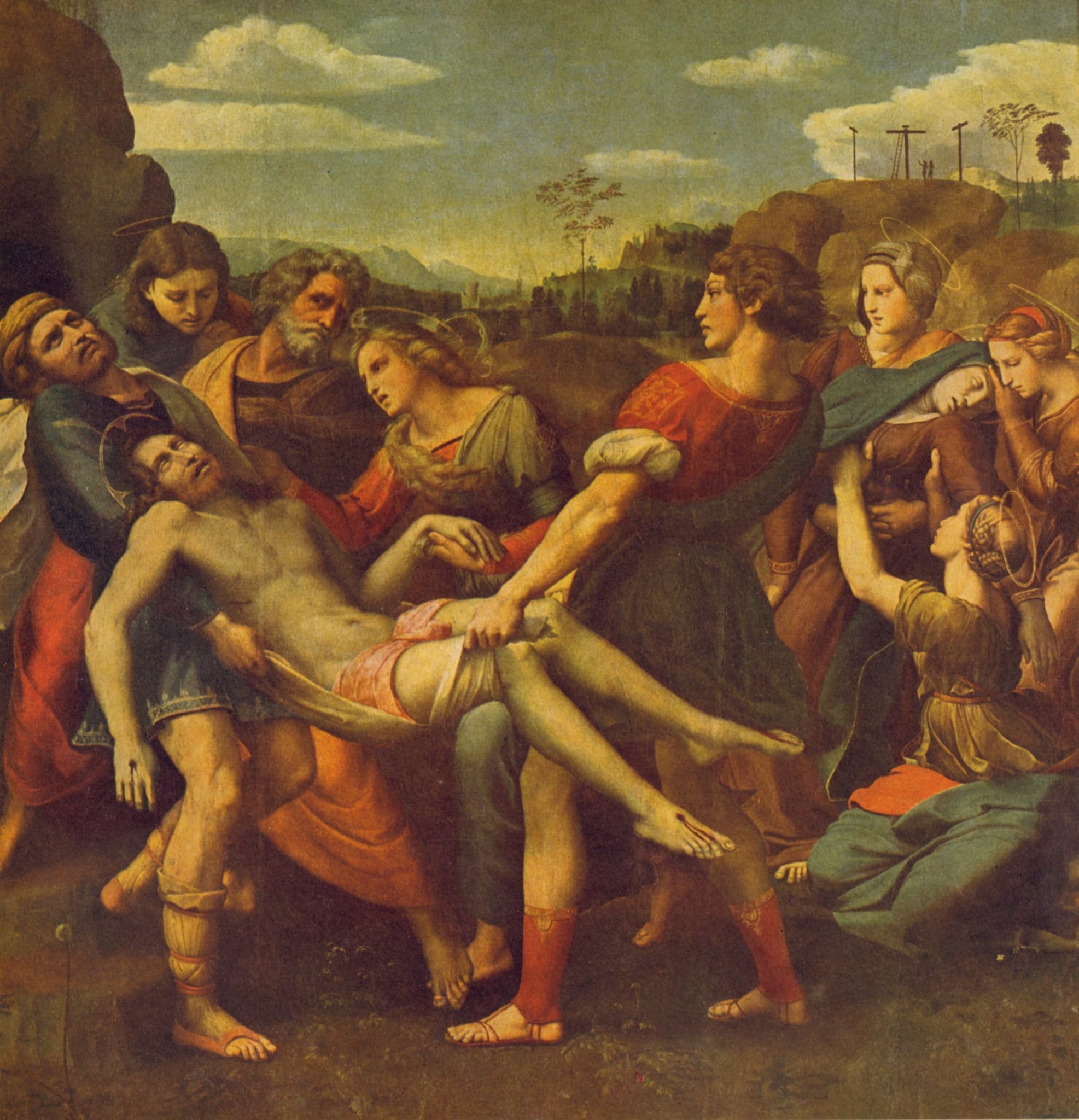
Deposition (The Carrying of the Dead Christ to the Sepulchre)
1507
Raphael’s Deposition shows the moment Christ’s body is carried to the tomb, with anguished figures—Mary, mourners, and attendants—arranged around the limp, central corpse. Significant as an early Raphael altarpiece demonstrating his growing mastery of composition, emotion, and balanced grouping influenced by Perugino yet moving toward High Renaissance naturalism. Viewers should look for the careful diagonals that guide the eye to Christ’s face, the subtle interplay of gestures and grief among the figures, and the use of light to model the body and heighten the scene’s solemnity.
Must-see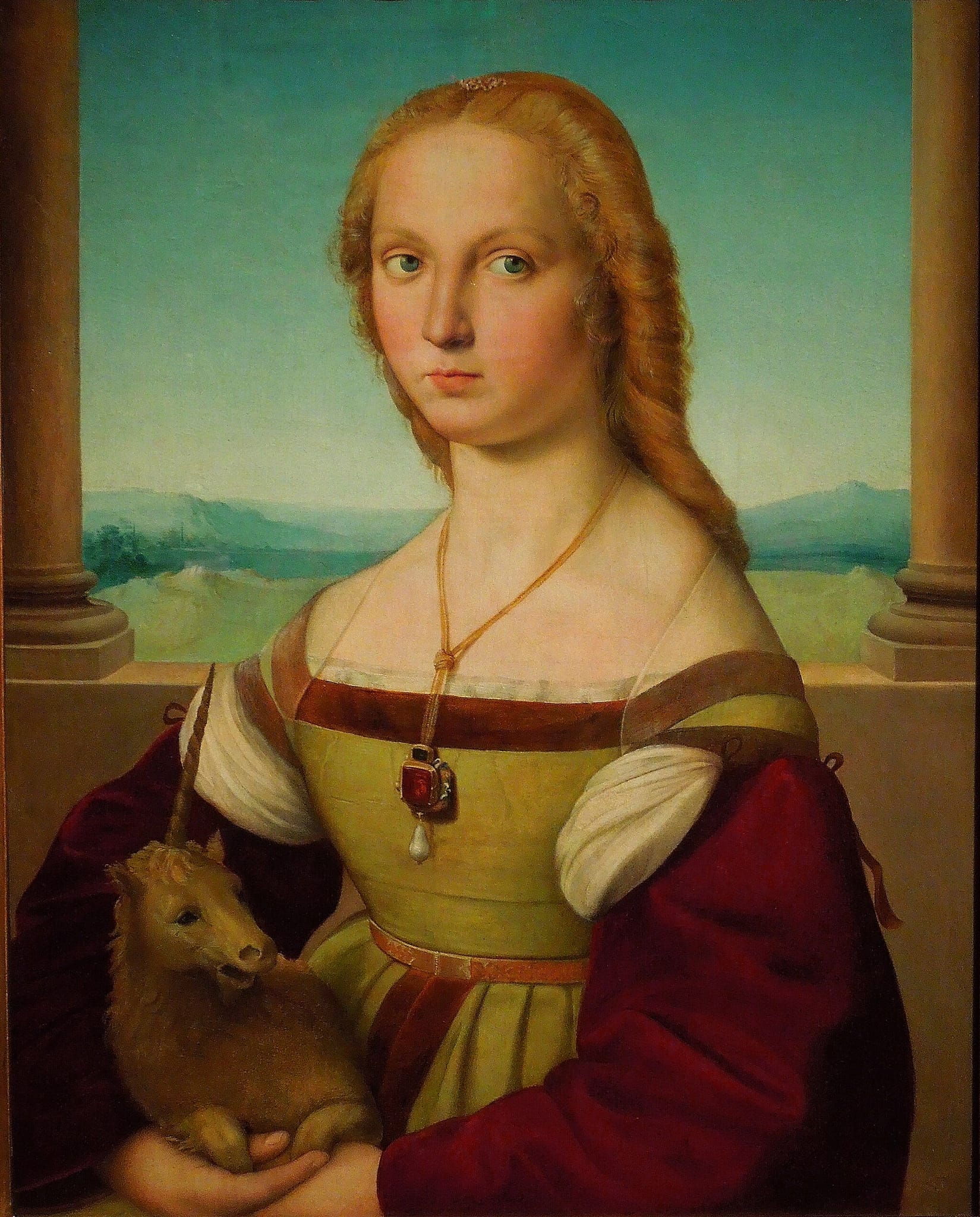
Young Woman with Unicorn
1505
This intimate portrait presents a young woman holding a small unicorn, a symbol of chastity and bridal virtue, set against a restrained background that emphasizes her serene expression and refined features. The painting is important as an example of Raphael’s early successes in portraiture, blending sweetness of expression with attention to fine detail and soft modeling. Viewers should attend to the delicate handling of skin and fabric, the symbolic meaning of the unicorn, and the subtle psychological connection between sitter and viewer conveyed through her direct gaze.
Must-see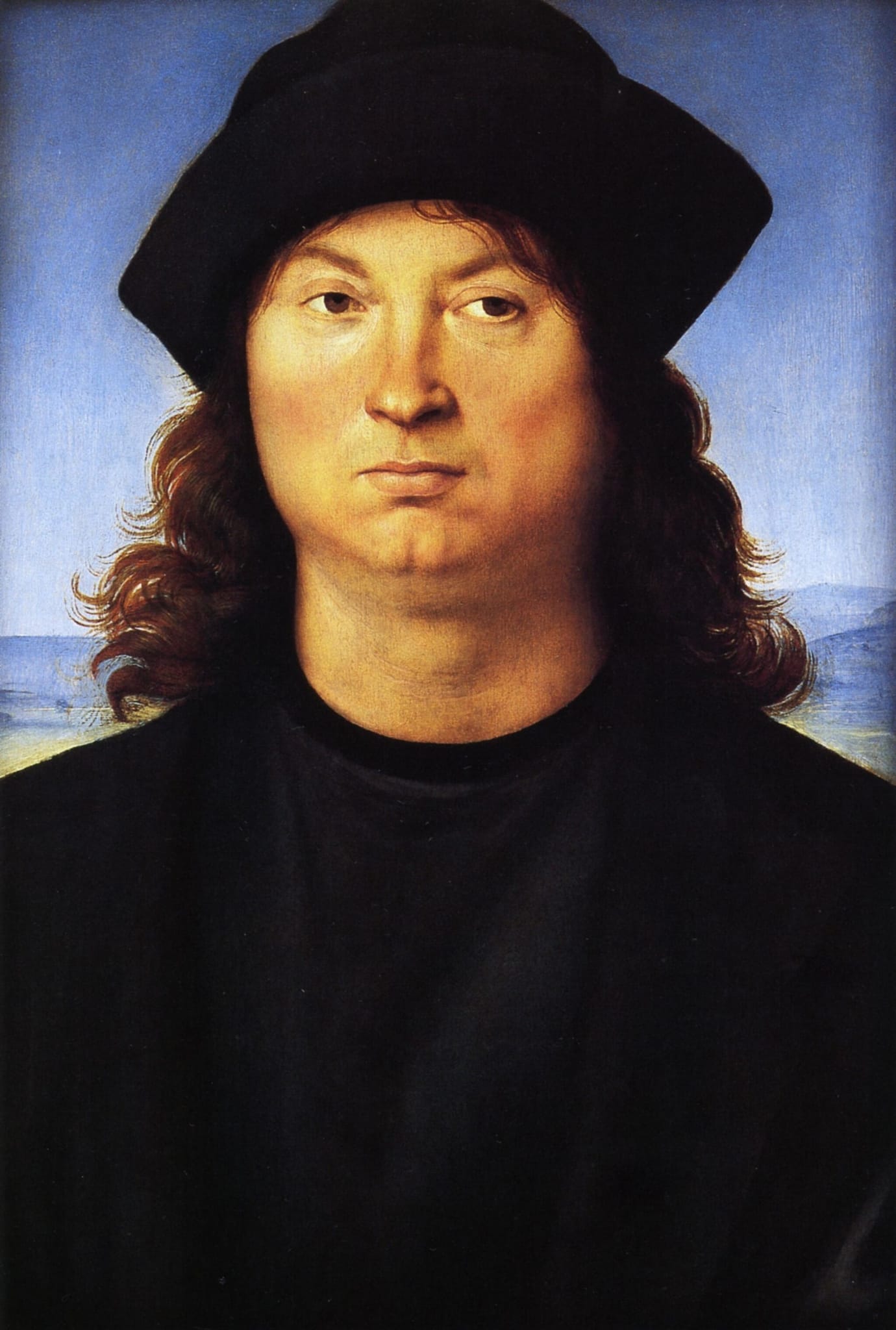
Portrait of a Man
1503
Raphael’s Portrait of a Man captures an unknown sitter with clear, balanced composition and a calm, introspective expression typical of his early portraits. Significant for showing Raphael’s development from his Umbrian roots toward a more naturalistic and individualized approach to likeness, the work reveals his emerging skill in rendering character through posture and facial nuance. Look for the refined modeling of the face, the simplicity of costume that focuses attention on the sitter’s features, and the silent psychological presence Raphael creates with subtle light and shadow.
Villa Farnesina (Accademia Nazionale dei Lincei)
Villa Farnesina is essential for Raphael because it contains fresco work he painted directly on the villa’s walls — most famously the Triumph of Galatea — so you see his figures in the architectural and decorative context for which they were conceived, not framed and relocated to a museum. Experiencing Raphael in the Farnesina highlights his mastery of fresco, narrative movement, and integration with architectural space, giving a visceral sense of how his imagery functioned as part of a patron’s private villa rather than as an isolated panel.
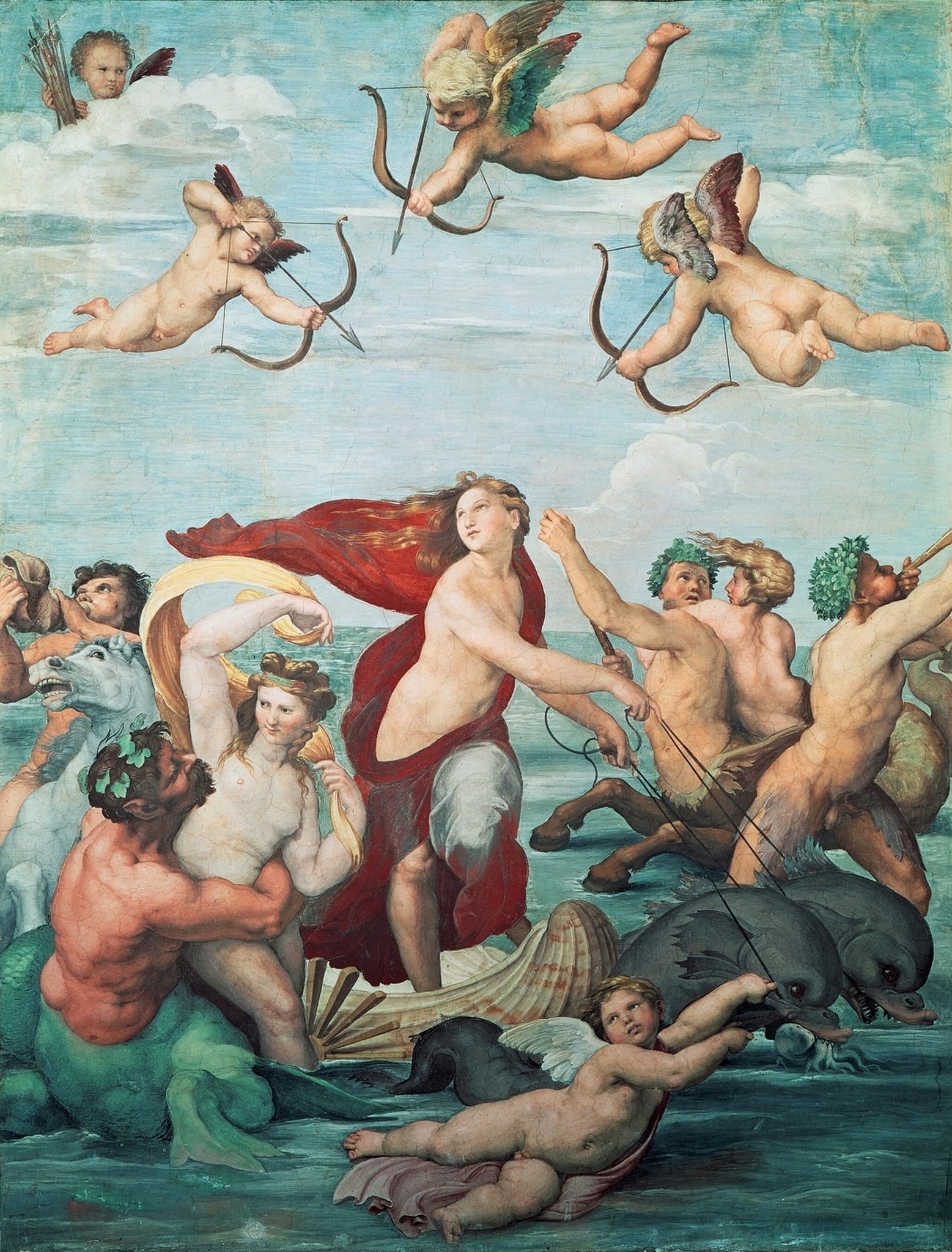
Triumph of Galatea
1512
Raphael’s Triumph of Galatea shows the sea-nymph Galatea riding a shell chariot through a lively marine procession of nereids, tritons, and putti — a poetic celebration of classical myth drawn from Ovid and the poet Angelo Poliziano. It is significant as a high point of Raphael’s Roman period: a summation of his mastery of idealized form, balanced composition, and luminous color in a fresco meant for a private Renaissance palace. Viewers should look for the rhythmic arrangement of figures, the elegant counterpose of Galatea against the swirling sea, and the subtle gradations of blue that unify sky and water while highlighting Raphael’s sculptural modeling of flesh.
Must-see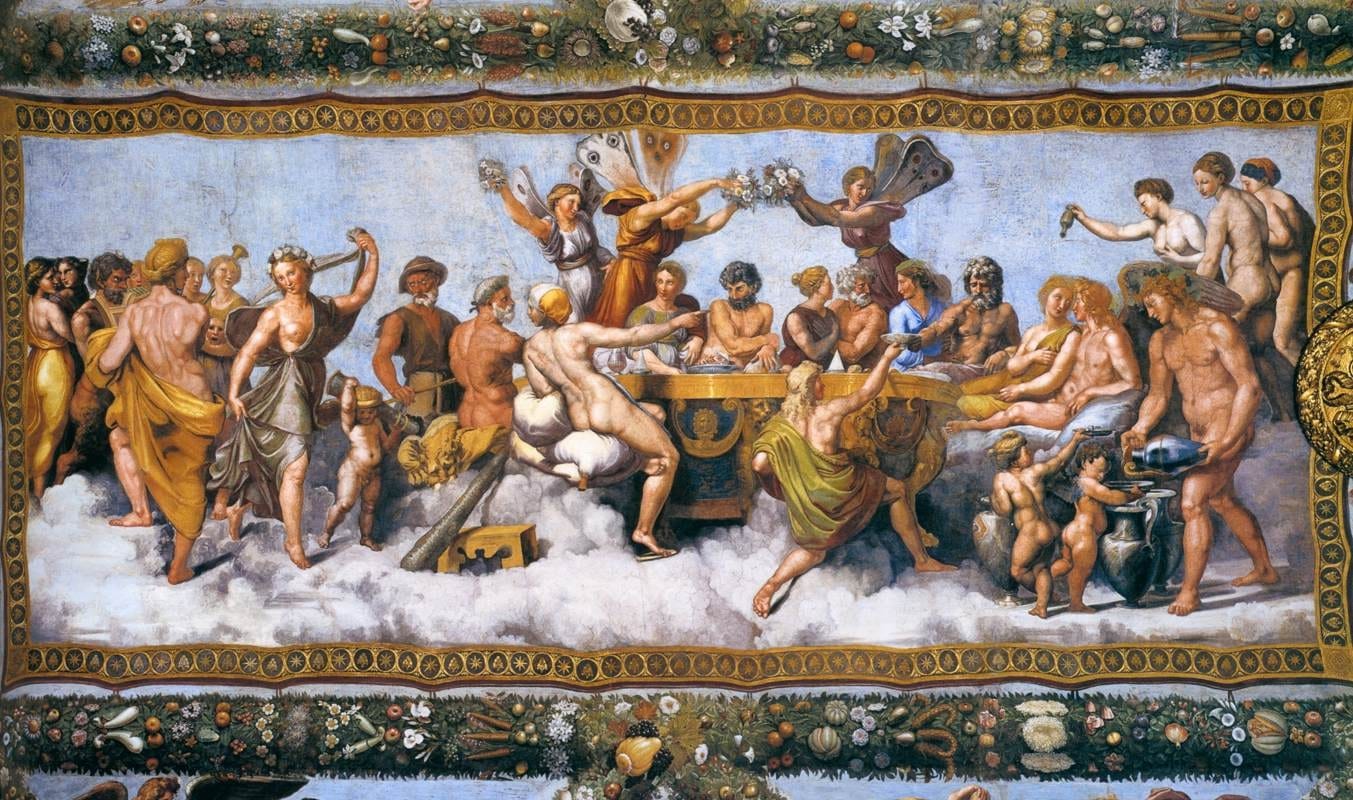
Loggia of Cupid and Psyche
1518
The Loggia of Cupid and Psyche is a sequence of frescoes and decorative panels by Raphael and his workshop that narrate the myth of Cupid and Psyche across multiple episodes, integrating allegory, grotesque ornament, and a series of graceful putti. Its significance lies in the fusion of narrative myth with elaborate decorative schemes for the intimate domestic setting of the Villa Farnesina, influencing later Renaissance and Mannerist interior design. When viewing, notice the interplay between the central narrative scenes and the surrounding grotesque motifs, the clarity of storytelling in each panel, and the refined handling of gestures and facial expression that convey emotional nuance.
Must-see