Vincent van Gogh Paintings in London — Where to See Them
London matters for experiencing Vincent van Gogh because approximately nine of his paintings are on permanent display across just two institutions — the National Gallery (7) and the Courtauld Gallery (2) — so you can see a concentrated set of originals without chasing them across the country. Housed in these major, walkable museums, the works let you compare his brushwork and colour handling up close and in sequence, making it easy to track shifts in technique and intensity during a single visit.
At a Glance
- Museums
- The National Gallery, The Courtauld Gallery (Courtauld Institute of Art)
- Highlight
- See Van Gogh's self-portraits and Sunflowers at The National Gallery.
- Best For
- Art lovers wanting concentrated Van Gogh works without museum-hopping.
The National Gallery
The National Gallery’s Van Gogh paintings matter because they place his work directly in dialogue with the earlier and contemporary European art that influenced and contrasted with him — you can see his radical use of color and brushwork against the 19th‑century painting tradition the museum presents. Having multiple Van Goghs in one collection lets you follow shifts in his palette and handling within a short walk, making comparisons with Impressionist and academic painters in neighbouring rooms especially revealing.
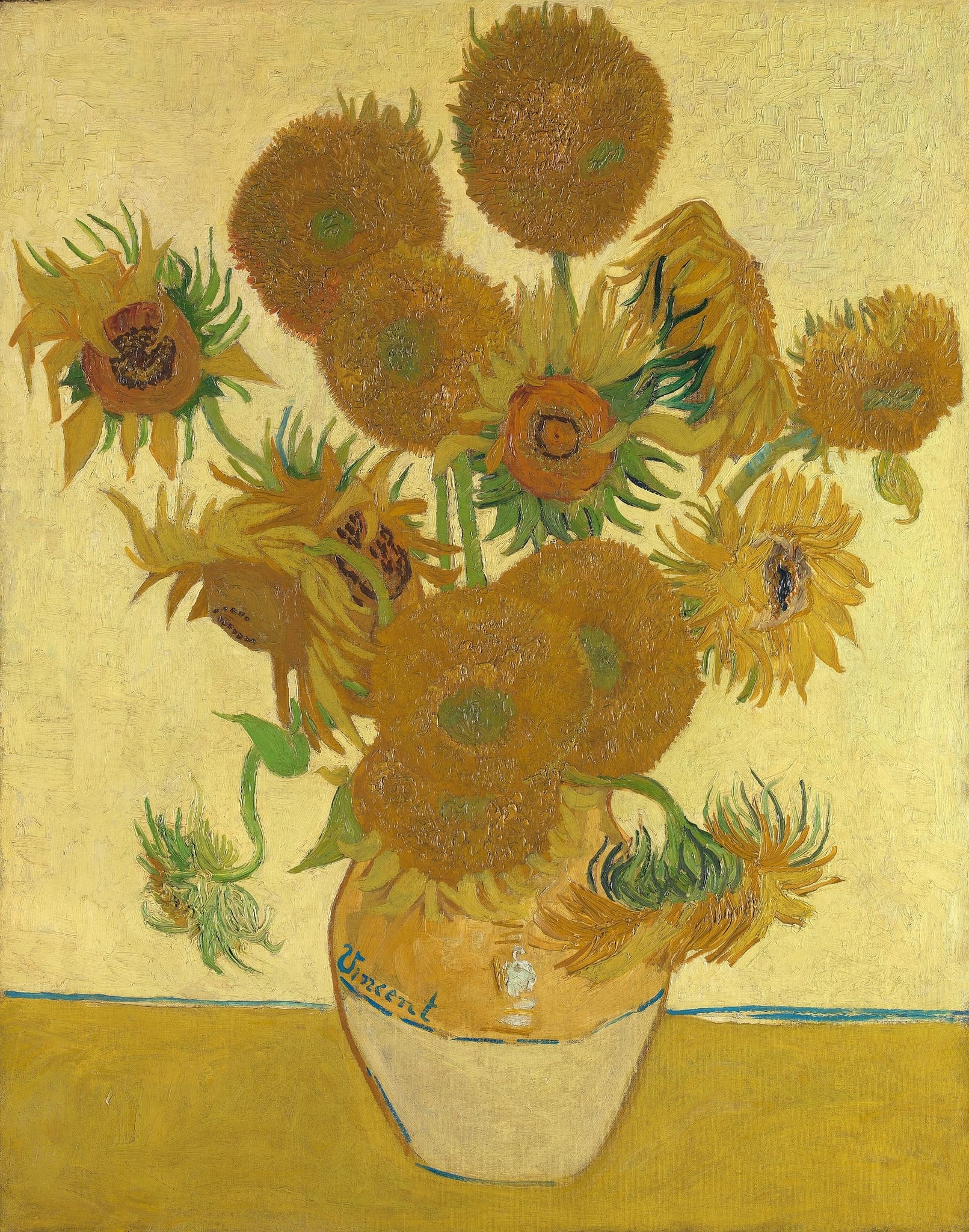
Sunflowers
1888
A bright still life of a vase of sunflowers rendered in thick, impastoed yellow and ochre tones, capturing the flowers at different stages of bloom and decay. Significant as a landmark of Van Gogh’s late Arles period and his exploration of color as emotional language, it celebrates life while acknowledging transience. Look for the energetic brushstrokes, the varied textures of petals and seed-heads, and the subtle shifts of yellow that create warmth and depth despite a limited palette.
Must-see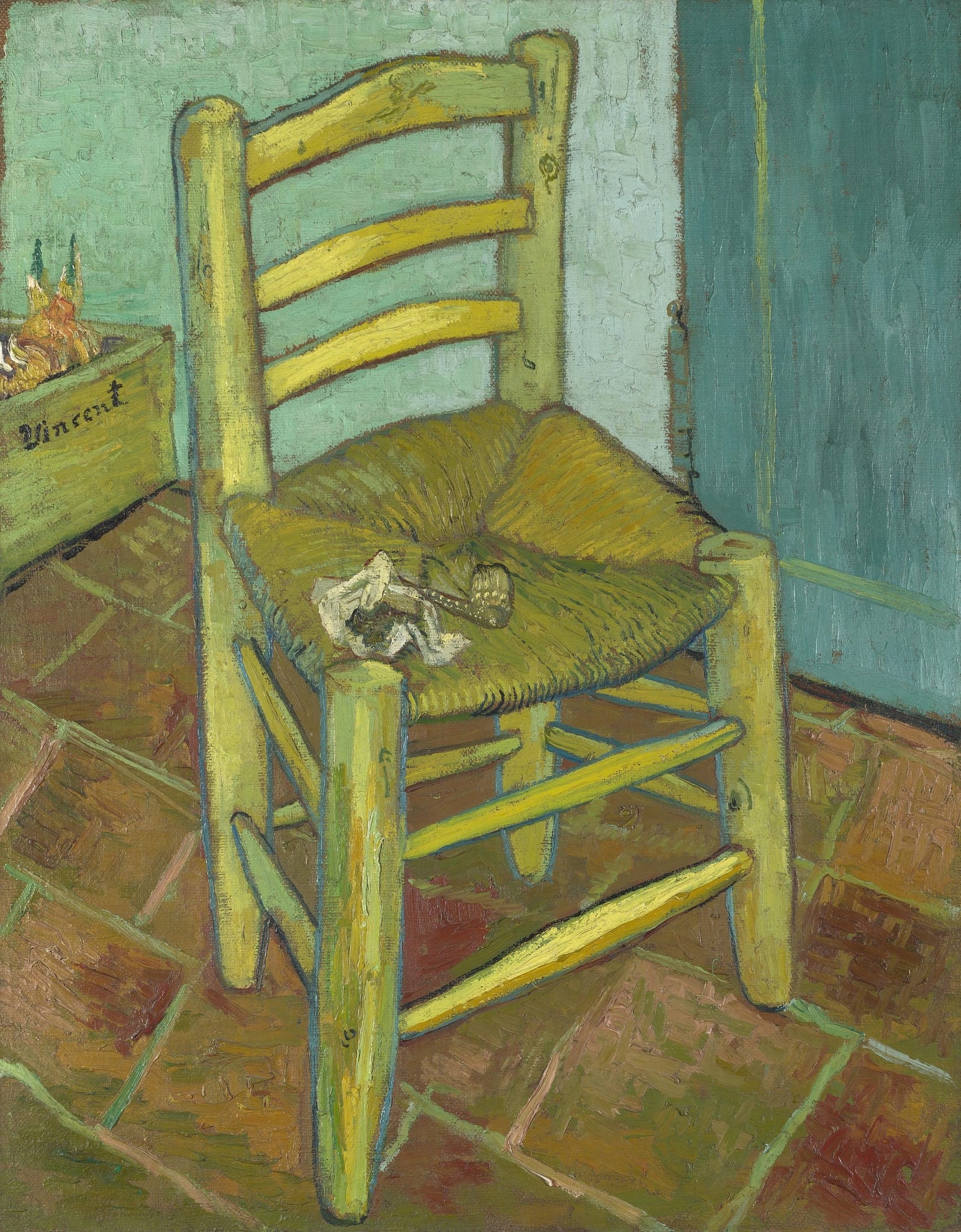
Van Gogh's Chair
1888
A simple, rustic wooden chair shown in front-on view with a pipe and a pouch resting on the seat, set against a flat, warm background. The painting is significant as a personal, intimate portrait of the artist’s everyday life and character—contrasting with Gauguin’s paired painting of a similar chair—and reflects Van Gogh’s interest in objects as extensions of identity. Notice the confident, visible brushstrokes, the complementary use of yellow and blue, and how the humble chair’s worn details convey personality and presence.
Must-see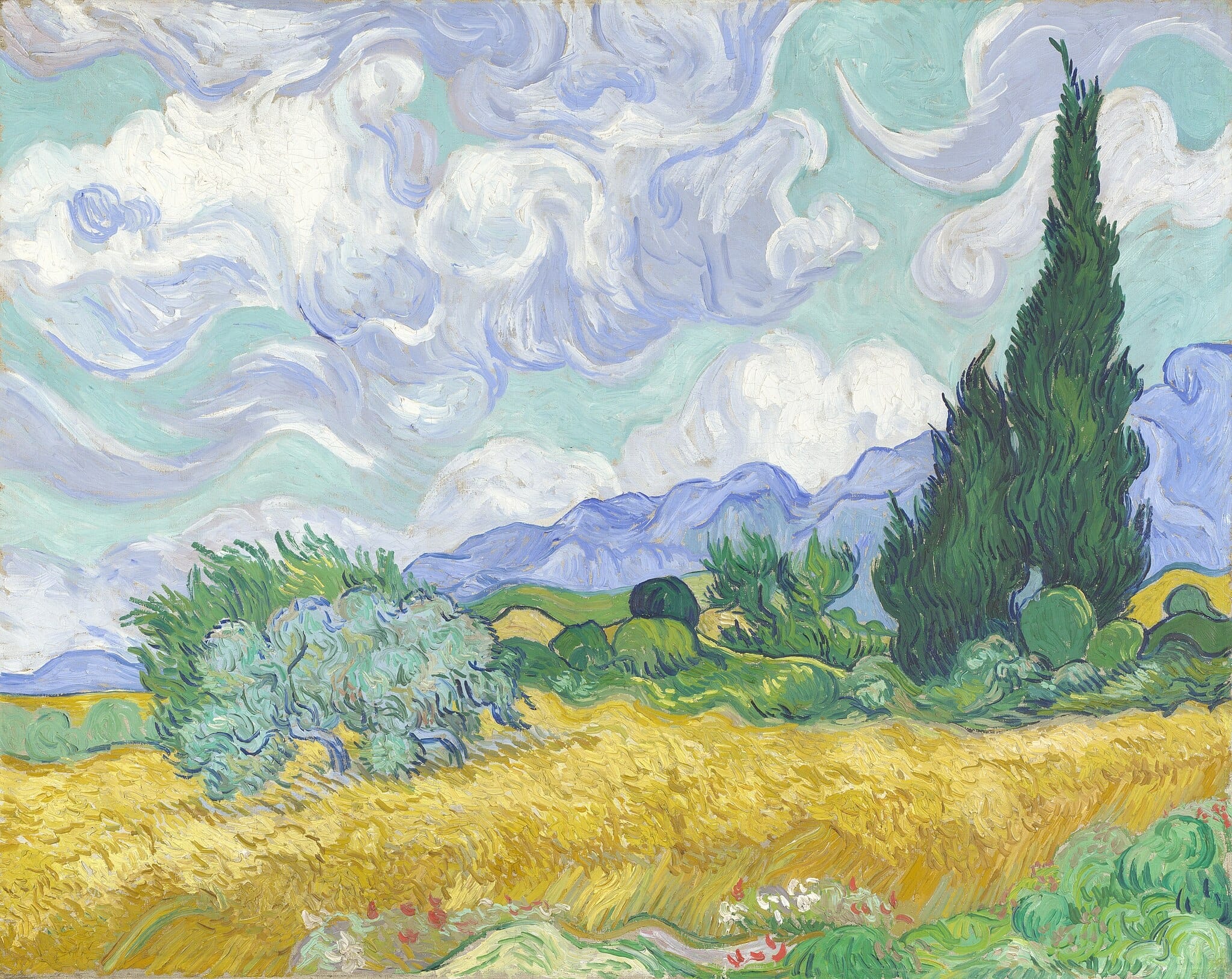
A Wheatfield, with Cypresses
1889
A dynamic landscape of a rippling wheatfield under a swirling sky, dominated by the vertical silhouettes of cypress trees and a distant hill. This work is significant as an example of Van Gogh’s mature style in Saint-Rémy, where emotional intensity and movement are expressed through rhythmic lines and bold color contrasts. Focus on the directional brushwork that guides the eye across the field, the contrast between the golden wheat and the deep greens/blues of the cypresses, and the sense of wind and motion created by the paint handling.
Must-see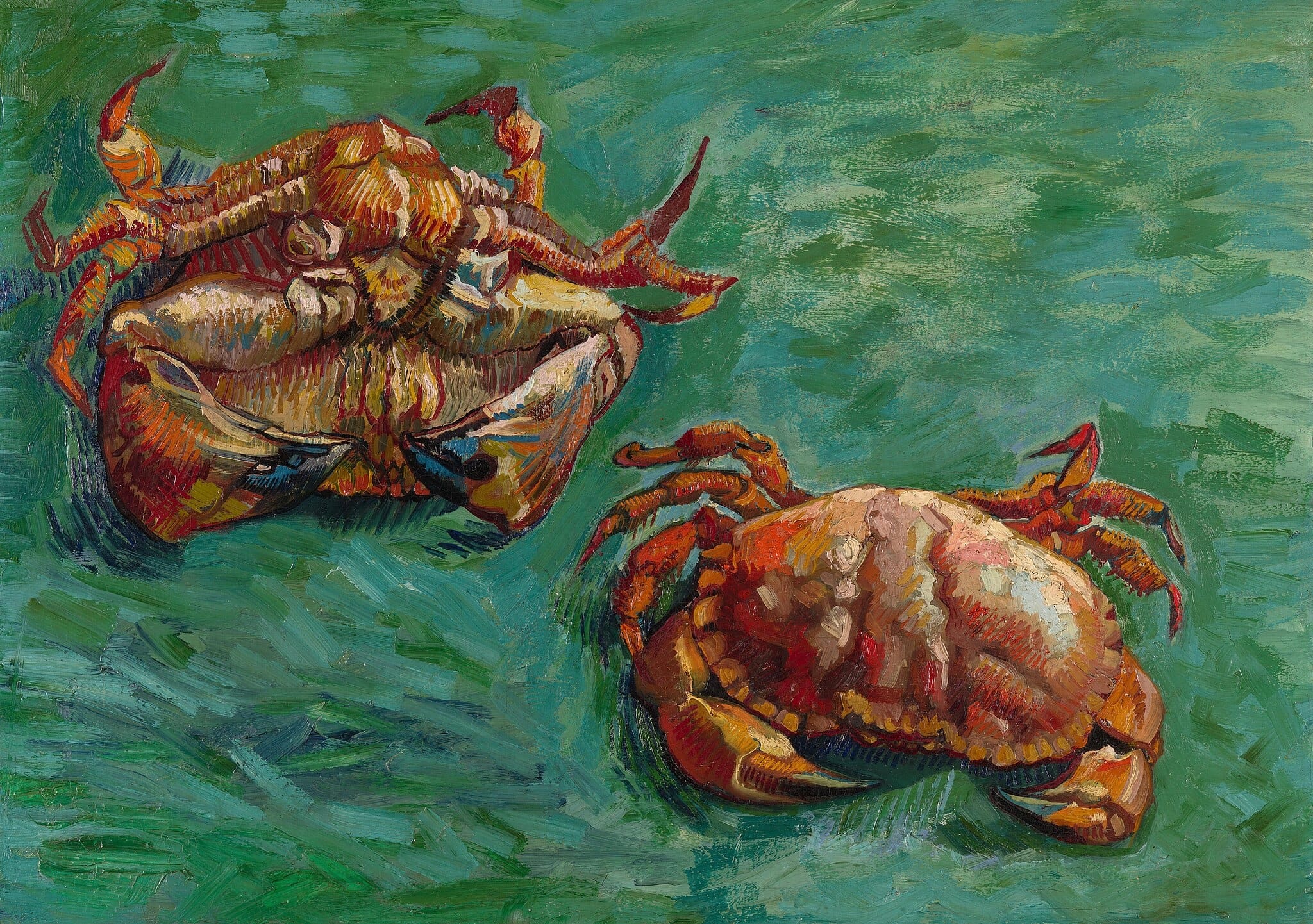
Two Crabs
1889
A deceptively simple still life showing two crabs—one on its back—arranged on a flat surface against a plain background. Though modest in subject, it is significant for Van Gogh’s playful experimentation with composition, form, and texture late in his career, and for the way everyday objects become intense visual statements. Look for the textured, almost sculptural application of paint, the warm earth tones set against cooler accents, and the quirky, slightly unsettling pose of the overturned crab.
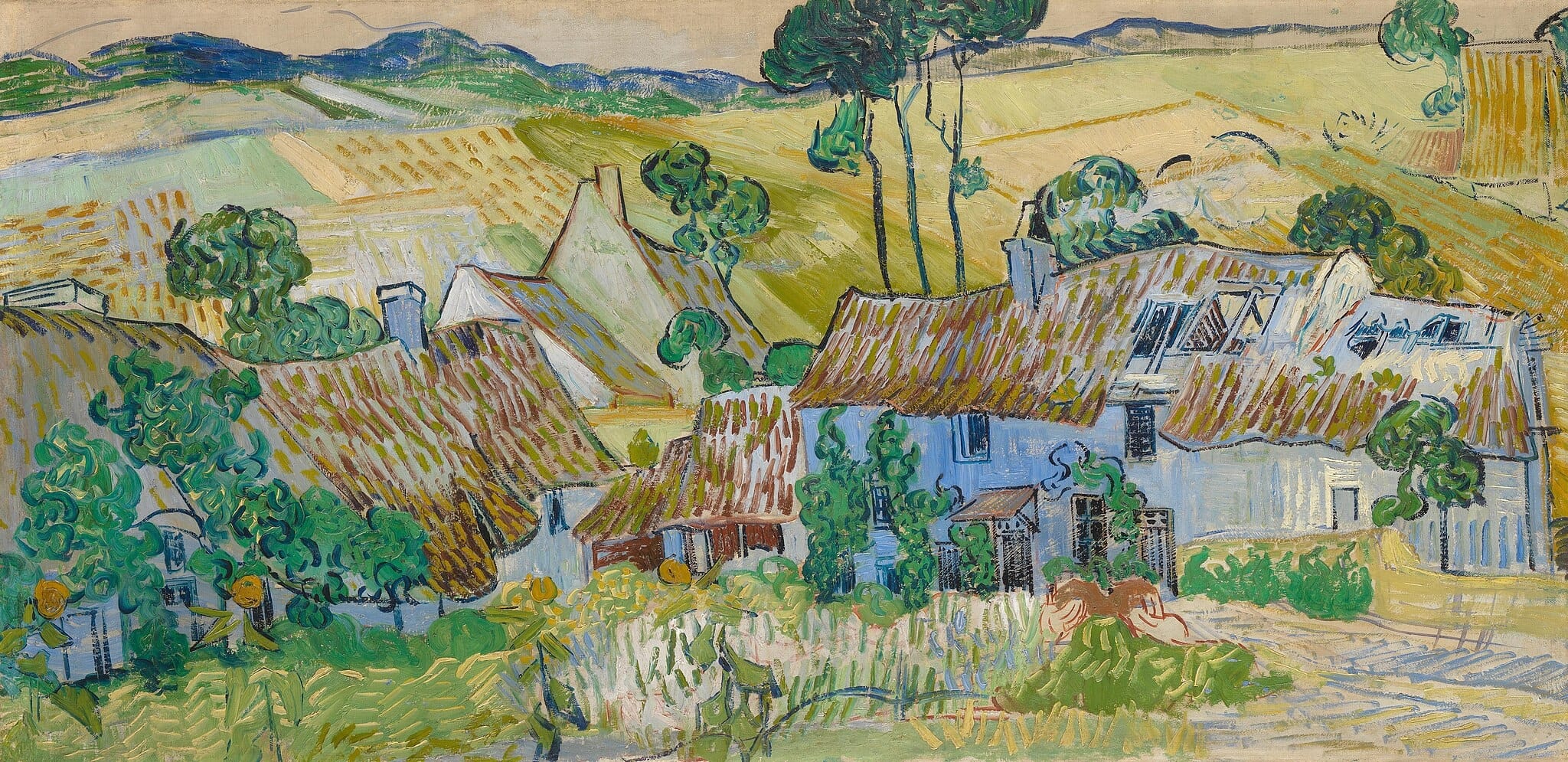
Farms near Auvers
1890
A pastoral scene of rural farm buildings and cultivated fields near Auvers-sur-Oise, depicted with short, vigorous brushstrokes and luminous color. Painted during the final months of Van Gogh’s life, it is significant for its synthesis of his landscape concerns—structure, rhythm, and emotional color—while responding to the French countryside around him. Observe the way the fields are broken into animated strokes, the architectural shapes of the farm buildings anchoring the composition, and the contrast between cultivated land and open sky.
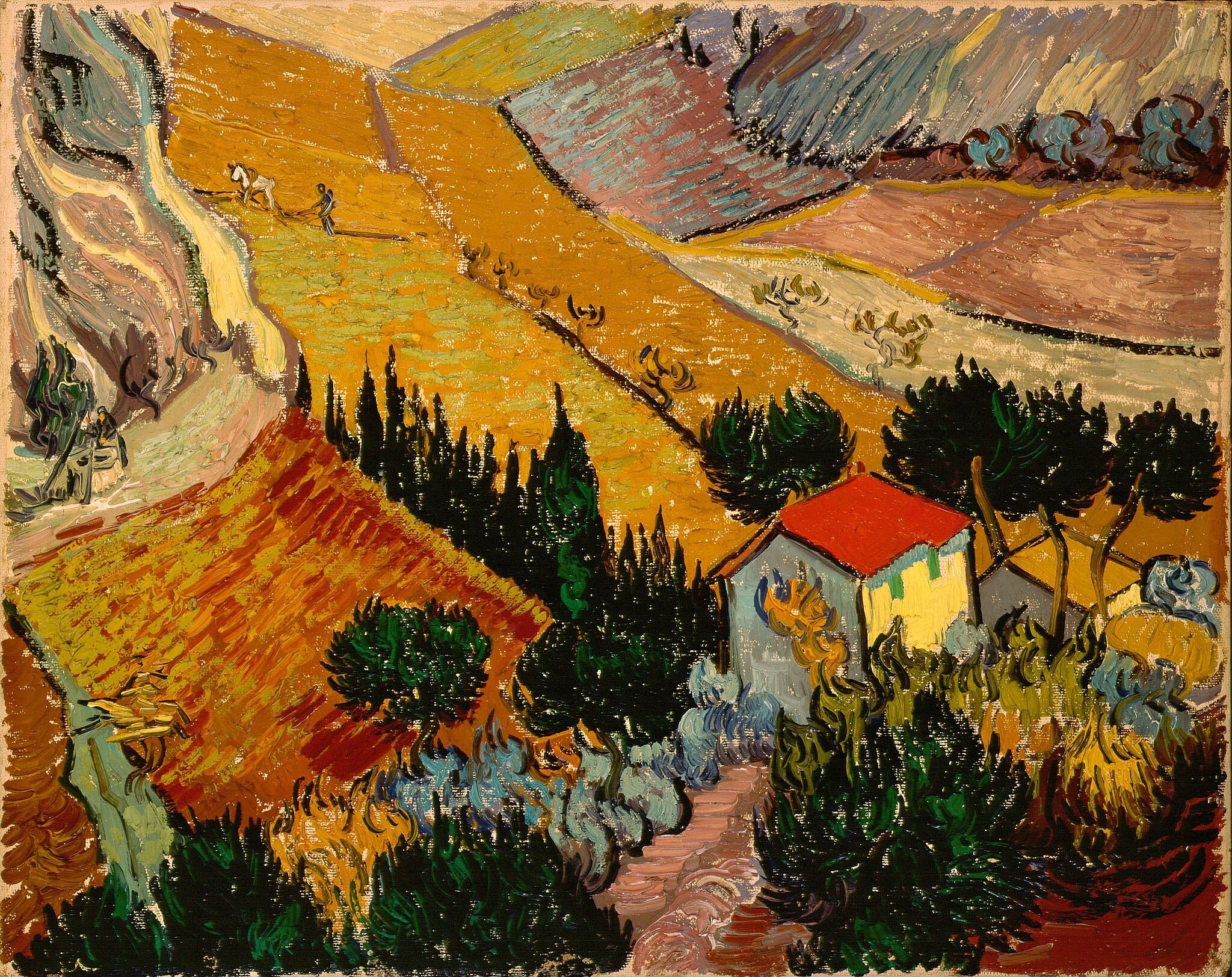
Landscape with Ploughman
1889
A countryside view centered on a solitary ploughman working the earth, set within a broad sweep of fields and sky. The painting highlights Van Gogh’s empathy with peasant labor and his belief in the moral and spiritual value of honest work, rendered through expressive color and vigorous brushwork. Look for the human figure’s modest scale against the landscape, the rhythmic repetition of ploughed furrows, and the energetic paint handling that conveys both physical exertion and the land’s vitality.
The Courtauld Gallery (Courtauld Institute of Art)
The Courtauld matters for Van Gogh because its compact, scholar‑driven displays let you study his paint surface and color relationships at close range — the intimate hang and the gallery’s teaching focus encourage looking at technique and influence rather than spectacle. With only a couple of Van Goghs in the collection, each work is presented within carefully curated conversations about Impressionism and Post‑Impressionism, which highlights subtler aspects of his method and artistic concerns.
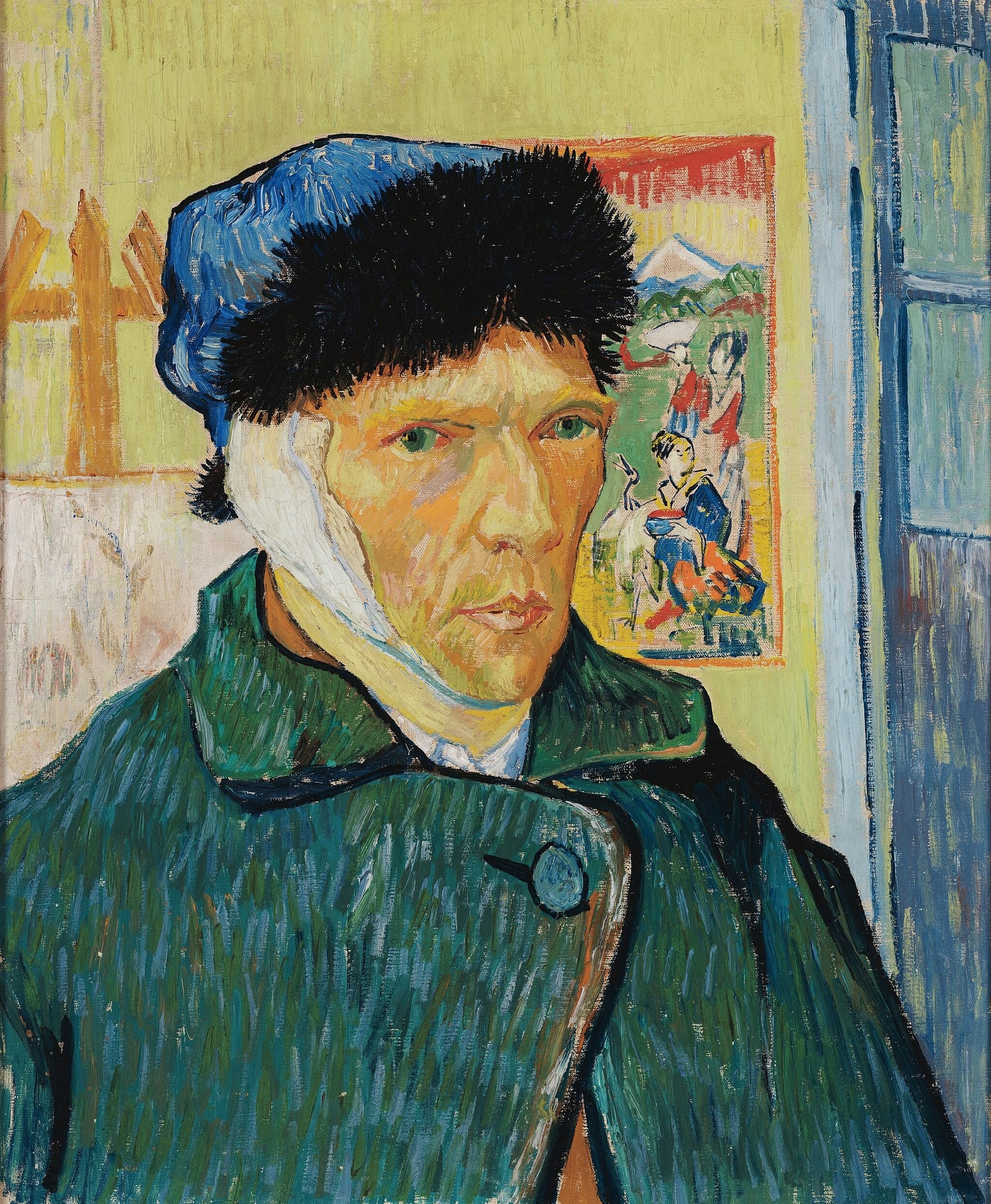
Self-Portrait with Bandaged Ear
1889
Van Gogh presents himself facing the viewer with his head wrapped in bandages after the ear incident in Arles; the work is a stark, intimate likeness that combines vulnerability with the artist’s intense presence. It’s significant as a psychological record of Van Gogh’s turmoil and resilience during a crisis in early 1889, and viewers should look for the tightly painted facial features, the cool contrasts between the bandage and his warm skin tones, and the flattened, decorative background that hints at Japonisme and his shifting stylistic concerns.
Must-see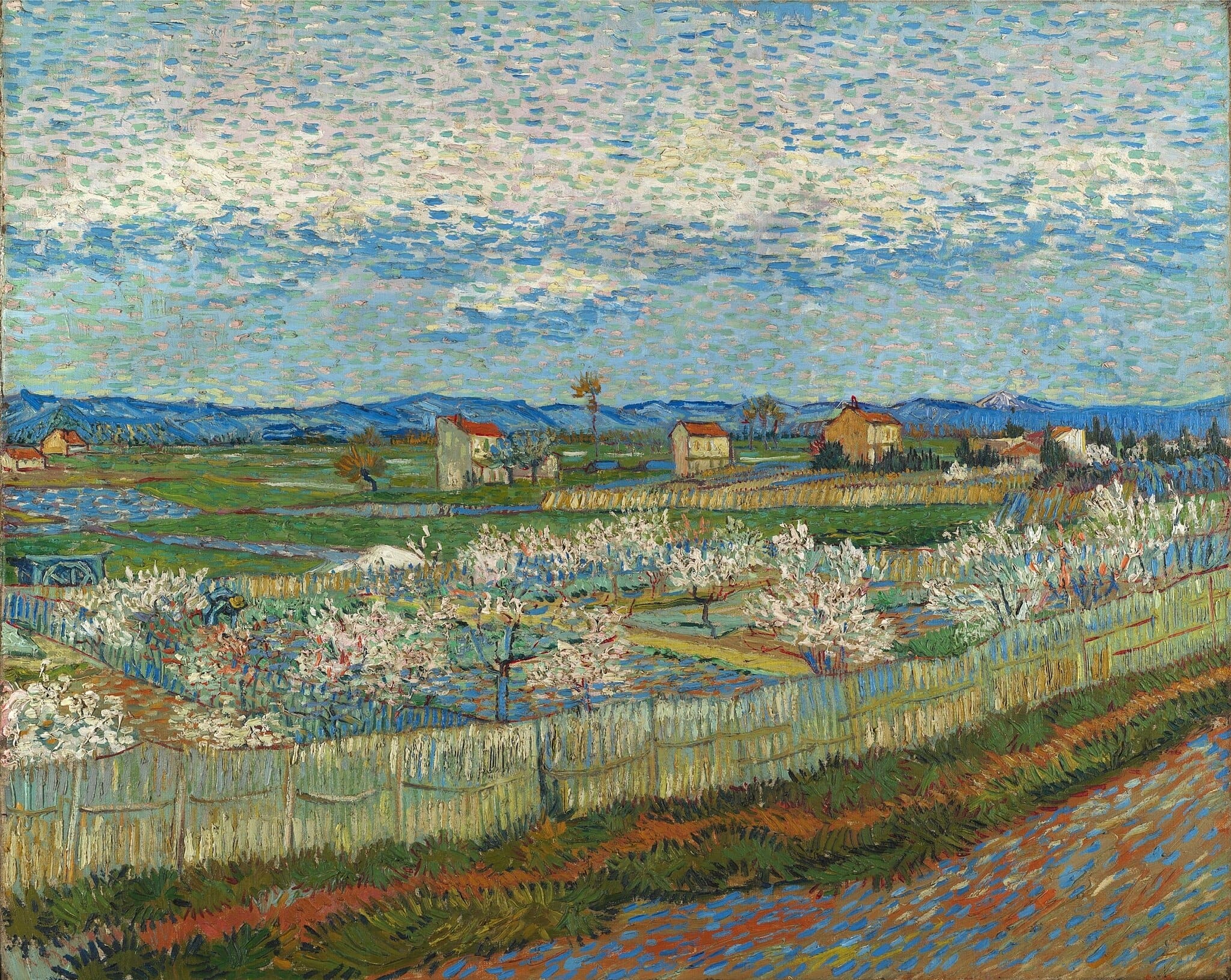
Peach Trees in Blossom
1889
This spring landscape shows a low, luminous plain dotted with flowering peach trees under a bright, open sky — a celebration of nature’s renewal painted while Van Gogh was in the south of France. The painting is significant for its vibrant, fauve-like color, rhythmic brushwork, and the way it fuses French landscape tradition with influences from Japanese prints; viewers should notice the patterned blossom clusters, the strong horizontal composition, and the energetic, linear brushstrokes that give the scene its pulsing vitality.
Must-see