Vincent van Gogh Paintings in New York — Where to See Them
New York matters for experiencing Vincent van Gogh because the city and its region hold approximately 3 of his paintings on permanent display across two museums: The Museum of Modern Art (MoMA) (2 paintings) and the Buffalo AKG Art Museum (formerly Albright-Knox) (1 painting). Seeing Van Gogh at MoMA places his work directly within the narrative of modern art alongside Picasso and Matisse, while the Buffalo AKG’s single, regionally significant holding lets you compare his brushwork and color sensibility in a different curatorial context.
At a Glance
- Museums
- The Museum of Modern Art (MoMA), Buffalo AKG Art Museum
- Highlight
- See Van Gogh masterpieces at MoMA; visit Buffalo AKG for a quieter focus.
- Best For
- Art lovers seeking iconic modern works and quieter museum experiences across New York State.
The Museum of Modern Art (MoMA)
MoMA holds one of Vincent van Gogh’s most universally recognized works, which has become a touchstone for understanding how his expressive color and brushwork helped shape 20th-century modernism; seeing this painting in person clarifies the scale, texture, and impasto that reproductions flatten. The museum deliberately places Van Gogh within narratives of modern art, so his work is experienced in dialogue with contemporaries and later artists who drew on his expressive techniques, making a visit both about the single masterpiece and its wide-reaching influence.
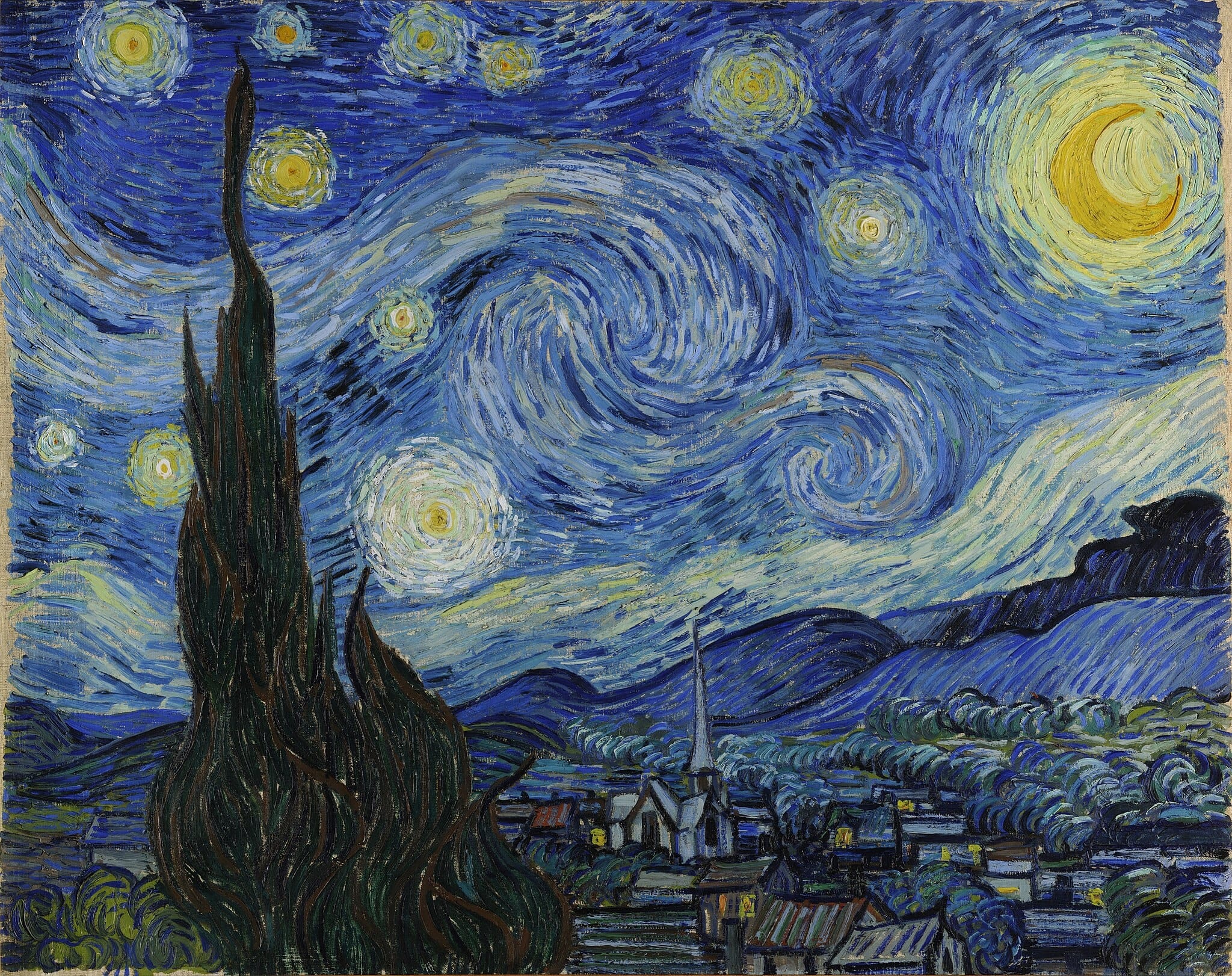
The Starry Night
1889
Depicts a nocturnal view from van Gogh’s asylum room at Saint-Rémy, with a swirling, luminous sky above a quiet village and a tall, dark cypress in the foreground. It is significant as one of van Gogh’s most iconic expressions of emotional intensity and innovative use of brushwork and color to convey mood rather than realistic detail. Look for the rhythmic, impasto swirls of blues and yellows, the contrast between the turbulent sky and the still village, and the cypress that links earth and sky.
Must-see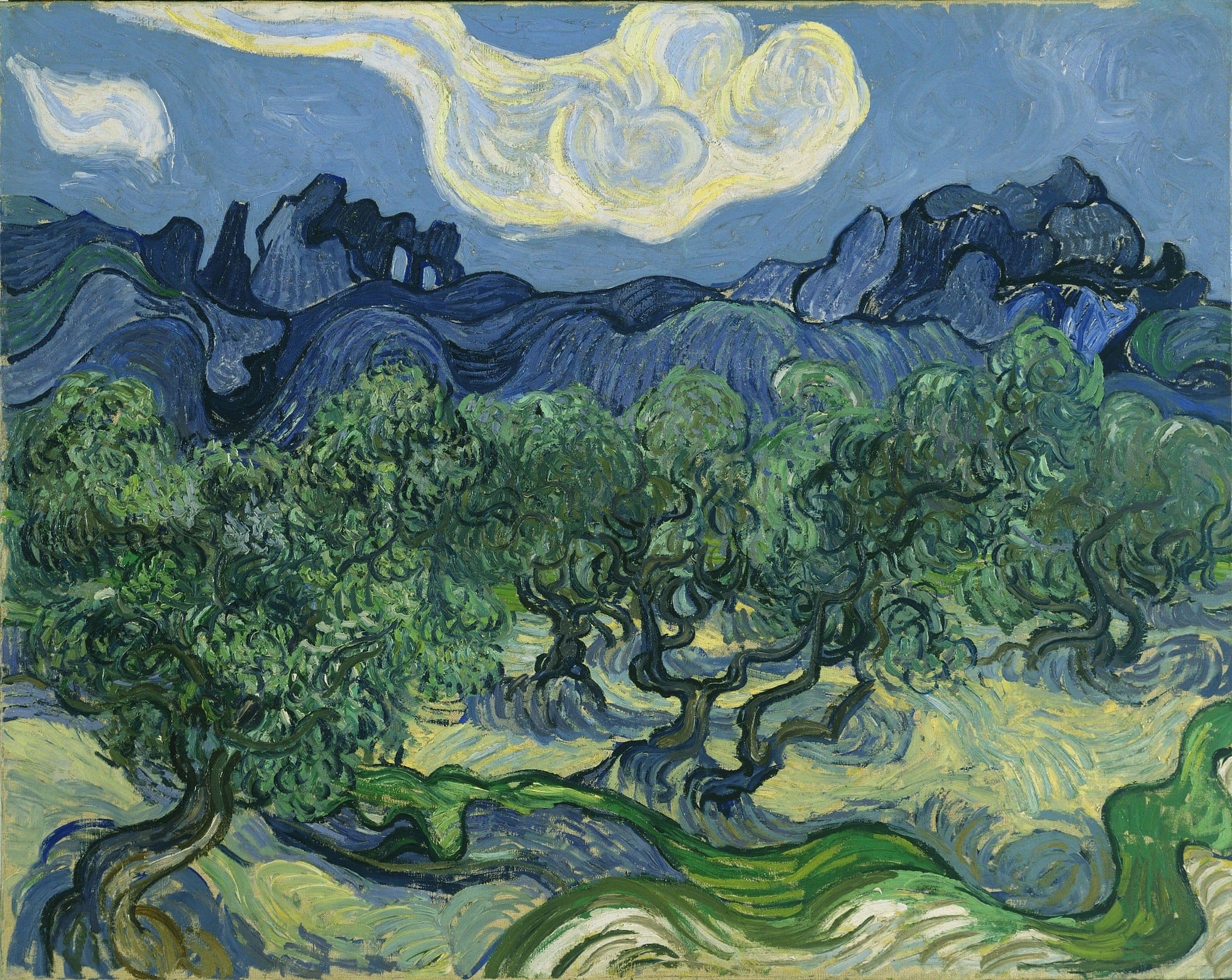
The Olive Trees
1889
Lush, expressive Post-Impressionist landscape painted at Saint-Rémy, showing Van Gogh’s energetic brushwork and color contrasts.
Must-seeBuffalo AKG Art Museum (formerly Albright-Knox)
Although smaller in number, the AKG’s Van Gogh (one painting in the collection) offers a quieter, more intimate encounter where the viewer can focus on the artist’s handling of color and gesture without the dense crowds of larger institutions. The museum’s collection and presentation emphasize connections between European masters and American collectors, so the work is often presented to highlight provenance, conservation history, and its place in 20th-century collecting—providing context for how Van Gogh’s reputation grew internationally.
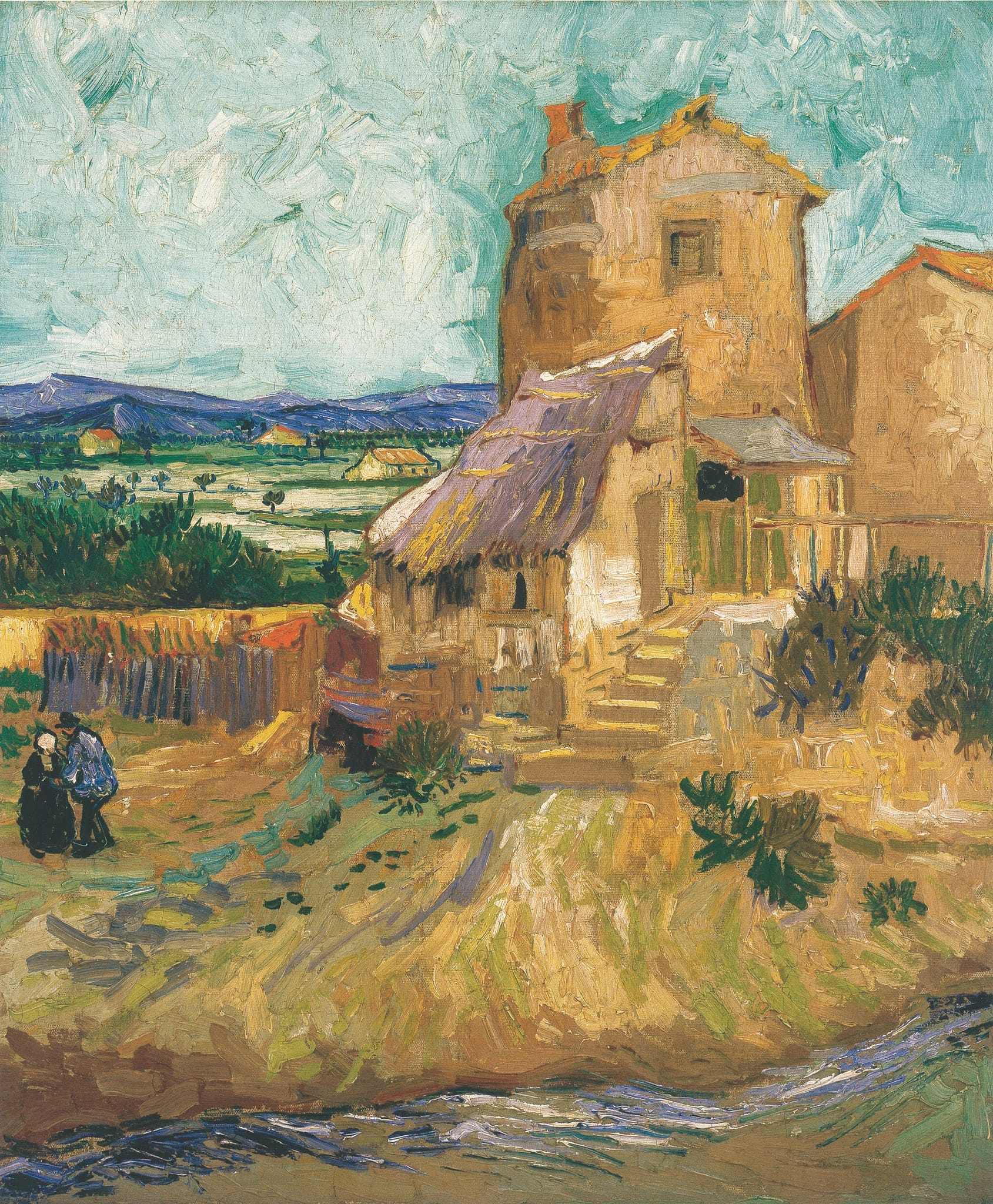
La Maison de La Crau (The Old Mill)
1888
Depicts a sunlit rural house and old mill set in the flat Provençal plain of La Crau outside Arles, rendered with Van Gogh’s energetic, directional brushstrokes and a vivid, sun-drenched palette. Significant as an example of his 1888 Arles period—when he moved toward brighter colors, thicker impasto, and heightened emotional expressiveness—this work synthesizes influences from Impressionism and Japanese prints into a distinctly personal vision of landscape. Look for the textured paint application, strong contrasts of complementary colors, and the way the buildings and sky are outlined and energized by rhythmic, visible brushwork that guides the eye across the scene.
Must-see