How Much Is Birch Forest Worth?
Last updated: March 16, 2026
Quick Facts
- Last Sale
- $104.6M (2022, Christie's New York)
- Insurance Value
- $125.0M (Replacement-value guideline (market-based; recommended insurer appraisal))
- Methodology
- recent sale
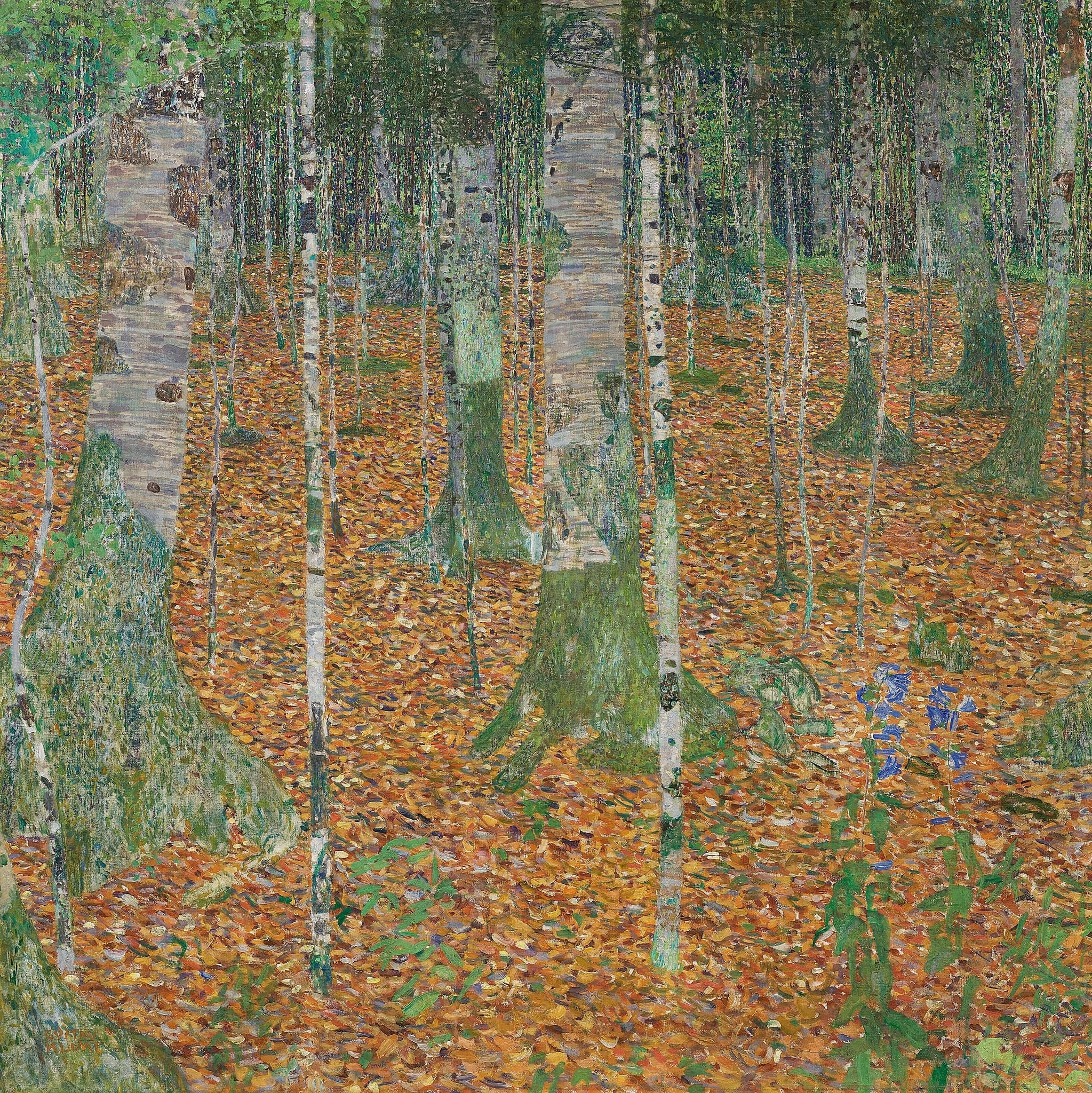
Anchored to Christie’s Nov 9, 2022 public sale (Price Realized US$104,585,000) of the same painting, I estimate Gustav Klimt’s Birch Forest (1903) current market value at US$100–150 million. The 2022 result is the primary market datum; the band allows for market-cycle movement, comparable trophy-sale uplift and condition/provenance contingencies.
Valuation Analysis
Valuation baseline and rationale. The primary market datum for Gustav Klimt’s Birch Forest (Birkenwald), 1903, is its public sale at Christie’s New York on 9 November 2022 where it realized US$104,585,000 (price inclusive of buyer’s premium). Because this is the identical physical work and the sale occurred with clear title and exemplary provenance (Bloch‑Bauer ownership, restitution, subsequent private ownership by Paul G. Allen), the 2022 result functions as the most authoritative, market‑tested baseline for valuation [1].
Comparative market context. Top‑end Klimt demand has strengthened in the years since, as shown by other marquee results for museum‑quality canvases; trophy sales have pushed public ceilings higher in peak markets. The 2025 Sotheby’s dispersal of the Lauder collection (Bildnis Elisabeth Lederer) and other high‑profile Klimt evening‑sale results demonstrate meaningful upside potential for the very best works and support a valuation band that extends above the 2022 realized price in favorable conditions [2].
Why $100–150M? The lower bound (≈US$100M) is conservative and close to the 2022 price realized, representing a realistic repeat result under stable market conditions or slightly softer demand. The upper bound (≈US$150M) allows for an elevated market cycle, exceptional competitive bidding, and additional premium drivers such as new scholarship, high‑profile institutional loans or demonstrable reinterpretation of the painting’s significance. Negative adjustments (condition issues, unresolved title or restitution claims, or a forced sale) would push realizations below the lower bound.
Practical implications. For insurance/replacement purposes a coverage figure above the midpoint of this band is prudent (see insurance recommendation below). For sale strategy, the painting should be marketed as an evening‑sale trophy with institutional outreach, a catalogue essay, and available technical/condition documentation to maximize results. Conversely, private treaty or distressed sales typically yield discounts to the public auction ceiling and should be avoided if maximizing price is the objective.
Next steps to refine value. Obtain a current condition report and technical imaging, assemble the complete provenance and exhibition/literature record, and request confidential consignment estimates from Christie’s and Sotheby’s. With those materials, this $100–150M band can be narrowed to a single‑point market value for insurance, sale negotiation, or estate planning.
Key Valuation Factors
Art Historical Significance
High ImpactBirch Forest (1903) occupies an important place in Klimt’s oeuvre: a mature landscape that demonstrates his decorative approach to nature and compositional abstraction outside his portrait/golden phase. While Klimt’s figure paintings remain the most sought after, high‑quality canvases that illustrate key stylistic developments are scarce in the marketplace. This painting’s date, scale and pictorial quality make it exhibition‑worthy and of genuine scholarly interest. Collectors and institutions prize works that contribute substantially to an artist’s narrative; for Birch Forest this yields a high positive impact on market value because it elevates the painting above routine secondary works.
Provenance & Title
High ImpactThe work’s provenance is exceptionally strong and fully determinative in commercial terms: acquired directly from Klimt by the Bloch‑Bauers, seized in 1938, held by the Österreichische Galerie and formally restituted to the heirs in 2006, then sold and later owned by Paul G. Allen. Clear, vetted title and an unambiguous restitution history materially reduce buyer risk—especially important for Austrian modernism where wartime provenance issues can derail transactions. This clarity supports top‑tier buyer participation and commands a premium versus similar works with incomplete histories.
Condition, Medium & Size
Medium ImpactAt roughly 110 x 110 cm and oil on canvas, Birch Forest is a substantial, displayable work. Its physical state is a core determinant of price: a good‑to‑excellent condition report with minimal invasive restoration supports valuations at or above the 2022 result. Conversely, structural instability, heavy retouching, or major conservation needs would necessitate a downward adjustment. Detailed technical imaging (infrared, x‑ray) and a conservation history are required to finalize any firm figure and to determine suitability for long‑term loans or museum exhibitions.
Exhibition & Literature History
High ImpactInclusion in major exhibitions and academic catalogues raises demand and legitimizes high price expectations. Birch Forest benefits from documented exhibition/literature entries in Christie’s catalogue and has been treated as museum caliber. Institutional loans and catalogue prominence reduce buyer uncertainty and often attract institutional bidders or collectors seeking works with public provenance. Strengthening the painting’s exhibition itinerary or scholarship prior to sale can therefore generate measurable upside within the valuation band.
Market Liquidity & Comparable Sales
High ImpactLiquidity for Klimt’s top canvases is robust among international collectors and institutions when provenance is impeccable. The painting’s own 2022 Christie’s result is the decisive comparable; other recent marquee Klimt sales demonstrate that ceilings can rise in peak markets. That said, liquidity drops off outside the trophy tier and realizations in forced or private-sale scenarios are typically substantially lower. Market liquidity and comparable evening‑sale evidence are therefore major drivers of where within the $100–150M band a final price will land.
Sale History
Painted by Gustav Klimt; acquired from the artist by Adele & Ferdinand Bloch‑Bauer
Christie's New York (restitution sale)
Christie's New York (Visionary: The Paul G. Allen Collection, Part I)
Gustav Klimt's Market
Gustav Klimt is a canonical figure of the Vienna Secession; his gold‑phase portraits and large figure compositions are trophy assets commanding the highest prices, while landscapes and studies occupy a secondary but still valuable market tier. Recent marquee auction results have lifted public‑sale ceilings into the low‑to‑mid hundreds of millions for museum‑quality canvases with impeccable provenance. Institutional interest and collector competition remain strong for top works; unresolved restitution issues remain the primary structural risk for Austrian modernism.
Comparable Sales
Birch Forest (Birkenwald)
Gustav Klimt
Direct sale of the same painting at a major evening sale; exemplary provenance (Bloch‑Bauer → Paul G. Allen) and the best single market-tested datum.
$104.6M
2022, Christie's New York
~$115.1M adjusted
Lady with a Fan (Dame mit Fächer)
Gustav Klimt
High‑profile evening sale for a trophy Klimt canvas in a similar price band; useful as a near‑term market benchmark for top Klimt canvases.
$108.4M
2023, Sotheby's London
~$115.6M adjusted
Bildnis Elisabeth Lederer
Gustav Klimt
Lauder-collection evening sale that established a new Klimt auction ceiling—demonstrates peak demand for museum-quality portraits with stellar provenance.
$236.4M
2025, Sotheby's New York
Birch Forest (Birkenwald) — restitution sale
Gustav Klimt
Earlier auction of the same painting immediately after restitution (Paul G. Allen buyer). Useful for measuring long-term appreciation and the painting's price history.
$40.3M
2006, Christie's New York
~$64.4M adjusted
Portrait of Adele Bloch‑Bauer I
Gustav Klimt
High‑profile private purchase (reported 2006) of one of Klimt's most famous portraits; a trophy-work private-sale benchmark when inflation-adjusted.
$135.0M
2006, Private sale to Ronald S. Lauder (reported)
~$215.4M adjusted
Current Market Trends
The current market shows intense demand for trophy Klimt canvases with clear provenance and exhibition history, pushing auction ceilings higher. However, the market remains bifurcated: elite, museum‑quality works draw global bidding and institutional attention, while smaller or less documented pieces trade more conservatively. Restitution/legal risks and macroeconomic volatility continue to affect buyer appetite and can produce discounts in non‑optimal sale conditions.