How Much Is Johanna Staude Worth?
Last updated: March 30, 2026
Quick Facts
- Methodology
- comparable analysis
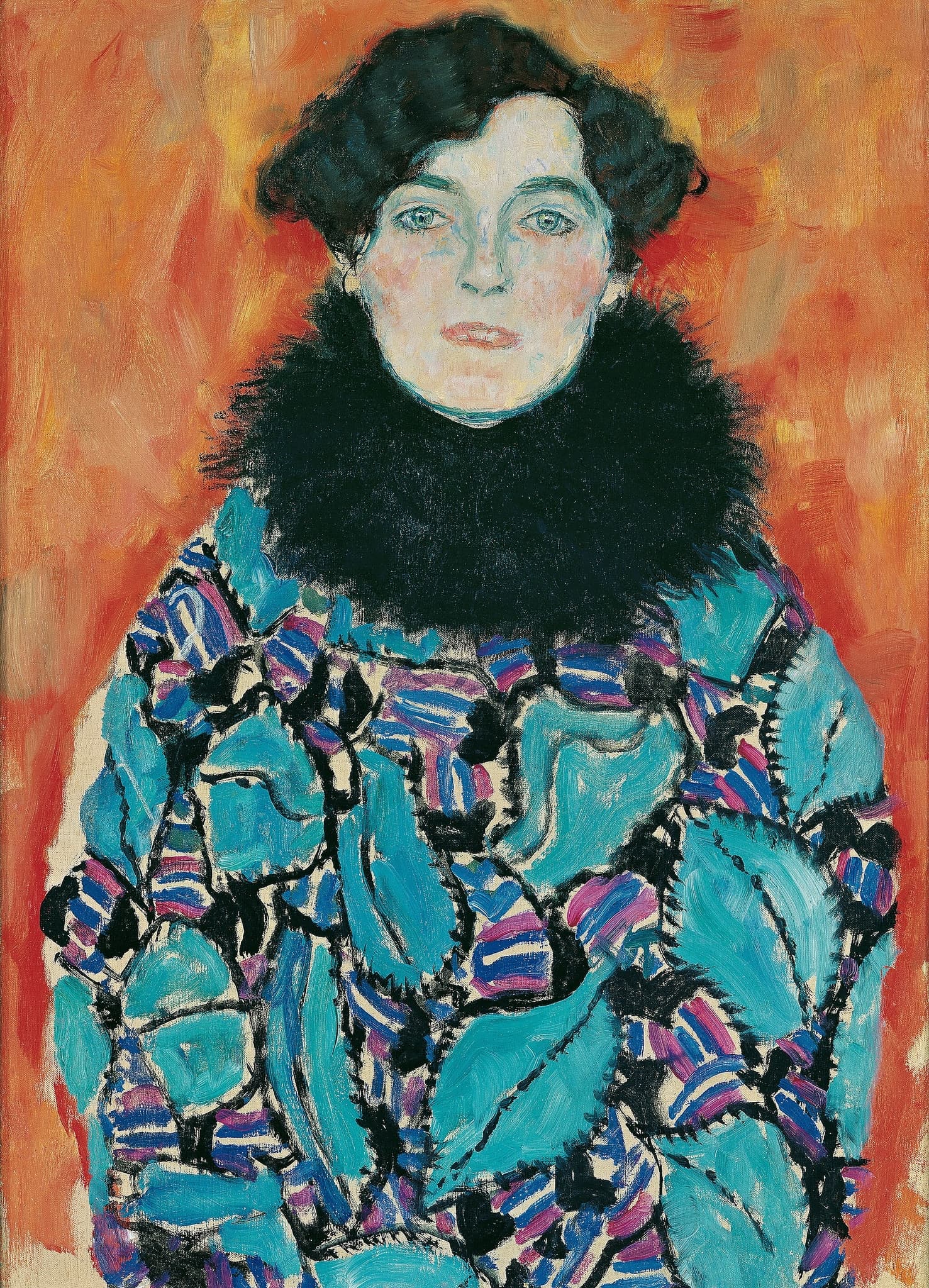
Hypothetical fair market value for Gustav Klimt’s Johanna Staude (1917–18, unfinished) is $70–100 million if legally deaccessioned and offered in a top-tier New York or London evening sale within 12–24 months. The range reflects strong late-period portrait demand set by recent Klimt records, balanced by a measured discount for the work’s unfinished state.
Valuation Analysis
Conclusion: Gustav Klimt’s Johanna Staude (1917–18), a celebrated late portrait left unfinished at the artist’s death, would command an estimated $70–100 million in a major evening auction under lawful deaccession and export conditions. This range triangulates the current high-water marks for Klimt’s late portraits and top landscapes with the specific attributes of Johanna Staude.
Key comparables and calibration: The upper bound for Klimt portraits was reset when Portrait of Elisabeth Lederer (1914–16) achieved $236.4 million at Sotheby’s New York in November 2025, a modern-art auction record [1]. The closest late-period benchmark is Dame mit Fächer (Lady with a Fan, 1917–18), a finished masterpiece that realized $108.4 million at Sotheby’s London in June 2023 [2]. On the landscape side, Paul G. Allen’s Birch Forest (1903) sold for $104.6 million at Christie’s in 2022, defining the recent ceiling for non-portrait Klimts [3]. For unfinished late portraits specifically, the pivotal comp is Frauenbildnis (Portrait of Ria Munk III, 1917–18), which brought $27.9 million in 2010 [4].
Work-specific positioning: Johanna Staude is a named sitter and a hallmark of Klimt’s final style, widely exhibited and reproduced. While its unfinished nature imposes a discount relative to fully realized late portraits like Lady with a Fan, its art-historical stature, visual impact, and rarity as a late portrait place it materially above secondary subjects and most landscapes. The painting’s long-term ownership by the Österreichische Galerie Belvedere, acquired directly from the sitter in 1963, provides exemplary provenance and scholarly visibility [5]. In a lawful sale context, such museum pedigree enhances demand and buyer confidence.
Market dynamics and venue effects: Klimt’s market has strengthened at the ultra-high end, with 2025’s record portrait and additional eight- and nine-figure results underscoring global competition for best-in-class works [1][3]. A New York or London evening sale, supported by an irrevocable bid or house guarantee, and marketed to global UHNW buyers (notably Europe, the U.S., and Asia), would be expected to optimize execution, as seen in the 2023 London and 2025 New York results [1][2][3].
Valuation synthesis: Anchoring below the $108.4 million finished late-portrait benchmark but well above historical pricing for unfinished late portraits, and mindful of top-tier landscape outcomes, the $70–100 million band reflects Johanna Staude’s high art-historical significance, exceptional provenance and museum halo, moderated by its unfinished state. Under favorable sale mechanics and robust competition, outcomes toward the top of the range are plausible.
Key Valuation Factors
Art Historical Significance
High ImpactJohanna Staude belongs to Klimt’s coveted late period (1917–18), a phase that has drawn intense scholarly and market attention. As a named portrait that lays bare Klimt’s late stylistic vocabulary—patterned fabrics, flattened decorative fields, incisive characterization—it is reproduced widely and regularly exhibited. Its status within the canon of Klimt portraits elevates demand beyond that for landscapes or subject studies. The work’s visibility through the Belvedere’s programming and publications further cements its reputation. This significance, coupled with rarity (few late portraits remain in private hands), supports a valuation substantially above mid‑tier Klimts and positions the painting just below fully finished late‑period masterpieces in price potential.
Unfinished State and Condition
Medium ImpactThe unfinished surface is a double-edged attribute: it offers a privileged view into Klimt’s late process and has considerable academic allure, yet it typically imposes a measurable discount versus a fully completed late portrait. Market evidence (e.g., Ria Munk III in 2010) demonstrates that collectors price incompletion distinctly from finish and ornamented refinement. While many connoisseurs value the immediacy and clarity of Klimt’s hand at this stage, broad trophy demand tends to prioritize fully realized portraits. A current, independent condition report would refine pricing sensitivity, but in standard scenarios, incompletion moderates the upper bound relative to a peer finished work.
Market Benchmarks and Scarcity
High ImpactRecent auction benchmarks have surged: a 2025 Klimt portrait set a $236.4 million record, while the finished late portrait Lady with a Fan brought $108.4 million in 2023. Landscapes have reached $104.6 million (Paul Allen sale), indicating an elevated floor for top Klimts. However, late named portraits are scarcer and generally preferred over landscapes. Within this context, Johanna Staude’s rarity and renown justify a level well above older unfinished-portrait results, while its incompletion argues for a discount against the very best finished portraits. Supply constraints and deep global UHNW demand support sustained eight‑ to nine‑figure outcomes for museum‑caliber Klimts.
Provenance and Legal/Export Context
Medium ImpactThe work’s unbroken, institutionally anchored provenance—held by the Österreichische Galerie Belvedere since 1963, acquired from the sitter—bolsters confidence and desirability. In a hypothetical sale, Austrian cultural heritage and export regulations would shape execution logistics. While such frameworks can influence timing and venue, they do not diminish intrinsic fair market value in a lawful, deaccessioned scenario. Instead, they may necessitate structured sale planning (e.g., venue selection, guarantees, and international marketing). The combination of museum pedigree and transparent ownership history is a net positive that helps concentrate bidding at the top end of the estimated range.
Sale History
Johanna Staude has never been sold at public auction.
Gustav Klimt's Market
Gustav Klimt is a blue‑chip cornerstone of the Modern category with exceptionally deep demand and constrained supply, particularly for late portraits and prime landscapes. The artist’s auction record was reset in November 2025, when Portrait of Elisabeth Lederer sold for $236.4 million, establishing a new benchmark for both Klimt and modern art at auction. In June 2023, the finished late portrait Lady with a Fan achieved $108.4 million in London, while Christie’s Paul G. Allen sale in 2022 saw Birch Forest reach $104.6 million. This cluster of nine‑figure outcomes reflects intense global competition from U.S., European, and Asian buyers for museum‑caliber Klimts, with guarantees and marquee venues amplifying performance.
Comparable Sales
Portrait of Elisabeth Lederer
Gustav Klimt
Same artist; major finished female portrait close in period; establishes the current upper bound for Klimt portraits and late-style demand.
$236.4M
2025, Sotheby's New York
Lady with a Fan (Dame mit Fächer)
Gustav Klimt
Same artist; late 1917–18 period; finished iconic late portrait; closest style/period benchmark for an A+ late Klimt.
$108.4M
2023, Sotheby's London
~$112.9M adjusted
Portrait of Ria Munk III (Frauenbildnis)
Gustav Klimt
Same artist; late 1917–18; crucial direct comp as an unfinished named portrait from the same phase.
$27.9M
2010, Christie's London
~$40.7M adjusted
Portrait of Adele Bloch-Bauer II
Gustav Klimt
Same artist; finished society portrait (1912); long-used benchmark for major Klimt portraits, useful for anchoring finished vs. unfinished discount.
$87.9M
2006, Christie's New York
~$138.8M adjusted
Birch Forest
Gustav Klimt
Same artist; masterpiece landscape; shows recent ceiling for non-portrait Klimts—useful lower anchor relative to top portraits.
$104.6M
2022, Christie's New York
~$113.7M adjusted
Blooming Meadow
Gustav Klimt
Same artist; top-tier landscape sold in the same 2025 record-setting context; helps bracket floor for trophy Klimts below great finished portraits.
$86.0M
2025, Sotheby's New York
Current Market Trends
The current market for late 19th–early 20th century Modern masterworks is characterized by a ‘two‑speed’ dynamic: cautious mid‑tier demand alongside vigorous competition for museum‑quality trophies. Klimt sits at the center of this momentum. The 2025 record portrait and recent nine‑figure results demonstrate a strong rebound and continued appetite for iconic works with impeccable provenance. New York and London marquee evening sales, coupled with guarantees and international outreach, remain the optimal venues for price discovery. Within this climate, late Klimt portraits rank among the most sought‑after assets, with unfinished works trading at a measured discount to finished masterpieces yet still commanding robust eight‑ to low nine‑figure valuations.
Sources
- The Art Newspaper — Klimt record at Sotheby's New York (Nov 18, 2025)
- Artnet News — Klimt’s ‘Lady With a Fan’ Sells for a Record $108.4m in London (June 27, 2023)
- The Art Newspaper — Paul Allen evening sale at Christie’s totals a record $1.5bn (Nov 10, 2022)
- Christie’s — 2010 Year-End Press Release (includes Klimt, ‘Ria Munk III’ result)
- Belvedere Research Journal — Franz Smola, ‘Klimt: Inspired…’ (provenance note for Johanna Staude, 1963 acquisition)