View of Delft
Study Print Studio
Create a personal study print
Build a companion study sheet around the part of this painting that speaks to you most. Choose a detail, shape an interpretation, and walk away with something personal and display-worthy.
Fast Facts
- Year
- c. 1660–1661
- Medium
- Oil on canvas
- Dimensions
- 96.5 × 115.7 cm
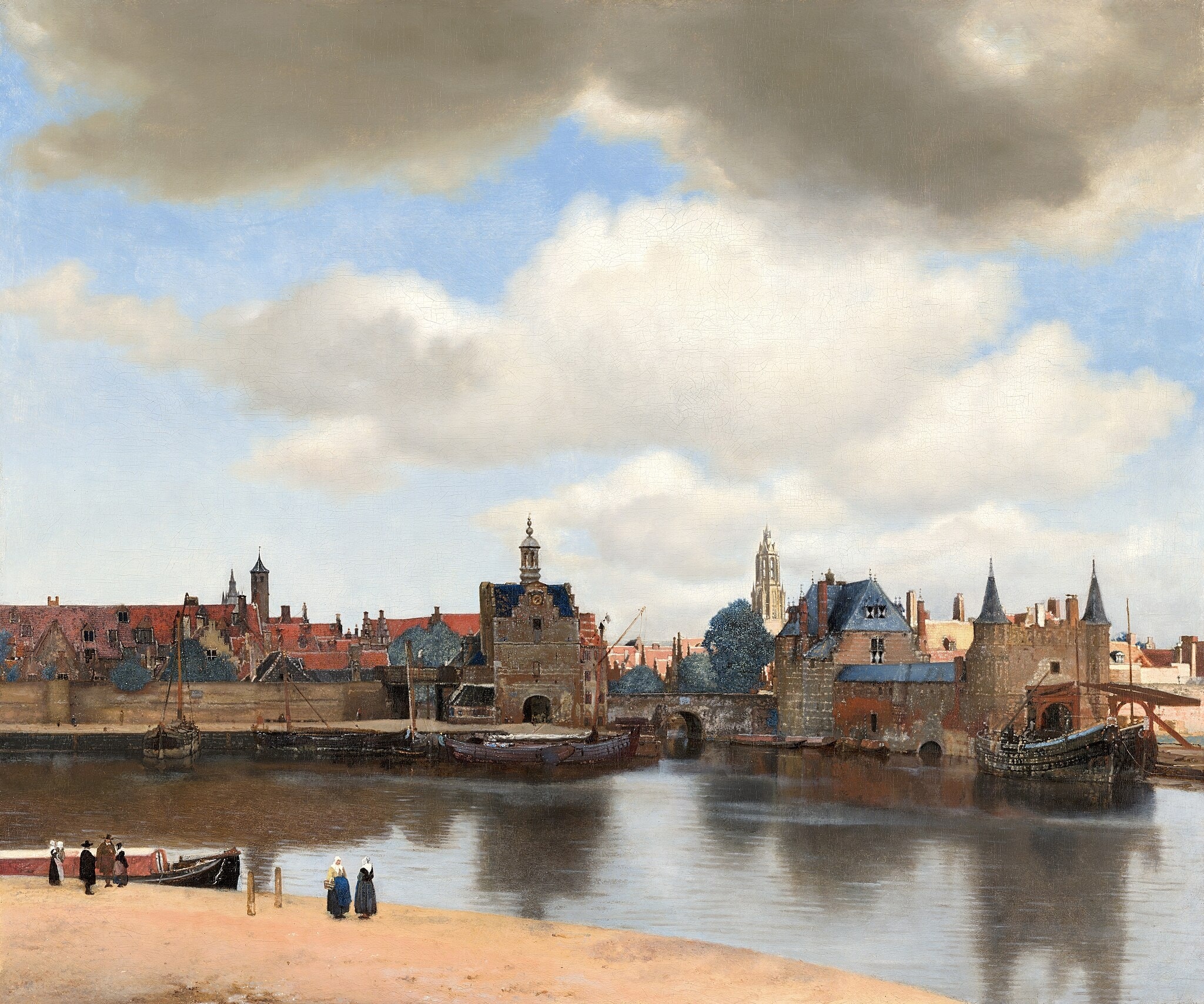
Click on any numbered symbol to learn more about its meaning
Meaning & Symbolism
Explore Deeper with AI
Ask questions about View of Delft
Popular questions:
Powered by AI • Get instant insights about this artwork
Interpretations
Formal/Technical Analysis: Optics as Poetics
Source: Arthur K. Wheelock Jr. & C. J. Kaldenbach; ColourLex technical roundup
Power & Ideology: The City as Self-Portrait after Disaster
Source: Mauritshuis; Annenberg Learner; Metropolitan Museum (Vermeer and the Delft School)
Temporal Forensics: Dating, Bells, and the Morning Problem
Source: Mauritshuis; The Guardian (reporting Olson et al.); Ars Technica (analysis of Olson study)
Social History: Work, Infrastructure, and Quiet Class
Source: Mauritshuis; Wheelock & Kaldenbach
Reception Aesthetics: Proust’s ‘Little Patch’ and Modern Seeing
Source: Mauritshuis (Proust reception)
Related Themes
About Johannes Vermeer
More by Johannes Vermeer
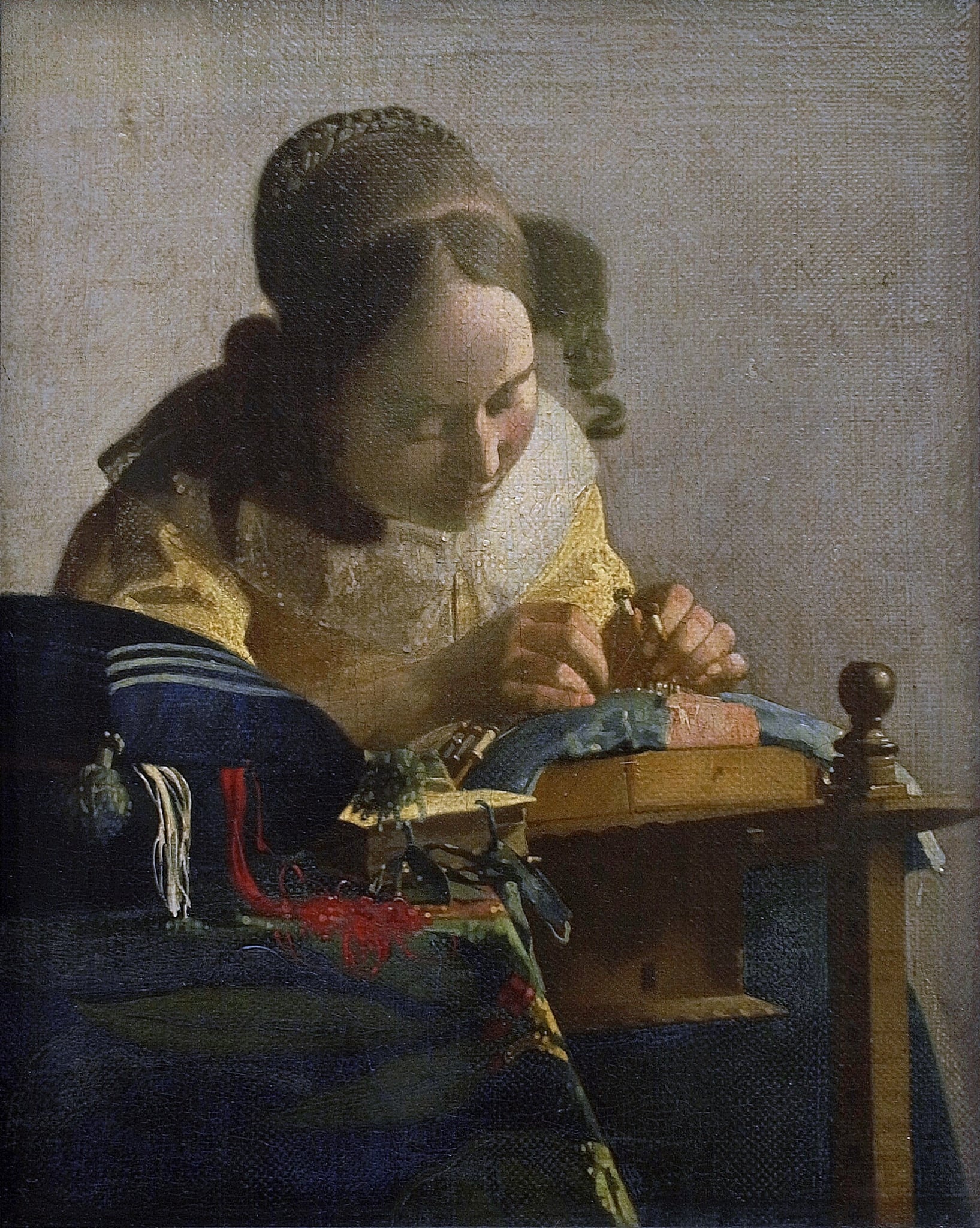
The Embroiderer
Johannes Vermeer (1669–1670)
In The Embroiderer, Johannes Vermeer condenses a world of work into a palm‑sized drama of <strong>attention</strong> and <strong>transformation</strong>. A young woman bends over a lace pillow as loose red and white threads spill in front, while a nascent pattern gathers under her poised fingers. Vermeer’s right‑hand light isolates the act of making and turns domestic labor into <strong>virtuous concentration</strong> <sup>[1]</sup>.
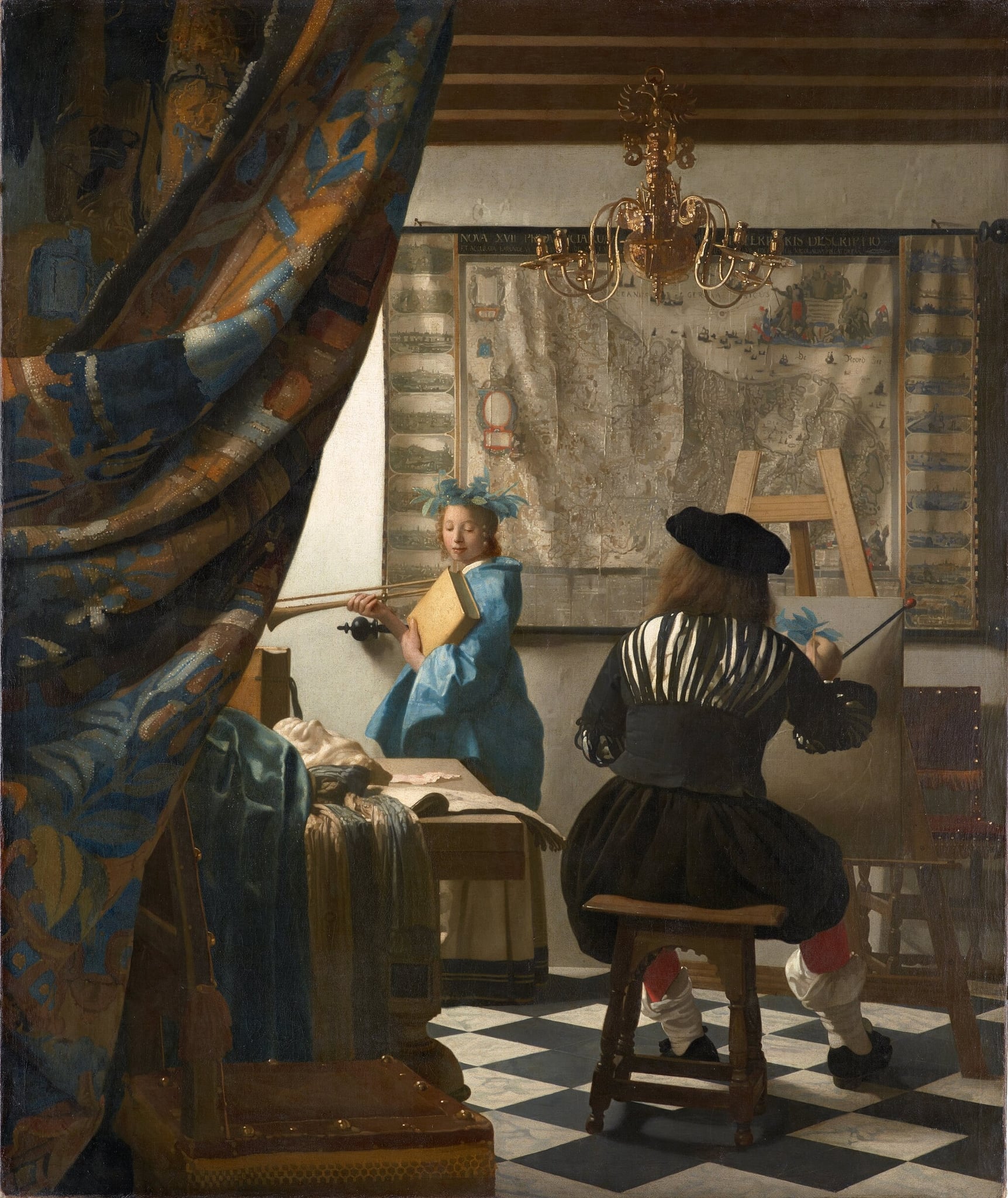
The Art of Painting
Johannes Vermeer (c. 1666–1668)
Johannes Vermeer’s The Art of Painting is a self-aware allegory that equates <strong>painting with history and fame</strong>. Framed by a parted <strong>tapestry</strong> like a stage curtain, an artist in historical dress paints the muse <strong>Clio</strong>, while a vast <strong>map of the Seventeen Provinces</strong> and a <strong>double‑headed eagle</strong> chandelier fold national memory into the studio scene <sup>[1]</sup><sup>[3]</sup>.
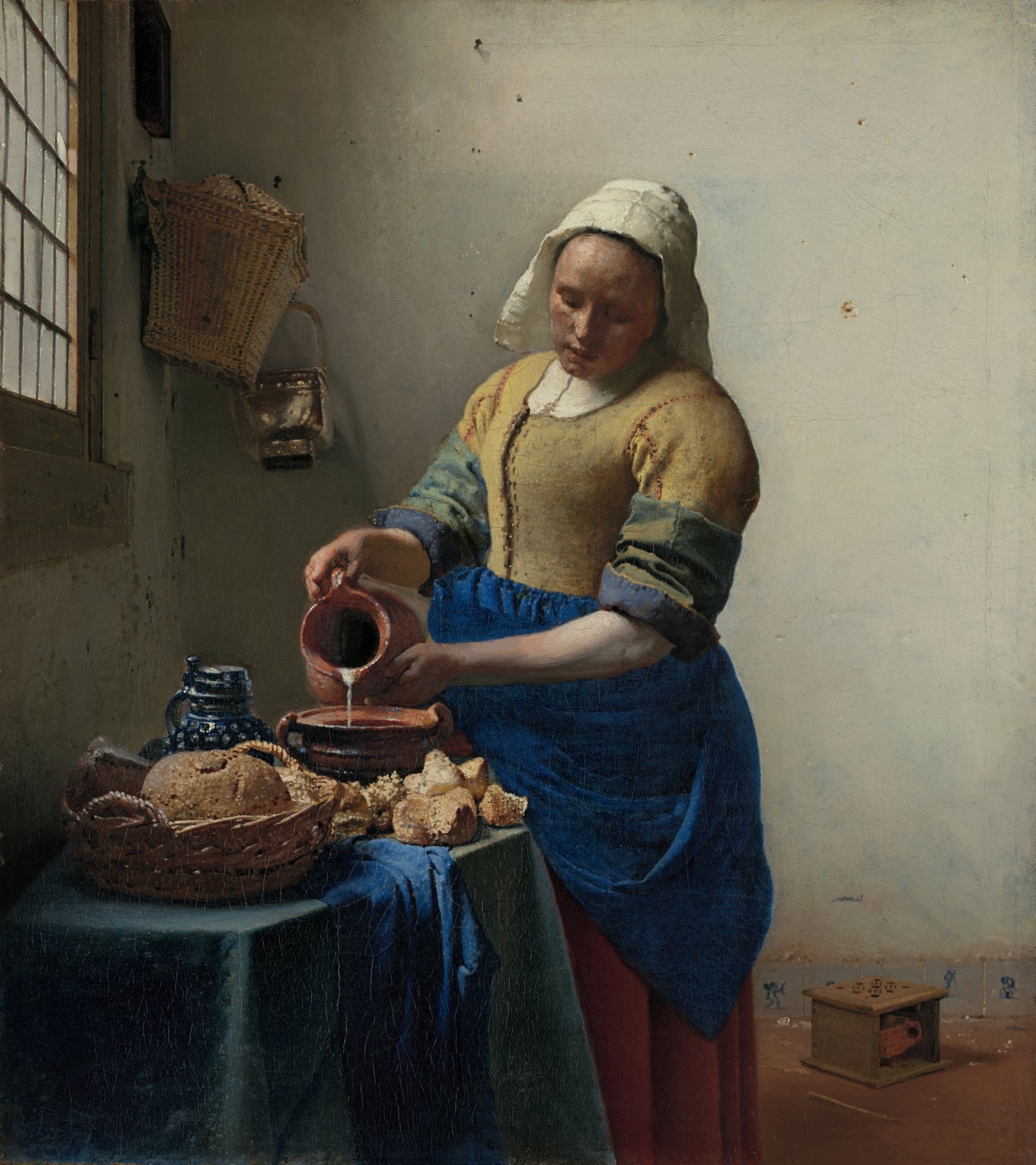
The Milkmaid
Johannes Vermeer (c. 1660)
In The Milkmaid, Vermeer turns an ordinary act—pouring milk—into a scene of <strong>quiet monumentality</strong>. Light from the left fixes the maid’s absorbed attention and ignites the <strong>saturated yellow and blue</strong> of her dress, while the slow thread of milk becomes the image’s pulse <sup>[1]</sup><sup>[2]</sup>. Bread, a Delft jug, nail holes, and a small <strong>foot warmer</strong> anchor a world where humble work is endowed with dignity and latent meaning <sup>[1]</sup><sup>[2]</sup>.