The Elevation of the Cross
Study Print Studio
Create a personal study print
Build a companion study sheet around the part of this painting that speaks to you most. Choose a detail, shape an interpretation, and walk away with something personal and display-worthy.
Fast Facts
- Year
- 1609–1610
- Medium
- Oil on panel
- Dimensions
- Center panel approx. 460 × 340 cm
- Location
- Cathedral of Our Lady, Antwerp
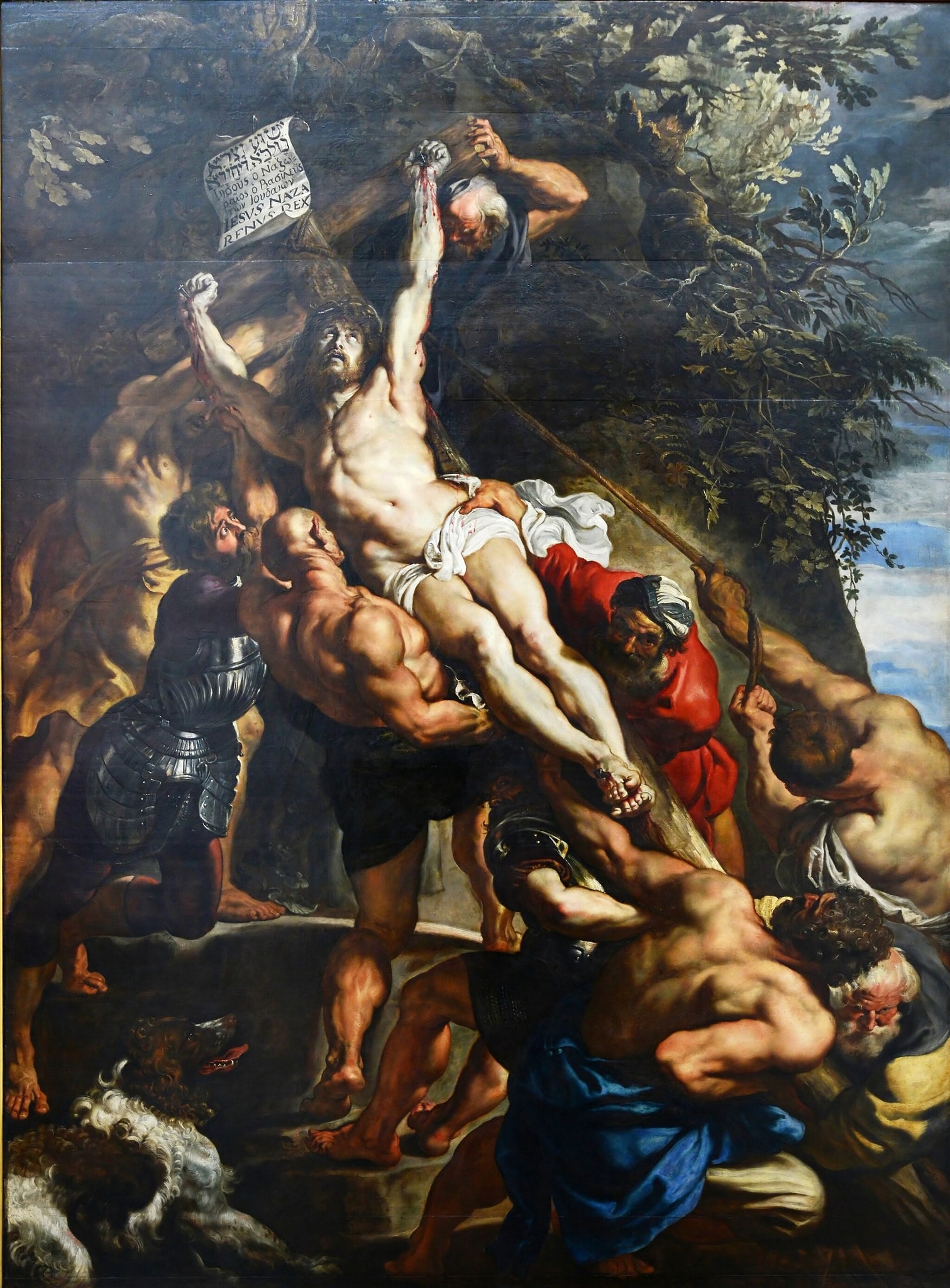
Click on any numbered symbol to learn more about its meaning
Meaning & Symbolism
Explore Deeper with AI
Ask questions about The Elevation of the Cross
Popular questions:
Powered by AI • Get instant insights about this artwork
Interpretations
Formal Analysis: A Continuous Triptych Engineered for Distance
Source: Smarthistory; Cathedral of Our Lady, Antwerp
Liturgical Function: Choreographing Devotion in Post‑Tridentine Antwerp
Source: Cynthia Lawrence (Routledge; bibliographic record via IxTheo); Cathedral of Our Lady; Smarthistory
Classical Quotations: Pagan Heroics Baptized
Source: Smarthistory; Web Gallery of Art; National Gallery (London)
Civic Theology: Local Saints and Antwerp’s Identity
Source: Wikipedia (cross‑checked with WGA); Web Gallery of Art
Material and Making: In Situ Craft as Thematic Echo
Source: TOPA heritage guide; Cathedral of Our Lady, Antwerp
Iconographic Micro‑Atlas: Dog, Trees, Tools
Source: ArtWay (interpretive, used cautiously); Cathedral of Our Lady; Smarthistory
Related Themes
About Peter Paul Rubens
More by Peter Paul Rubens
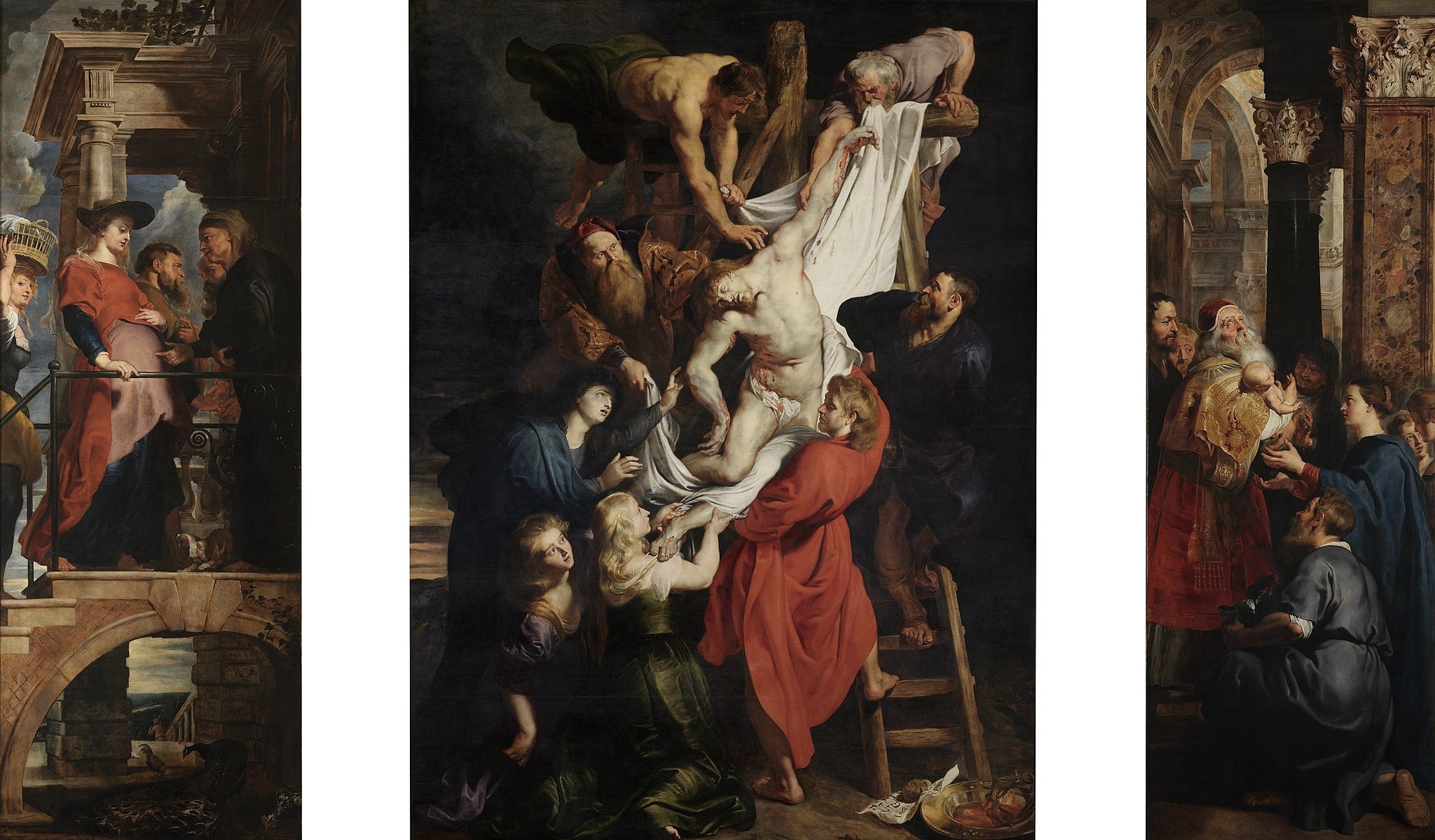
The Descent from the Cross
Peter Paul Rubens (1611–1614)
At night beneath a black sky, The Descent from the Cross stages a solemn transfer of Christ’s body along a luminous <strong>white shroud</strong> that cuts diagonally across the scene. The flanking wings—<strong>The Visitation</strong> and <strong>The Presentation in the Temple</strong>—frame the central tragedy with beginnings and revelation, turning the triptych into a single arc from Incarnation to Redemption. Rubens fuses <strong>Baroque chiaroscuro</strong> with tender, communal gestures to make grief a shared act of devotion.

The Garden of Eden with the Fall of Man
Peter Paul Rubens (c. 1615)
<strong>The Garden of Eden with the Fall of Man</strong> stages the instant Eve passes the forbidden fruit to Adam as the serpent coils above and a teeming paradise encircles them. The panel fuses Peter Paul Rubens’s dramatic nudes with Jan Brueghel the Elder’s encyclopedic fauna and flora, turning Eden into a lush theatre of temptation and consequence <sup>[1]</sup>. Light isolates Eve’s raised arm and golden hair while predators stir at the margins, signaling paradise in the act of unraveling.