Bread (breaking of bread) Symbolism
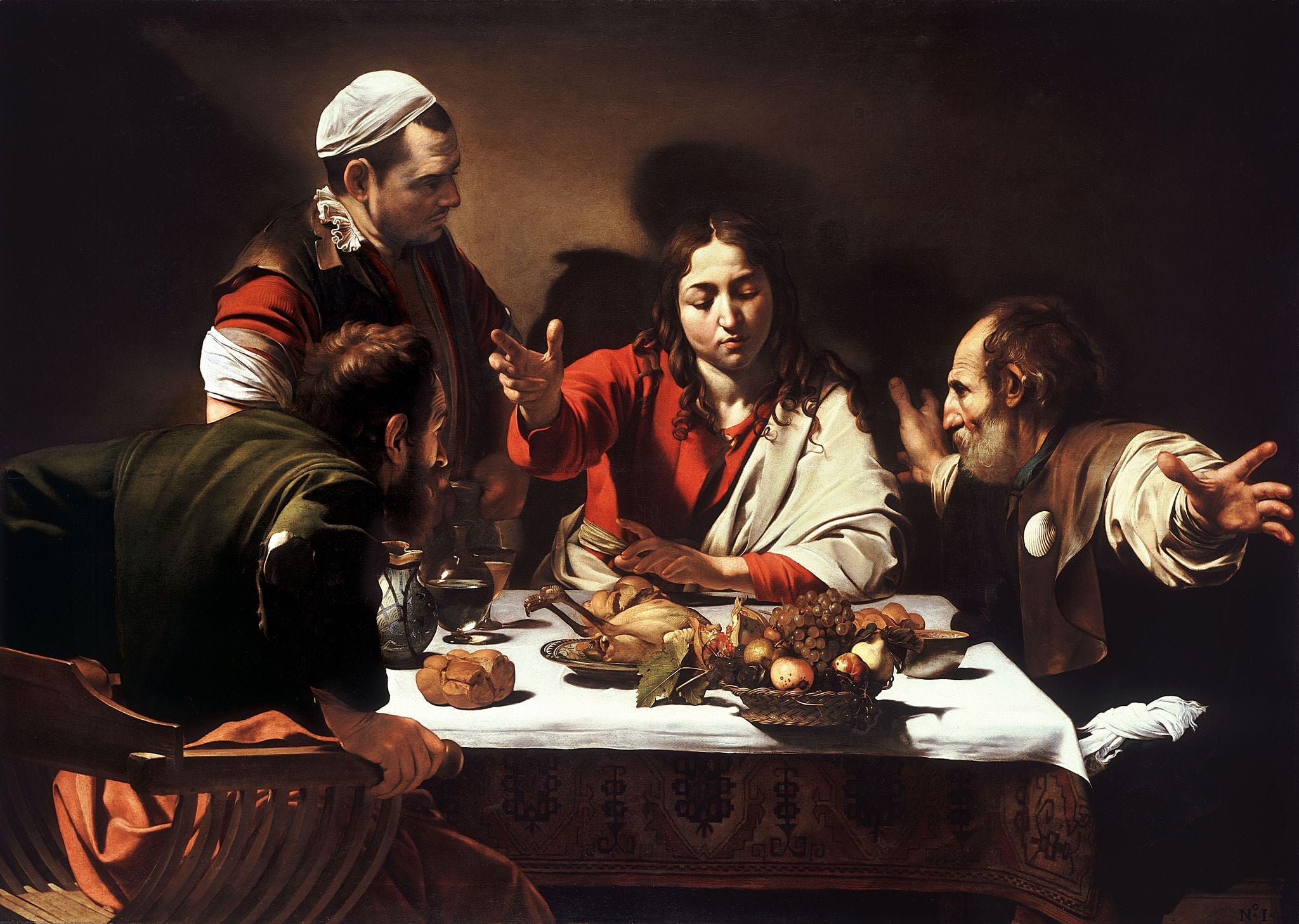
In Christian art, the breaking of bread signifies Christ’s presence and the institution of the Eucharist, often marking the moment the risen Christ is recognized. The act of blessing and dividing bread serves as a visual shorthand for revelation, communion, and shared table fellowship. Artists frequently highlight hands, light, and the tabletop to transform an ordinary meal into a sacred encounter.
Bread (breaking of bread) in The Supper at Emmaus
In Caravaggio’s The Supper at Emmaus (1601), the breaking of bread anchors the scene at the instant two disciples recognize Christ. A raking light isolates Christ’s calm blessing over the bread, while the disciples’ bodies erupt in response—one surging forward with a torn sleeve, the other flinging his arms wide—so recognition reads as physical shock. The Eucharistic table and the teetering basket of fruit frame the bread with images of abundance and fragility, focusing attention on it as the sign of Christ’s presence and the pivot of revelation.