Closed eyes Symbolism
Closed eyes in art mark a turning away from outward sight toward sleep, death, or inward attention. Around 1900, the motif sharpened themes of mortality and private sensation, redirecting viewers from spectacle to bodily presence and intimate feeling. In Gustav Klimt's work, shut lids become emblems of thresholds—between life and death, and between public display and private reverie.
Closed eyes in Old Man on His Deathbed
In Old Man on His Deathbed (c. 1899–1900), Gustav Klimt centers a profile turned toward light; the closed eyes and slightly parted mouth, set within vaporous blues and ochers where head, pillow, and air bleed together, convert close observation into a modern memento mori. Here the shut lids register the final withdrawal from the world, focusing the scene on the body's last stillness rather than on outward vision.
In Girlfriends (Water Serpents I) (1904; last revisions by 1907), two elongated nudes drift through a jeweled, underwater field where bodies and ornament fuse. Their closed eyes, with interlaced arms and hair that streams like currents, seal the encounter in intimate secrecy, turning desire inward. At the same time, metallic scales, eye-shaped ovals, and a watchful fish charge the water with erotic and mythic tension, setting private reverie against motifs of looking.
Common Themes
Artworks Featuring This Symbol
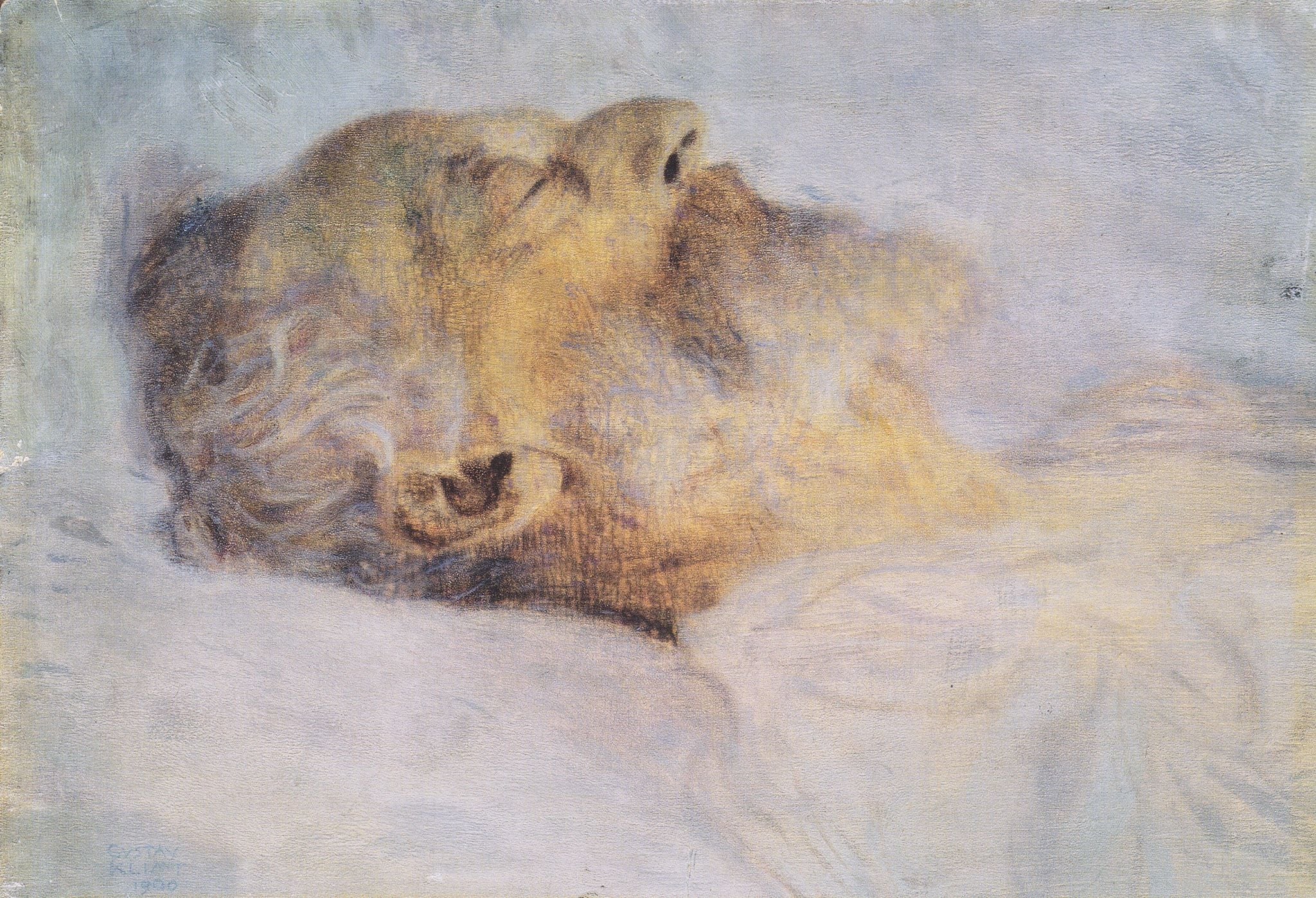
Old Man on His Deathbed
Gustav Klimt (1900 (cataloged; c. 1899–1900, inscription likely by another hand))
Gustav Klimt’s Old Man on His Deathbed is a concentrated vigil at life’s threshold, rendered in <strong>vaporous blues and ochers</strong> that let head, pillow, and air bleed into one another. The profile turned toward light, with <strong>closed eyes and a slightly parted mouth</strong>, transforms observation into a modern <strong>memento mori</strong> <sup>[1]</sup><sup>[2]</sup>.
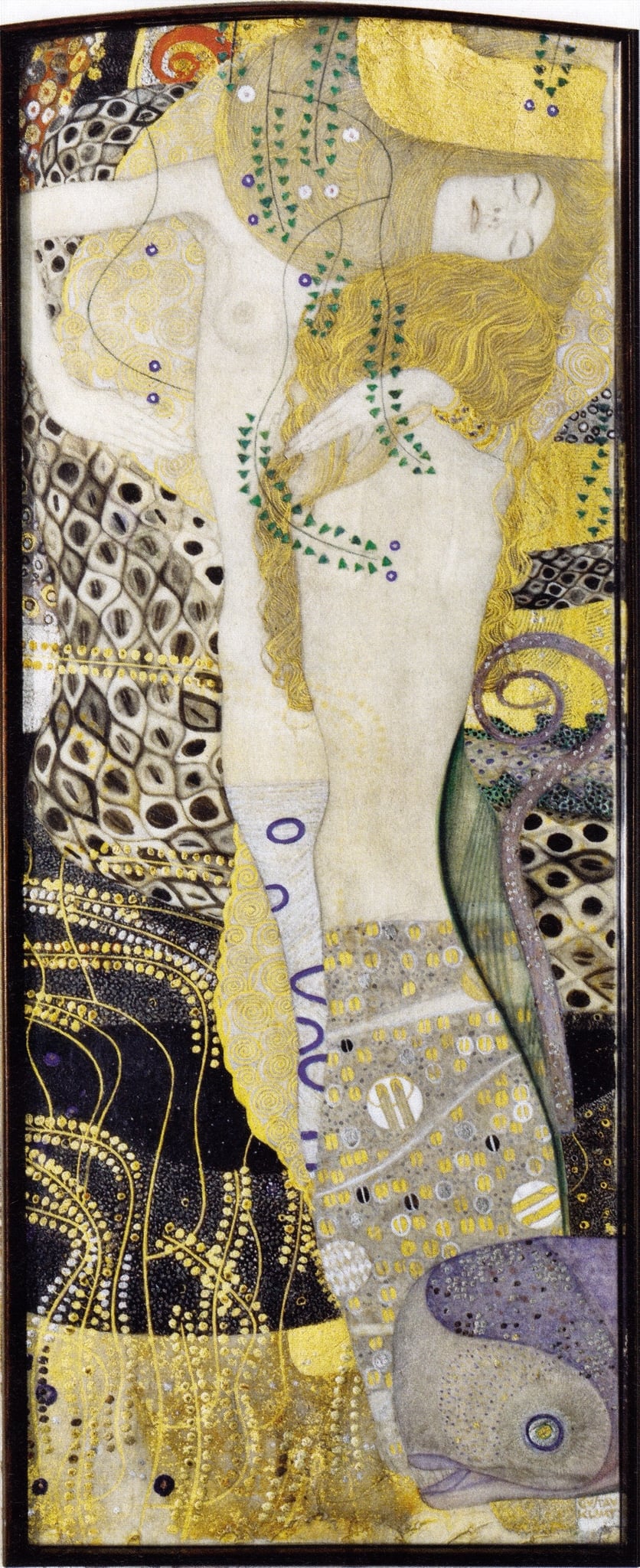
Girlfriends (Water Serpents I)
Gustav Klimt (1904; last revisions by 1907)
Gustav Klimt’s Girlfriends (Water Serpents I) stages two elongated nudes drifting in a jeweled, underwater field where bodies and ornament fuse into a single, <strong>luminous</strong> surface. Closed eyes, interlaced arms, and hair that streams like <strong>currents</strong> seal the scene in intimate secrecy, while metallic scales, eye-shaped ovals, and a watchful fish charge the water with <strong>erotic</strong> and <strong>mythic</strong> tension <sup>[1]</sup><sup>[2]</sup><sup>[3]</sup>.