Old Man on His Deathbed

by Gustav Klimt

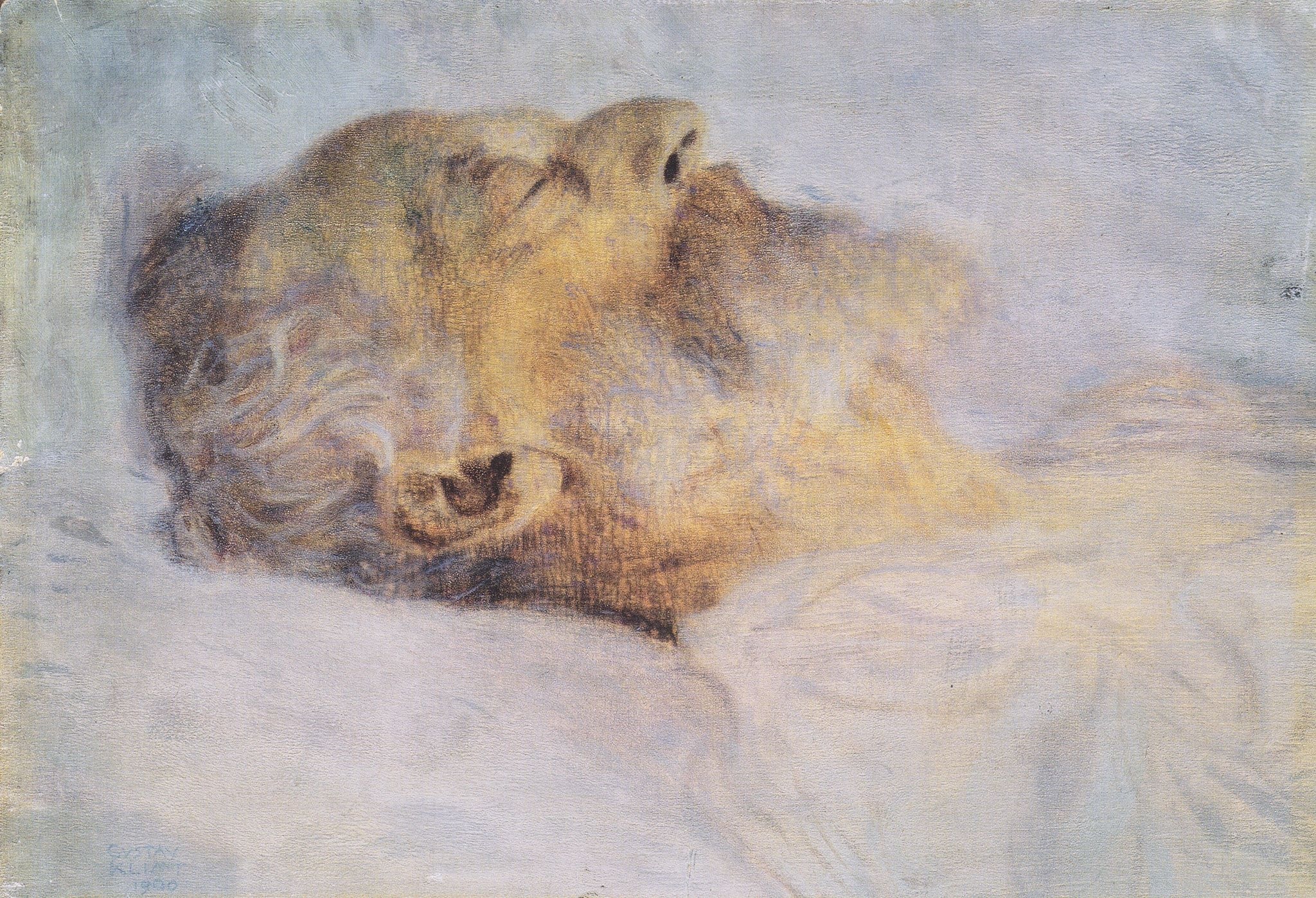
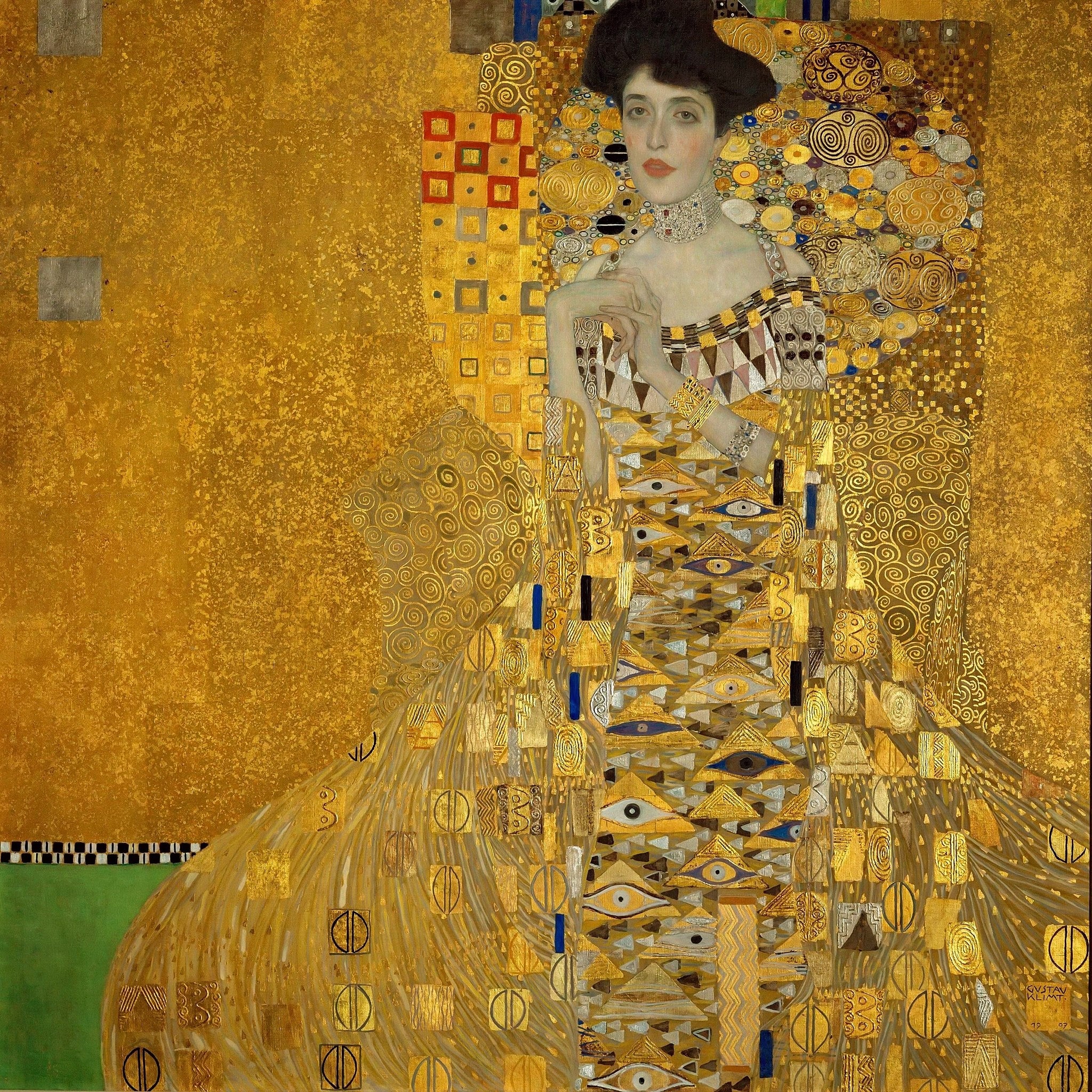
Gustav Klimt’s Old Man on His Deathbed is a concentrated vigil at life’s threshold, rendered in vaporous blues and ochers that let head, pillow, and air bleed into one another. The profile turned toward light, with closed eyes and a slightly parted mouth, transforms observation into a modern memento mori [1][2].
💰

Market Value

$6–9 million

How much is Old Man on His Deathbed worth?

Study Print Studio

Create a personal study print

Build a companion study sheet around the part of this painting that speaks to you most. Choose a detail, shape an interpretation, and walk away with something personal and display-worthy.

Fast Facts

Year
1900 (cataloged; c. 1899–1900, inscription likely by another hand)
Medium
Oil on cardboard
Dimensions
30.4 × 44.8 cm
Location
Österreichische Galerie Belvedere, Vienna
See all Gustav Klimt paintings in Vienna
Old Man on His Deathbed by Gustav Klimt (1900 (cataloged; c. 1899–1900, inscription likely by another hand)) featuring Pale light on pillow, Closed eyes, Slightly parted mouth

Click on any numbered symbol to learn more about its meaning

Meaning & Symbolism

Klimt composes the head in strict profile, tipped toward a pale field of light so that the brow ridge, nose bridge, and beard catch a gentle illumination while the ear sinks into shadow. The eyes are sealed; the lips part as though releasing a final breath. Across the surface, soft, scumbled strokes and thin glazes mute edges: the linen at the jawline refuses to declare a boundary, and the chest vaporizes into the ground. This refusal of contour is not a mannerism but an argument—that identity is loosening, individuality thinning into the surrounding air. The reduced palette of blue-grays, honeyed ochers, and pearly whites functions like a vital sign declining to a steady hum. Klimt’s paint handling is unusually reticent for him around 1900: no gilt, no ornamental pattern, only observational tenderness. The Belvedere notes that death portrayals in his circle were often made immediately after death and were rarely displayed publicly, which clarifies the painting’s quiet tone and its private, documentary charge 1. The museum also believes the sheet was likely cropped from a larger composition; that truncation intensifies the confrontation with the head and erases narrative cues, leaving us with nothing but the threshold moment 1. Form carries meaning here. The diagonal alignment of the head along the lower-left to upper-right axis meets a countercurrent of cool light that floods the pillow. Those vectors stage a passage, not a portrait: the sitter’s identity is unknown, and Klimt suppresses biography to reach a more universal liminality 1. In fin-de-siècle Vienna, the polarity of Eros and Thanatos animated art and thought; Klimt’s more overt allegory in Death and Life externalizes that polarity with a personified Death and a communal cluster of the living, yet its tranquility rhymes with the serenity here 2. Old Man on His Deathbed achieves the same existential stance without symbols: the benedictive light over the brow, the softened beard dissolving into cloth, the breath suggested by the slightly open mouth. Even the factual irregularity of the painting’s inscription—"GVSTAV / KLIMT / 1900" likely written by another hand—reinforces the work’s liminal position between record and remembrance, prompting curatorial dating around 1899–1900 rather than a firm single year 1. Why Old Man on His Deathbed is important, then, is twofold. First, it demonstrates Klimt’s capacity to translate clinical proximity into metaphysical clarity: paint becomes vigil, brushwork becomes breath. Second, it locates his Symbolism not in emblems but in facture—edges that fade, tones that quiet, light that absolves—anticipating how modern art would encode meaning in handling rather than icon. Within the Vienna Secession’s project to renew art’s language, this small oil on cardboard stands as a decisive, humane statement about dying: not terror, but acceptance; not spectacle, but presence 123.

Explore Deeper with AI

Ask questions about Old Man on His Deathbed

Popular questions:

Powered by AI • Get instant insights about this artwork

💬 Ask questions about this artwork!

Interpretations

Historical Context: Private Death Portraiture in the Secession Circle

Belvedere’s curatorial note situates this painting within a practice of intimate death portrayals—often executed immediately after death and seldom publicly shown because of their personal charge 1. This custom explains the work’s anti‑theatrical tone and its tight focus on the threshold moment rather than biography. The museum’s observation that the sheet was likely cropped further clarifies its present intensity: a fragment that isolates head, pillow, and light, stripping away narrative furniture to produce a distilled vigil. Dating oscillates between c. 1899–1900, partly because the visible inscription is likely by another hand, an uncertainty consistent with the informal, private production of such bedside studies 15. Read this way, the painting records a communal Viennese ritual of witnessing death, reframed by Klimt as a modern meditation on presence.

Source: Belvedere Museum

Material and Facture: Oil on Cardboard as Modern Memento

Executed in oil on cardboard at an intimate scale (30.4 × 44.8 cm), the work leverages a humble support to prioritize speed, proximity, and touch over display 1. Klimt’s thin glazes, scumbled strokes, and refusal of crisp contour stage a visual dissolution that doubles as meaning: identity loosens, edges blur, breath fades. The absence of gilt or pattern—so prominent in later works—signals a conscious anti‑ornamental stance, aligning with Symbolist aims to convey interior states through facture rather than emblem 13. The small, portable support reinforces the work’s status as a private record—something brought to the site of death, made quickly and attentively, then kept within a circle of mourners before entering the museum.

Source: Belvedere Museum; Encyclopaedia Britannica

Identity Hypothesis and Family Circles: The Hermann Flöge Question

While the sitter remains officially unknown 1, an early hypothesis proposed that the portrait might depict Hermann Flöge (father of Emilie Flöge), who died in 1897—an attribution that would challenge the “1900” inscription and anchor the work more tightly within Klimt’s extended family network 6. The museum does not endorse this identification, yet the debate illuminates how kinship and mourning shaped these images. If linked to the Flöges, the painting would register not only modern Vienna’s death culture but also Klimt’s personal economies of care, knitting art to companionship and grief. Regardless of identity, the unresolved inscription—likely by another hand—keeps the object poised between record and remembrance, mirroring its thematic liminality 156.

Source: Belvedere Museum; im Kinsky (citing Belvedere periodical)

Comparative Symbolism: From Allegory to Liminal Light

Set beside Klimt’s allegorical masterpiece Death and Life, this small bedside study achieves a related serenity without personifications: no skull, no shroud iconography, only light, breath, and dissolving edges 2. In both, Eros and Thanatos are held in balance—not as conflict but as rhythm—yet here the symbolism migrates into tone, touch, and illumination 12. This shift embodies a Symbolist credo: ideas rendered as atmospheres and thresholds rather than narrative props 3. The painting’s benedictive light functions like a secular anointing, translating metaphysical transition into optical tenderness. The result is a radical condensation of Klimt’s death‑and‑life dialectic, achieved through facture rather than emblem, intimacy rather than spectacle.

Source: Leopold Museum; Belvedere Museum; Encyclopaedia Britannica

Authorship and Inscription: The Signature as Threshold

Belvedere notes the lower‑left inscription “GVSTAV KLIMT 1900” is probably by another hand, prompting a curatorial date around 1899–1900 15. This anomaly is not trivial: it frames the work as an artifact of mourning practices, where documentation might be added by relatives, dealers, or later custodians. The object thus hovers between document and artwork, echoing its visual liminality. The uncertain hand and flexible date complicate standard art‑historical certainties—authorship, intention, finish—while underscoring how death images often circulate privately before institutional canonization. In short, the signature’s ambiguity becomes thematically apt: a textual afterimage attached to a painted after‑presence, both marking and softening the line between life, memory, and museum record 15.

Source: Belvedere Museum

Related Themes

About Gustav Klimt

Gustav Klimt (1862–1918), co-founder of the Vienna Secession, pivoted from controversial public commissions to a decorative-symbolist language in his Golden Period. Drawing on Byzantine mosaics and modern design, he fused opulent surfaces with psychological intensity. By 1908–09, he transformed scandal into canon, and The Kiss became Vienna’s emblem of modern love.
View all works by Gustav Klimt

More by Gustav Klimt

Portrait of Adele Bloch-Bauer I by Gustav Klimt

Portrait of Adele Bloch-Bauer I

Gustav Klimt (1907)

Gustav Klimt’s Portrait of Adele Bloch-Bauer I stages its sitter as a <strong>secular icon</strong>—a living presence suspended in a field of gold that converts space into <strong>pattern and power</strong>. The naturalistic face and hands emerge from a reliquary-like cascade of eyes, triangles, and tesserae, turning light, ornament, and status into the painting’s true subjects <sup>[1]</sup><sup>[2]</sup>.
Sunflower by Gustav Klimt

Sunflower

Gustav Klimt (1907/1908)

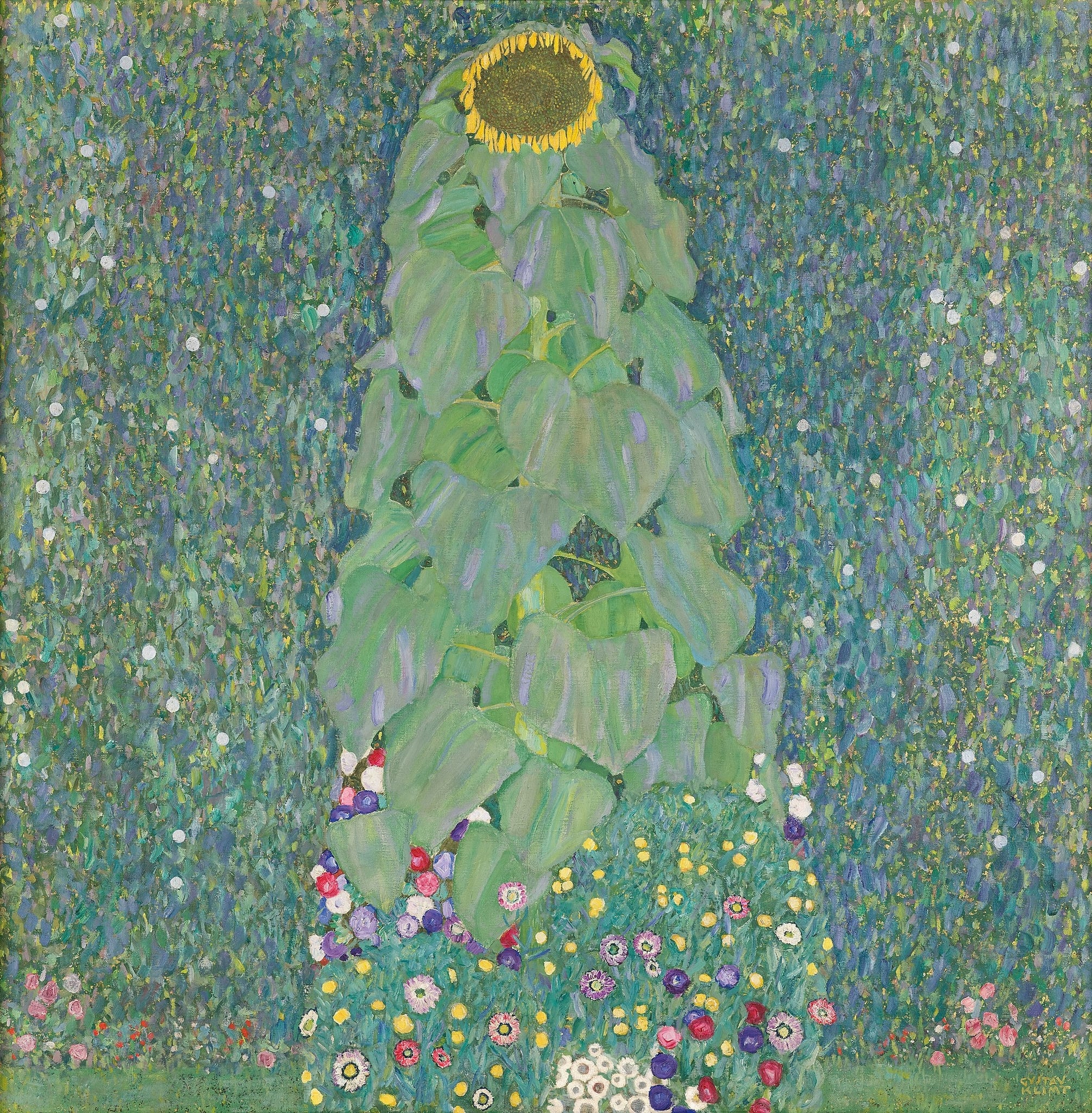
Gustav Klimt’s Sunflower turns a single bloom into a <strong>monumental, figure-like presence</strong>. A tapering stack of broad, drooping leaves rises from a <strong>mosaic-like carpet of round blossoms</strong>, crowned by a gold-flecked disc that glows against a cool, stippled field. The work fuses <strong>portrait, icon, and landscape</strong> into one emblem of vitality and quiet sanctity <sup>[1]</sup><sup>[2]</sup>.
Cottage Garden with Sunflowers by Gustav Klimt

Cottage Garden with Sunflowers

Gustav Klimt (1906–1907 (signed 1907))

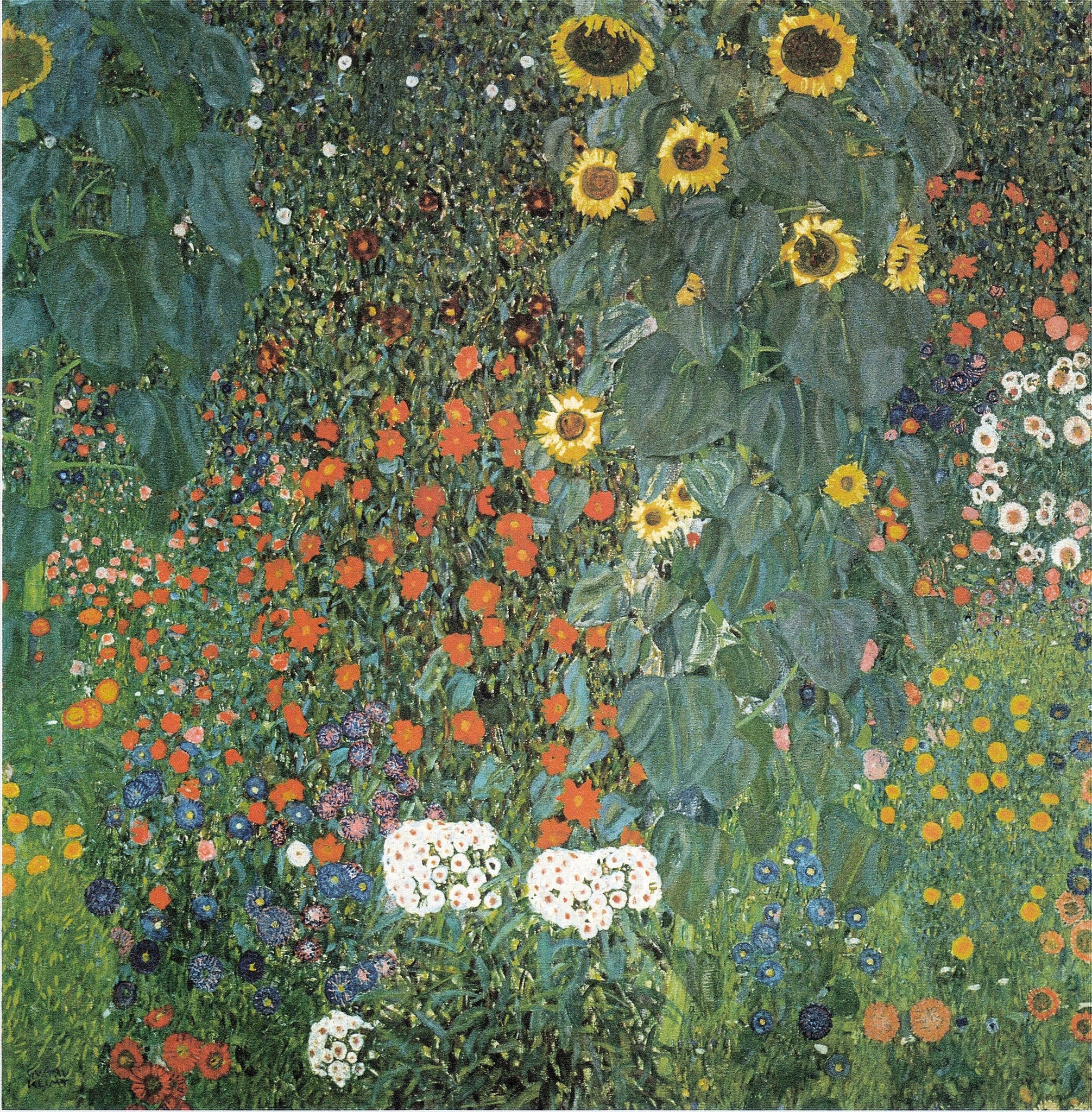
Cottage Garden with Sunflowers is a square, horizonless field of blooms where a vertical column of <strong>sunflowers</strong> anchors an all-over weave of color and pattern. Klimt fuses <strong>ornament and nature</strong>, turning a humble Litzlberg cottage plot into a radiant matrix of cyclical life and renewal <sup>[1]</sup><sup>[4]</sup><sup>[5]</sup>.
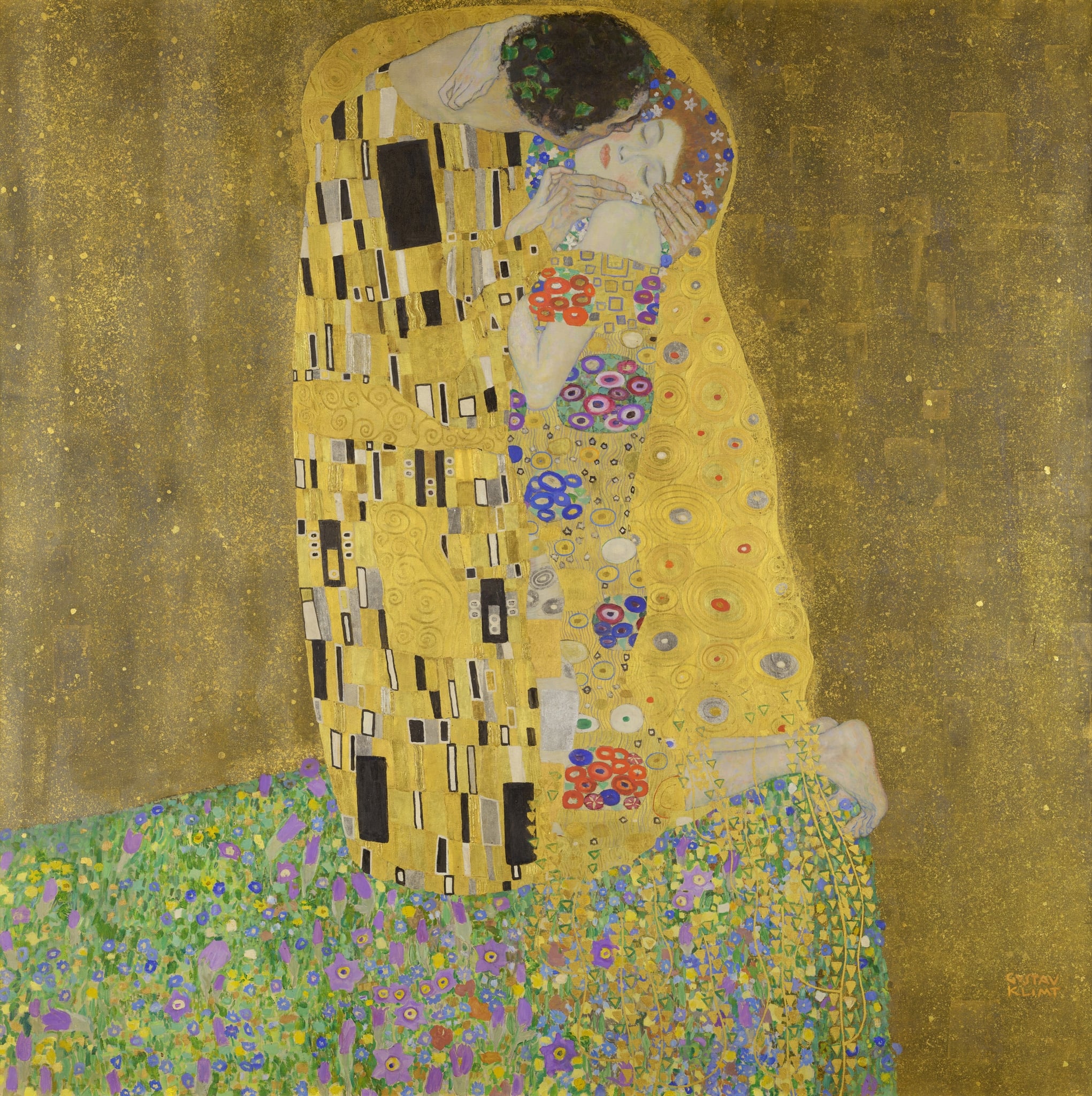
The Kiss by Gustav Klimt

The Kiss

Gustav Klimt (1908 (completed 1909))

The Kiss stages human love as a <strong>sacred union</strong>, fusing two figures into a single, gold-clad form against a timeless field. Klimt opposes <strong>masculine geometry</strong> (black-and-white rectangles) to <strong>feminine organic rhythm</strong> (spirals, circles, flowers), then resolves them in radiant harmony <sup>[1]</sup><sup>[2]</sup>.
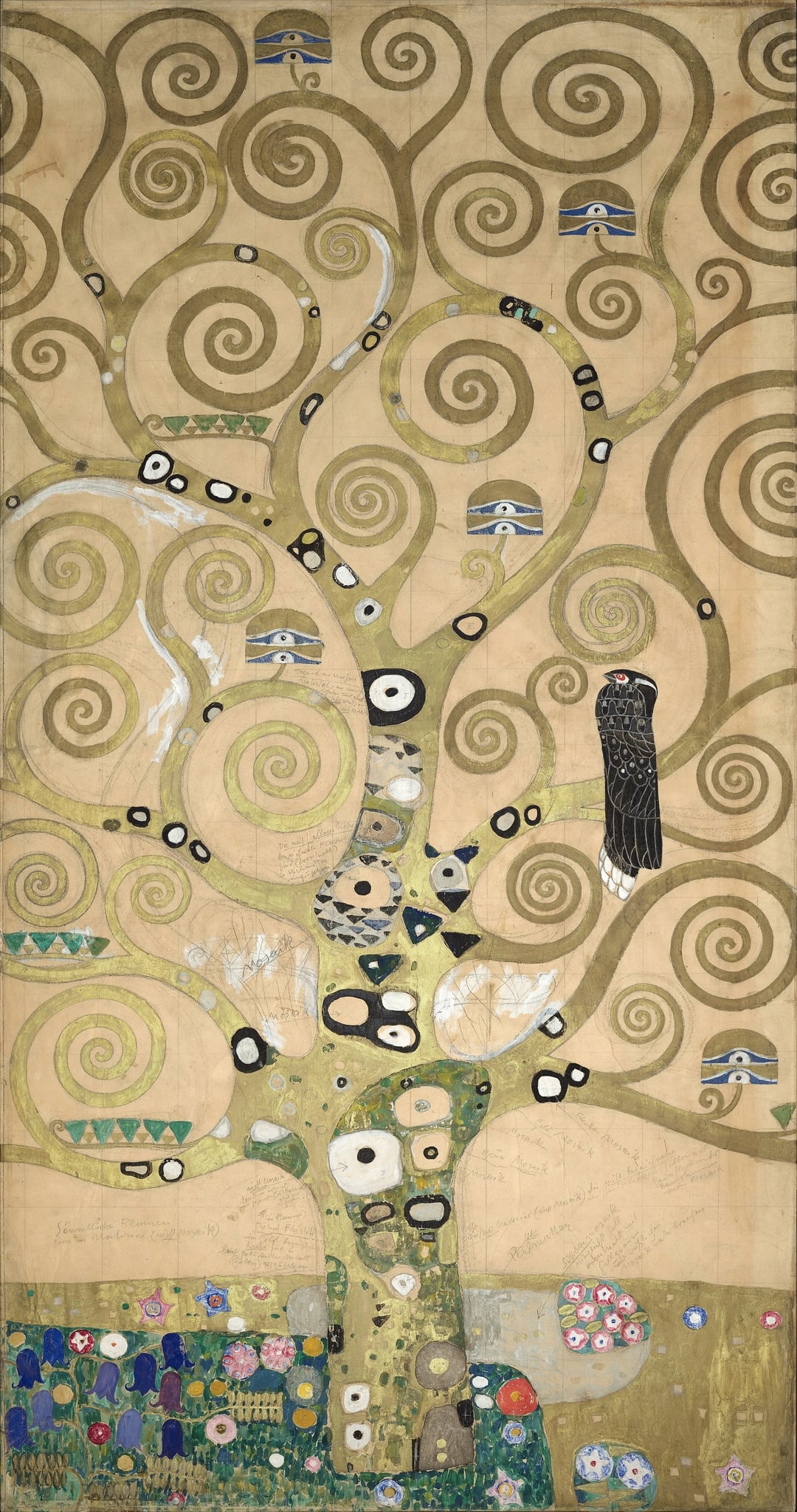
The Tree of Life by Gustav Klimt

The Tree of Life

Gustav Klimt (1910–1911 (design; mosaic installed 1911))

Gustav Klimt’s The Tree of Life crystallizes a <strong>cosmological axis</strong> in a gilded ornamental language: a rooted trunk erupts into <strong>endless spirals</strong>, embedded with <strong>eye-like rosettes</strong> and shadowed by a black, red‑eyed bird. Designed as part of the Stoclet dining‑room frieze, it fuses <strong>symbolism and luxury materials</strong> to link earthly abundance with timeless transcendence <sup>[1]</sup><sup>[2]</sup>.
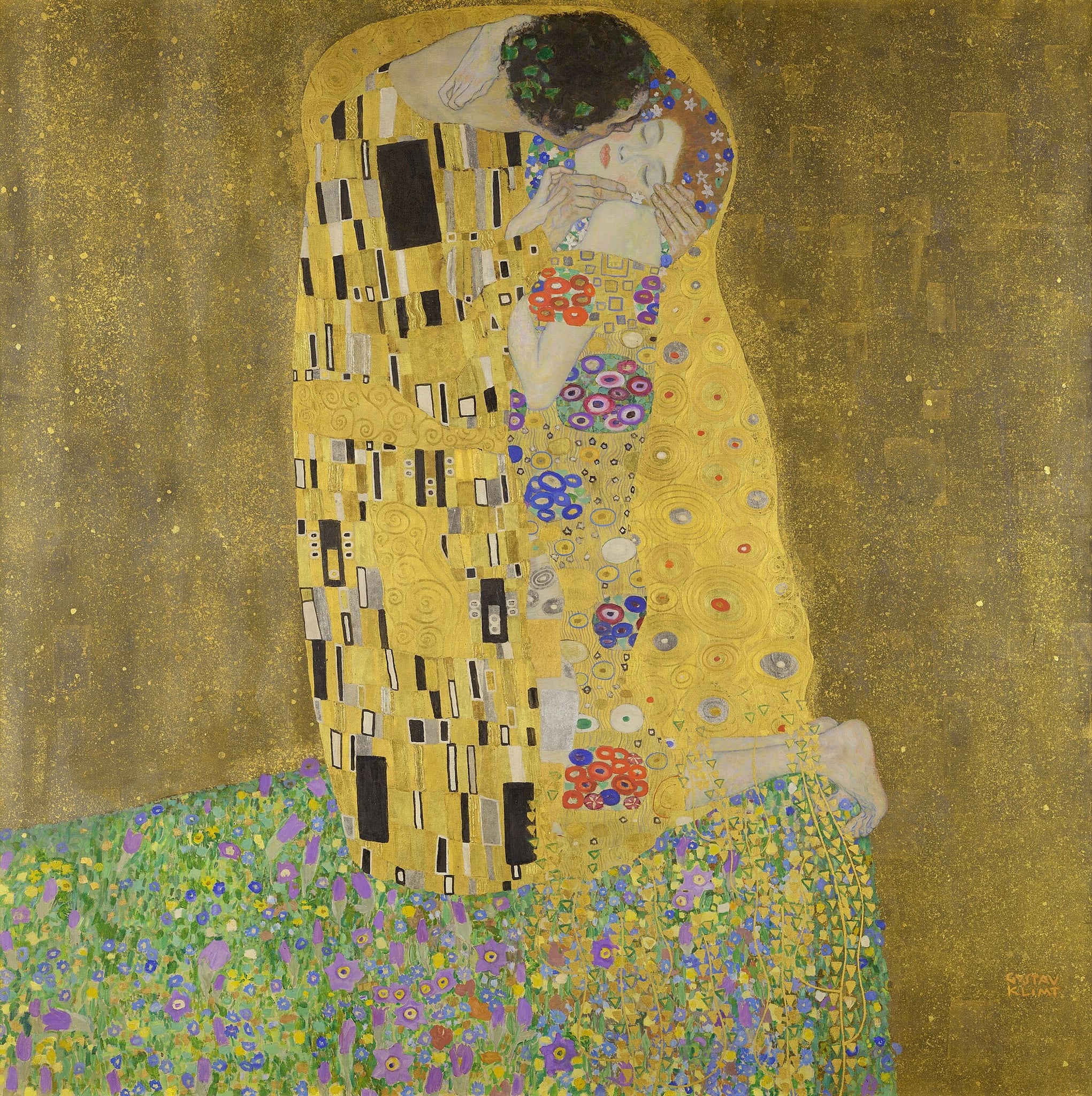
The Kiss (Lovers) by Gustav Klimt

The Kiss (Lovers)

Gustav Klimt (1907–1908 (Belvedere lists 1908/09))

The Kiss (Lovers) crystallizes Klimt’s <strong>Golden Period</strong> ideal: erotic union staged as a sacred vision. Two bodies fuse beneath a single golden mantle, poised on a flowered ledge at the brink of the unknown, where <strong>pattern becomes symbol</strong> and intimacy becomes icon.