Cross and ladder Symbolism
The cross and ladder signify the instrument of Crucifixion and the means of Christ’s descent, marking the Passion’s completion and the loving care of those who lower his body. In Baroque treatments of the Descent from the Cross, as in Rubens’s work, the pairing turns violent death into a deliberate act of removal and devotion.
Cross and ladder in The Descent from the Cross
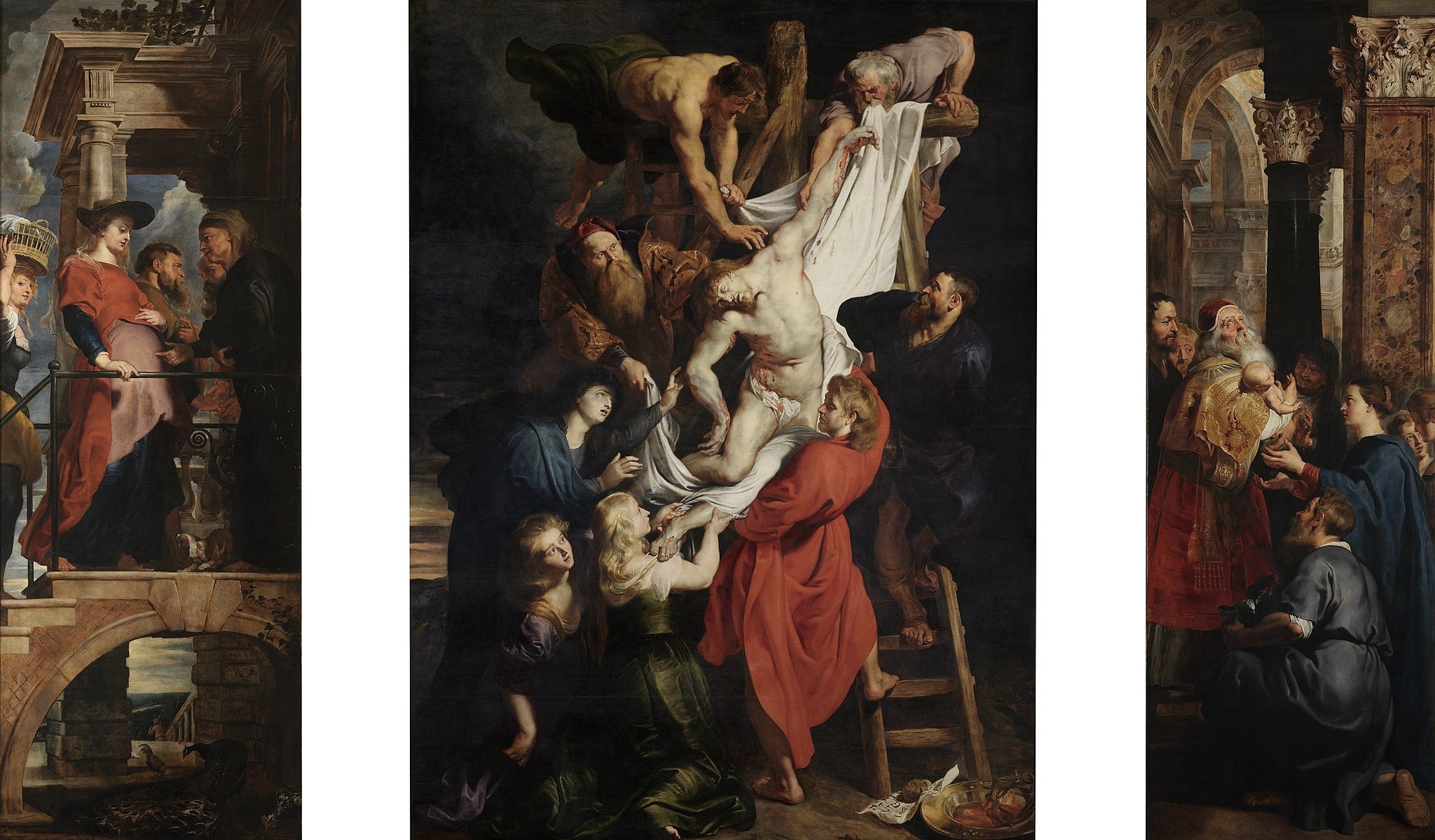
Peter Paul Rubens’s The Descent from the Cross (1611–1614) centers the cross against a black night while Christ’s body is guided downward along a luminous white shroud that cuts diagonally across the scene. Baroque chiaroscuro and the coordinated gestures of the attendants make the descent a communal act of care, conveying the completed sacrifice the symbol names.
Framed by The Visitation and The Presentation in the Temple, the triptych binds beginnings, revelation, and this central removal into a single arc from Incarnation to Redemption. Within this structure, the cross-and-ladder motif functions as the hinge between Crucifixion and burial: the moment when suffering is answered by attentive, reverent labor.