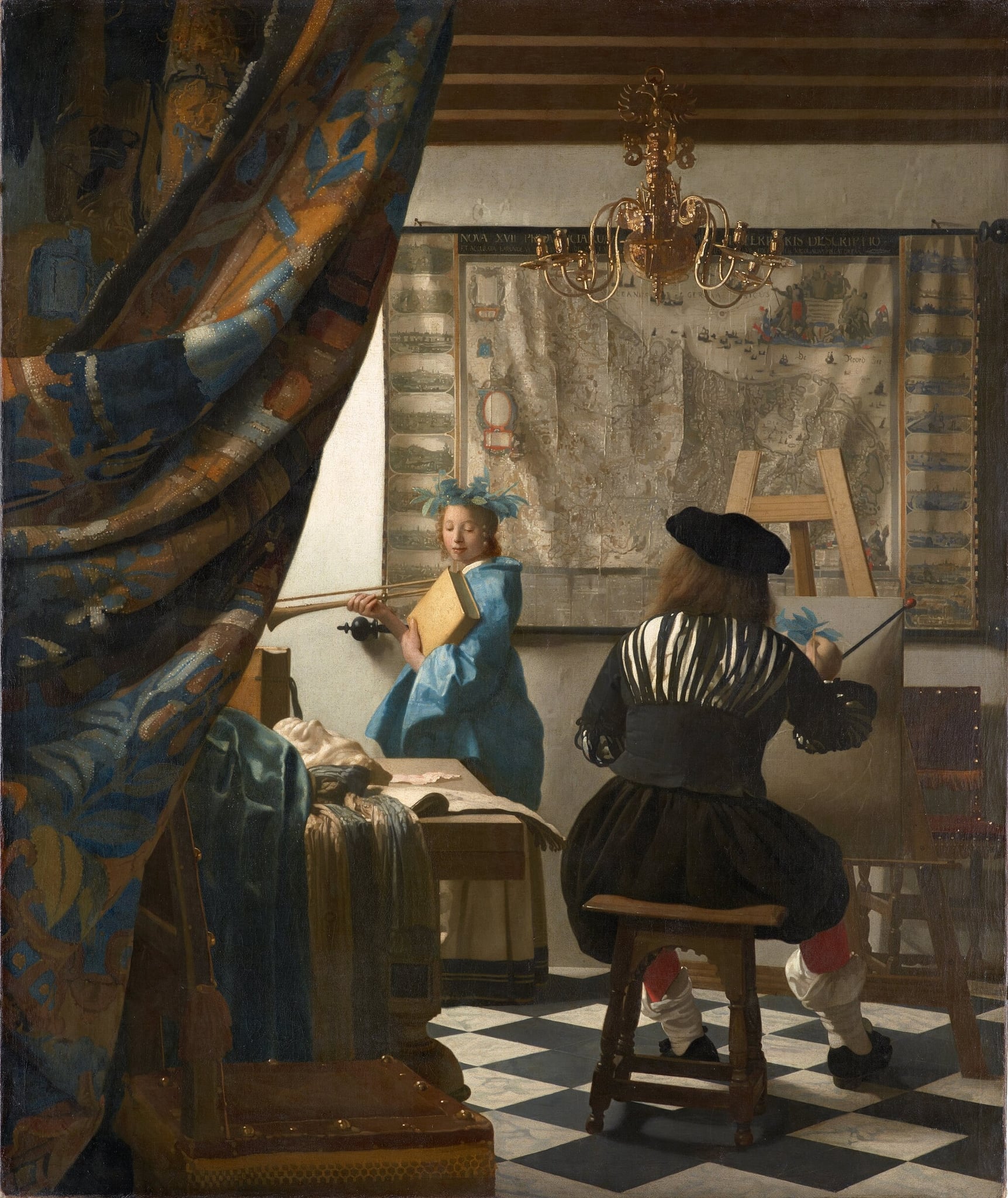
Double‑headed eagle chandelier Symbolism
The double‑headed eagle is a long‑standing imperial emblem, closely associated in early modern Europe with the Holy Roman Empire under Habsburg rule. When fashioned into objects like chandeliers, it signifies sovereignty, dynastic power, and the reach of imperial authority. In paintings, its appearance can cue viewers to read the scene through political history and collective memory.
Double‑headed eagle chandelier in The Art of Painting
In Johannes Vermeer’s The Art of Painting (c. 1666–1668), a double‑headed eagle chandelier crowns the studio interior. In concert with the vast map of the Seventeen Provinces and the muse Clio, it brings the Habsburg emblem into an allegory of art, turning the room into a site of political retrospection and national memory. By presiding over the scene, the chandelier links the painter’s craft to history and fame, reminding viewers of former sovereignty within a Dutch context.