INRI tablet Symbolism
INRI abbreviates the Latin Iesus Nazarenus Rex Iudaeorum—“Jesus of Nazareth, King of the Jews”—the inscription recorded on the titulus, or tablet, fixed above Christ on the Cross. In Western art it functions as a compact text that both states the Roman charge and proclaims Christ’s kingship, anchoring Crucifixion and related Passion scenes in scripture and theology.
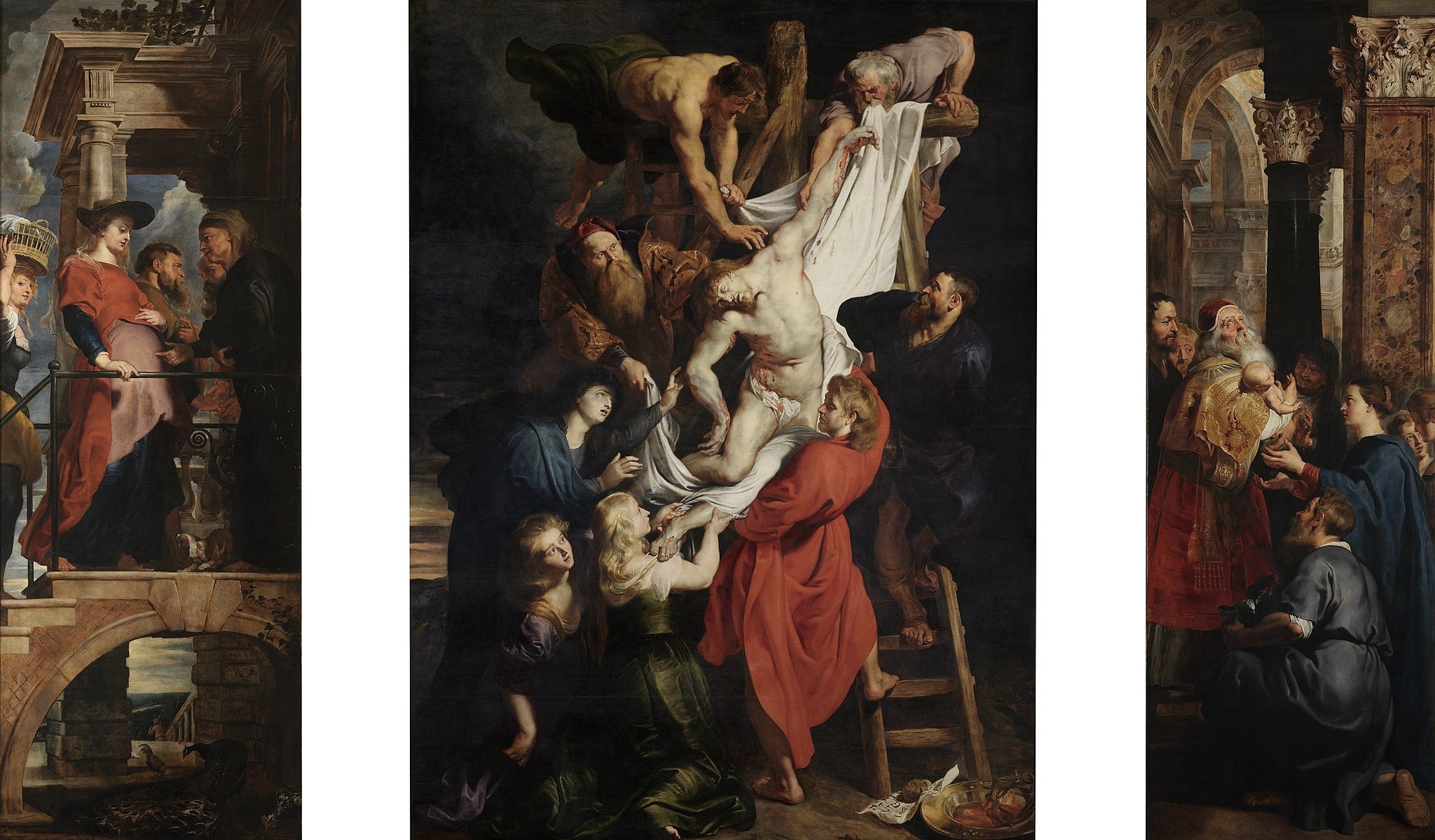
INRI tablet in The Descent from the Cross
In Peter Paul Rubens’s The Descent from the Cross (1611–1614), the drama unfolds at the very instrument of execution to which the INRI tablet belongs. Even as Rubens concentrates on the luminous white shroud and the shared labor of mourning, the inscription’s claim—“Jesus of Nazareth, King of the Jews”—frames the transfer of Christ’s body: it identifies the condemned figure being lowered and affirms the kingship that gives the scene its redemptive gravity. Within the triptych’s sweep from Incarnation to Redemption, that royal title resonates with the flanking moments of beginning and revelation, binding the central tragedy to the work’s larger theology of fulfillment.