Iron streetlamp Symbolism
In late nineteenth-century city views, the iron streetlamp signifies the reach of modern infrastructure and the municipal ordering of public space. Its standardized, repeating form marks thoroughfares, regulates movement, and makes technology visibly part of urban experience. In Impressionist painting, it also registers weather and light, linking modernization to the act of seeing.
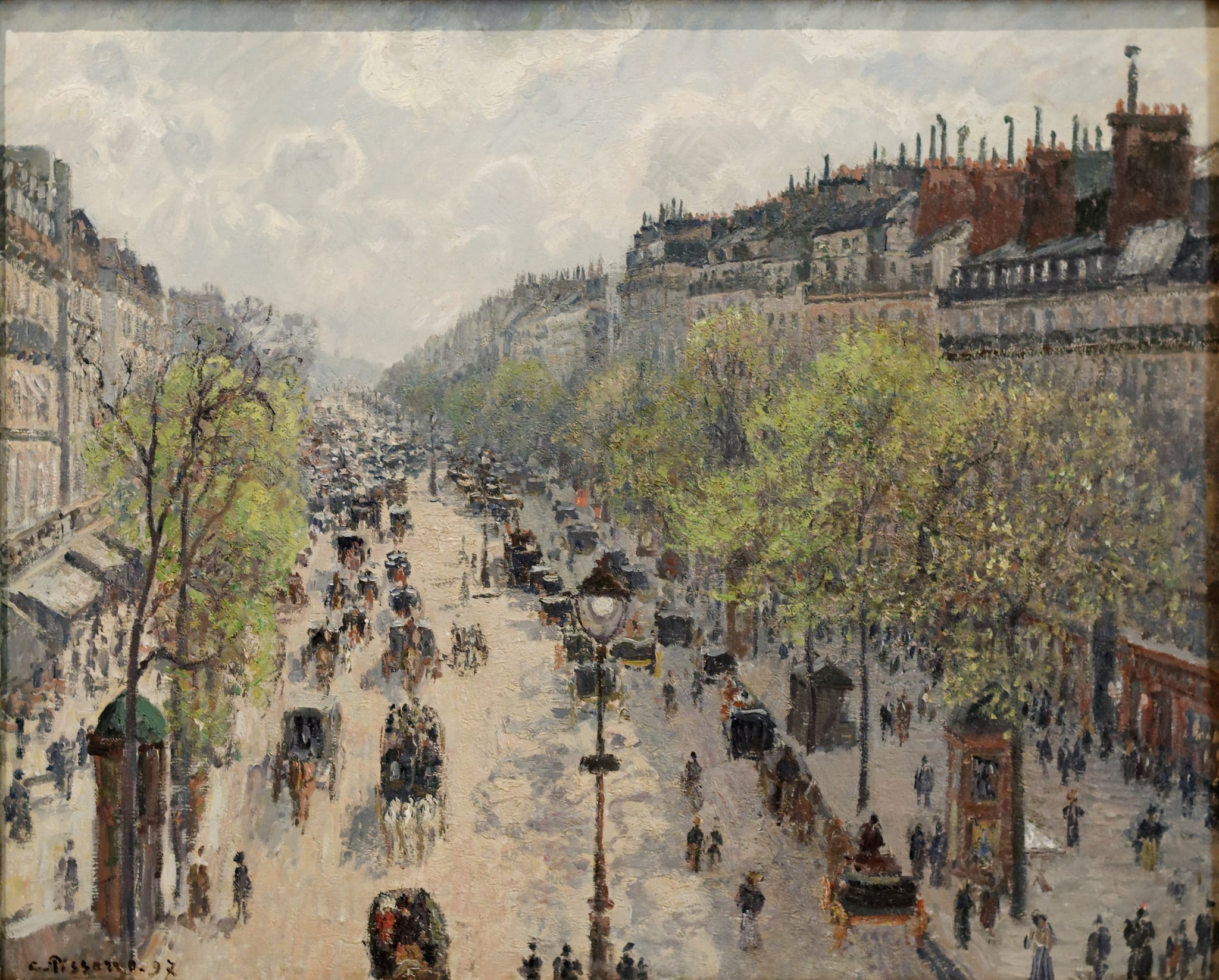
Iron streetlamp in The Boulevard Montmartre on a Spring Morning
In Camille Pissarro’s The Boulevard Montmartre on a Spring Morning (1897), iron streetlamps run the length of the grand boulevard, their regular verticals pacing the composition and signaling the civic design of modern Paris. Pissarro’s flickering brushwork folds the lamps together with crowds and carriages, so they function both as markers of municipal order and as participants in the scene’s river of motion. Seen from a fixed, elevated vantage, the posts punctuate the pale roadway and tender greens, helping articulate depth, flow, and the lived texture of modern life that Impressionism sought to record.