Long bench Symbolism
In art, the long bench often signifies rest, shared time, and a pause that gathers people or holds them in potential. Its extended horizontal form can create a visual resting place, slowing the viewer’s attention and suggesting sociability even in the absence of figures. Artists use it to mark thresholds between movement and stillness, inviting contemplation.
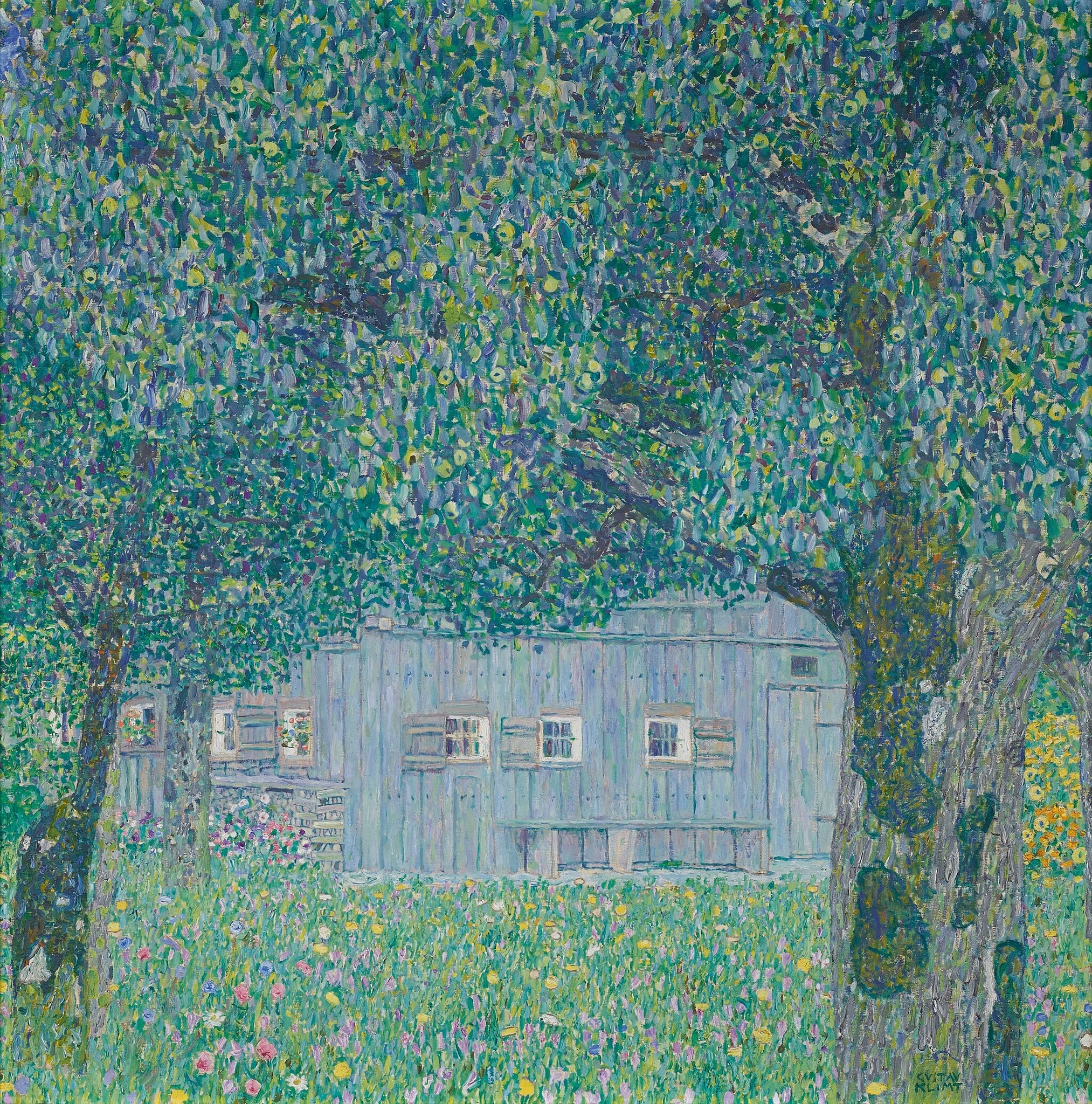
Long bench in Farmhouse in Buchberg (Upper Austrian Farmhouse)
In Gustav Klimt’s Farmhouse in Buchberg (Upper Austrian Farmhouse) (1911), the meanings associated with the long bench are evoked without a literal bench. Klimt’s square format and selective pointillism fuse house, trees, and flowers into a contemplative, patterned field that privileges stillness over incident; the cool façade, held in balance against the vibrating canopy and jewel-like meadow, creates zones of visual rest. Everyday architecture becomes an emblem of refuge within fecund nature, and human life is held in abeyance—echoing the bench’s promise of communal pause and repose while deferring actual occupancy.