Marriage & domesticity
Featured Artworks
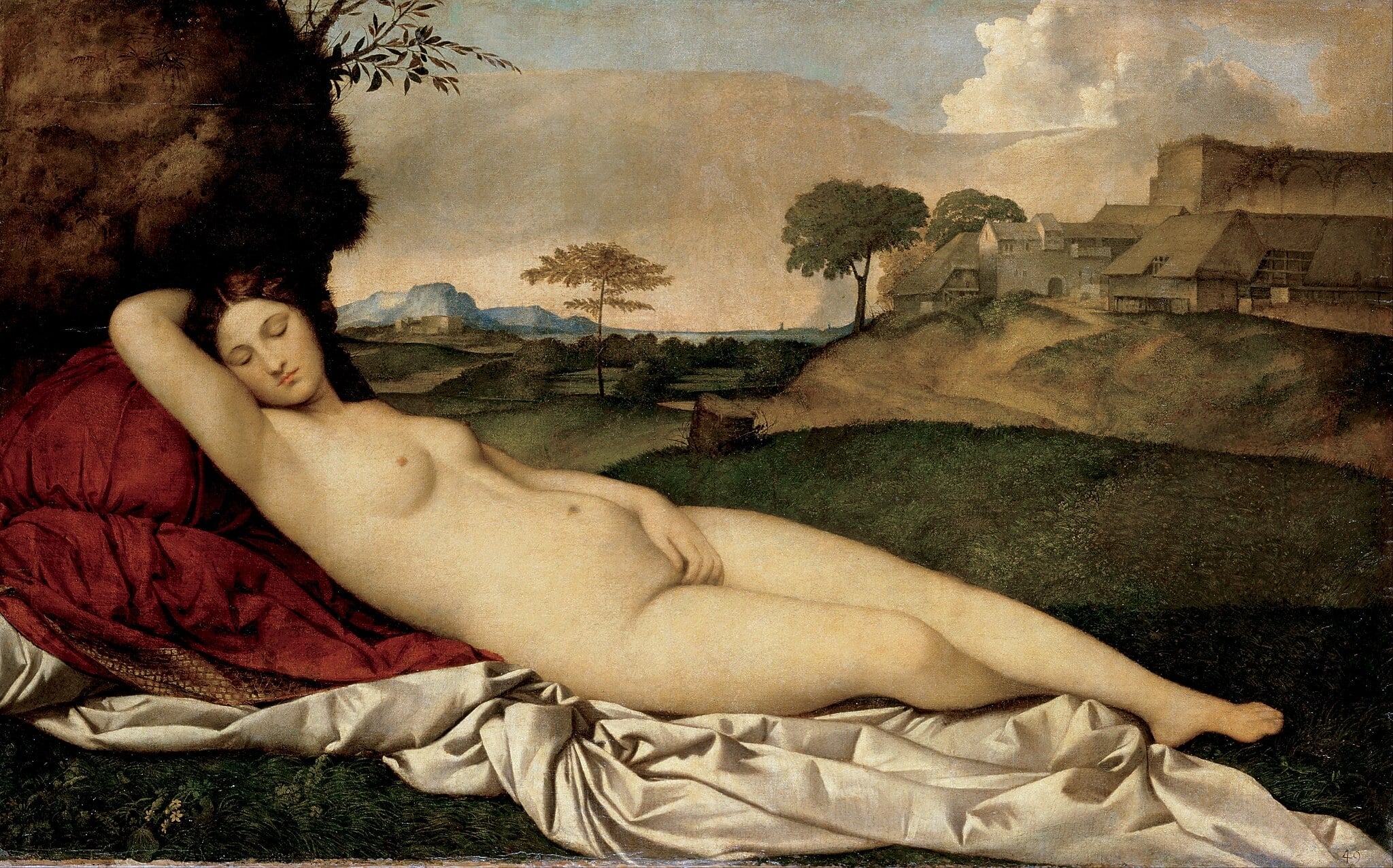
The Sleeping Venus
Giorgione (c. 1508–1510)
In The Sleeping Venus, the goddess reclines across a rolling landscape, her body a serene diagonal that fuses human beauty with nature’s forms. Cool, <strong>silvery drapery</strong> and <strong>deep red cushions</strong> intensify her luminous flesh, while the right-hand <strong>Venus pudica</strong> gesture suspends desire between revelation and restraint. The painting crystallizes the Venetian ideal of poetic harmony (<strong>poesia</strong>) and inaugurates the fully realized reclining nude in Western art <sup>[2]</sup><sup>[4]</sup><sup>[6]</sup>.
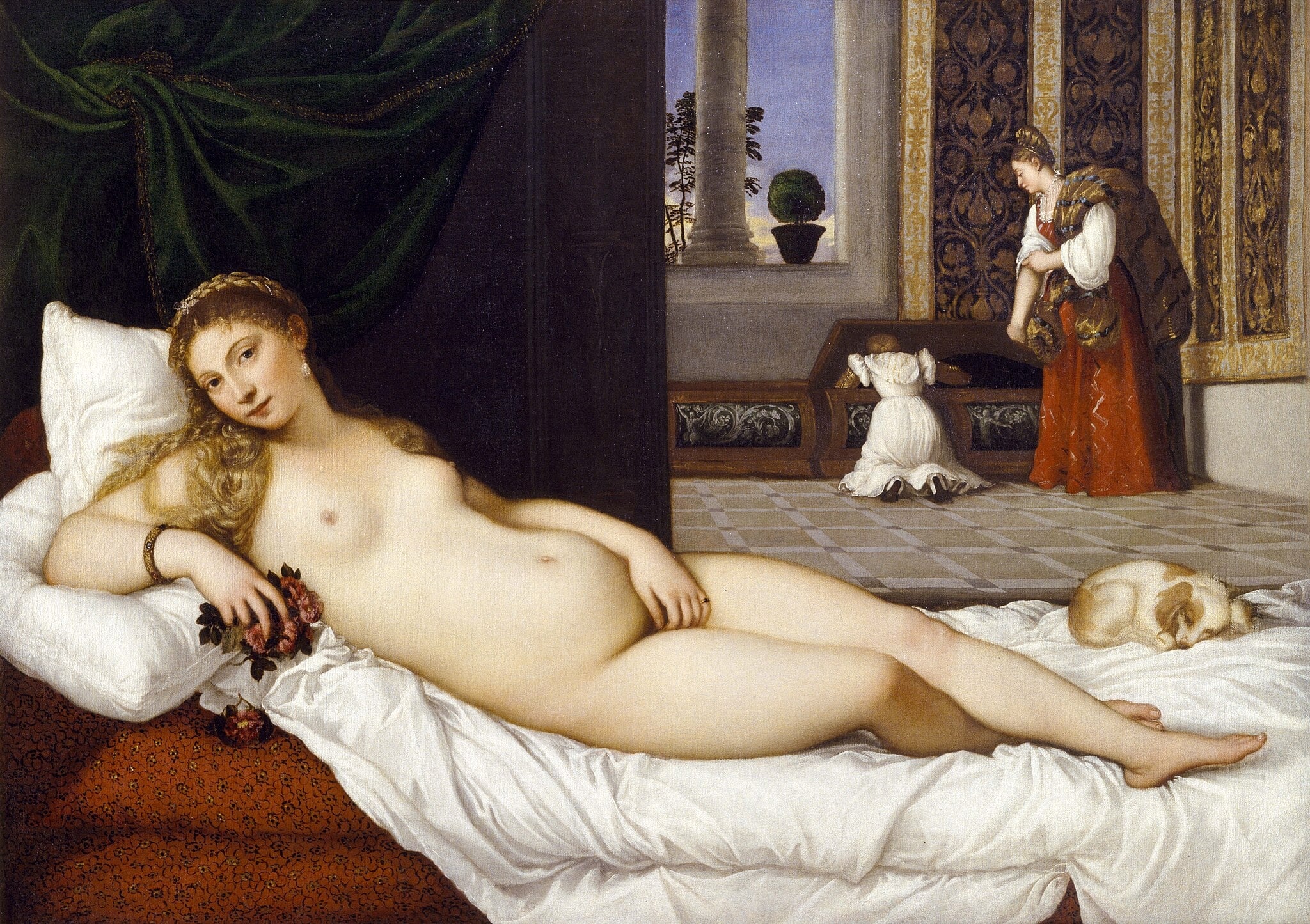
Venus of Urbino
Titian (1538)
Titian’s Venus of Urbino turns the mythic goddess into an ideal bride, merging frank <strong>eroticism</strong> with the codes of <strong>marital fidelity</strong>. In a Venetian bedroom, the nude’s direct gaze, roses, sleeping lapdog, and attendants at a cassone bind desire to domestic virtue and fertility <sup>[1]</sup><sup>[2]</sup>.
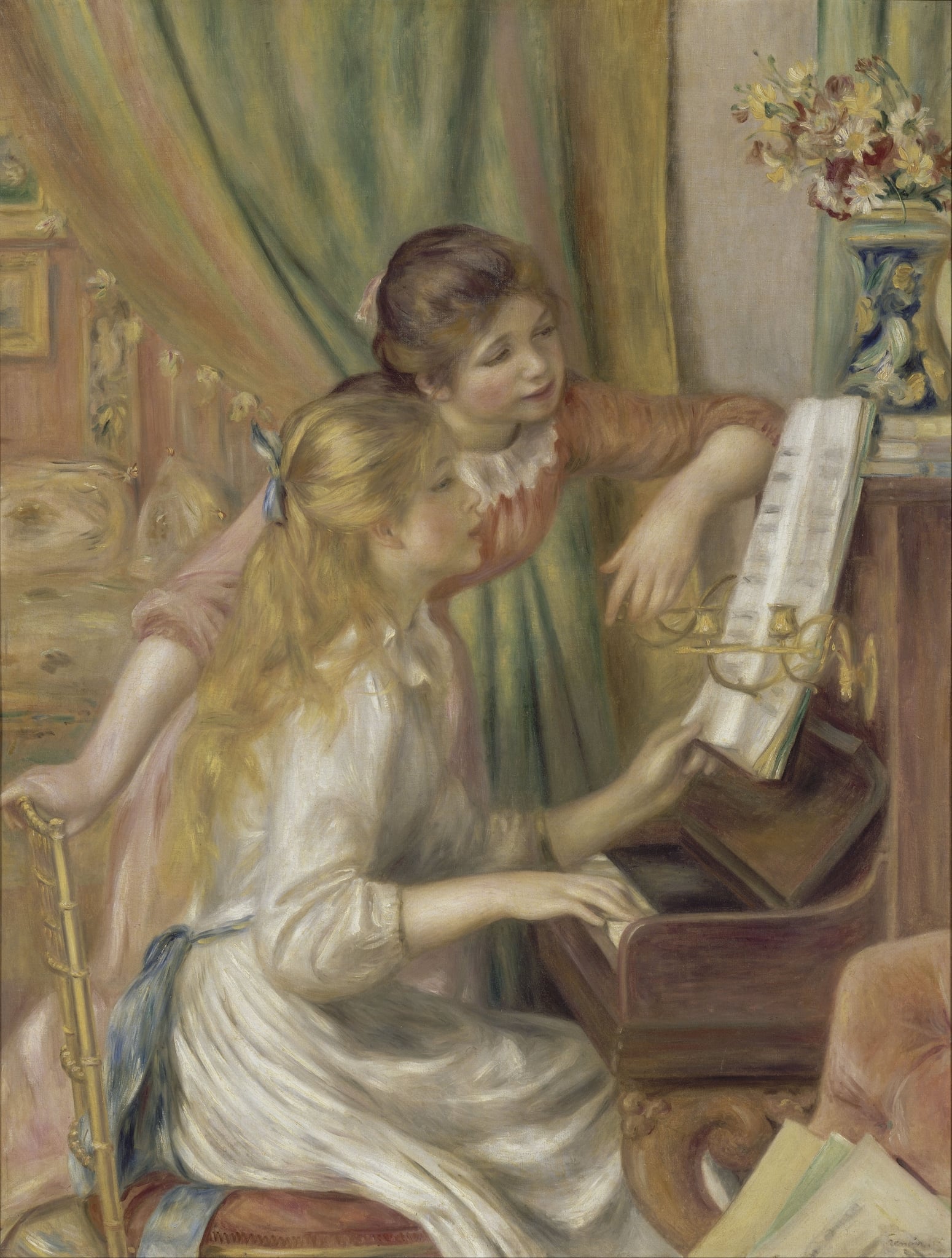
Young Girls at the Piano
Pierre-Auguste Renoir (1892)
Renoir’s Young Girls at the Piano turns a quiet lesson into a scene of <strong>attunement</strong> and <strong>bourgeois grace</strong>. Two adolescents—one seated at the keys, the other leaning to guide the score—embody harmony between discipline and delight, rendered in Renoir’s late, <strong>luminous</strong> touch <sup>[1]</sup><sup>[2]</sup>.
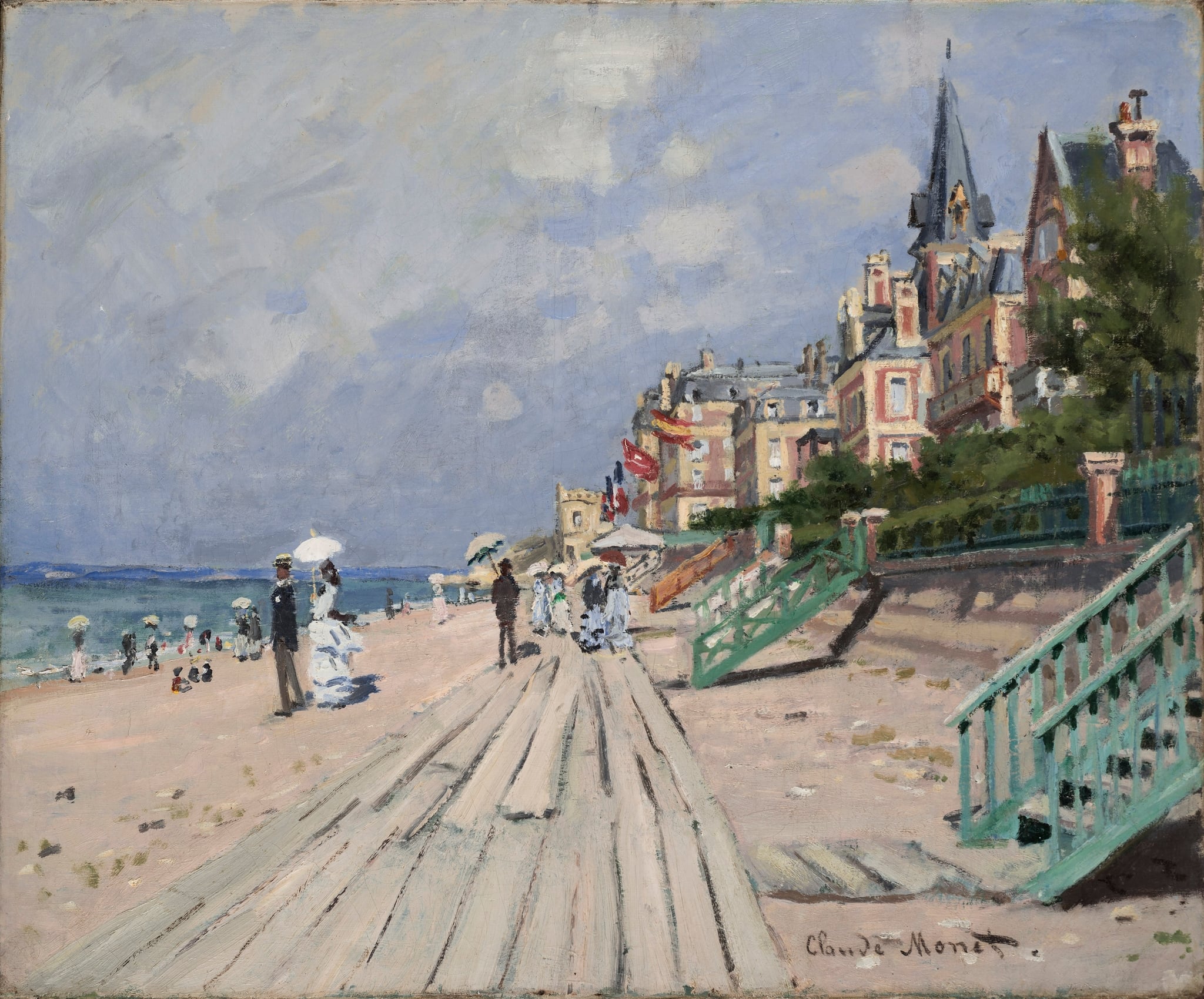
Beach at Trouville
Claude Monet (1870)
Beach at Trouville turns the Normandy resort into a stage where <strong>modern leisure</strong> meets <strong>restless weather</strong>. Monet’s diagonal boardwalk, wind-whipped <strong>red flags</strong>, and white <strong>parasols</strong> marshal the eye through a day animated by light and air rather than by individual stories <sup>[1]</sup><sup>[2]</sup>. The work asserts Impressionism’s claim to immediacy—there is even <strong>sand embedded in the paint</strong> from working on site <sup>[1]</sup>.
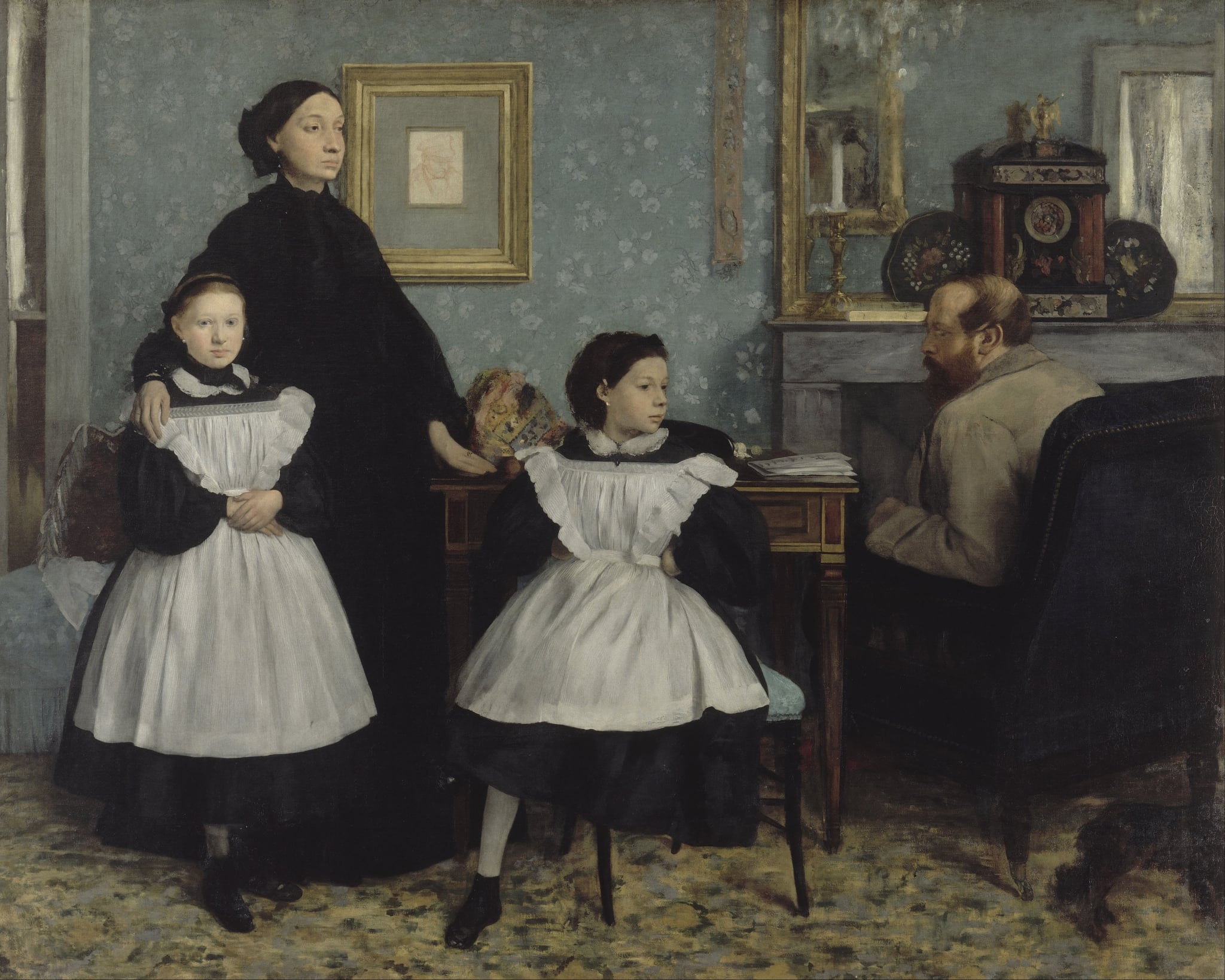
The Bellelli Family
Edgar Degas (1858–1869)
In The Bellelli Family, Edgar Degas orchestrates a poised domestic standoff, using the mother’s column of <strong>mourning black</strong>, the daughters’ <strong>mediating whiteness</strong>, and the father’s turned-away profile to script roles and distance. Rigid furniture lines, a gilt <strong>clock</strong>, and the ancestor’s red-chalk portrait create a stage where time, duty, and inheritance press on a family held in uneasy equilibrium.
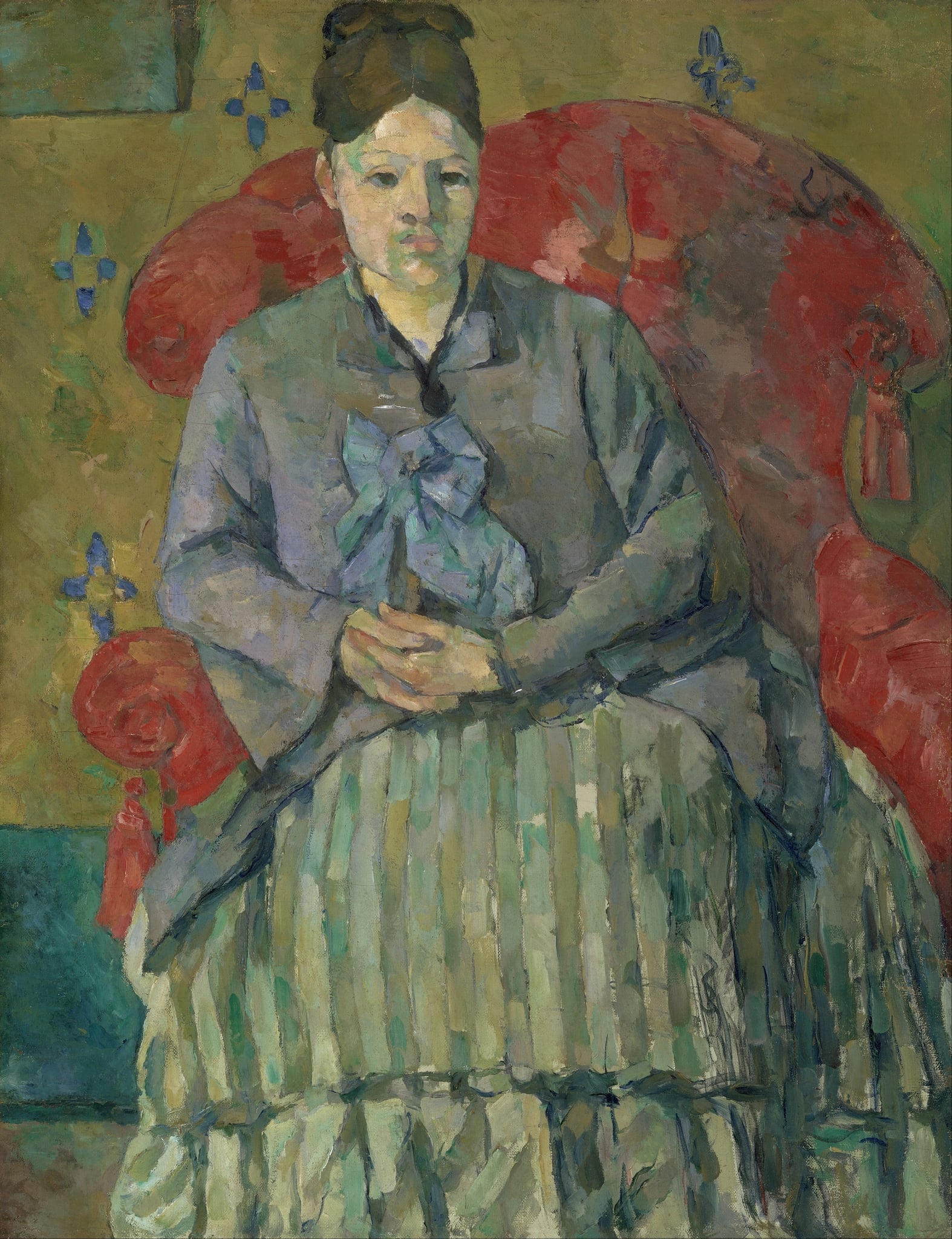
Madame Cézanne in a Red Armchair
Paul Cézanne (about 1877)
Paul Cézanne’s Madame Cézanne in a Red Armchair (about 1877) turns a domestic sit into a study of <strong>color-built structure</strong> and <strong>compressed space</strong>. Cool blue-greens of dress and skin lock against the saturated <strong>crimson armchair</strong>, converting likeness into an inquiry about how painting makes stability visible <sup>[1]</sup><sup>[3]</sup>.
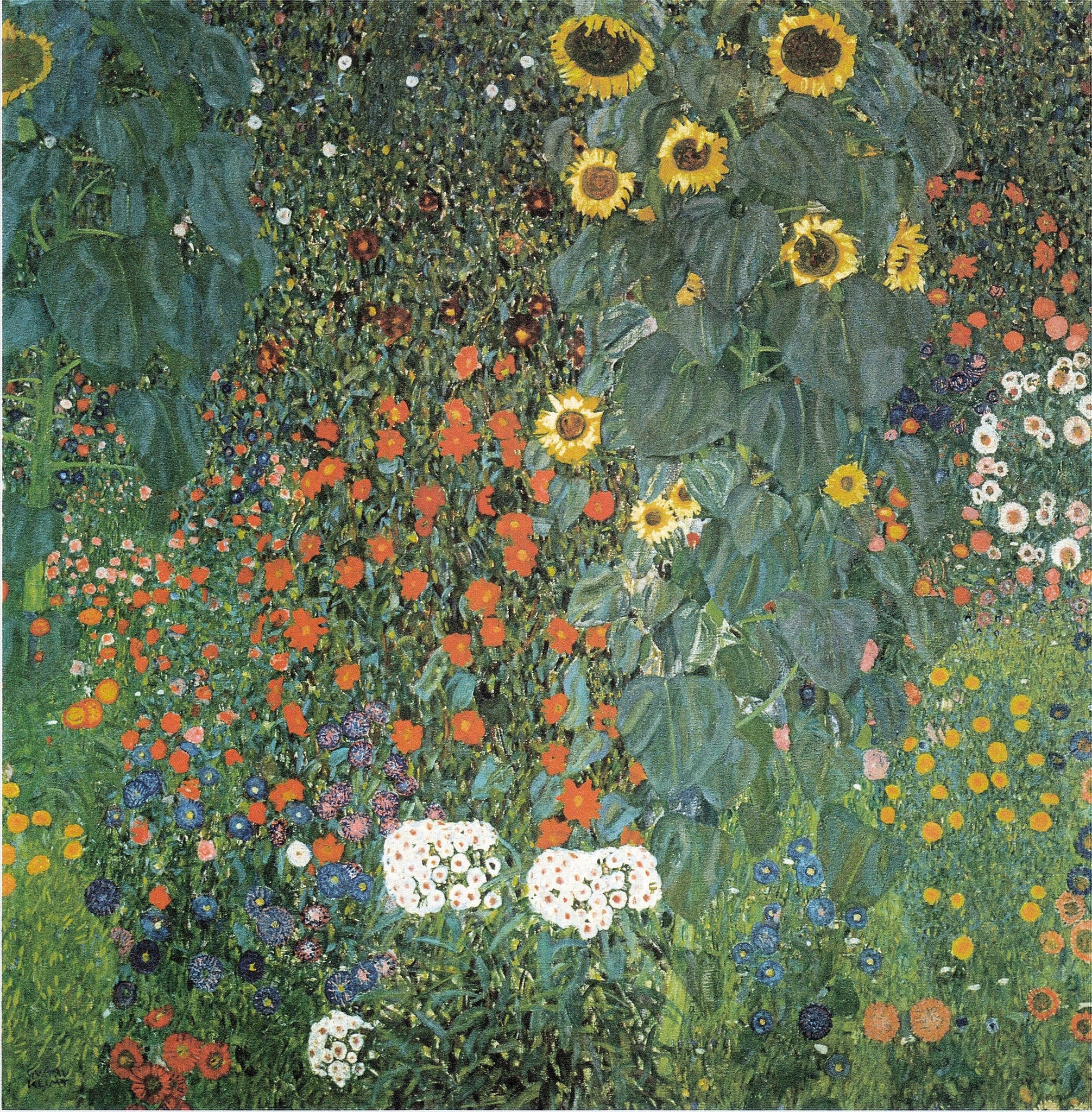
Cottage Garden with Sunflowers
Gustav Klimt (1906–1907 (signed 1907))
Cottage Garden with Sunflowers is a square, horizonless field of blooms where a vertical column of <strong>sunflowers</strong> anchors an all-over weave of color and pattern. Klimt fuses <strong>ornament and nature</strong>, turning a humble Litzlberg cottage plot into a radiant matrix of cyclical life and renewal <sup>[1]</sup><sup>[4]</sup><sup>[5]</sup>.
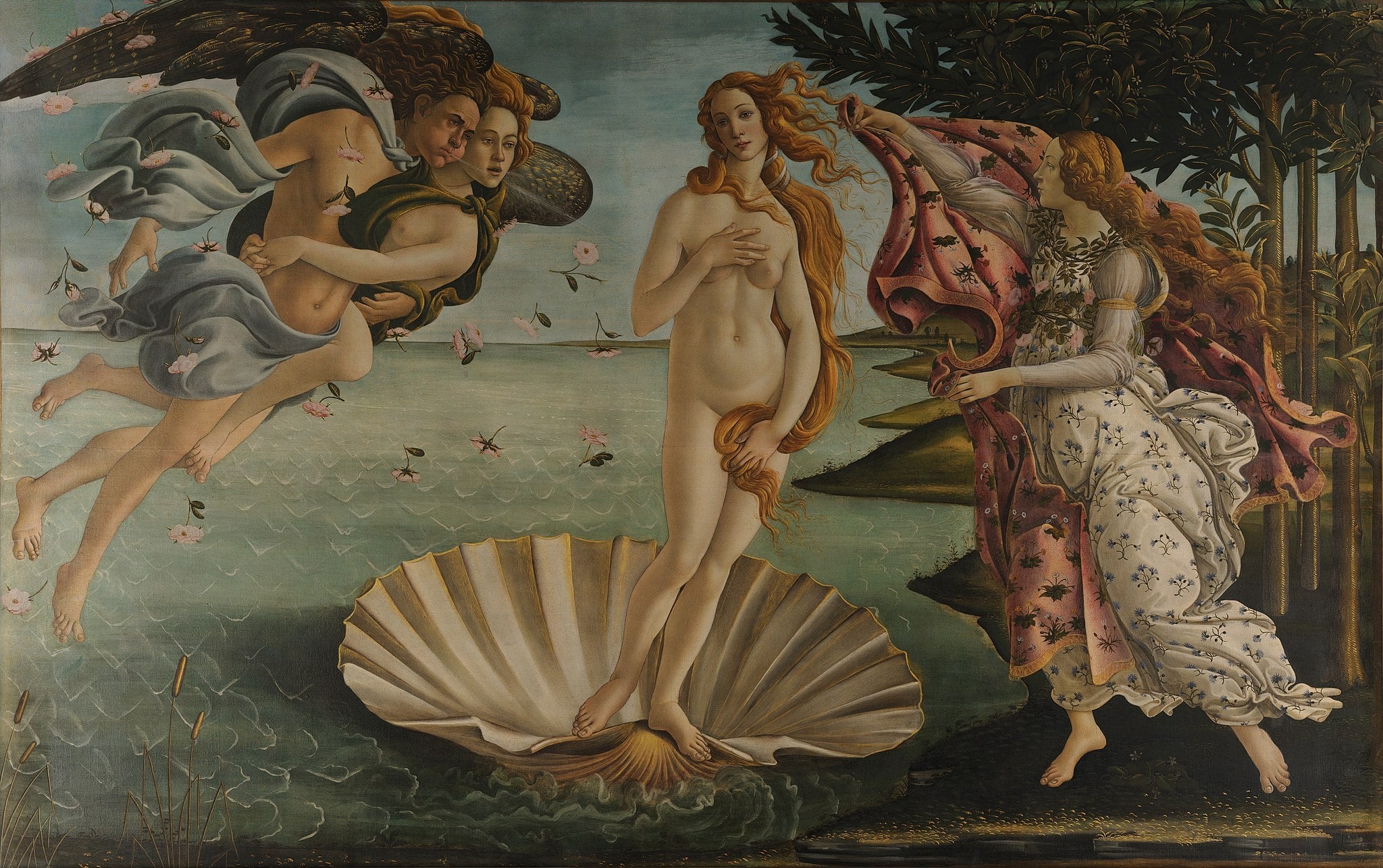
The Birth of Venus
Sandro Botticelli (c. 1484–1486)
In The Birth of Venus, <strong>Sandro Botticelli</strong> stages the sea-born goddess arriving on a <strong>scallop shell</strong>, blown ashore by intertwined <strong>winds</strong> and greeted by a flower-garlanded attendant who lifts a <strong>rose-patterned mantle</strong>. The painting’s crisp contours, elongated figures, and gilded highlights transform myth into an <strong>ideal of beauty</strong> that signals love, spring, and renewal <sup>[1]</sup><sup>[2]</sup>.
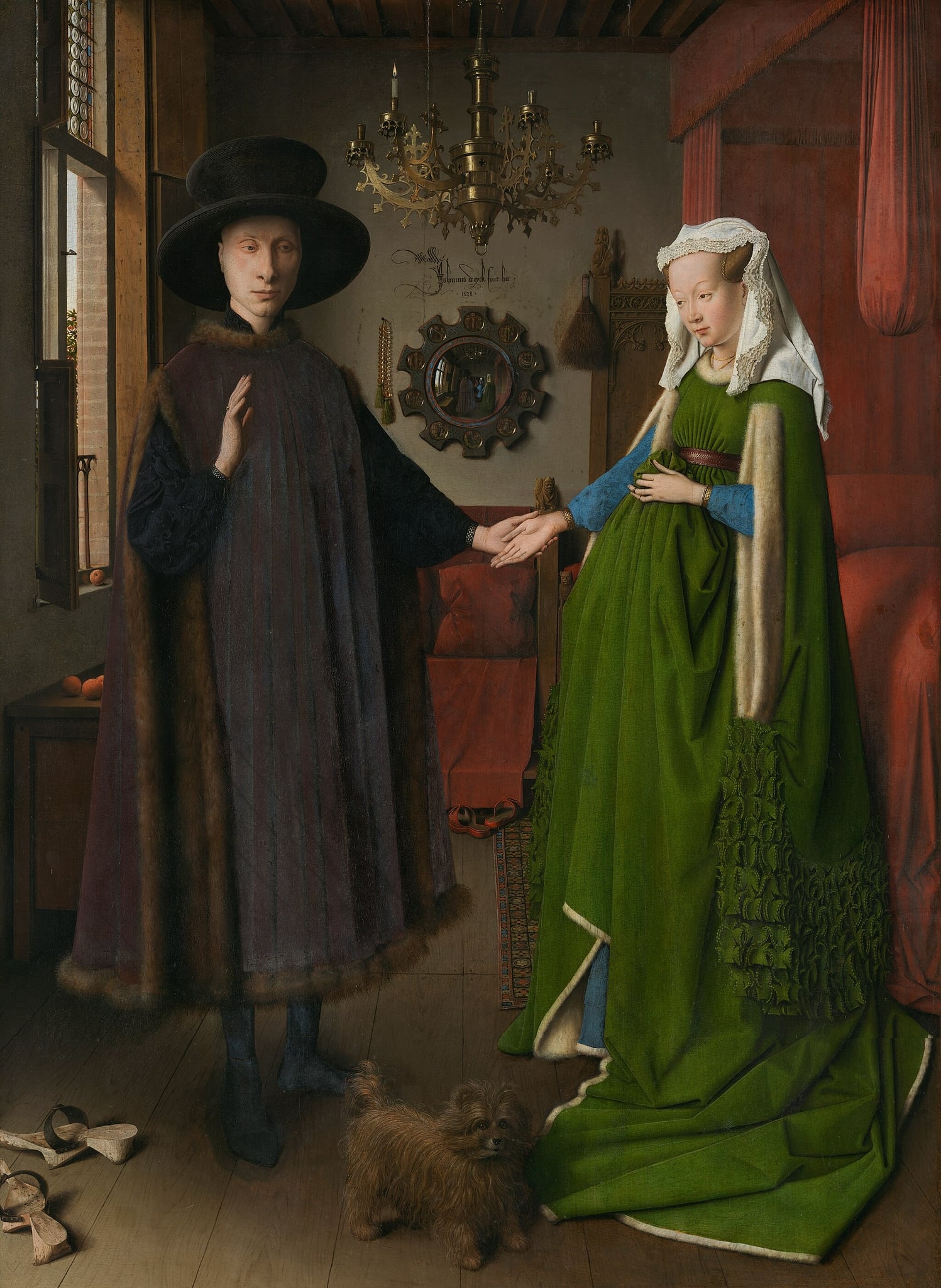
The Arnolfini Portrait
Jan van Eyck (1434)
In The Arnolfini Portrait, Jan van Eyck stages a poised encounter between a richly dressed couple whose joined hands, a single burning candle, and a convex mirror transform a domestic interior into a scene of <strong>status and sanctity</strong>. The painting asserts the artist’s own <strong>presence</strong>—"Johannes de eyck fuit hic 1434"—as if to validate the moment while showcasing oil painting’s power to make belief tangible through light, texture, and reflection <sup>[1]</sup><sup>[2]</sup>.
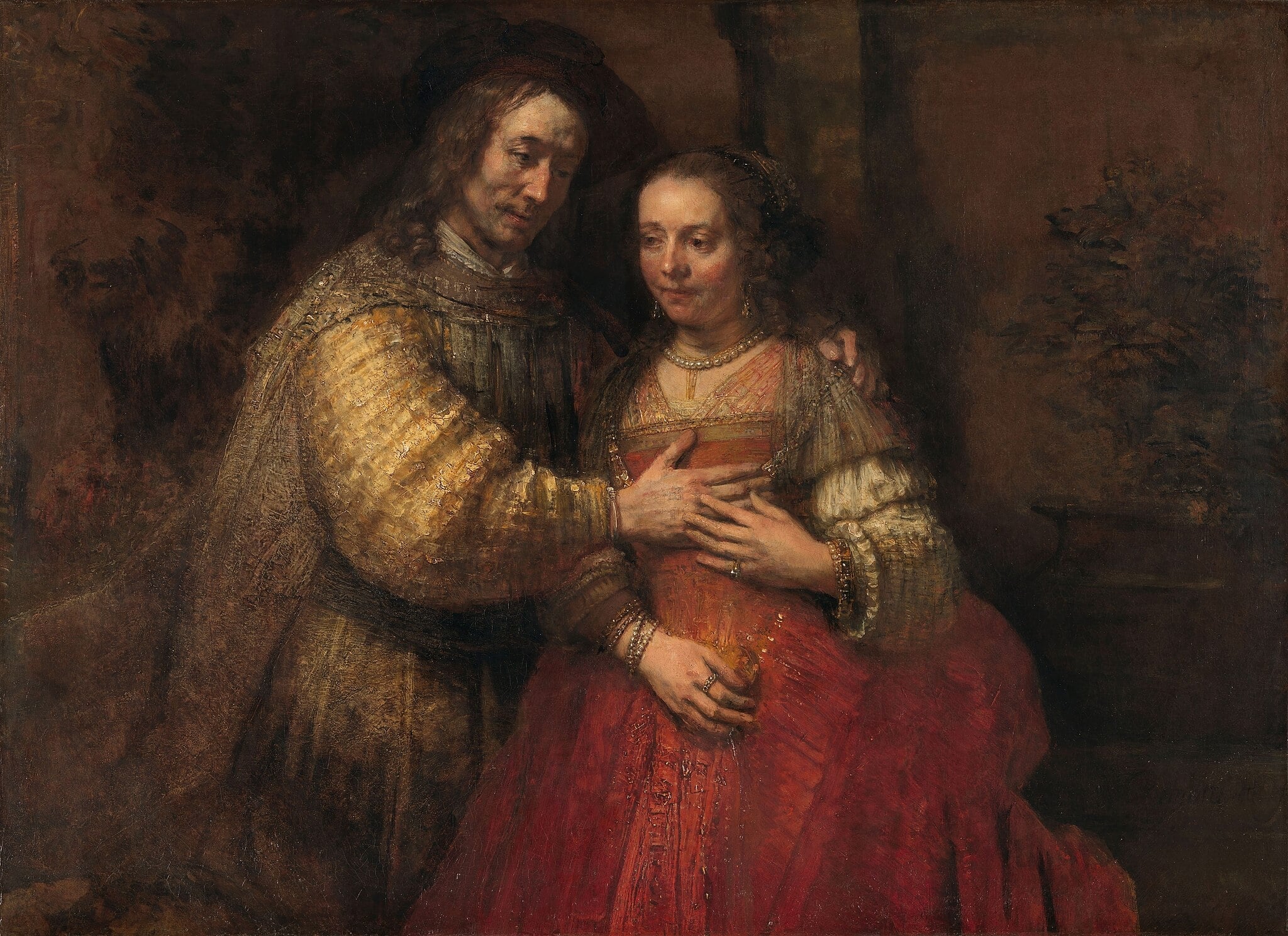
The Jewish Bride
Rembrandt van Rijn (c. 1665–1669)
The Jewish Bride by Rembrandt van Rijn stages an intimate covenant: two figures, read today as <strong>Isaac and Rebecca</strong>, seal their union through touch rather than spectacle. Light concentrates on faces and hands, while the man’s glittering <strong>gold sleeve</strong> and the woman’s <strong>coral-red gown</strong> turn paint itself into a metaphor for fidelity and tenderness <sup>[1]</sup><sup>[3]</sup>. This late masterpiece embodies Rembrandt’s <strong>material eloquence</strong>—impasto as feeling—within a hushed, dark setting <sup>[1]</sup><sup>[2]</sup>.
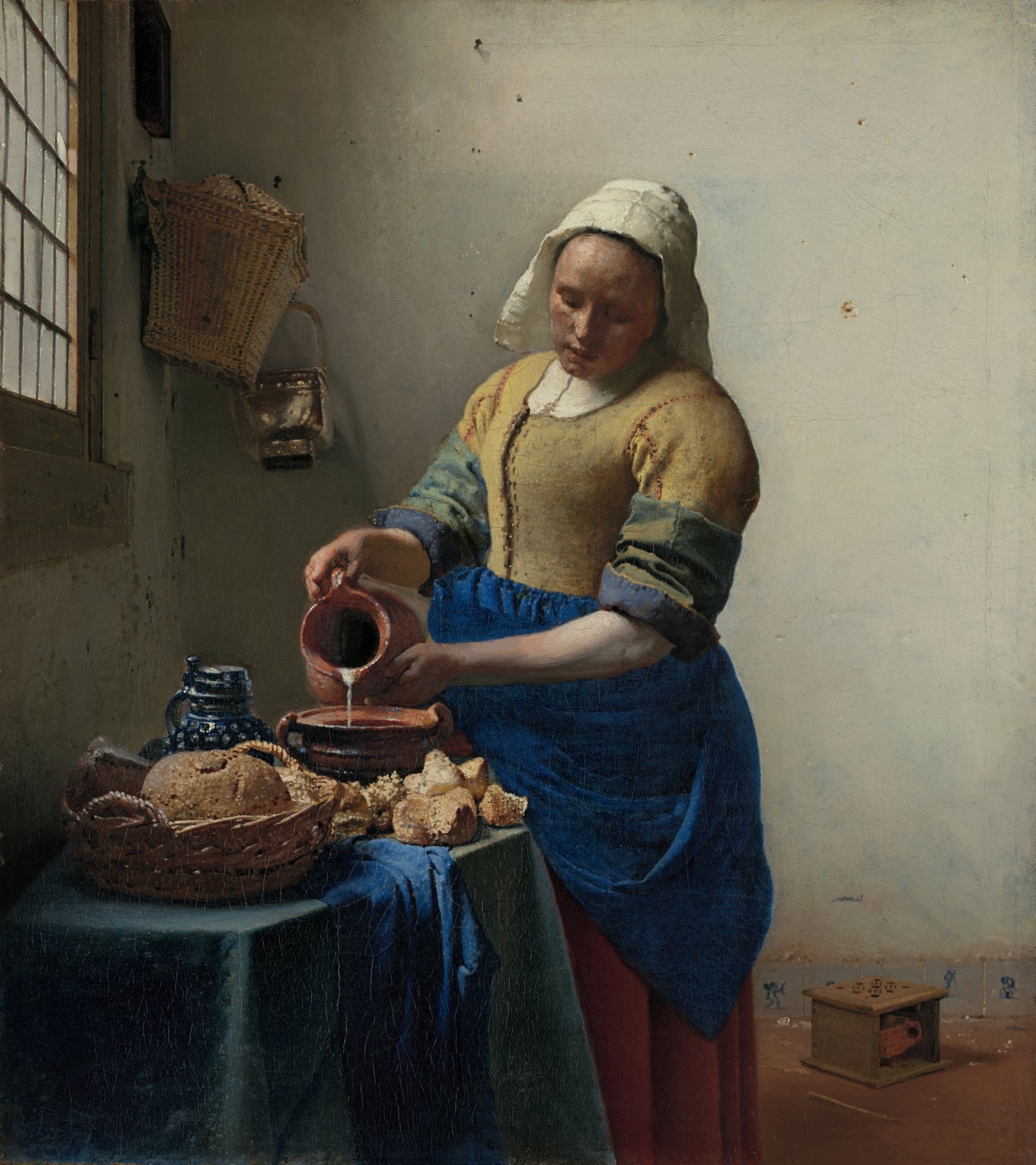
The Milkmaid
Johannes Vermeer (c. 1660)
In The Milkmaid, Vermeer turns an ordinary act—pouring milk—into a scene of <strong>quiet monumentality</strong>. Light from the left fixes the maid’s absorbed attention and ignites the <strong>saturated yellow and blue</strong> of her dress, while the slow thread of milk becomes the image’s pulse <sup>[1]</sup><sup>[2]</sup>. Bread, a Delft jug, nail holes, and a small <strong>foot warmer</strong> anchor a world where humble work is endowed with dignity and latent meaning <sup>[1]</sup><sup>[2]</sup>.
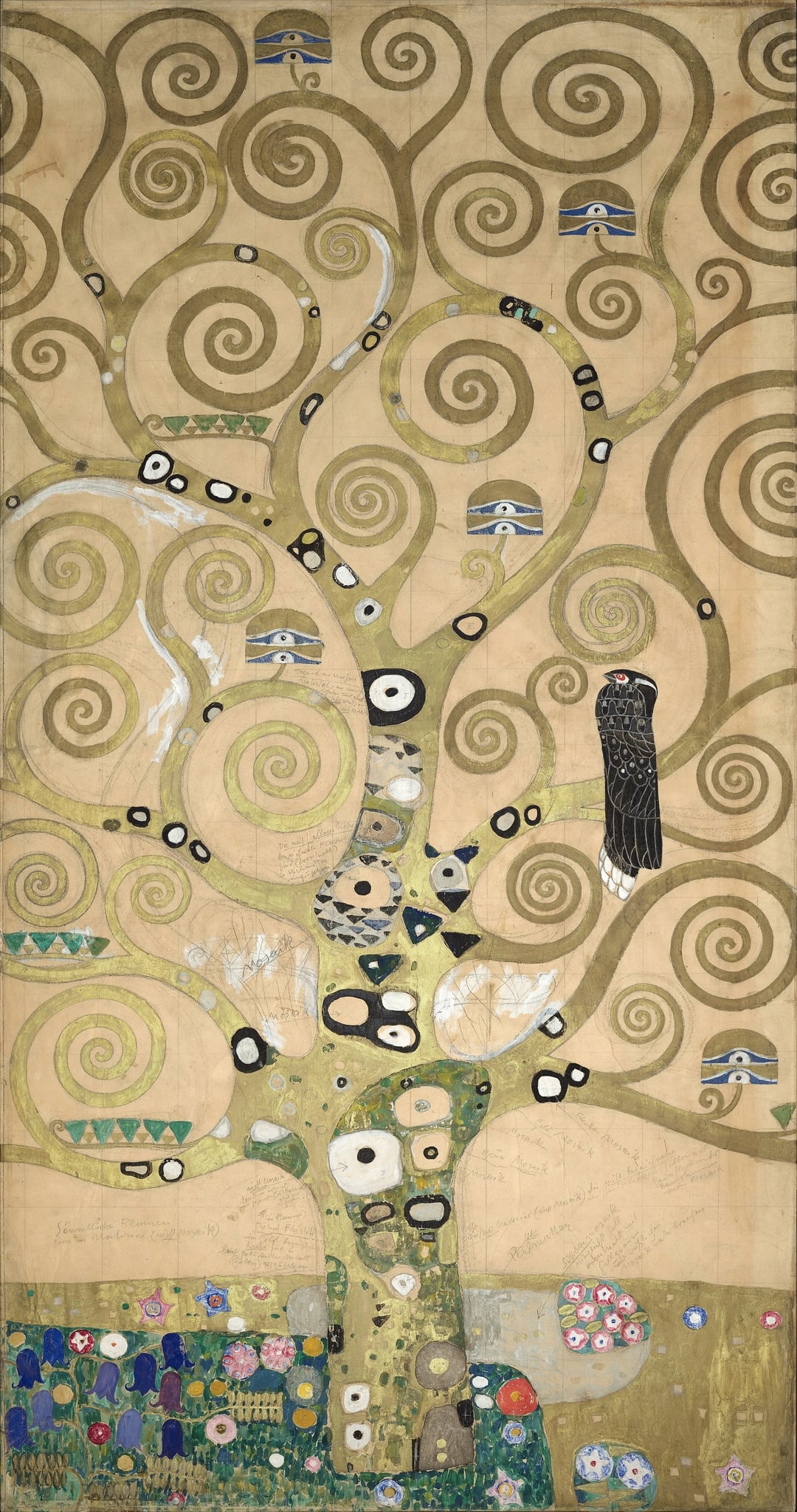
The Tree of Life
Gustav Klimt (1910–1911 (design; mosaic installed 1911))
Gustav Klimt’s The Tree of Life crystallizes a <strong>cosmological axis</strong> in a gilded ornamental language: a rooted trunk erupts into <strong>endless spirals</strong>, embedded with <strong>eye-like rosettes</strong> and shadowed by a black, red‑eyed bird. Designed as part of the Stoclet dining‑room frieze, it fuses <strong>symbolism and luxury materials</strong> to link earthly abundance with timeless transcendence <sup>[1]</sup><sup>[2]</sup>.
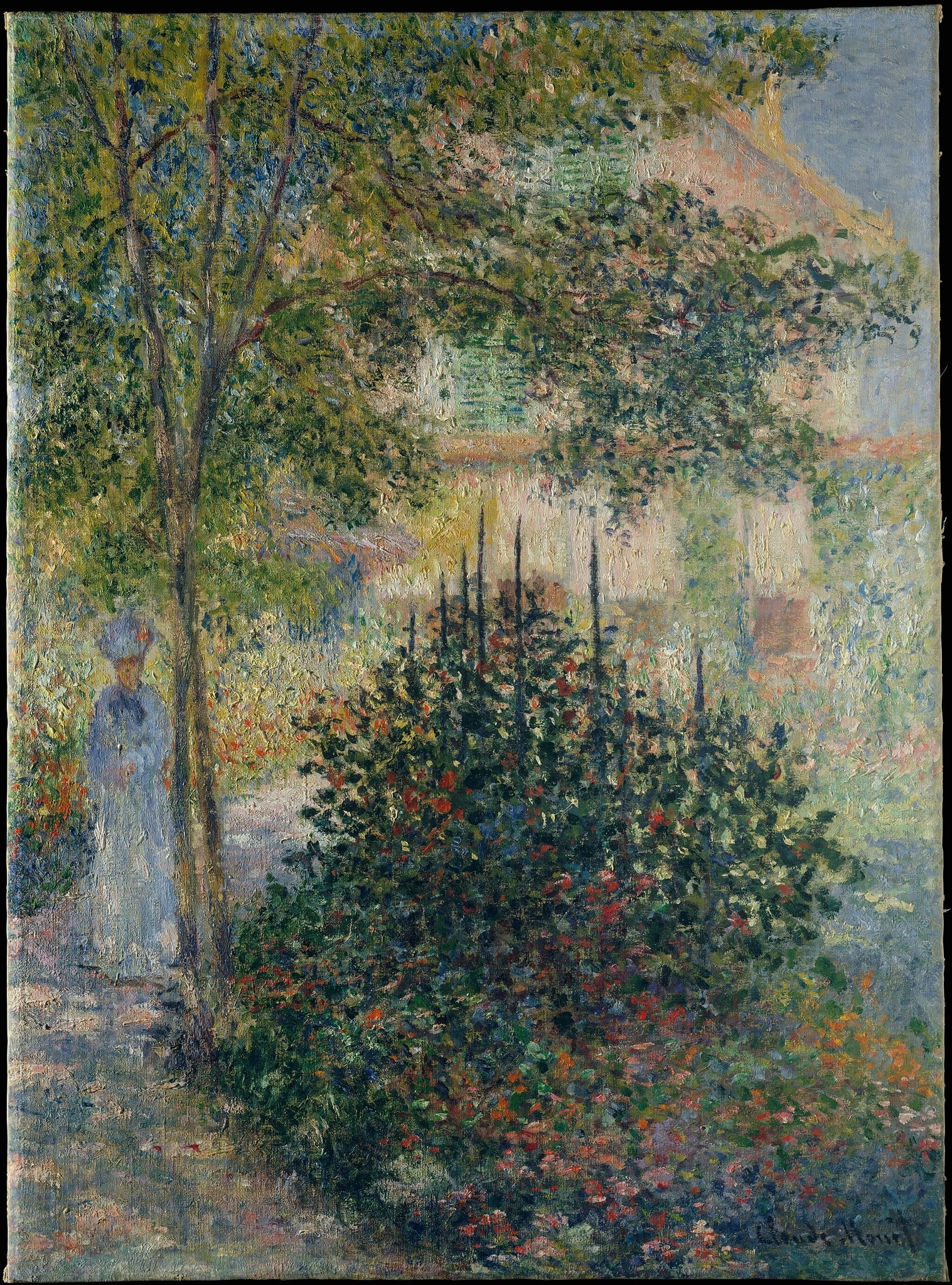
Camille Monet (1847–1879) in the Garden at Argenteuil
Claude Monet (1876)
Claude Monet’s Camille Monet (1847–1879) in the Garden at Argenteuil captures a fleeting, sunstruck interval where a blue‑clad figure hovers at the shaded path while a <strong>corbeille</strong> of spiked flowers ignites the foreground. The pink house with <strong>green shutters</strong> flickers through a veil of leaves, its surfaces dissolved into vibrating strokes of light. Monet subordinates likeness to the <strong>sensation of air and color</strong>, turning the garden into a living field of time and perception <sup>[1]</sup><sup>[2]</sup>.
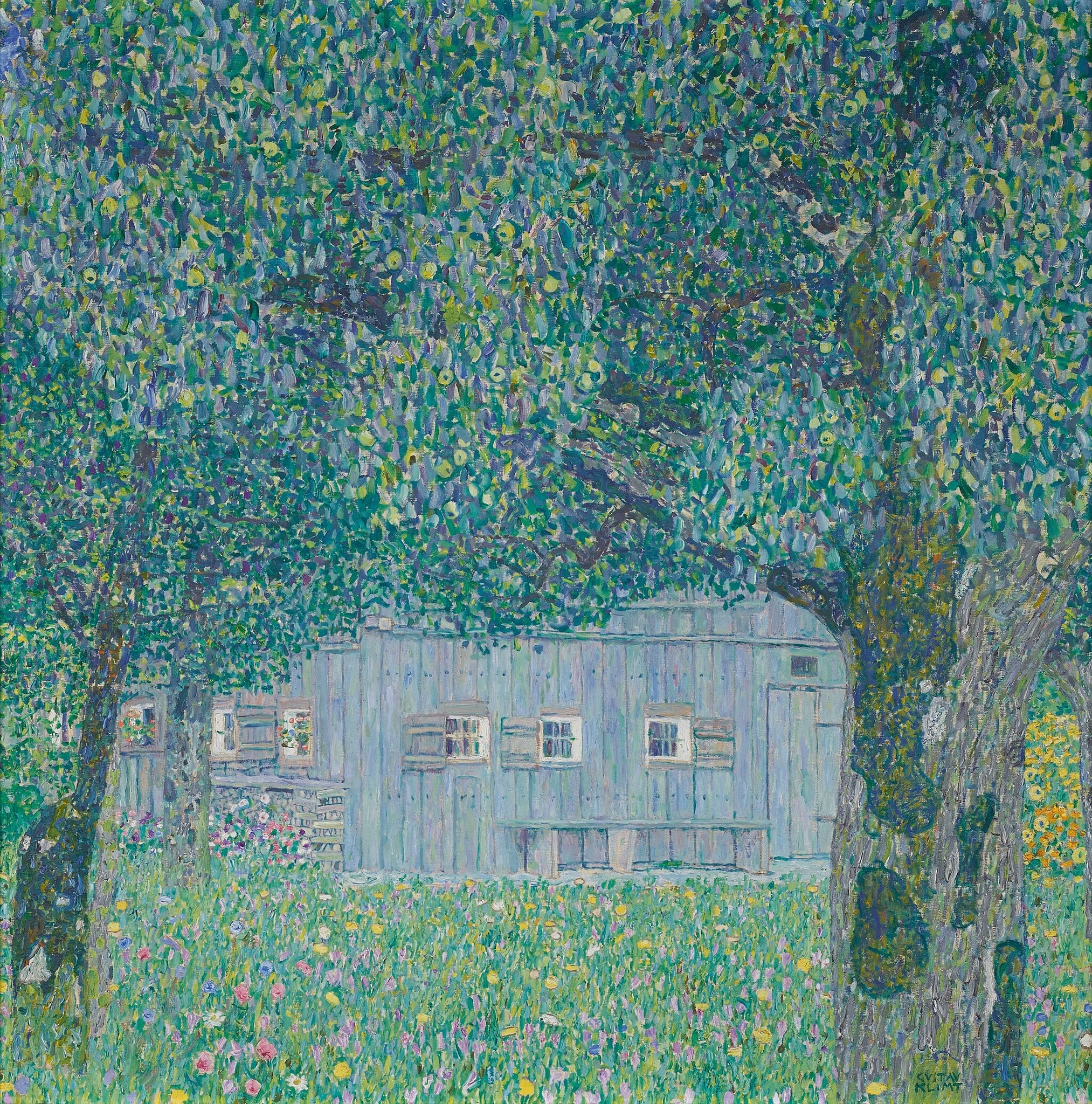
Farmhouse in Buchberg (Upper Austrian Farmhouse)
Gustav Klimt (1911)
Gustav Klimt’s Farmhouse in Buchberg (Upper Austrian Farmhouse) renders a rural dwelling almost absorbed by an orchard, its cool façade held in balance against a vibrating canopy of leaves and a jewel-like meadow. Through a square format and <strong>selective pointillism</strong>, Klimt fuses house, trees, and flowers into a contemplative, patterned field that privileges <strong>stillness</strong> over incident <sup>[1]</sup><sup>[6]</sup>. The work turns everyday architecture into an emblem of <strong>refuge within fecund nature</strong>.
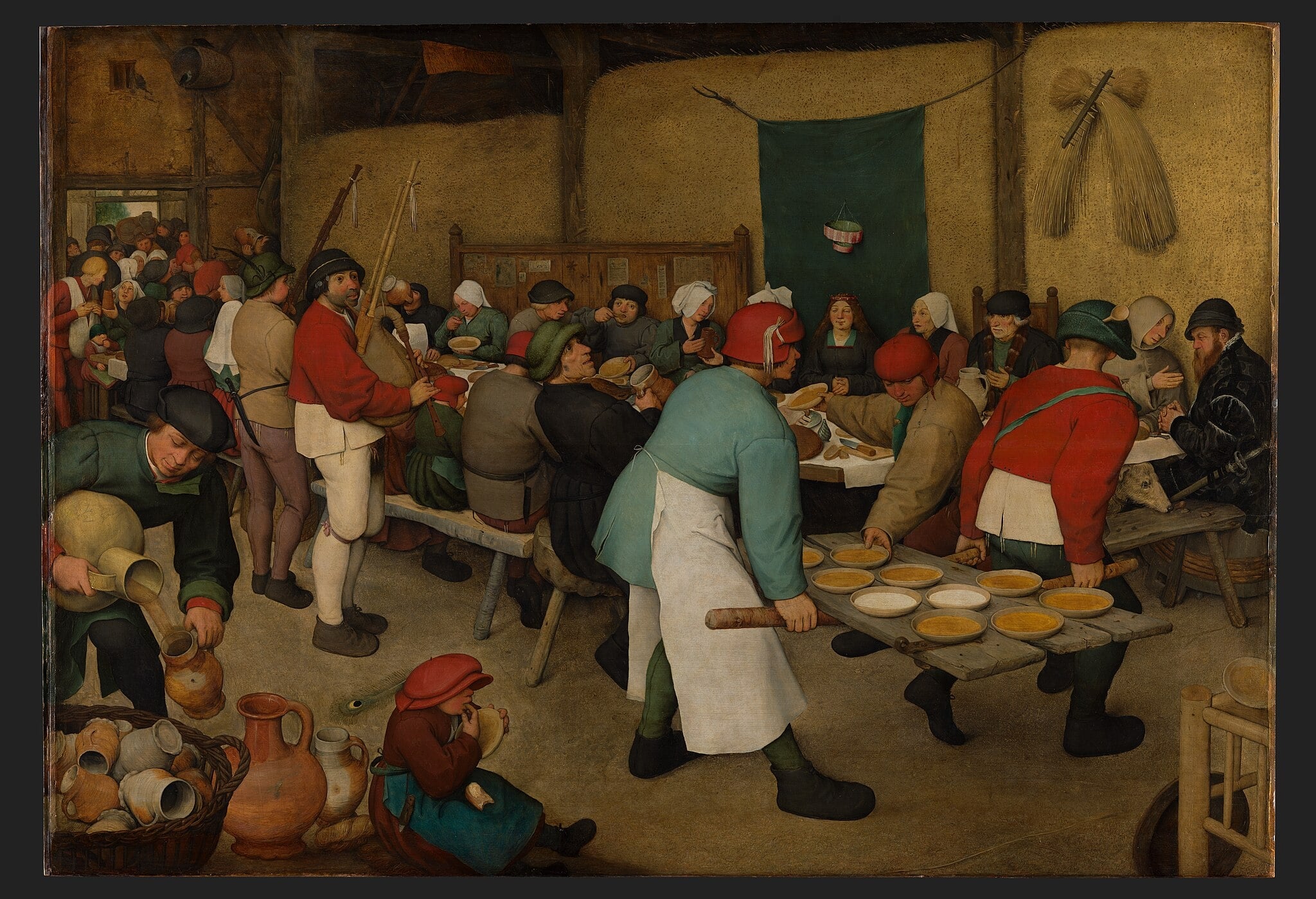
The Peasant Wedding
Pieter Bruegel the Elder (1568)
In The Peasant Wedding, Pieter Bruegel the Elder stages a <strong>communal rite</strong> inside a barn, where humble ingenuity and shared labor become the true spectacle. A bride sits beneath a <strong>green cloth of honor</strong> with a paper crown above, as servers balance bowls of porridge on a <strong>door turned into a tray</strong>, beer flows, and a bagpiper looks on <sup>[1]</sup><sup>[2]</sup>.