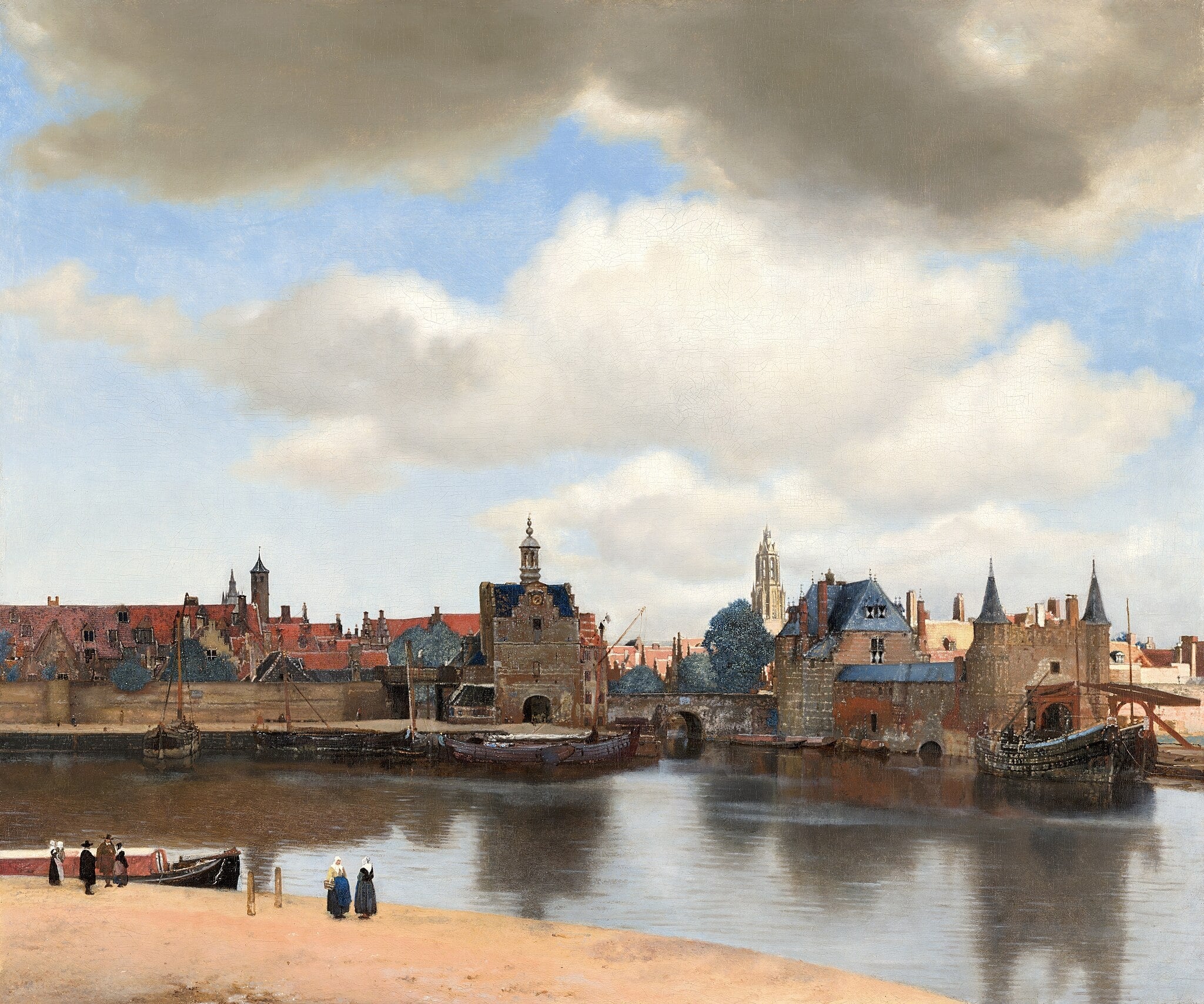
Rotterdam Gate and drawbridge Symbolism
In art, a city gate with a drawbridge marks the threshold where the protected city meets the wider world. In early modern Dutch city views, these fortified passages symbolize civic order and the regulated movement of people and goods. Their masonry and moving bridgework together suggest resilience—able to close in danger and open to exchange.
Rotterdam Gate and drawbridge in View of Delft
In View of Delft (c. 1660–1661), Johannes Vermeer presents Delft’s waterfront with the Rotterdam Gate and its drawbridge mediating access between harbor and town. Moored boats and small figures underscore commerce and everyday passage, yet the calm hush and stable geometry convey control and security. Sunlight that catches select roofs and the spire of the Nieuwe Kerk anchoring the skyline reinforces a vision of ordered civic life in which entry is supervised and prosperity is sustained. The gate’s sturdy walls and the functional drawbridge embody defended openness: a guarded threshold that manages exchange while signaling the city’s resilience.