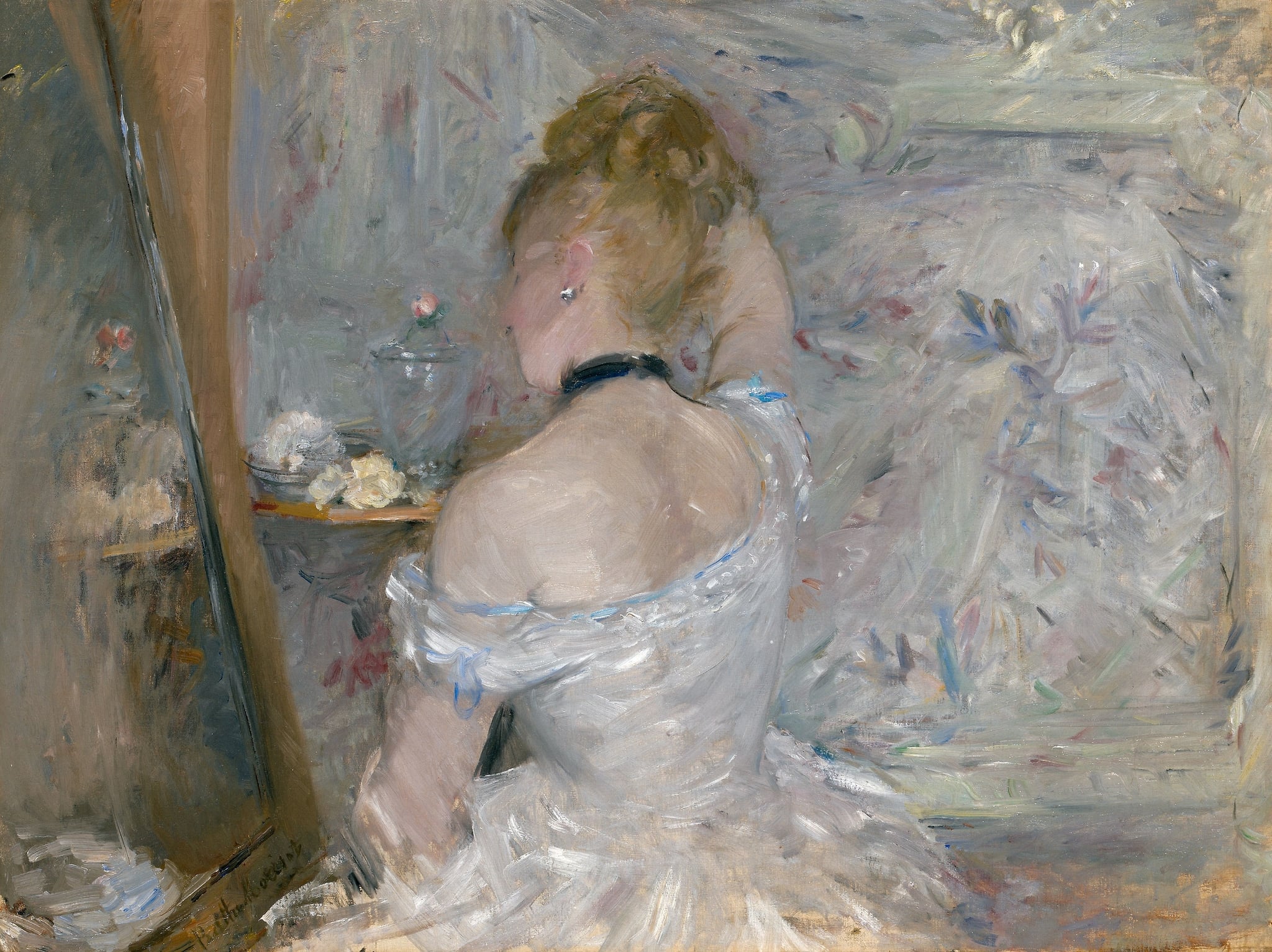
Turned back (averted face) Symbolism
In art, a turned back or averted face marks a deliberate withholding of facial identity, redirecting meaning to body, gesture, and setting. This choice often asserts privacy and autonomy, complicating the usual exchange of gazes between subject and viewer. By suspending direct address, artists can evoke interiority and identity-in-formation rather than public display.
Turned back (averted face) in Woman at Her Toilette
Berthe Morisot’s Woman at Her Toilette (1875–1880) makes the averted face central to its meaning. The woman is seen from behind as she raises an arm to adjust her hair; the mirror yields only a softened reflection amid powders, jars, and a white flower, so her face never comes into sharp focus. Morisot’s feathery, silvery-violet brushwork and the accent of a black velvet choker draw attention to gesture and atmosphere rather than likeness. The refusal of clear facial visibility shifts the scene from spectacle to a private ritual of self-fashioning, preserving the subject’s autonomy while presenting modern subjectivity as something actively made rather than simply shown.