Rembrandt van Rijn Paintings in Amsterdam — Where to See Them
Amsterdam is the best place to see Rembrandt van Rijn in person: about 11 of his paintings are on permanent display across two museums — ten at the Rijksmuseum and one at the Amsterdam Museum (Amsterdam Museum aan de Amstel). That concentration, with the Rijksmuseum’s ten works providing a focused survey of key moments in his career and the Amsterdam Museum adding local context, lets you study his brushwork, use of light, and evolving subjects in the city where he lived and worked.
At a Glance
- Museums
- Rijksmuseum, Amsterdam Museum (Amsterdam Museum aan de Amstel)
- Highlight
- See Rembrandt's The Night Watch at the Rijksmuseum
- Best For
- Art lovers and Baroque painting enthusiasts
Rijksmuseum
The Rijksmuseum matters for experiencing Rembrandt because it holds the single most comprehensive and historically central concentration of his works—ranging from early portraits to late, intimate masterpieces—so you can trace his development as a painter, draftsman and printmaker in one place. The museum’s collection includes cornerstone works (for example The Night Watch and The Jewish Bride are part of its holdings) and has been the institutional home for major Rembrandt research, restorations and large-scale presentations that reframe his oeuvre for modern audiences. ([rijksmuseum.nl](https://www.rijksmuseum.nl/en/whats-on/exhibitions/past/all-the-rembrandts?utm_source=openai))
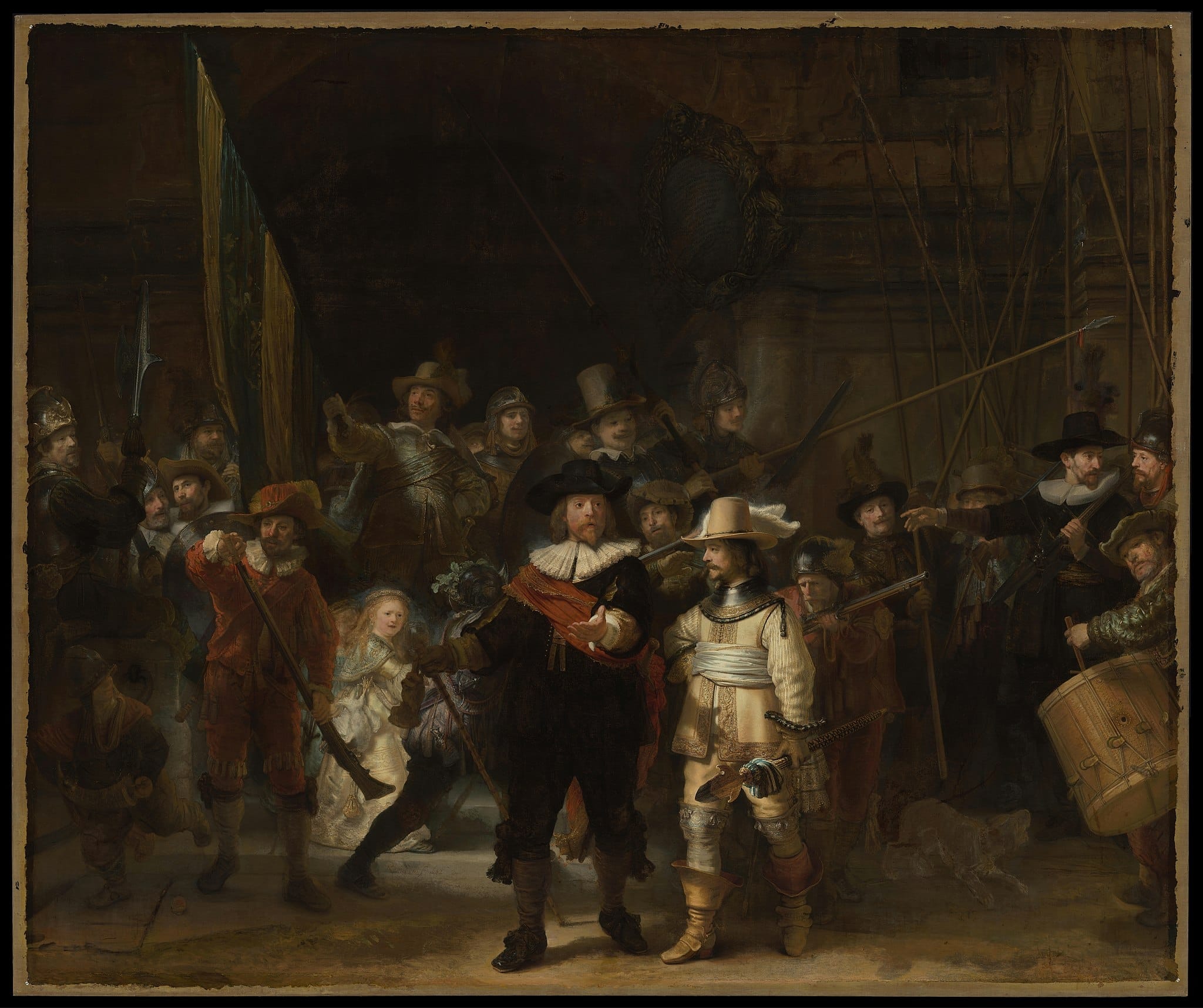
The Night Watch (Militia Company of District II under the Command of Captain Frans Banninck Cocq)
1642
A large group portrait of a civic militia company led by Captain Frans Banninck Cocq and his lieutenant as they move out to action, animated by figures in motion, children, and a dramatic use of light and shadow. It is significant for transforming the static group portrait into a lively, theatrical scene and for Rembrandt’s bold composition and chiaroscuro. Viewers should look for the glowing faces and hands that guide the eye, the small girl with the chicken (a symbolic element), and the deep, layered handling of light that creates depth and narrative.
Must-see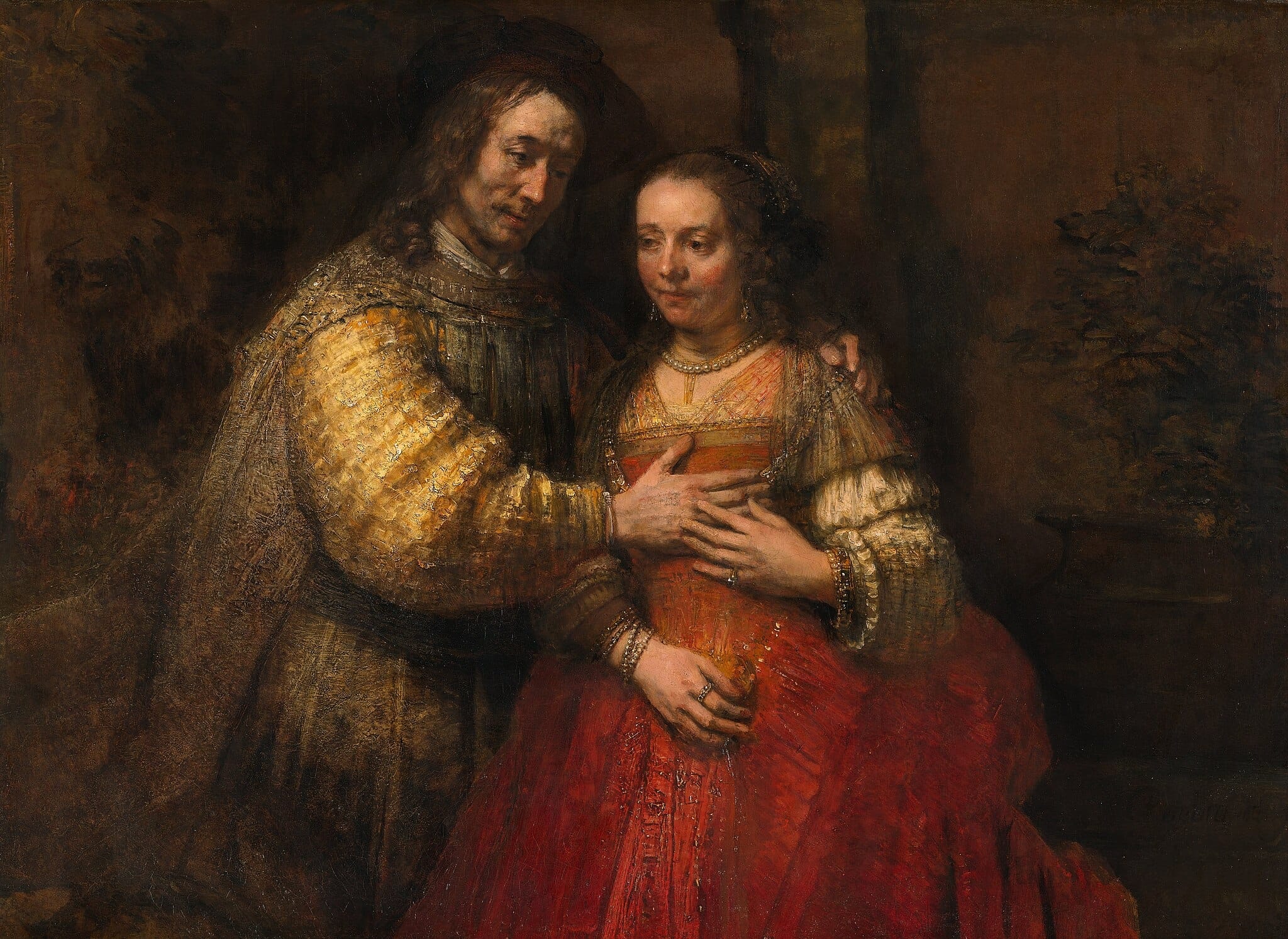
Isaac and Rebecca, Known as ‘The Jewish Bride’
c. 1665 - c. 1669
An intimate double portrait traditionally interpreted as Isaac and Rebecca (or a couple), showing a tender moment of touch and affection, rendered with warm, rich tones and textured brushwork. Its significance lies in Rembrandt’s late-career focus on psychological depth, intimacy, and painterly surface rather than detailed finish. Look for the thick, tactile paint, the gentle, almost sacred connection between the figures, and the subtle play of light on their faces and luxurious clothing.
Must-see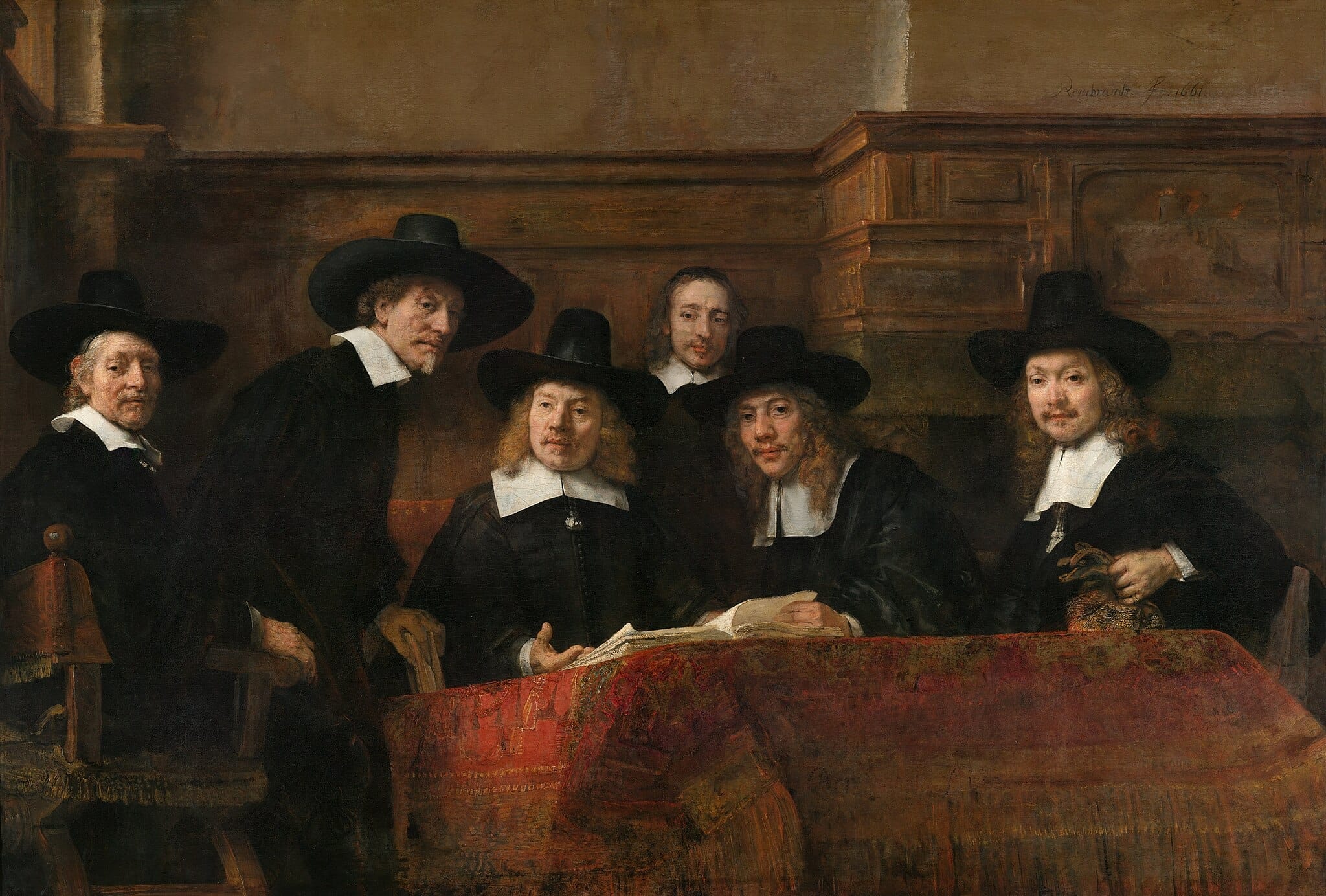
The Sampling Officials of the Amsterdam Drapers’ Guild, Known as ‘The Syndics’
1662
A formal group portrait of the five drapers’ guild officials assembled around a table as they inspect cloth samples, captured at a moment of purposeful attention toward the viewer. It is significant for its economy of composition, strong sense of civic duty, and Rembrandt’s ability to convey character and function within a restrained setting. Notice the directness of the officials’ gazes, the carefully lit faces emerging from shadow, and the crisp diagonals of the table that organize the scene.
Must-see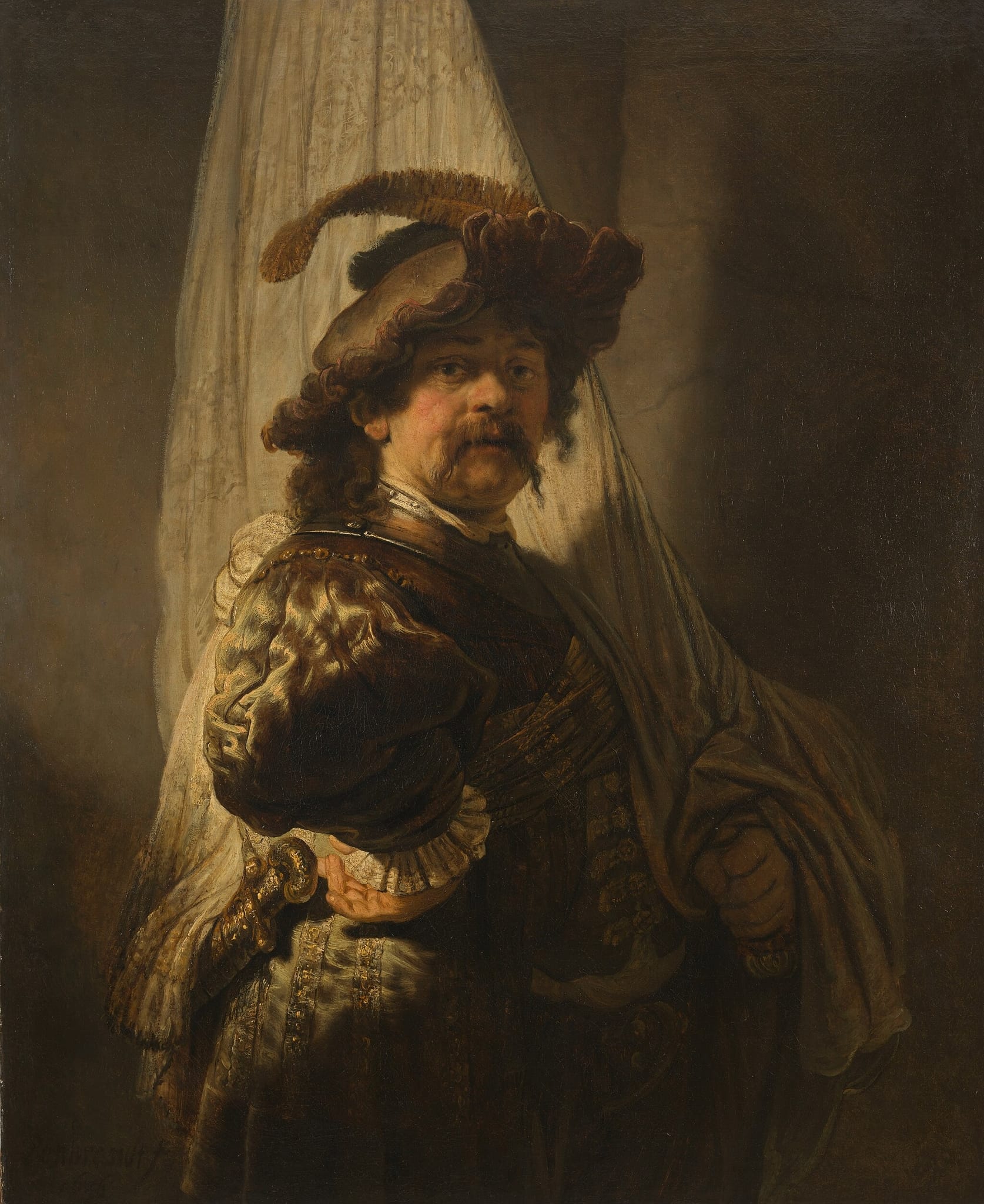
The Standard Bearer
1636
A full-length portrait of a young man proudly bearing a ceremonial flag, depicted with vivacious brushwork and confident posture. The painting is significant as an early demonstration of Rembrandt’s skill at combining costume, personality, and dramatic lighting to create heroic presence. Viewers should focus on the energetic handling of fabric and flesh, the glint of metal and flag detail, and the lively expression that animates the figure.
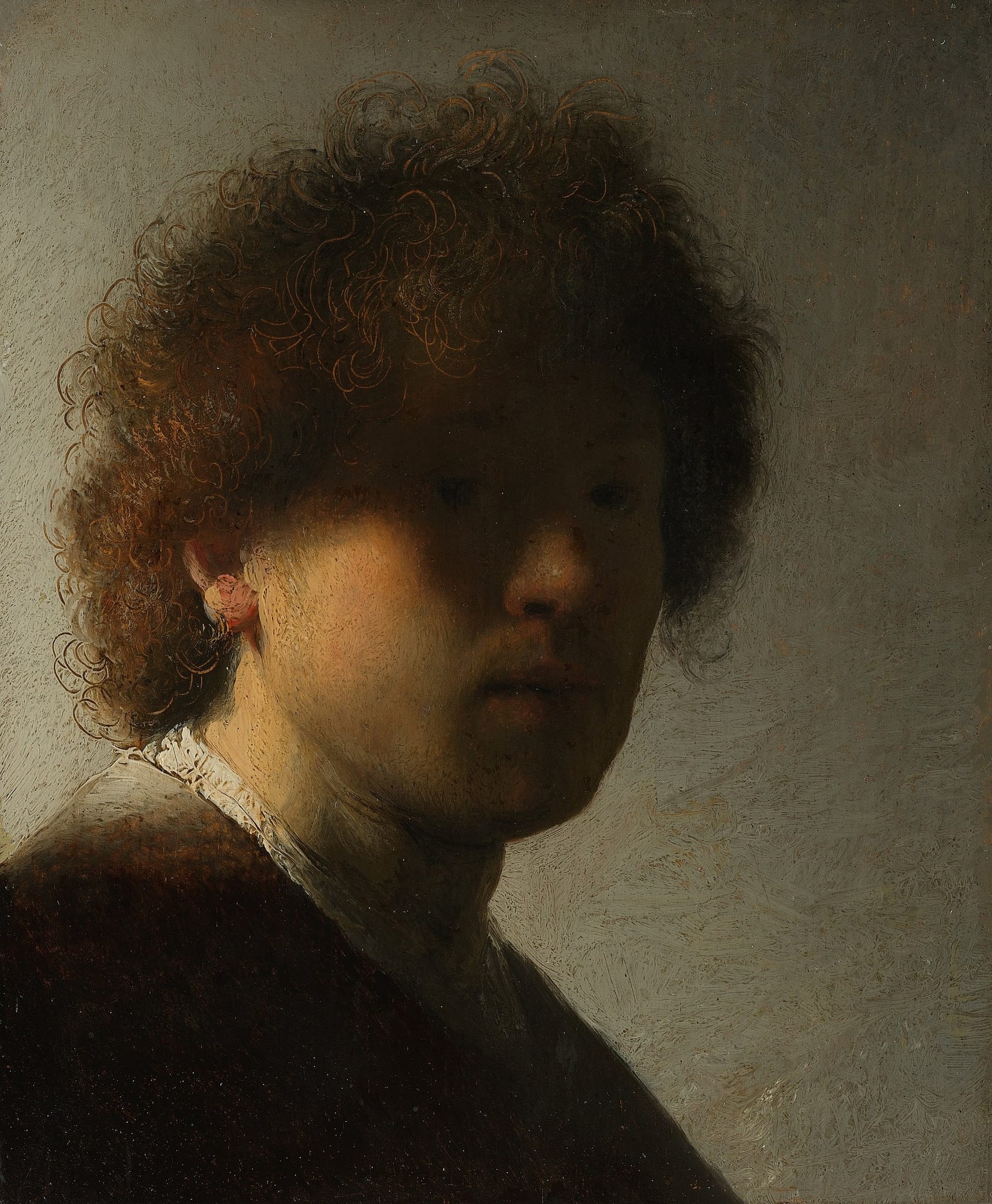
Self-portrait (with tousled hair)
c. 1628
An early self-portrait showing the young Rembrandt with untidy hair and a direct, inquisitive expression, capturing both his likeness and a vivid sense of personality. It is significant because it marks the beginning of his lifelong exploration of the self and mastery of expressive brushwork. Look for the spontaneous, lively brushstrokes, the intensity of the gaze, and the way light models his face against a dark background.
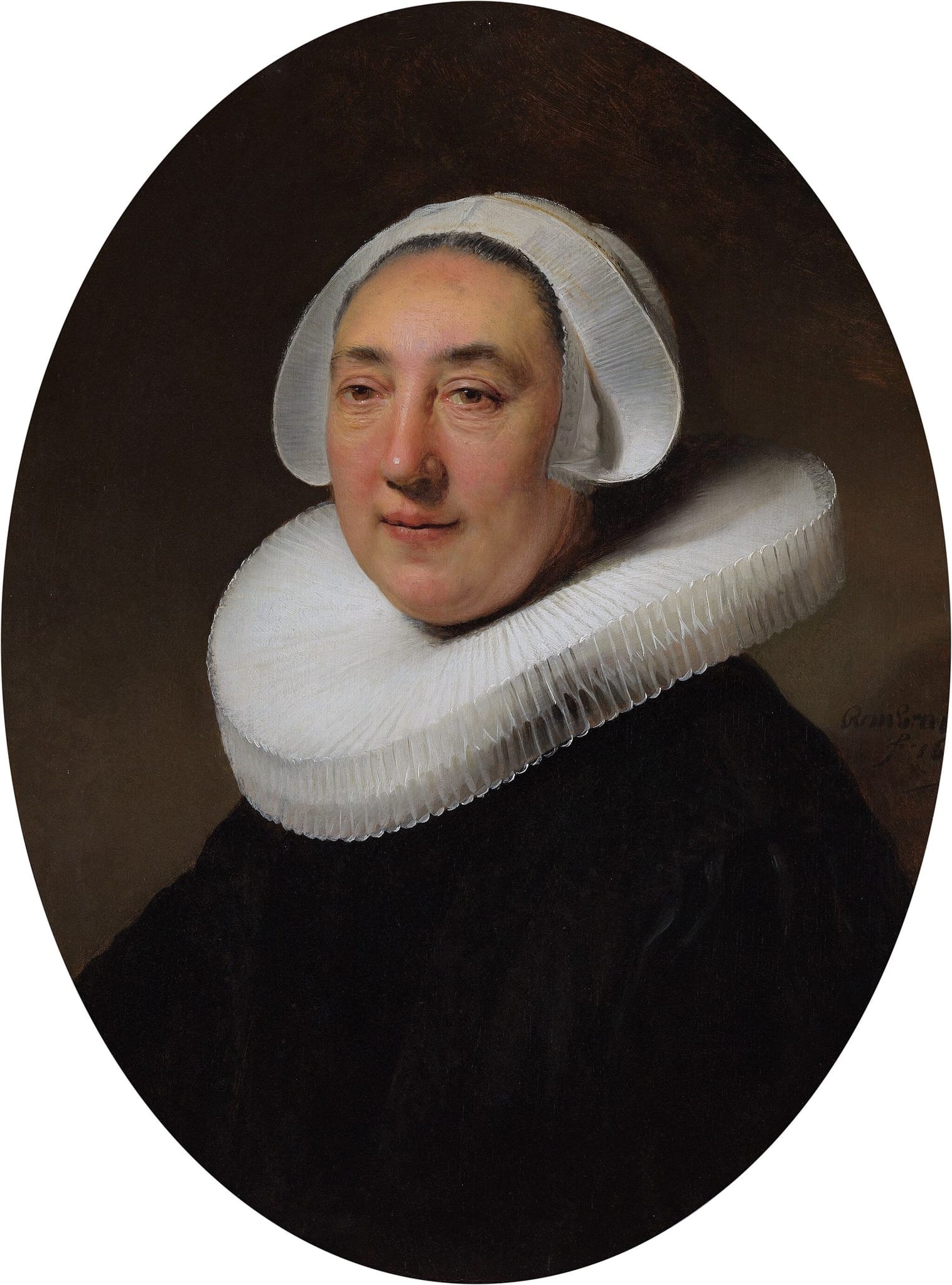
Portrait of Haesje Jacobsdr van Cleyburg
1634
A refined portrait of Haesje Jacobsdr van Cleyburg presenting her with dignified poise, elegant dress, and delicate lace details that signal her social status. The work is significant for Rembrandt’s sensitive rendering of texture and his nuanced depiction of sitters’ character. Viewers should observe the careful treatment of fabrics and lace, the soft modeling of the face, and the composed yet warm presence conveyed through light and posture.
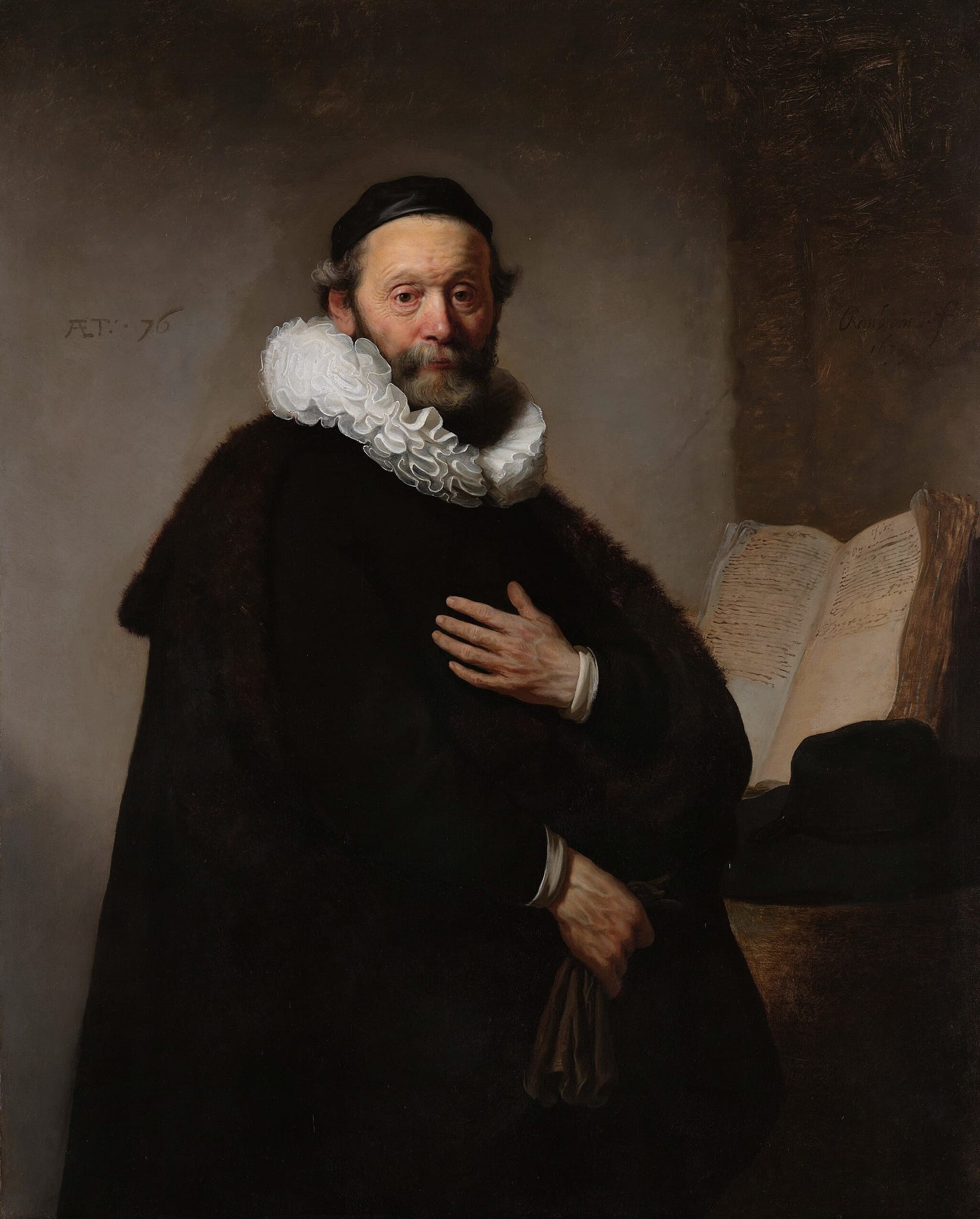
Johannes Wtenbogaert
1633
A portrait of the theologian Johannes Wtenbogaert shown in sober dress with a serious, contemplative expression that reflects his intellectual and religious standing. Its significance lies in Rembrandt’s ability to combine psychological insight with dignified simplicity, emphasizing character over ornament. Look for the restrained palette, the attentive rendering of the sitter’s face and hands, and the quiet interplay of light that frames his features.
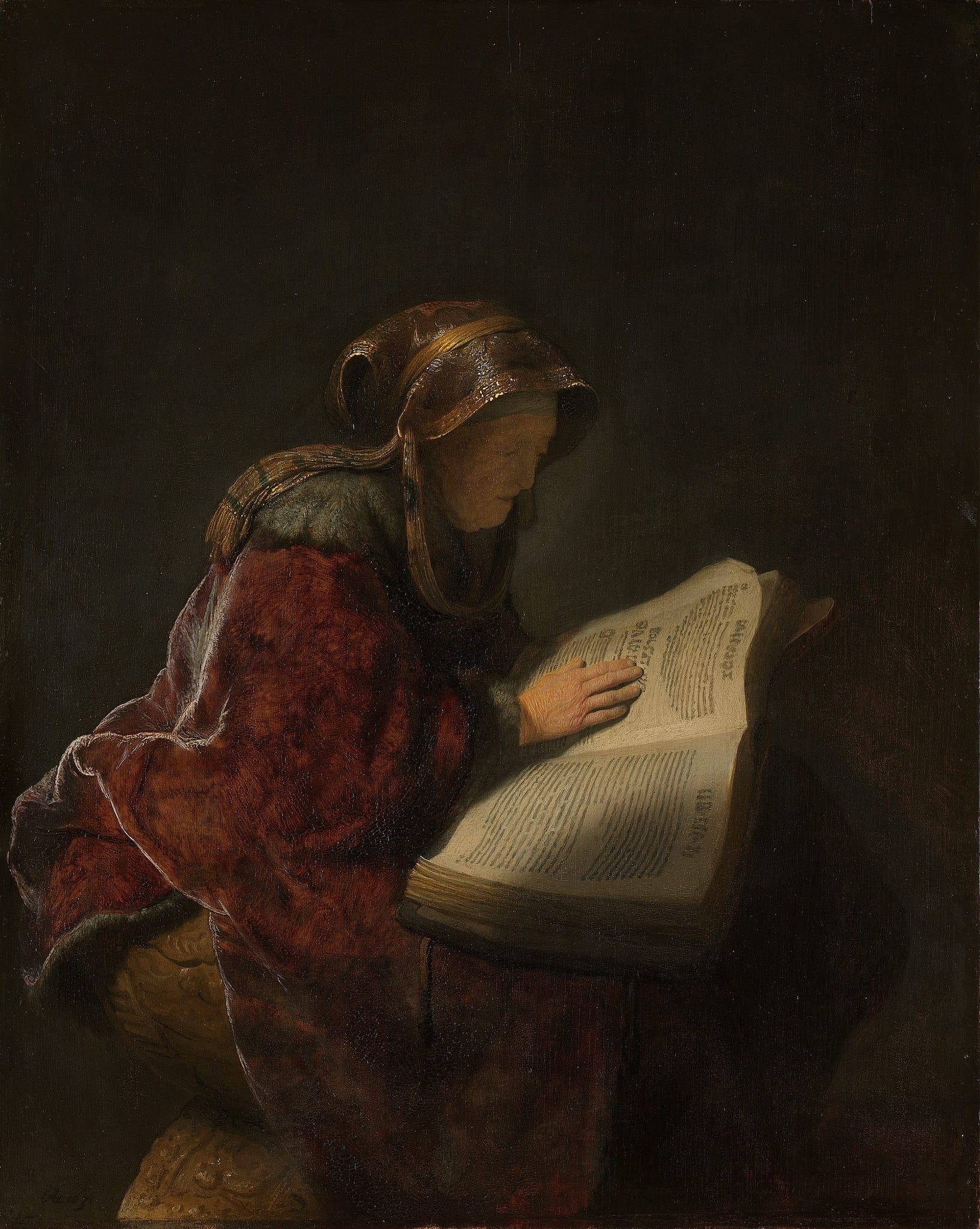
Old Woman Reading, Probably the Prophetess Anna
1631
A small, intimate scene of an elderly woman absorbed in reading, often identified as the prophetess Anna, rendered with warm tones and careful attention to aged skin and hands. The painting is significant for its empathy and the devotional mood created by the concentrated figure and focused light. Viewers should notice the tender depiction of age—wrinkled hands, a concentrated face—and the concentrated beam of light that isolates her in quiet study.
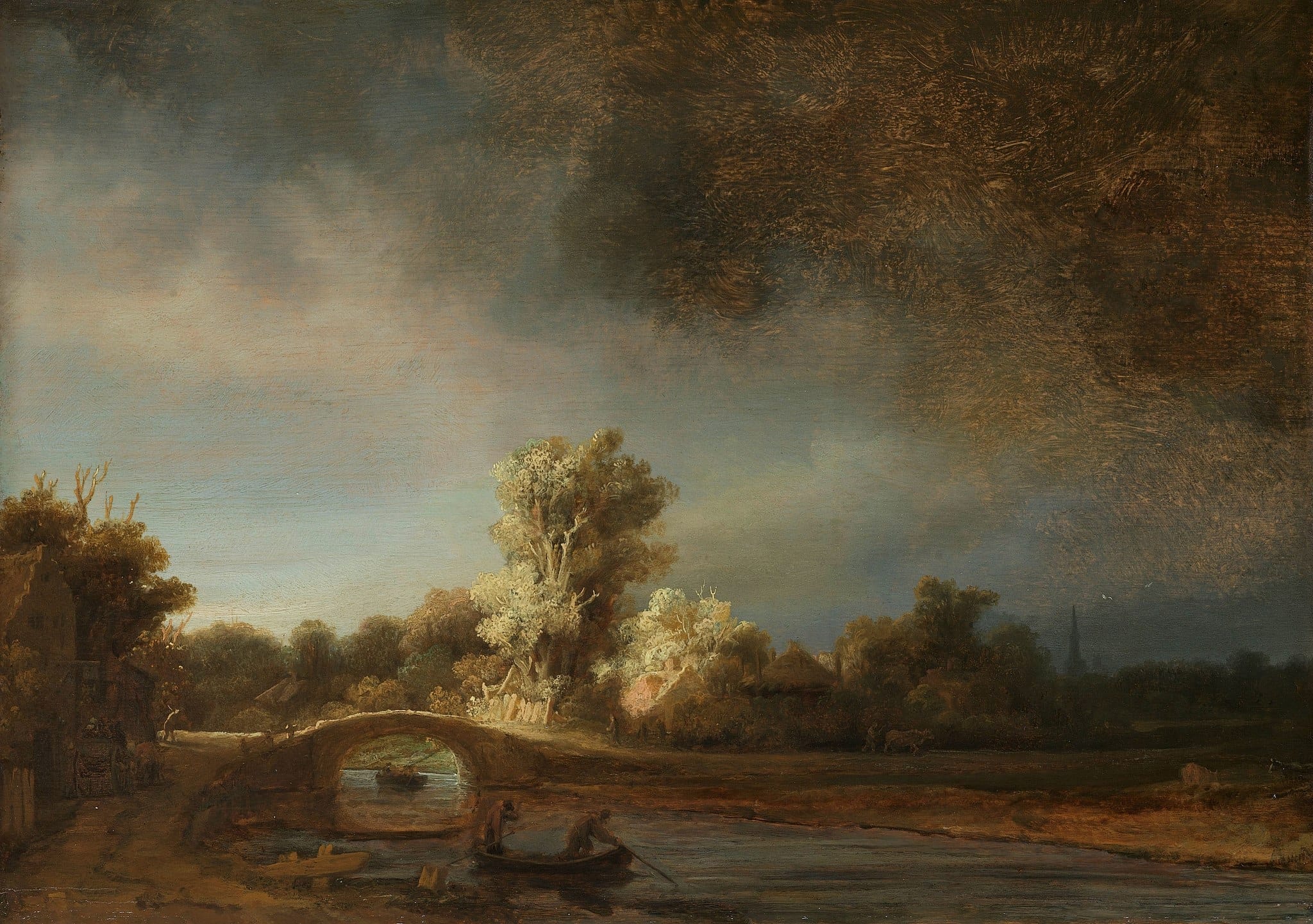
Landscape with a Stone Bridge
c. 1638
A tranquil Dutch landscape centered on a sturdy stone bridge spanning a calm waterway, with figures and distant buildings placed within a broad, natural setting. The work is significant as an example of Rembrandt’s early landscape practice, showing atmospheric effects and a balanced composition that unites human presence with nature. Look for the tonal variations in sky and water, the subtle reflections, and the compositional placement of the bridge as a focal anchor.
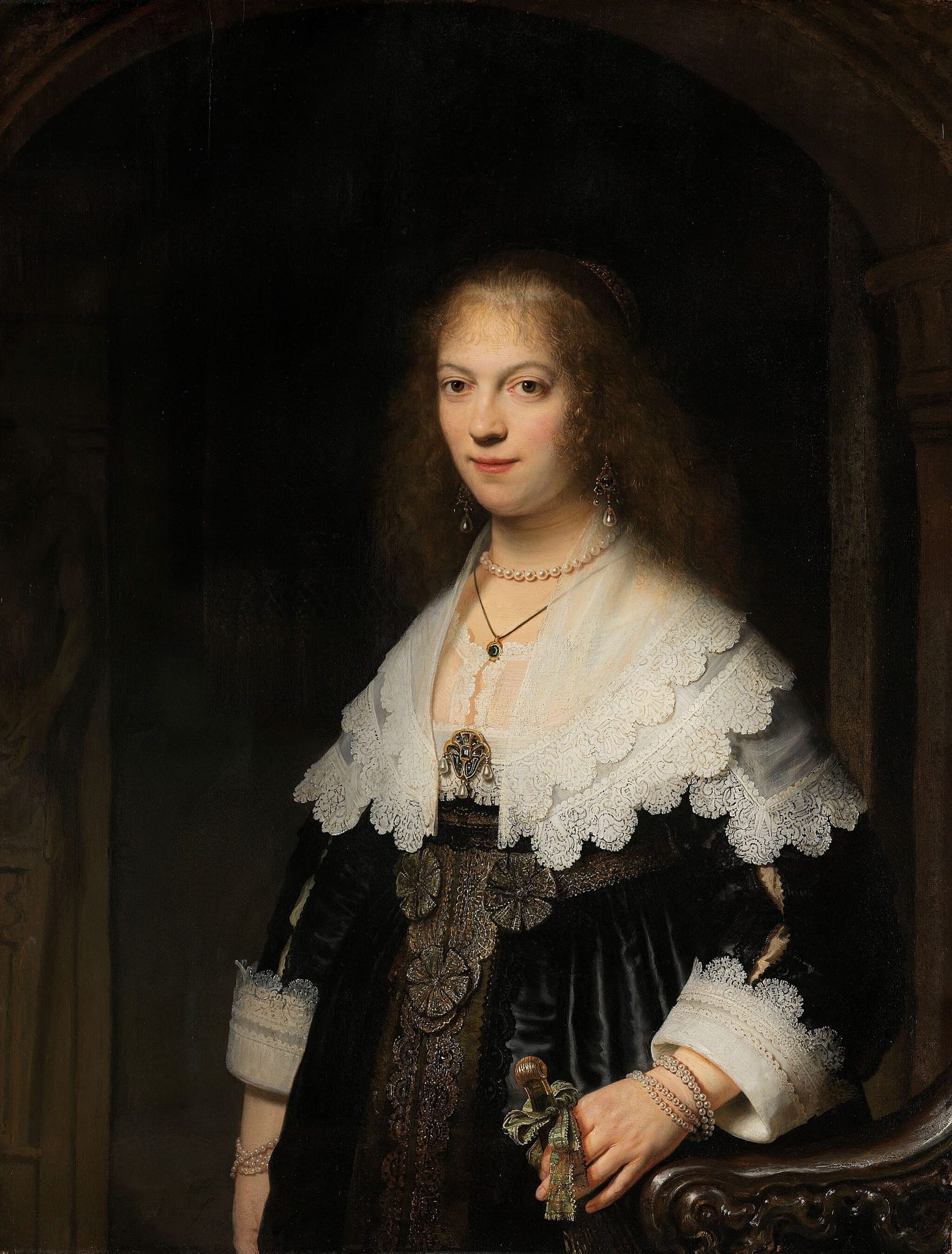
Portrait of a Woman, Probably Maria Trip
1639
A stately portrait of a woman, likely Maria Trip, depicted with elegant attire, a composed expression, and precise attention to lace and jewelry that denote wealth and taste. It is significant for its combination of portrait realism and the display of material culture typical of Amsterdam’s elite. Viewers should focus on the refined textures—lace, silk, pearls—the calm dignity of the sitter, and Rembrandt’s warm modeling of her face.
Amsterdam Museum (Amsterdam Museum aan de Amstel)
The Amsterdam Museum matters for Rembrandt because it situates the artist within the city he lived and worked in: the museum’s collection and displays link Rembrandt’s paintings and prints to Amsterdam’s civic, social and material history, and the institution occasionally shows a work by Rembrandt from its holdings to illuminate local contexts. While the city’s national collection (Rijksmuseum) holds the largest number of Rembrandt paintings, the Amsterdam Museum keeps items that help visitors understand the artist’s place in Amsterdam’s urban story and civic portrait traditions. ([amsterdammuseum.nl](https://www.amsterdammuseum.nl/locaties/amsterdam-museum-aan-de-amstel/1495?utm_source=openai))
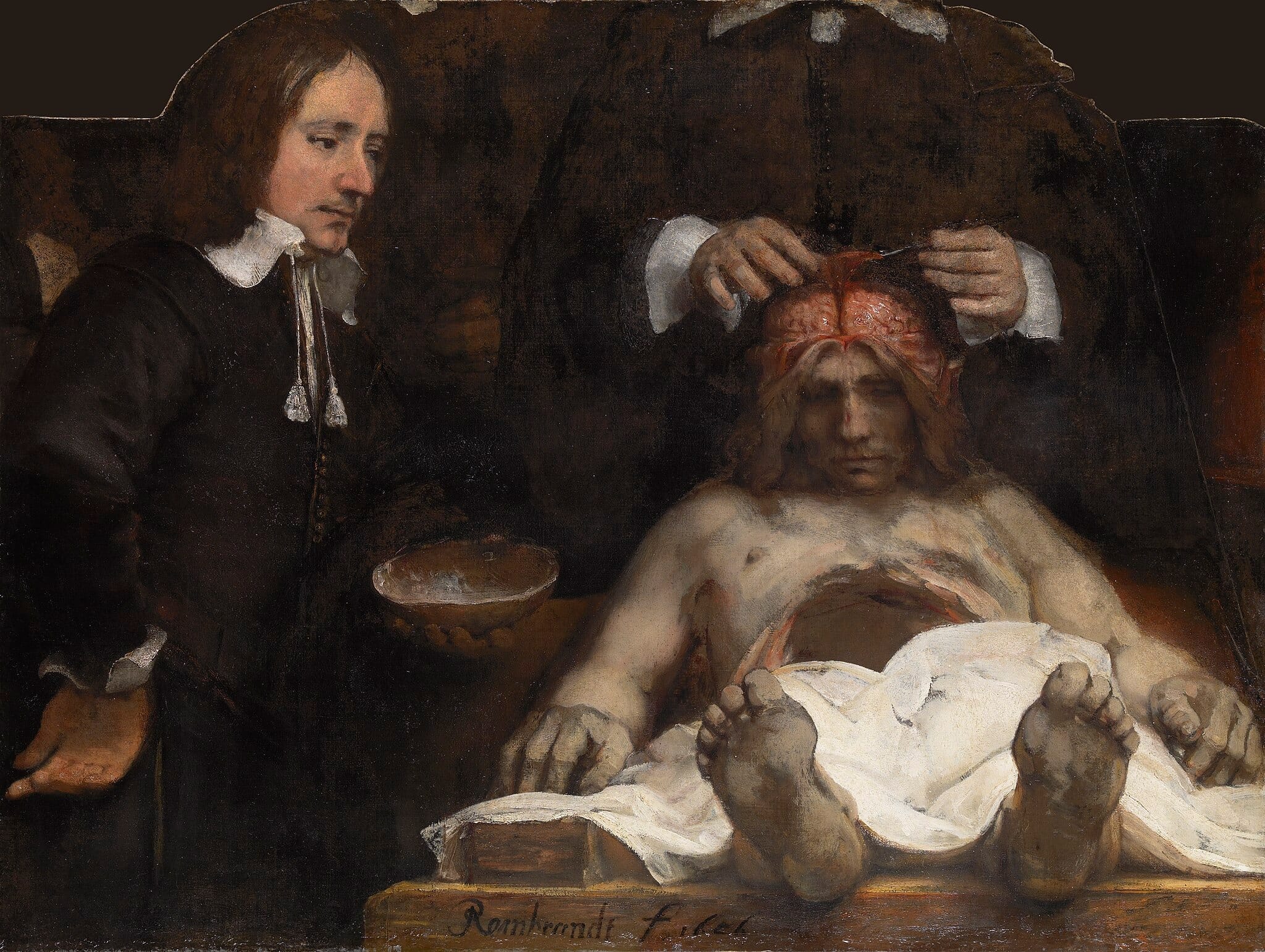
The Anatomy Lesson of Dr. Jan Deijman
1656
This fragmentary group portrait shows Dr. Jan Deijman performing a brain dissection on the cadaver of an executed criminal, a public anatomy lesson organised by the surgeons’ guild in Amsterdam. It is significant as Rembrandt’s later revisiting of the anatomy-lesson genre (after his famous 1632 Tulp picture) and as a rare surviving fragment of a once much larger composition that documents scientific practice and civic ritual in the Dutch Golden Age; viewers should look for Rembrandt’s dramatic chiaroscuro, the concentrated gestures around the dissection, and the expressive, individualized faces of the onlookers that turn a medical demonstration into a psychological group portrait. ([en.wikipedia.org](https://en.wikipedia.org/wiki/The_Anatomy_Lesson_of_Dr._Deijman?utm_source=openai))
Must-see