Rembrandt van Rijn Paintings in Washington DC — Where to See Them
Washington, DC matters for experiencing Rembrandt because the National Gallery of Art houses approximately eight of his paintings on permanent display, making it the only city where you can see that concentration in a single museum. That grouping lets you compare his handling of light, brushwork and psychological depth across portraits and biblical scenes in one visit, with gallery labels and conservation displays that make technical and historical differences easy to follow.
At a Glance
- Museums
- National Gallery of Art
- Highlight
- See Rembrandt's portraits and biblical scenes at the National Gallery of Art
- Best For
- Art lovers interested in Baroque portraiture and religious painting
National Gallery of Art
The National Gallery of Art matters for experiencing Rembrandt because its Rembrandt paintings span different phases of his career and present both intimate portraits and more complex narrative works, allowing viewers to see how his handling of light, surface texture, and psychological presence evolved. The paintings are displayed alongside a strong Dutch Golden Age collection, so you can compare Rembrandt directly with his contemporaries and pupils, which clarifies his distinctive approach to chiaroscuro and brushwork. The NGA also prioritizes conservation and scholarship, so labels and occasional gallery talks highlight technical discoveries (pentimenti, layering, glazing) that deepen appreciation of his method.
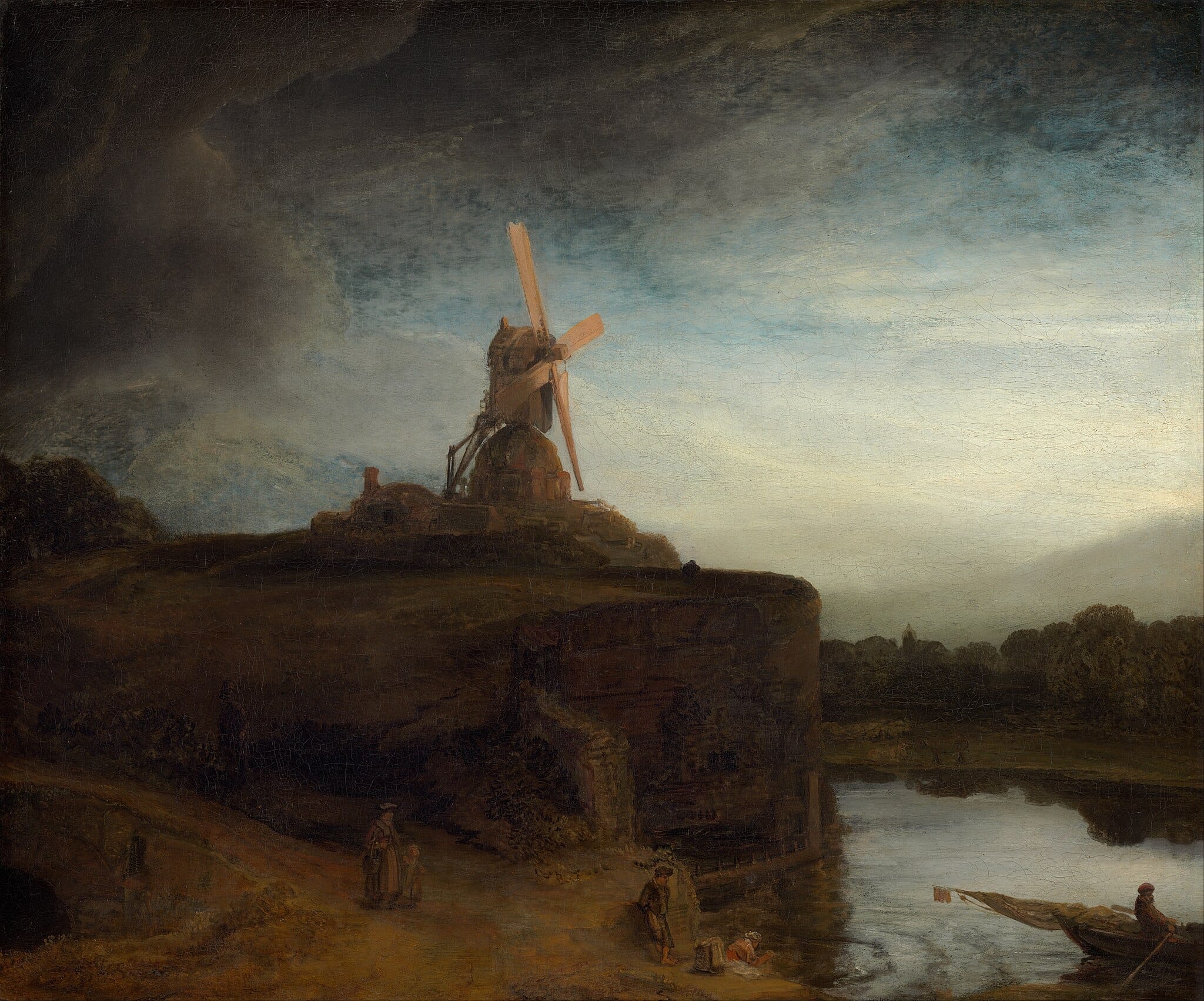
The Mill
1645/1648
A windswept Dutch landscape dominated by a large, silhouette-like windmill set on a rise against a luminous sky, with small figures and farm buildings below. Significant as one of Rembrandt’s rare and powerful late landscapes, it demonstrates his mastery of atmospheric light and simplified, monumental composition. Look for the dramatic contrast between the dark mass of the mill and the glowing sky, the economy of brushwork that suggests rather than defines detail, and the layering of light that creates depth.
Must-see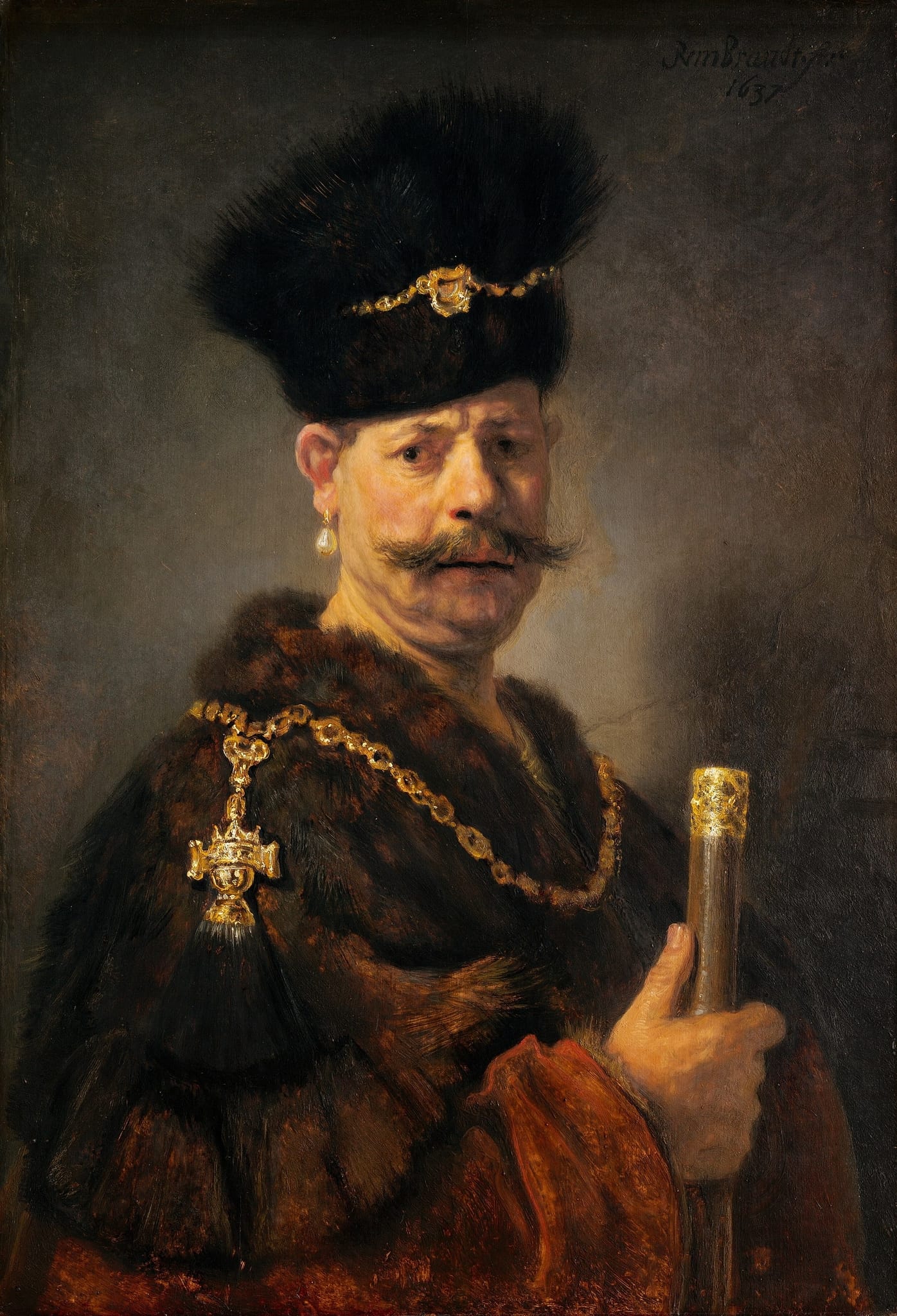
A Polish Nobleman
1637
A striking portrait of a fellow in exotic, Eastern European dress—fur-trimmed cloak, high boots and a tall cap—presented with direct gaze and confident posture. Important for Rembrandt’s interest in costume and character, the painting explores identity, texture, and the theatricality of dress as a means of psychological depiction. Notice the tactile rendering of fabrics, the warm, incisive highlights on face and hands, and how the dark background isolates the sitter to emphasize presence.
Must-see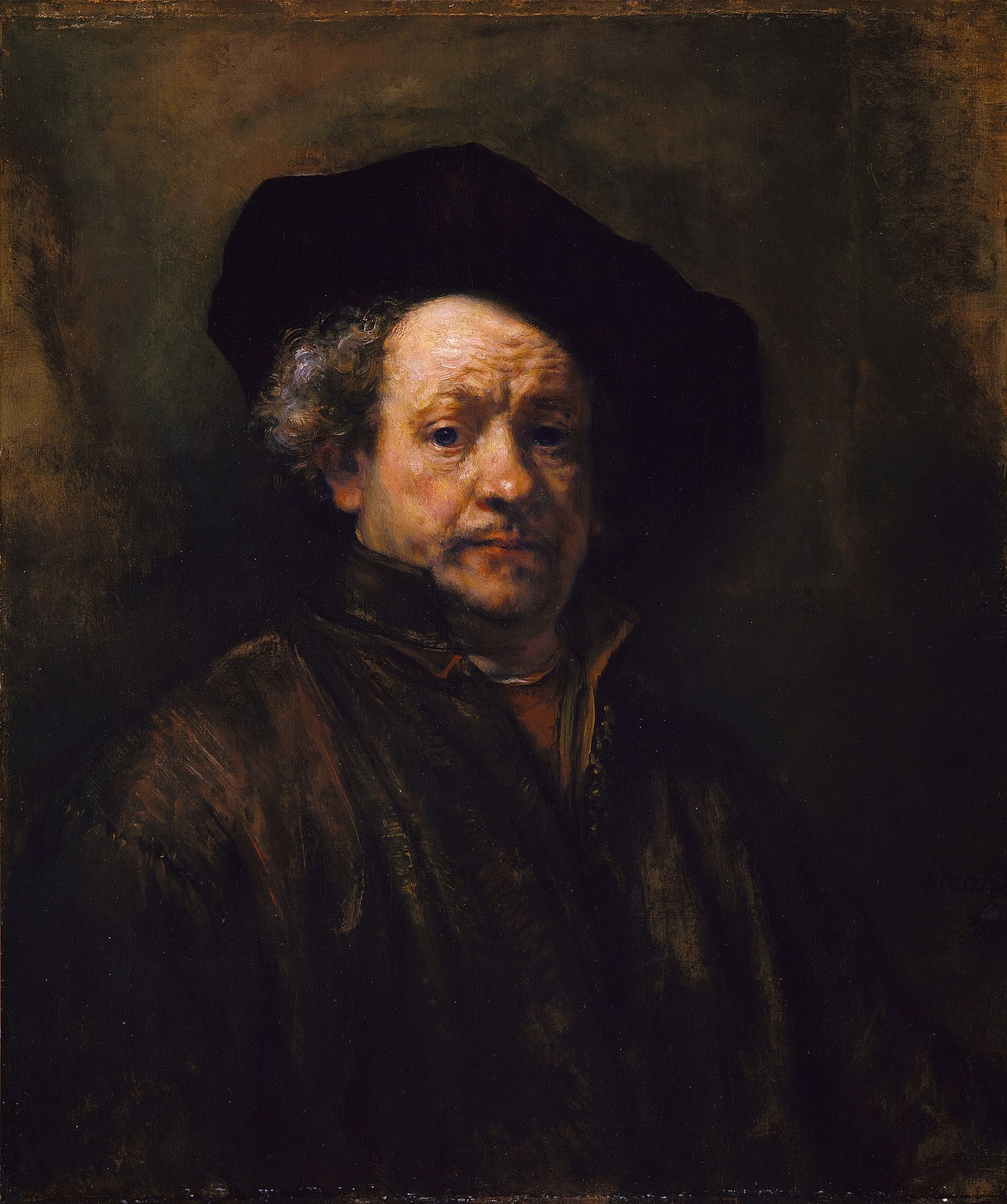
Self-Portrait
1659
Rembrandt presents himself in later middle age with sober dignity: half-length, turned slightly, with direct, searching eyes and a simple dark cloak and broad-brimmed hat. This self-portrait is significant as part of his lifelong introspective series—here the tone is contemplative rather than ostentatious, revealing maturity and mastery of paint. Observe the nuanced handling of flesh tones, the loose yet revealing brushwork around the beard and hat, and the way light sculpts the face against a velvety shadowed background.
Must-see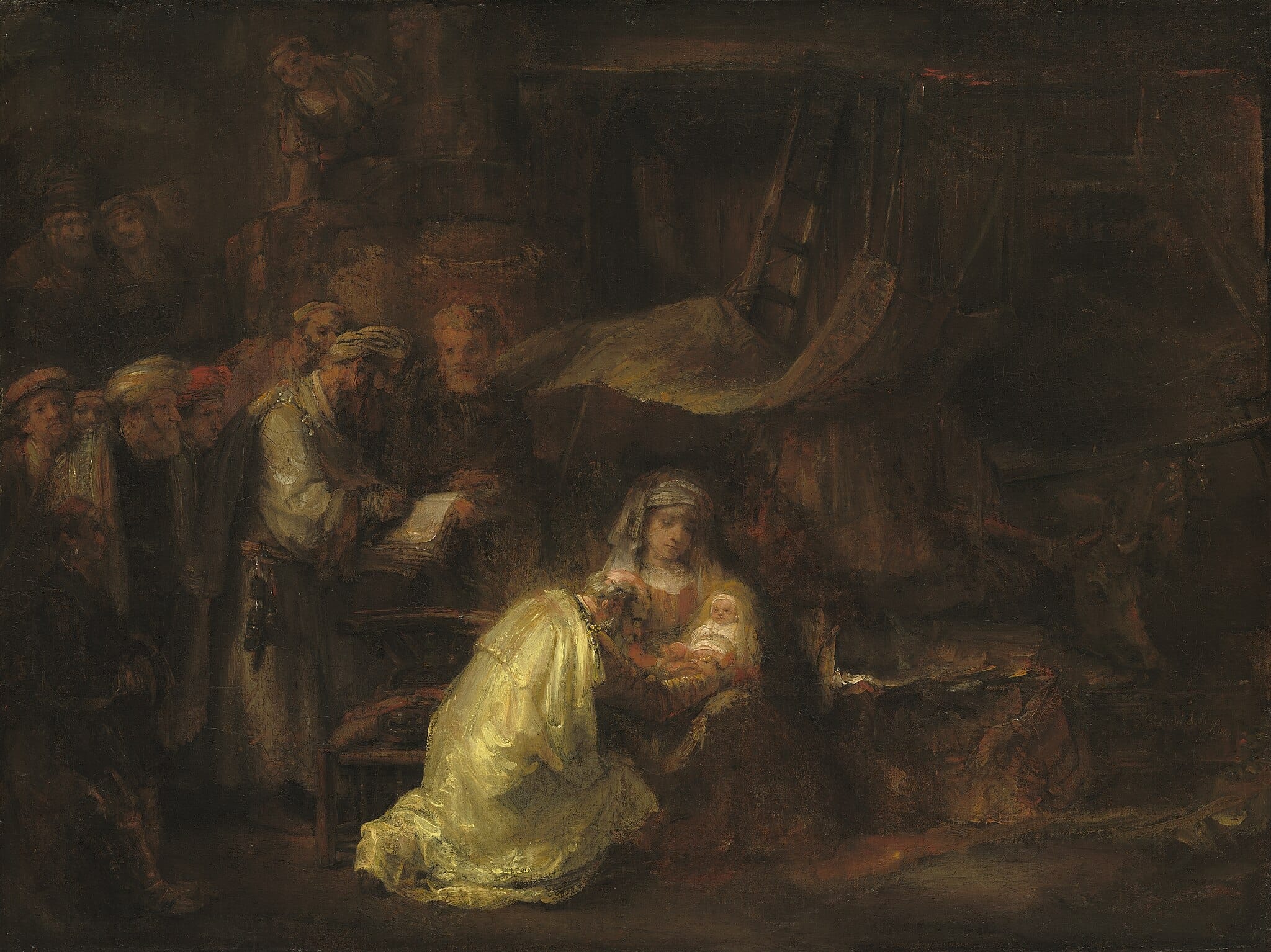
The Circumcision
1661
A devotional scene depicting the biblical rite of circumcision, centered on the infant and surrounded by clergy and family members in a dim, candlelit interior. The work is significant for blending religious narrative with intimate, theatrical lighting—Rembrandt uses chiaroscuro to create a solemn, humanized moment. Look for the focused illumination on the child’s form, the expressive faces of the onlookers, and the warm tonal palette that unifies the composition while directing attention to the spiritual core of the scene.
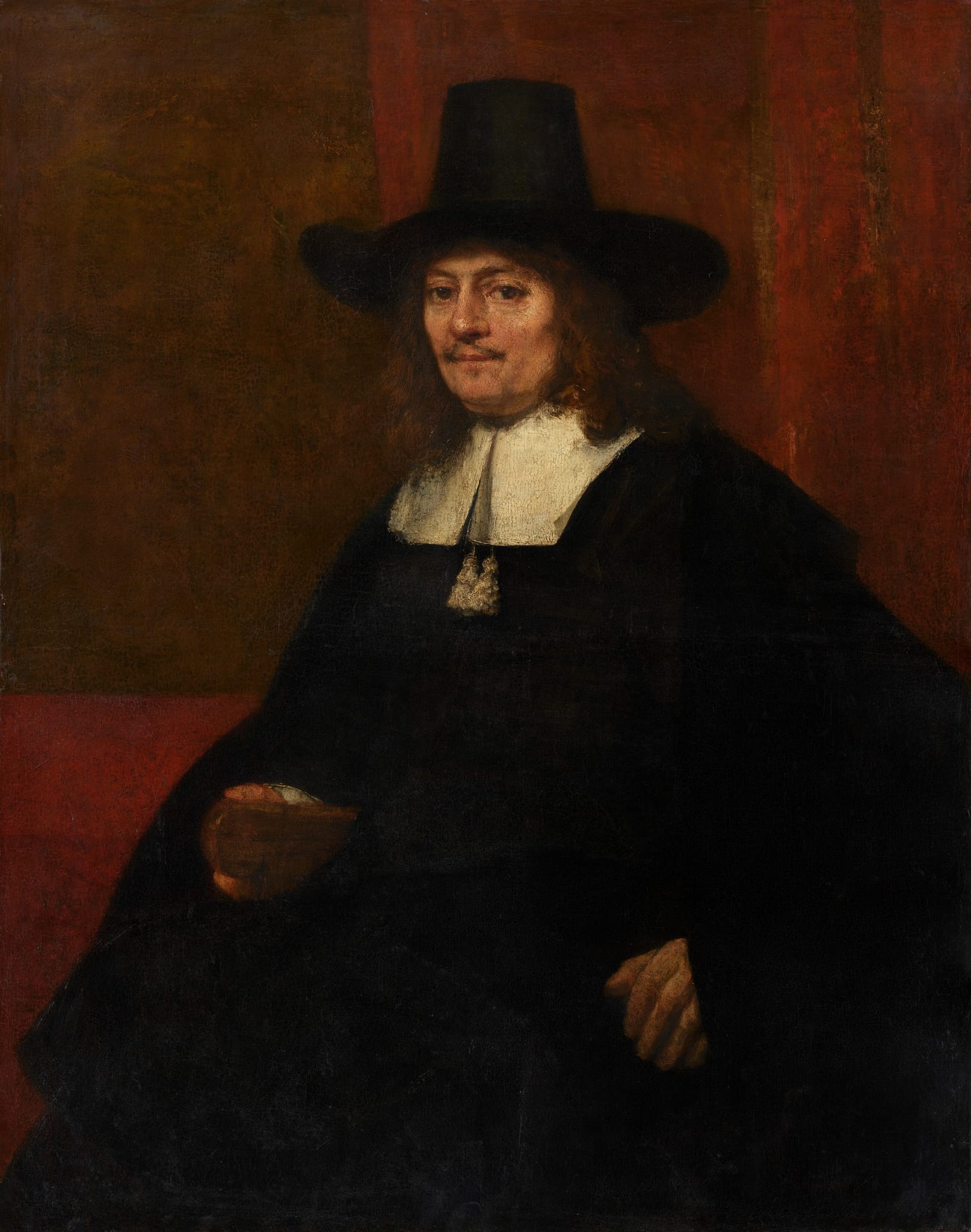
Portrait of a Man in a Tall Hat
c. 1663
A powerful head-and-shoulders portrait of an older man shown in rich, dark clothing and a distinctive tall hat, his face modeled by strong, concentrated light. It exemplifies Rembrandt’s late style of economical, textured brushwork and psychological immediacy, privileging character over ornament. Pay attention to the painterly, almost sculptural handling of light on the face, the textured strokes that suggest details rather than describe them, and the way the hat frames and intensifies the sitter’s presence.
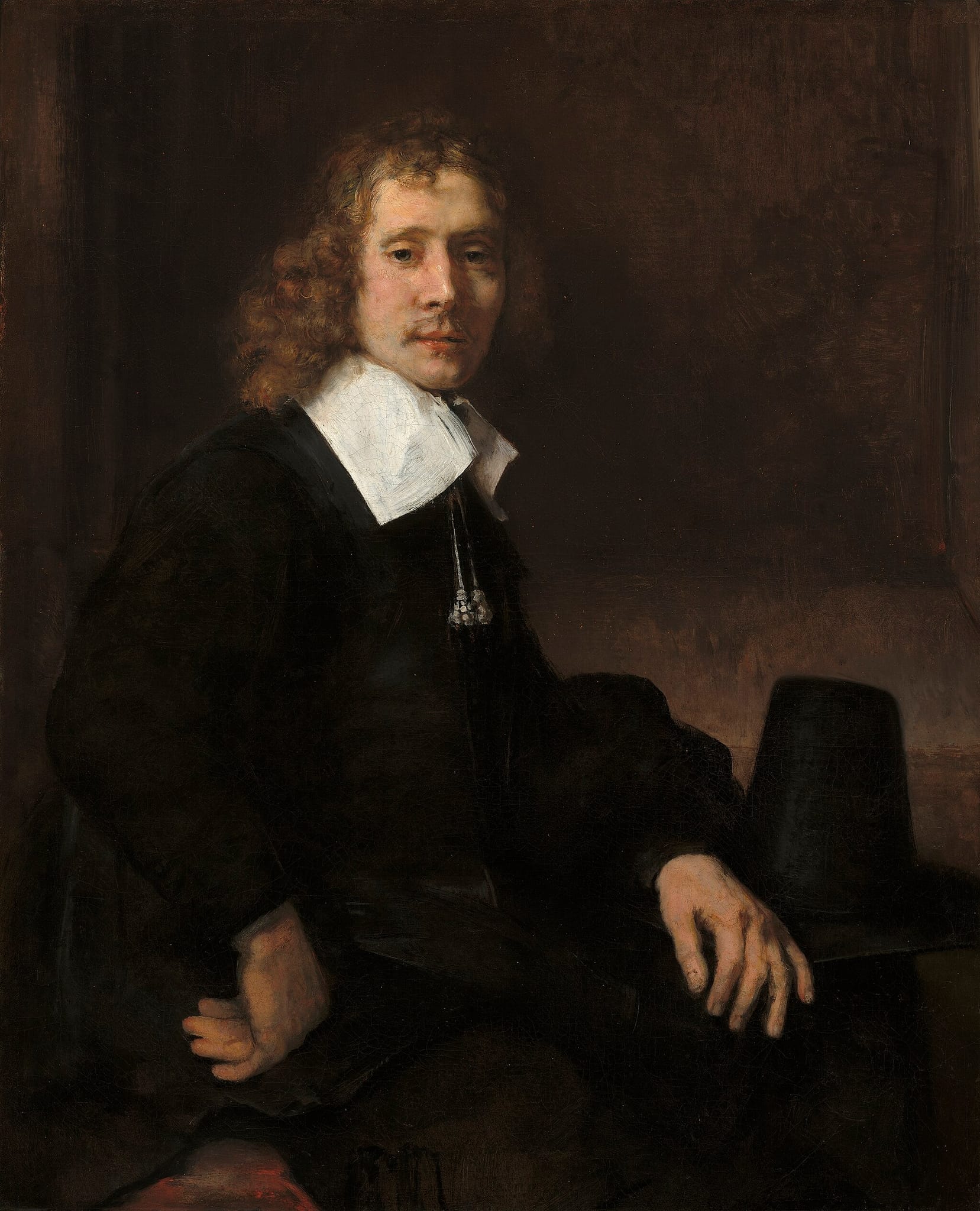
A Young Man Seated at a Table
c. 1660
A quiet interior portrait of a young man seated at a table, engaged in a modest activity and bathed in soft, directional light from the side. The painting is significant for its intimate scale and Rembrandt’s ability to convey presence and mood through restrained composition and subtle light effects. Look for the warm highlights on the hands and face, the harmony between figure and shadowed surroundings, and the sensitive, economical brushwork that captures texture and temperament.
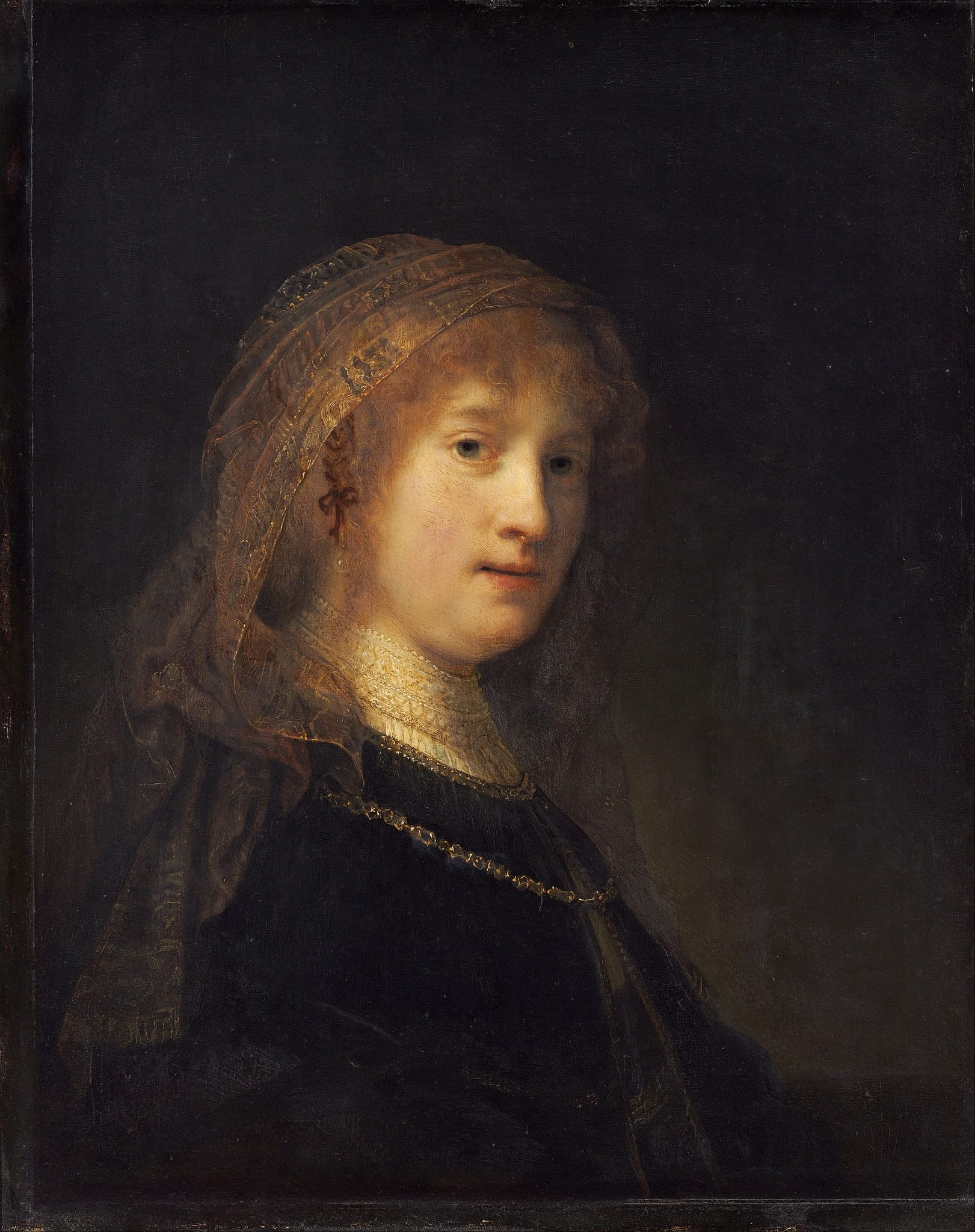
Saskia van Uylenburgh, the Wife of the Artist
c. 1634–1635
A charming, affectionate portrait of Rembrandt’s wife Saskia, shown with a gentle smile and elegant attire, often highlighted by a light, lively touch. Important both personally and artistically, the portrait captures intimacy and tenderness while demonstrating Rembrandt’s early skill at combining fidelity to appearance with subtle idealization. Notice the vivacity in her eyes and mouth, the delicate handling of lace and fabric, and the warm glow that brings her face forward from a subdued background.
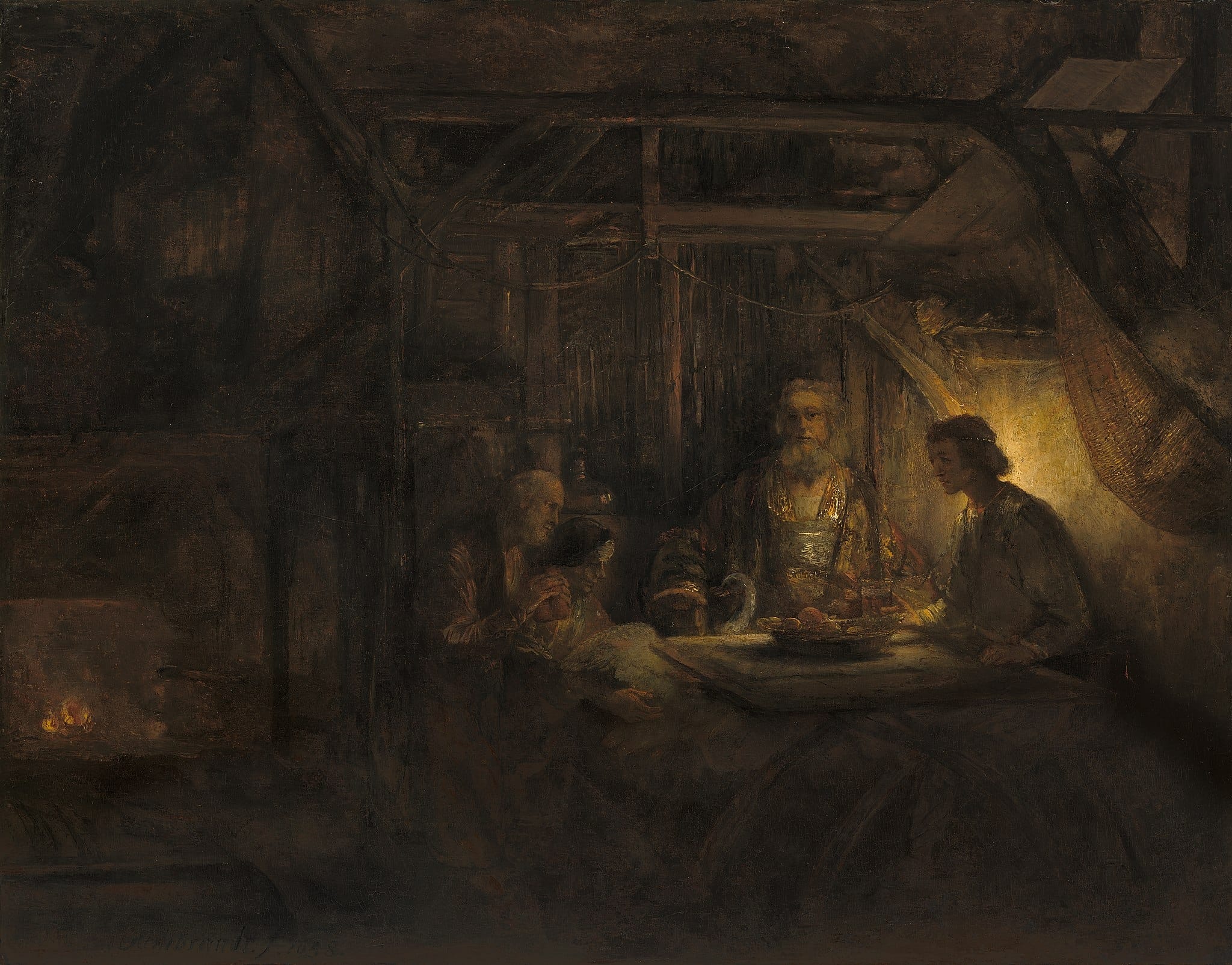
Philemon and Baucis
c. 1658
A small-scale genre-history scene showing the elderly couple Philemon and Baucis receiving the gods in humble domestic surroundings, often interpreted with warmth and moral gravity. The work is significant as an example of Rembrandt’s late interest in moralizing narratives depicted with psychological depth and intimate lighting. Observe the tender interaction between the figures, the rich play of warm, low light that unifies the scene, and the economical brushwork that suggests texture and atmosphere rather than minute detail.