Rembrandt van Rijn Paintings in London — Where to See Them
London is home to approximately 27 Rembrandt paintings on permanent display across four museums: the National Gallery (18), the Wallace Collection (5), Dulwich Picture Gallery (3) and Kenwood House (English Heritage) (1). What makes London distinctive is not just the numbers but the variety — the National Gallery’s core group of major portraits and biblical scenes is complemented by the Wallace and Dulwich’s more intimate, cabinet-like hangings and Kenwood’s single showpiece in a historic house, so you can see how Rembrandt reads in both public monuments and private settings.
At a Glance
- Museums
- National Gallery, Wallace Collection, Dulwich Picture Gallery, Kenwood House (English Heritage)
- Highlight
- See Rembrandt masterpieces at the National Gallery—must for portrait lovers.
- Best For
- Portrait and Baroque art lovers wanting concentrated Rembrandt works.
National Gallery
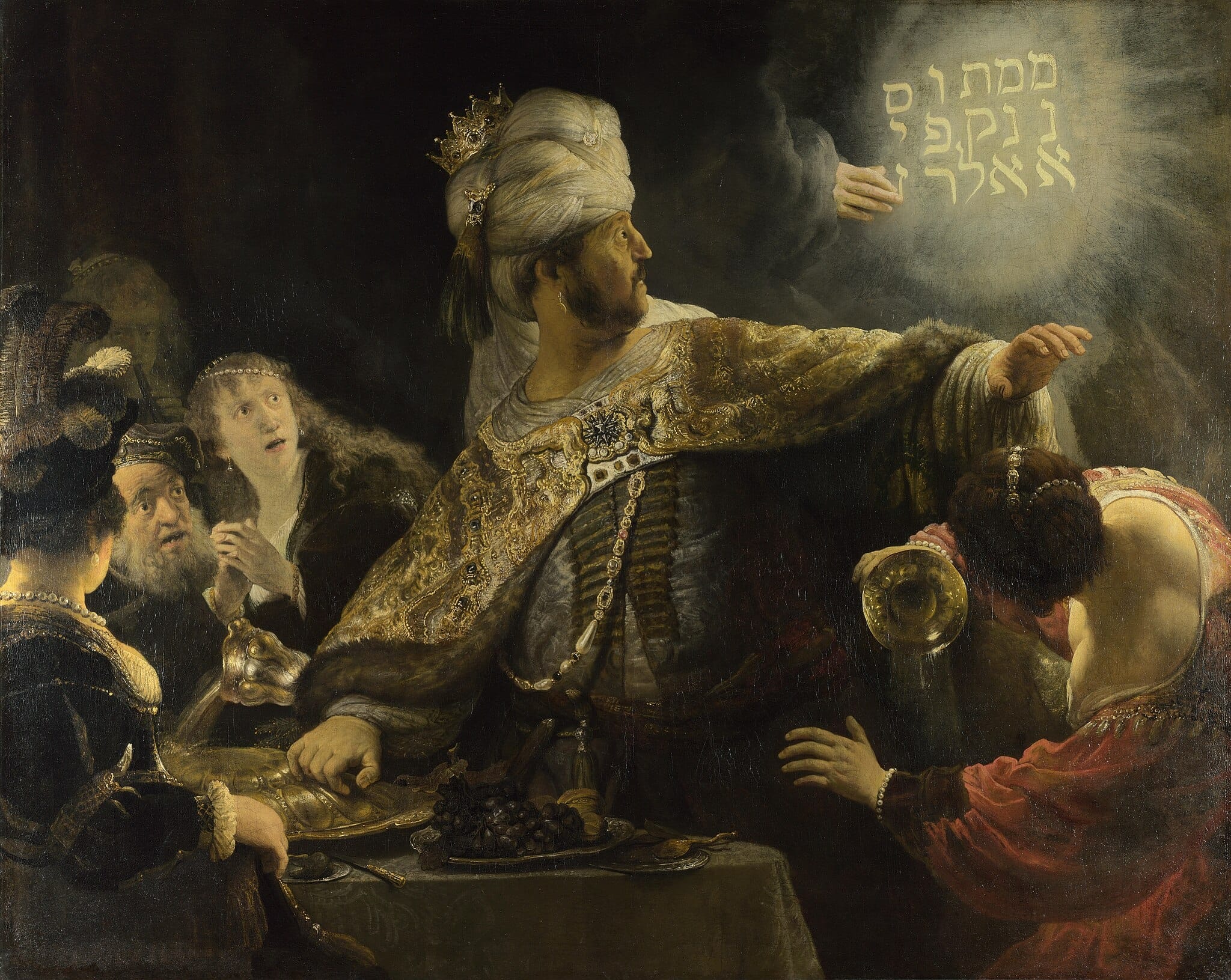
Belshazzar's Feast
1636
Rembrandt depicts the dramatic biblical moment from Daniel when a hand writes a terrifying message on the wall during King Belshazzar’s banquet, capturing the panic and confusion of the court. It’s significant as one of Rembrandt’s great early history paintings, showing his mastery of theatrical composition, rich colouring and characterful faces. Look for the stark contrast between the illuminated foreground figures and the darker background, the terrified gestures, and the enigmatic Hebrew inscription on the wall.
Must-see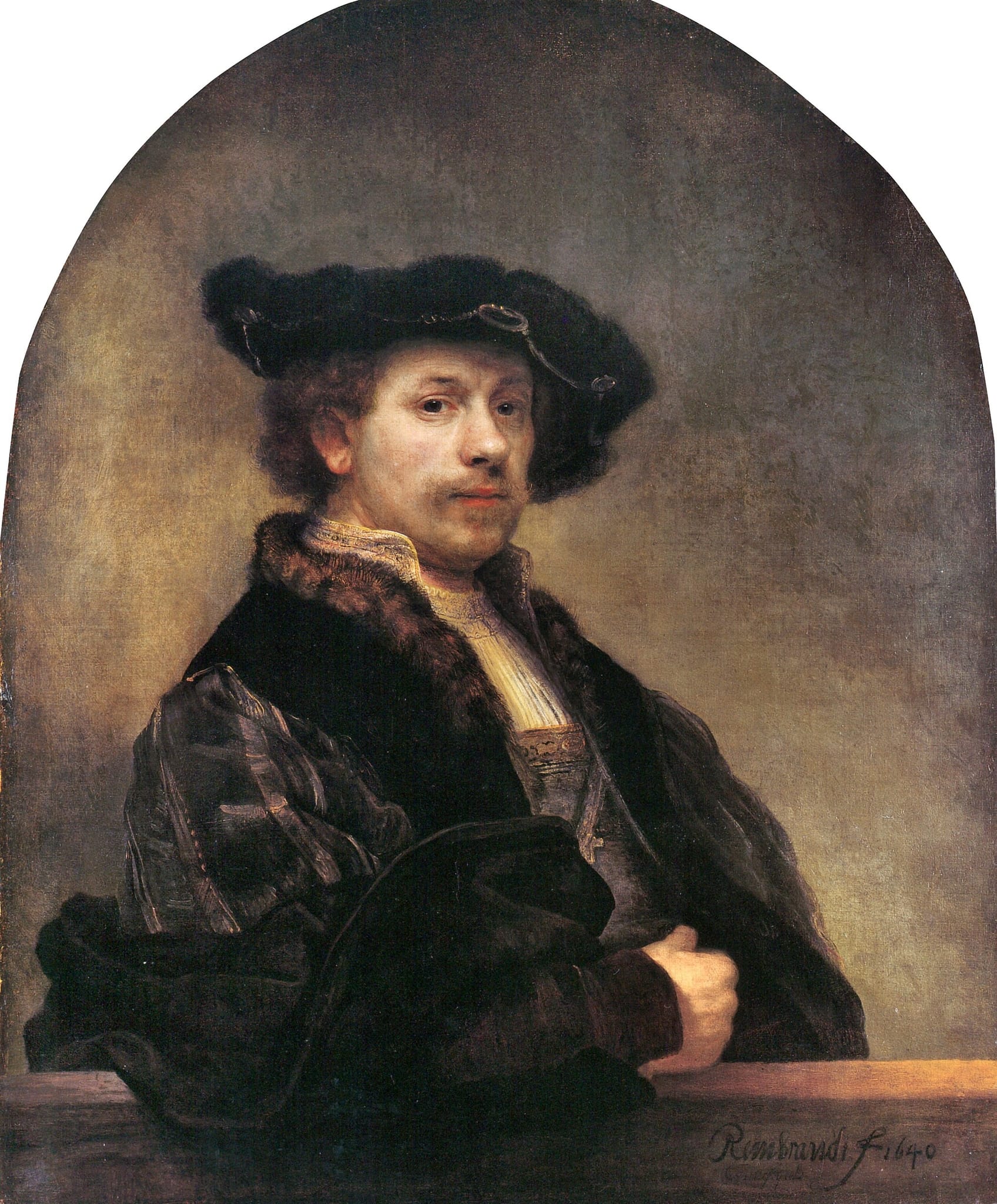
Self Portrait at the Age of 34
Rembrandt presents himself as a confident, stylish artist — a gentleman-portrait that balances self-fashioning with psychological presence. The work is important for how Rembrandt constructs artistic identity through costume, pose and a direct but controlled gaze. Note the sumptuous brushwork on the costume, the warm modelling of the face, and the subtle play between confidence and introspection in his expression. ([nationalgallery.org.uk](https://www.nationalgallery.org.uk/paintings/rembrandt-self-portrait-at-the-age-of-34?utm_source=openai))
Must-see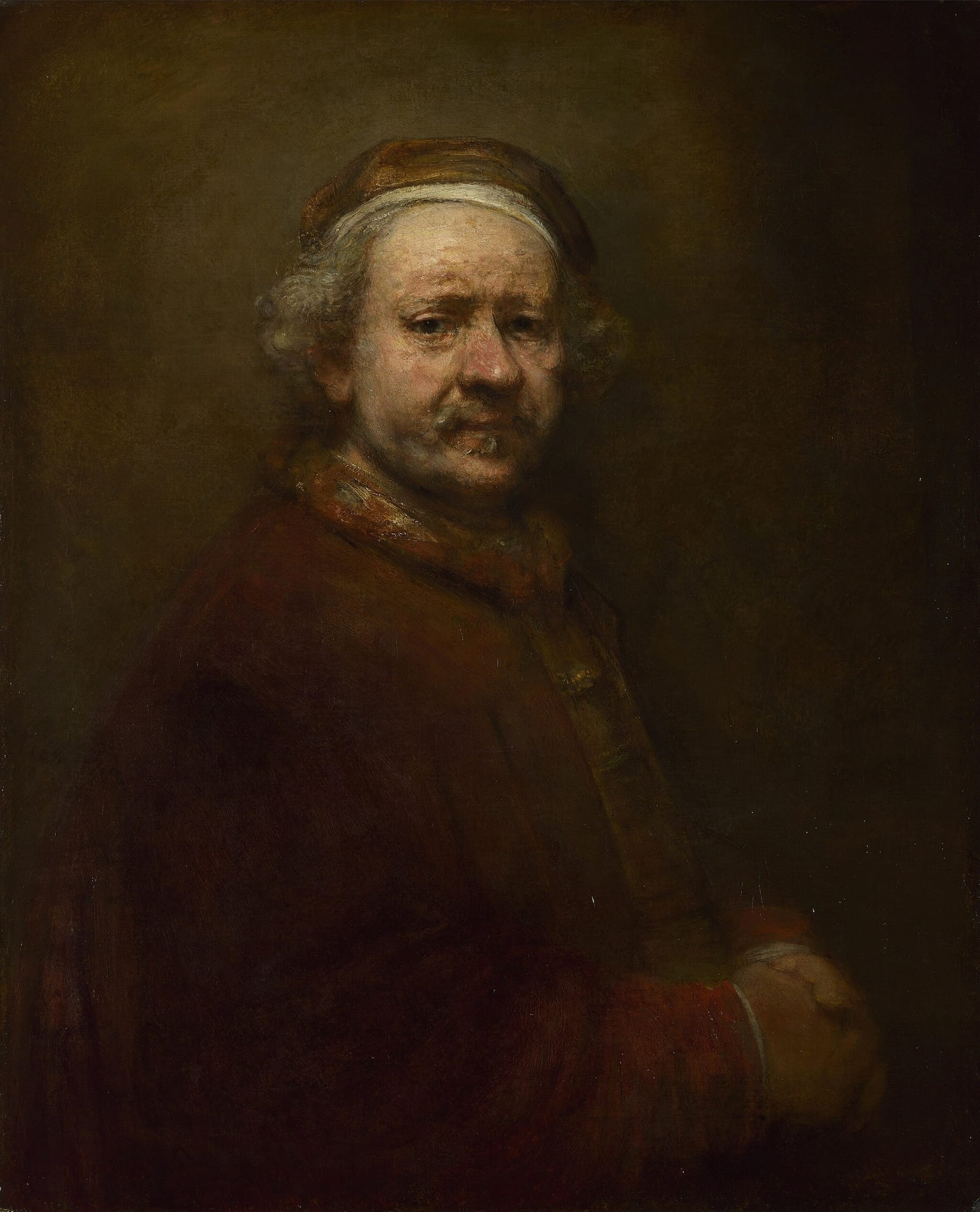
Self Portrait at the Age of 63
1669
In this late self-portrait Rembrandt confronts old age with frank realism: the lined face, sparse hair and steady, inward-looking gaze communicate experience and endurance. It’s significant as a culminating statement of his late style — economical paint handling that focuses attention on psychological truth rather than adornment. Observe the economy of brushstrokes that render flesh and texture, and how the dark, shallow space concentrates attention on the face and hands.
Must-see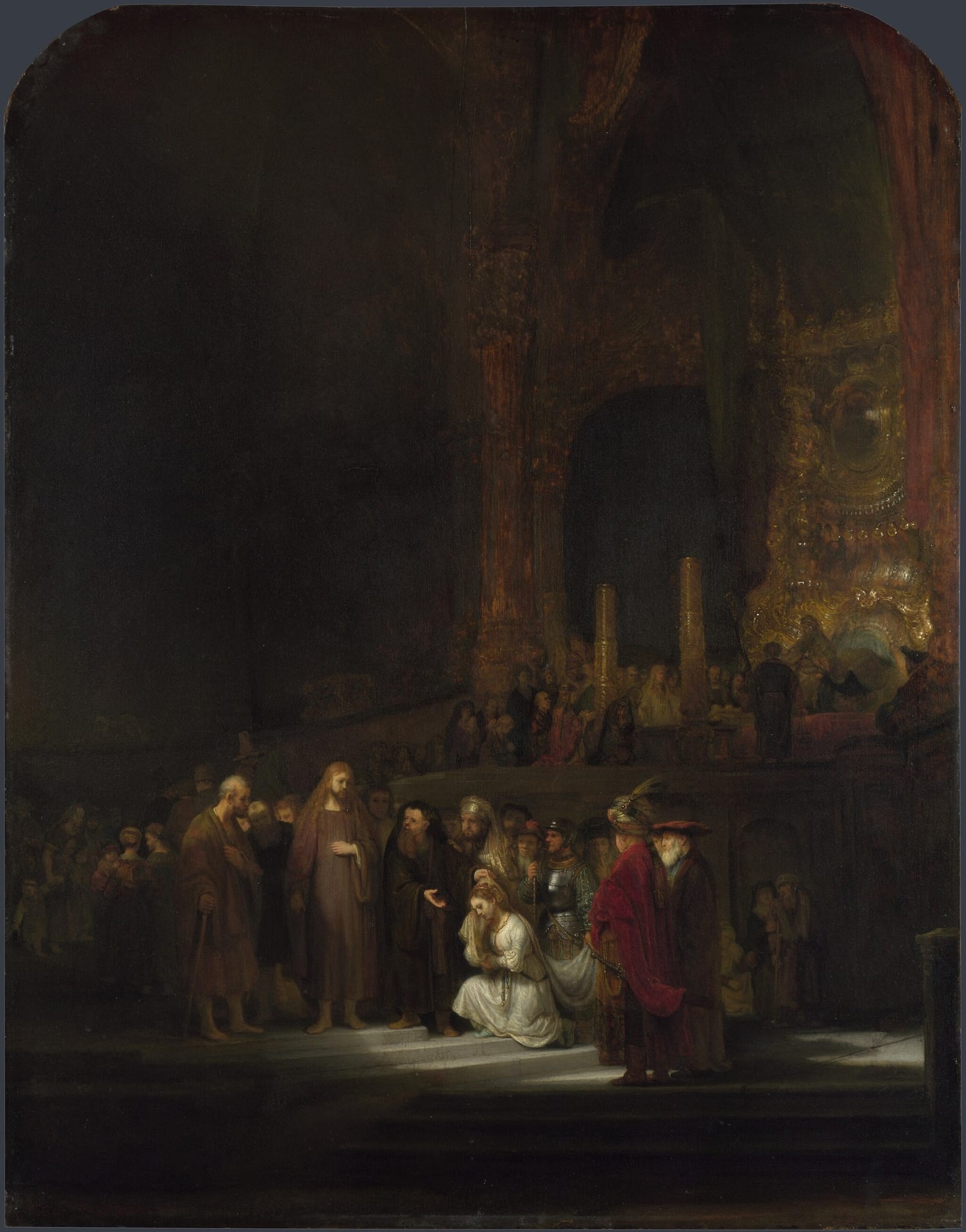
The Woman taken in Adultery
Rembrandt stages the Gospel episode where Jesus is asked to judge a woman accused of adultery, concentrating on emotional intensity rather than legal theatrics. The painting is valued for its humanising treatment of the figures and Rembrandt’s dramatic control of light to isolate the key players. Look for the kneeling woman’s vulnerability, the divided group of accusers, and the focused beam of light that brings the moral question to the fore. ([en.wikipedia.org](https://en.wikipedia.org/wiki/The_Woman_Taken_in_Adultery_%28Rembrandt%29?utm_source=openai))
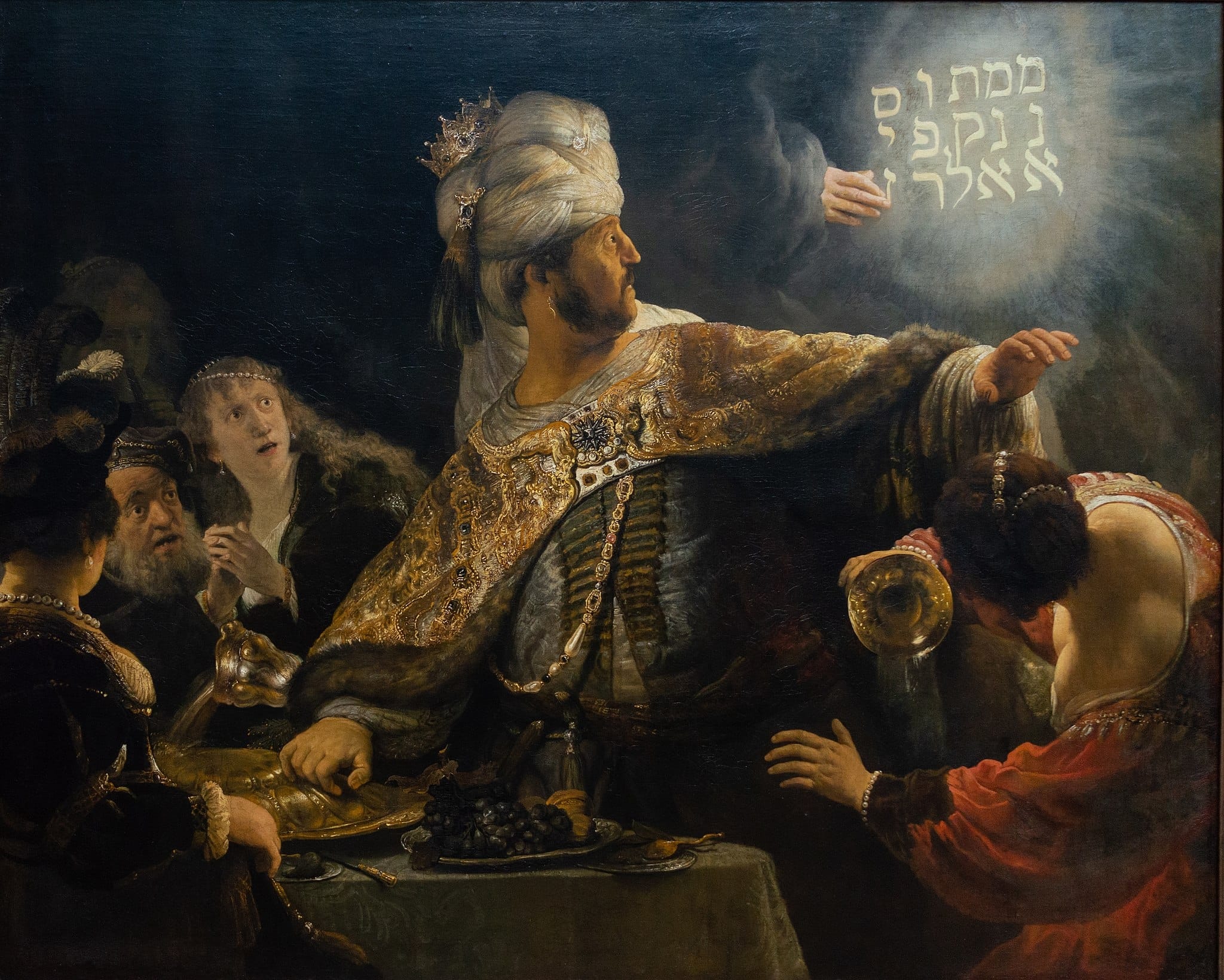
Belshazzar's Feast (study listed separately in some catalogues)
This study (a separate preparatory or related work) concentrates on compositional and figural ideas Rembrandt explored for the larger Belshazzar scene, often isolating groups or gestures. Such studies are significant for showing his working methods — how he tested lighting, poses and facial expressions before or alongside the finished work. When you view it, compare its handling and scale with the major feast painting to see what Rembrandt changed or emphasised.
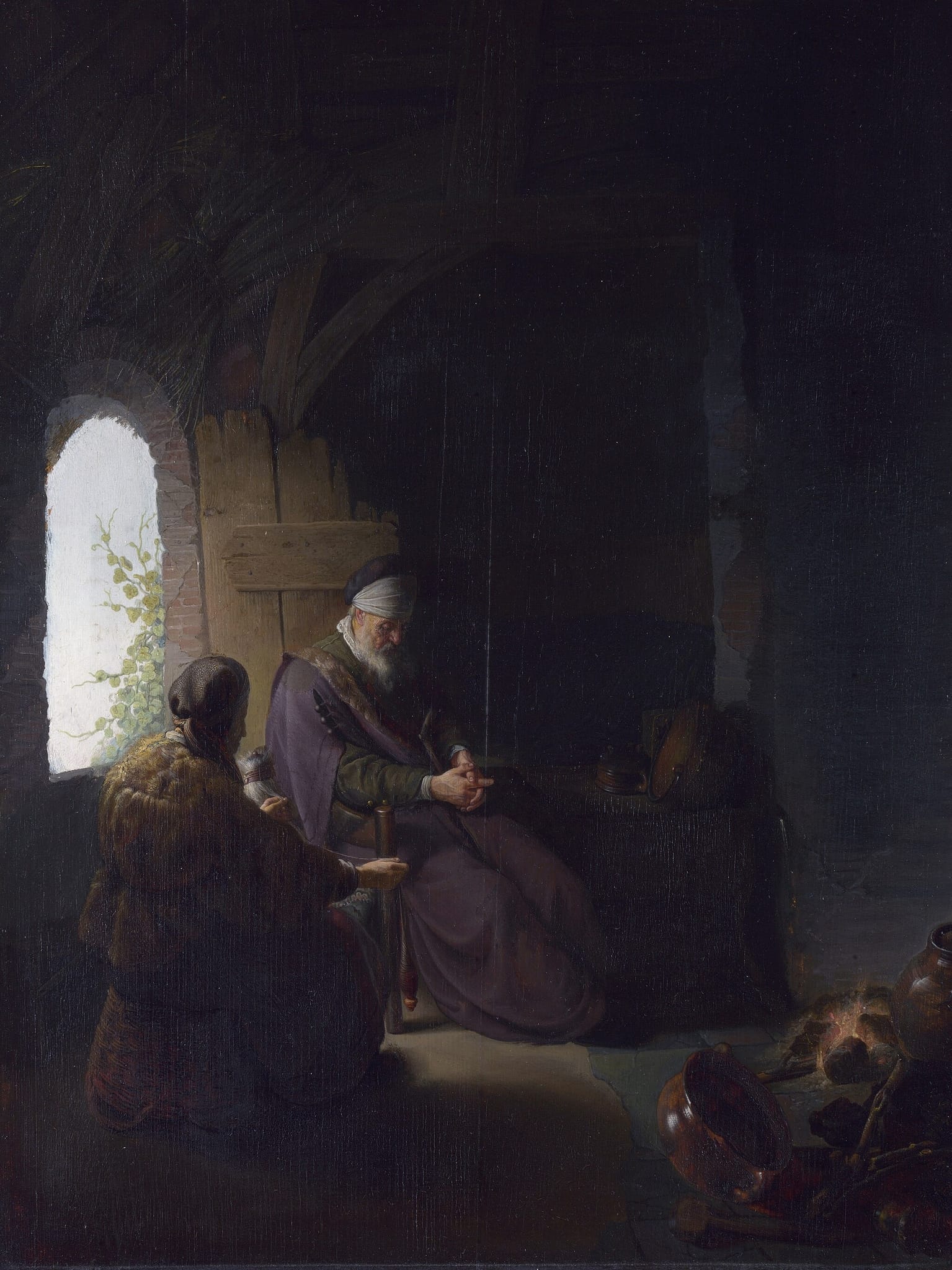
Anna and the Blind Tobit
1630
Rembrandt depicts the elderly couple Tobit and Anna in a quietly intimate domestic scene, emphasising age, patience and piety instead of miraculous action. The painting is significant as an early example of Rembrandt’s interest in sympathetic, realistic portraiture within biblical narrative. Notice the tender gestures, the careful modelling of old skin and hair, and his sensitive, warm use of light to create atmosphere. ([nationalgallery.org.uk](https://www.nationalgallery.org.uk/paintings/rembrandt-anna-and-the-blind-tobit?utm_source=openai))
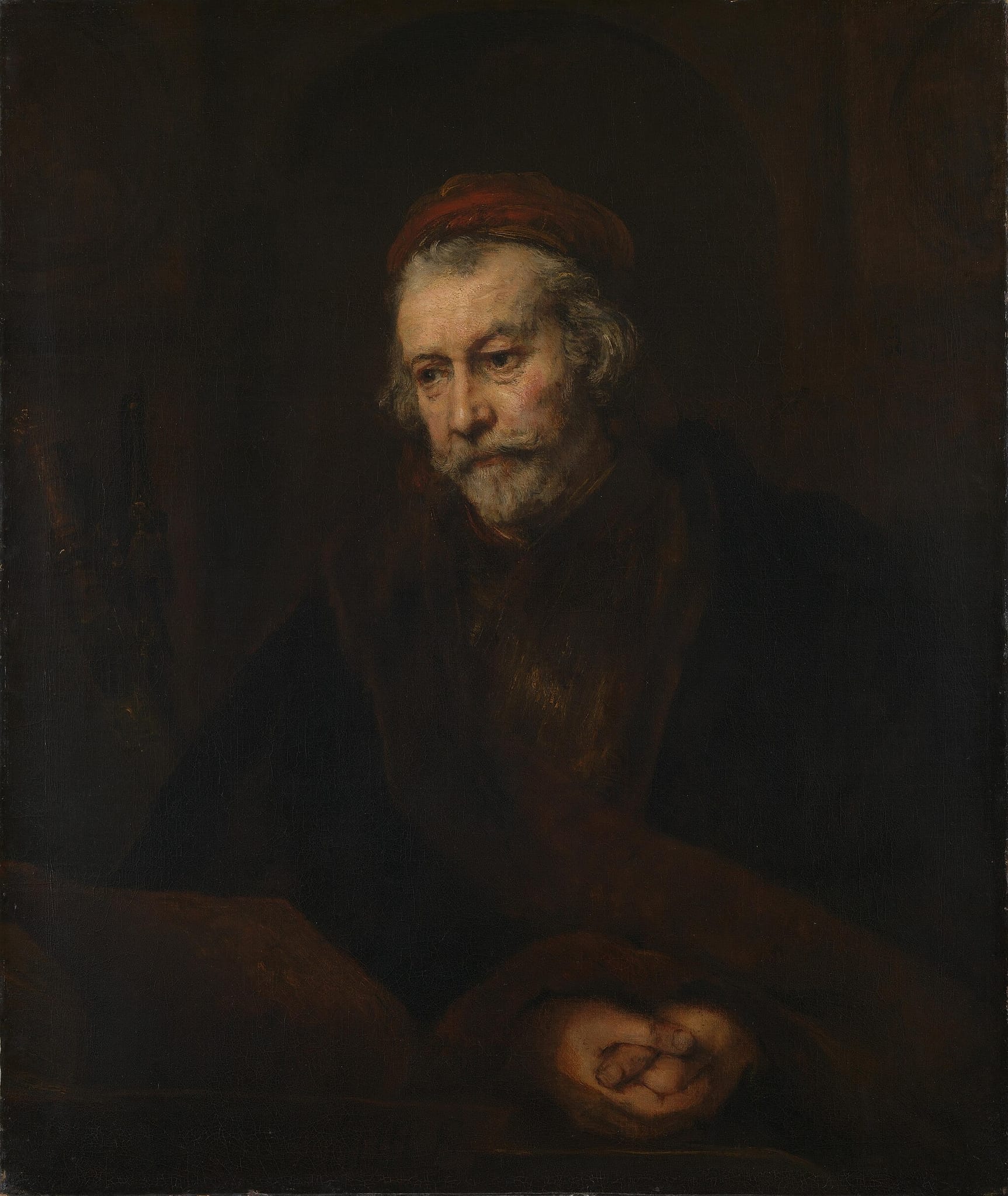
An Elderly Man as Saint Paul
1659
Rembrandt portrays an aged, contemplative Saint Paul (often shown as a study or portrait of an elderly sitter in apostolic guise), emphasising spiritual reflection and inner life. The work is significant for its psychological penetration and the subtle, textural handling of costume and flesh typical of Rembrandt’s later portraiture. Look for the expressive face, the concentrated gaze, and the painterly economy that suggests rather than describes detail.
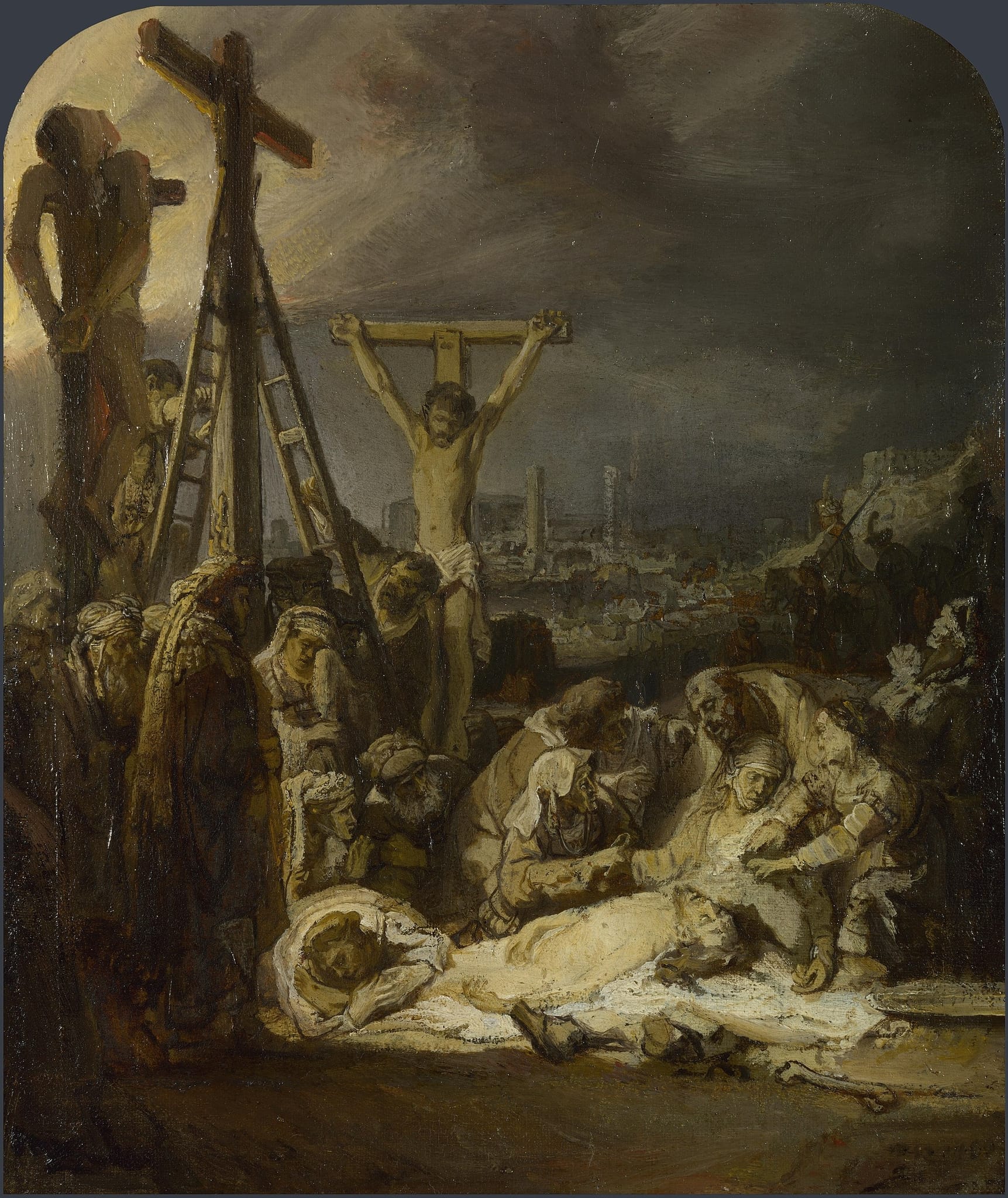
The Lamentation over the Dead Christ
Rembrandt’s Lamentation concentrates on the poignant grief of those surrounding Christ’s body, using close grouping and directed light to heighten emotional intensity. The painting is important for its empathetic humanism and for how Rembrandt uses shadow to focus on faces and hands that register mourning. When looking, attend to the intertwined gestures of sorrow, the tender handling of Christ’s body and the restrained palette that intensifies the mood.
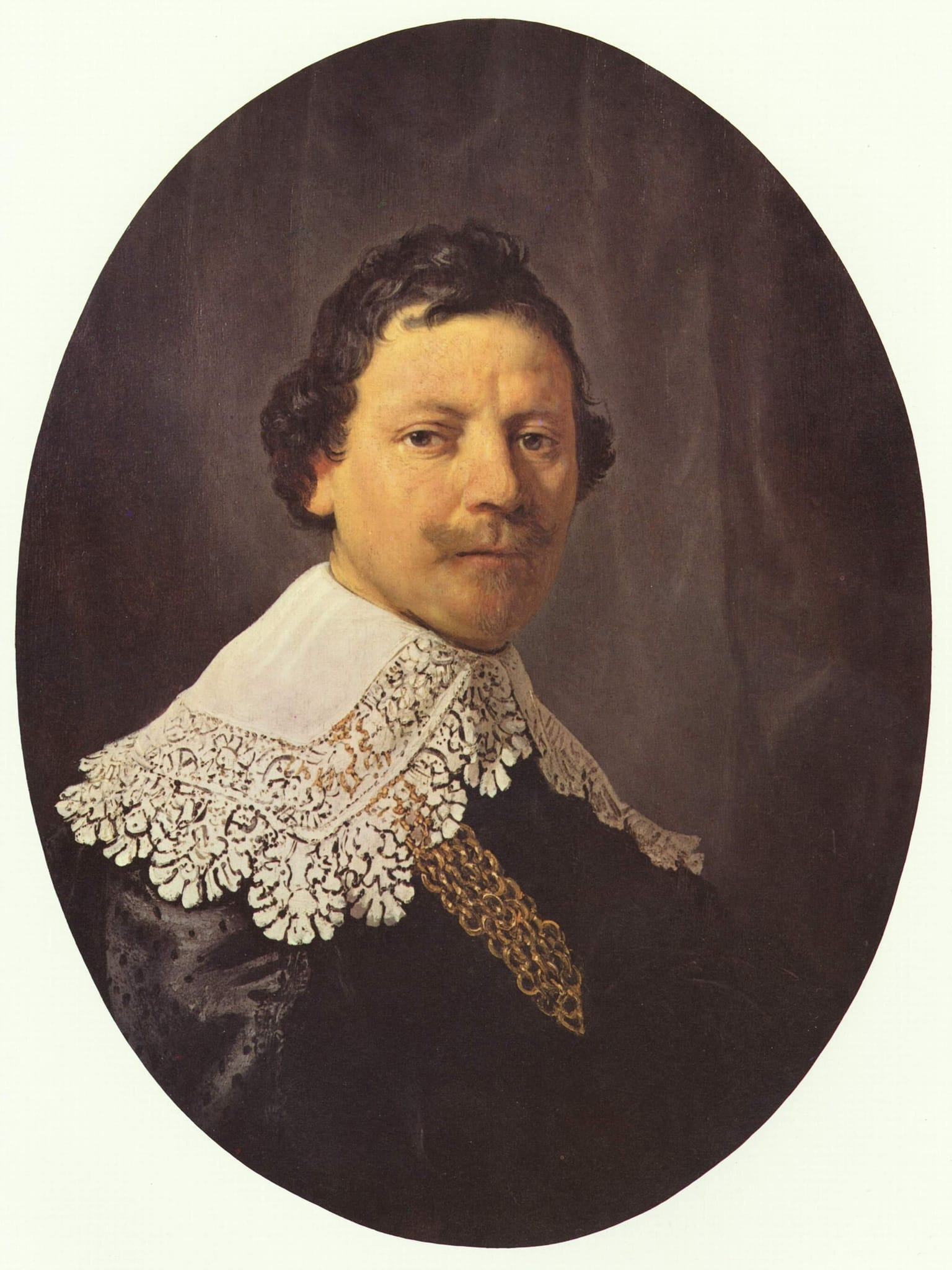
Portrait of Philips Lucasz.
1635
This portrait presents Philips Lucasz with a clear, dignified presence — Rembrandt captures sitters with psychological immediacy and material detail. It’s significant as an example of Rembrandt’s success as a portraitist for Amsterdam’s elite, combining status indicators with a truthful likeness. Look for finely observed facial modelling, the texture of costume and any accessories that indicate the sitter’s position or character.
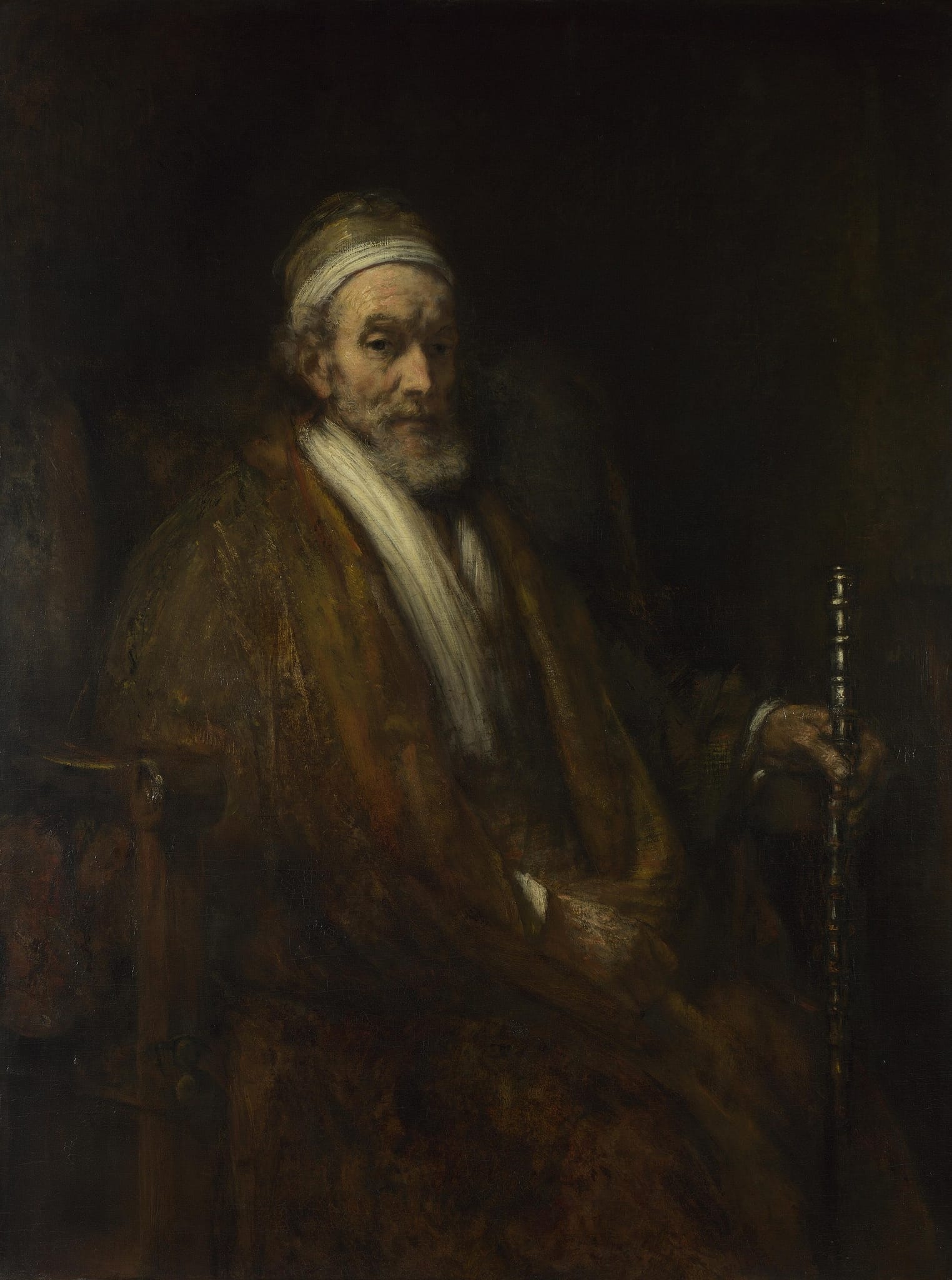
Portrait of Jacob Trip
Rembrandt portrays the merchant Jacob Trip with a composed dignity, balancing individual character with the visual signs of wealth and status. The painting demonstrates Rembrandt’s skill in integrating characterful likeness with sumptuous costume and confident handling of paint. Look for the sitter’s posture and gaze, the tactile rendering of fabrics and any objects that signal his mercantile standing.
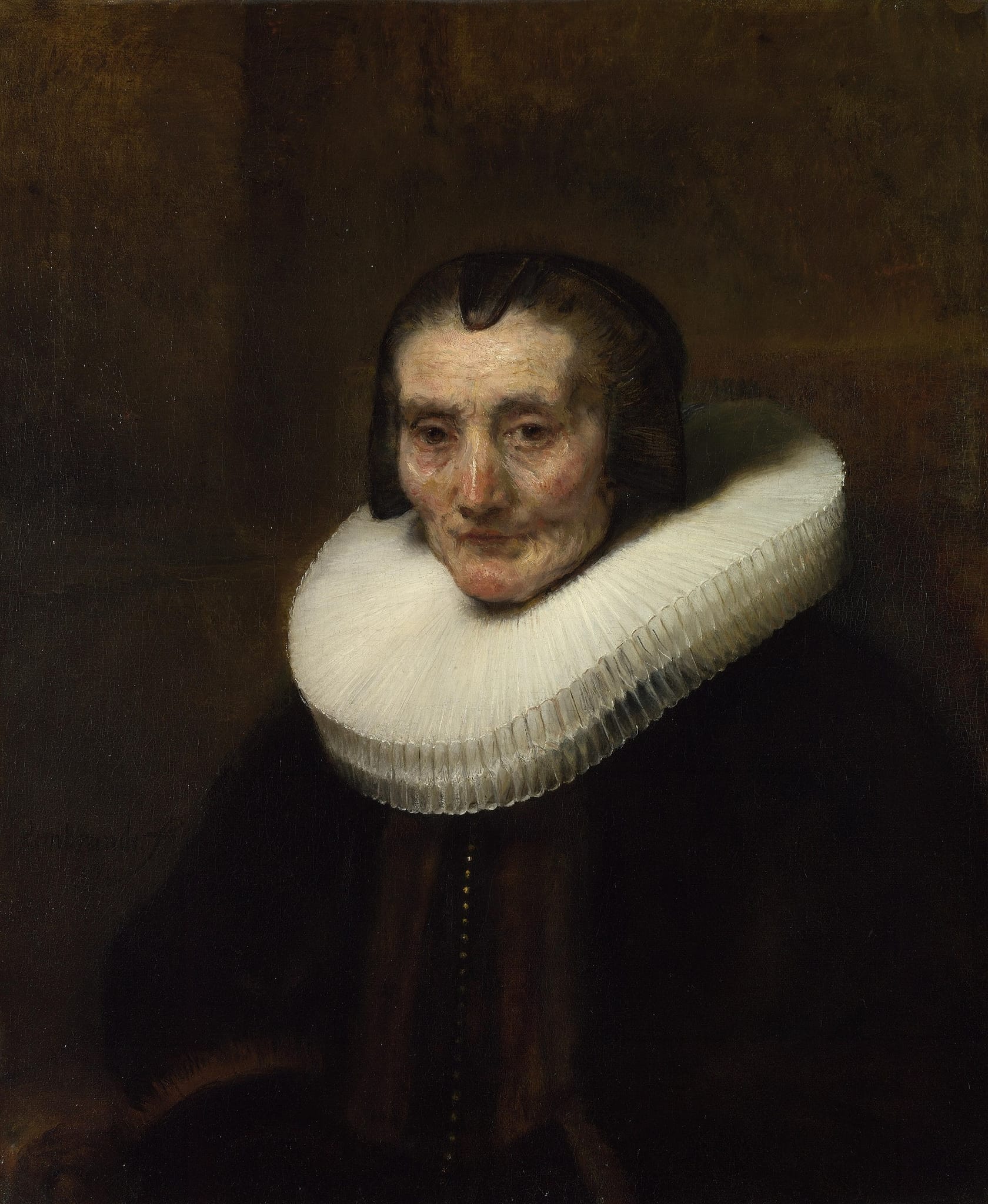
Portrait of Margaretha de Geer, Wife of Jacob Trip
Margaretha de Geer is shown with poised reserve and elegance, Rembrandt conveying both social rank and personal presence. The portrait is significant as part of Rembrandt’s accomplished group of commissioned family portraits, where costume and demeanour are used to construct respectable identity. Notice the delicate treatment of lace and jewellery, the sitter’s composed expression, and the way light models her face against a muted background.
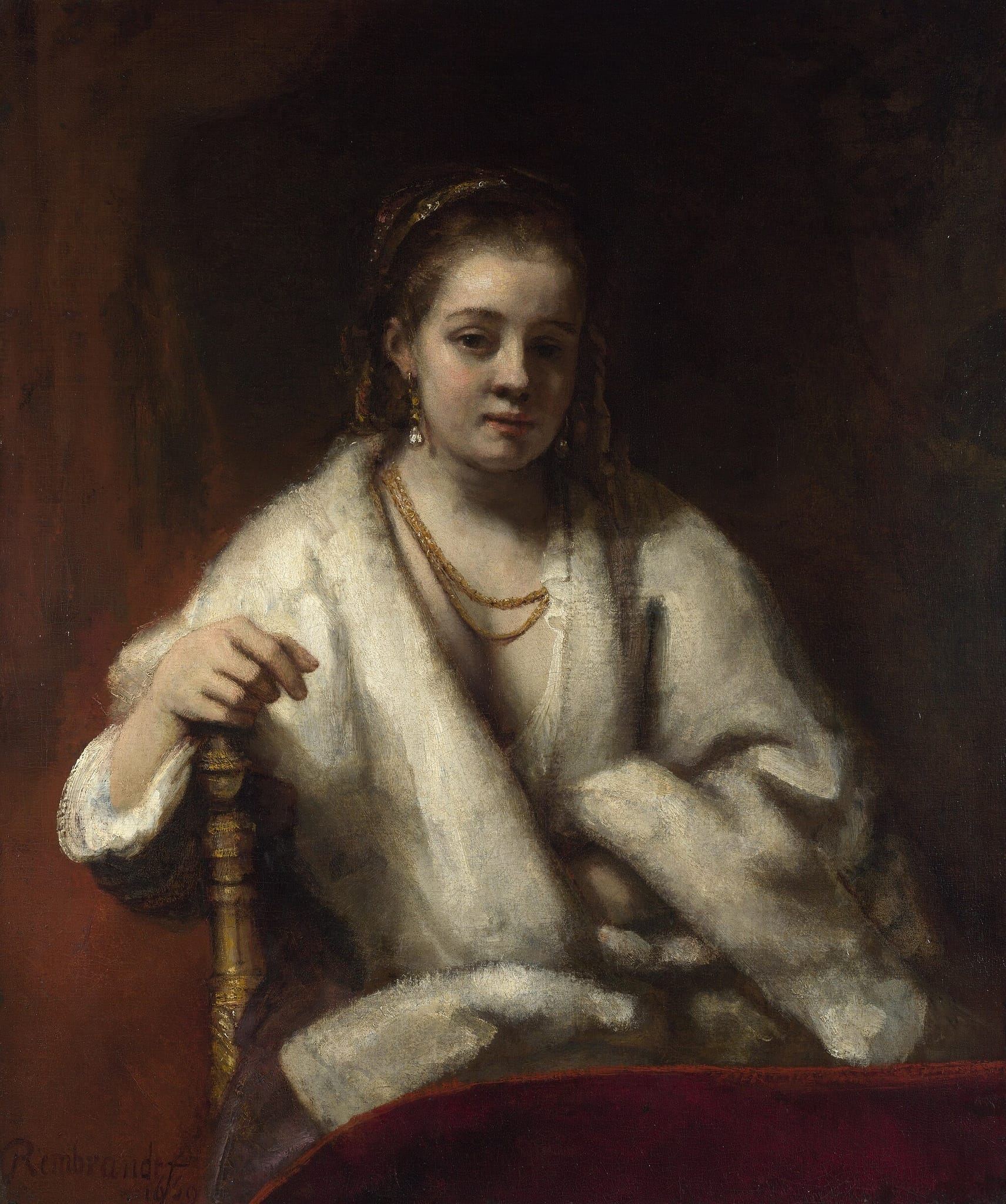
Portrait of Hendrickje Stoffels
Rembrandt’s portraits of Hendrickje capture warmth and intimacy — she appears as a close companion rather than a formal sitter. The works are significant both biographically (Hendrickje was Rembrandt’s partner and frequent model) and artistically for their compassionate realism. Look for soft modelling of features, a gentle expression and subtle highlights that bring a sense of immediacy to the face.
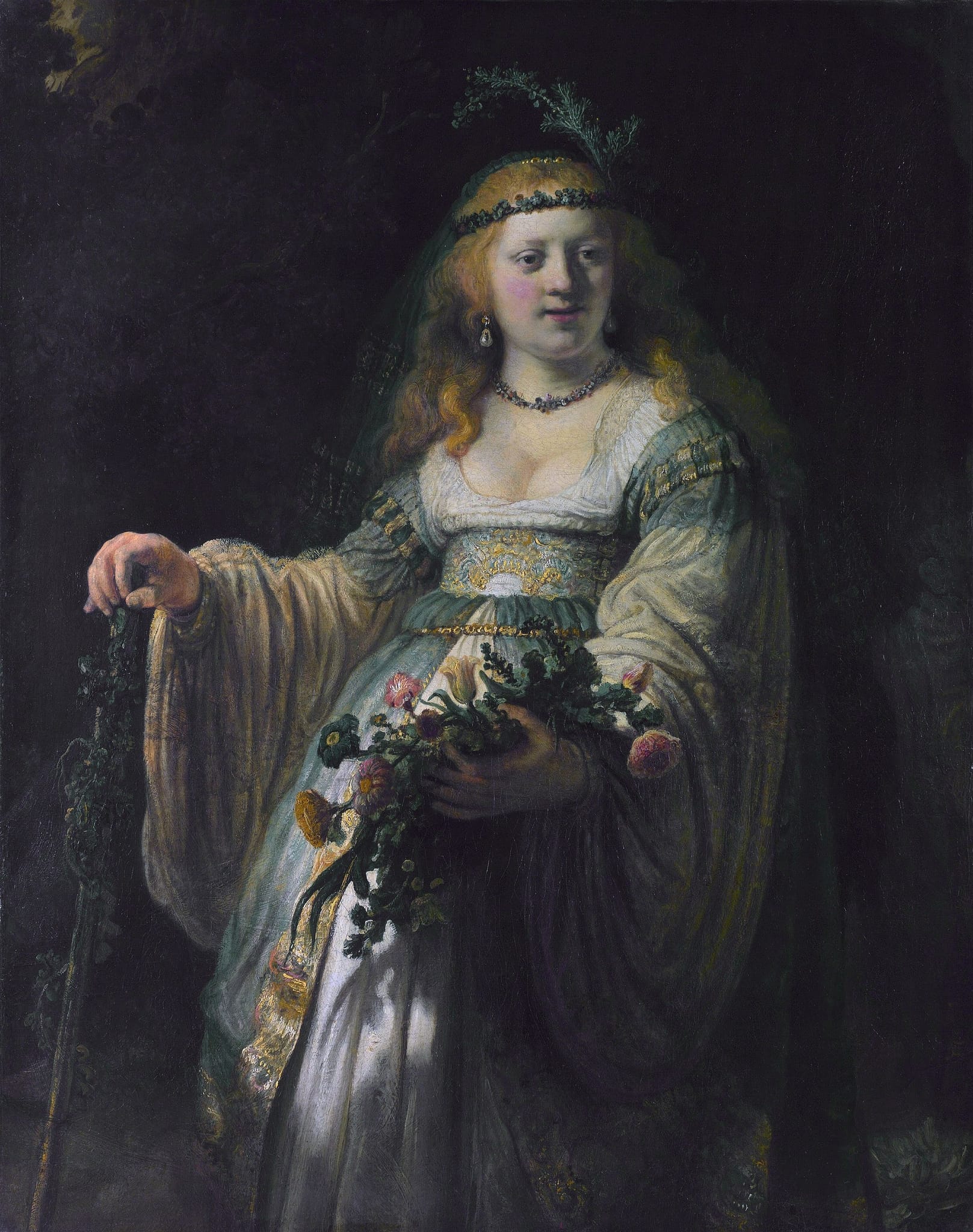
Saskia van Uylenburgh in Arcadian Costume
Rembrandt dresses his wife Saskia in an Arcadian or pastoral costume, transforming a portrait into a poetic, slightly theatrical image. The painting is valued for its fusion of personal intimacy and imaginative costume — an example of how Rembrandt and his circle enjoyed inventive portrait types. Observe the costume’s rich textures, the relaxed but assured pose, and the warm, affectionate rendering of Saskia’s features.
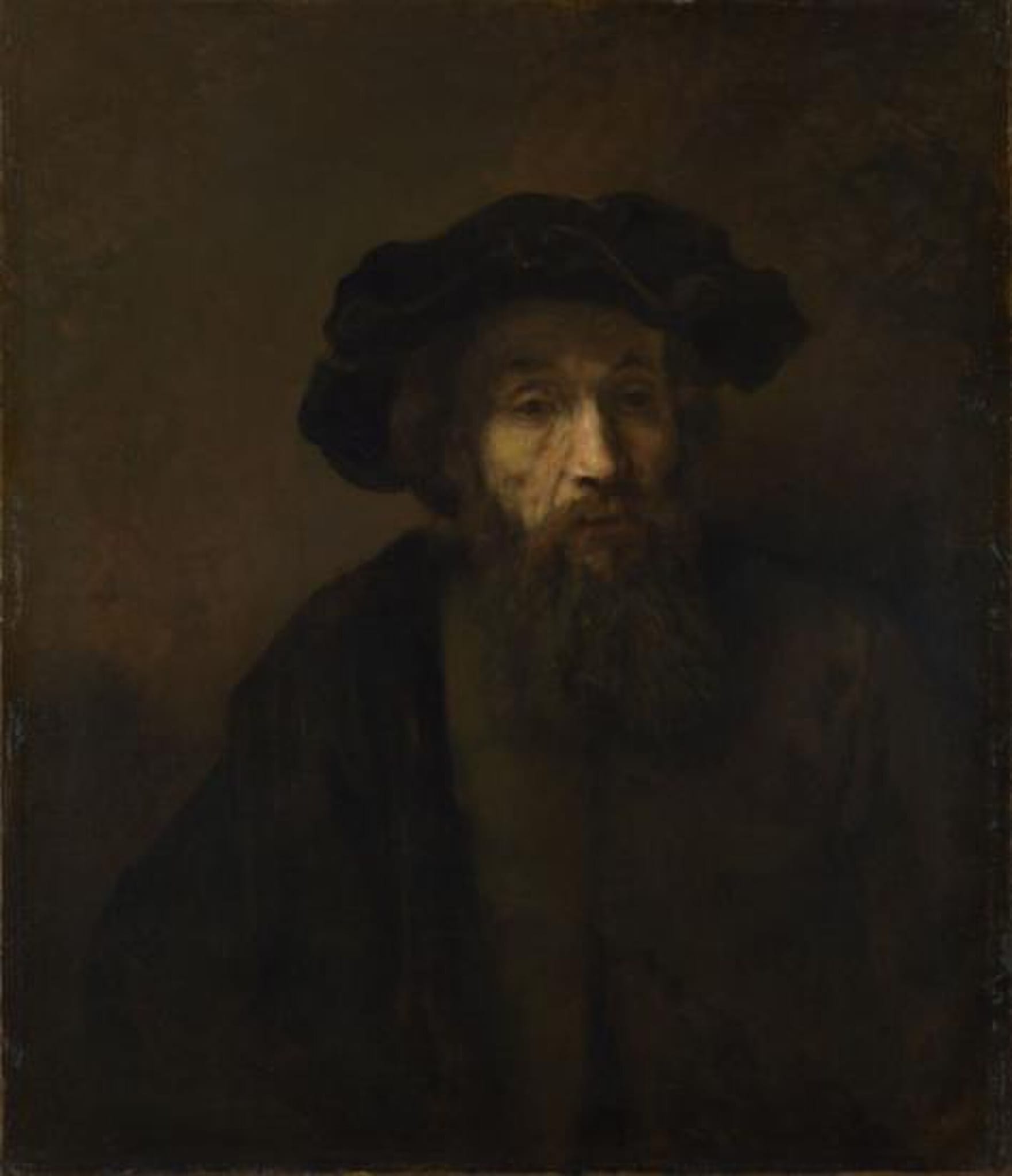
A Bearded Man in a Cap
A focused portrait head likely intended as a character study, showing Rembrandt’s fascination with individual physiognomy and expressive light. The work is significant as an example of his ability to turn a simple head study into a vivid psychological portrait. Look for the concentrated light on the face, lively brushwork in the beard and cap, and the naturalism of the sitter’s expression.
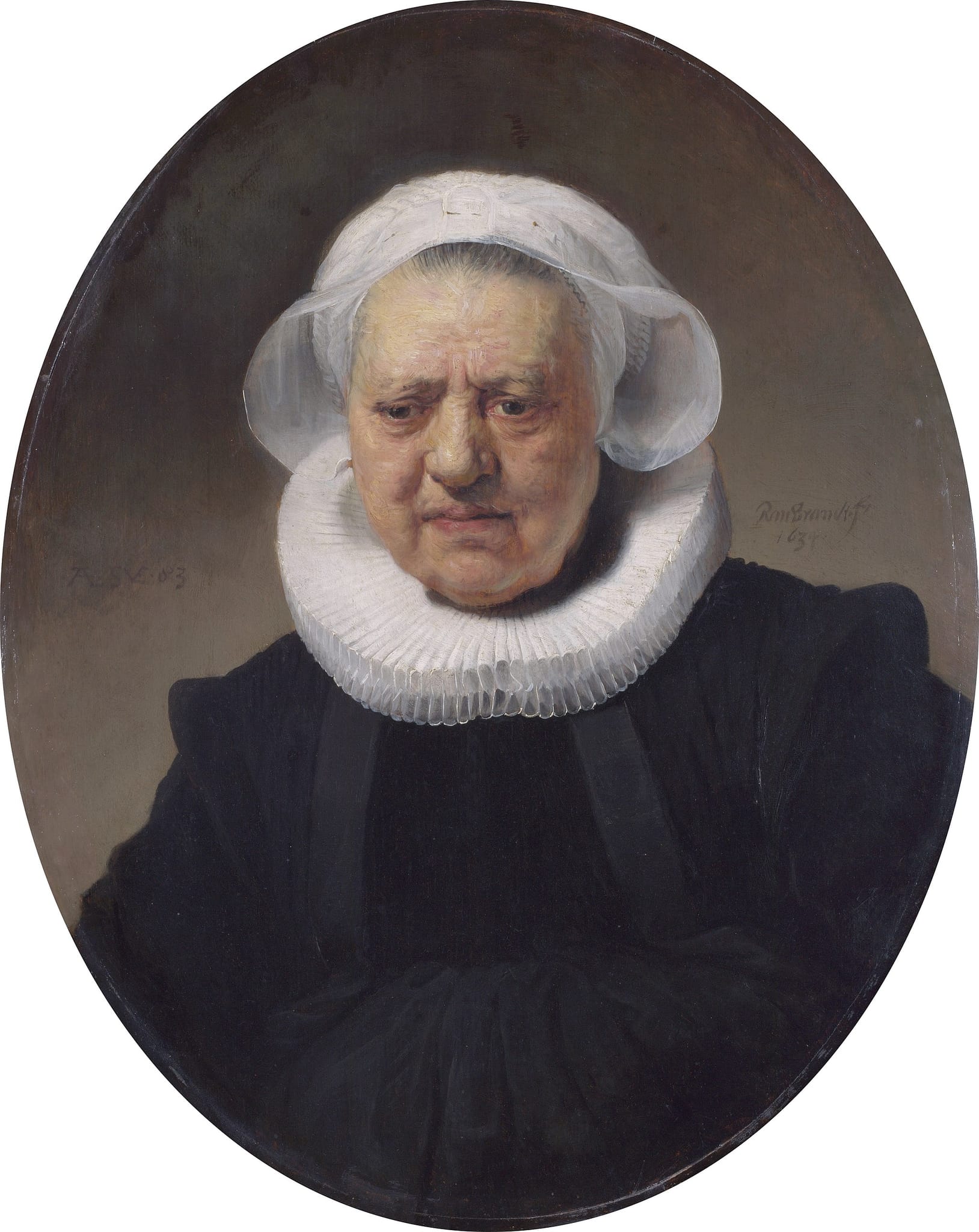
Portrait of Aechje Claesdr.
Rembrandt presents Aechje Claesdr. with a direct and respectful realism that emphasises her individuality and presence. The portrait is important in demonstrating Rembrandt’s portrait technique for middle-class sitters: clear likeness, truthful handling of costume and an attentive rendering of personality. Pay attention to the sitter’s gaze, the realistic textures of clothing and the careful modelling of the face.
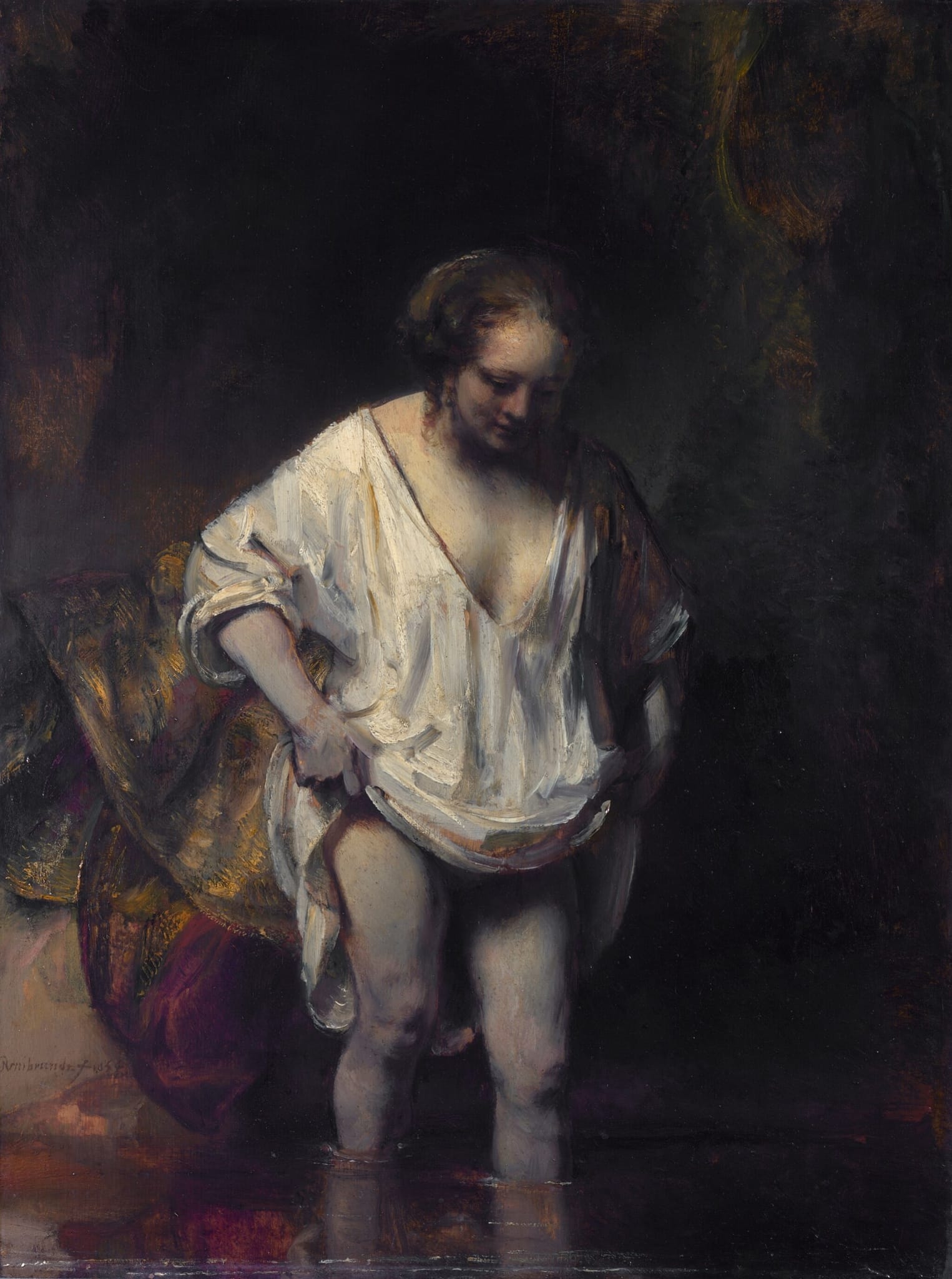
A Woman bathing in a Stream (Hendrickje Stoffels?)
This small, intimate scene of a bathing woman (sometimes identified with Hendrickje Stoffels) blends genre subject with close observation of form and light. It’s significant for Rembrandt’s sensitive treatment of the nude and for the way he creates an intimate mood with economical means. Look for the soft modelling of the body, reflective water surfaces and the muted, natural palette that unites figure and setting.
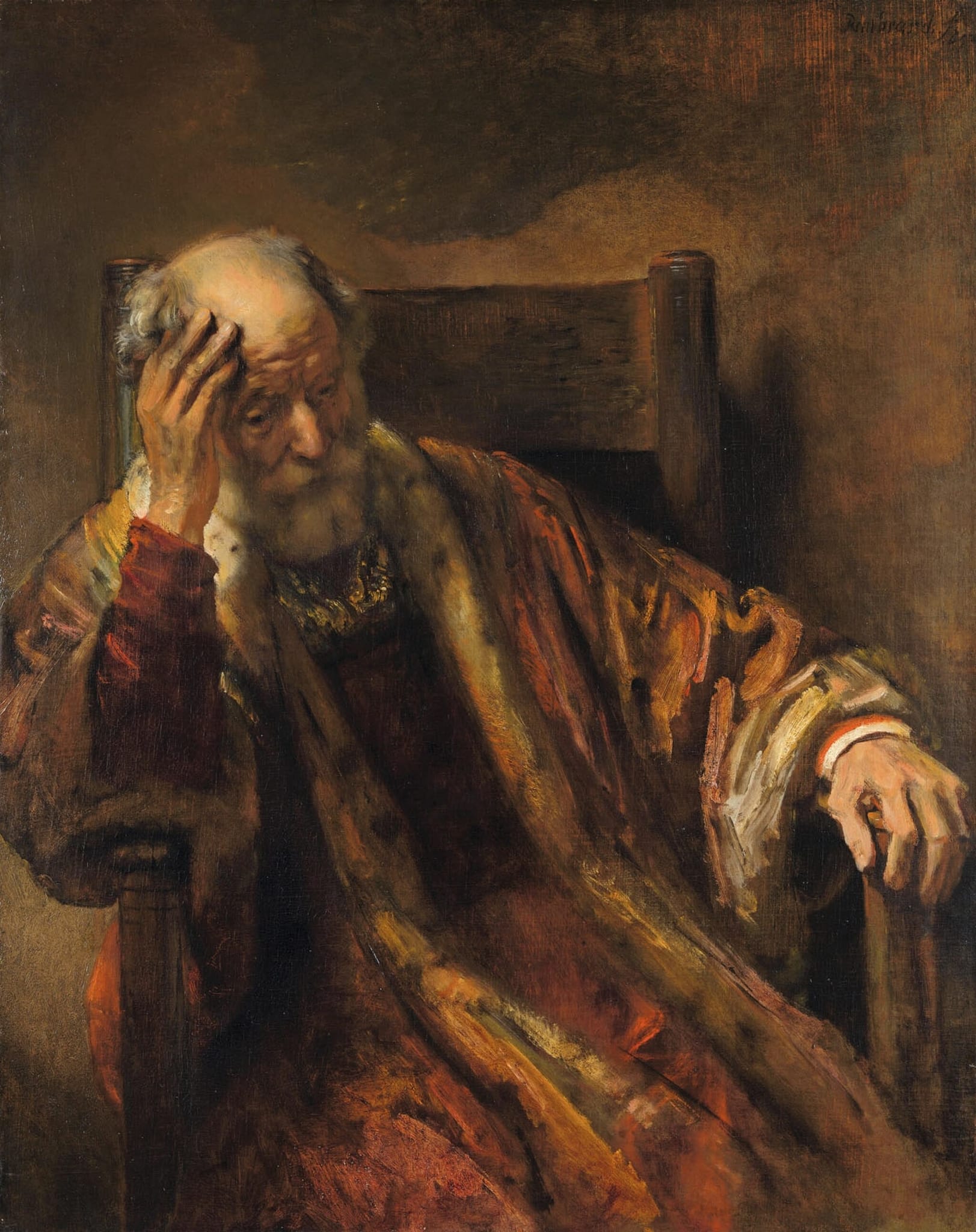
An Old Man in an Armchair
Rembrandt captures an elderly sitter seated in an armchair with a mix of portrait realism and character study, emphasising age through facial detail and posture. The work is significant as an example of his late interest in the dignity and pathos of old age. Note the textured handling of skin and hands, the weight of the sitter in the chair, and the way light isolates key features against a dark interior.
Wallace Collection
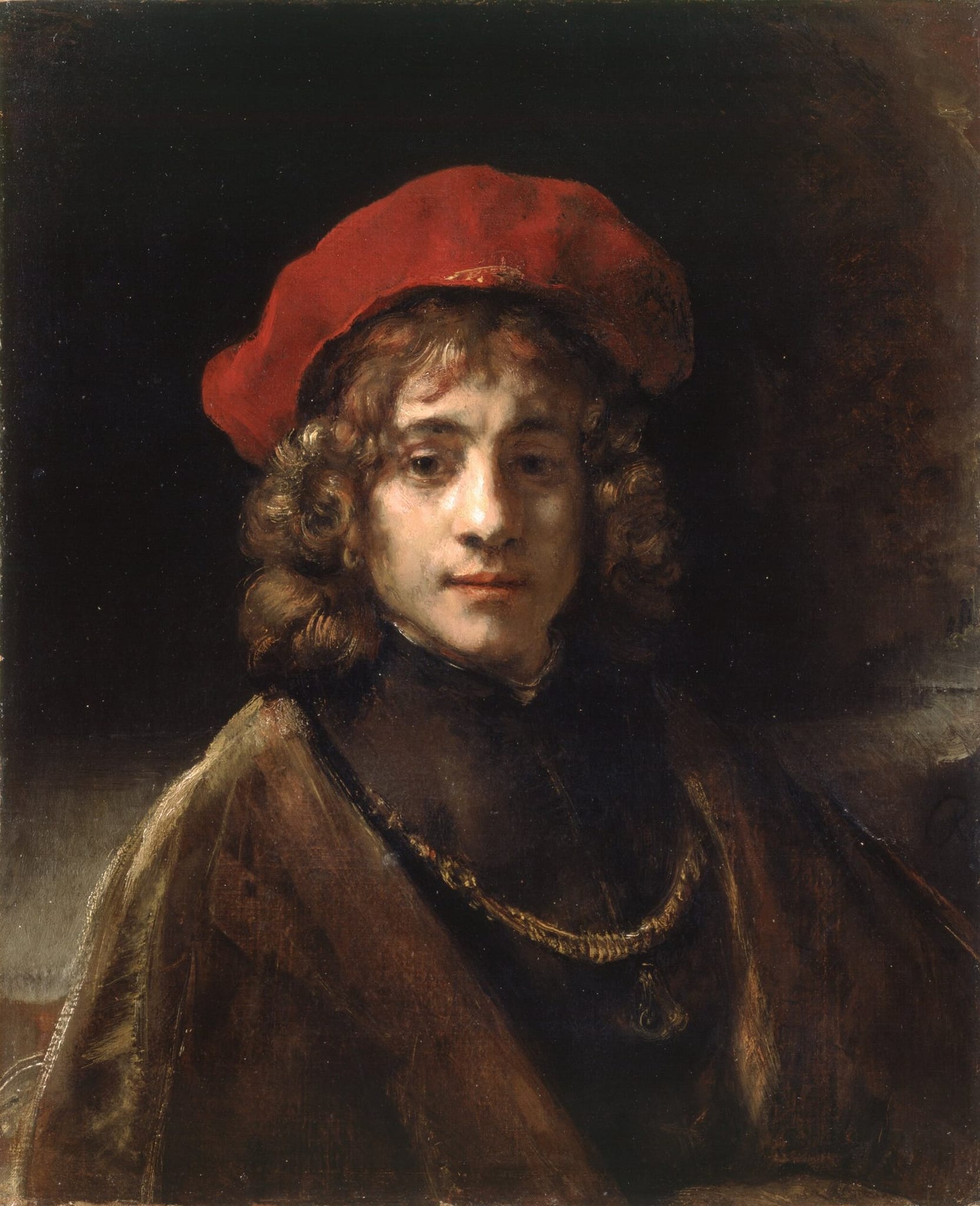
Titus, the Artist's Son
c.1657
Depicts Rembrandt’s adult son Titus seated at a table, caught in a quiet, introspective pose with warm, autumnal lighting. Significant as a tender, late-period portrait showing Rembrandt’s mature handling of light and psychological depth; it reflects the artist’s personal connection to his sitter. Viewers should look for the subtle modeling of the face, the textured brushwork in the clothing and background, and how light sculpts form while leaving areas in rich shadow.
Must-see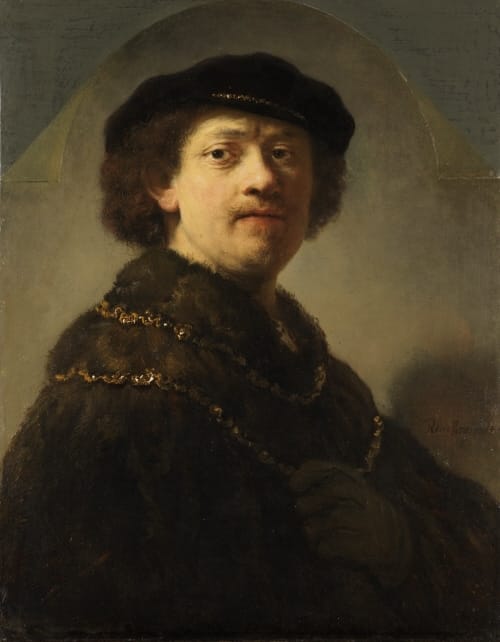
Self-Portrait in a Black Cap
1637
A confident early mature self-portrait showing Rembrandt wearing a simple black cap and looking directly at the viewer with expressive immediacy. Important as an example of his exploration of self-representation and mastery of chiaroscuro, revealing both ego and vulnerability. Notice the lively, economical brushwork, the warm flesh tones against the dark cap, and the intense, thoughtful gaze that anchors the composition.
Must-see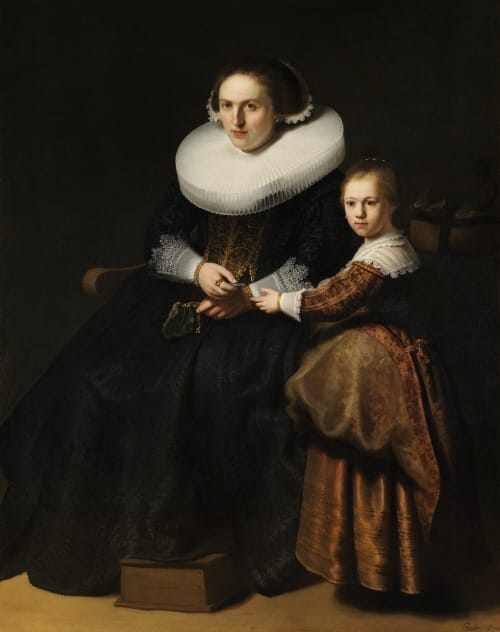
Portraits of Susanna van Collen and her Daughter Anna
1632
A pair of pendants portraying the wealthy widow Susanna van Collen and her young daughter Anna, each rendered with individualized features and elegant attire. Significant for its documentation of affluent Amsterdam society and Rembrandt’s skill in capturing familial relationships and costume detail. Look for the delicate rendering of lace and fabric, the contrast between motherly composure and childlike presence, and the subtle psychological bond suggested by their expressions.
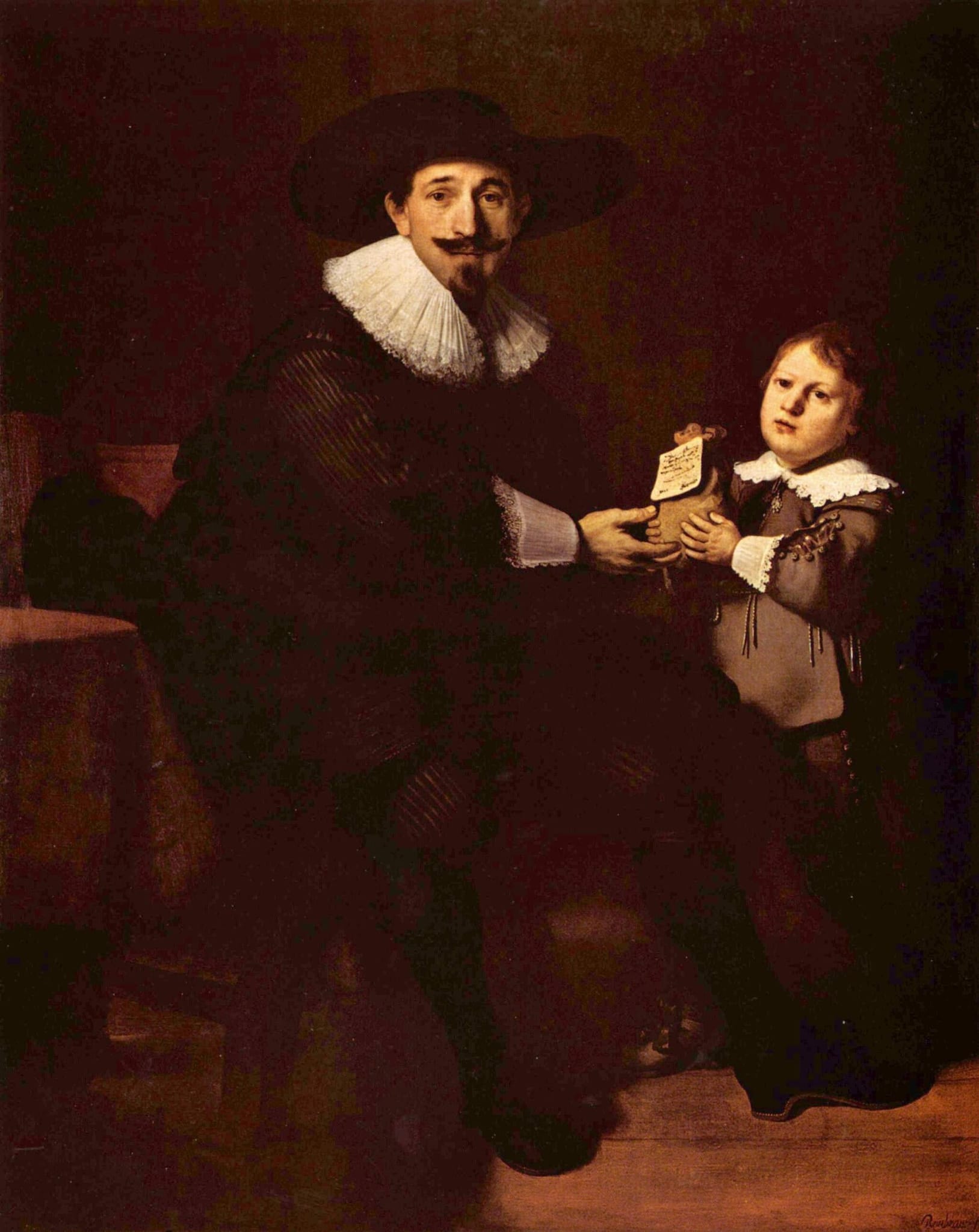
Portraits of Jean Pellicorne and his Son Casper
1633
Two companion portraits of Jean Pellicorne and his young son Casper, presented with dignity and precise attention to costume and character. Important as examples of Rembrandt’s early portrait practice in which he balanced formality with lively, individualized characterization. Observe the meticulous depiction of textures—hair, collars, and fabrics—the directness of the gazes, and the painter’s use of light to model each face against a subdued background.
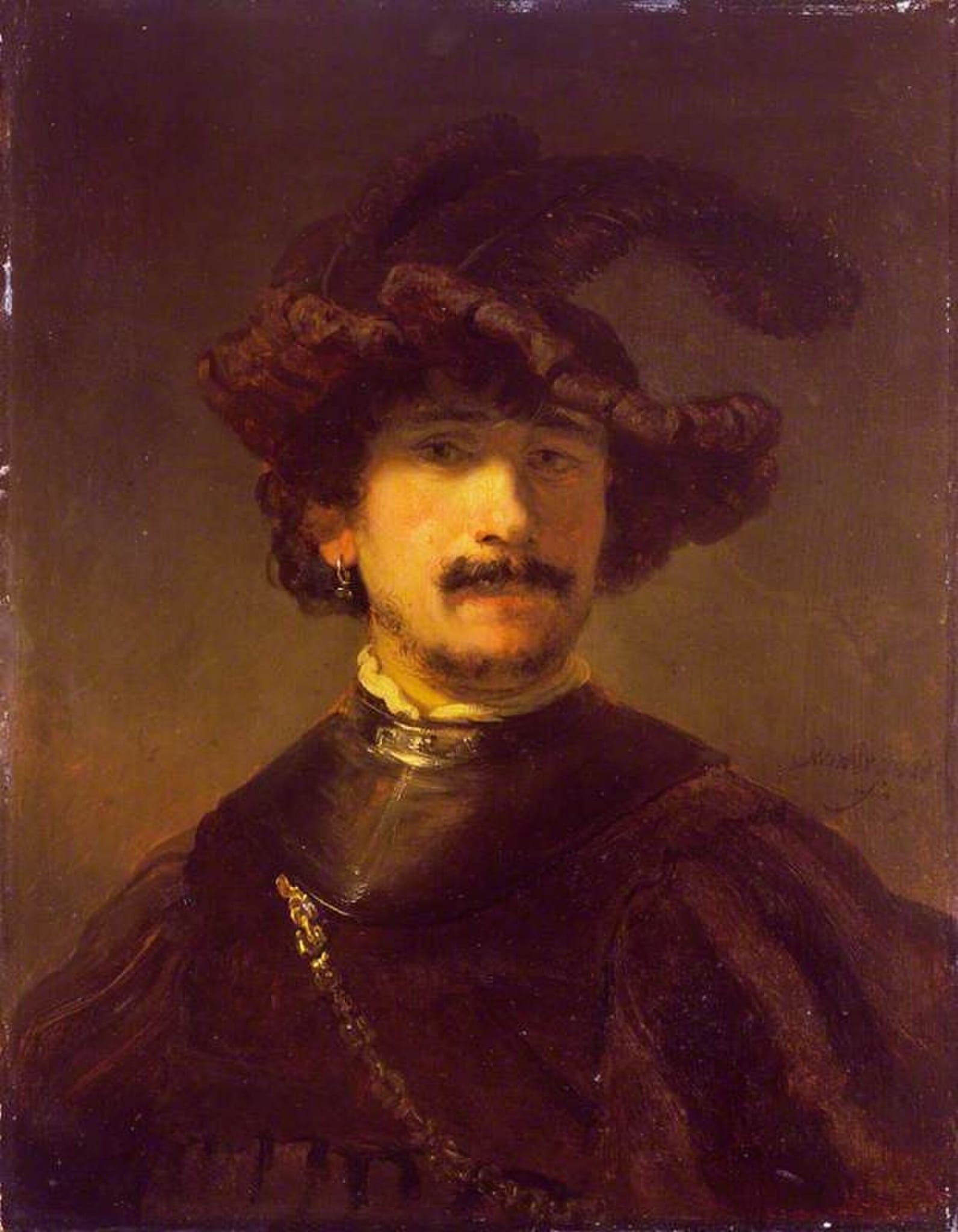
An Officer in a Plumed Hat
1634
Shows a military officer wearing a dramatic plumed hat and cloak, portrayed with bold gesture and spirited presence. Significant for its vivid depiction of rank and personality and for demonstrating Rembrandt’s ability to animate costume and character in a single figure portrait. Focus on the theatrical silhouette of the hat, the energetic brushstrokes in the costume, and the interplay of light that highlights the face while leaving parts of the figure in shadow.
Dulwich Picture Gallery
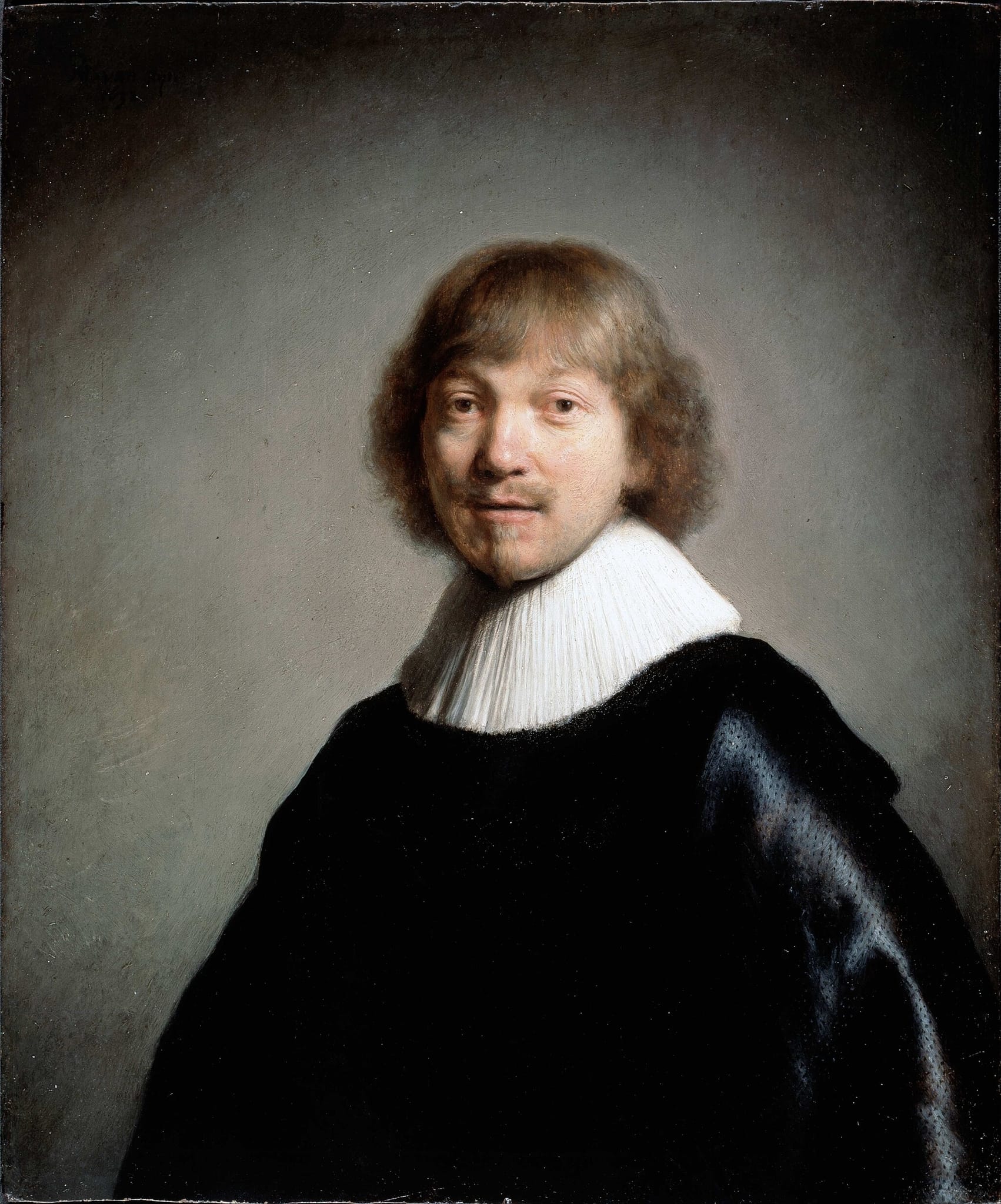
Jacob de Gheyn III
1632
A small, intimate oil portrait of the engraver Jacob de Gheyn III, shown in three-quarter view against a plain, dark background — the focus is entirely on his face and expressive eyes. Its significance lies in Rembrandt’s early mastery of psychological portraiture and the painting’s colourful provenance (it entered Dulwich with the founding bequest and is famous for having been stolen multiple times). Look for the delicate handling of light across the forehead and cheek, the economical brushwork, and the way Rembrandt models a convincing presence with a limited palette. ([dulwichpicturegallery.org.uk](https://www.dulwichpicturegallery.org.uk/explore/explore-the-collection/jacob-iii-de-gheyn/?utm_source=openai))
Must-see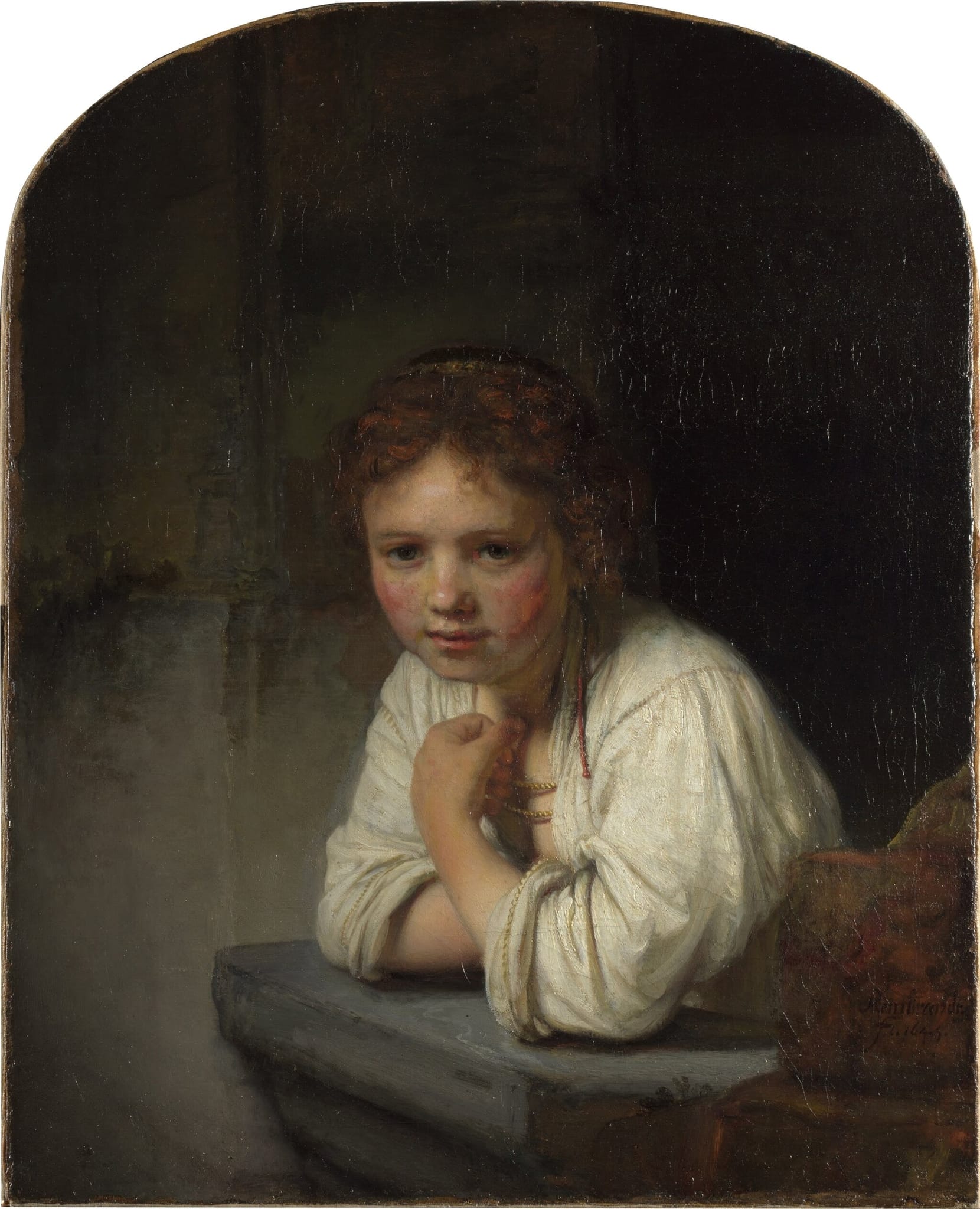
Girl at a Window
1645
This work depicts a young girl leaning slightly forward at an open window, her face lit from the left while her hands rest on the sill, creating an intimate, partly narrative moment between viewer and sitter. Important for its blend of portrait and genre elements, it shows Rembrandt’s mature ability to create atmosphere and human immediacy rather than formal pose. When you view it, notice the soft, warm treatment of skin, the contrast between the luminous face and the shadowed interior, and the subtle suggestion of a life beyond the frame. ([artuk.org](https://artuk.org/discover/artworks/girl-at-a-window-200382?utm_source=openai))
Must-see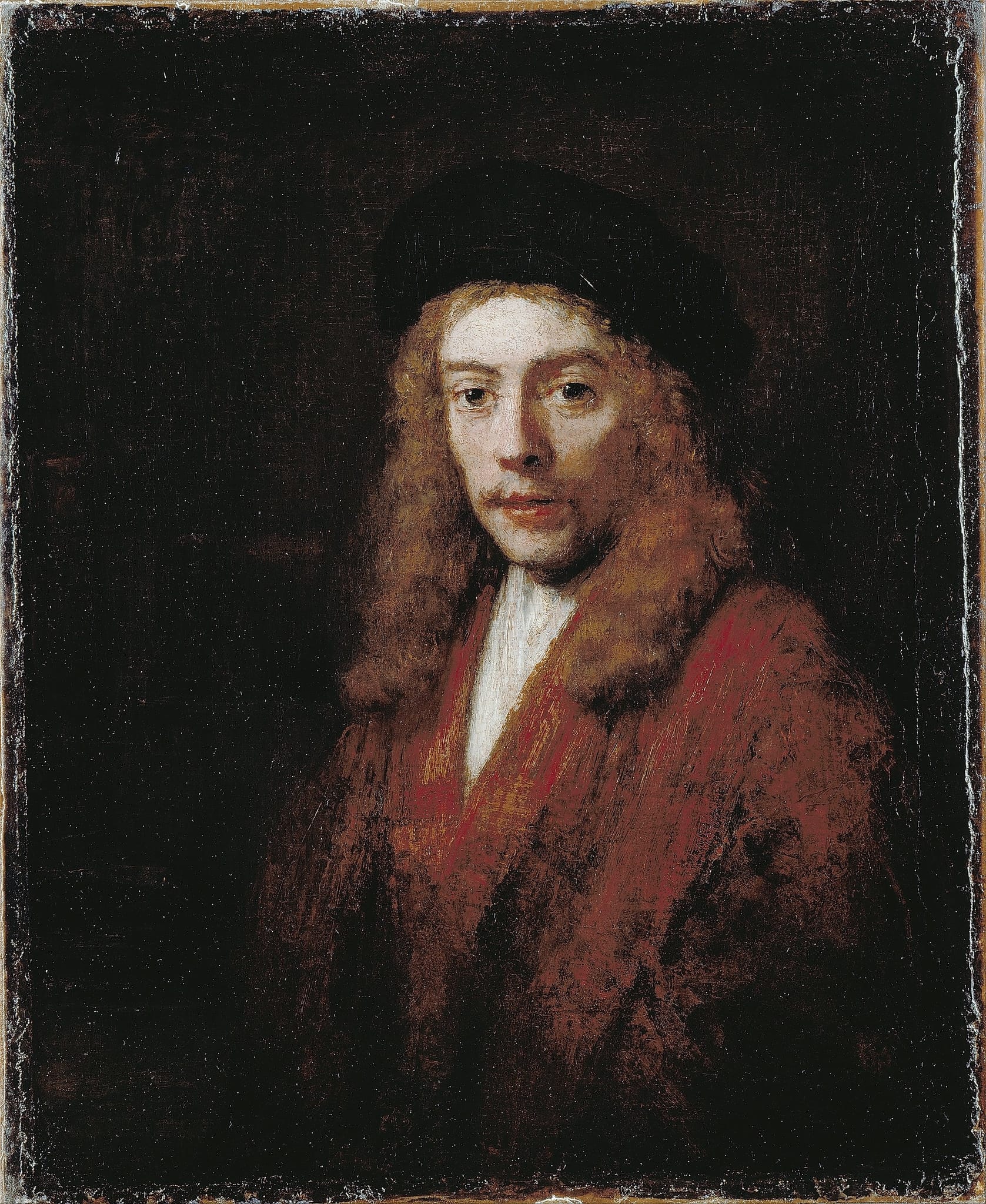
A Young Man, perhaps the Artist's Son Titus
1668
A contemplative half-length portrait of a young man whose identity has been debated but was long thought to be Rembrandt’s son Titus; the sitter gazes out with a quiet, introspective expression and muted costume. Its significance rests in the late-period intimacy and psychological depth characteristic of Rembrandt’s final decades, and in the ambiguity about sitter and context that invites close looking. Pay attention to the restrained palette, the modelling of the face with warm highlights rising from deep shadow, and the faint suggestion of books in the background that hint at the sitter’s possible scholarly or personal role. ([dulwichpicturegallery.org.uk](https://www.dulwichpicturegallery.org.uk/explore-the-collection/201-250/a-young-man-perhaps-the-artists-son-titus/?utm_source=openai))
Kenwood House (English Heritage)
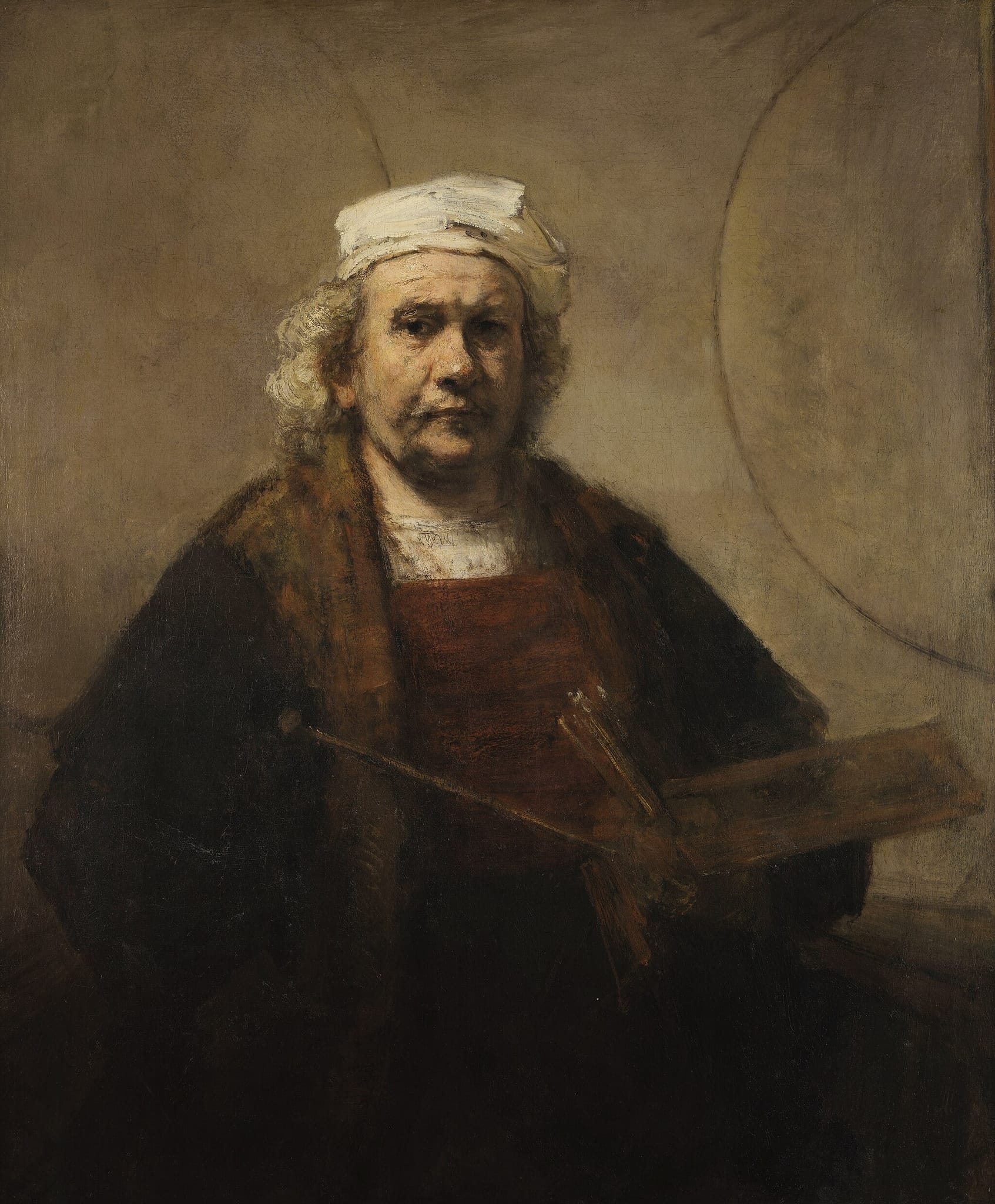
Self-Portrait with Two Circles
1665
Rembrandt presents himself as an imposing, elderly artist, seated three-quarter length in a dark robe and cap against a dusky background marked by two faint, enigmatic circles. The work is significant as a late-career masterwork that asserts his artistic authority and innovative painterly technique — a confident statement of identity after decades of experimentation. Look closely at the rich impasto and varied brushstrokes (especially in the face and hands), the subtle modelling of light and shadow, and the ambiguous circles behind him, which invite interpretations ranging from studio props to symbolic references to artistic perfection or the artist’s standing in the intellectual world.
Must-see