Rembrandt van Rijn Paintings in New York — Where to See Them
New York matters for experiencing Rembrandt because it houses approximately 12 of his paintings on permanent display across two museums—the Metropolitan Museum of Art (9 paintings) and The Frick Collection (3 paintings)—allowing visitors to compare his work in different curatorial contexts. The Met presents a broad view of Rembrandt’s scale and experimentation, while the Frick’s intimate rooms highlight his late portraits and subtle handling of light and texture, so you can see both monumentality and intimacy within a single visit.
At a Glance
- Museums
- The Metropolitan Museum of Art, The Frick Collection
- Highlight
- See intimate Rembrandt portraits and masterful brushwork at The Frick.
- Best For
- Art lovers seeking Dutch Golden Age masterpieces and intimate portraiture
The Metropolitan Museum of Art
The Met matters for experiencing Rembrandt because it holds a significant and varied group of his paintings within a broader, comparative display of 17th‑century Dutch art — you can see how Rembrandt’s handling of light, texture and psychological portraiture sits alongside his Dutch contemporaries. The museum’s long history of collecting and conserving these works also means some paintings show important conservation histories and curatorial interpretations that illuminate Rembrandt’s working methods and evolving reputation.
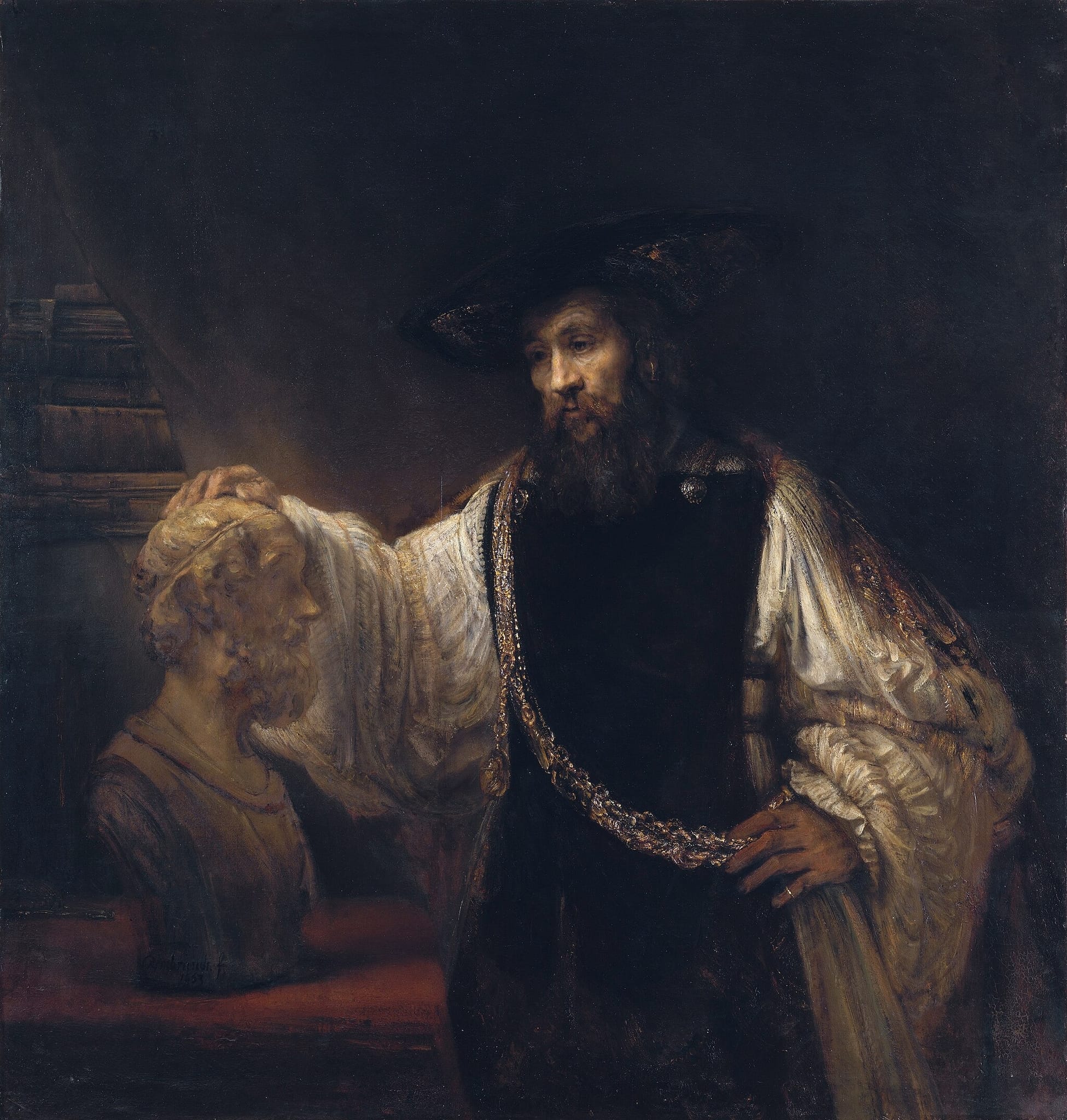
Aristotle with a Bust of Homer
1653
Rembrandt shows an aged, richly robed Aristotle resting his hand on a sculpted bust of Homer, suggesting the philosopher’s meditation on fame, legacy, and the value of poetic glory versus material wealth. The painting is significant as a mature example of Rembrandt’s psychological portraiture and symbolic storytelling, combining classical subject matter with intimate realism. Look for the contrast between the luxurious fabrics and the rough, idealized bust, and Rembrandt’s dramatic use of light to focus attention on Aristotle’s thoughtful expression. ([metmuseum.org](https://www.metmuseum.org/art/collection/search/437394?utm_source=openai))
Must-see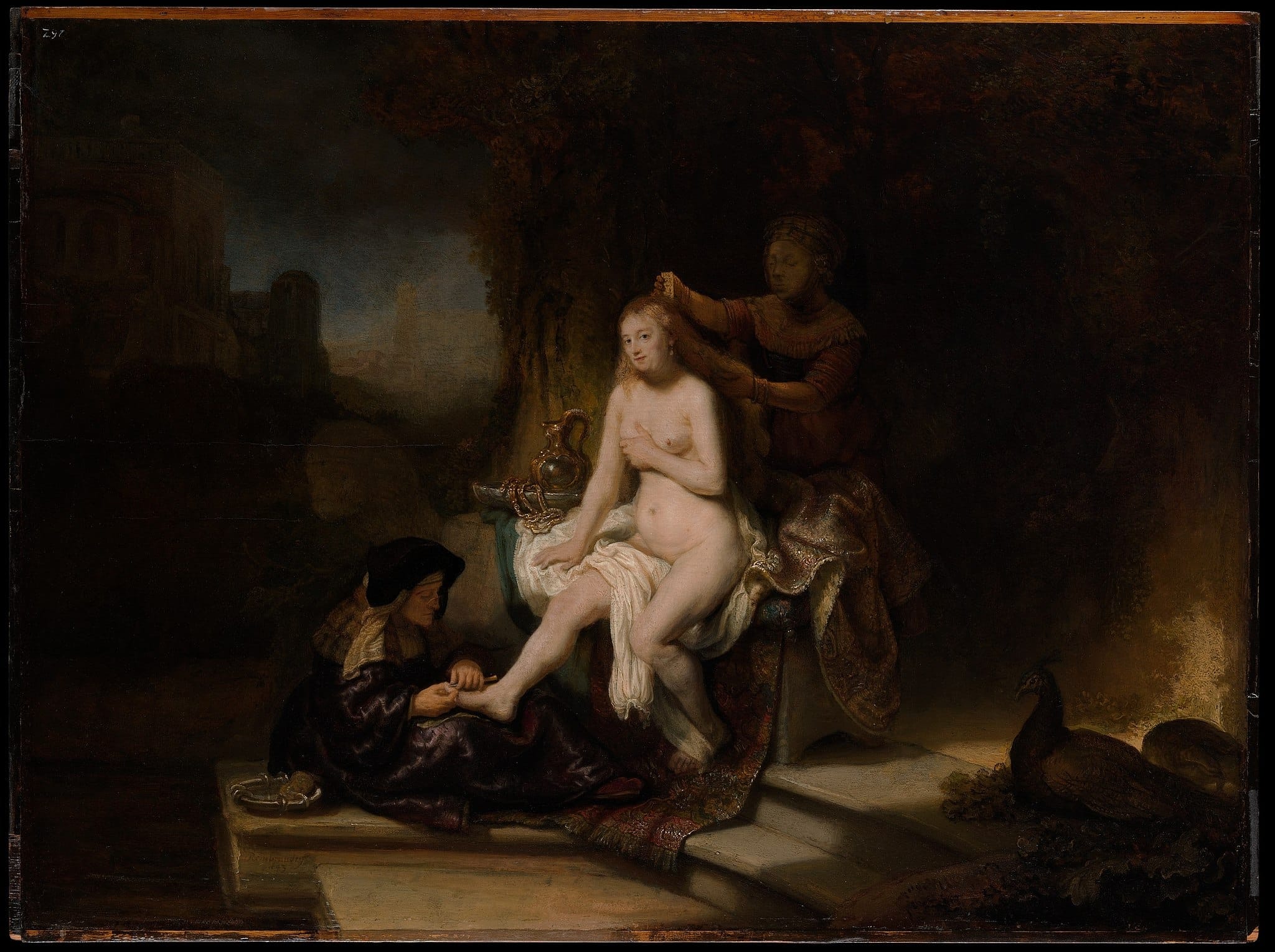
The Toilet of Bathsheba
1643
This tableau depicts Bathsheba at her toilette, attended and absorbed in a private moment that Rembrandt transforms into a study of inward feeling and moral ambiguity. Important for its sensual yet restrained handling and its place in Rembrandt’s exploration of biblical subjects as intimate human dramas, the work invites viewers to consider Bathsheba’s dignity and the gaze that will alter her fate. Notice the soft modeling of her skin, the loose, painterly brushwork in the fabrics, and how reflected light shapes the quiet, contemplative atmosphere. ([artchive.com](https://www.artchive.com/artwork/the-toilet-of-bathsheba-rembrandt-1643/?utm_source=openai))
Must-see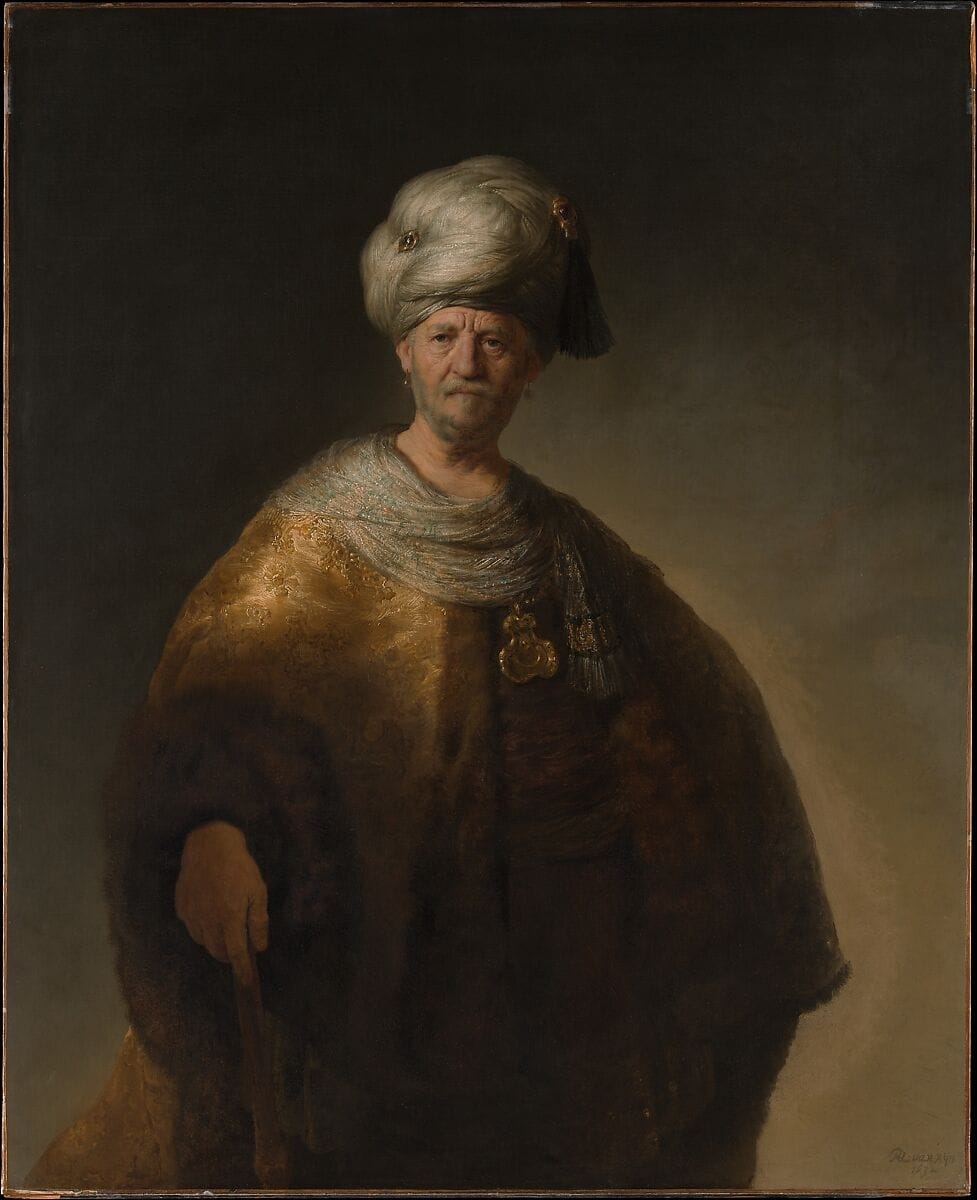
Man in a Turban
1632
A close-up portrait of a bearded man wearing a large turban, rendered with rich chiaroscuro that isolates the head against a dark background and emphasizes character through expressive brushwork. Often discussed as an example of Rembrandt’s fascination with costume and physiognomy, the picture is significant for its immediacy and masterful handling of light to reveal texture and presence. Look at the lively, economical brushstrokes in the beard and turban and the way a small catchlight brings the sitter’s eye to life. ([metmuseum.org](https://www.metmuseum.org/art/collection/search/437385?utm_source=openai))
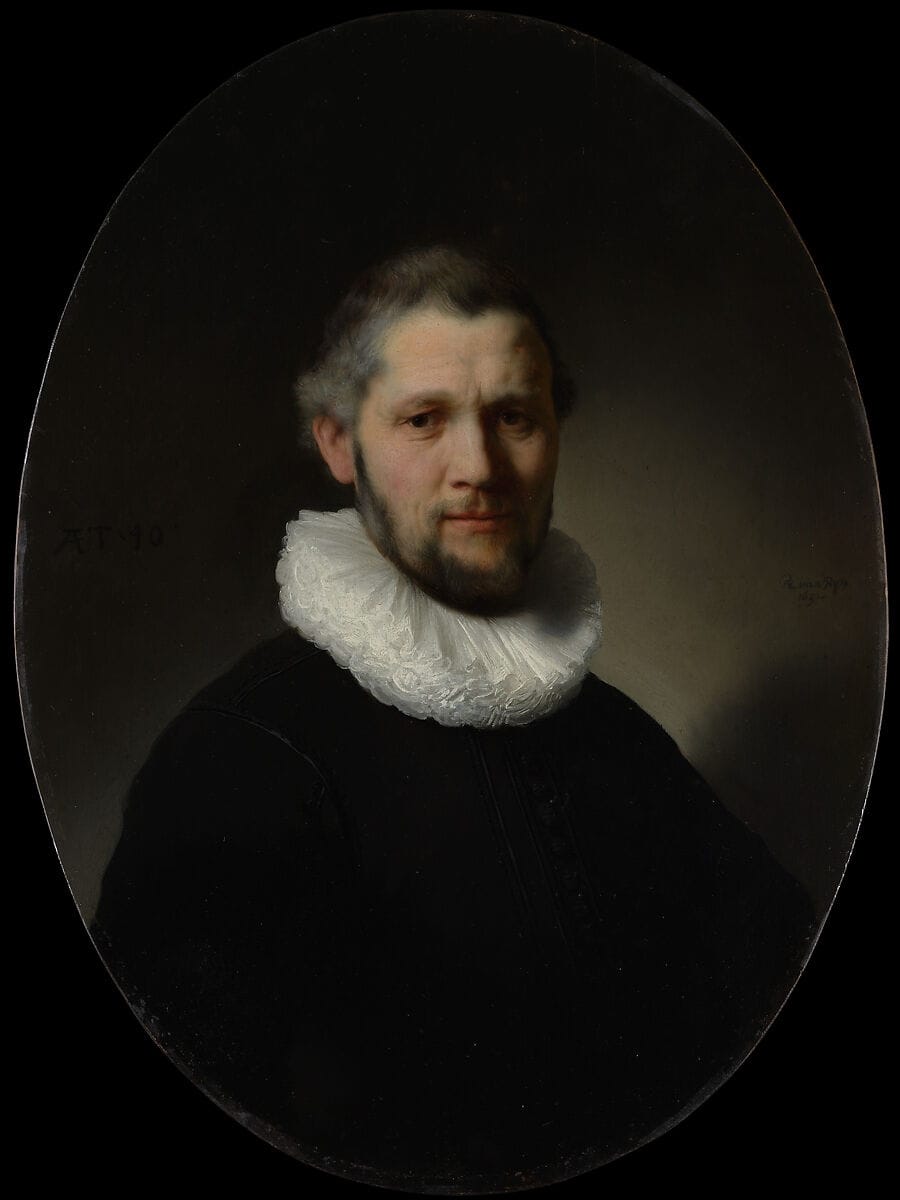
Portrait of a Man
1632
This formal portrait presents a young man in contemporary Dutch dress, notable for its clarity of characterization and refined technique typical of Rembrandt’s early Amsterdam period. The painting’s importance lies in how Rembrandt balances individualized features with an overarching compositional restraint, making the sitter both a social type and a distinct personality. Observe the careful rendering of the face and hands, the controlled palette, and the subtle play of light across the sitter’s features. ([en.wikipedia.org](https://en.wikipedia.org/wiki/Portrait_of_a_Man%2C_probably_a_Member_of_the_Van_Beresteyn_Family?utm_source=openai))
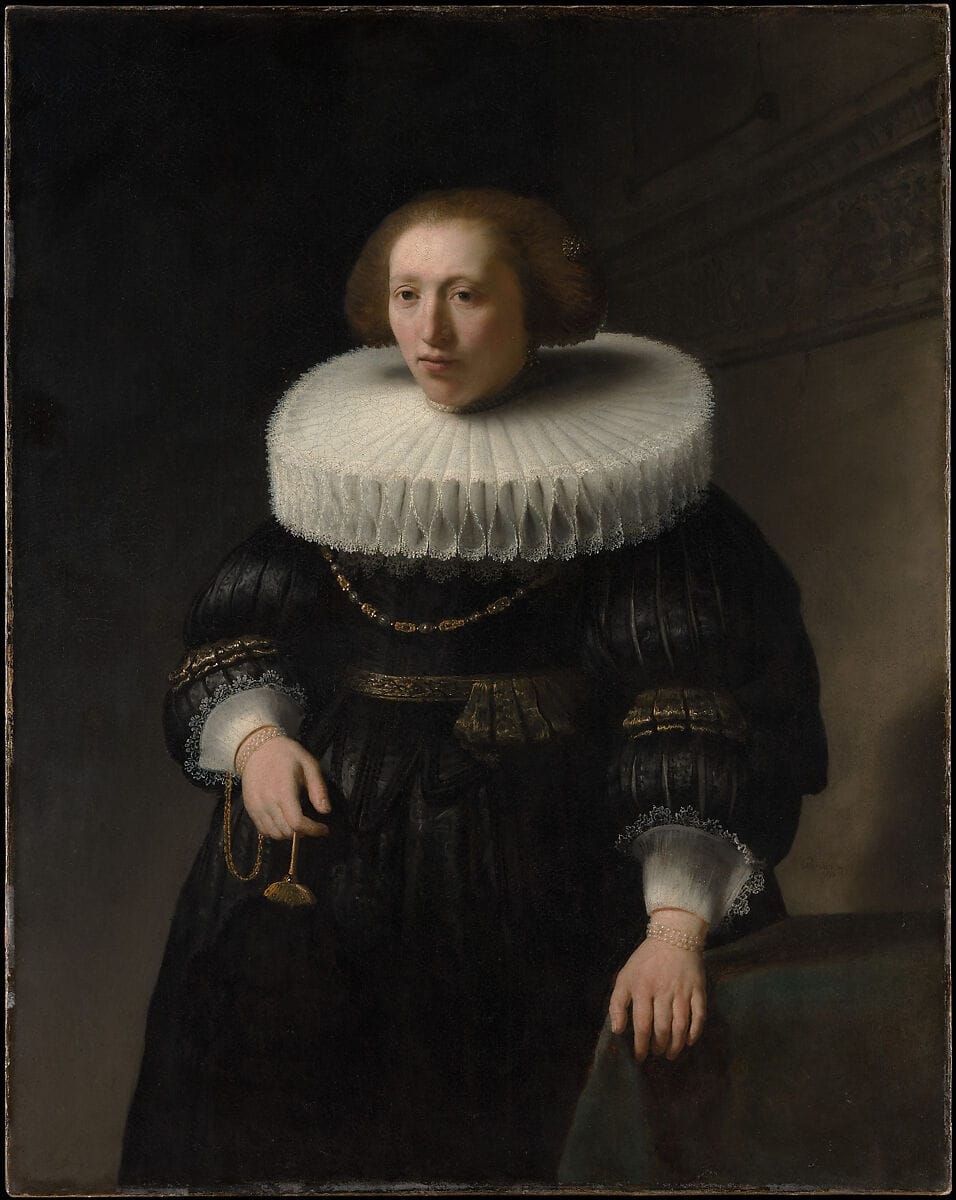
Portrait of a Woman
1633
Painted as a pendant to the 1632 Portrait of a Man, this depiction of a woman (probably the man’s spouse) combines formal restraint with sensitive attention to costume and expression. Its significance comes from Rembrandt’s ability to convey social status and personal presence simultaneously, and from the way the two pendants interact as a pair. Look for the delicate treatment of lace and fabric, the soft modeling of the face, and compositional echoes that link it to its companion portrait. ([en.wikipedia.org](https://en.wikipedia.org/wiki/Portrait_of_a_Woman%2C_probably_a_Member_of_the_Van_Beresteyn_Family?utm_source=openai))
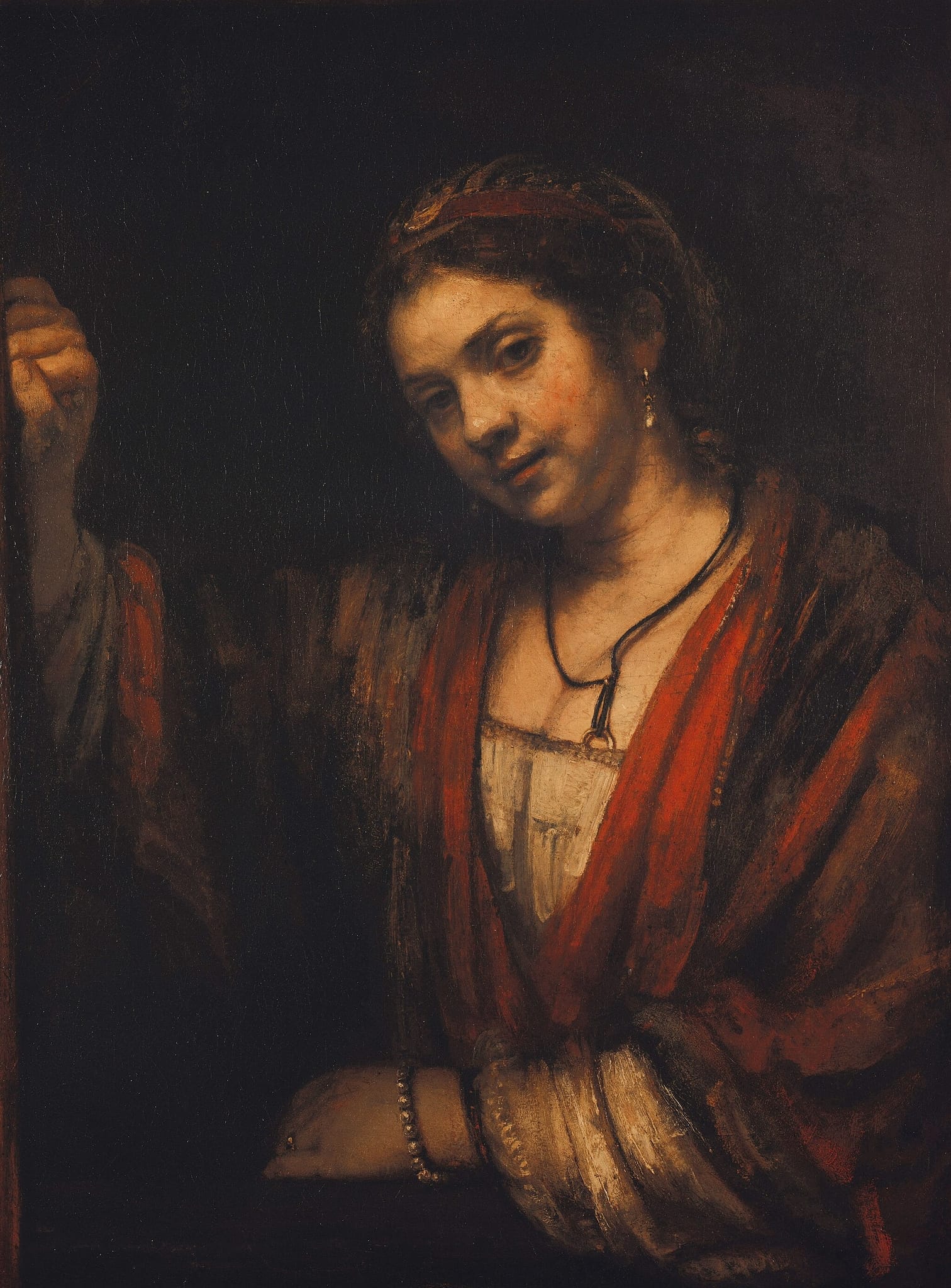
Hendrickje Stoffels
c. 1654
Rembrandt’s portrait of Hendrickje Stoffels presents his longtime partner with warmth and psychological immediacy, portraying her with tenderness and subtle dignity rather than overt idealization. The work is significant both biographically and artistically: Hendrickje appears in several of Rembrandt’s late works and this portrait reflects his late-style emphasis on concentrated observation and spontaneous brushwork. Notice the soft, economical strokes that model her face, the intimate scale, and the way light sculpts her features against a dark ground. ([theguardian.com](https://www.theguardian.com/culture/2000/jul/15/art?utm_source=openai))
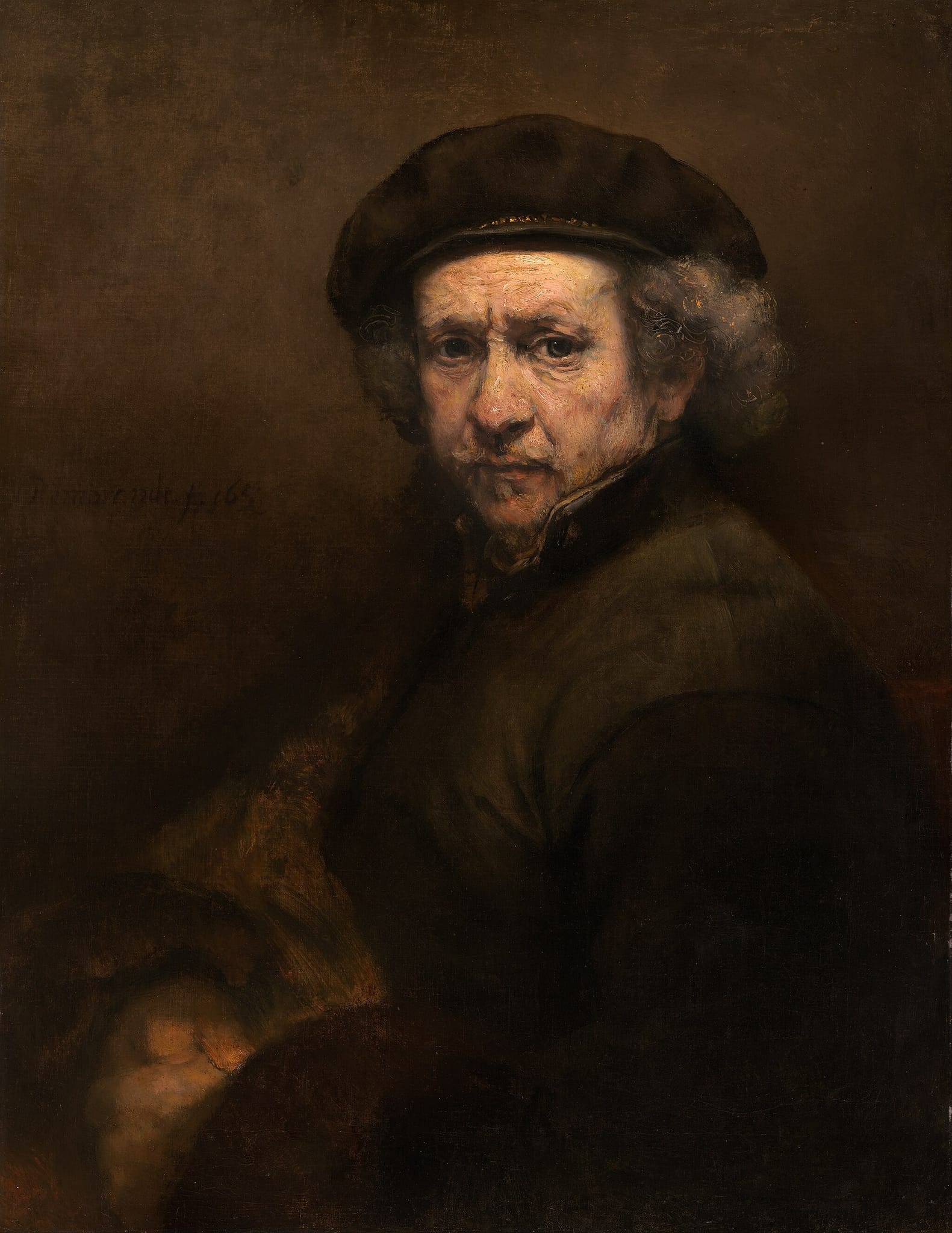
Self-Portrait
c. 1660
In this late self-portrait Rembrandt presents himself as an experienced, contemplative artist: the face is observed with frankness and psychological depth, set against a spare, dark background. It’s significant as part of Rembrandt’s unrivaled series of self-portraits that chronicle his changing appearance and self-conception across decades, showing mastery of light, texture, and empathetic realism. Look closely at the variety of brushwork—from finely described features to broader, textured strokes—and the steady, reflective gaze that anchors the composition. ([metmuseum.org](https://www.metmuseum.org/press-releases/rembrandts-self-portrait-2012-exhibitions?utm_source=openai))
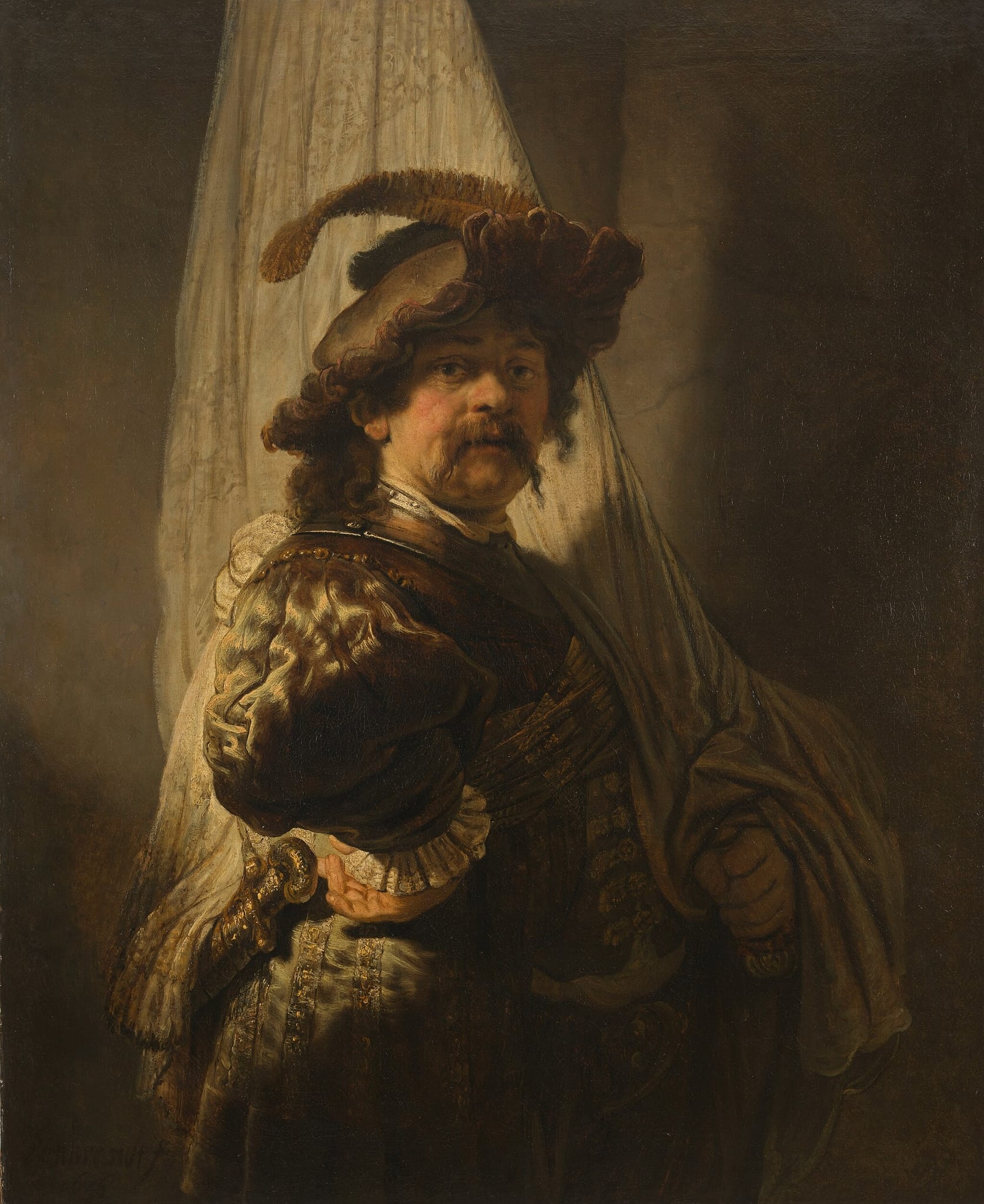
The Standard Bearer
1654
Imposing civic-guard portrait noted for bravura costume details and forceful presence.
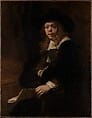
Portrait of Gerard de Lairesse
c. 1664
Rembrandt’s portrait of the artist-theorist Gérard de Lairesse shows him as an assured, cultivated figure, rendered with subdued color and sensitive modeling that emphasize intellect over flamboyance. The work is important for recording a leading cultural figure of the Dutch Golden Age and for demonstrating Rembrandt’s continued subtlety in late portraiture. Look for the nuanced handling of flesh tones, the calm, reflective expression, and the economical yet expressive brushwork that conveys character with restraint. ([thehistoryofart.org](https://www.thehistoryofart.org/rembrandt/portrait-of-gerard-de-lairesse/?utm_source=openai))
The Frick Collection
The Frick matters because its small, domestic setting lets Rembrandt’s paintings be seen in an intimate, room‑like context similar to how they might have been displayed in a private collection — this intimacy heightens the psychological presence and surface detail of his portraits and small-scale works. The Frick’s focused collection and meticulous framing/display historically attracted major Rembrandt pictures and scholarship, so viewing his paintings here often reveals subtle tonal gradations and varnish qualities emphasized by the museum’s conservation choices.
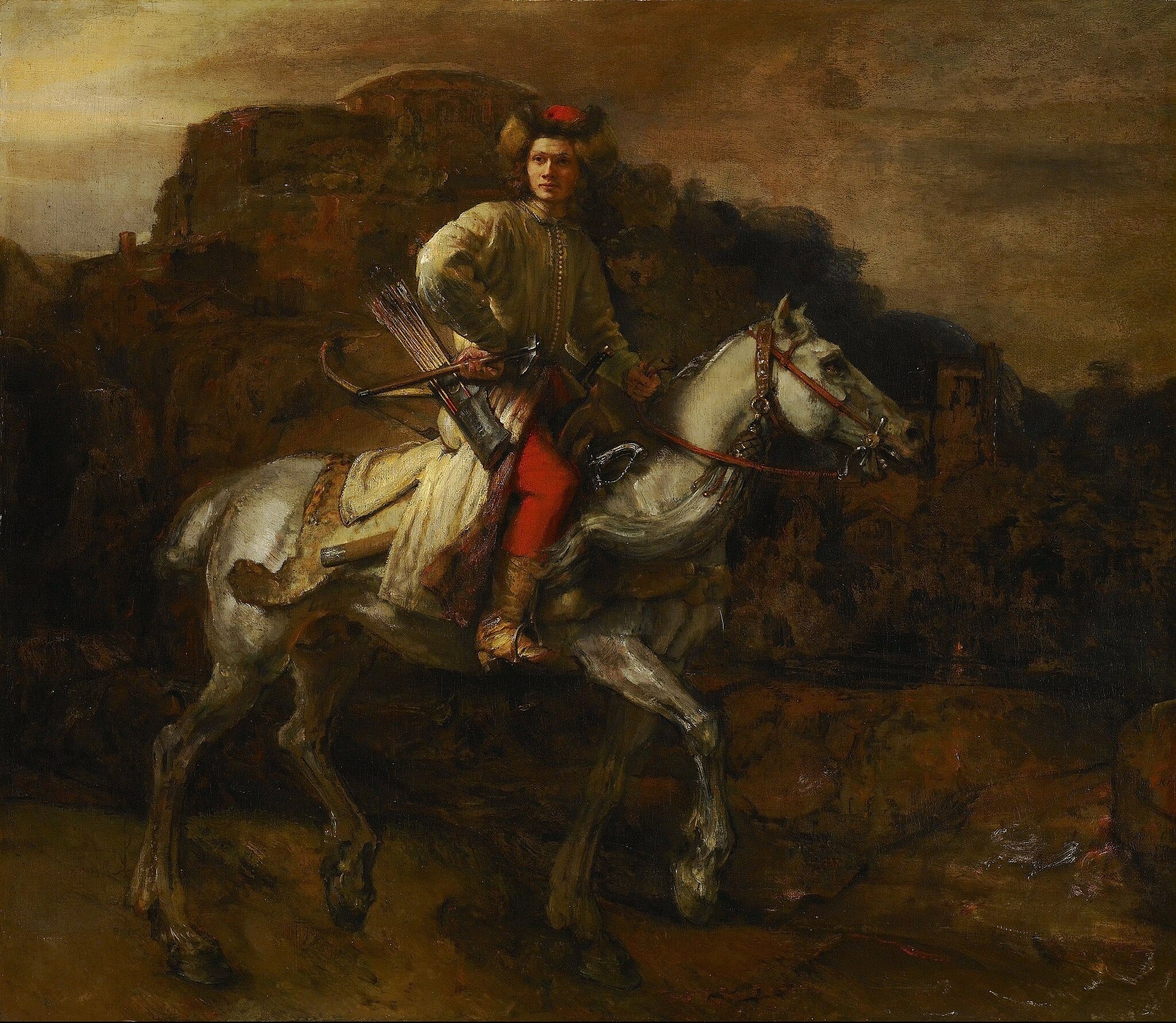
The Polish Rider
1655
A lone young rider in exotic, Eastern-European dress sits astride a spirited horse against a brooding, landscape background; the figure appears both alert and pensive. The work is significant for its enigmatic subject — scholars have debated whether it is a portrait, a character study, or a romanticized ‘type’ — and for Rembrandt’s atmospheric handling of light and mood. Look for the loose, painterly brushwork, the luminous treatment of the rider’s face and hands, and the subtle, shadowy landscape that heightens the mystery.
Must-see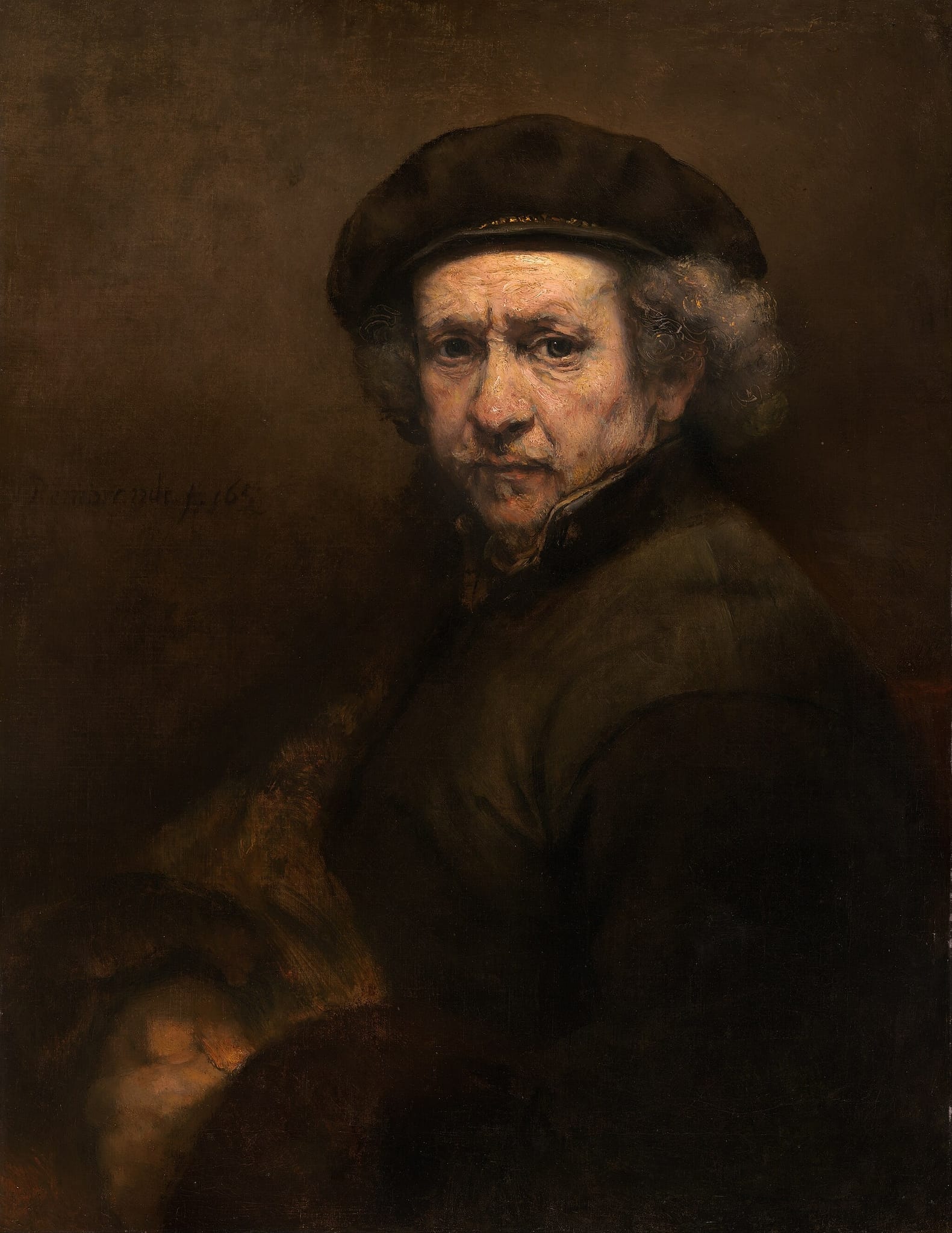
Self-Portrait
1658
Rembrandt presents himself as an older, dignified artist, facing the viewer with a frank, steady gaze and wearing a dark cloak and broad-brimmed hat. This late self-portrait is significant as a powerful statement of psychological realism and artistic maturity, showing how he used paint texture and chiaroscuro to convey character. Notice the thick, varied impasto, the warm flesh tones modeled by precise highlights, and the directness of the eyes that draws you into the sitter’s experience.
Must-see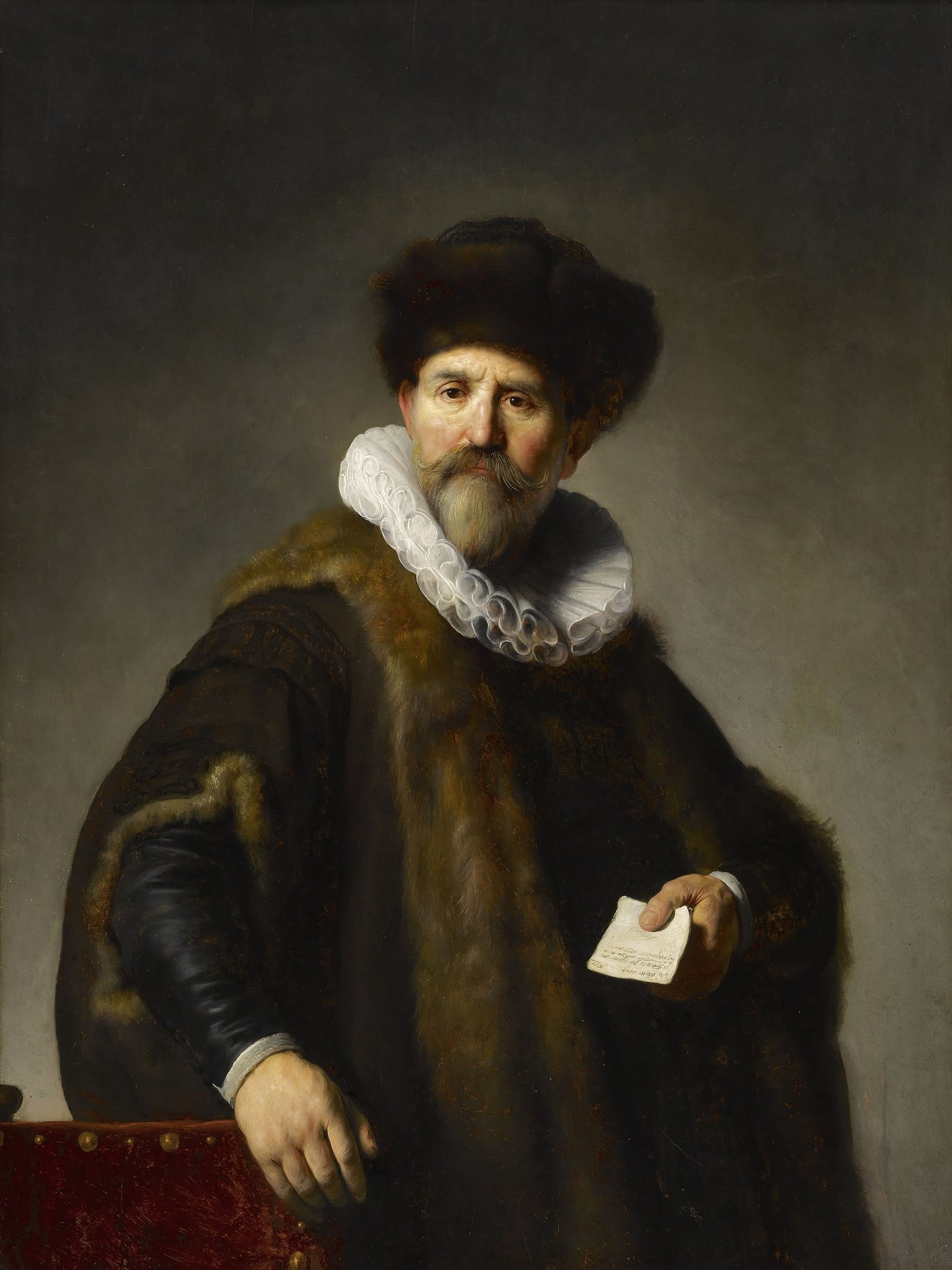
Portrait of Nicolaes Ruts
1631
This early Amsterdam portrait depicts the merchant Nicolaes Ruts seated in three-quarter view, dressed in fashionable attire with an ornate lace collar and a fine fur-lined cloak. It is significant as an example of Rembrandt’s early ability to combine precise detail (dress and accessories that signal status) with a lively, individualized likeness. Pay attention to the meticulous rendering of textures — lace, fabric, and skin — the warm glow on the face, and the expressive modelling of the hands that help convey Ruts’s presence.