The Calling of Saint Matthew
by Caravaggio
Study Print Studio
Create a personal study print
Build a companion study sheet around the part of this painting that speaks to you most. Choose a detail, shape an interpretation, and walk away with something personal and display-worthy.
Fast Facts
- Year
- 1599–1600
- Medium
- Oil on canvas
- Dimensions
- 322 × 340 cm
- Location
- Contarelli Chapel, San Luigi dei Francesi, Rome
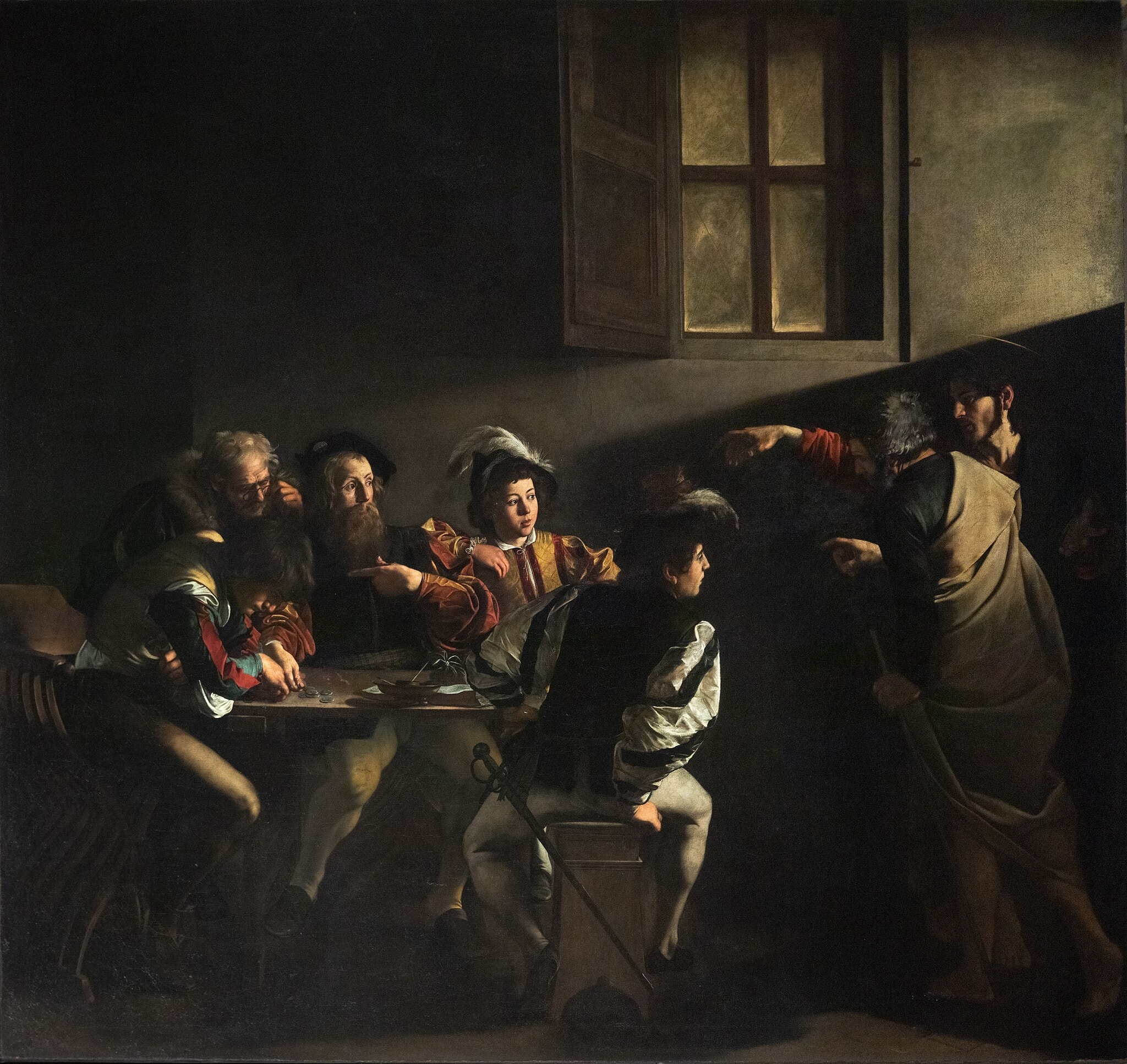
Click on any numbered symbol to learn more about its meaning
Meaning & Symbolism
Explore Deeper with AI
Ask questions about The Calling of Saint Matthew
Popular questions:
Powered by AI • Get instant insights about this artwork
Interpretations
Site-Specificity & Phenomenology
Source: Smarthistory; Contarelli Chapel overview; Britannica
Socioeconomic Lens & Northern Genre Echoes
Source: Web Gallery of Art (genre precedents); Britannica
Counter‑Reformation Mediation & Authority
Source: Britannica; RAI Scuola
Ambiguity as Devotional Technology
Source: Wikipedia (summary of debate, Varriano note); Kunsthistorisches Institut in Florenz (2025 lecture notice)
Intertextuality & the Politics of Quotation
Source: Britannica
Optics, Vision, and Moral Myopia
Source: Archdiocese of San Francisco; Art in Context
Related Themes
About Caravaggio
More by Caravaggio
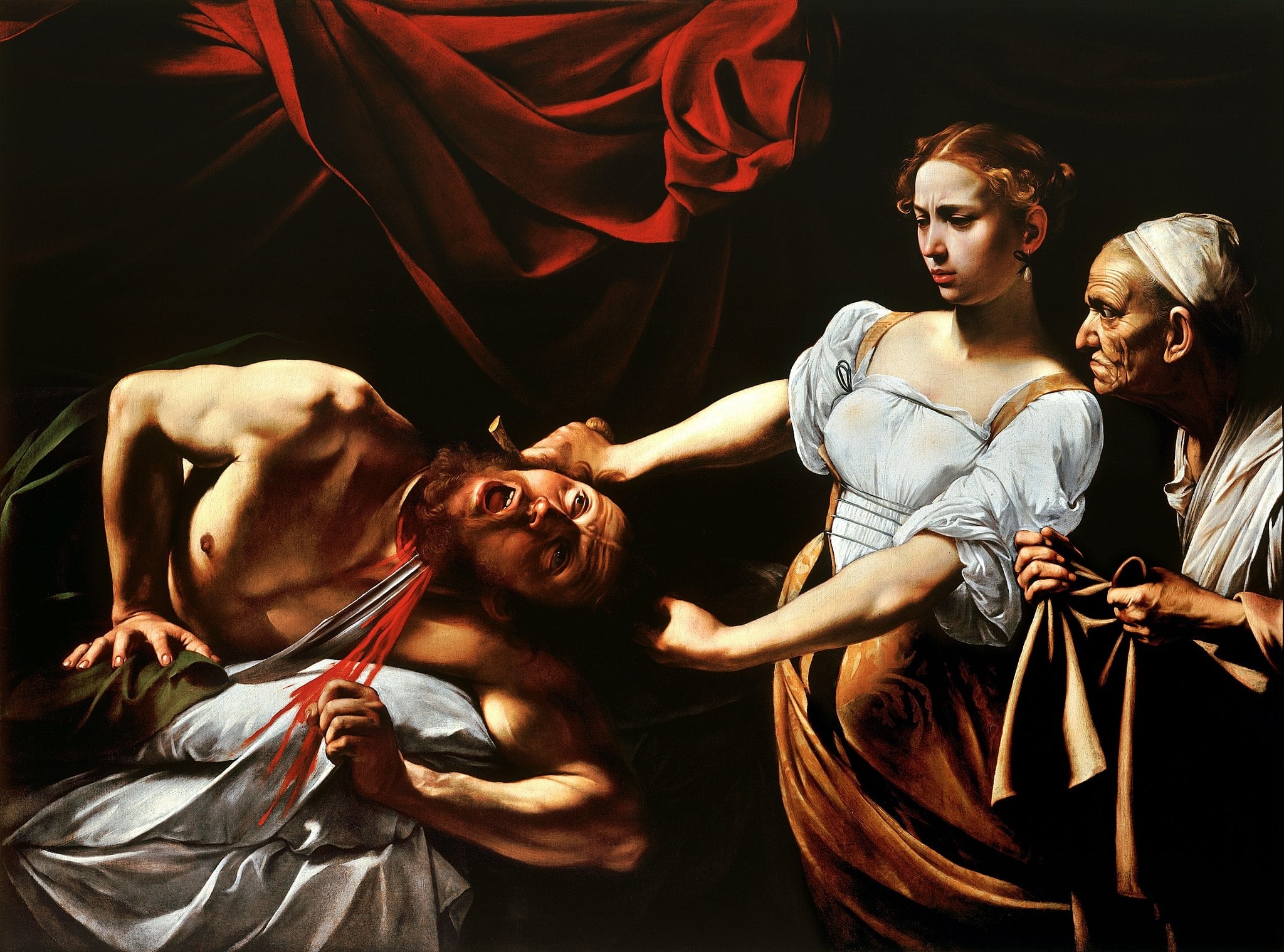
Judith Beheading Holofernes
Caravaggio (1599)
Caravaggio’s Judith Beheading Holofernes stages the biblical execution as a shocking present-tense event, lit by a raking beam that cuts figures from darkness. The <strong>red curtain</strong> frames a moral spectacle in which <strong>virtue overthrows tyranny</strong>, as Judith’s cool determination meets Holofernes’ convulsed resistance. Radical <strong>naturalism</strong>—from tendon strain to ribboning blood—makes deliverance feel material and irreversible.
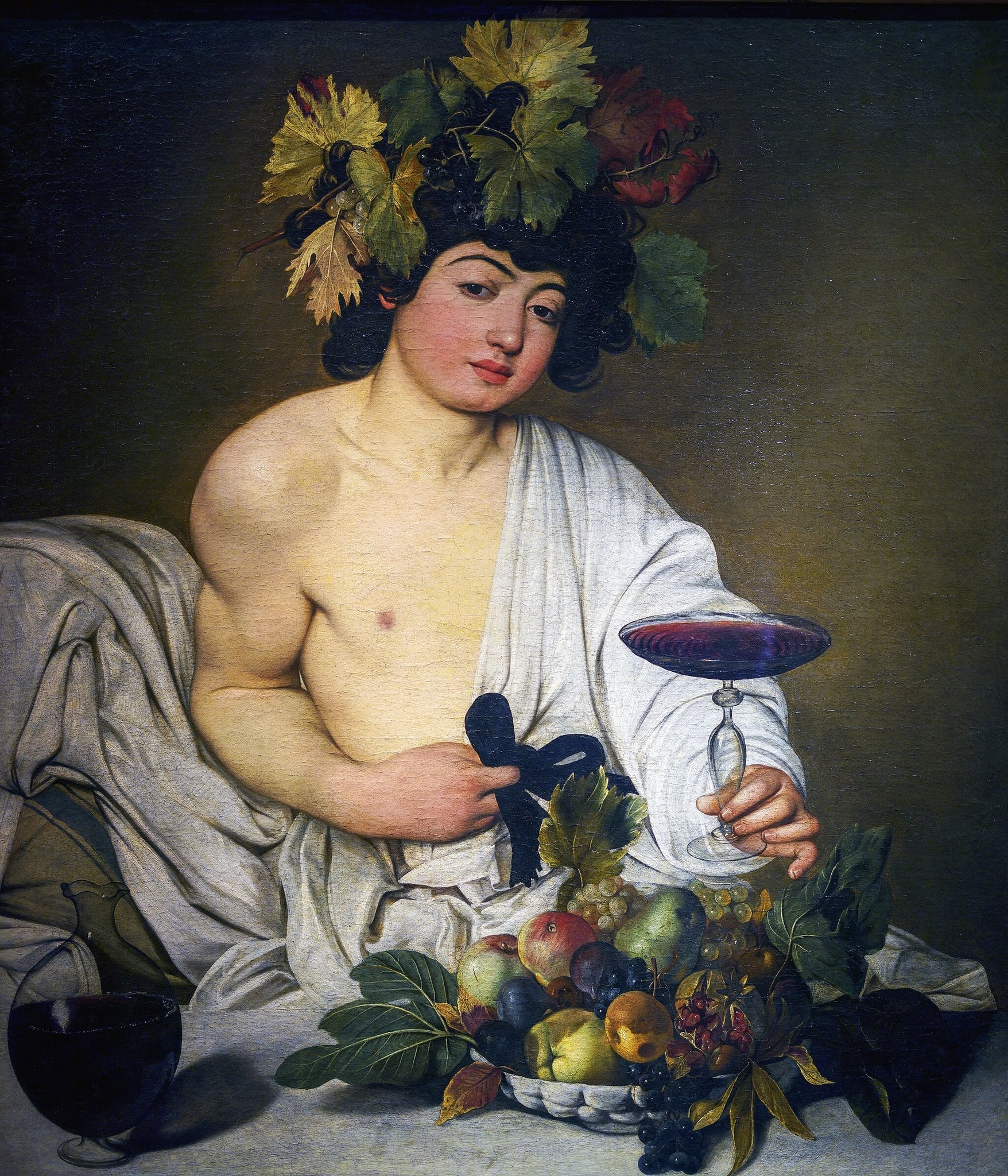
Bacchus
Caravaggio (c. 1598)
Caravaggio’s Bacchus stages a human-scaled god who offers wine with disarming immediacy, yoking <strong>sensual invitation</strong> to <strong>vanitas</strong> warning. The tilted goblet, blemished fruit, and wilting leaves insist that abundance and youth are <strong>precarious</strong>. A private Roman milieu under Cardinal del Monte shaped this refined, provocative image <sup>[1]</sup><sup>[2]</sup>.
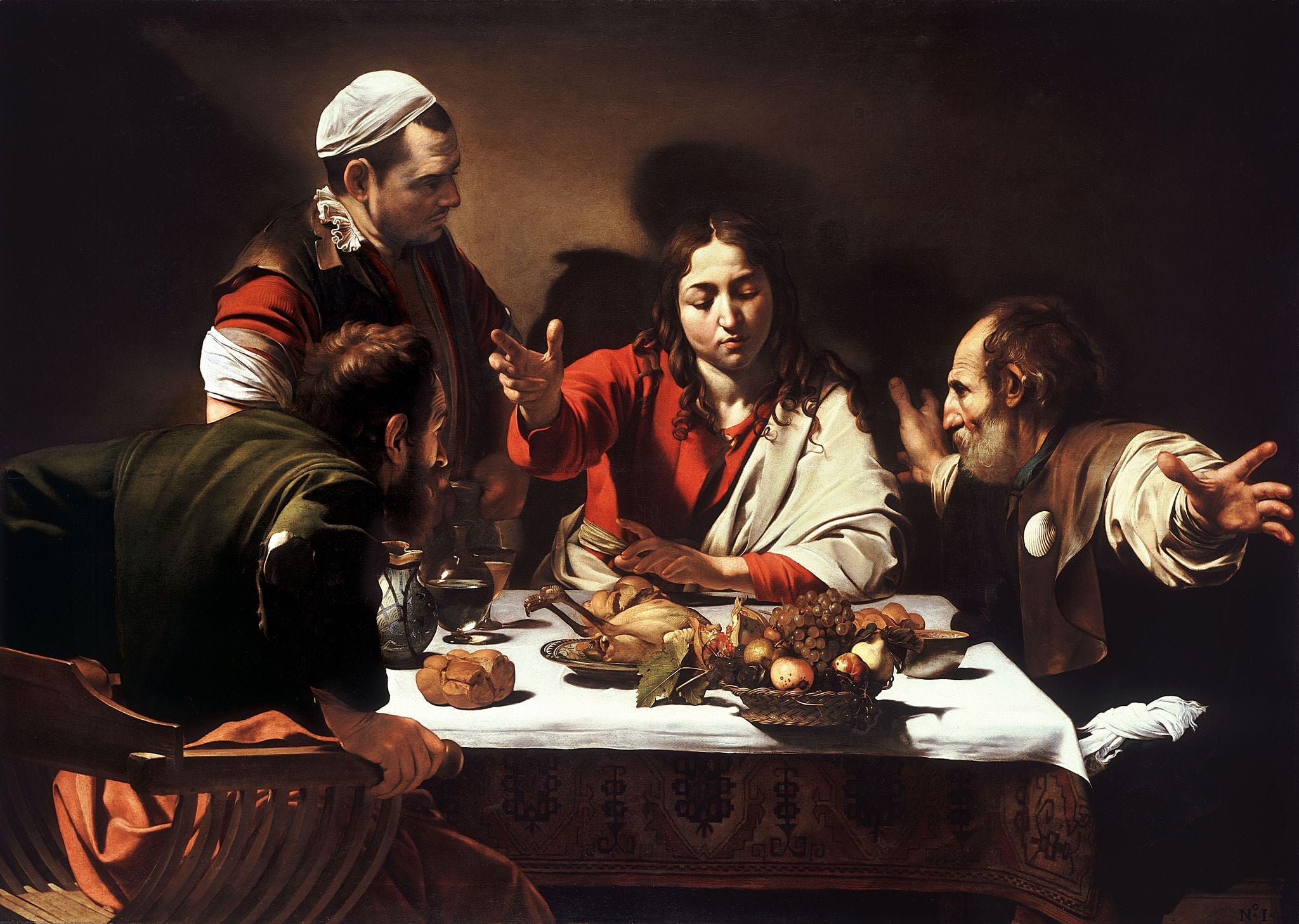
The Supper at Emmaus
Caravaggio (1601)
Caravaggio’s The Supper at Emmaus captures the split-second when two disciples recognize Christ in the <strong>breaking of bread</strong>. A raking light isolates Christ’s calm blessing while the disciples erupt—one surging forward with a torn sleeve, the other flinging his arms wide—so the shock of revelation reads as bodily fact. The teetering <strong>basket of fruit</strong> and Eucharistic table amplify themes of abundance and fragility <sup>[1]</sup><sup>[4]</sup>.