The Wanderer above the Sea of Fog
Study Print Studio
Create a personal study print
Build a companion study sheet around the part of this painting that speaks to you most. Choose a detail, shape an interpretation, and walk away with something personal and display-worthy.
Fast Facts
- Year
- ca. 1817
- Medium
- Oil on canvas
- Dimensions
- 94.8 × 74.8 cm
- Location
- Hamburger Kunsthalle, Hamburg

Click on any numbered symbol to learn more about its meaning
Meaning & Symbolism
Explore Deeper with AI
Ask questions about The Wanderer above the Sea of Fog
Popular questions:
Powered by AI • Get instant insights about this artwork
Interpretations
Formal Analysis
Source: Hamburger Kunsthalle; Friedrich 250 portal
Medium Reflexivity (Art about Looking)
Source: Joseph Leo Koerner; Friedrich 250 portal
Religious/Spiritual Reading
Source: Joseph Leo Koerner; Encyclopaedia Britannica
Political/National Context
Source: Friedrich 250 (Hamburger Kunsthalle portal); Encyclopaedia Britannica
Reception and Afterlives
Source: Encyclopaedia Britannica; The Metropolitan Museum of Art
Explore Specific Elements
Dive deeper into individual scenes and details within The Wanderer above the Sea of Fog.
The Rückenfigur
Friedrich’s Rückenfigur—the solitary man seen from behind—turns a panoramic view into a drama of looking. Standing exactly where our eyes would stand, he fuses landscape, philosophy, and selfhood, transforming the painting into an image about perception itself.
The Sea of Fog
The sea of fog in Friedrich’s Wanderer above the Sea of Fog is both a real weather phenomenon and a metaphysical stage. This luminous cloud‑ocean turns mountains into islands and makes the act of looking—into the unknown—the painting’s central drama.
Related Themes
About Caspar David Friedrich
More by Caspar David Friedrich
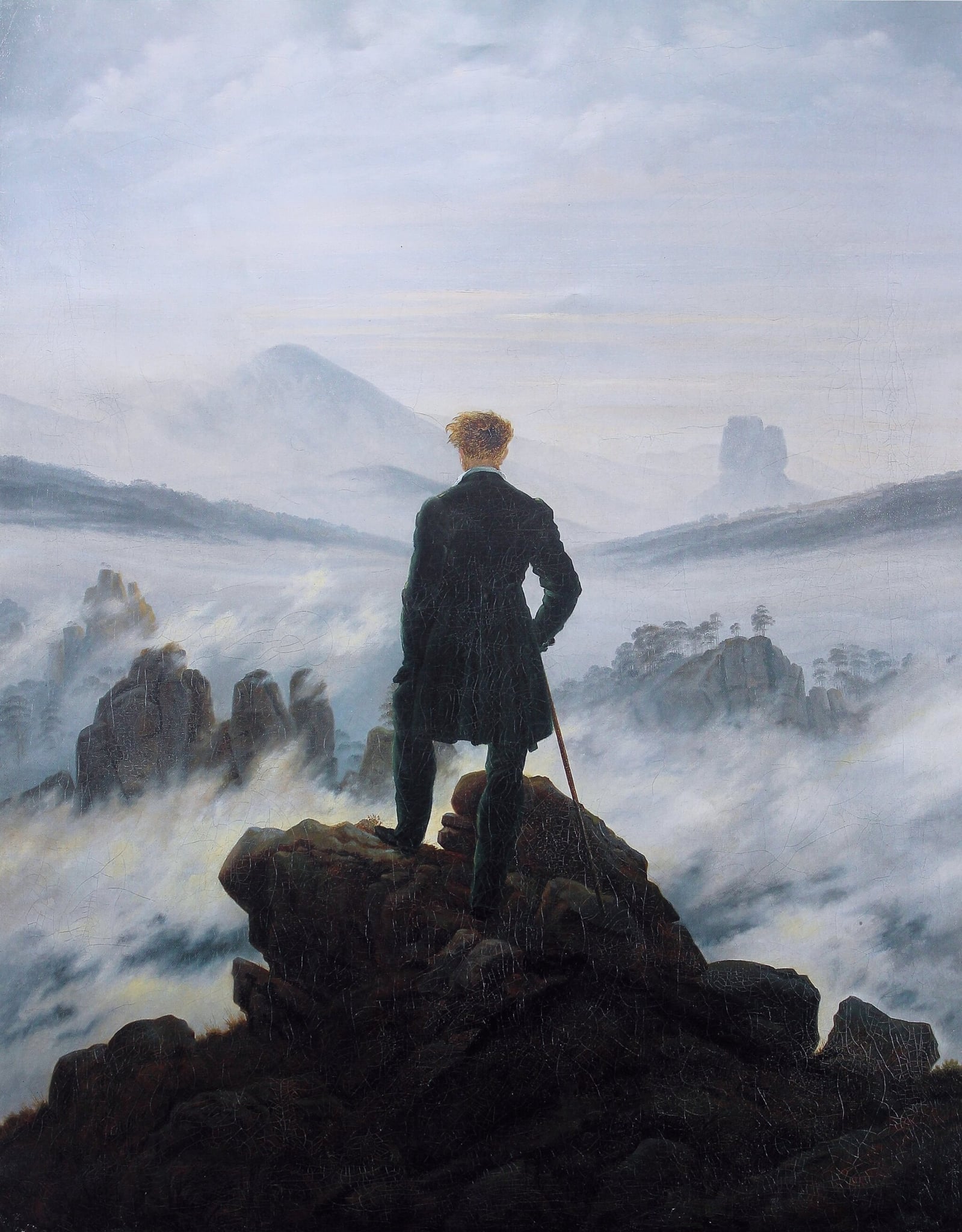
Wanderer above the Sea of Fog
Caspar David Friedrich (ca. 1817)
A solitary figure stands on a jagged crag above a churning <strong>sea of fog</strong>, his back turned in the classic <strong>Rückenfigur</strong> pose. Caspar David Friedrich transforms the landscape into an inner stage where <strong>awe, uncertainty, and resolve</strong> meet at the edge of perception <sup>[3]</sup><sup>[5]</sup>.
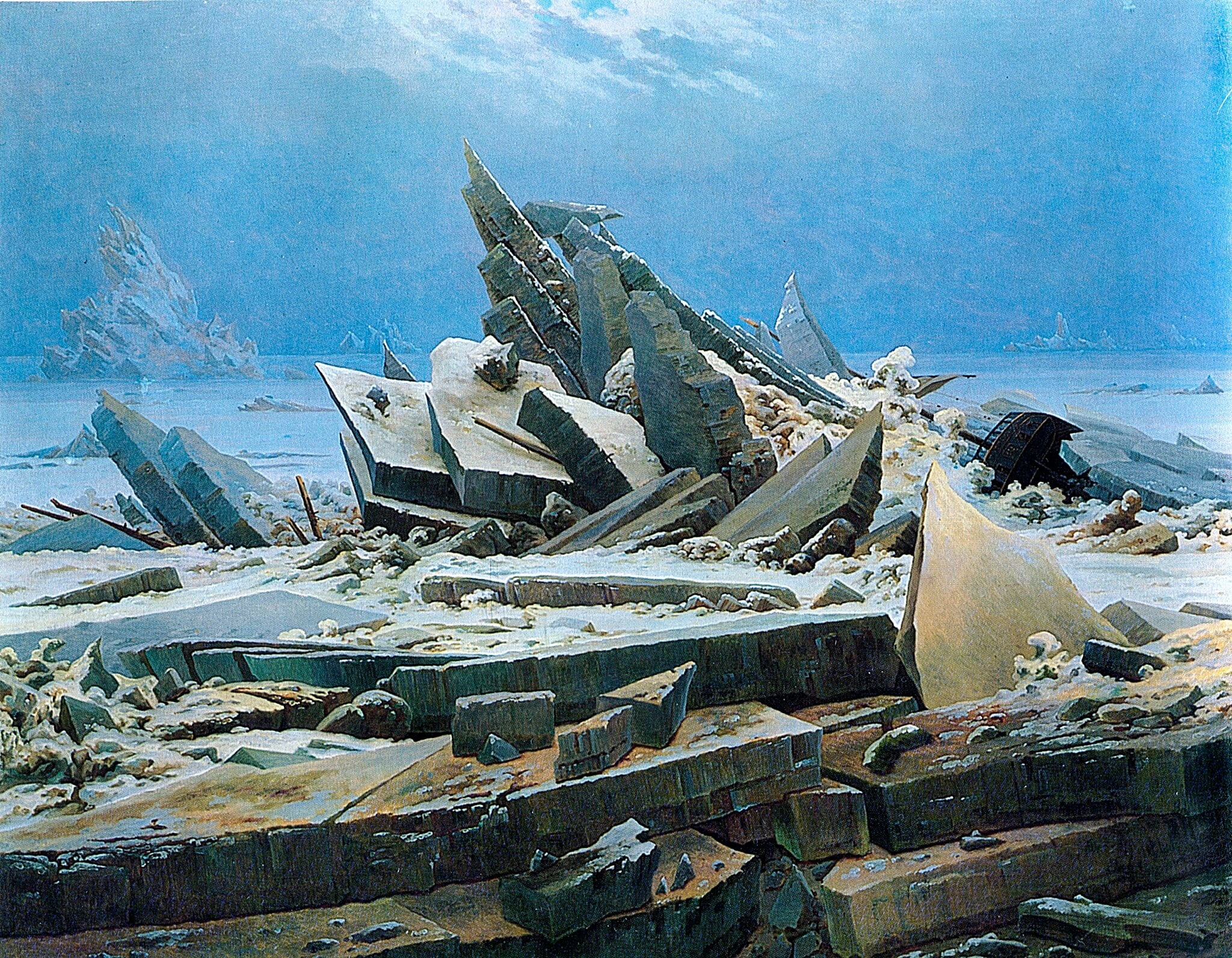
The Sea of Ice
Caspar David Friedrich (1823–1824)
Caspar David Friedrich’s The Sea of Ice turns nature into a <strong>frozen architecture</strong> that crushes a ship and, with it, human pretension. The painting stages the <strong>Romantic sublime</strong> as both awe and negation, replacing heroic conquest with the stark finality of ice and silence <sup>[1]</sup><sup>[3]</sup>.