The sublime & awe
Featured Artworks

Composition VIII
Wassily Kandinsky (1923)
Composition VIII stages a <strong>musical drama in geometry</strong>: circles, vectors, and triangles surge across a cream field in calibrated counterpoint. A <strong>brooding black circle</strong> at left sets the tonal center while grids, checkerboards, and compass-like dials organize bursts of color and rhythm. The canvas becomes a <strong>score of invisible harmonies</strong>, where pure form conveys feeling.
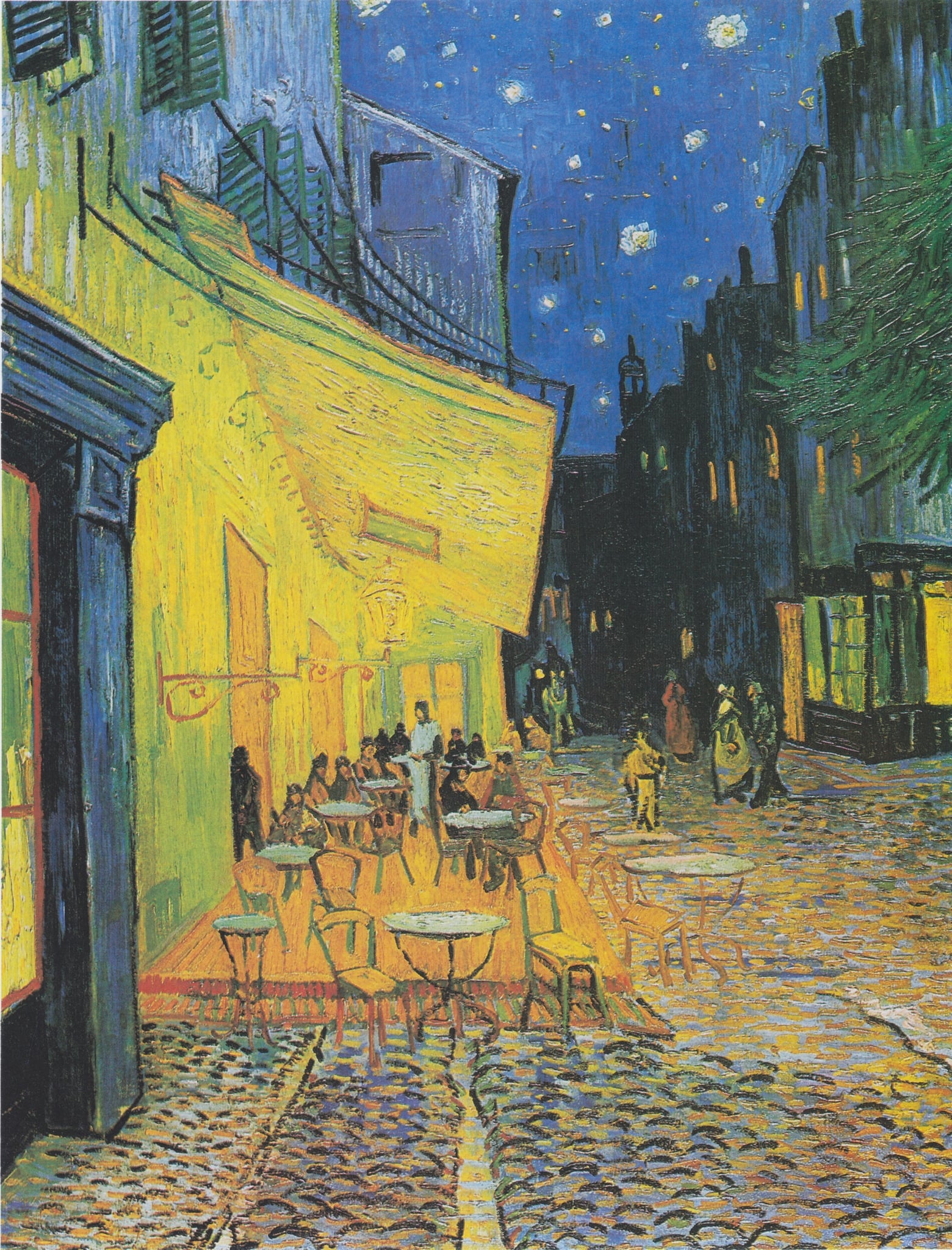
Café Terrace at Night
Vincent van Gogh (1888)
In Café Terrace at Night, Vincent van Gogh turns nocturne into <strong>luminous color</strong>: a gas‑lit terrace glows in yellows and oranges against a deep <strong>ultramarine sky</strong> pricked with stars. By building night “<strong>without black</strong>,” he stages a vivid encounter between human sociability and the vastness overhead <sup>[1]</sup><sup>[2]</sup>.
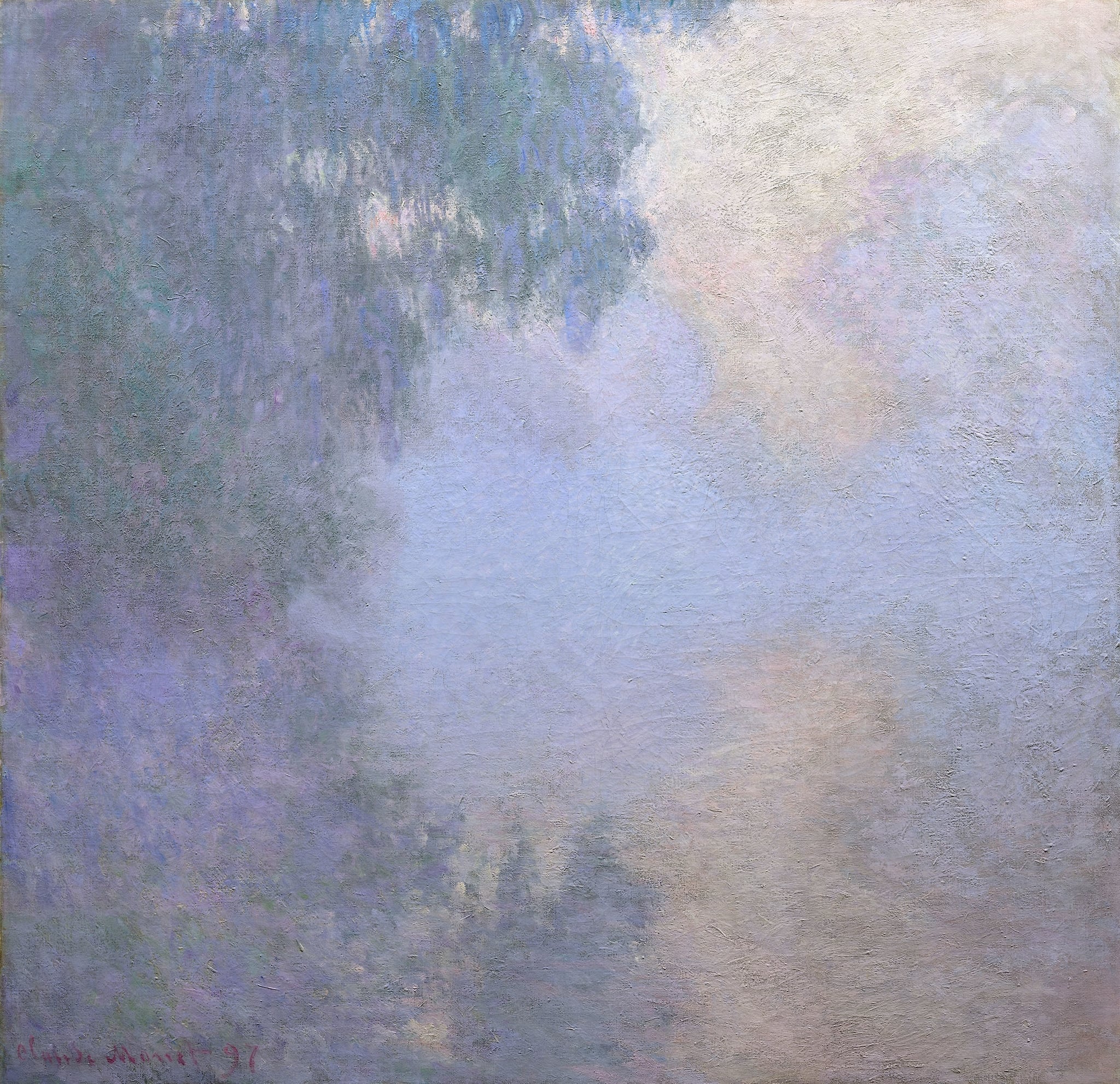
Morning on the Seine (series)
Claude Monet (1897)
Claude Monet’s Morning on the Seine (series) turns dawn into an inquiry about <strong>perception</strong> and <strong>time</strong>. In this canvas, the left bank’s shadowed foliage dissolves into lavender mist while a pale radiance opens at right, fusing sky and water into a single, reflective field <sup>[1]</sup><sup>[2]</sup>.
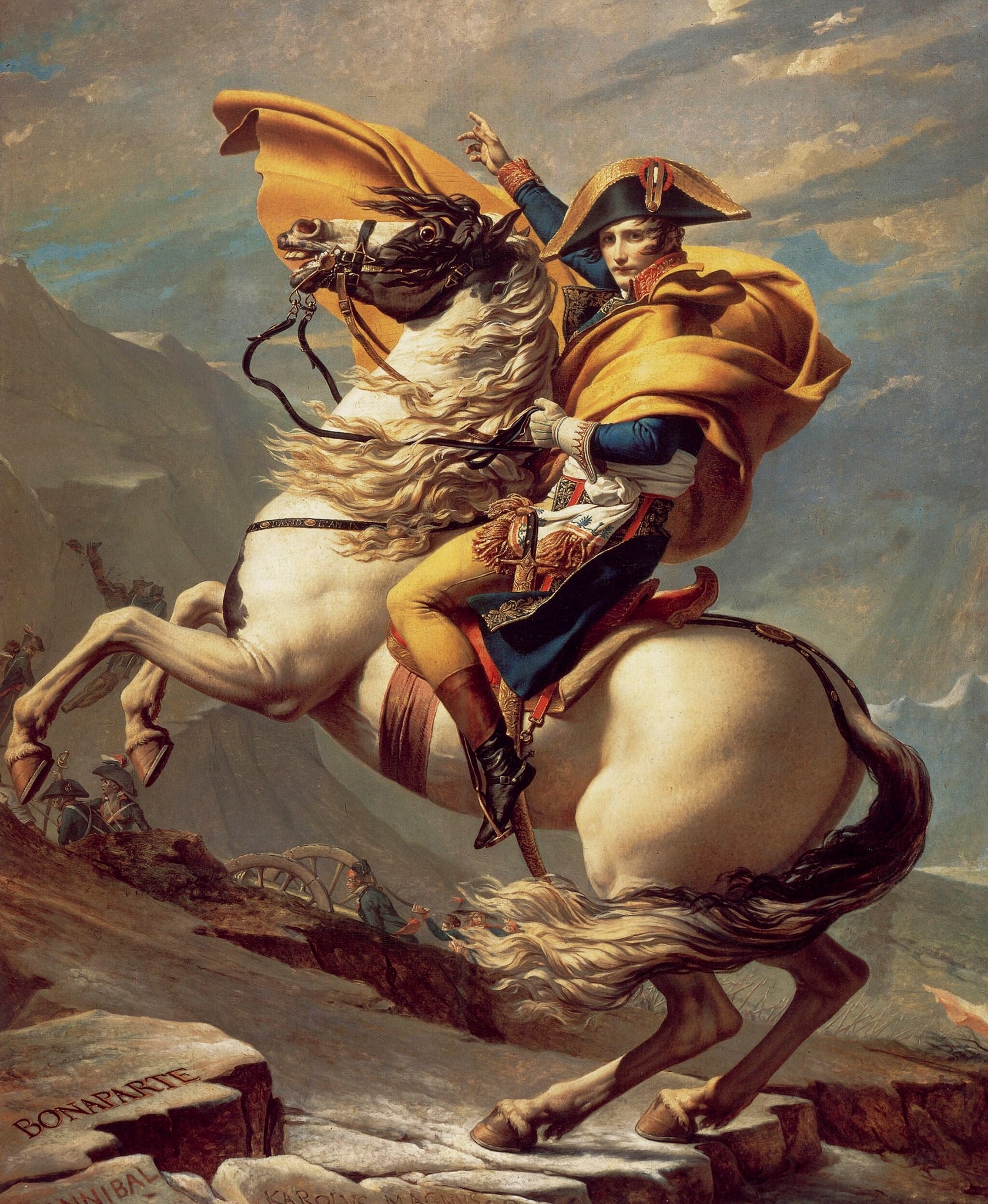
Napoleon Crossing the Alps
Jacques-Louis David (1801–1805 (series of five versions))
Jacques-Louis David turns a difficult Alpine passage into a <strong>myth of command</strong>: a serene leader on a rearing charger, a <strong>billowing golden cloak</strong>, and names cut into stone that bind the crossing to Hannibal and Charlemagne. The painting manufactures <strong>political legitimacy</strong> by fusing modern uniform and classical gravitas into a single, upward-driving image <sup>[1]</sup><sup>[2]</sup><sup>[3]</sup><sup>[4]</sup>.
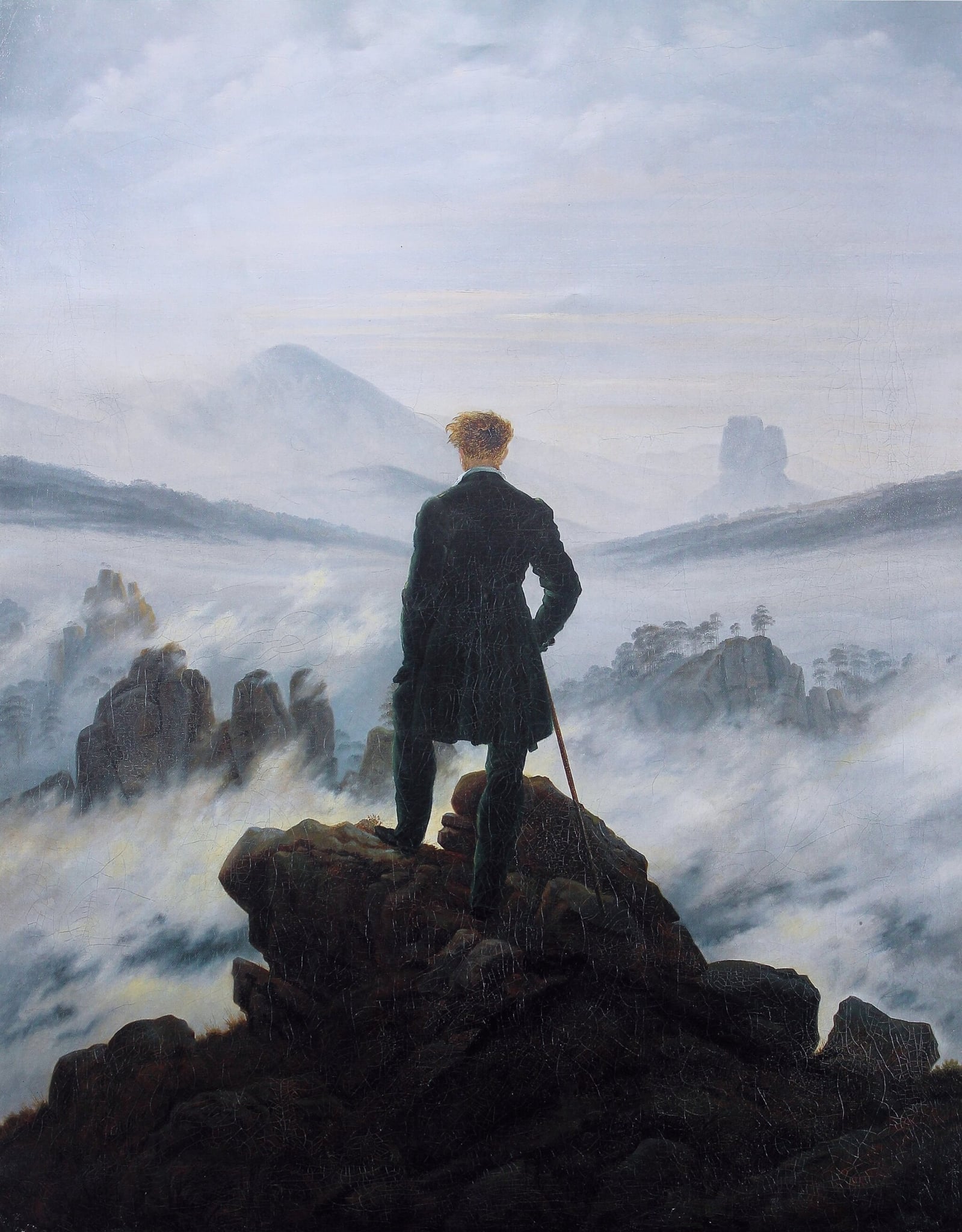
Wanderer above the Sea of Fog
Caspar David Friedrich (ca. 1817)
A solitary figure stands on a jagged crag above a churning <strong>sea of fog</strong>, his back turned in the classic <strong>Rückenfigur</strong> pose. Caspar David Friedrich transforms the landscape into an inner stage where <strong>awe, uncertainty, and resolve</strong> meet at the edge of perception <sup>[3]</sup><sup>[5]</sup>.

The Valley of the Nervia
Claude Monet (1884)
Claude Monet’s The Valley of the Nervia is a high‑key meditation on <strong>atmosphere as structure</strong>: snow‑lit Maritime Alps rise above a pale, stony riverbed, their mass defined by air and light rather than contour. Through quick, broken strokes of <strong>violet, blue, and lemon</strong>, Monet fuses fleeting afternoon shimmer with the valley’s geologic permanence <sup>[1]</sup><sup>[2]</sup>.
The Cliff Walk at Pourville
Claude Monet (1882)
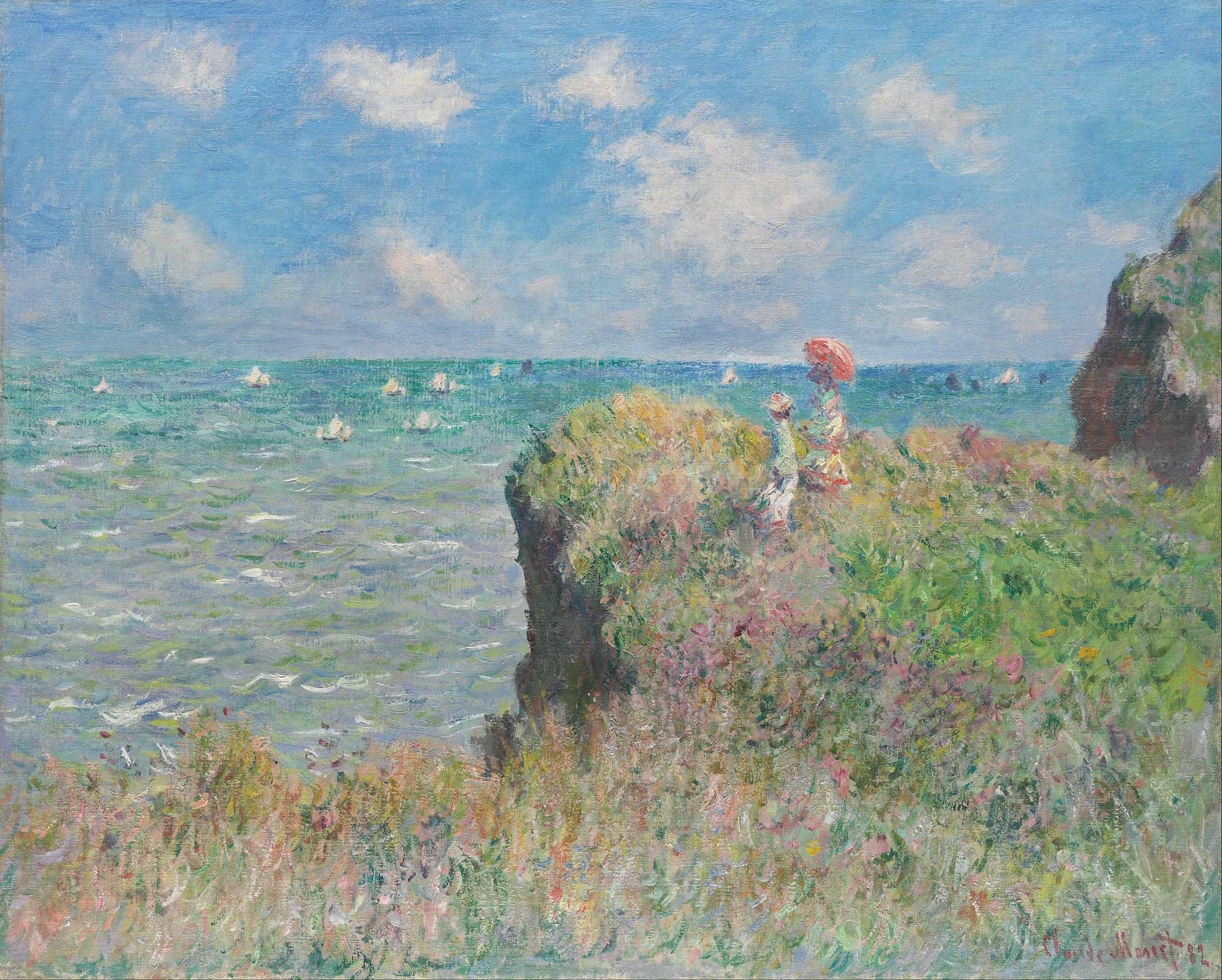
Claude Monet’s The Cliff Walk at Pourville renders wind, light, and sea as interlocking forces through <strong>shimmering, broken brushwork</strong>. Two small walkers—one beneath a pink parasol—stand near the <strong>precipitous cliff edge</strong>, their presence measuring the vastness of turquoise water and bright sky dotted with white sails. The scene fuses leisure and the <strong>modern sublime</strong>, making perception itself the subject <sup>[1]</sup><sup>[2]</sup>.
San Giorgio Maggiore at Dusk
Claude Monet (1908–1912)
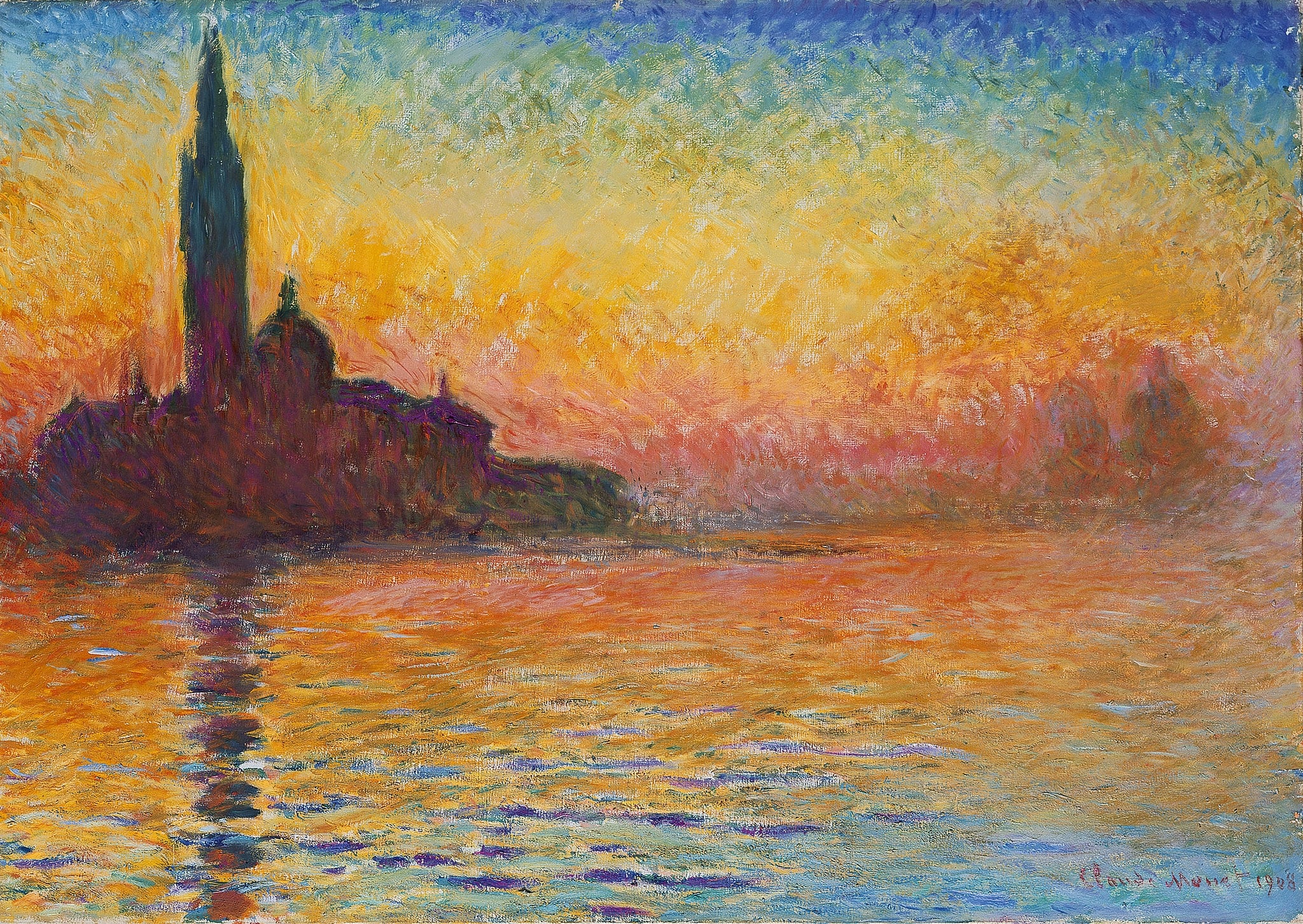
Claude Monet’s San Giorgio Maggiore at Dusk fuses the Benedictine church’s dark silhouette with a sky flaming from apricot to cobalt, turning architecture into atmosphere. The campanile’s vertical and its wavering reflection anchor a sea of trembling color, staging a meditation on <strong>permanence</strong> and <strong>flux</strong>.
The Sea of Ice
Caspar David Friedrich (1823–1824)
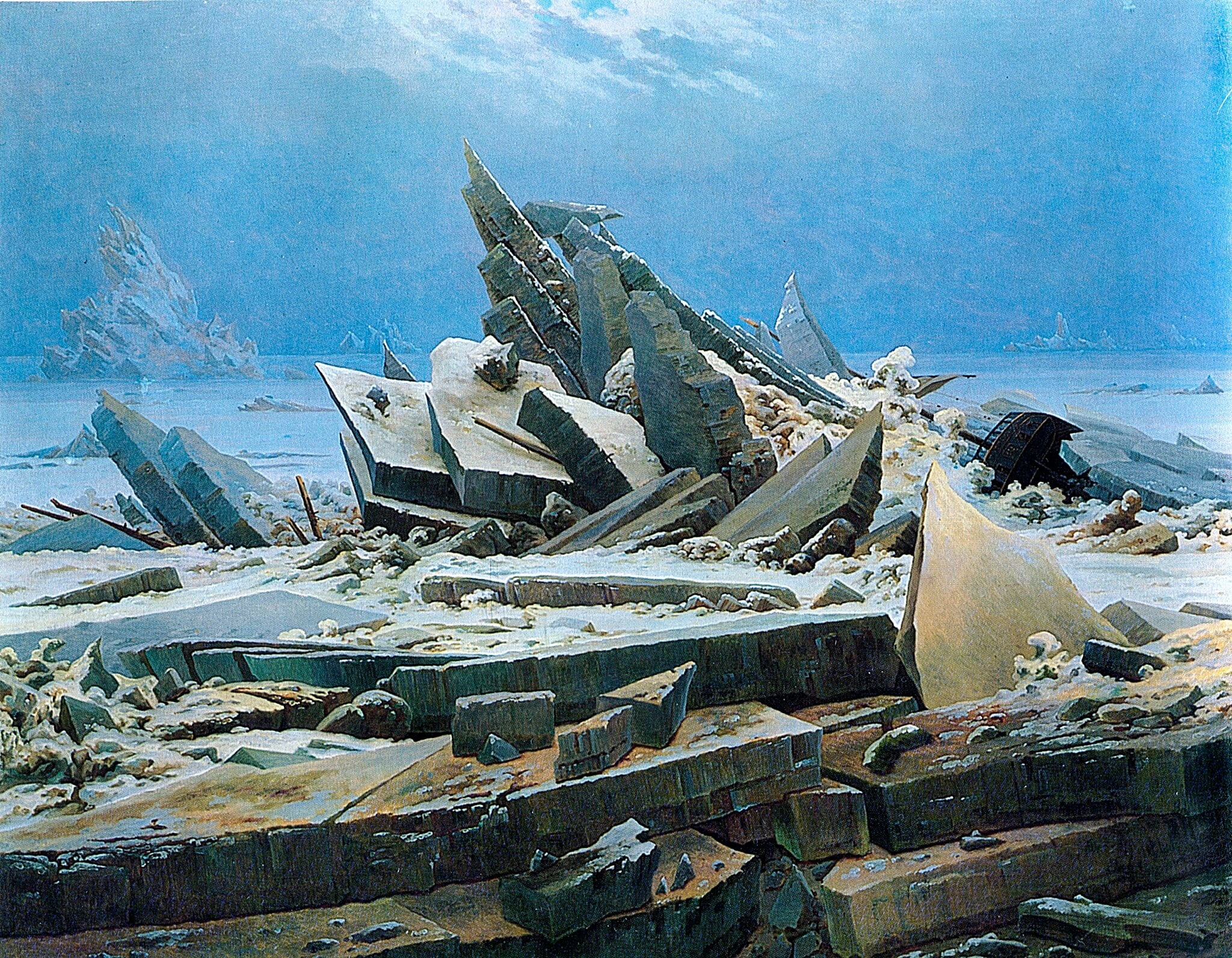
Caspar David Friedrich’s The Sea of Ice turns nature into a <strong>frozen architecture</strong> that crushes a ship and, with it, human pretension. The painting stages the <strong>Romantic sublime</strong> as both awe and negation, replacing heroic conquest with the stark finality of ice and silence <sup>[1]</sup><sup>[3]</sup>.
Rain, Steam and Speed
J. M. W. Turner (1844)
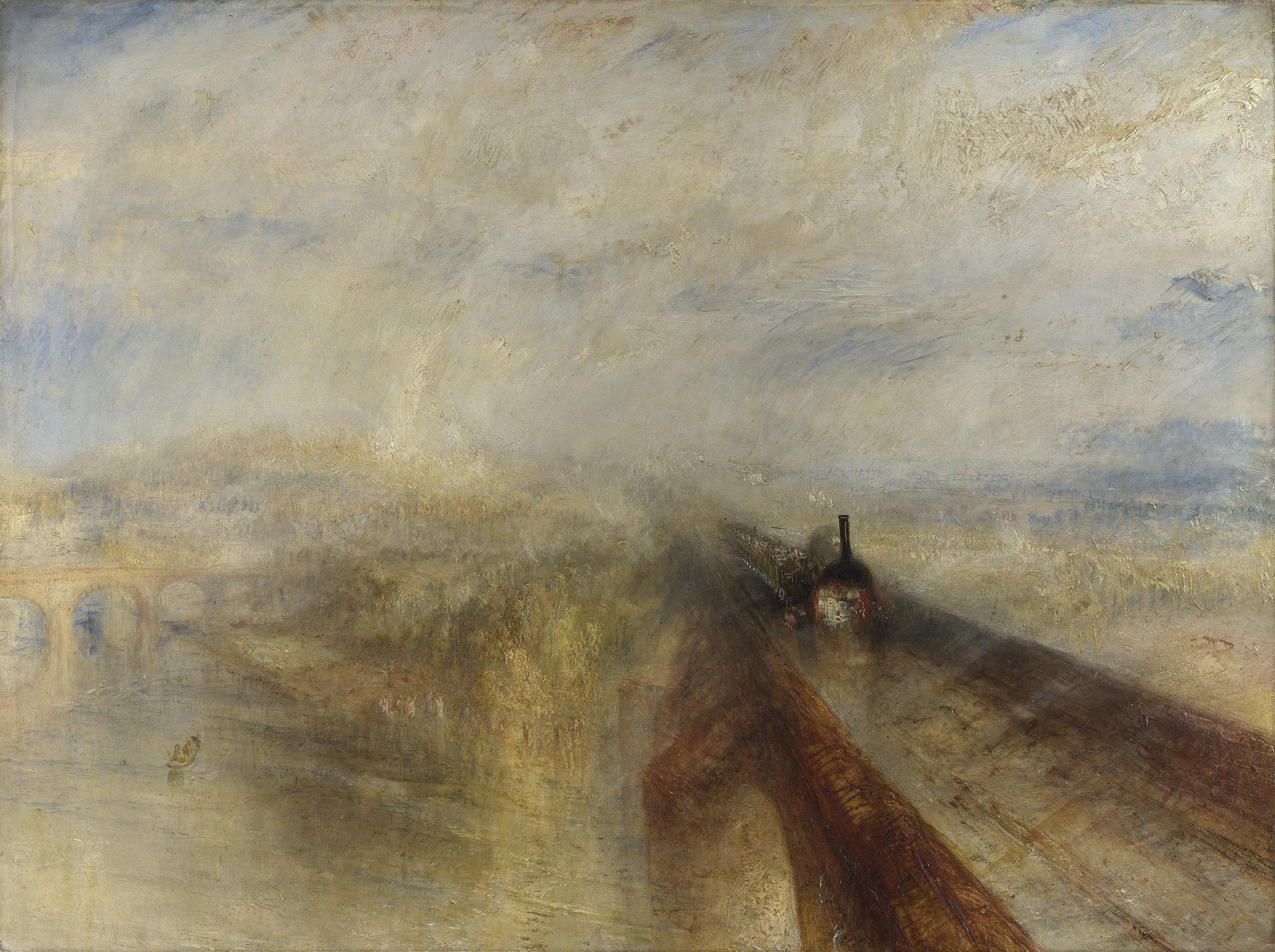
In Rain, Steam and Speed, J. M. W. Turner fuses weather and industry into a single onrushing vision, as a dark locomotive thrusts along the diagonal of Brunel’s Maidenhead Railway Bridge through veils of rain and light. The blurred fields, river, and town dissolve into a charged atmosphere where <strong>rain</strong>, <strong>steam</strong>, and <strong>speed</strong> become the true subjects. Counter-motifs—a small boat beneath pale arches and a near-invisible hare ahead of the train—stage a drama between pre‑industrial life and modern velocity <sup>[1]</sup><sup>[2]</sup>.
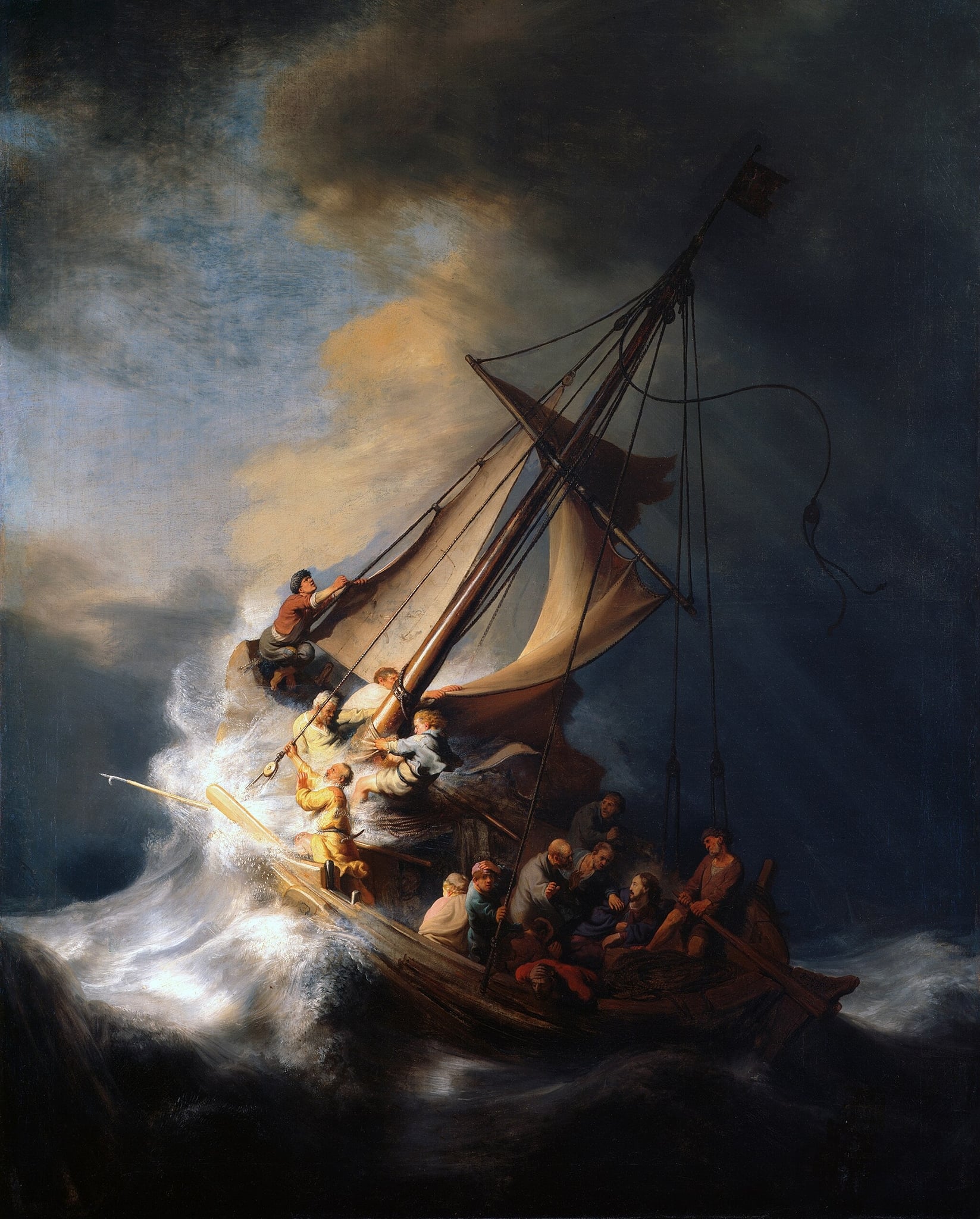
The Storm on the Sea of Galilee
Rembrandt van Rijn (1633)
Rembrandt van Rijn’s The Storm on the Sea of Galilee stages a clash of <strong>human panic</strong> and <strong>divine composure</strong> at the instant before the miracle. A torn mainsail whips across a steeply tilted boat as terrified disciples scramble, while a <strong>serenely lit Christ</strong> anchors a pocket of calm—an image of faith holding within chaos <sup>[1]</sup><sup>[3]</sup>. It is Rembrandt’s only painted seascape, intensifying its dramatic singularity in his oeuvre <sup>[2]</sup>.

The Fighting Temeraire
J. M. W. Turner (1839)
In The Fighting Temeraire, J. M. W. Turner sets a <strong>ghostly man‑of‑war</strong> against a <strong>sooty steam tug</strong> under a blazing, emblematic sunset. The pale ship’s towering masts and slack rigging read like memory, while the tug’s black smoke cuts through the rigging where a flag once flew, signaling <strong>power passing from sail to steam</strong> <sup>[1]</sup><sup>[2]</sup>. A crescent moon and a humble buoy punctuate a river turned to molten gold, marking both ending and beginning <sup>[3]</sup><sup>[4]</sup>.
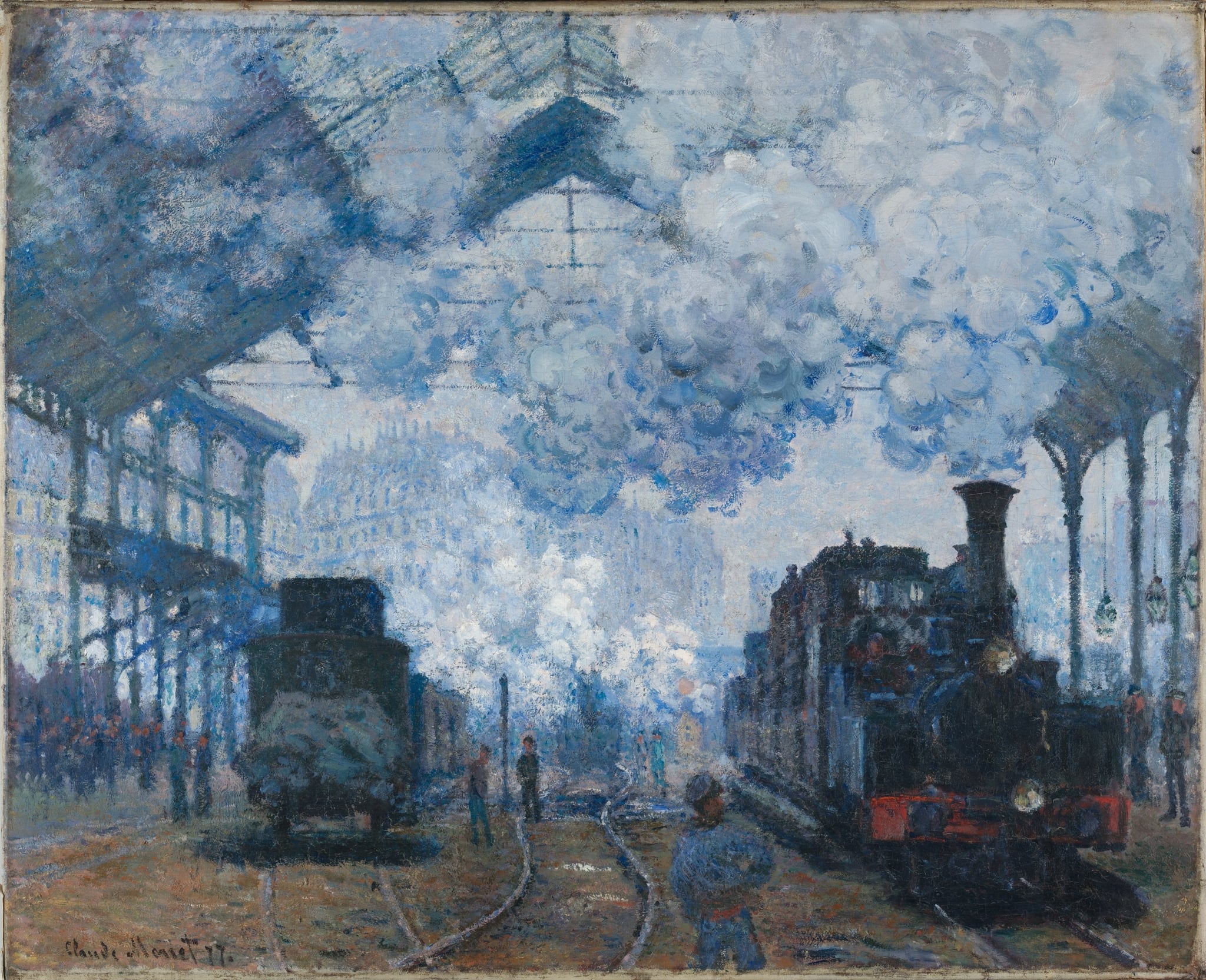
The Gare Saint-Lazare: Arrival of a Train
Claude Monet (1877)
Claude Monet’s The Gare Saint-Lazare: Arrival of a Train plunges viewers into a <strong>vapor-filled nave of iron and glass</strong>, where billowing steam, hot lamps, and converging rails forge a drama of industrial modernity. The right-hand locomotive, its red buffer beam glowing, materializes out of a <strong>blue-gray atmospheric envelope</strong>, turning motion and time into visible substance <sup>[1]</sup><sup>[3]</sup>.
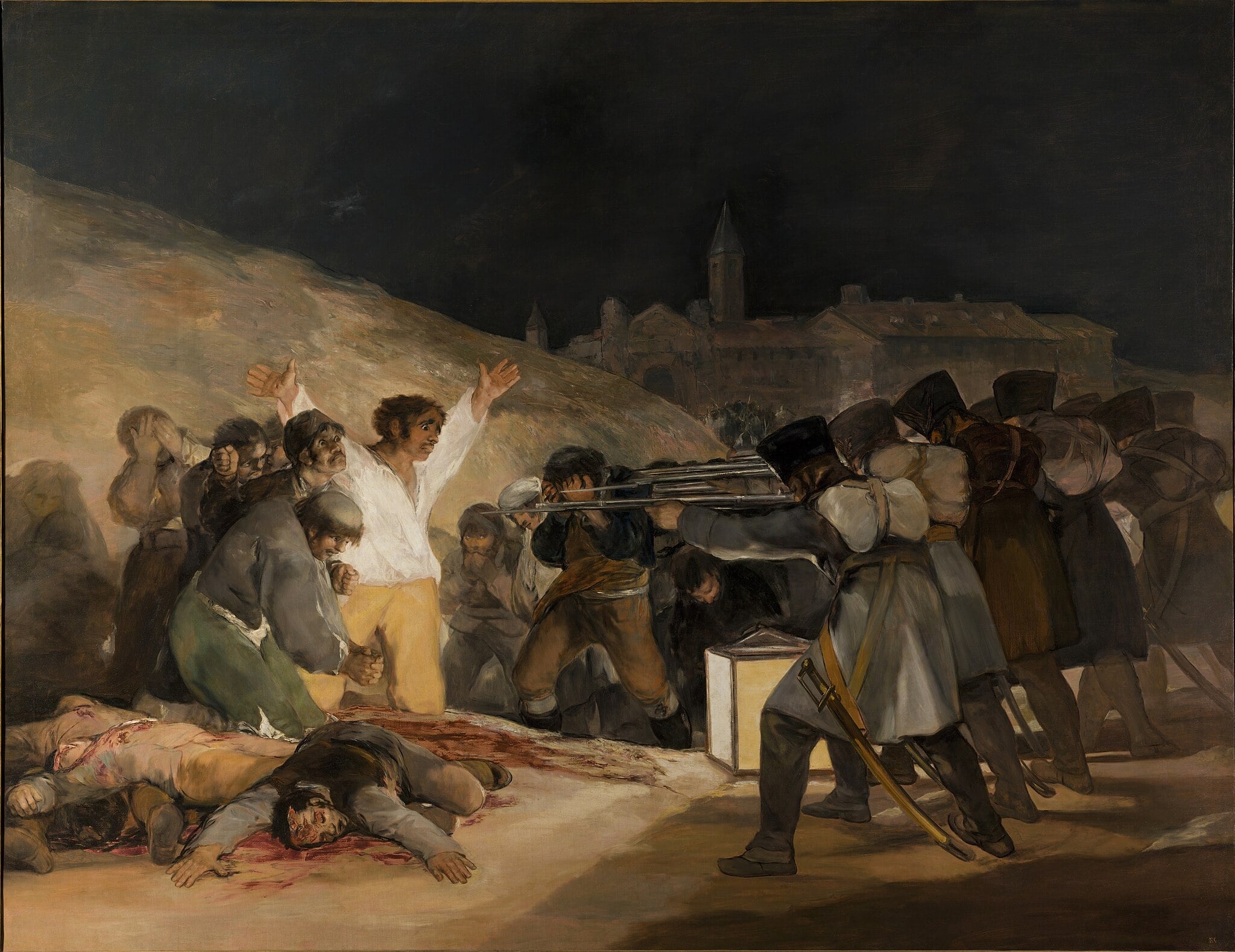
The Third of May 1808
Francisco Goya (1814)
Francisco Goya’s The Third of May 1808 turns a specific reprisal after Madrid’s uprising into a universal indictment of <strong>state violence</strong>. A lantern’s harsh glare isolates a civilian who raises his arms in a <strong>cruciform</strong> gesture as a faceless firing squad executes prisoners, transforming reportage into <strong>modern anti-war testimony</strong> <sup>[1]</sup><sup>[2]</sup>.
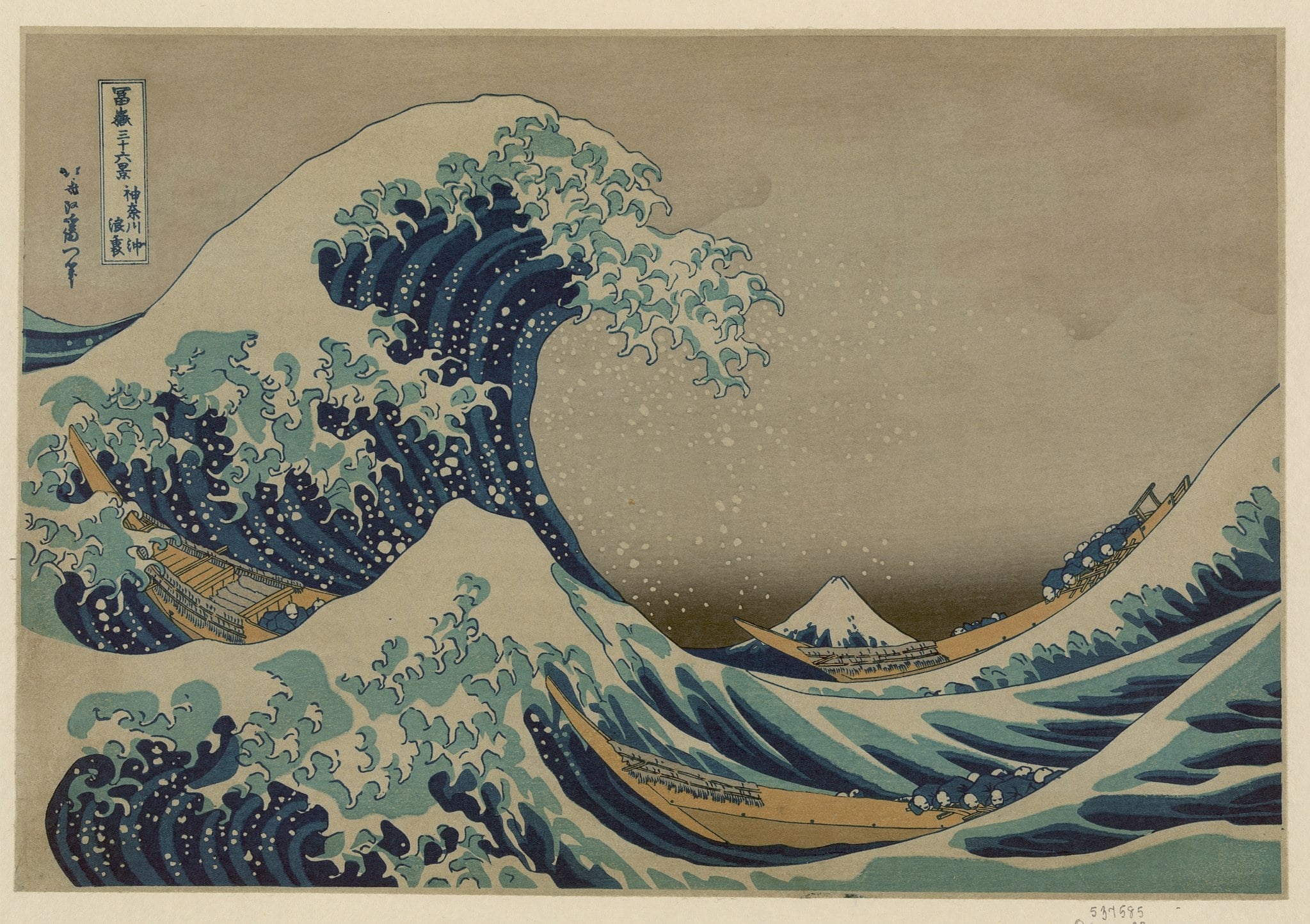
The Great Wave off Kanagawa
Hokusai (ca. 1830–32)
The Great Wave off Kanagawa distills a universal drama: fragile laboring boats face a <strong>towering breaker</strong> while <strong>Mount Fuji</strong> sits small yet immovable. Hokusai wields <strong>Prussian blue</strong> to sculpt depth and cold inevitability, fusing ukiyo‑e elegance with Western perspective to stage nature’s power against human resolve <sup>[1]</sup><sup>[3]</sup>.
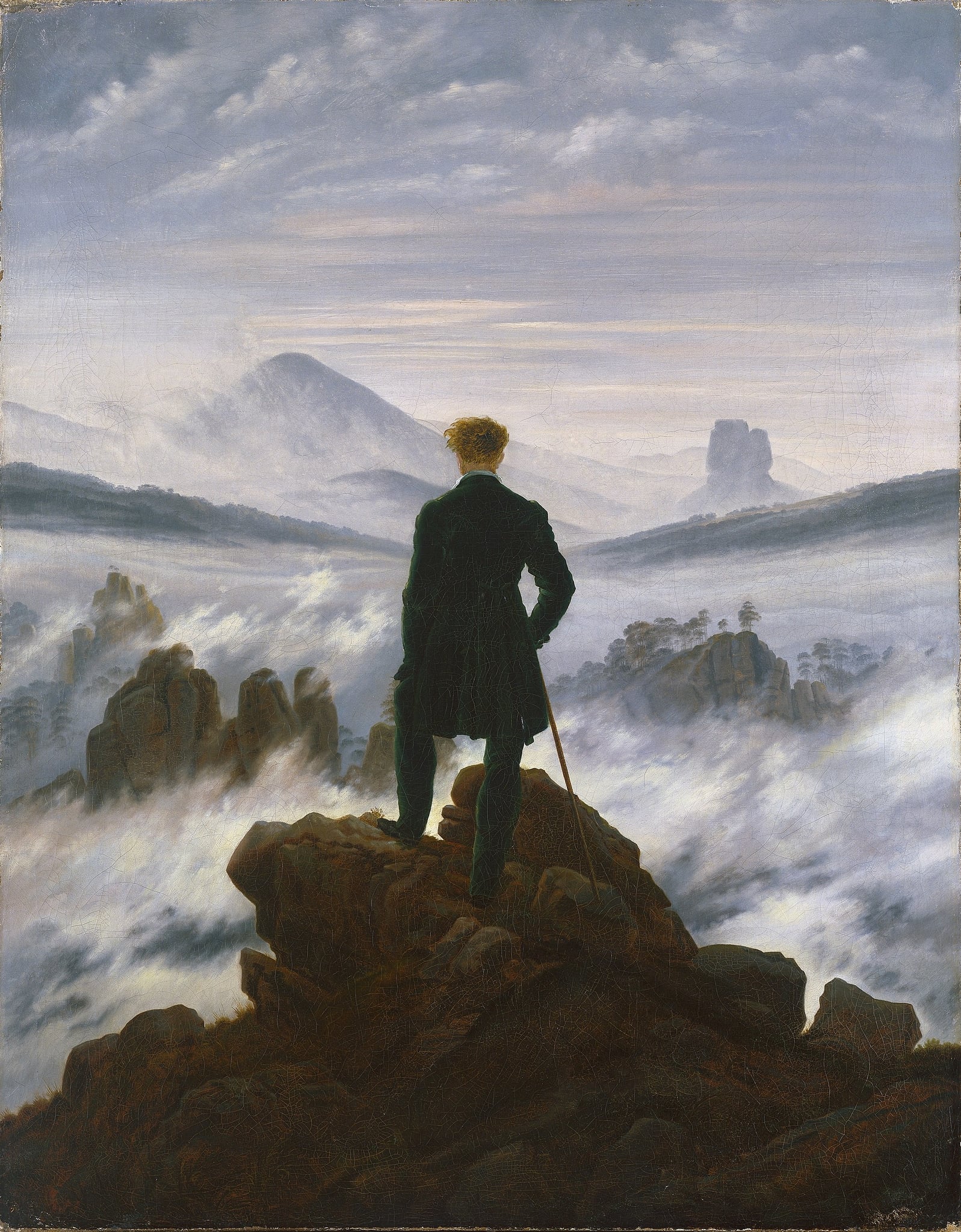
The Wanderer above the Sea of Fog
Caspar David Friedrich (ca. 1817)
Caspar David Friedrich’s The Wanderer above the Sea of Fog distills the Romantic encounter with nature into a single <strong>Rückenfigur</strong> poised on jagged rock above a rolling <strong>sea of mist</strong>. The cool, receding vista and the figure’s still stance convert landscape into an <strong>inner drama of contemplation</strong> and the <strong>sublime</strong> <sup>[1]</sup><sup>[3]</sup>.
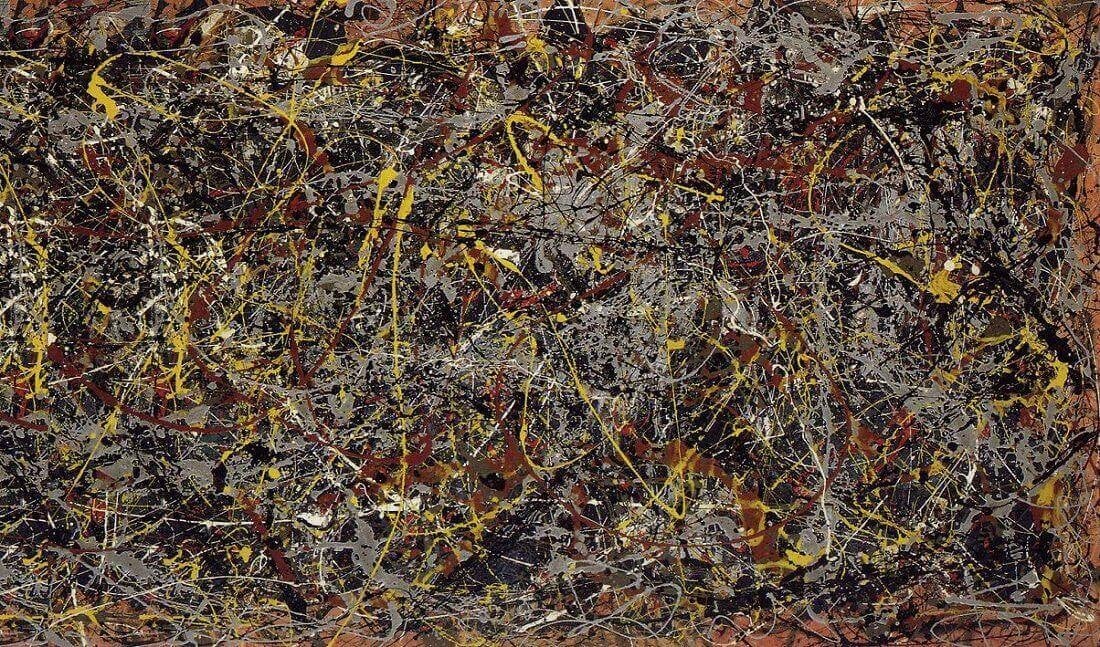
No. 5, 1948
Jackson Pollock (1948)
<strong>No. 5, 1948</strong> is a large, floor‑painted field of poured enamel where tangled skeins of black, gray, umber, and bursts of yellow span the entire support. Its <strong>all‑over</strong> structure rejects a central motif, turning the painting into a record of motion and material behavior. The result is a charged surface that reads as both <strong>image and event</strong> <sup>[1]</sup><sup>[2]</sup><sup>[3]</sup>.
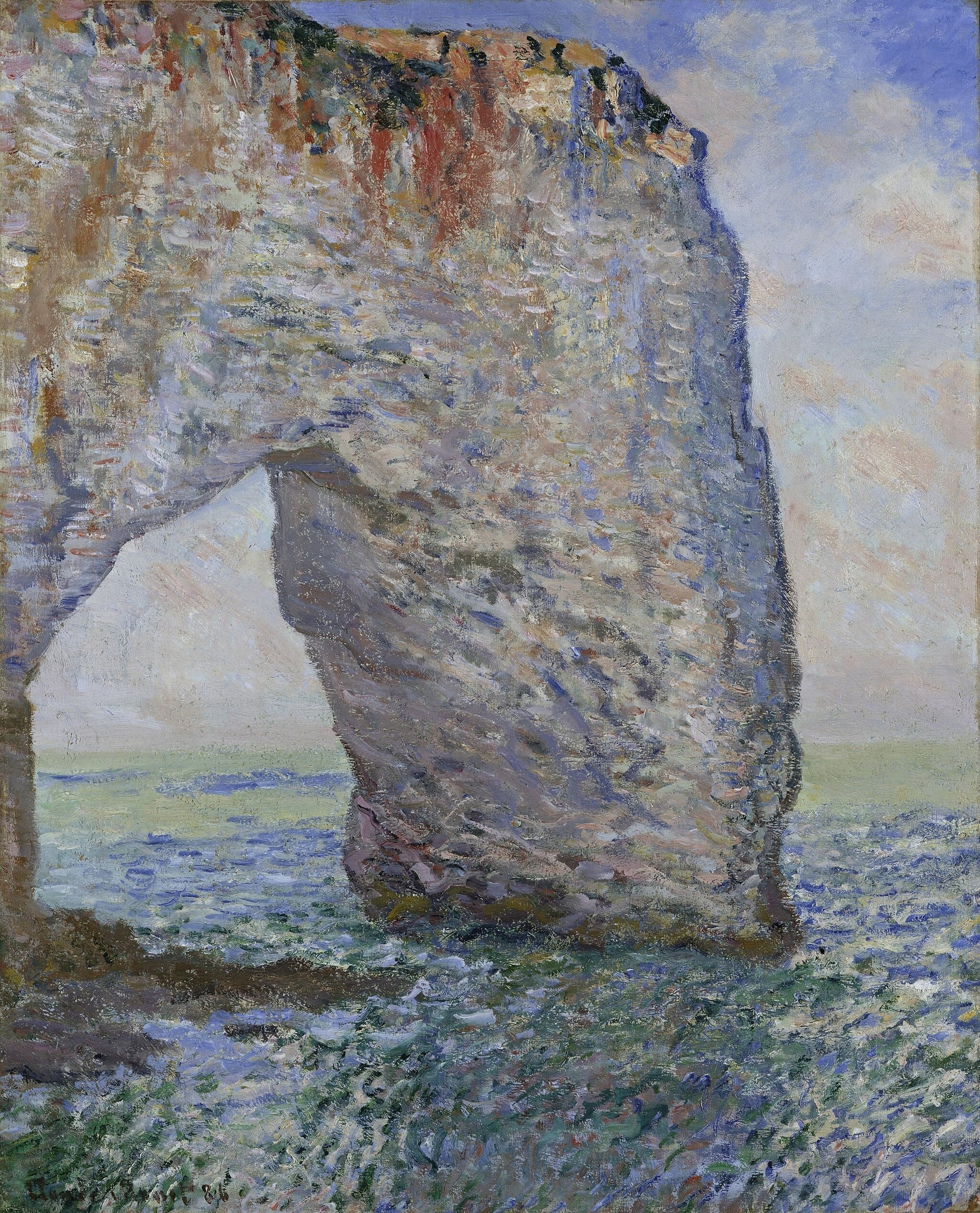
The Manneporte near Étretat
Claude Monet (1886)
Monet’s The Manneporte near Étretat turns the colossal sea arch into a <strong>threshold of light</strong>: rock, sea, and air interlock as shifting color rather than fixed form. Dense lilac–ochre strokes make the cliff feel massive yet <strong>dematerialized</strong> by illumination, while the arch’s opening stages a quiet, glimmering horizon <sup>[1]</sup><sup>[2]</sup>.
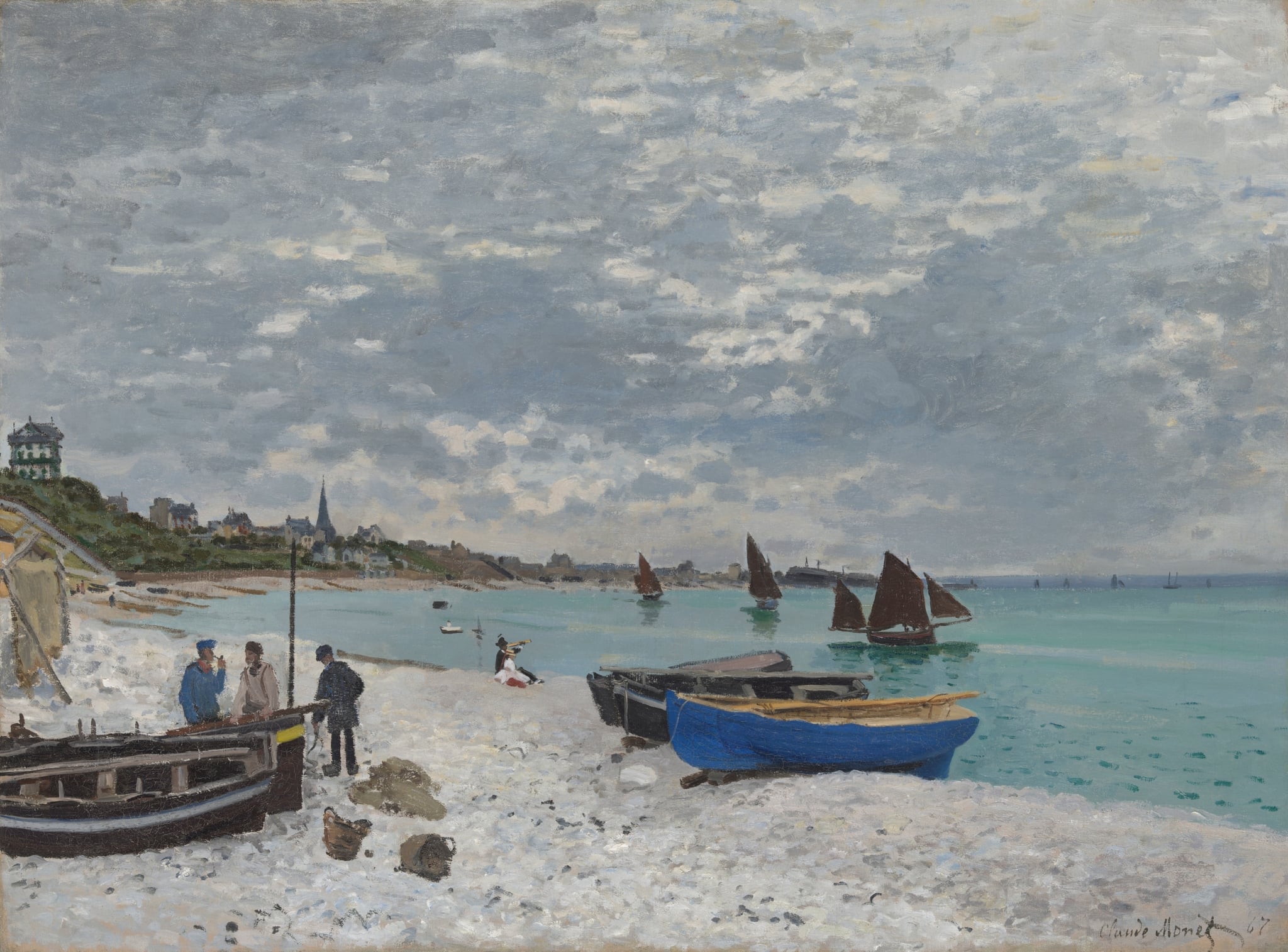
The Beach at Sainte-Adresse
Claude Monet (1867)
In The Beach at Sainte-Adresse, Claude Monet stages a modern shore where <strong>labor and leisure intersect</strong> under a broad, changeable sky. The bright <strong>blue beached boat</strong> and the flotilla of <strong>rust-brown working sails</strong> punctuate a turquoise channel, while a fashionably dressed pair sits mid-beach, spectators to the traffic of the port. Monet’s brisk, broken strokes make the scene feel <strong>caught between tides and weather</strong>, a momentary balance of work, tourism, and atmosphere <sup>[1]</sup><sup>[2]</sup>.
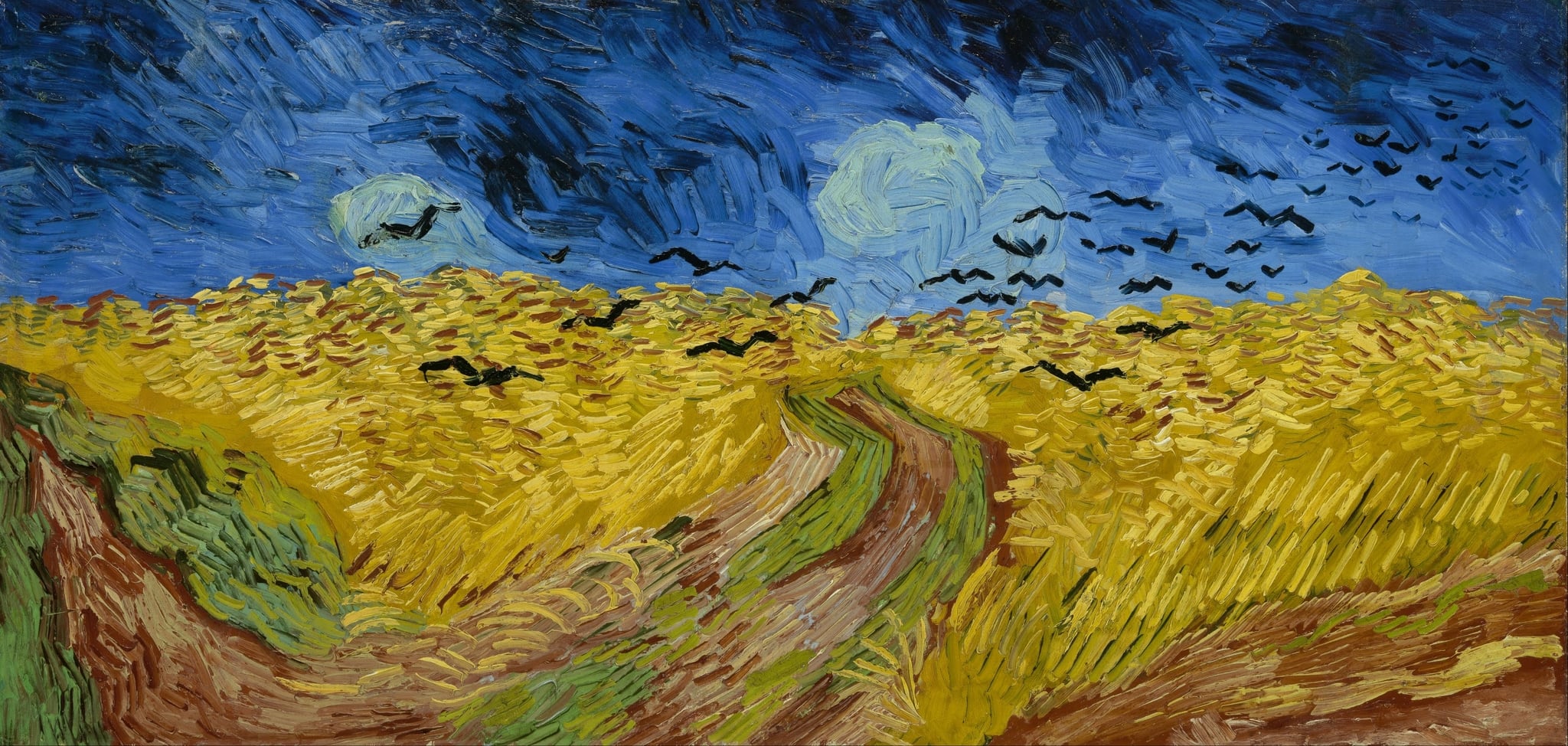
Wheatfield with Crows
Vincent van Gogh (1890)
A panoramic wheatfield splits around a rutted track under a storm-charged sky while black crows rush toward us. Van Gogh drives complementary blues and yellows into collision, fusing <strong>nature’s vitality</strong> with <strong>inner turbulence</strong>.

Agapanthus
Claude Monet (c. 1915–1926)
In Agapanthus, Claude Monet turns a close-cropped bed of lilies into a field of <strong>pure movement and light</strong>. Lilac blooms flicker against layered greens, their long, arcing stems written in <strong>calligraphic strokes</strong> that dissolve the line between plant and air.
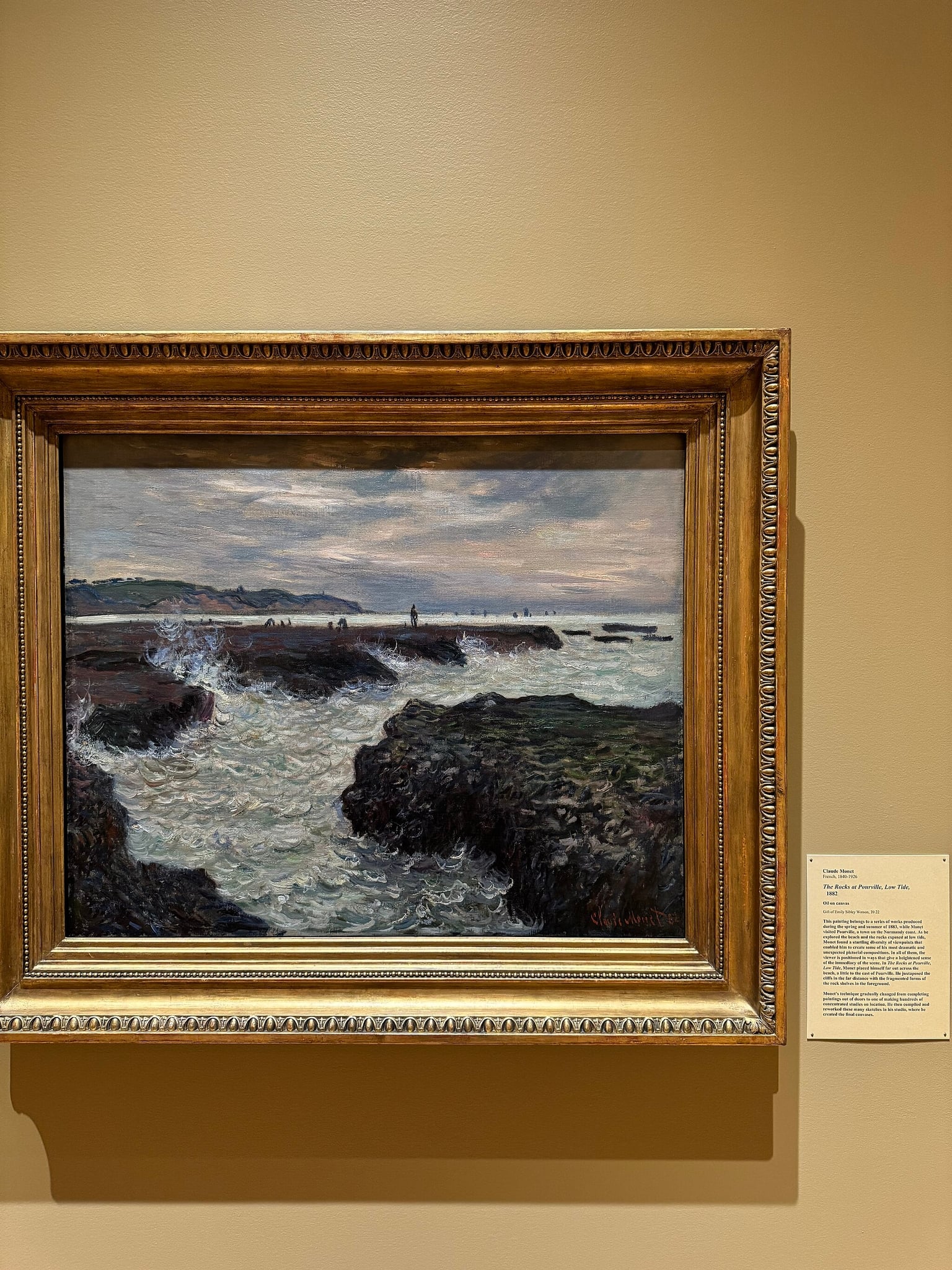
The Rocks at Pourville, Low Tide
Claude Monet (1882)
Claude Monet’s The Rocks at Pourville, Low Tide renders the Normandy foreshore as a meeting of <strong>endurance and flux</strong>—dark, seaweed-laden rocks cleave through <strong>foaming, mobile surf</strong> beneath a cool, <strong>pewter sky</strong>. Tiny silhouettes along the horizon reduce human presence to scale and rhythm, centering nature’s <strong>temporal pulse</strong>.
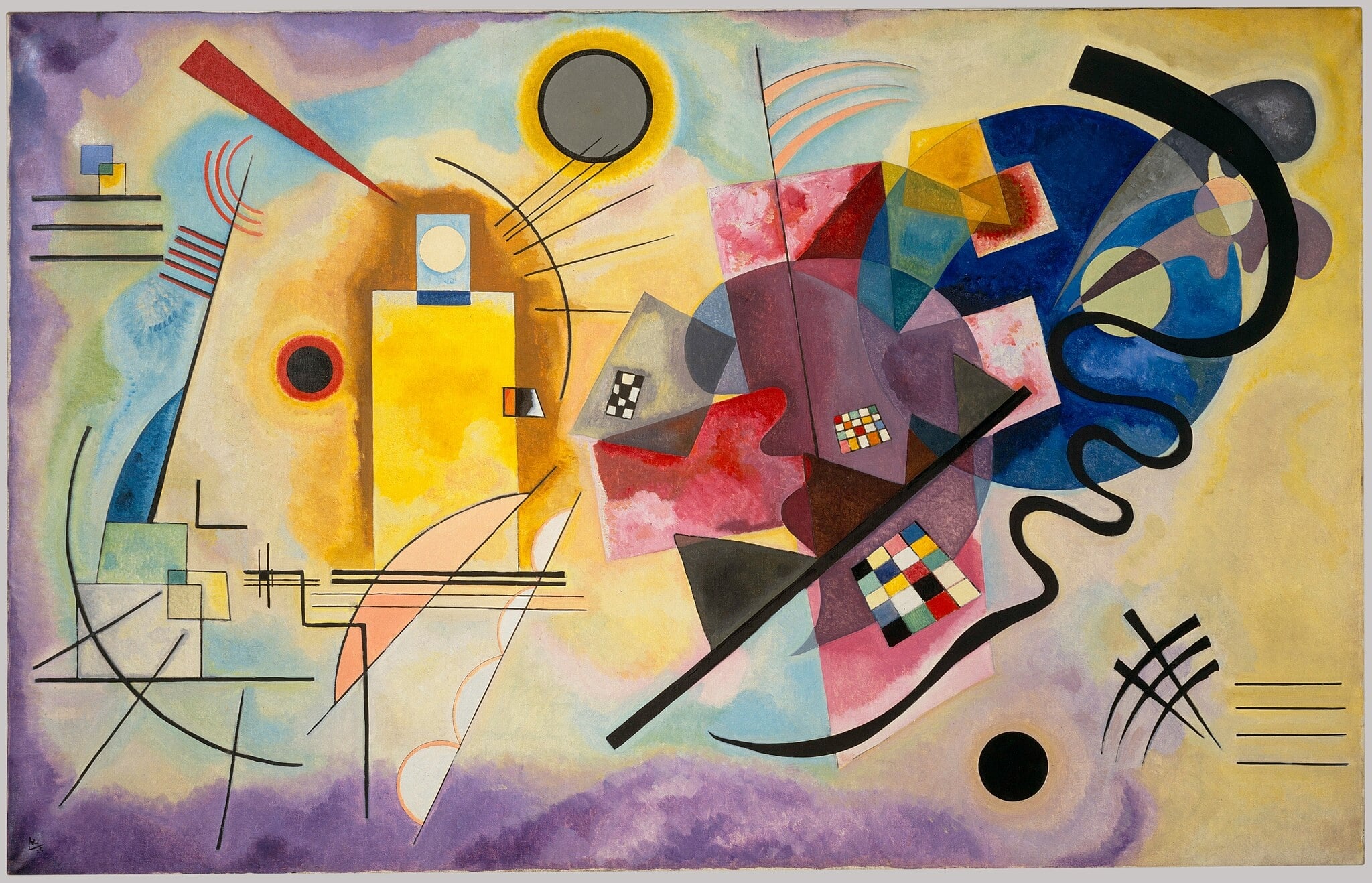
Yellow-Red-Blue
Wassily Kandinsky (1925)
Yellow-Red-Blue stages a collision of <strong>order and impulse</strong> through primary color and geometry. A lucid field of yellow rectangles and orthogonals confronts a vortex of blues, reds, circles, and a serpentine black line, all bound by a commanding black diagonal. The canvas reads like a <strong>spiritual score</strong>, balancing tensions into dynamic equilibrium.

Mont Sainte-Victoire
Paul Cézanne (1902–1906)
Cézanne’s Mont Sainte-Victoire renders the Provençal massif as a constructed order of <strong>planes and color</strong>, not a fleeting impression. Cool blues and violets articulate the mountain’s facets, while <strong>ochres and greens</strong> laminate the fields and blocky houses, binding atmosphere and form into a single structure <sup>[2]</sup><sup>[4]</sup>.
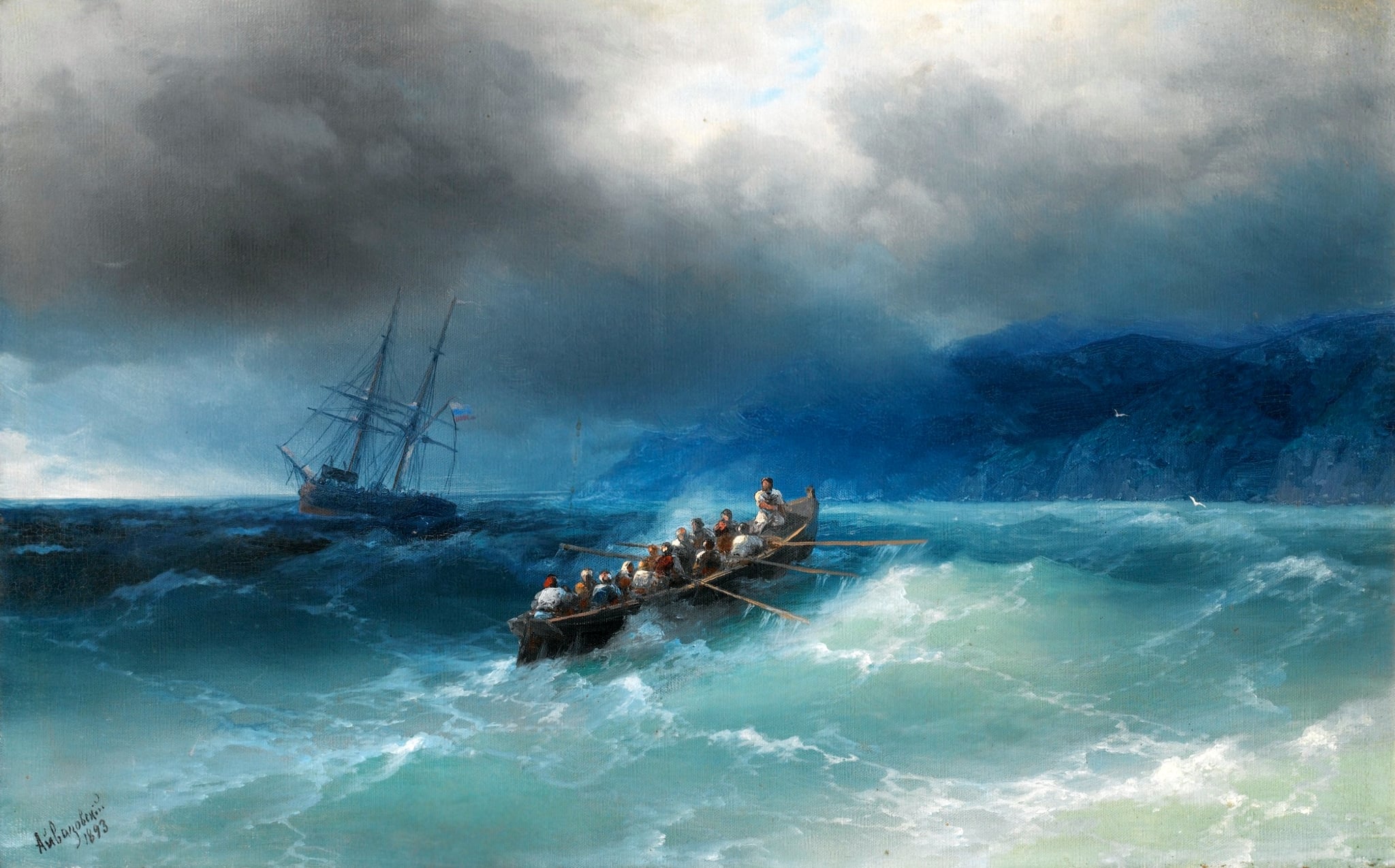
The Storm (Seascape)
Ivan Aivazovsky (1850)
In The Storm (Seascape), Ivan Aivazovsky forges a drama of <strong>human resolve</strong> against the <strong>Sublime sea</strong>. A crowded lifeboat claws up a green-blue swell toward a <strong>break of light</strong>, while a tall-masted ship lists behind and a <strong>rocky coast</strong> looms to the right. The painting crystallizes peril and hope in a single, surging moment.
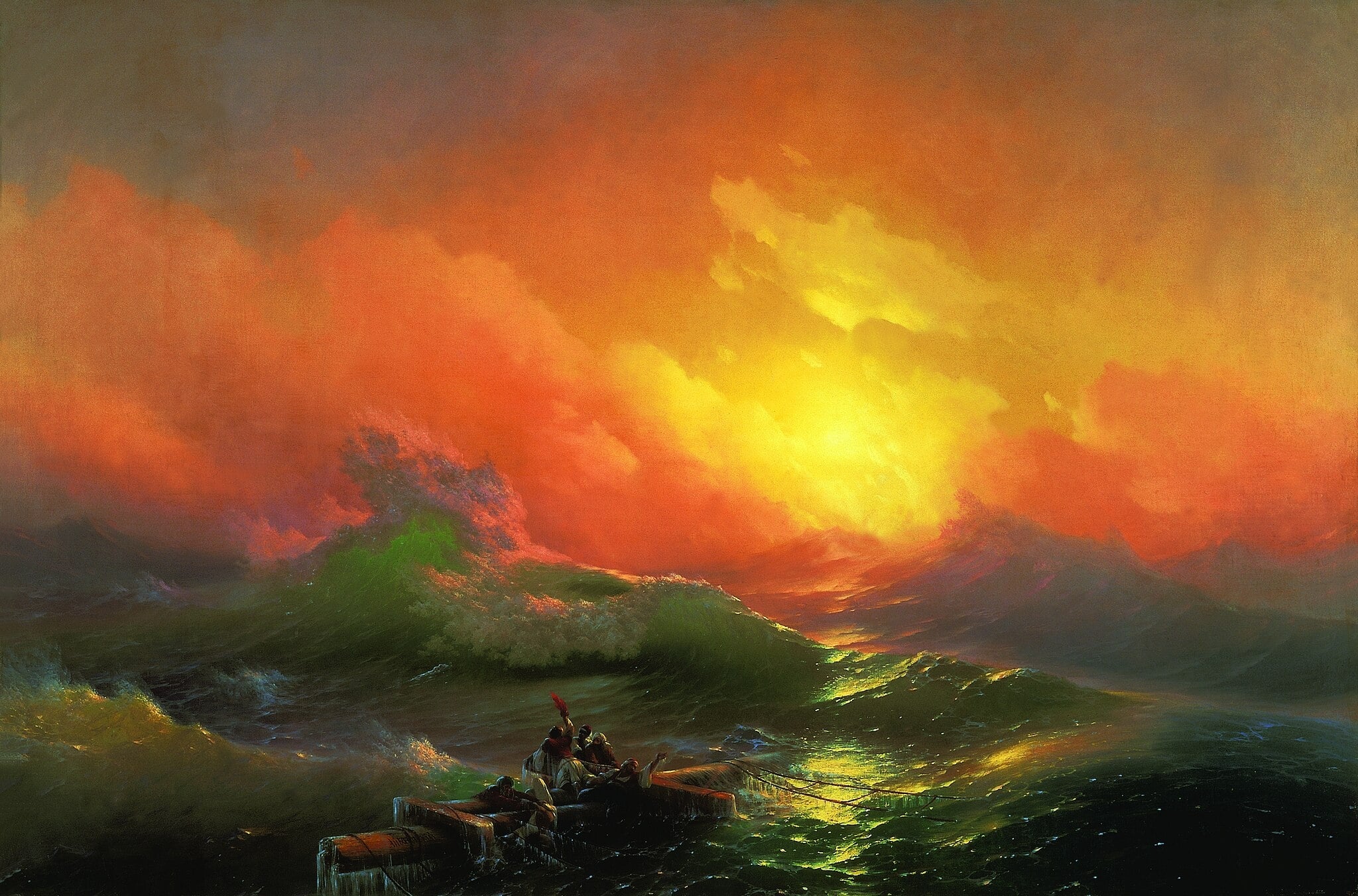
The Ninth Wave
Ivan Aivazovsky (1850)
The Ninth Wave stages a struggle between annihilation and deliverance on a heaving sea, where survivors cling to a cross‑shaped raft under a <strong>molten dawn</strong>. Aivazovsky turns light into a <strong>redemptive force</strong>, cutting a golden path across emerald waves that both threaten and guide the castaways <sup>[1]</sup><sup>[3]</sup>.
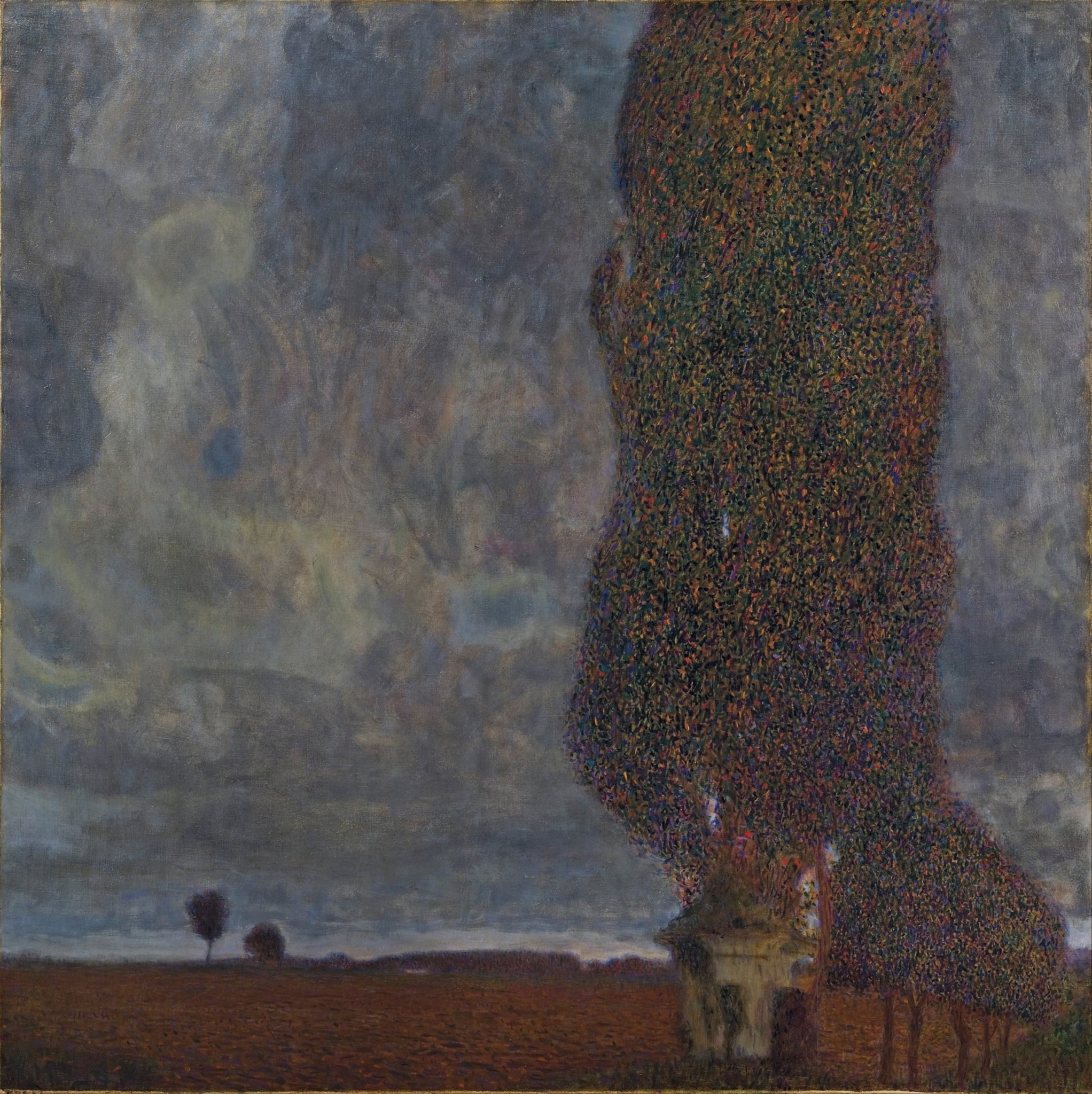
The Large Poplar II (Gathering Storm)
Gustav Klimt (1902/03)
In The Large Poplar II (Gathering Storm), a monumental poplar rises like a <strong>sentinel</strong> at the right edge while a low, rust-toned plain and tiny chapel anchor the horizon. Klimt devotes most of the square canvas to a <strong>charged, near-monochrome sky</strong>, making weather the protagonist and turning the tree’s flecked canopy into a shimmering, ominous <strong>mosaic</strong> <sup>[1]</sup><sup>[2]</sup>.