The Return of the Prodigal Son
Study Print Studio
Create a personal study print
Build a companion study sheet around the part of this painting that speaks to you most. Choose a detail, shape an interpretation, and walk away with something personal and display-worthy.
Fast Facts
- Year
- c. 1661–1669 (probably completed by 1669)
- Medium
- Oil on canvas
- Dimensions
- 262 × 205 cm
- Location
- The State Hermitage Museum, Saint Petersburg
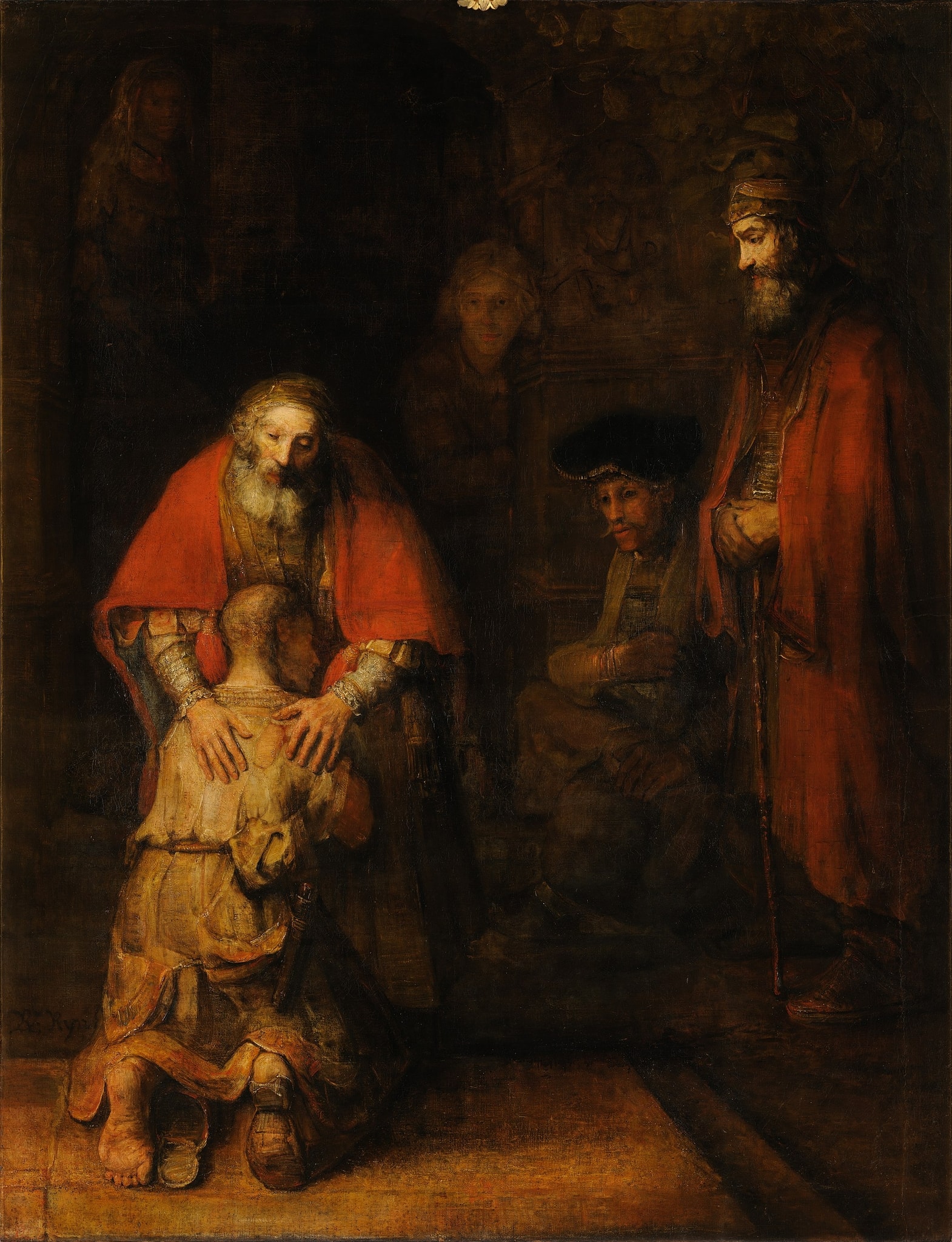
Click on any numbered symbol to learn more about its meaning
Meaning & Symbolism
Explore Deeper with AI
Ask questions about The Return of the Prodigal Son
Popular questions:
Powered by AI • Get instant insights about this artwork
Interpretations
Formal Analysis: Late-Style Material Devotion
Source: National Gallery, London; National Gallery of Art, Washington
Iconography of Witnesses: Ethics of Spectatorship
Source: University of Michigan dissertation (1983)
Reception History: The ‘Two Hands’ Debate
Source: Henri J. M. Nouwen; Janson; Rosenberg/Slive; Kenneth Clark (via consolidated references)
Socio-Economic Ethics: Restitution Beyond Merit
Source: The Christian Century; Camilliani Institute commentary
Spatial Liturgy: From Threshold to Altar
Source: National Gallery, London; Web Gallery of Art (Rosenberg/Slive summary)
Temporal Psychology: The Long Now of Mercy
Source: National Gallery of Art, Washington; Janson and related canonical summaries
Related Themes
About Rembrandt van Rijn
More by Rembrandt van Rijn
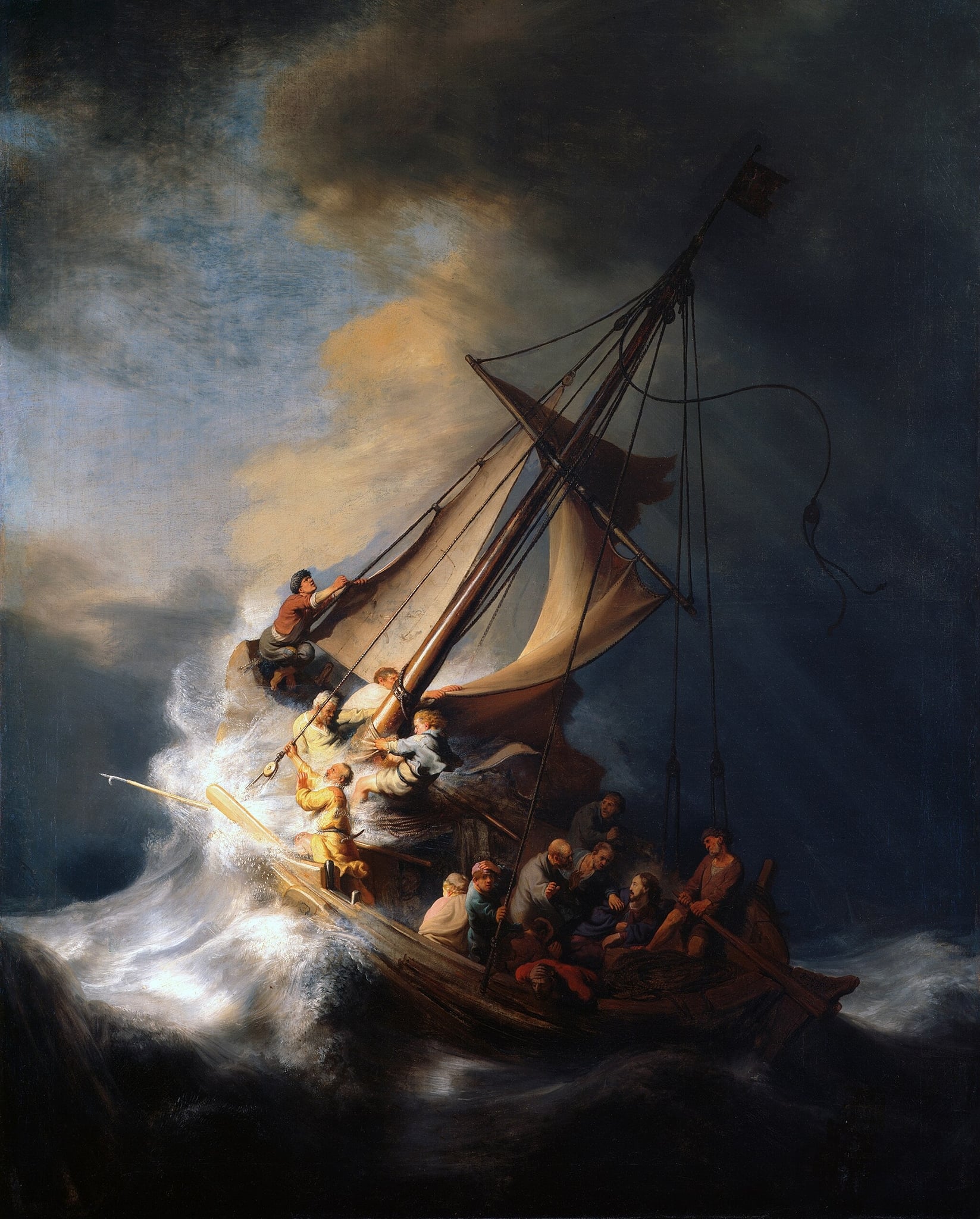
The Storm on the Sea of Galilee
Rembrandt van Rijn (1633)
Rembrandt van Rijn’s The Storm on the Sea of Galilee stages a clash of <strong>human panic</strong> and <strong>divine composure</strong> at the instant before the miracle. A torn mainsail whips across a steeply tilted boat as terrified disciples scramble, while a <strong>serenely lit Christ</strong> anchors a pocket of calm—an image of faith holding within chaos <sup>[1]</sup><sup>[3]</sup>. It is Rembrandt’s only painted seascape, intensifying its dramatic singularity in his oeuvre <sup>[2]</sup>.
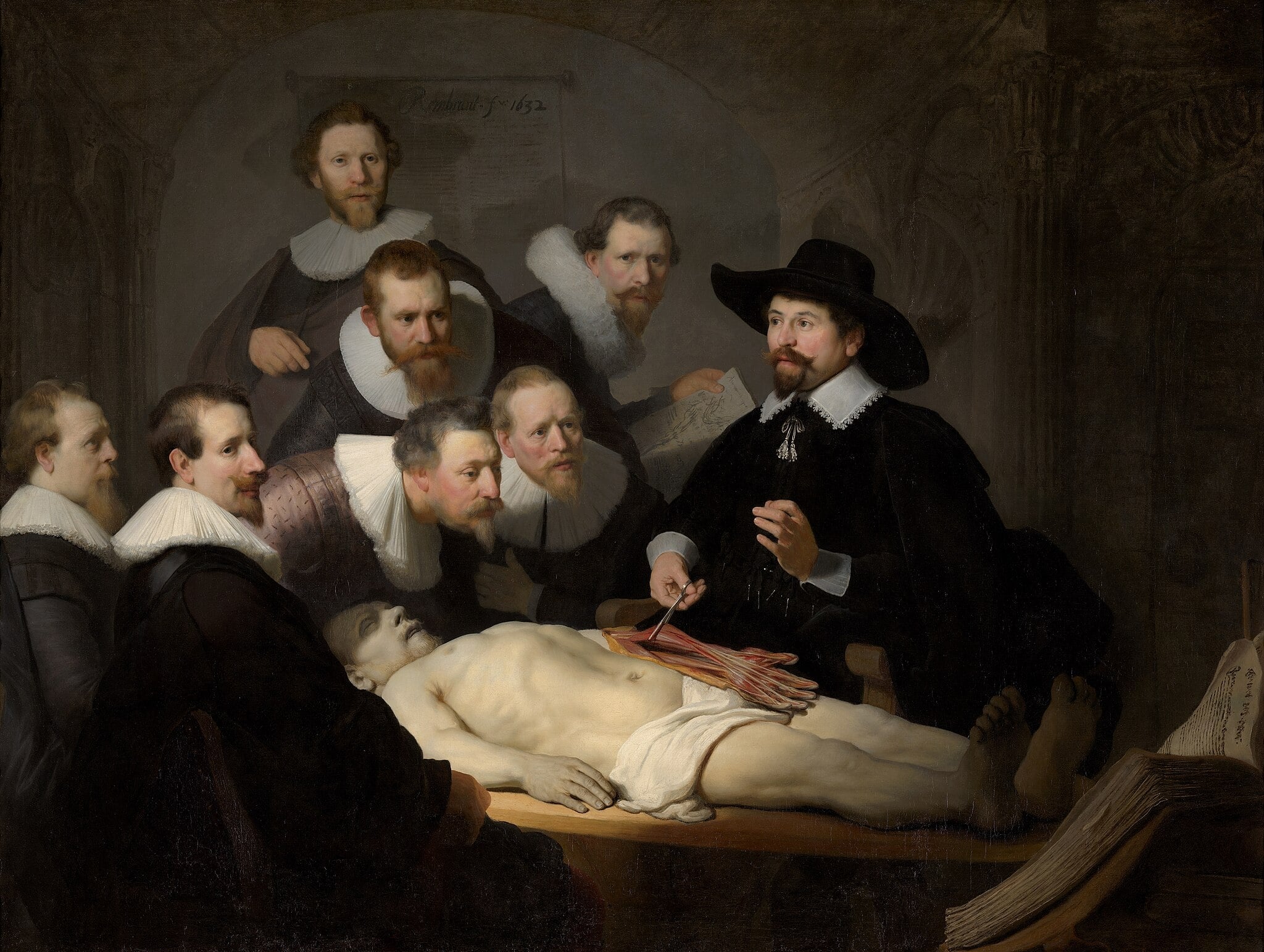
The Anatomy Lesson of Dr. Nicolaes Tulp
Rembrandt van Rijn (1632)
Rembrandt van Rijn turns a civic commission into a drama of <strong>knowledge made visible</strong>. A cone of light binds the ruff‑collared surgeons, the pale cadaver, and Dr. Tulp’s forceps as he raises the <strong>forearm tendons</strong> to explain the hand. Book and body face each other across the table, staging the tension—and alliance—between <strong>textual authority</strong> and <strong>empirical observation</strong> <sup>[1]</sup><sup>[2]</sup>.
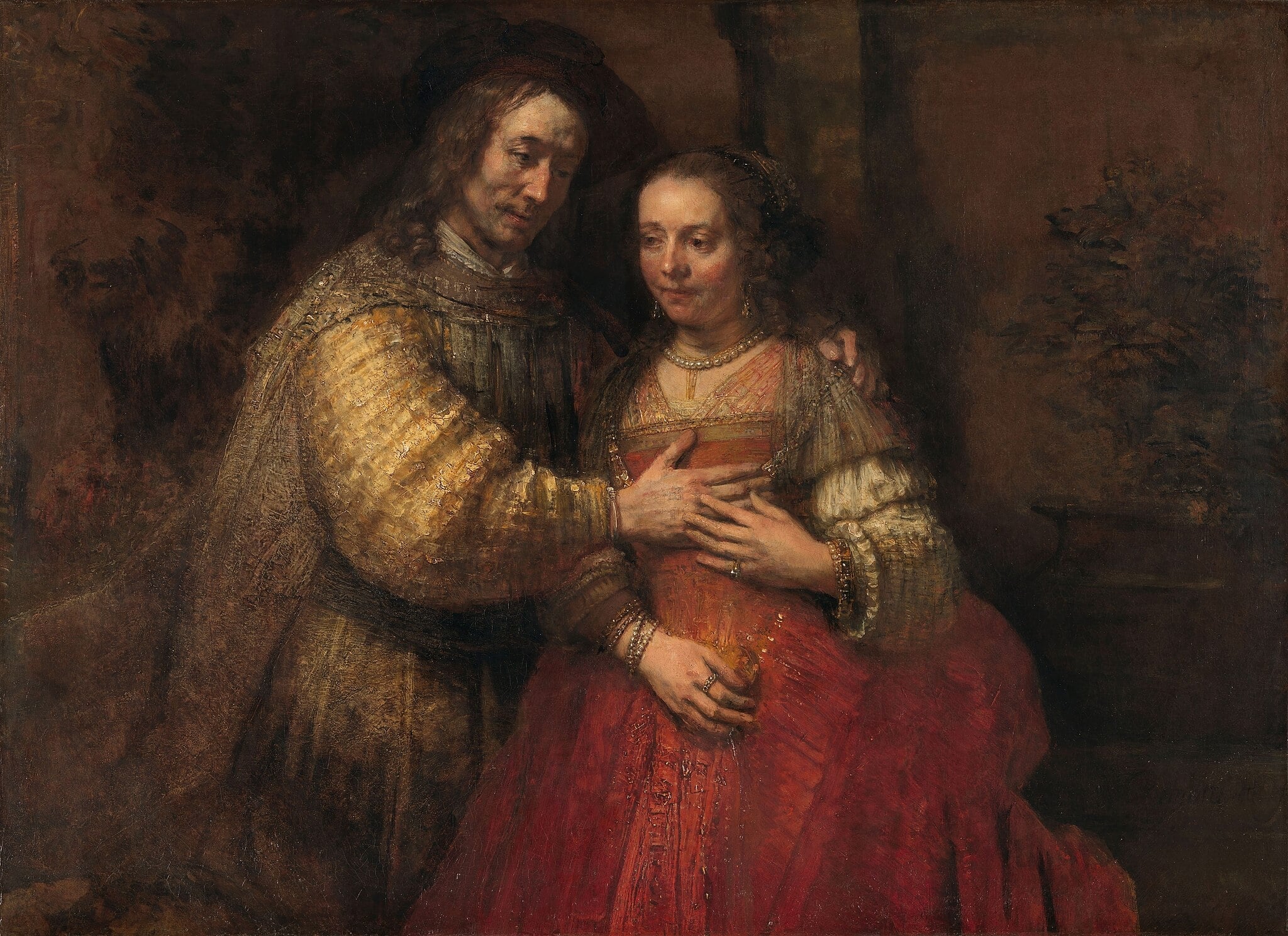
The Jewish Bride
Rembrandt van Rijn (c. 1665–1669)
The Jewish Bride by Rembrandt van Rijn stages an intimate covenant: two figures, read today as <strong>Isaac and Rebecca</strong>, seal their union through touch rather than spectacle. Light concentrates on faces and hands, while the man’s glittering <strong>gold sleeve</strong> and the woman’s <strong>coral-red gown</strong> turn paint itself into a metaphor for fidelity and tenderness <sup>[1]</sup><sup>[3]</sup>. This late masterpiece embodies Rembrandt’s <strong>material eloquence</strong>—impasto as feeling—within a hushed, dark setting <sup>[1]</sup><sup>[2]</sup>.