The Storm on the Sea of Galilee
Study Print Studio
Create a personal study print
Build a companion study sheet around the part of this painting that speaks to you most. Choose a detail, shape an interpretation, and walk away with something personal and display-worthy.
Fast Facts
- Year
- 1633
- Medium
- Oil on canvas
- Dimensions
- 160 × 128 cm (63 × 50 3/8 in.)
- Location
- Isabella Stewart Gardner Museum, Boston (stolen; whereabouts unknown)
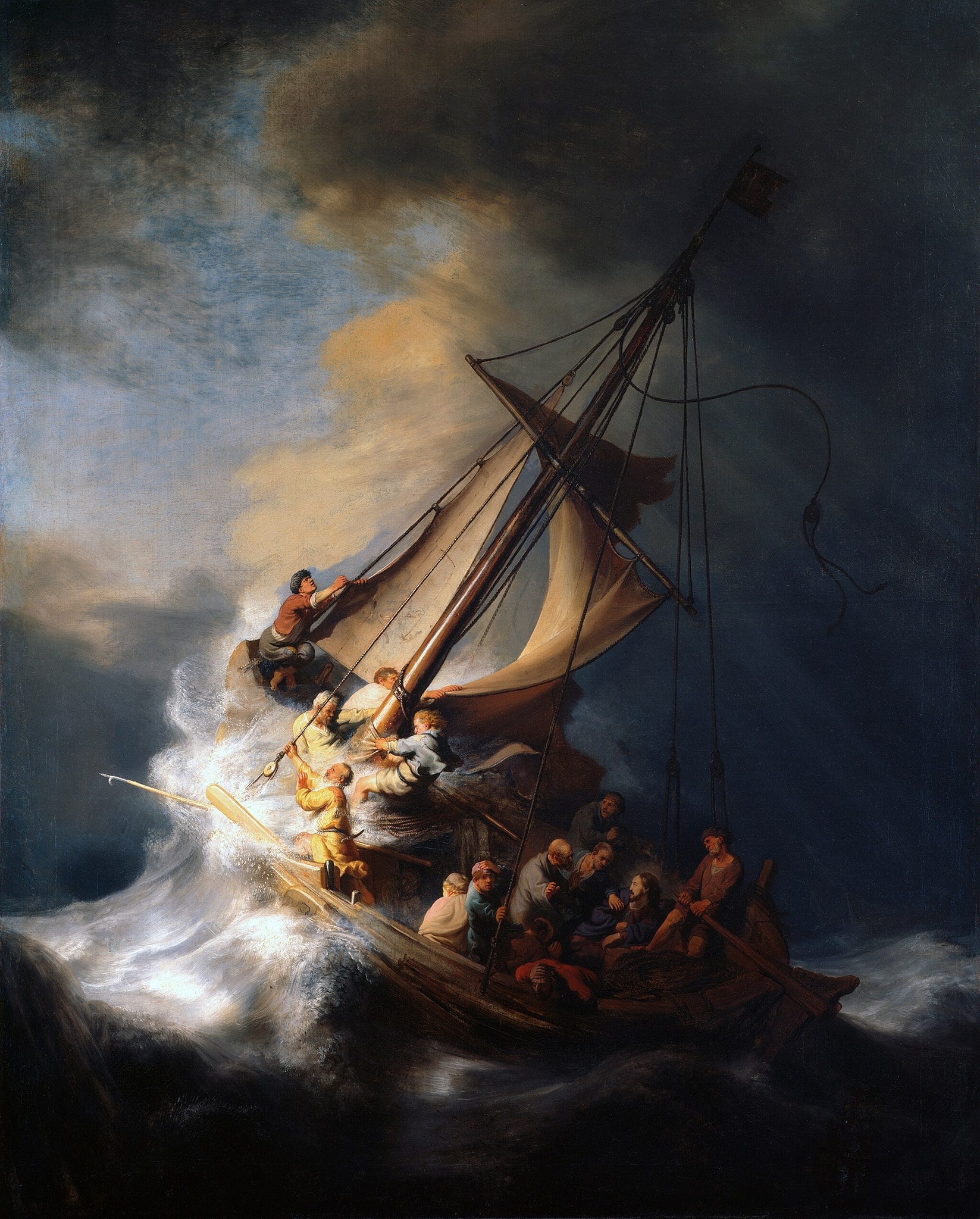
Click on any numbered symbol to learn more about its meaning
Meaning & Symbolism
Explore Deeper with AI
Ask questions about The Storm on the Sea of Galilee
Popular questions:
Powered by AI • Get instant insights about this artwork
Interpretations
Formal Genealogy: From de Vos’s Print to Rembrandt’s Vertical Maelstrom
Source: ISGM (object essay) and influence studies via Maerten de Vos/Collaert
Expressive Inaccuracy: Nautical ‘Errors’ as Baroque Rhetoric
Source: John Walsh, Notes in the History of Art (1985); ISGM
Market and Medium: Early Amsterdam Bravura as Credo
Source: ISGM; FBI (only seascape); Britannica (First Amsterdam period)
Theology of Light: From Rebuke Imagined to Illumination Felt
Source: ISGM (Zell excerpt); John Walsh
Beholder Inside the Boat: Authorship, Address, and Devotion
Source: ISGM; FBI image/inscription record
Afterlife of an Image: Theft, Absence, and the Work’s Aura
Source: FBI National Stolen Art File; ISGM blog on the frames; ISGM object page
Related Themes
About Rembrandt van Rijn
More by Rembrandt van Rijn
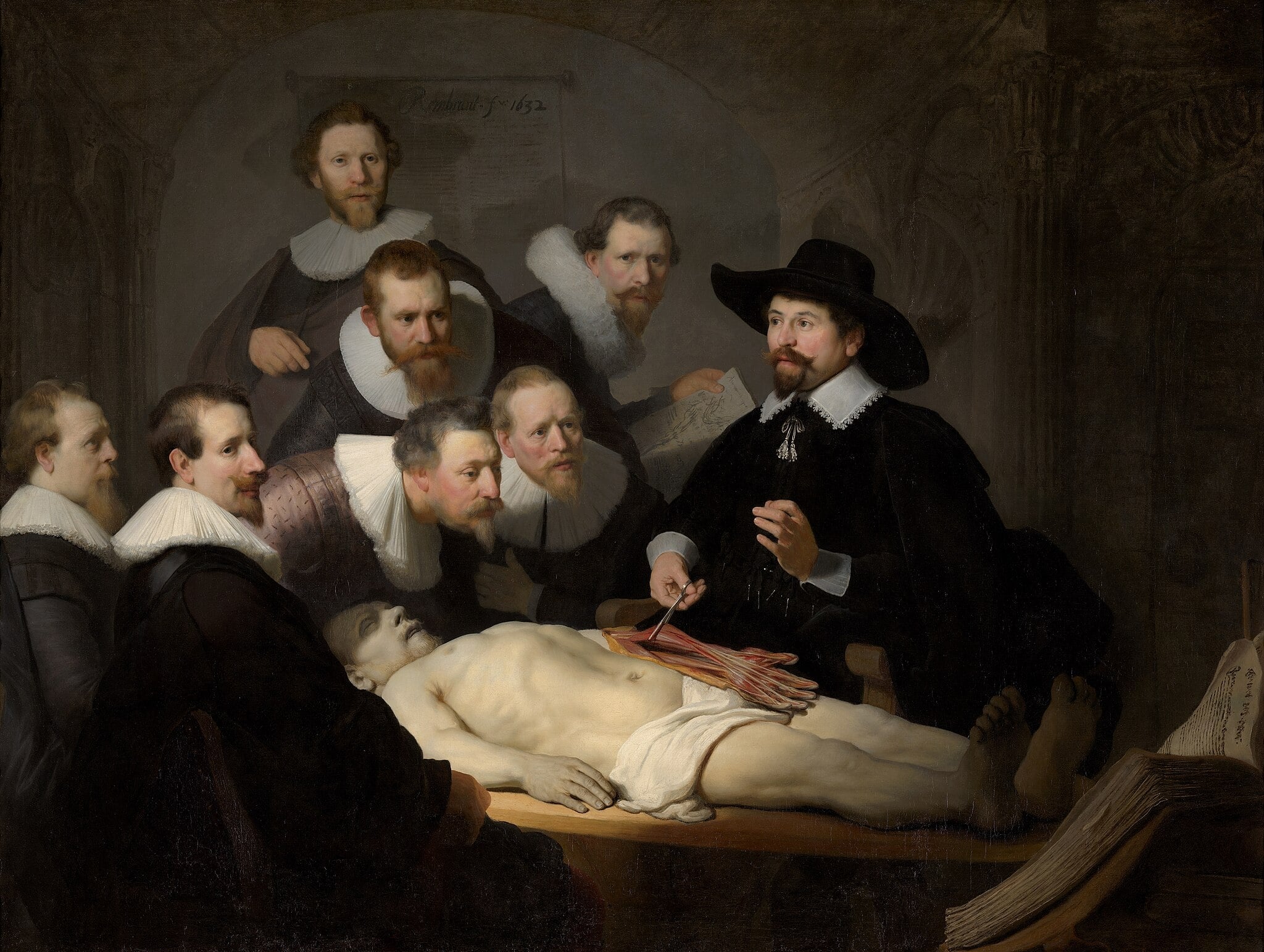
The Anatomy Lesson of Dr. Nicolaes Tulp
Rembrandt van Rijn (1632)
Rembrandt van Rijn turns a civic commission into a drama of <strong>knowledge made visible</strong>. A cone of light binds the ruff‑collared surgeons, the pale cadaver, and Dr. Tulp’s forceps as he raises the <strong>forearm tendons</strong> to explain the hand. Book and body face each other across the table, staging the tension—and alliance—between <strong>textual authority</strong> and <strong>empirical observation</strong> <sup>[1]</sup><sup>[2]</sup>.
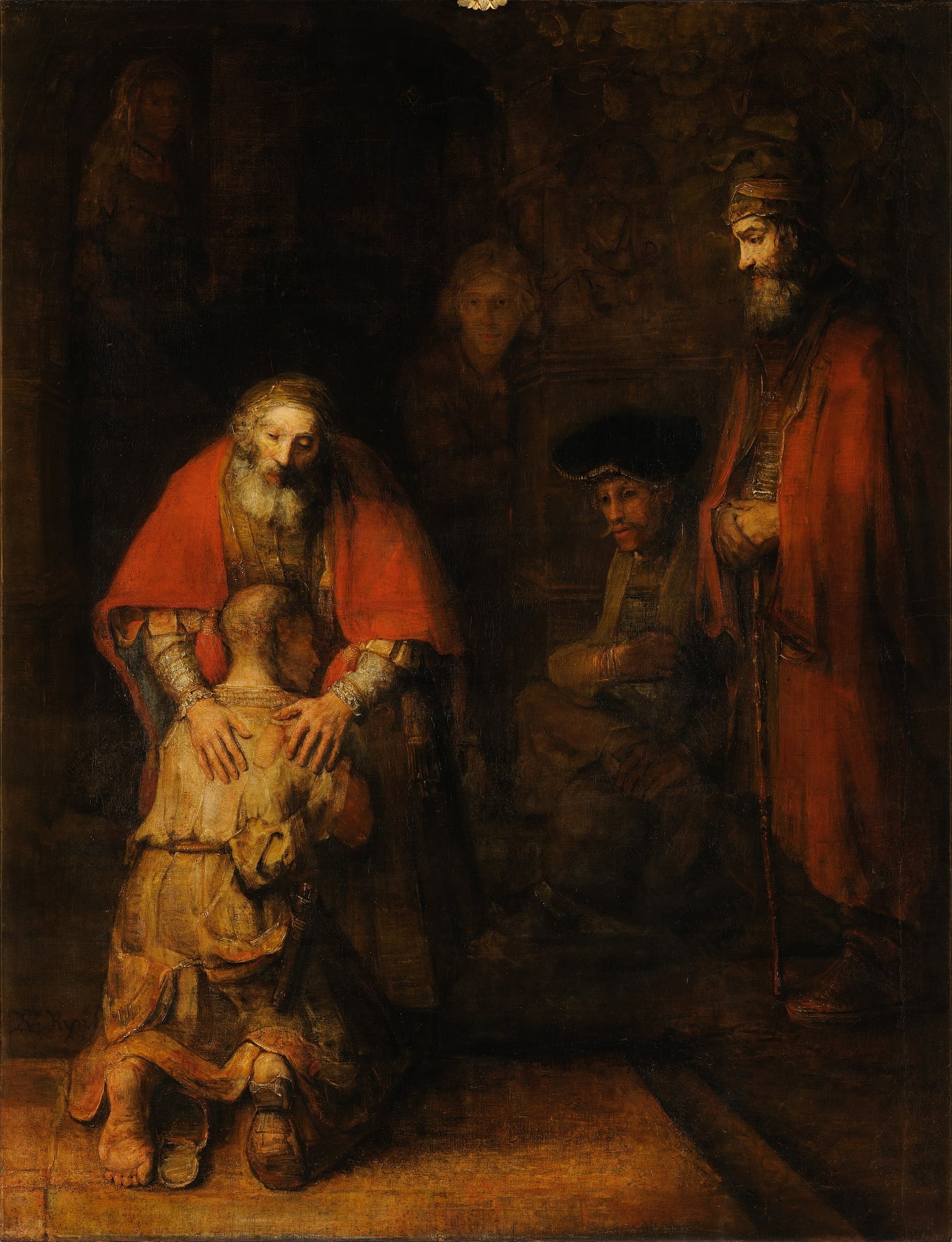
The Return of the Prodigal Son
Rembrandt van Rijn (c. 1661–1669 (probably completed by 1669))
Rembrandt van Rijn’s The Return of the Prodigal Son is a late-life meditation on <strong>mercy</strong>, <strong>homecoming</strong>, and <strong>restored dignity</strong>. In a hush of dusk-like light, a ragged son kneels into his father’s <strong>embrace</strong>, while an upright elder brother holds back in shadow. The image concentrates meaning in illuminated <strong>faces, hands, and feet</strong>, turning a parable into a timeless human reckoning. <sup>[1]</sup><sup>[2]</sup>
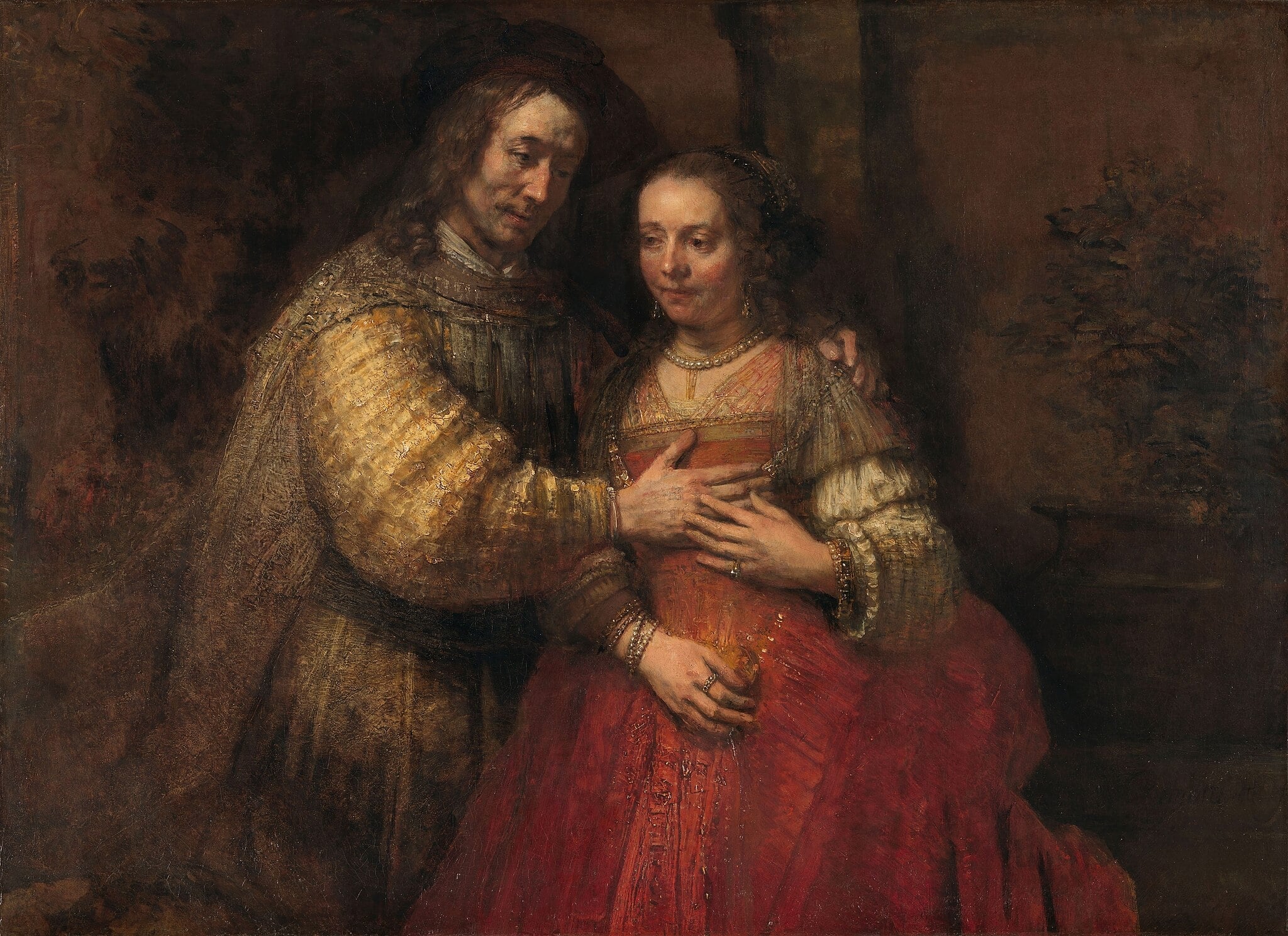
The Jewish Bride
Rembrandt van Rijn (c. 1665–1669)
The Jewish Bride by Rembrandt van Rijn stages an intimate covenant: two figures, read today as <strong>Isaac and Rebecca</strong>, seal their union through touch rather than spectacle. Light concentrates on faces and hands, while the man’s glittering <strong>gold sleeve</strong> and the woman’s <strong>coral-red gown</strong> turn paint itself into a metaphor for fidelity and tenderness <sup>[1]</sup><sup>[3]</sup>. This late masterpiece embodies Rembrandt’s <strong>material eloquence</strong>—impasto as feeling—within a hushed, dark setting <sup>[1]</sup><sup>[2]</sup>.