The Birth of Venus
Study Print Studio
Create a personal study print
Build a companion study sheet around the part of this painting that speaks to you most. Choose a detail, shape an interpretation, and walk away with something personal and display-worthy.
Fast Facts
- Year
- c. 1484–1486
- Medium
- Tempera on canvas
- Dimensions
- 172.5 × 278.5 cm
- Location
- Uffizi Galleries, Florence
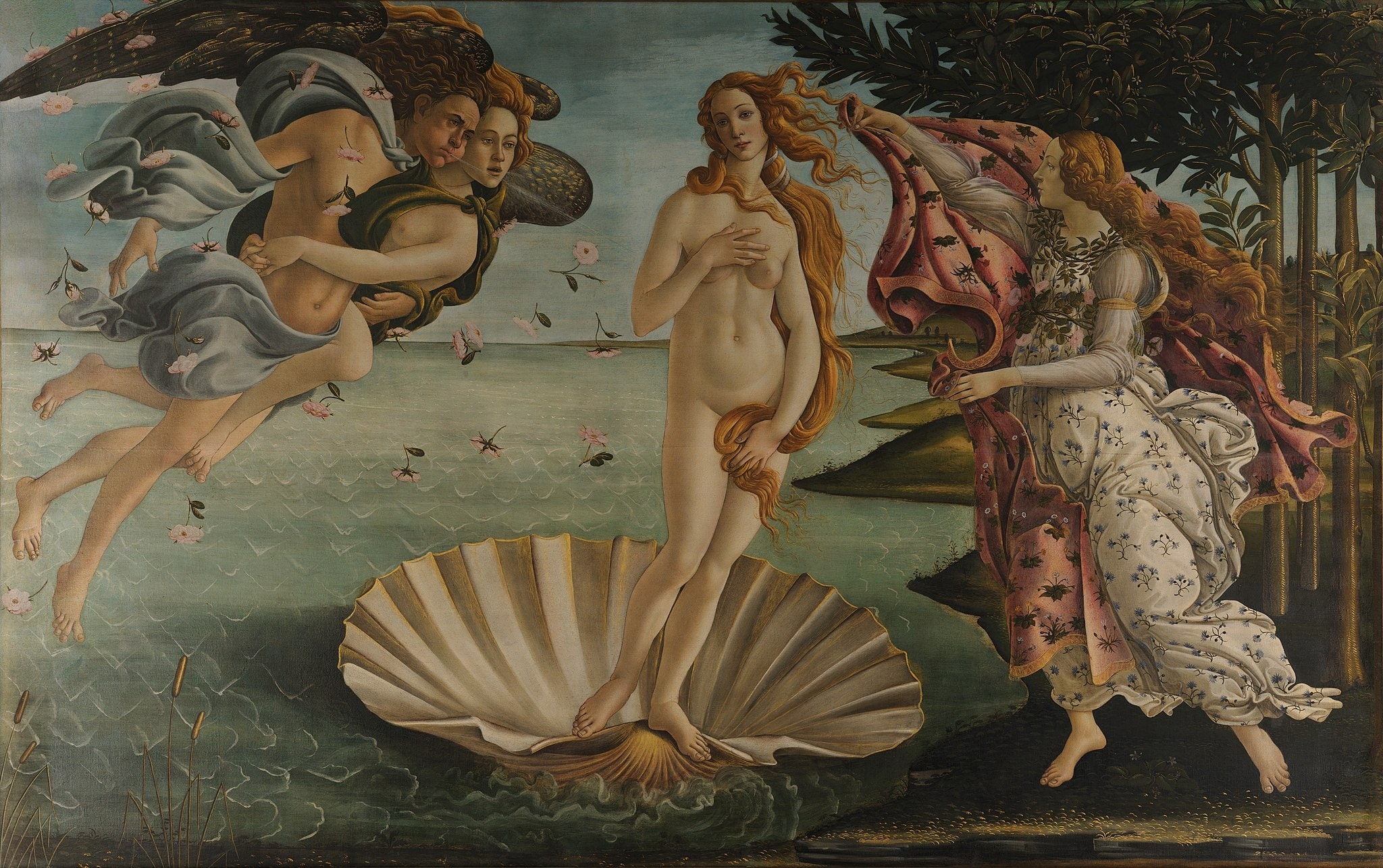
Click on any numbered symbol to learn more about its meaning
Meaning & Symbolism
Explore Deeper with AI
Ask questions about The Birth of Venus
Popular questions:
Powered by AI • Get instant insights about this artwork
Interpretations
Historiography & Patronage Debate
Source: Uffizi Galleries; Wikipedia (inventory debate)
Nuptial Culture & Domestic Use
Source: Met Museum (Heilbrunn Timeline); Smarthistory; Uffizi
Medium, Surface, and Ideality
Source: Uffizi Galleries; Encyclopaedia Britannica; Smarthistory
Pagan–Christian Syncretism
Source: Synthesis of scholarship (as summarized in Wikipedia); Smarthistory
Humanist Poetics & Formal Design
Source: Uffizi Galleries; Smarthistory
Explore Specific Elements
Dive deeper into individual scenes and details within The Birth of Venus.
Venus's Flowing Hair
Venus’s flowing hair is at once a veil of modesty, a banner of wind and movement, and a halo of divine radiance. Botticelli turns these cascading, gilded strands into a luminous sign of ideal beauty, fusing antique convention with Medici-court poetics to announce the goddess’s arrival.
The Scallop Shell
The scallop shell at Venus’s feet is both her vehicle and her signature. Reviving the ancient Venus Anadyomene myth, Botticelli uses the oversized shell to stage the goddess’s shoreward arrival and to announce love and ideal beauty entering the human world.
Zephyr and Chloris
Botticelli’s left-hand duo of Zephyr and his companion surges across the canvas, their breath visibly wafting Venus toward shore. This airborne embrace crystallizes the Florentine revival of classical poetry and philosophy, turning the wind itself into a generative force that inaugurates love and spring.
The Hora of Spring
The right-hand attendant in Botticelli’s The Birth of Venus is the Hora of Spring, striding ashore with a flowered mantle to welcome and clothe the newborn goddess. Drawn from a precise classical episode and staged in a Medici-coded grove, she personifies the season when beauty and love enter—and civilize—the world.
Related Themes
About Sandro Botticelli
More by Sandro Botticelli
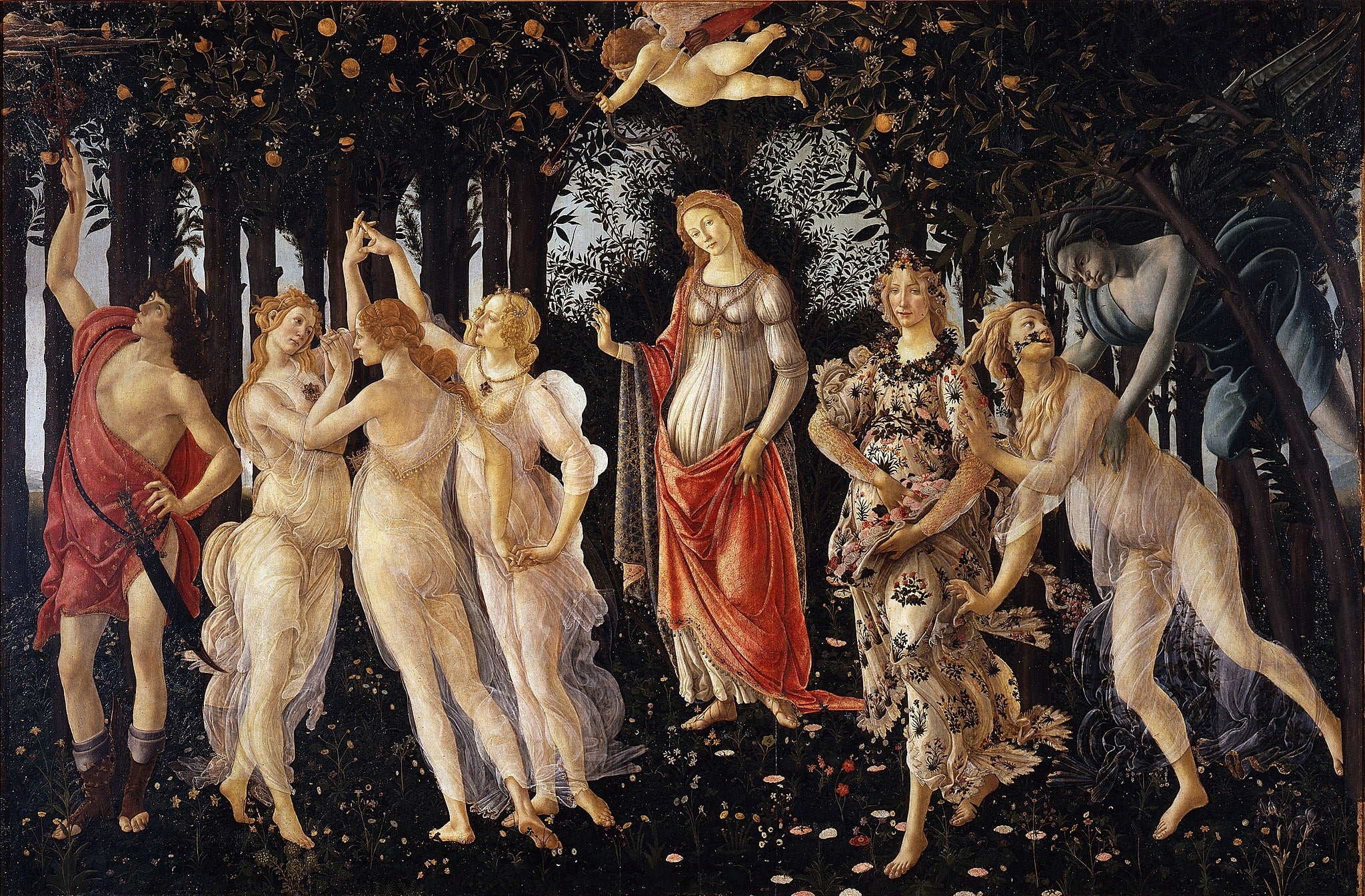
Primavera
Sandro Botticelli (c. 1480 (1477–1482))
Primavera stages a mythic procession of <strong>Spring</strong> in an orange and laurel grove: <strong>Venus</strong> presides beneath a myrtle canopy as <strong>Cupid</strong> looses an arrow, <strong>Mercury</strong> clears the last clouds, the <strong>Three Graces</strong> dance, and <strong>Zephyrus</strong> pursues <strong>Chloris</strong>, who blossoms into <strong>Flora</strong>. The carpet of more than a hundred identifiable flowers and the Medici-laden orchard declare <strong>fertility, peace, and ordered prosperity</strong> under Venus’s benign rule <sup>[1]</sup><sup>[2]</sup>.
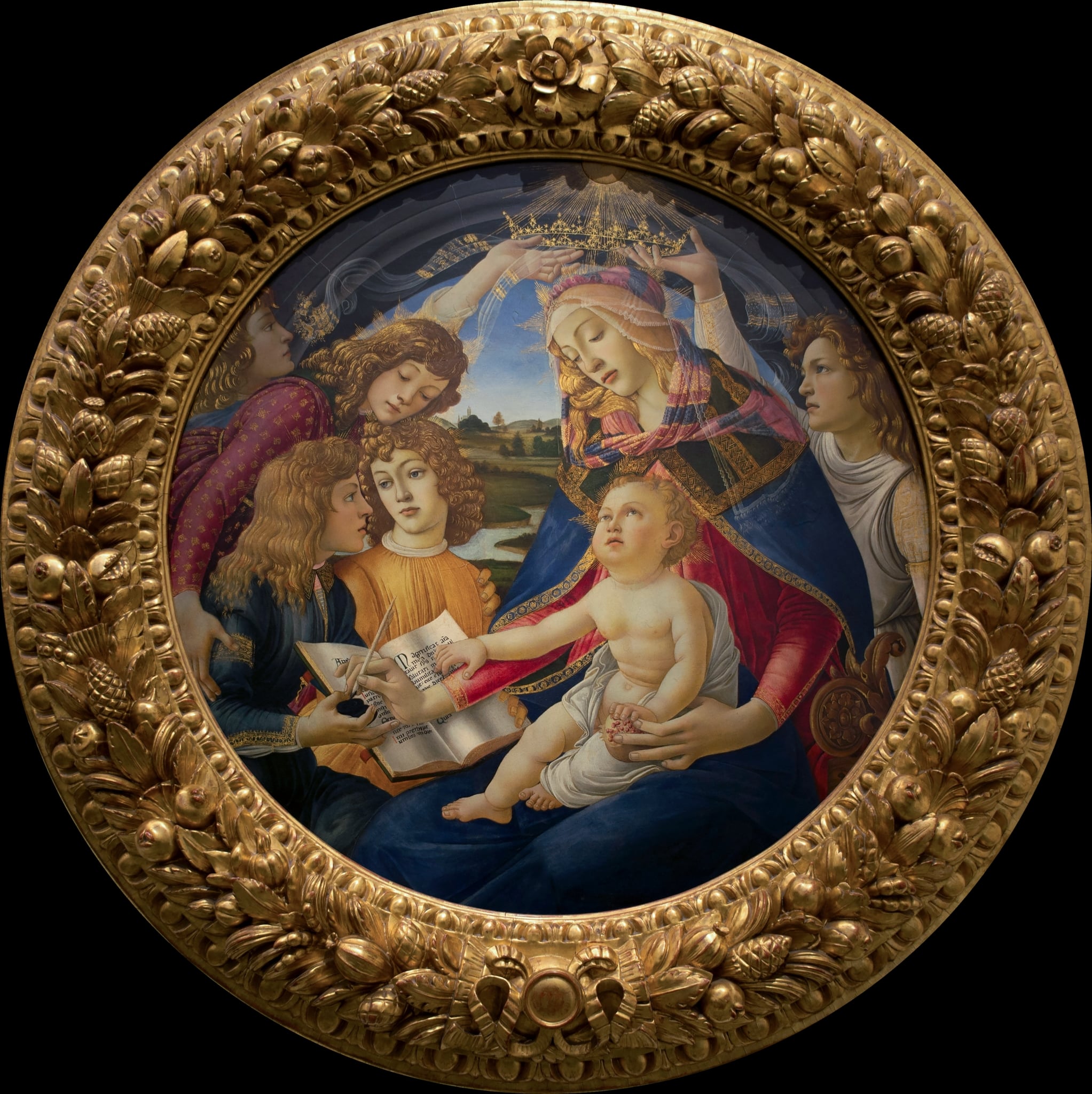
Madonna of the Magnificat
Sandro Botticelli (c. 1483)
Botticelli’s Madonna of the Magnificat is a circular panel where the Virgin, <strong>crowned by angels</strong>, writes the <strong>Magnificat</strong> as the Christ Child guides her hand. A split <strong>pomegranate</strong> in the Child’s grasp prefigures the Passion while the wingless, courtly angels and a Tuscan view bind sacred mystery to Florentine life <sup>[1]</sup><sup>[2]</sup>. The tondo’s swirl of fabrics and gold makes theology visible as a choreography of <strong>praise, prophecy, and sacrifice</strong>.