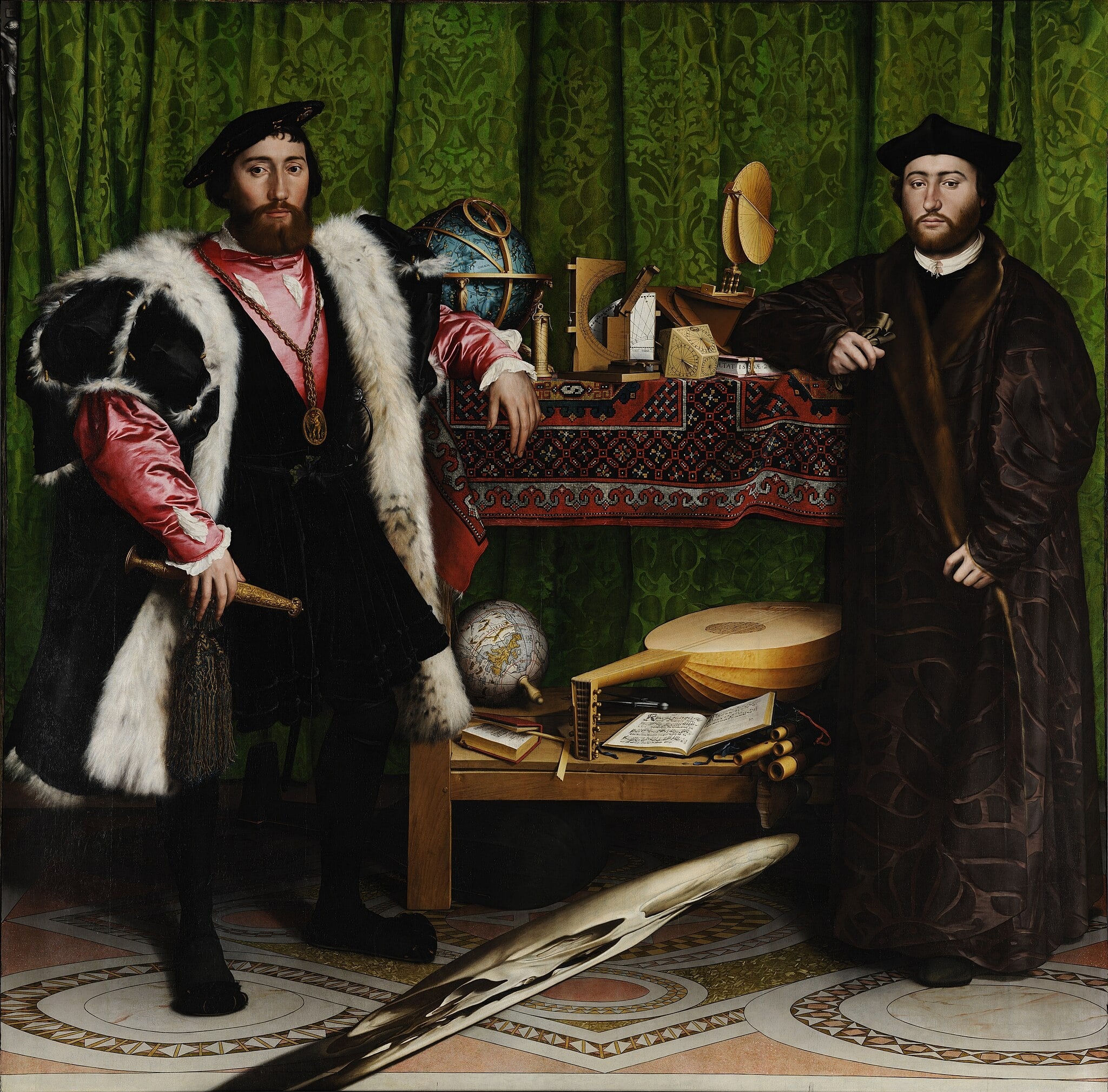
Anamorphic skull Symbolism
An anamorphic skull is a skull rendered in deliberate perspectival distortion that becomes legible from a particular viewing angle or device. In European art of the 16th century, it functions as a memento mori, reminding viewers of human mortality and the vanity of worldly achievement. The motif also showcases the period’s interest in optics and perspective within Renaissance image-making.
Anamorphic skull in The Ambassadors
In Hans Holbein the Younger’s The Ambassadors (1533), the anamorphic skull cuts across a meticulously staged display of learning—a green curtain, shelves of scientific instruments, books, and musical devices—set alongside fur, velvet, and an Oriental carpet. This distorted skull pointedly counters those emblems of status and knowledge with a stark reminder of death; in tandem with the veiled crucifix, it introduces a sober theme of mortality and salvation that tempers the painting’s celebration of Renaissance knowledge amid Reformation discord.