Christ’s calm figure Symbolism
In Christian art, Christ’s calm figure embodies divine composure and saving authority in the midst of danger. The motif often sets Christ’s untroubled stillness against visible turmoil to affirm faith as inner steadiness and the source of deliverance. Artists use light, posture, and placement to make this calm the visual counterforce to chaos.
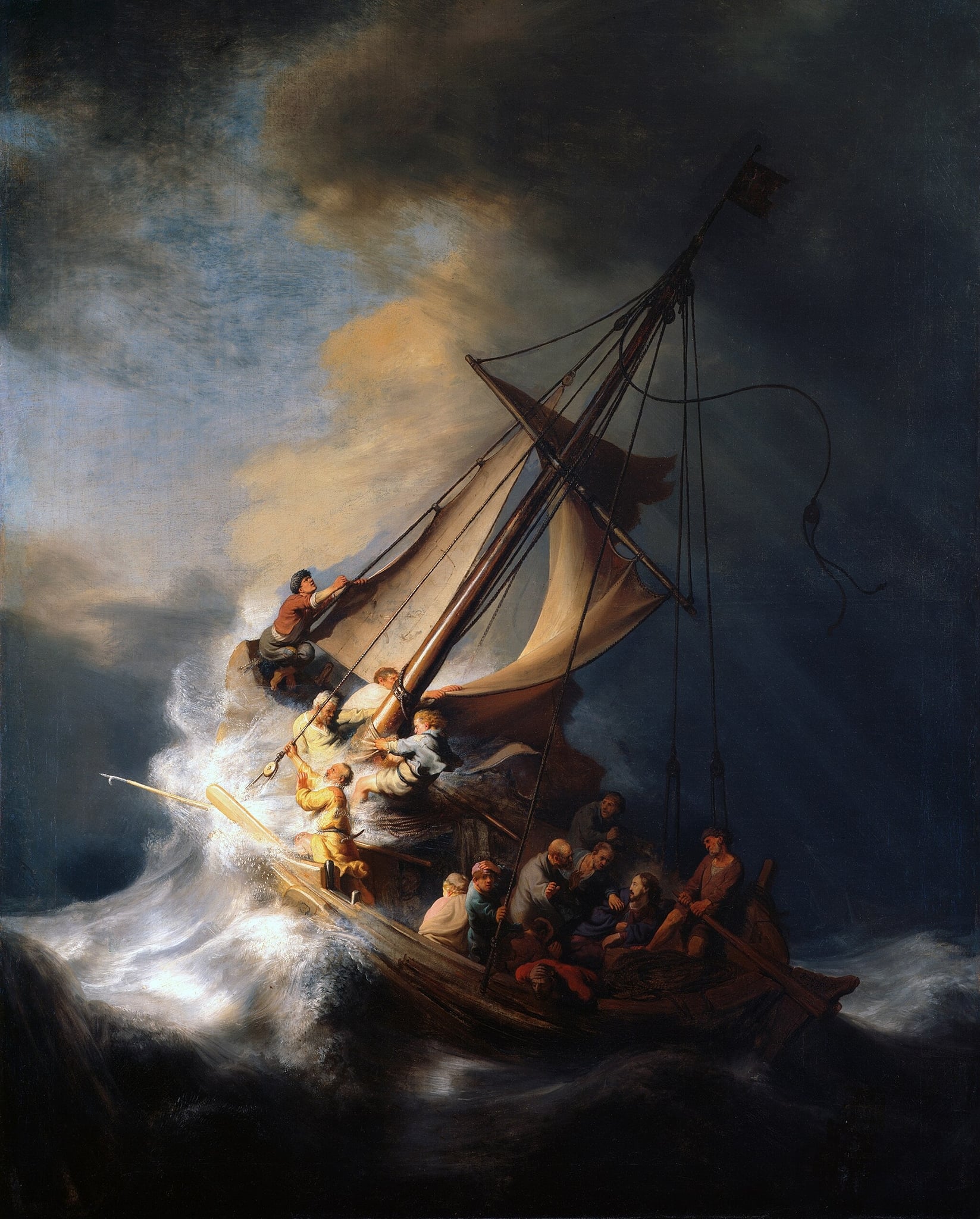
Christ’s calm figure in The Storm on the Sea of Galilee
In Rembrandt van Rijn’s The Storm on the Sea of Galilee (1633), the symbol is distilled at the instant before the miracle: a torn mainsail snaps across a steeply tilted boat and terrified disciples scramble, while a serenely lit Christ forms a still center. His unruffled presence, set off by illumination and contrasted with the boat’s violent pitch, creates a pocket of composure within turbulence, visualizing faith as inner steadiness and the authority that will save.
As Rembrandt’s only painted seascape, the scene concentrates this drama of panic versus poise into a singular image. Composition, lighting, and gesture converge to make Christ’s calm the anchoring force of the picture—the stable axis around which fear, wind, and water turn and are ultimately brought to order.