Father’s two distinct hands Symbolism
In depictions of the Prodigal Son, the father’s two distinct hands concentrate the drama of return into a single act of blessing that joins firmness with tenderness and restores the child’s dignity. In Christian narrative painting, touch—especially the paired, deliberate placement of hands—becomes the instrument of reconciliation and renewed status.
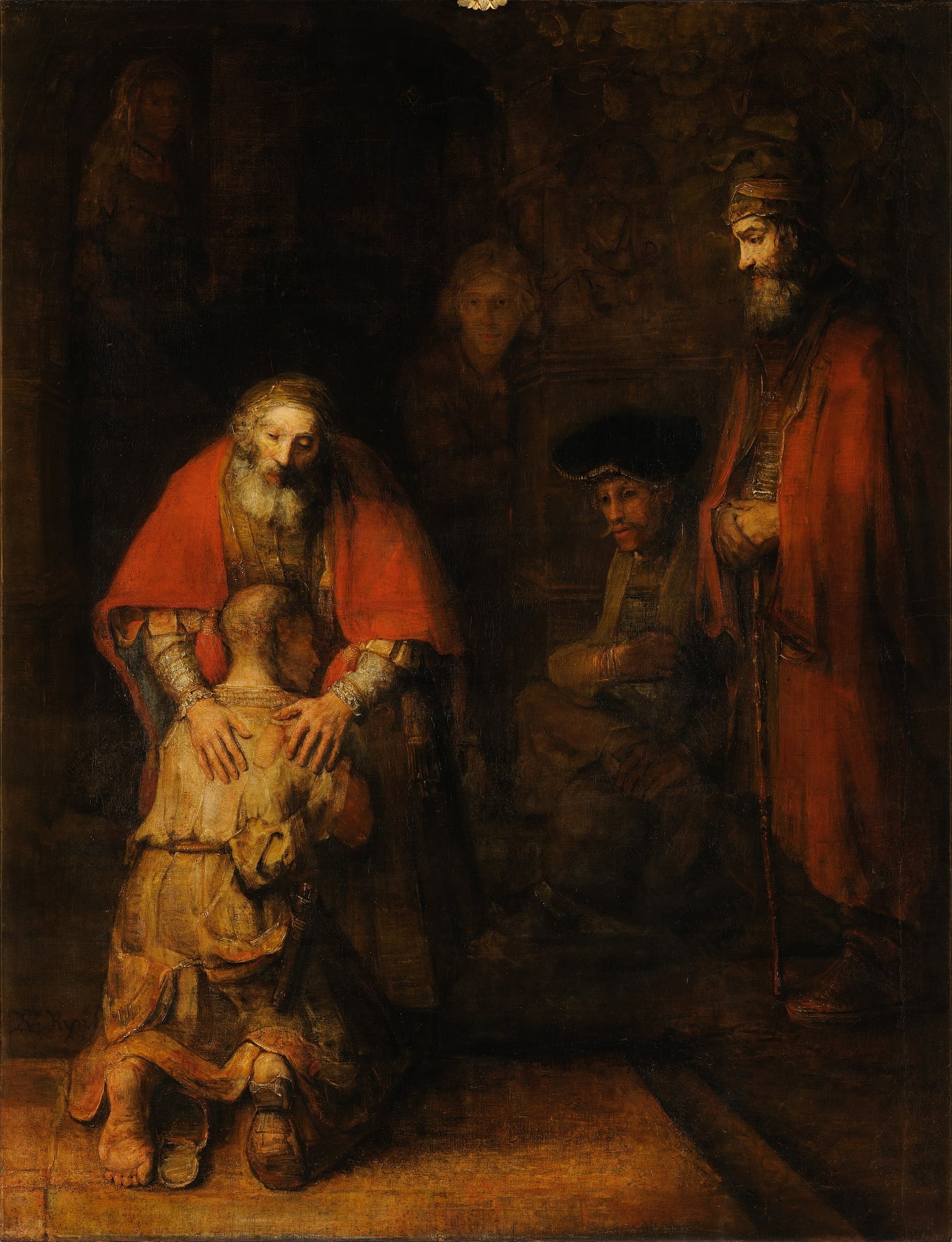
Father’s two distinct hands in The Return of the Prodigal Son
Rembrandt van Rijn’s The Return of the Prodigal Son (c. 1661–1669 (probably completed by 1669)) makes the symbol unmistakable: within a hush of dusk-like light, the kneeling, ragged son is received by the father’s illuminated hands. By concentrating meaning in faces, hands, and feet, Rembrandt turns the embrace itself into the act that restores dignity.
The upright elder brother, holding back in shadow, sharpens the contrast between withheld judgment and the father’s enacted mercy. In this setting, the father’s two hands do the work of blessing—at once steady and gentle—embodying a reconciliation that unites firm justice with tender welcome.