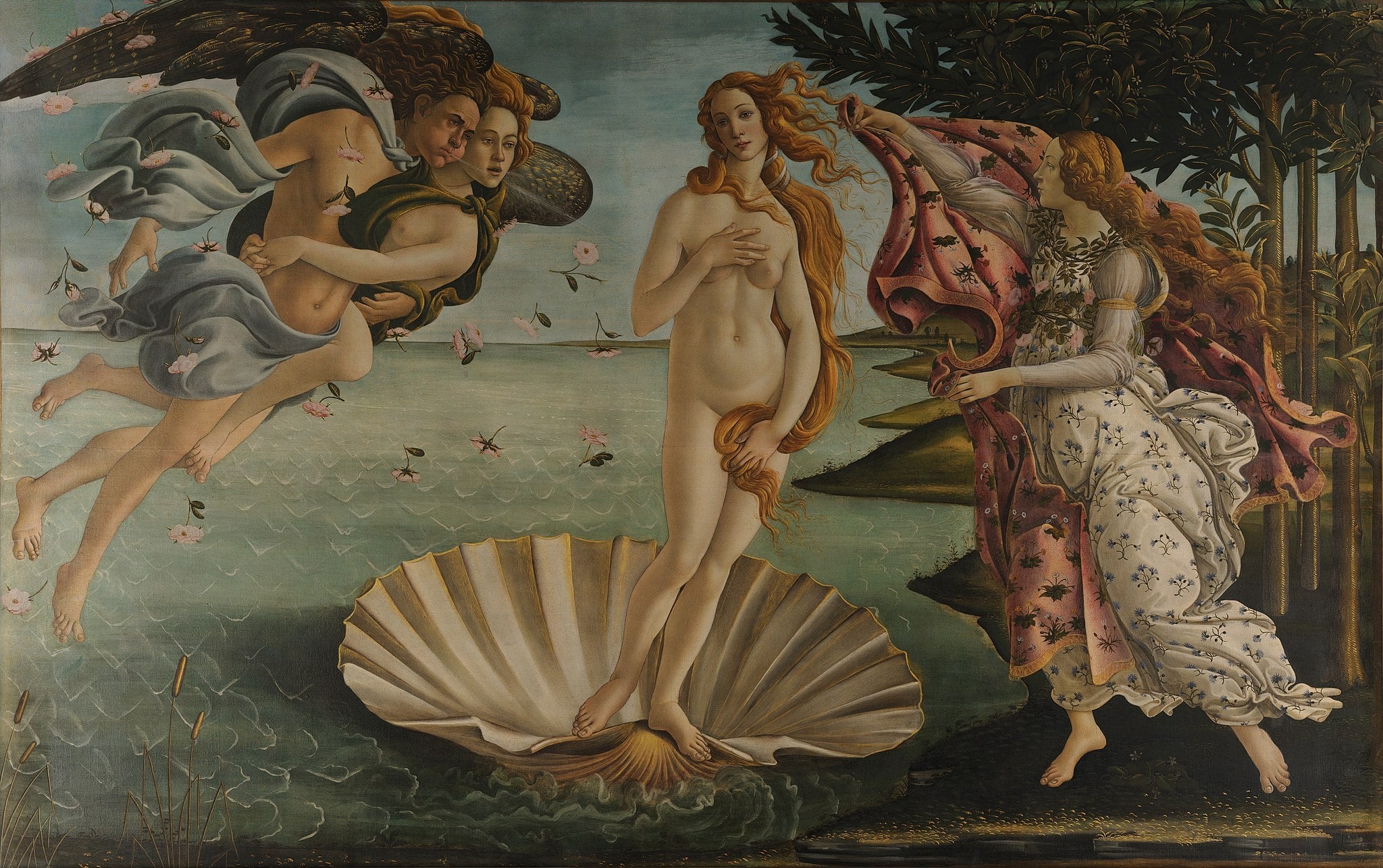
Intertwined winds (Zephyrus with Aura/Chloris) Symbolism
Intertwined winds (Zephyrus with Aura/Chloris) personify the life-giving West Wind and the spring breeze, a classical pairing revived in the Renaissance to signal desire, fertility, and the advent of spring. Depicted as an entwined couple exhaling a single gust, they act as the animating breath that carries beauty and new growth into the world.
Intertwined winds (Zephyrus with Aura/Chloris) in The Birth of Venus
In Sandro Botticelli's The Birth of Venus (c. 1484–1486), the goddess is borne to shore on a shell by the intertwined winds at left. Botticelli employs this motif (Zephyrus with Aura/Chloris) so that their shared breath becomes the engine of the scene, propelling Venus into view and aligning her arrival with love, spring, and renewal—an emphasis echoed by the flower-garlanded attendant who offers a rose-patterned mantle.