Parasol Symbolism
In painting, the parasol mediates sunlight and signals stylish leisure in the open air. In seasonal imagery, it can mark spring’s bright weather and a sense of renewal, aligning fashion with nature’s return.
Parasol in The Harbour at Lorient
Édouard Manet’s Jeanne (Spring) (1881) makes the parasol a seasonal emblem and a marker of modernity. The sitter’s crisp profile beneath a cream parasol, set against luminous, leafy greens, ties the accessory to spring light and growth. By fusing a time-honored allegory with Parisian couture—hat, glove, parasol—Manet turns the object into the language of renewal and youth, keeping the idea of spring both perennial and up-to-the-minute.
Common Themes
Artworks Featuring This Symbol
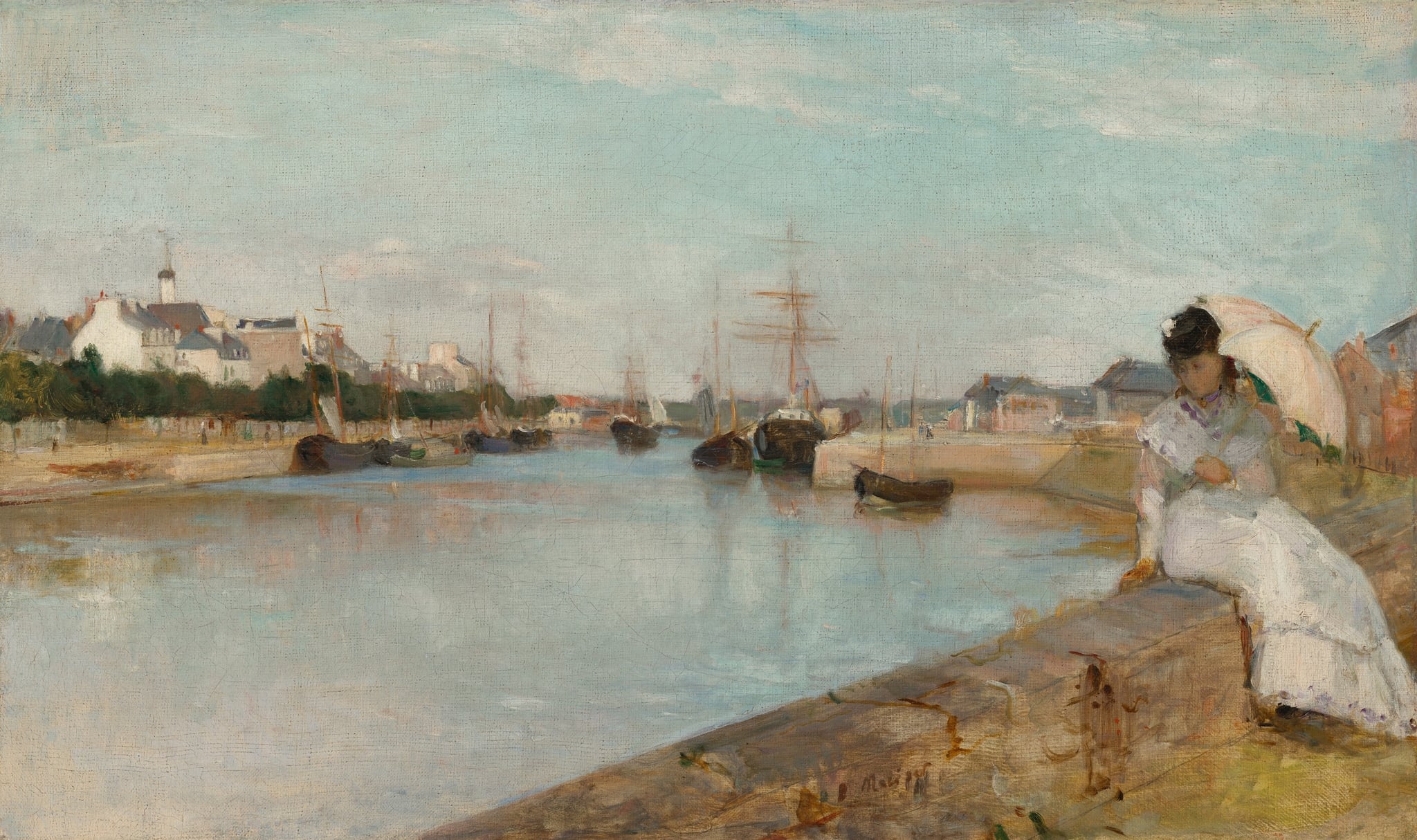
The Harbour at Lorient
Berthe Morisot (1869)
Berthe Morisot’s The Harbour at Lorient stages a quiet tension between <strong>private reverie</strong> and <strong>public movement</strong>. A woman under a pale parasol sits on the quay’s stone lip while a flotilla of masted boats idles across a silvery basin, their reflections dissolving into light. Morisot’s <strong>pearly palette</strong> and brisk brushwork make the water read as time itself, holding stillness and departure in the same breath <sup>[1]</sup>.

Jeanne (Spring)
Édouard Manet (1881)
Édouard Manet’s Jeanne (Spring) fuses a time-honored allegory with <strong>modern Parisian fashion</strong>: a crisp profile beneath a cream parasol, set against <strong>luminous, leafy greens</strong>. Manet turns couture—hat, glove, parasol—into the language of <strong>renewal and youth</strong>, making spring feel both perennial and up-to-the-minute <sup>[1]</sup><sup>[2]</sup>.