Discover the Hidden Meanings in Art
Explore the symbolism, themes, and deeper interpretations behind famous paintings and artworks from history.
Featured Artworks
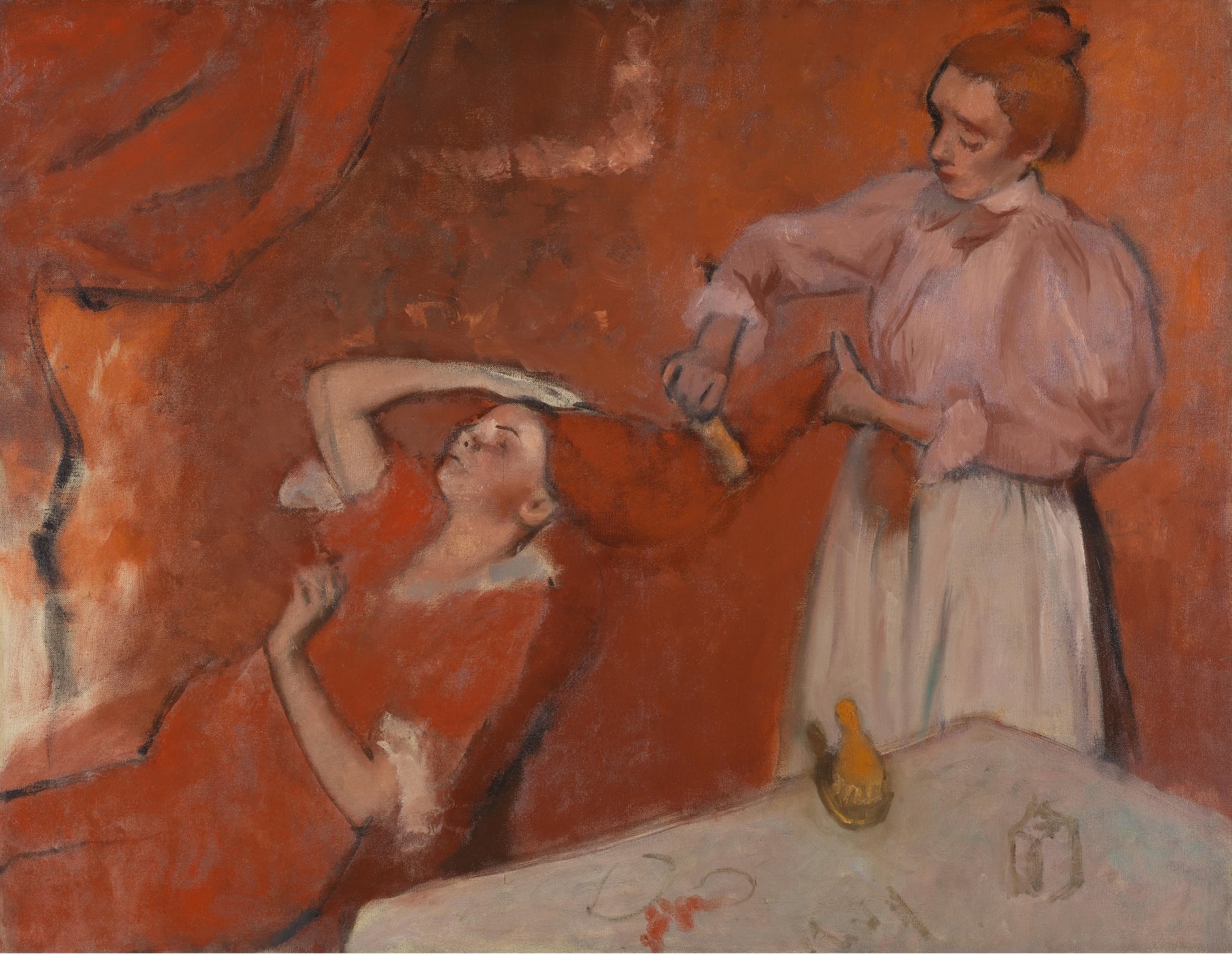
Combing the Hair
Edgar Degas (c.1896)
Edgar Degas’s Combing the Hair crystallizes a private ritual into a scene of <strong>compressed intimacy</strong> and <strong>classed labor</strong>. The incandescent field of red fuses figure and room, turning the hair into a <strong>binding ribbon</strong> between attendant and sitter <sup>[1]</sup>.
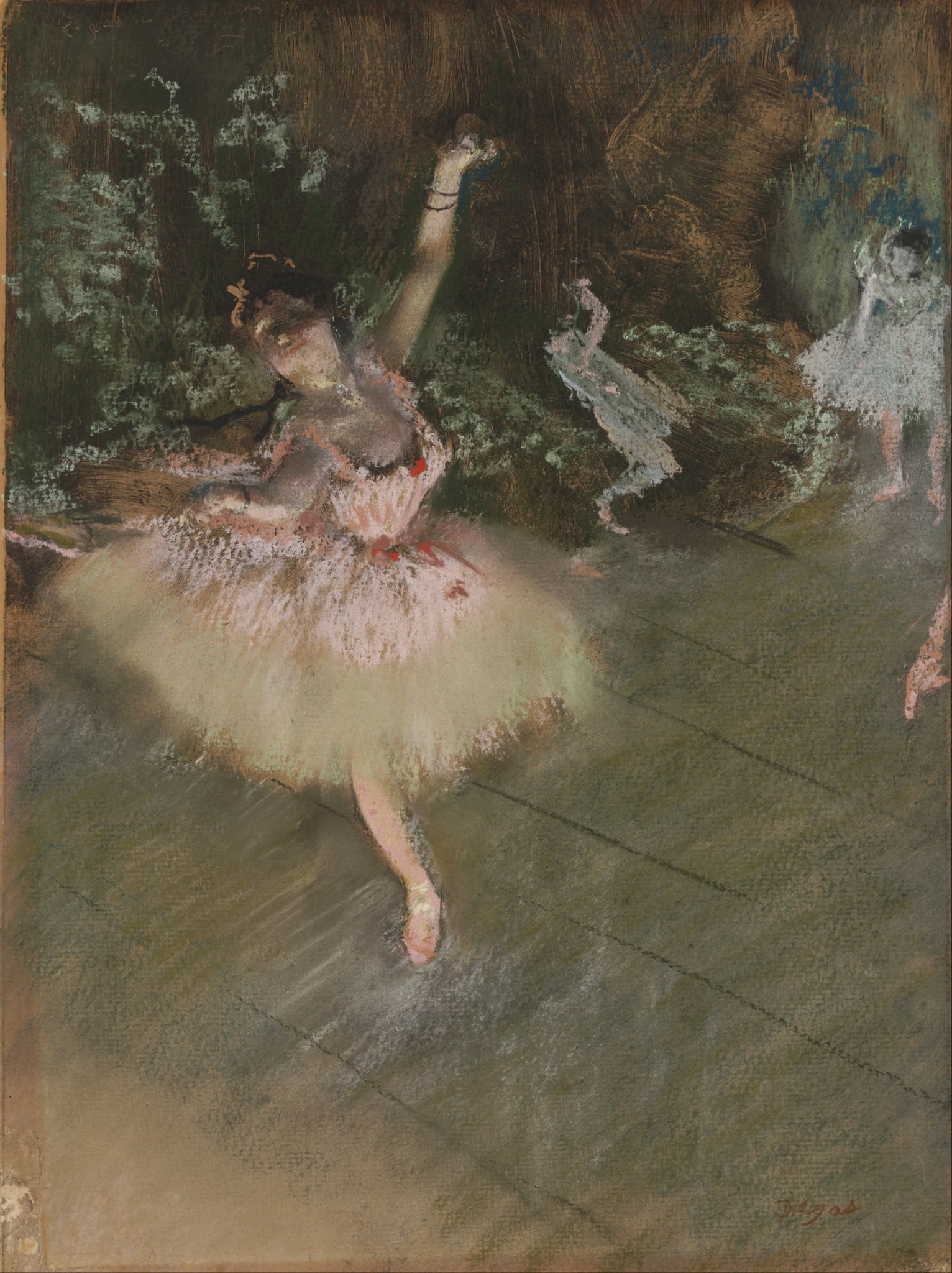
The Star
Edgar Degas (c. 1876–1878)
Edgar Degas’s The Star shows a prima ballerina caught at the crest of a pose, her tutu a <strong>vaporous flare</strong> against a <strong>murky, tilted stage</strong>. Diagonal floorboards rush beneath her single pointe, while pale, ghostlike dancers linger in the wings, turning triumph into a scene of <strong>radiant isolation</strong> <sup>[2]</sup><sup>[5]</sup>.
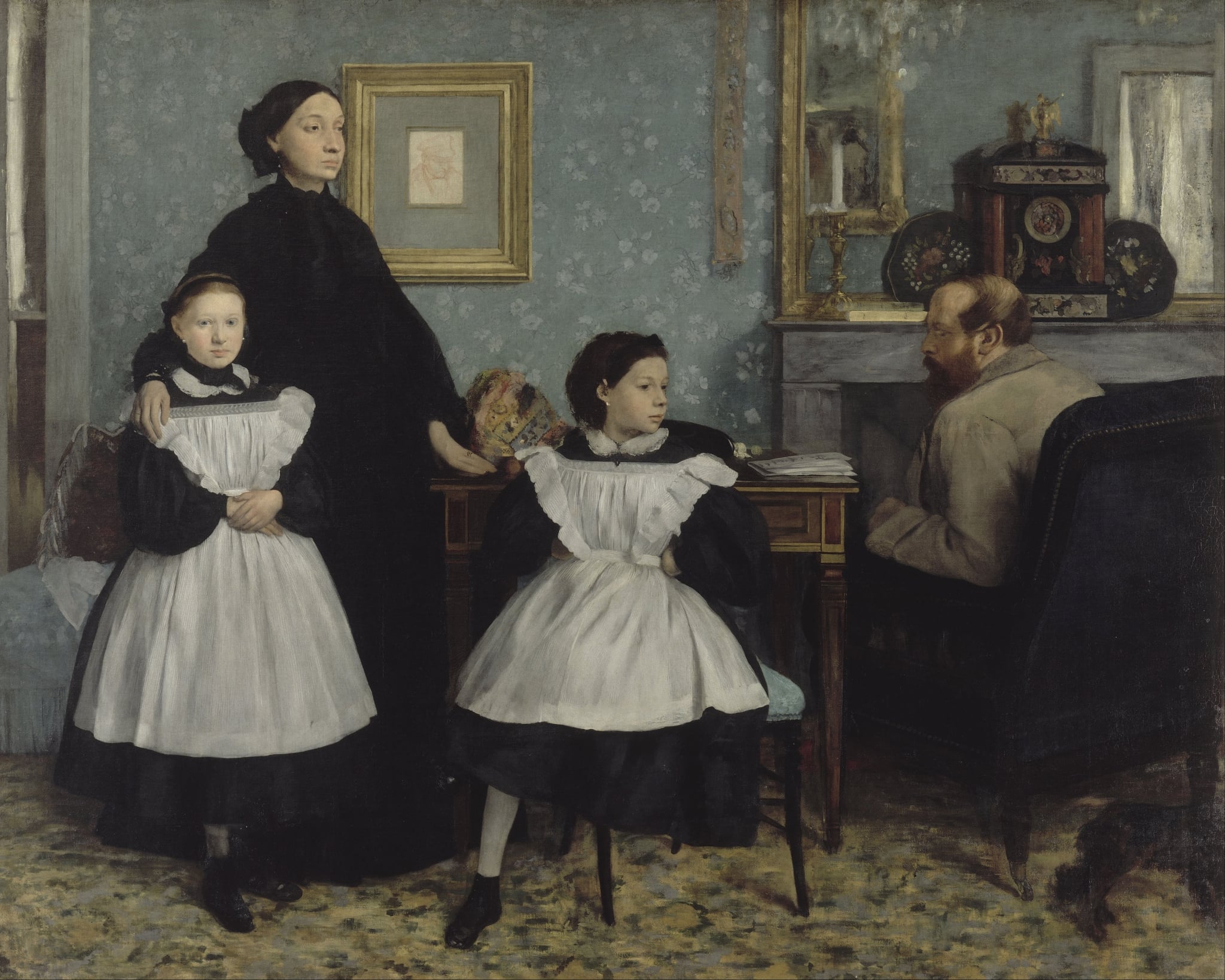
The Bellelli Family
Edgar Degas (1858–1869)
In The Bellelli Family, Edgar Degas orchestrates a poised domestic standoff, using the mother’s column of <strong>mourning black</strong>, the daughters’ <strong>mediating whiteness</strong>, and the father’s turned-away profile to script roles and distance. Rigid furniture lines, a gilt <strong>clock</strong>, and the ancestor’s red-chalk portrait create a stage where time, duty, and inheritance press on a family held in uneasy equilibrium.
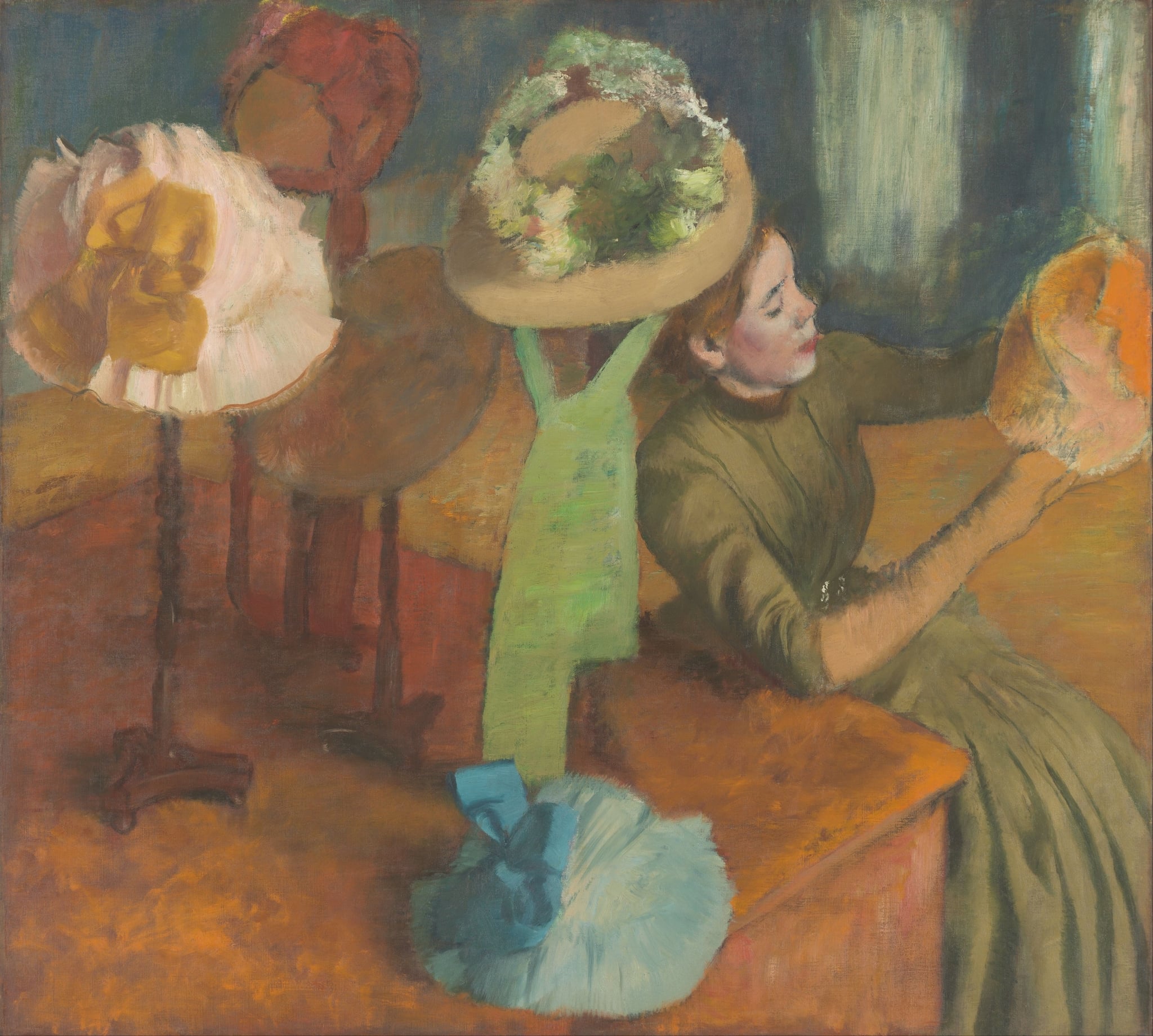
The Millinery Shop
Edgar Degas (1879–1886)
Edgar Degas’s The Millinery Shop stages modern Paris through a quiet act of <strong>work</strong> rather than display. A young woman, cropped in profile, studies a glowing <strong>orange hat</strong> while faceless stands crowned with ribbons and plumes press toward the picture plane. Degas turns a boutique into a meditation on <strong>labor, commodities, and identity</strong> <sup>[1]</sup><sup>[2]</sup>.
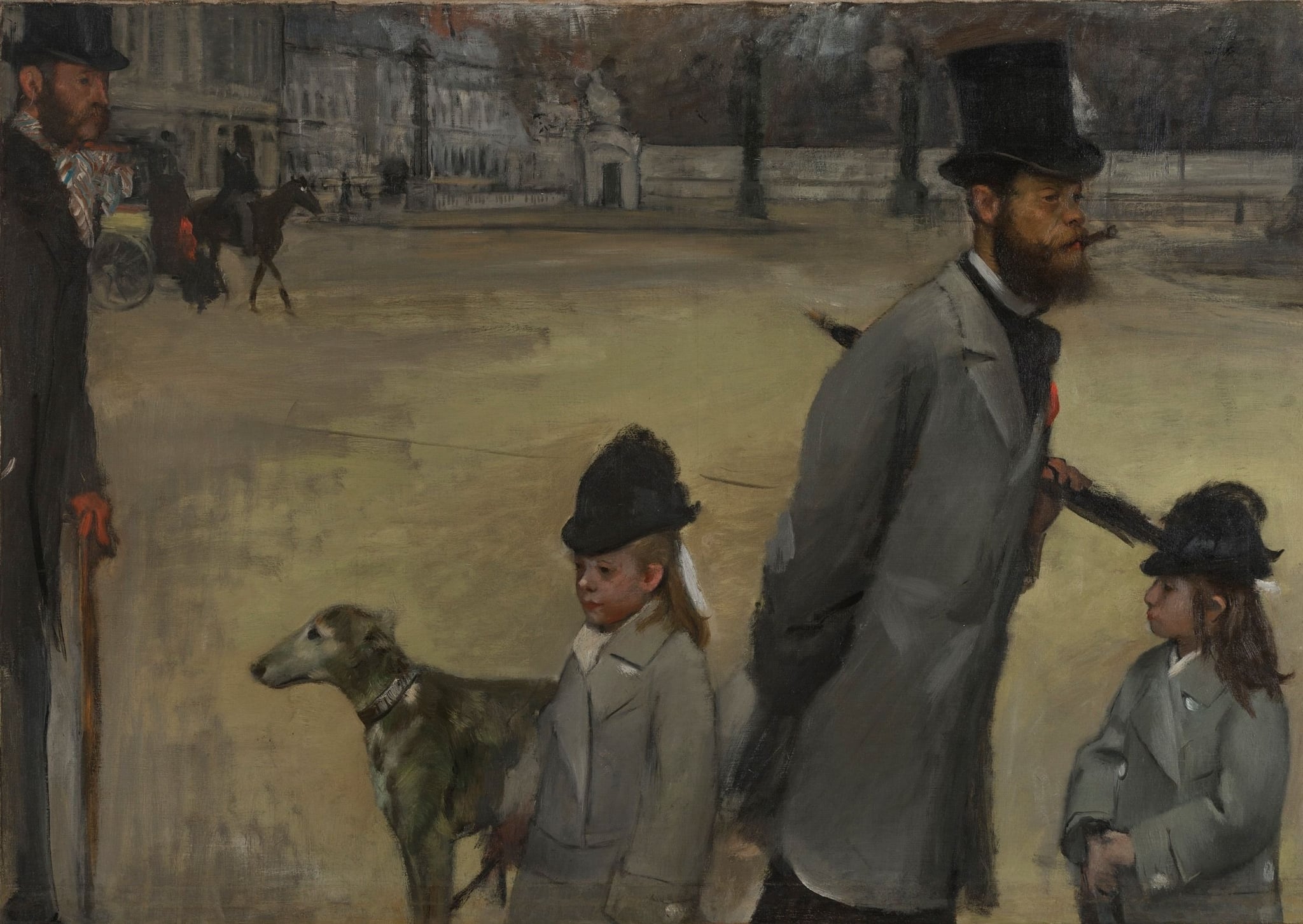
Place de la Concorde
Edgar Degas (1875)
Degas’s Place de la Concorde turns a famous Paris square into a study of <strong>modern isolation</strong> and <strong>instantaneous vision</strong>. Figures stride past one another without contact, their bodies abruptly <strong>cropped</strong> and adrift in a wide, airless plaza—an urban stage where elegance masks estrangement <sup>[1]</sup><sup>[2]</sup>.
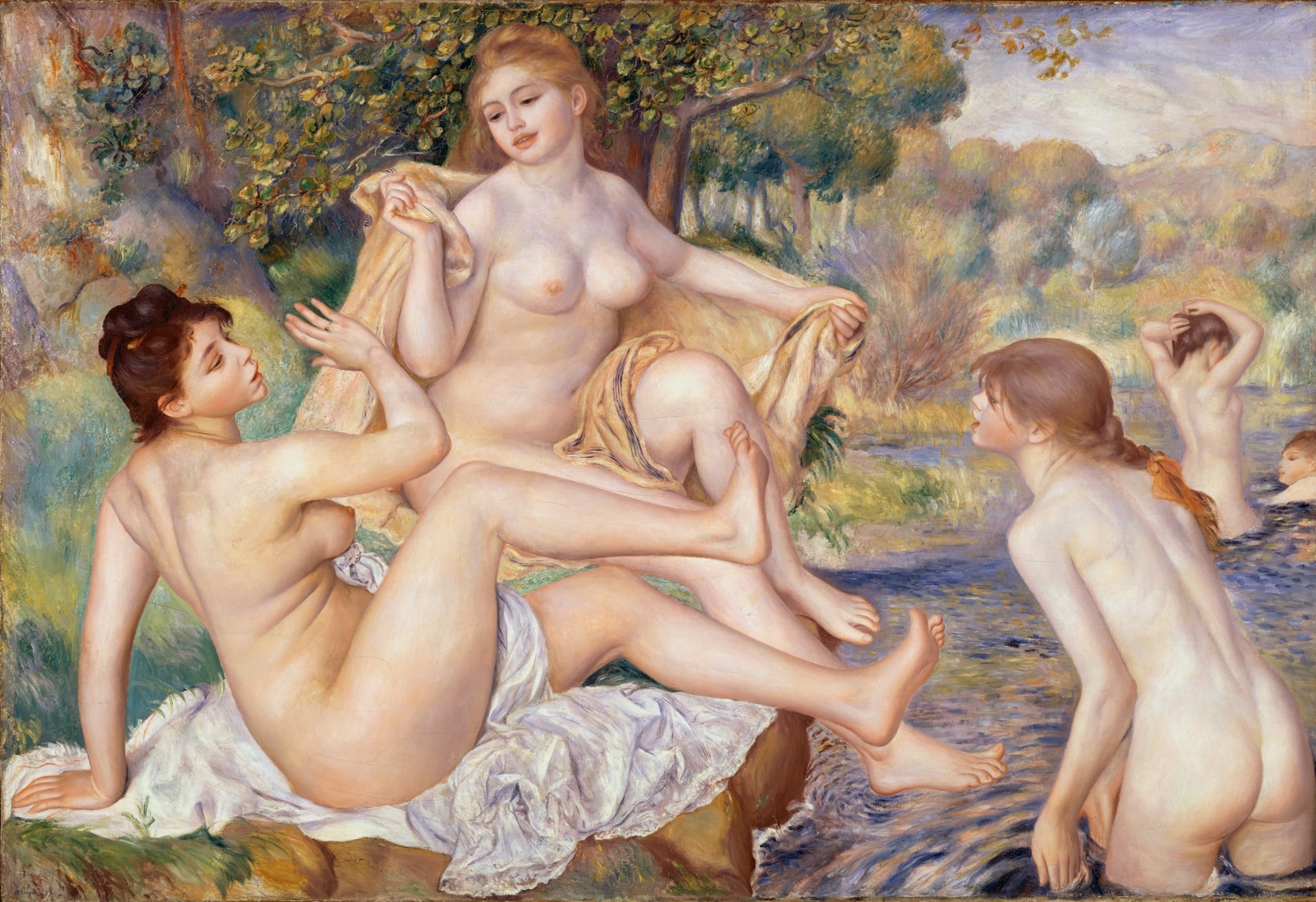
The Large Bathers
Pierre-Auguste Renoir (1884–1887)
Pierre-Auguste Renoir’s The Large Bathers unites modern bodies with a pastoral grove to stage an <strong>Arcadian ideal</strong>. Three monumental nudes form interlocking curves and triangles while two background figures splash and groom, fusing <strong>sensual warmth</strong> with <strong>classical order</strong> <sup>[1]</sup><sup>[2]</sup>.