Most Expensive Marc Chagall Paintings
Few artists command the market mystique of Marc Chagall, whose dreamlike palette and poetic, often Jewish-themed iconography have made his canvases some of the most sought-after in modern art. At the apex sits I and the Village, a work whose estimated market value—roughly $100–200 million—reflects both its iconic status and the competitive bidding it attracts at auction. Equally collectible are pieces such as The Green Violinist ($30–60 million) and Les Amoureux ($28–40 million), valued for their emblematic motifs and museum-quality provenance, while Le songe du Roi David ($20–30 million) and The Yellow Crucifixion ($10–30 million) command attention for their theological depth and historical resonance. Works like Le Grand Cirque ($13–22 million) showcase Chagall’s theatrical imagination, even as more modestly ranged paintings—The Flying Carriage ($500,000–$15,000,000), Birthday ($3,000,000–$12,000,000), The Eiffel Tower ($1,500,000–$5,000,000) and Above the Town ($30,000–$3,500,000)—offer accessible entry points for collectors. Scarcity, provenance, condition and market trends all elevate Chagall’s oeuvre from beloved art to prized investment.
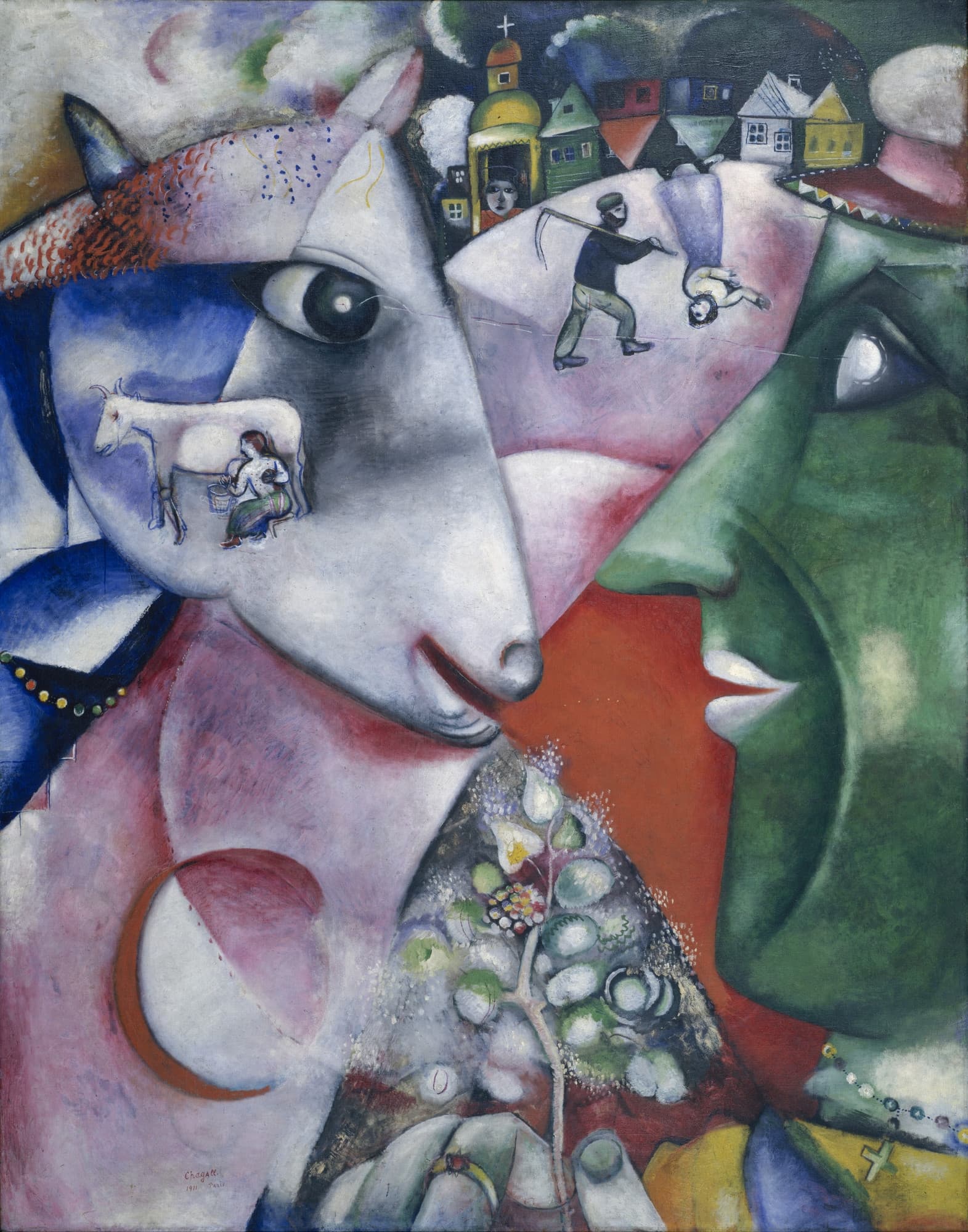
$100-200 million
As a canonical MoMA masterpiece with no true peers, a hypothetical auction of I and the Village could plausibly achieve $100–200 million under optimal conditions.
See full valuation →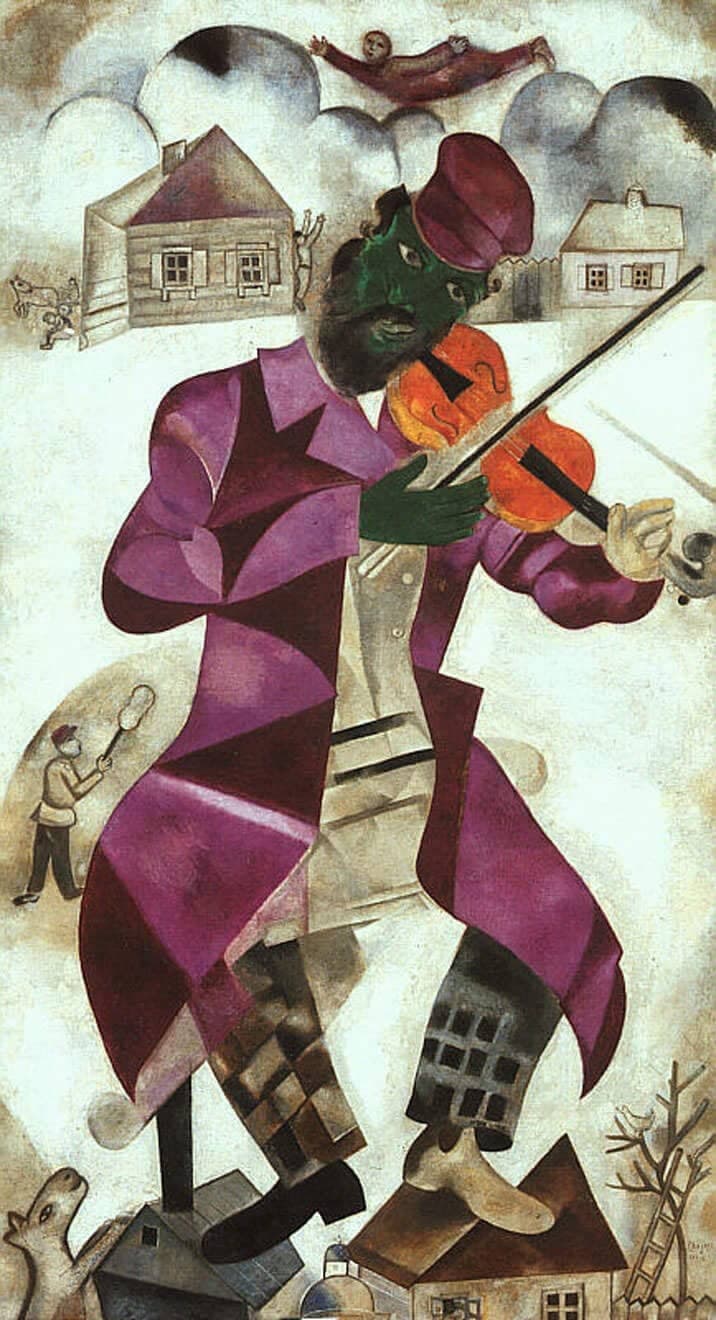
$30-60 million
Given its 1923–24 Paris date, monumental scale and Guggenheim provenance—together with Chagall’s $28.45M record—The Green Violinist could reasonably reset the artist’s auction benchmark at $30–60M.
See full valuation →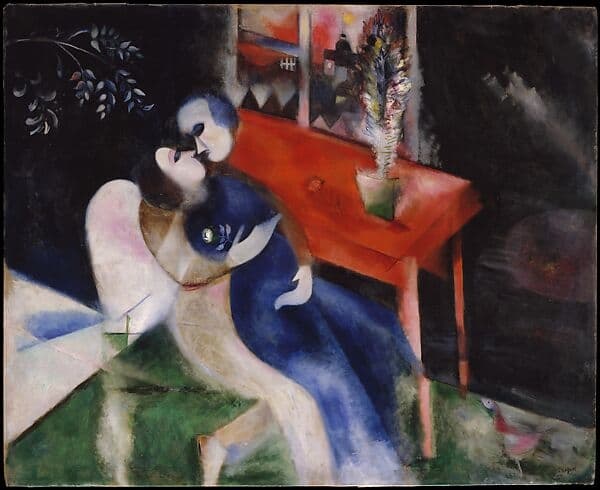
$28-40 million
If the documented 1928 oil with Bernheim Jeune provenance matches Sotheby’s 2017 lot, its $28–40M estimate is anchored to that $28,453,000 2017 sale adjusted for inflation and comparables.
See full valuation →$10-30 million
If the Centre Pompidou’s canonical Yellow Crucifixion surfaced in a major evening sale with impeccable provenance and condition, a realistic auction estimate is $10–30M.
See full valuation →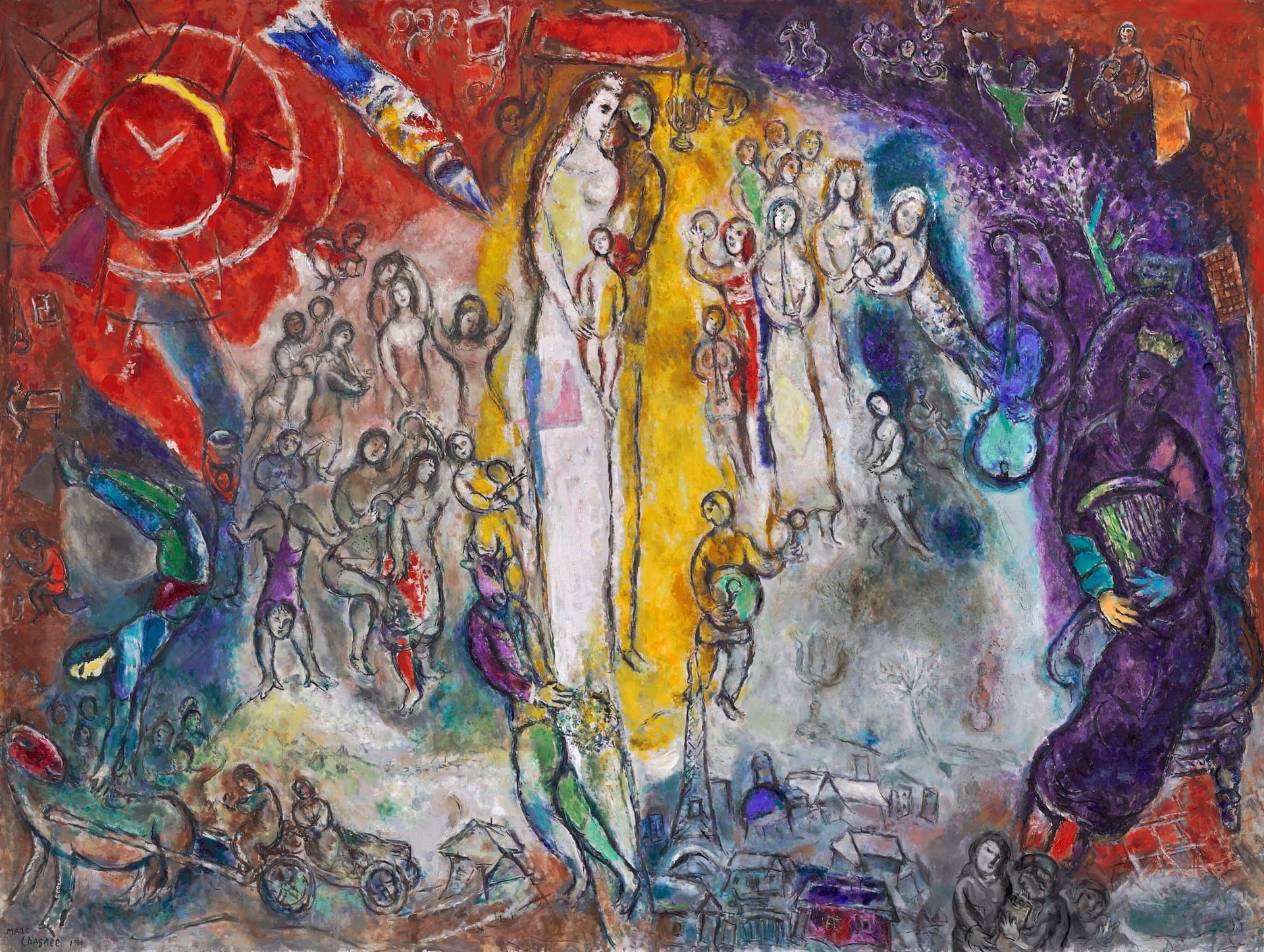
$20-30 million
An authenticated, museum‑scale 1966 canvas matching Christie’s Nov 17, 2025 lot justifies a $20–30M range, anchored to the Christie’s $26.51M (with premium) result.
See full valuation →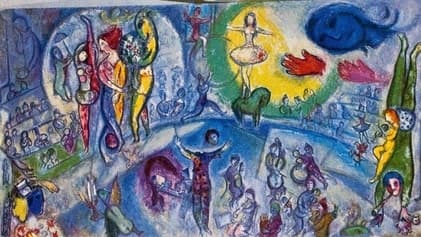
$13–22 million
Le Grand Cirque’s $13–22M valuation is primarily anchored to two identical‑canvas Sotheby’s evening‑sale realizations and corroborating comparable auction evidence.
See full valuation →$500,000–$15,000,000
A small authenticated variant of The Flying Carriage sold for ~ $2.40M (Sotheby’s 2019), while a large, museum‑quality 1913 oil could command $3–15M, yielding an overall $0.5–15M range.
See full valuation →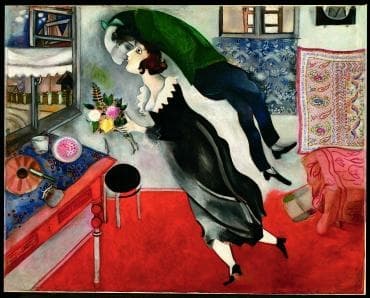
$3,000,000–$12,000,000
MoMA’s Birthday (1915; oil on cardboard) carries a conditional $3–12M estimate driven upward by institutional provenance but materially constrained by the cardboard support and condition risk.
See full valuation →$1,500,000–$5,000,000
Assuming an authentic 1929 oil of medium‑to‑large scale in good condition, late‑1920s Chagall comparables support a $1.5–5M market estimate, noting no confirmed 1929 'Eiffel Tower' hammer.
See full valuation →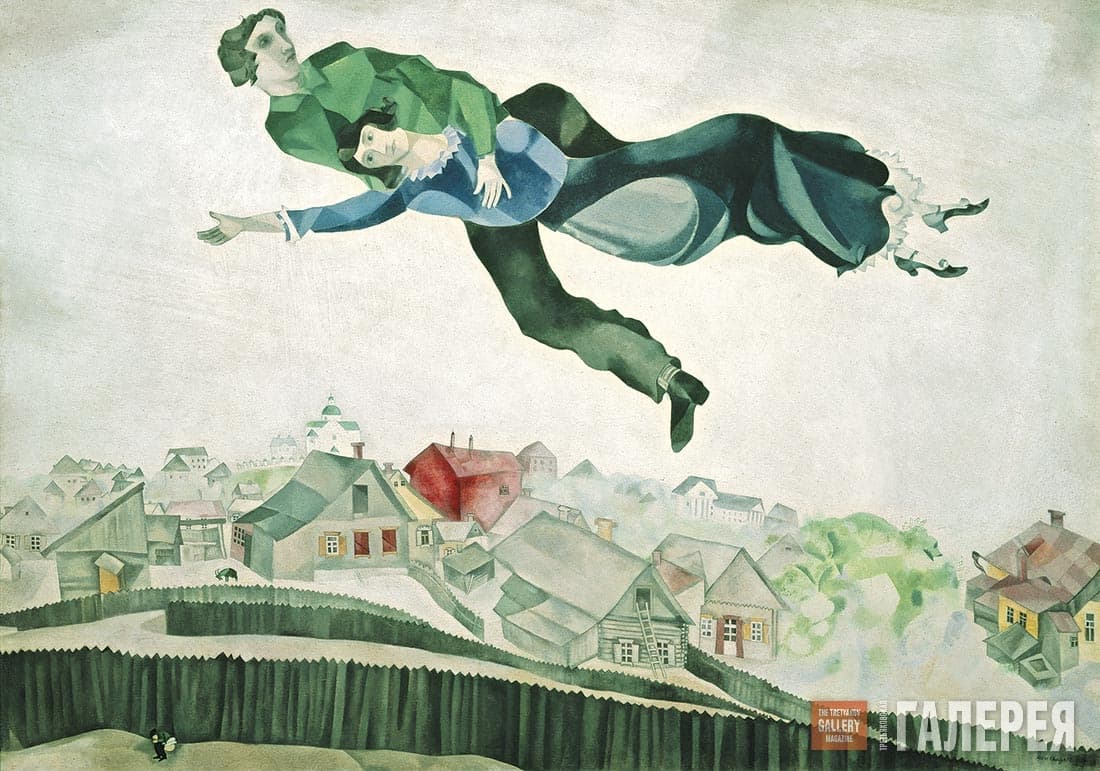
$30,000–$3,500,000
The $30,000–3.5M spread for Above the Town reflects that unsigned workshop studies trade near the low end, while committee‑confirmed, museum‑quality drawings or gouaches reach multimillion prices.
See full valuation →What Drives Value in Marc Chagall's Work
Canonical Motifs (shtetl violinists, floating lovers, crucifixions)
Chagall’s market is motif‑driven: certain subjects (I and the Village; The Green Violinist; Les Amoureux; The Yellow Crucifixion) are culturally canonical and attract trophy buyers. Les Amoureux’s $28.45M sale shows motif‑led pricing, while Holocaust/crucifixion works draw institutional interest beyond decorative demand. Collectors cross‑shop these Chagall icons against other modern masterpieces, so the subject’s centrality to Chagall’s visual identity materially increases a work’s ceiling.
Institutional Provenance and Museum Rarity
Works with major museum histories (I and the Village — MoMA, The Green Violinist — Guggenheim) carry outsized value because many of Chagall’s seminal canvases are already institutionalized. When a museum‑grade Chagall appears, verified provenance reduces scholarly and legal friction and pulls global, trophy‑level bidders. The scarcity of comparable, publicly held masterpieces in private trade therefore creates discontinuous pricing jumps specific to Chagall’s catalogue.
Period/Variant Status and Committee Authentication
Date and uniqueness matter: early Paris experiments (c.1911–14: I and the Village, Flying Carriage) and prime 1920s Paris icons (Les Amoureux 1928, Eiffel Tower 1929) outperform later studio variants. Many compositions exist in multiple versions, so Comité/Catalogue‑raisonné confirmation (e.g., Sotheby’s 2019 Flying Carriage with committee authentication) is routinely required to reach top estimates for Chagall.
Scale and Chagall‑Specific Media Risks (sawdust, cardboard, tempera)
Monumental, museum‑scale canvases (Le Grand Cirque; Green Violinist) command premiums because they anchor exhibitions and collections. Conversely, Chagall’s frequent use of fragile supports and unconventional media—oil on cardboard (Birthday) or tempera with sawdust (Le songe du Roi David)—creates conservation risks that depress bids unless backed by thorough conservator documentation and proven museum stewardship.
Market Context
Marc Chagall’s auction market is deep, global and selective: the record remains Les Amoureux, $28.45M (Sotheby’s, 2017), with a near‑record $26.51M for Le songe du Roi David in 2025 underscoring renewed top‑end strength. Demand centers on Paris‑period oils (1910s–30s) and color‑rich Vence works of the 1950s–60s, while prints and works on paper provide broad liquidity. Museum‑provenance, committee authentication and exhibition history materially lift prices, and major museums and institutional buyers drive competition alongside growing Asian collector participation. After a softer Modern market in 2023–24, late‑2025 marquee evening sales signaled a rebound for blue‑chip canvases; the market remains bifurcated—best‑in‑class masterpieces command premium bidding and scarcity premia, mid‑tier material is price‑disciplined.