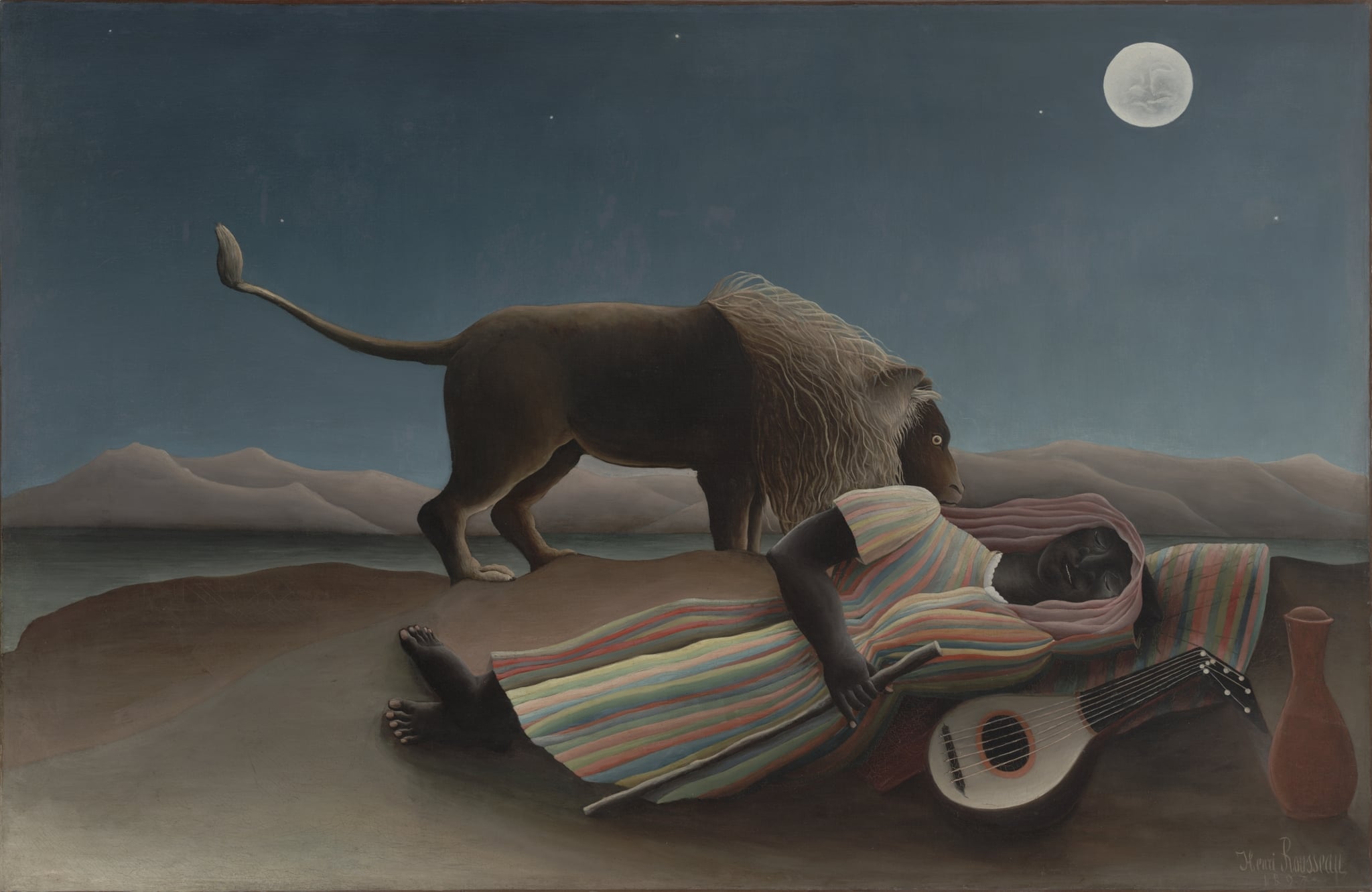
The Sleeping Gypsy
Study Print Studio
Create a personal study print
Build a companion study sheet around the part of this painting that speaks to you most. Choose a detail, shape an interpretation, and walk away with something personal and display-worthy.
Fast Facts
- Year
- 1897
- Medium
- Oil on canvas
- Dimensions
- 129.5 x 200.7 cm
- Location
- The Museum of Modern Art (MoMA), New York
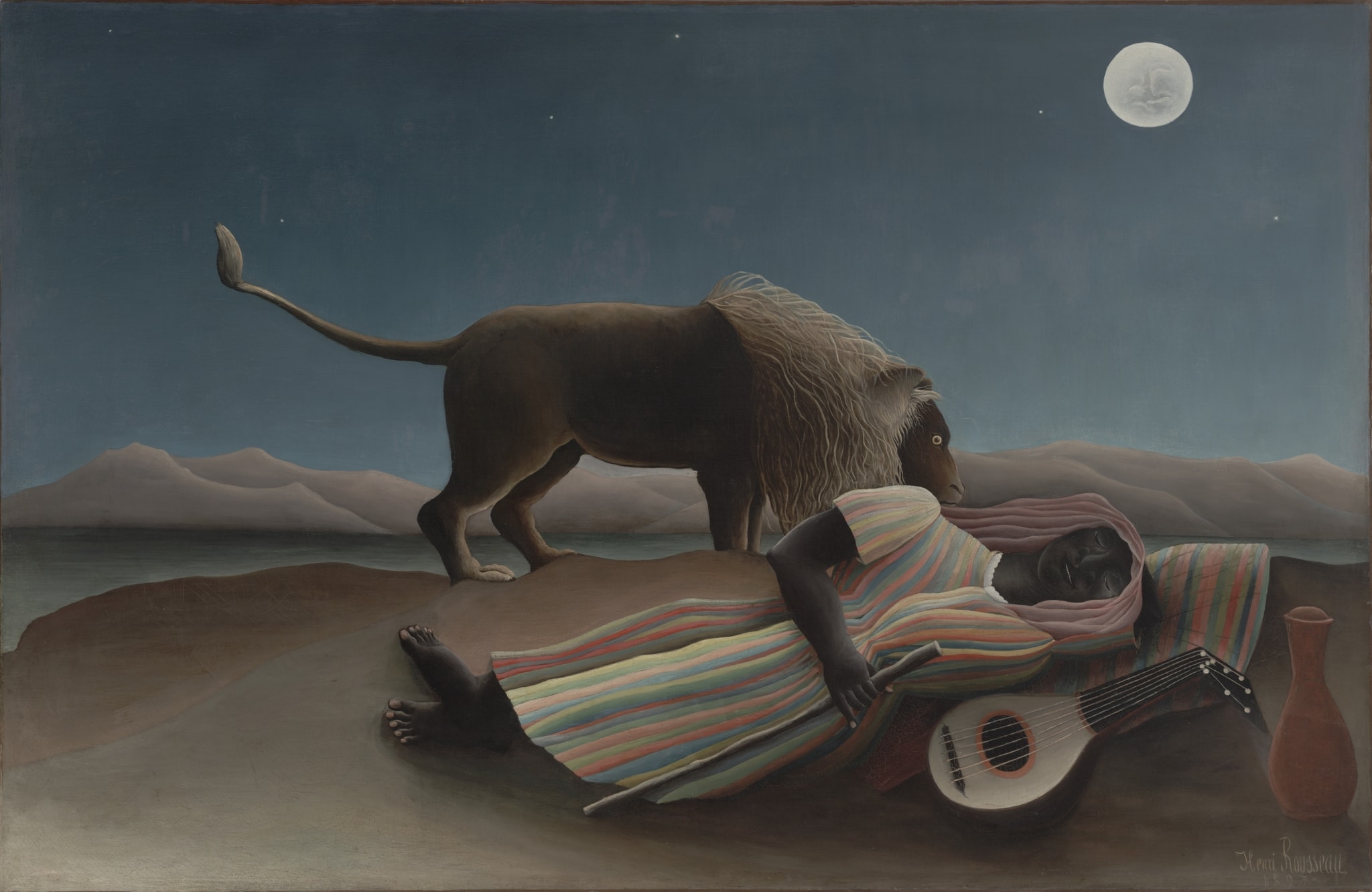
Click on any numbered symbol to learn more about its meaning
Meaning & Symbolism
Explore Deeper with AI
Ask questions about The Sleeping Gypsy
Popular questions:
Powered by AI • Get instant insights about this artwork
Interpretations
Colonial Imagination and the Racialized Sleeper (Symbolic Reading)
Source: MoMA (Rousseau letter; curatorial audio); Encyclopaedia Britannica
Flatness as Metaphysics (Formal Analysis)
Source: MoMA; Larousse; Encyclopaedia Britannica
Psycho-Dreaming and Guardianship (Psychological Interpretation)
Source: Jean Cocteau (via TheArticle); Rousseau letter (MoMA Highlights)
Objects at the Threshold (Iconographic Analysis)
Source: MoMA (object record; Rousseau letter)
Outsider to Vanguard: Authorship and Authenticity (Historical Context)
Source: MoMA (provenance); TheArtStory; Encyclopaedia Britannica
Ecology of Truce: The Sublime Without Attack (Environmental Reading)
Source: Larousse; Encyclopaedia Britannica; Rousseau letter (MoMA Highlights)
Explore Specific Elements
Dive deeper into individual scenes and details within The Sleeping Gypsy.
The Sniffing Lion
Rousseau’s lion leans in to sniff, not strike—an uncanny pause that turns a predator into the quiet fulcrum of The Sleeping Gypsy. Drawn from Paris’s ‘exotic’ image-bank yet rendered with dreamlike calm, the animal concentrates the painting’s suspense and serenity.
The Mandolin and Jug
In The Sleeping Gypsy, the compact still-life of a mandolin and an earthen water jug anchors Rousseau’s moonlit fantasy in human reality. Named by the artist as the traveler’s instrument and drinking vessel, they declare her vocation and survival kit while quietly intensifying the painting’s balance of serenity and threat.