Diagonal beam of light Symbolism
A diagonal beam of light often signifies divine illumination breaking into ordinary life, selecting and revealing a destined figure. In Baroque painting, especially under tenebrism, this oblique shaft functions as a visual vector that drives the narrative and marks the moment of inward transformation. Its slant conveys intervention and urgency, distinguishing it from general radiance.
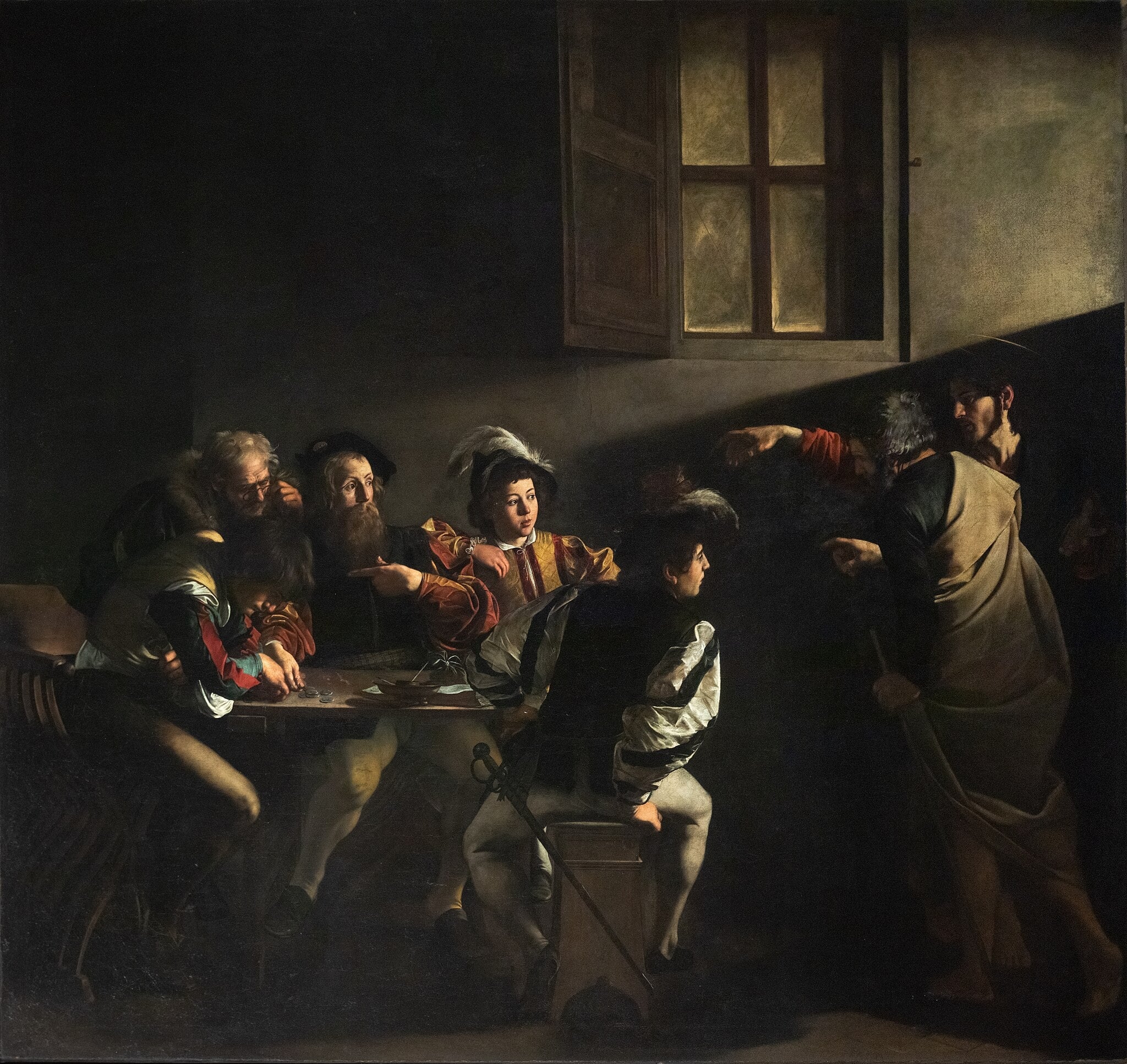
Diagonal beam of light in The Calling of Saint Matthew
In Caravaggio’s The Calling of Saint Matthew (1599–1600), a crisp diagonal beam cuts across a shadowed interior to isolate Matthew at the money table. The light aligns with Christ’s pointing gesture, arresting the scene at the hinge between hesitation and assent. By fusing stark Baroque tenebrism with figures in contemporary dress, Caravaggio makes the beam read as grace entering the present tense—public, incisive, and transformative—so that illumination itself performs the calling.