Water lilies Symbolism
In art, water lilies mark the meeting of surface and depth, where reflection and material form overlap. Their brief, floating presence makes them emblems of fleeting beauty and attentive looking, often used to probe light, time, and perception.
Water lilies in Bridge over a Pond of Water Lilies
In Claude Monet’s The Water Lily Pond (1899), water lilies organize a designed garden into a theater of perception. Spread across the reflective water, they interrupt and anchor the mirror of sky and willow fronds, softening the boundary between direct sight and reflection. Set beneath the pale, arched Japanese bridge, the lilies function as visual pauses on the surface, directing attention to seeing itself as the subject.
Common Themes
Artworks Featuring This Symbol
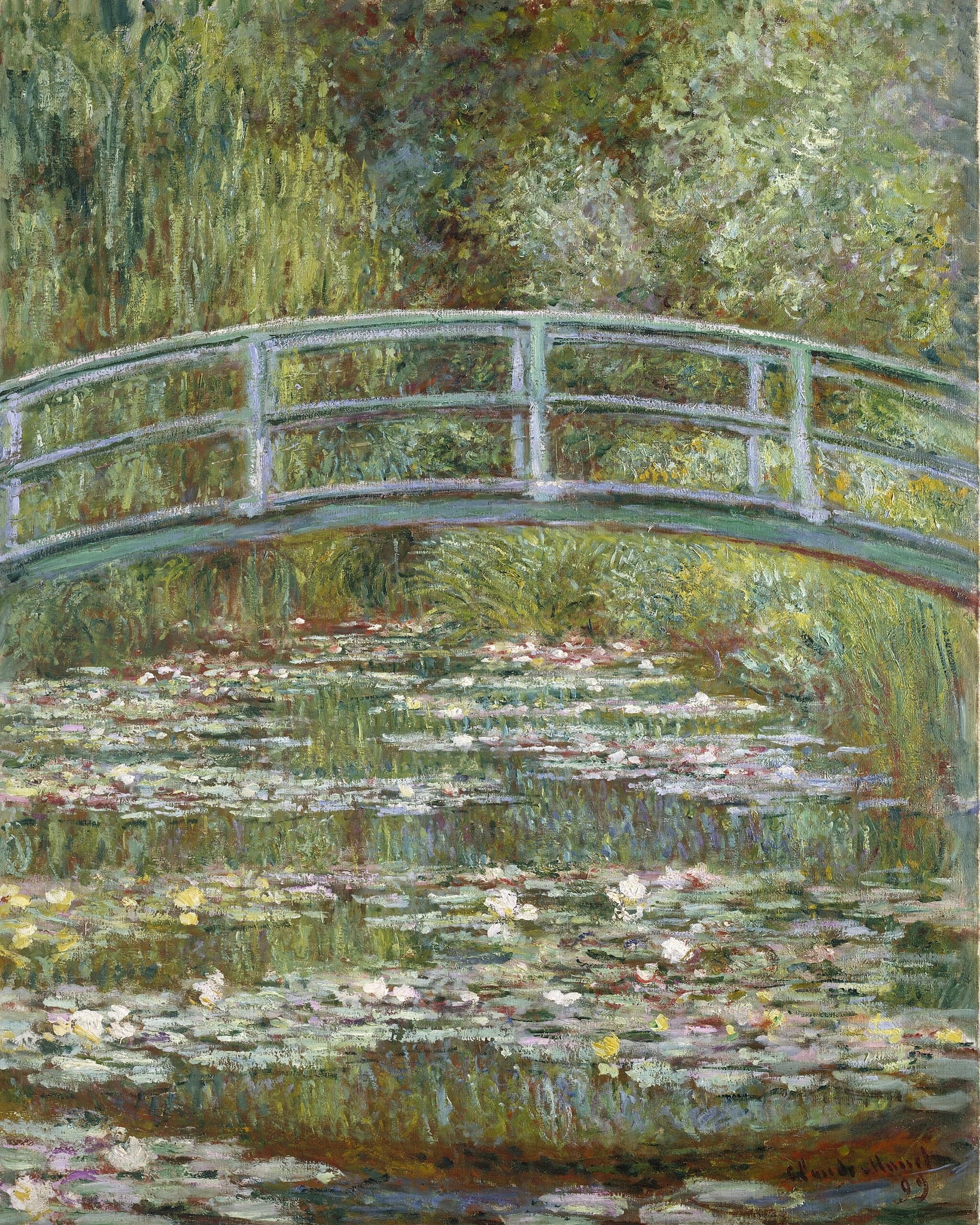
Bridge over a Pond of Water Lilies
Claude Monet (1899)
Claude Monet’s Bridge over a Pond of Water Lilies stages a <strong>threshold</strong> where garden and reflection merge. The cool arc of the <strong>Japanese-style bridge</strong> steadies a field of trembling light, while lilies hover between surface and depth, turning perception itself into the subject <sup>[1]</sup><sup>[2]</sup>.
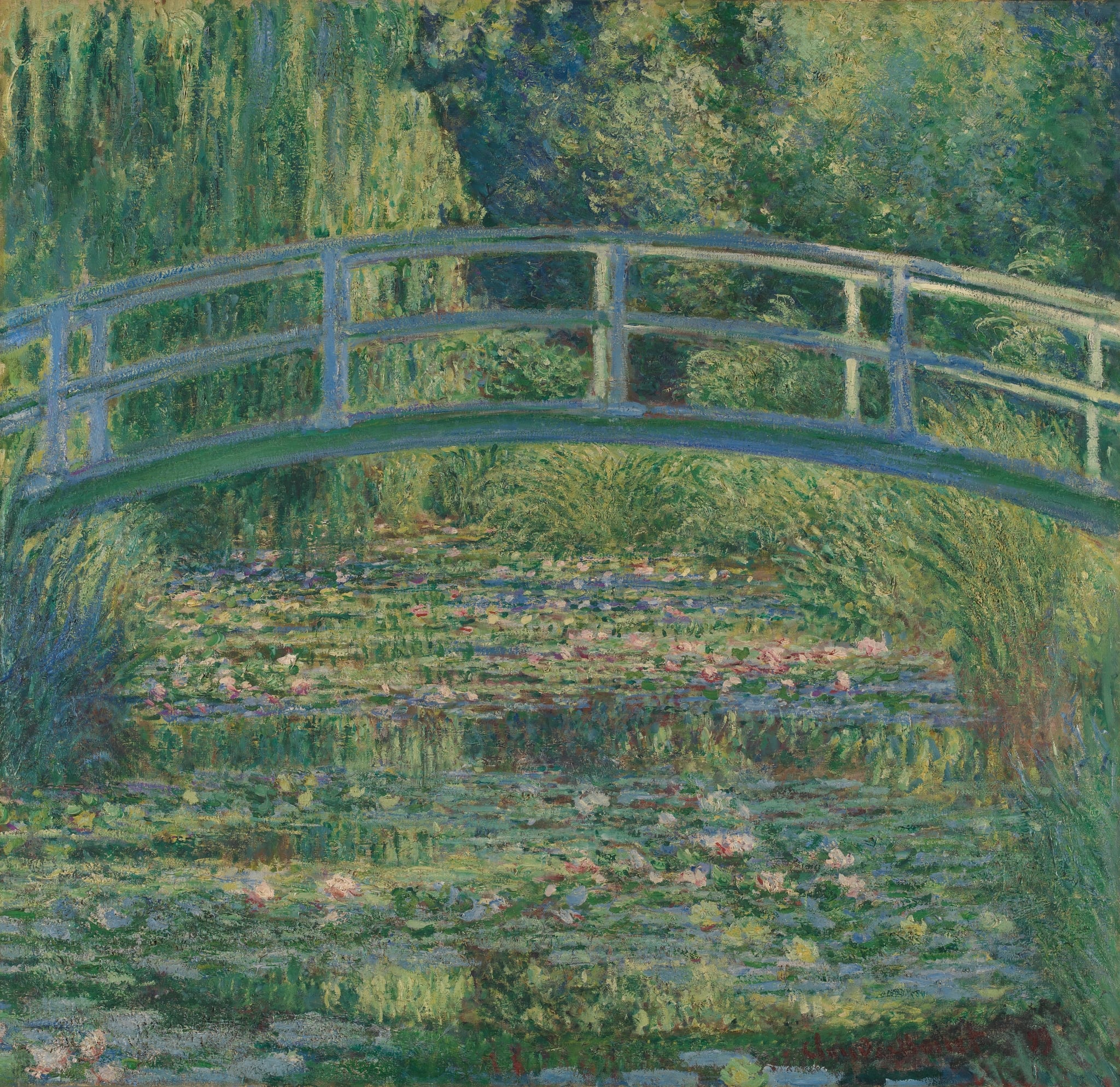
The Water Lily Pond
Claude Monet (1899)
Claude Monet’s The Water Lily Pond transforms a designed garden into a theater of <strong>perception and reflection</strong>. The pale, arched <strong>Japanese bridge</strong> hovers over a surface where lilies, reeds, and mirrored willow fronds dissolve boundaries between water and sky, proposing <strong>seeing itself</strong> as the subject <sup>[1]</sup><sup>[3]</sup>.