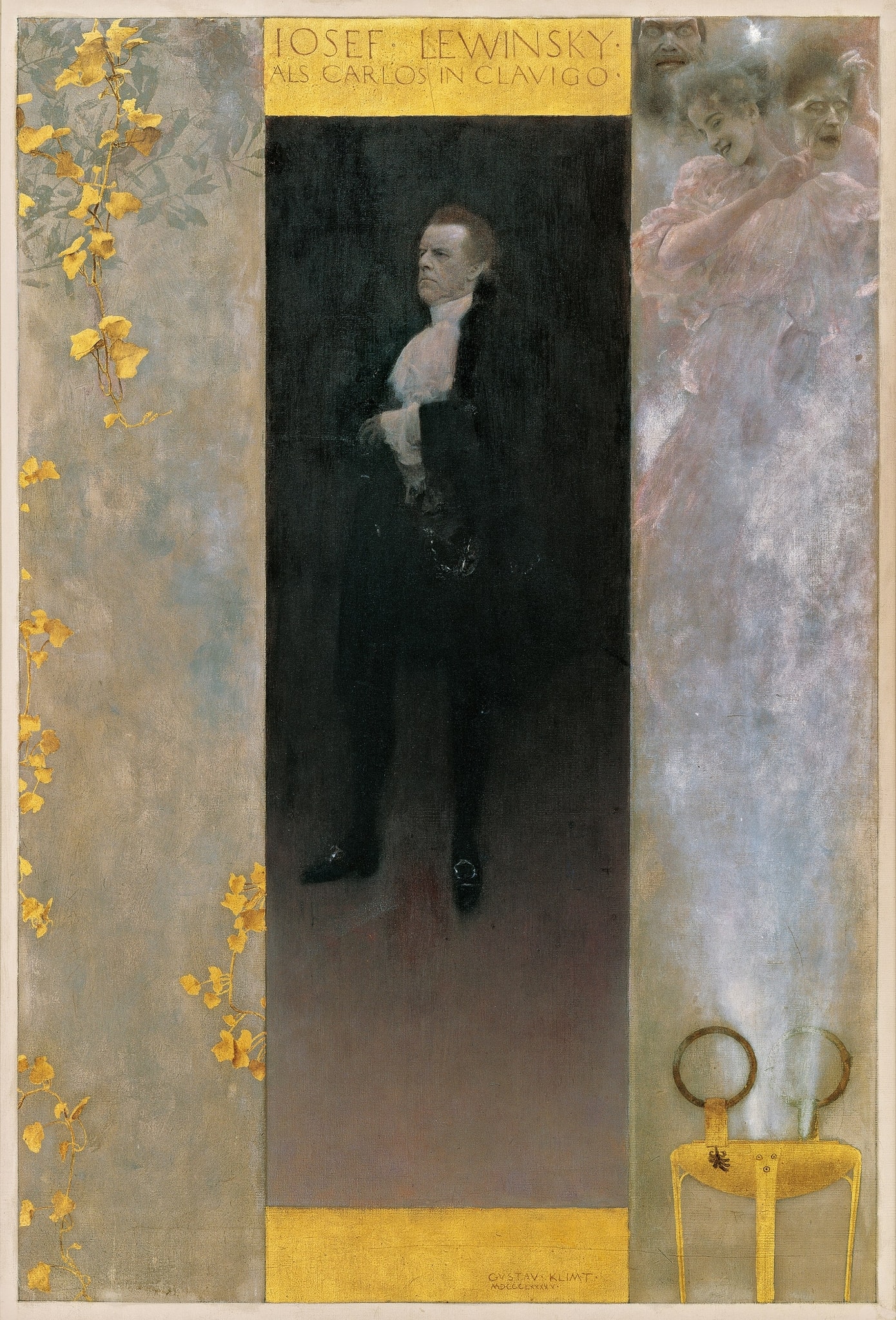
Josef Lewinsky as Carlos in Clavigo

by Gustav Klimt

A stark, triptych-like design turns the actor’s upright silhouette into a test of will against a surrounding chorus of masks, laurel/ivy, and a smoking antique tripod. Klimt fuses portrait and allegory to stage the psychic weather of Goethe’s drama while previewing his turn toward Symbolism and ornamental modernity [1][2].

Study Print Studio

Create a personal study print

Build a companion study sheet around the part of this painting that speaks to you most. Choose a detail, shape an interpretation, and walk away with something personal and display-worthy.

Fast Facts

Year
1895
Medium
Oil on canvas
Dimensions
60 × 44 cm
Location
Österreichische Galerie Belvedere, Vienna
See all Gustav Klimt paintings in Vienna
Josef Lewinsky as Carlos in Clavigo by Gustav Klimt (1895) featuring Golden ivy/laurel, Theatrical masks/phantoms in smoke, Antique tripod/brazier, Gold title and plinth bands

Click on any numbered symbol to learn more about its meaning

Meaning & Symbolism

Klimt organizes the canvas as a tall, three-part proscenium. In the center, the figure stands in evening dress, nearly swallowed by a matte black shaft; only a tight wedge of light strikes the shirtfront, cuffs, and the set mouth, while tiny accents—the watch chain, button gleam, shoe buckles—catch like stage sparks. This is not a likeness displayed in a room but a character engineered by light: a column of control and calculation that corresponds to Carlos’s function in Goethe’s play, the adviser who coolly advances ambition over fidelity 17. Above and below, gold bands act as title cartouche and plinth, turning the picture into a hybrid of poster and shrine—language that binds the sitter’s role to an elevated cultural frame and asserts the image’s readiness for reproduction in the period’s deluxe theater compendia 13. The flanking panels convert décor into argument. At left, a pale, misted ground hosts golden ivy threaded with faint laurel, symbols of immortality and honor; they promise lasting renown and the nobility of craft 1. At right, an antique tripod/brazier exhales smoke from which fluttering, pink‑tinged apparitions and theatrical masks materialize—an epiphany of the stage’s Dionysian origins and its fickle, intoxicating power 12. The right panel’s swarm—half-glee, half-sneer—registers gossip, desire, and the volatility of audience judgment; the left panel’s cool vegetal climb reads as the steady accrual of recognized merit. Between these competing rhetorics, the actor’s silhouette becomes a seal of self-mastery, an insistence that character is not dissolved by spectacle. Klimt’s triptych thus diagrams a psychic triangle: personal discipline; public fame; and the ecstatic, destabilizing mask tradition that haunts modern performance 12. Formally, the painting announces Klimt’s turn from historicist portraiture to Symbolism and proto‑Secession design. The flattened bands, ornamental gold, and emblematic flora/masks replace deep space with a semantic stage—each zone a legible sign rather than a neutral background 134. The picture’s modernity also resides in its function: conceived for dissemination by a reproduction society, it leverages poster-like clarity and strong vertical architecture so meaning survives translation to print 13. Yet Klimt retains tactile theatricality in the scumbled smokes and pearly veils at right, allowing the Dionysian to breathe against the actor’s polished restraint. In sum, why Josef Lewinsky as Carlos in Clavigo is important is that it codifies a new grammar for the theatrical portrait—one that stages the conflict between public spectacle and inner will, situates contemporary acting within an ancient lineage, and previews the gilded symbolic language that will soon define Klimt’s mature work 123.

Explore Deeper with AI

Ask questions about Josef Lewinsky as Carlos in Clavigo

Popular questions:

Powered by AI • Get instant insights about this artwork

💬 Ask questions about this artwork!

Interpretations

Reproduction Culture & Poster Aesthetics

Commissioned by the Gesellschaft für vervielfältigende Kunst for a luxury theater compendium, Klimt builds a portrait that anticipates its own dissemination. The gold title bars, tripartite layout, and compressed contrasts read like a poster engineered to survive reduction to photogravure, privileging legible symbols over deep space. This is not merely a likeness but an object calibrated to the economies of reproduction—an early case of painterly design shaped by print workflows and the period’s appetite for collectible portfolios. By aligning the actor’s image with typographic fields and emblematic signs, Klimt fuses fine art and publicity, previewing Secessionist strategies that would leverage reproducibility as a modern virtue rather than a compromise 13.

Source: Prestel Klimt volume; Klimt Database

Ritual Stage: From Proscenium to Shrine

Klimt’s framing converts the stage into ritual architecture. The upper and lower gold bands operate like a cartouche and base, while the right-hand tripod/brazier exhales apparitions tied to Greek theater and Dionysus, recoding performance as cultic epiphany. The left panel’s ivy and laurel extend this sacralization with symbols of immortality and honor, so the actor is both contemporary celebrity and officiant in an ancient rite. The triptych logic invests the portrait with liturgical cadence: central hieratic figure; dexter panel of ecstatic origin; sinister panel of reward and endurance. Klimt thus reframes Viennese theater as a modern mystery play with classical pedigree 12.

Source: Prestel Klimt volume; Kulturpool/Belvedere record

Actorly Psychology and the Role of Carlos

Rather than celebrity flattery, Klimt pursues a role-psychology: the severe black shaft and tight wedge of light distill Lewinsky into the calculating conscience of Goethe’s play. Carlos is the adviser who prioritizes ambition over fidelity; Klimt’s pinpoints of gleam—watch chain, buttons, set mouth—encode cold counsel and self-command under the glare of judgment. Flanking masks register the social multiplicity the role manipulates, while the ivory‑cool vegetal field promises the laurels of success. The portrait thus performs Carlos’s dramaturgy on the viewer, staging persuasion as light, focus, and subtraction—a moral geometry of control amid temptation 15.

Source: Prestel Klimt volume; Goethe, Clavigo (Wikisource)

Symbolist Grammar and Japoniste Flattening

The painting’s authority comes from its Symbolist syntax: planar fields, ornamental gold, and discrete emblems that read as signs, not scenery. Klimt suppresses perspectival recession in favor of stacked, vertical bands and graphic silhouettes, aligning with pan‑European Symbolism and the proto‑Secession appetite for decorative clarity. Contemporary accounts link this phase to Japonisme in Vienna—borrowed flatness, asymmetry, and emphasis on contour—evident in the central figure’s cut‑out presence against near‑void black. Meaning is carried by adjacency and motif (ivy/laurel; masks/tripod) rather than narrative anecdote, making the canvas a program of legible metaphors optimized for modern spectatorship and reproduction 136.

Source: Prestel Klimt volume; Klimt Database; Britannica (Vienna Secession)

Making the Likeness: Photographs, Statuette, and Absence

Archival notes indicate Klimt worked through multiple sittings and likely relied on photographic aids and even a bronze statuette by Karl Dietrich when Lewinsky was abroad. The resultant central figure—precise in contour, sparing in modeling—bears the stamp of mediated observation. This hybrid method complicates the painting’s claim to immediacy: the actor appears as an engineered construct, coherent with the work’s thematic insistence on mask, role, and reproducibility. Klimt’s dependence on surrogates becomes an aesthetic position, not a deficiency: a demonstration that the modern portrait may be authored through assembled proxies, then elevated by symbolic architecture into lasting icon 3.

Source: Klimt Database

Economies of Prestige: Patronage, Print, and the Burgtheater

By 1902 the portrait was in the Belvedere via compensation from the Society for the Reproductive Arts, underscoring how institutional sponsorship and print markets shaped what counted as canonical. The Burgtheater, Vienna’s prestige stage, provided subjects whose images would circulate as cultural capital in deluxe volumes like Teuber’s history. Klimt’s gold cartouches are thus more than décor—they signal branding within a network of publishers, societies, and museums that transformed stage performance into collectible image. The painting records a moment when symbolic modernism and media-savvy patronage fused to stabilize reputation across the museum and the printed page 23.

Source: Kulturpool/Belvedere record; Klimt Database

Related Themes

About Gustav Klimt

Gustav Klimt (1862–1918), co-founder of the Vienna Secession, pivoted from controversial public commissions to a decorative-symbolist language in his Golden Period. Drawing on Byzantine mosaics and modern design, he fused opulent surfaces with psychological intensity. By 1908–09, he transformed scandal into canon, and The Kiss became Vienna’s emblem of modern love.
View all works by Gustav Klimt

More by Gustav Klimt

Portrait of Adele Bloch-Bauer I by Gustav Klimt

Portrait of Adele Bloch-Bauer I

Gustav Klimt (1907)

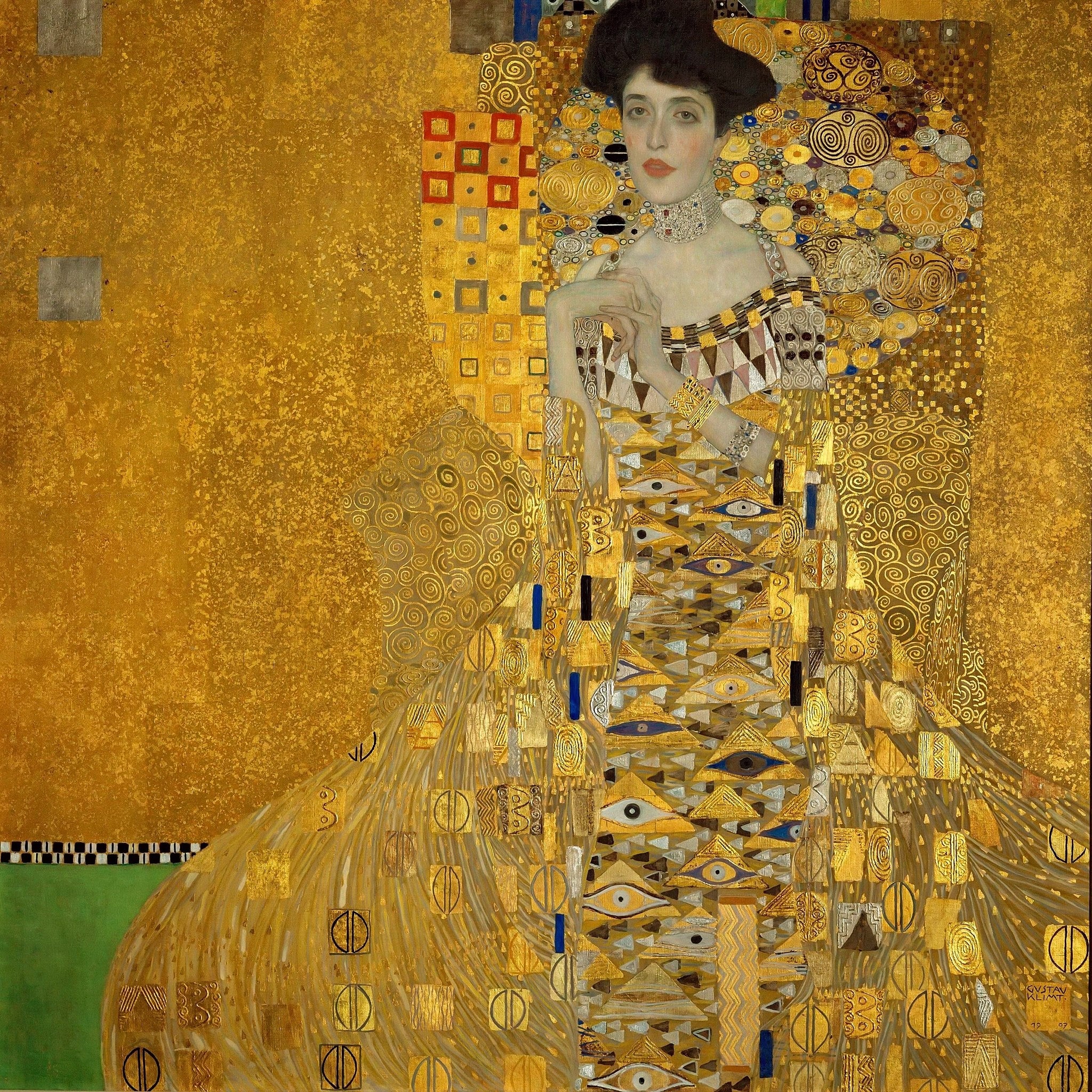
Gustav Klimt’s Portrait of Adele Bloch-Bauer I stages its sitter as a <strong>secular icon</strong>—a living presence suspended in a field of gold that converts space into <strong>pattern and power</strong>. The naturalistic face and hands emerge from a reliquary-like cascade of eyes, triangles, and tesserae, turning light, ornament, and status into the painting’s true subjects <sup>[1]</sup><sup>[2]</sup>.
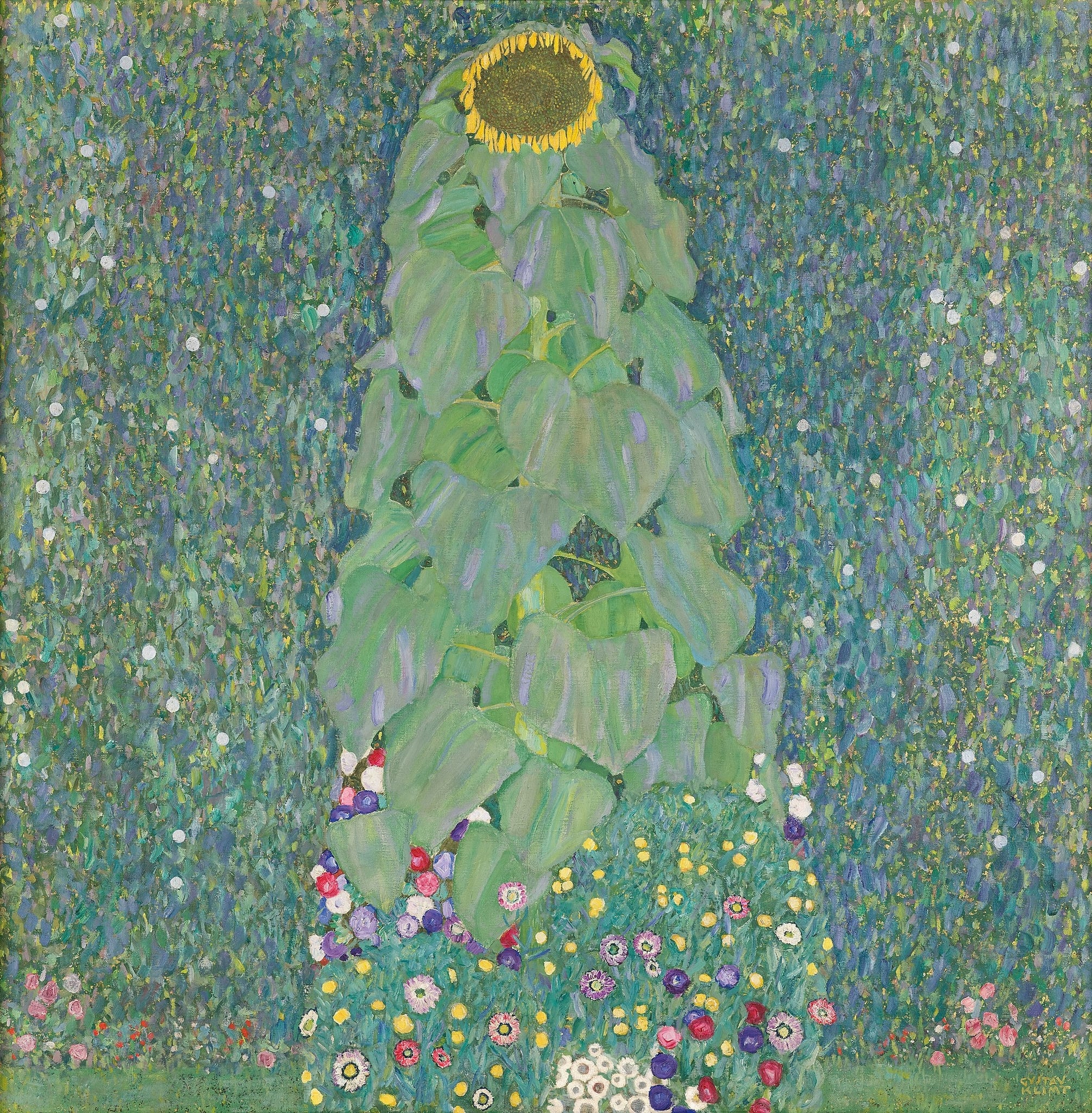
Sunflower by Gustav Klimt

Sunflower

Gustav Klimt (1907/1908)

Gustav Klimt’s Sunflower turns a single bloom into a <strong>monumental, figure-like presence</strong>. A tapering stack of broad, drooping leaves rises from a <strong>mosaic-like carpet of round blossoms</strong>, crowned by a gold-flecked disc that glows against a cool, stippled field. The work fuses <strong>portrait, icon, and landscape</strong> into one emblem of vitality and quiet sanctity <sup>[1]</sup><sup>[2]</sup>.
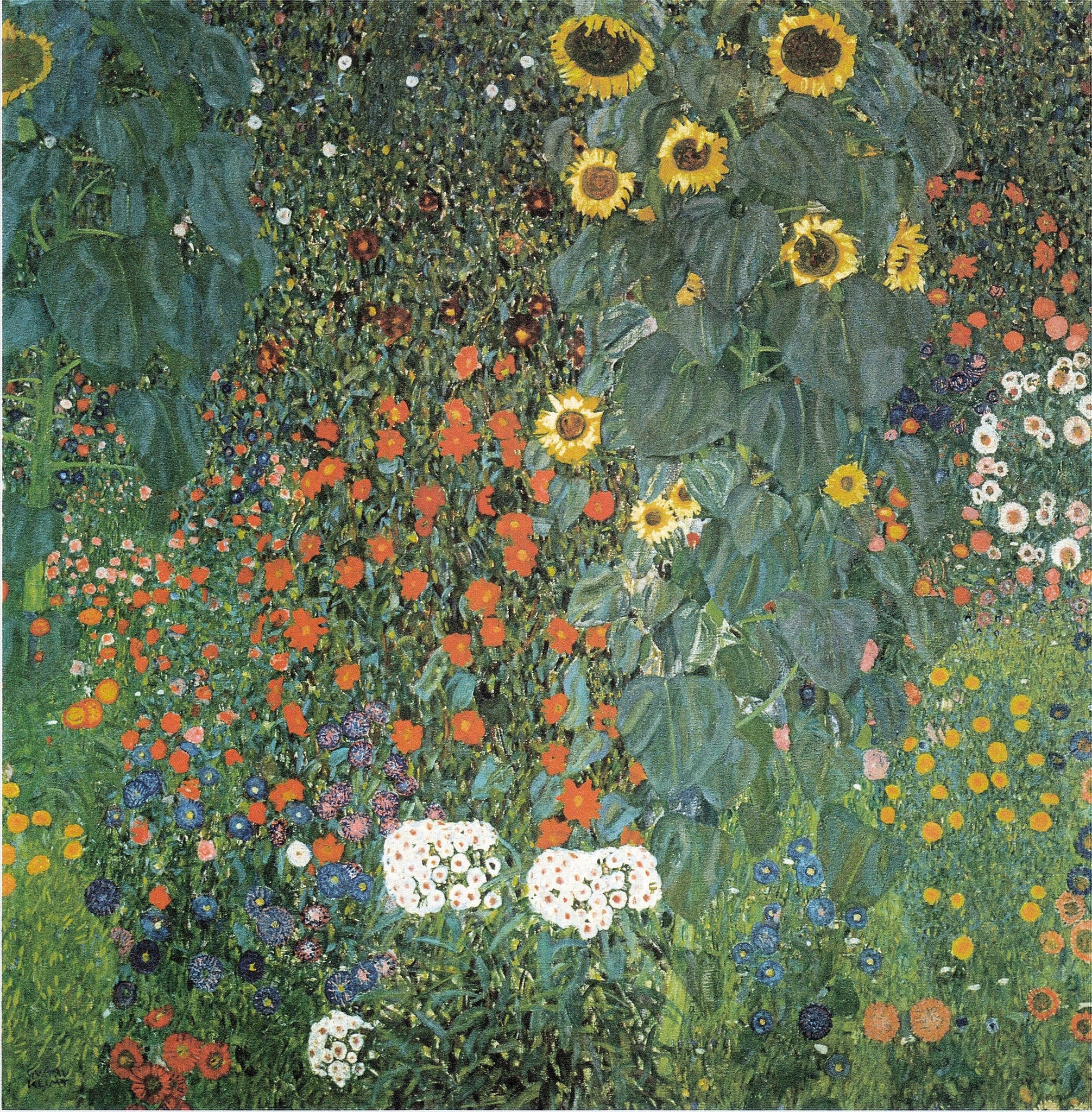
Cottage Garden with Sunflowers by Gustav Klimt

Cottage Garden with Sunflowers

Gustav Klimt (1906–1907 (signed 1907))

Cottage Garden with Sunflowers is a square, horizonless field of blooms where a vertical column of <strong>sunflowers</strong> anchors an all-over weave of color and pattern. Klimt fuses <strong>ornament and nature</strong>, turning a humble Litzlberg cottage plot into a radiant matrix of cyclical life and renewal <sup>[1]</sup><sup>[4]</sup><sup>[5]</sup>.
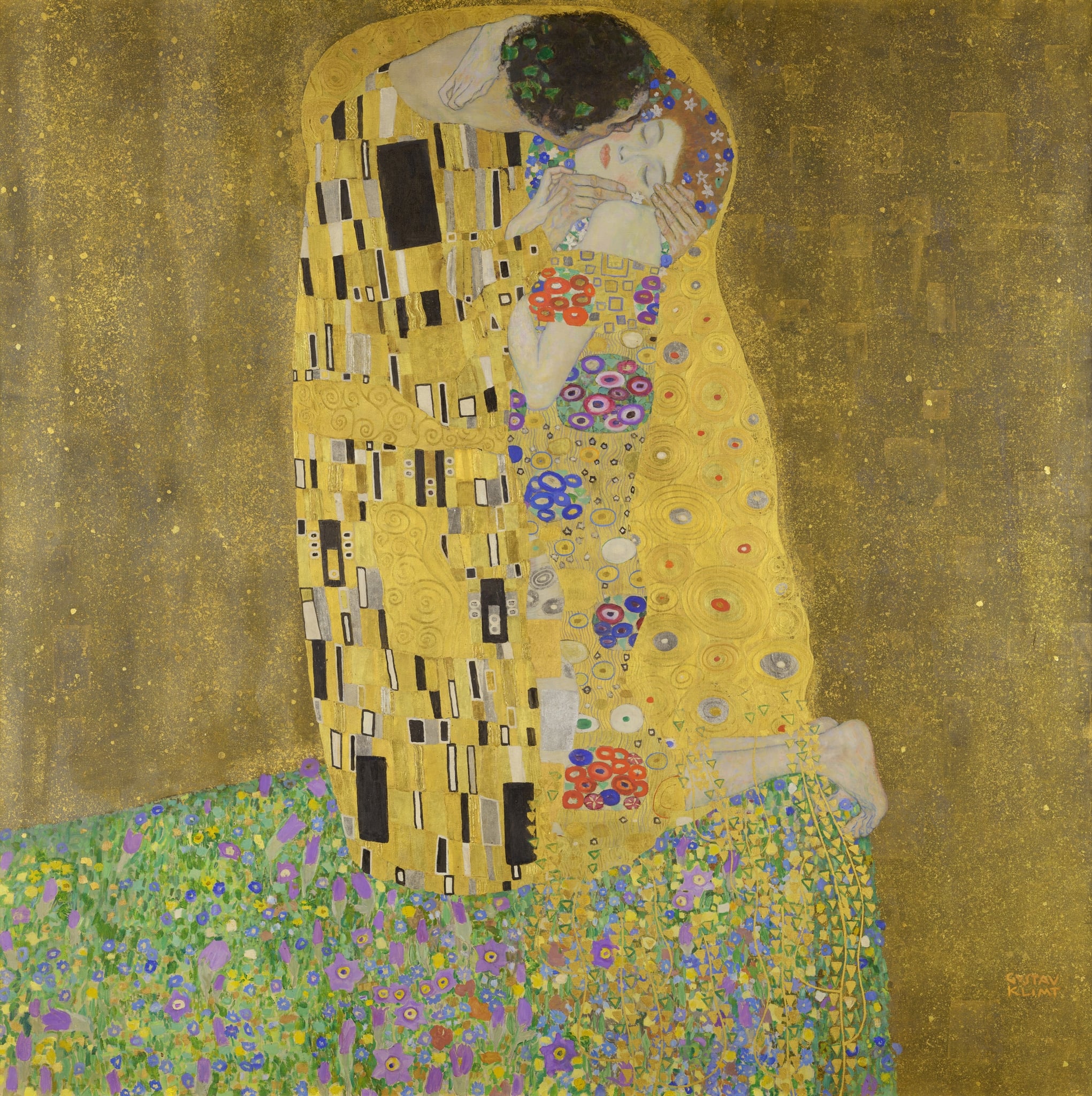
The Kiss by Gustav Klimt

The Kiss

Gustav Klimt (1908 (completed 1909))

The Kiss stages human love as a <strong>sacred union</strong>, fusing two figures into a single, gold-clad form against a timeless field. Klimt opposes <strong>masculine geometry</strong> (black-and-white rectangles) to <strong>feminine organic rhythm</strong> (spirals, circles, flowers), then resolves them in radiant harmony <sup>[1]</sup><sup>[2]</sup>.
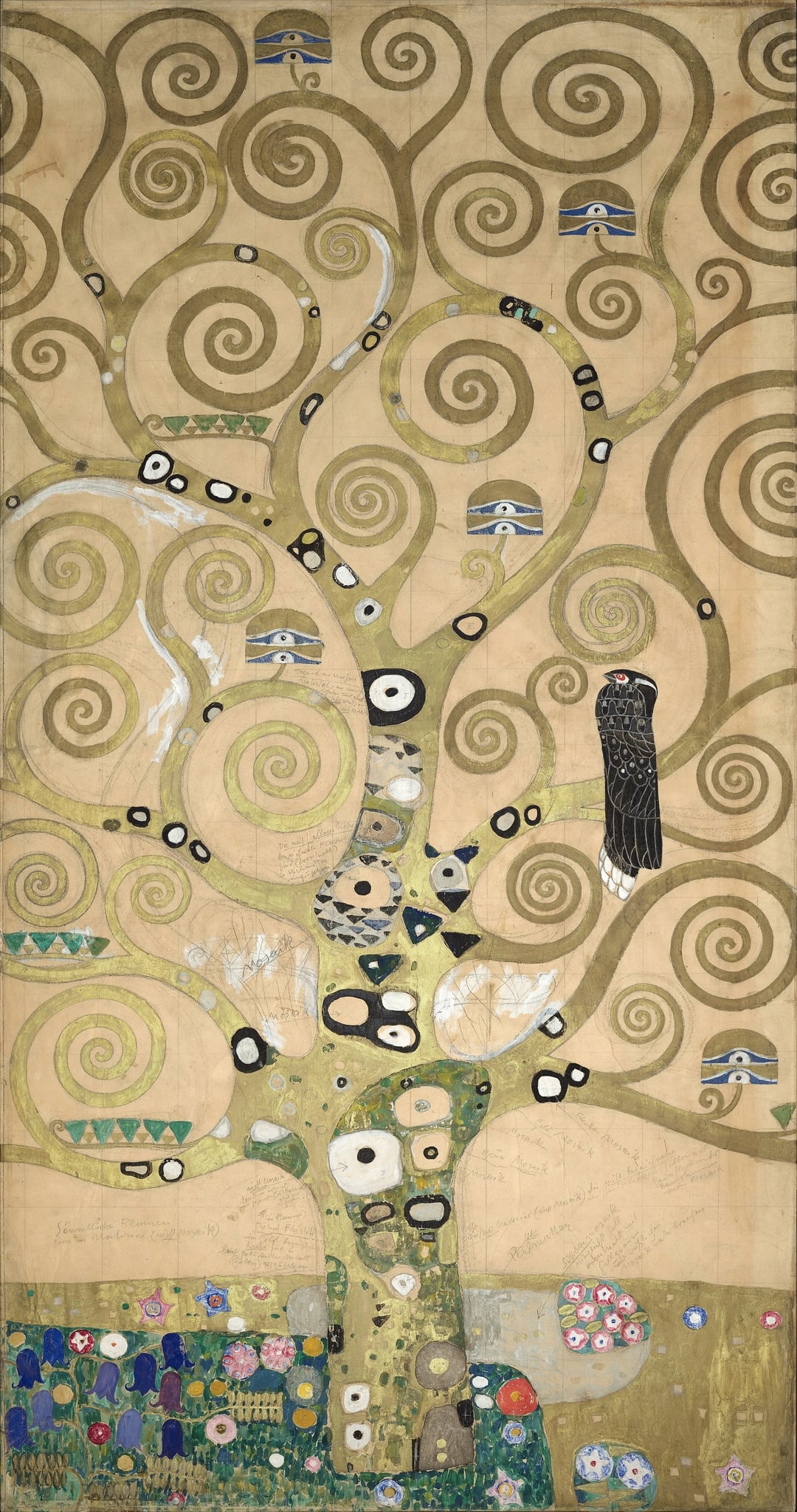
The Tree of Life by Gustav Klimt

The Tree of Life

Gustav Klimt (1910–1911 (design; mosaic installed 1911))

Gustav Klimt’s The Tree of Life crystallizes a <strong>cosmological axis</strong> in a gilded ornamental language: a rooted trunk erupts into <strong>endless spirals</strong>, embedded with <strong>eye-like rosettes</strong> and shadowed by a black, red‑eyed bird. Designed as part of the Stoclet dining‑room frieze, it fuses <strong>symbolism and luxury materials</strong> to link earthly abundance with timeless transcendence <sup>[1]</sup><sup>[2]</sup>.
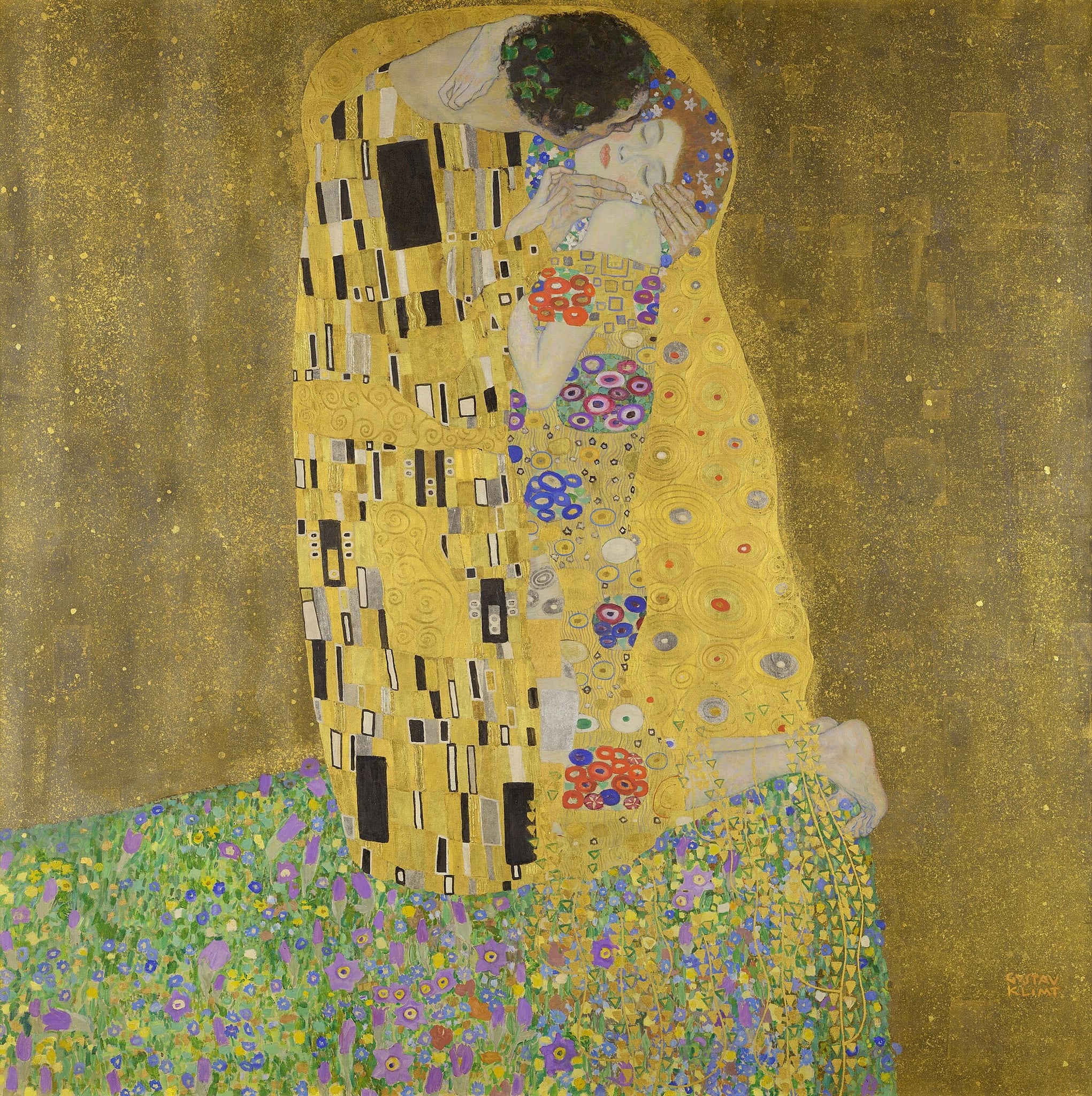
The Kiss (Lovers) by Gustav Klimt

The Kiss (Lovers)

Gustav Klimt (1907–1908 (Belvedere lists 1908/09))

The Kiss (Lovers) crystallizes Klimt’s <strong>Golden Period</strong> ideal: erotic union staged as a sacred vision. Two bodies fuse beneath a single golden mantle, poised on a flowered ledge at the brink of the unknown, where <strong>pattern becomes symbol</strong> and intimacy becomes icon.