Portrait of an Old Man in Profile (Count Traun?)

by Gustav Klimt

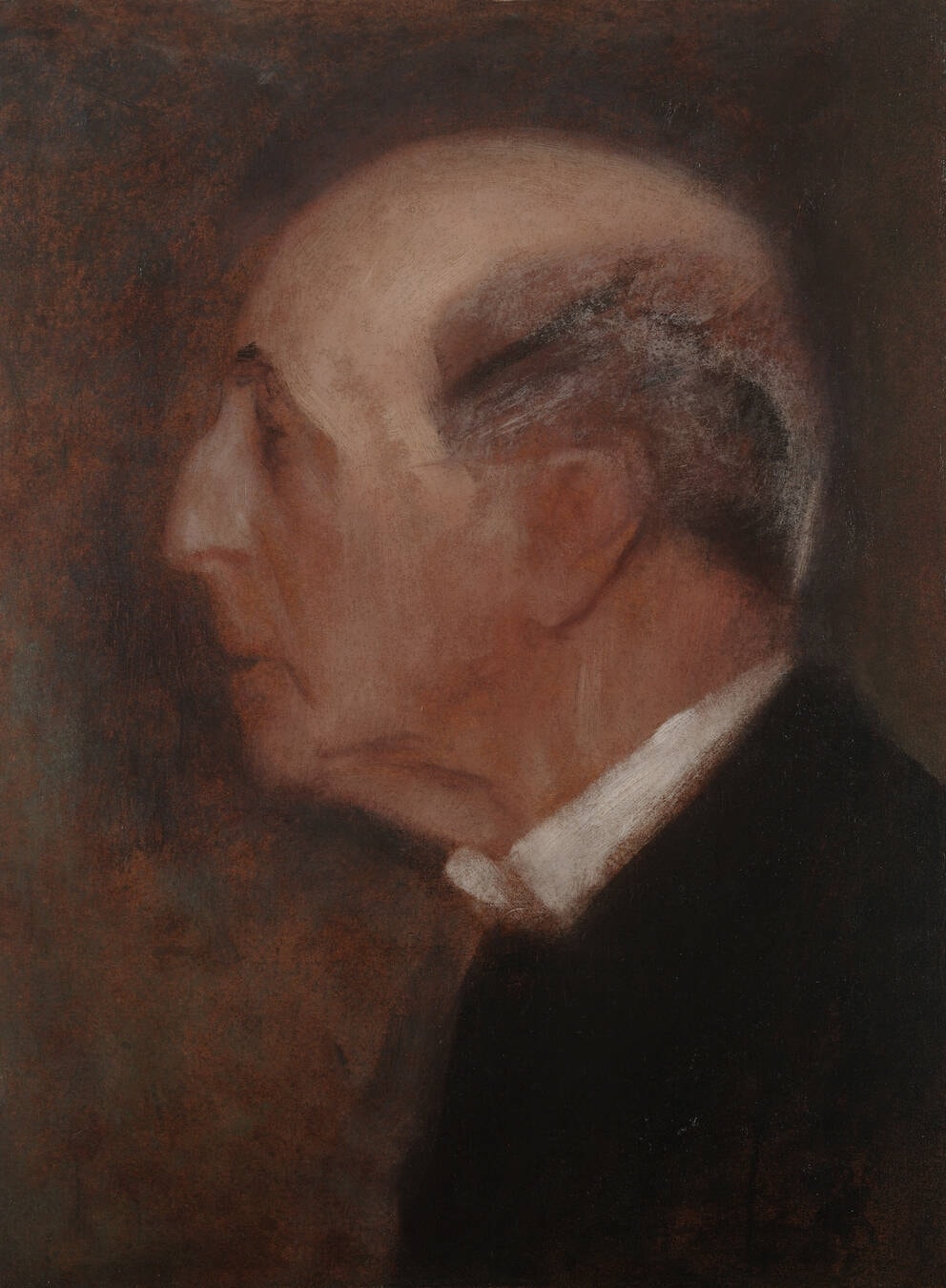
Gustav Klimt’s Portrait of an Old Man in Profile (Count Traun?) distills human presence to a strict profile set against a dusky, earth‑toned field. With thin oil on cardboard, Klimt lets edges dissolve into atmosphere, turning the bald crown, graying wisps, and slack jaw into a meditation on age and transience [1].

Study Print Studio

Create a personal study print

Build a companion study sheet around the part of this painting that speaks to you most. Choose a detail, shape an interpretation, and walk away with something personal and display-worthy.

Fast Facts

Year
c. 1896
Medium
Oil on cardboard
Dimensions
46 × 35.2 × 2.4 cm
Location
Leopold Museum, Vienna
See all Gustav Klimt paintings in Vienna
Portrait of an Old Man in Profile (Count Traun?) by Gustav Klimt (c. 1896) featuring Strict profile silhouette, Dissolving edges, Bald crown with gray wisps, White collar wedge

Click on any numbered symbol to learn more about its meaning

Meaning & Symbolism

Klimt constructs the head as a medallion-like silhouette, turning left, its contours simplified to a single continuous arc from brow to nape. Yet that classical clarity is immediately unsettled: the bald crown glows softly before it dissolves into brown umber haze, and the ear and jaw blur where bone should assert firmness. The small wedge of bright collar, abraded to near‑paper thinness, punctuates the throat but cannot stabilize the figure’s retreat into dusk. These decisions strip away social display and bind dignity to impermanence; the sitter’s presence is affirmed by the profile’s authority and simultaneously eroded by Klimt’s rubbed, feathered edges. In place of ornament, Klimt chooses restraint—economical pigments, a narrow register of rusts and charcoals, and paint so thin the support seems to breathe through. The effect is a contemplative hush, as if the air, not just the paint, were modeling the face. This is empathetic vanitas without skulls or hourglasses: the head persists, but time is visible at its margins 1. The Leopold Museum identifies the work as an artist‑initiated character study—the sitter remains unconfirmed despite the inherited label “Count Traun?”—and the painting stayed in Klimt’s estate, undermining the idea of a paid commission 12. That status clarifies its stake in the artist’s development. Between 1895 and 1897 Klimt explored life‑cycle imagery and made several elderly male heads; in this context the old man functions as a symbol of late life and memory, a counterpart to youthful figures in contemporaneous allegories 4. A close comparator is The Blind Man (c. 1896), where similar dusk‑toned atmosphere, thin handling, and introspective withdrawal appear; together they chart Klimt’s shift from decorative historicism to a psychological modernity later refined in his famous portraits, albeit here without gilded surfaces 13. What is decisive is method: Klimt tests how far he can move from linear description toward atmospheric contour, how much identity can survive when paint records not features but states—fatigue, recollection, the body’s quiet yielding. In this test, the painting succeeds: the profile’s authority anchors us; the melting edges summon finitude; and the modest collar admits worldly status only to concede its secondary rank to time. Thus the work crystallizes an ethics of looking characteristic of Klimt’s turn-of-century practice—attention without spectacle, intimacy without intrusion. Its importance lies in demonstrating, at a pivotal moment before the Secession, that Klimt could extract profound symbolism from minimal means, elevating a single aging head into a universal emblem of human passage 124.

Explore Deeper with AI

Ask questions about Portrait of an Old Man in Profile (Count Traun?)

Popular questions:

Powered by AI • Get instant insights about this artwork

💬 Ask questions about this artwork!

Interpretations

Historiography & Naming: From “Count” to Character

The inherited label “Count Traun?” once framed the image as a patrician likeness, but current research reclassifies it as a self-initiated character study that remained in Klimt’s estate—evidence against a commission 12. That shift matters: it moves our reading from social typology to psychological inquiry and from dynastic identity to time-bound presence. The purple estate stamp on the verso anchors this reframing in object biography, while the sparse handling—strict profile, thin paint—aligns with studies rather than society portraiture 12. In practical terms, the question mark in the title is not mere caution; it is an interpretive pivot that licenses readings of age, memory, and vanitas over heraldry. The painting thus becomes a case study in how catalog tradition and provenance research recalibrate meaning, authority, and viewing expectations in Klimt scholarship.

Source: Leopold Museum; Austrian Federal Ministry provenance dossier

Materiality as Meaning: Cardboard, Abrasion, Breath

Executed in oil on cardboard, the work harnesses a modest, fragile support to echo the body’s own precarity. Klimt’s paint is so thin that the ground “seems to breathe through,” turning support visibility into a metaphor for material and mortal permeability 1. The rubbed edges at skull, ear, and collar are not mere finish; they operate as indexical traces of touch and time, where facture models dissolution. Such economy—earth hues, feathered edges, abraded highlights—constructs an image that reads as much by what evaporates as by what remains. In this lens, the portrait is medium-reflexive: surface aging, scumble, and absorbency are enlisted to evoke senescence. Parallels with The Blind Man (c. 1896) underscore this strategy across the period, where Klimt privileges atmosphere over contour to register inward states 13.

Source: Leopold Museum

Class Coded, Then Quieted

A sliver of bright collar and dark coat acknowledges bourgeois or aristocratic status, but Klimt pointedly minimizes fashion and insignia, subordinating rank to age’s visibility 1. In contrast to his later gilded society portraits, here décor recedes in favor of a near-monochrome field that neutralizes display. This restraint—“attention without spectacle”—articulates an ethics of looking that levels hierarchy: the human head, not its trappings, anchors meaning 1. The work therefore stages a subtle critique of class representation within Viennese portraiture on the eve of the Secession, foreshadowing how modernist portraitists would prize psychological presence over social emblem. The result is a portrait that acknowledges class markers only to quiet them, letting the porous edges of the profile argue that time, not title, is the decisive frame for identity.

Source: Leopold Museum

Classical Profile, Modern Dissolution

The cameo-like, strict profile invokes the numismatic and Renaissance lineage of authoritative likeness—medallions, coins, and antique reliefs—where identity is minted in contour. Klimt adopts that authority, then undoes it at the margins: the bald crown “dissolves into brown umber haze,” and bone-softening blur compromises classical firmness 1. This tension between profile’s fixity and atmosphere’s flux is a laboratory for Klimt’s late‑1890s pivot from historicist description to symbolist modernity. The device lets him keep the profile’s legibility while testing how far erosion can proceed without losing personhood. It is a strategic anachronism—classical pose, modern edge—that compresses past and present into a single head, prefiguring the Secession’s embrace of tradition filtered through subjective perception 15.

Source: Leopold Museum

Aging as Program: The Late‑1890s Cycle

Read alongside The Blind Man (c. 1896) and related head studies, the profile belongs to Klimt’s life‑cycle exploration between 1895–97, where youth and the bald, elderly male function as emblematic poles in an allegorical system 34. The old man’s withdrawal into dusk tones operates as a mnemonic image—less a portrait than a vessel for memory and finitude—anticipating works shown in the 1st Secession exhibition (1898) that foreground inward states over ornament 35. This programmatic interest situates the painting at a hinge in Klimt’s career: still within Historicism per museum classification, yet already testing symbolist condensation, tonal restraint, and edge ambiguity as carriers of meaning. In this frame, the work is not an isolated study but a node in a deliberate sequence charting human passage across Klimt’s emerging modern aesthetics.

Source: Leopold Museum; Klimt Foundation

Related Themes

About Gustav Klimt

Gustav Klimt (1862–1918), co-founder of the Vienna Secession, pivoted from controversial public commissions to a decorative-symbolist language in his Golden Period. Drawing on Byzantine mosaics and modern design, he fused opulent surfaces with psychological intensity. By 1908–09, he transformed scandal into canon, and The Kiss became Vienna’s emblem of modern love.
View all works by Gustav Klimt

More by Gustav Klimt

Portrait of Adele Bloch-Bauer I by Gustav Klimt

Portrait of Adele Bloch-Bauer I

Gustav Klimt (1907)

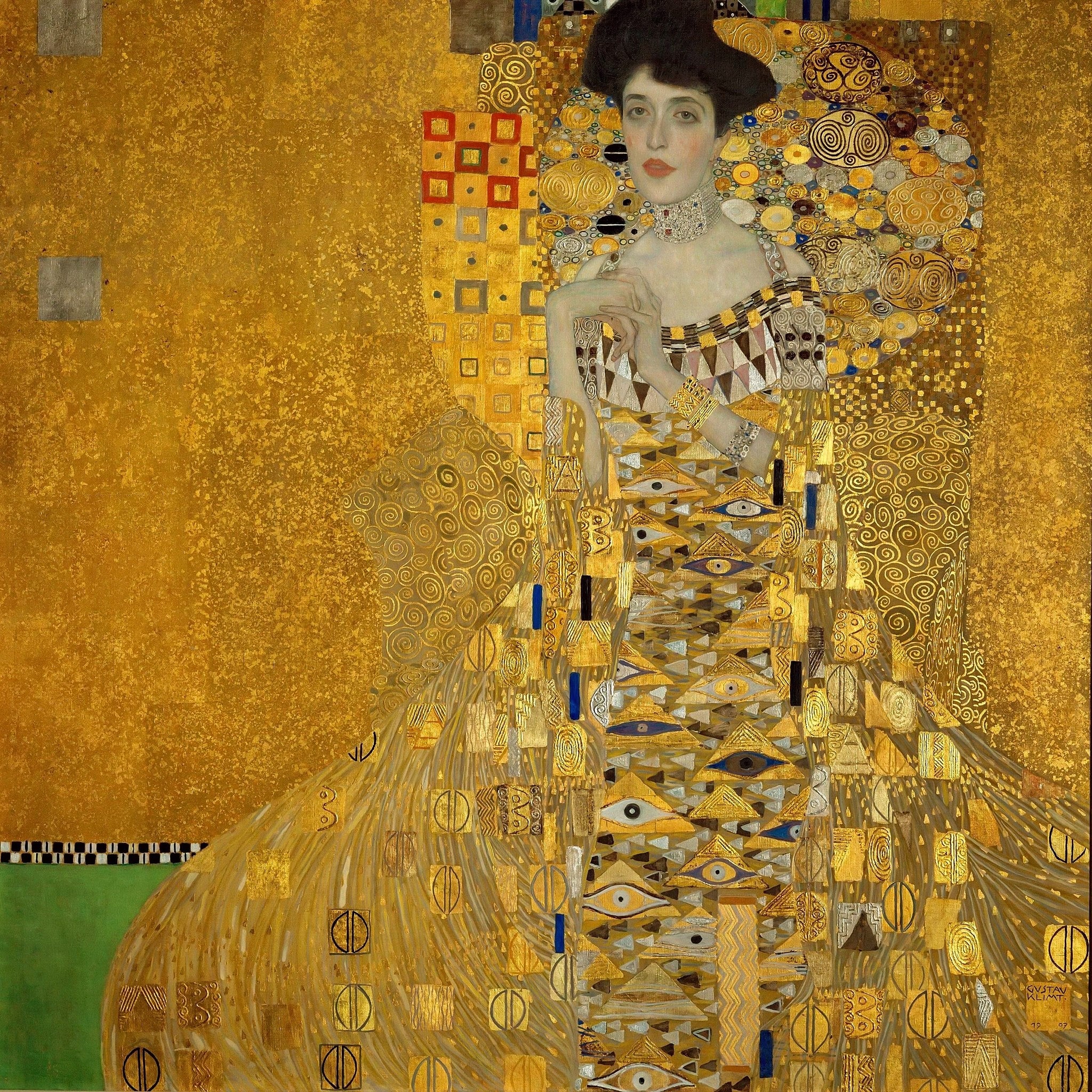
Gustav Klimt’s Portrait of Adele Bloch-Bauer I stages its sitter as a <strong>secular icon</strong>—a living presence suspended in a field of gold that converts space into <strong>pattern and power</strong>. The naturalistic face and hands emerge from a reliquary-like cascade of eyes, triangles, and tesserae, turning light, ornament, and status into the painting’s true subjects <sup>[1]</sup><sup>[2]</sup>.
Sunflower by Gustav Klimt

Sunflower

Gustav Klimt (1907/1908)

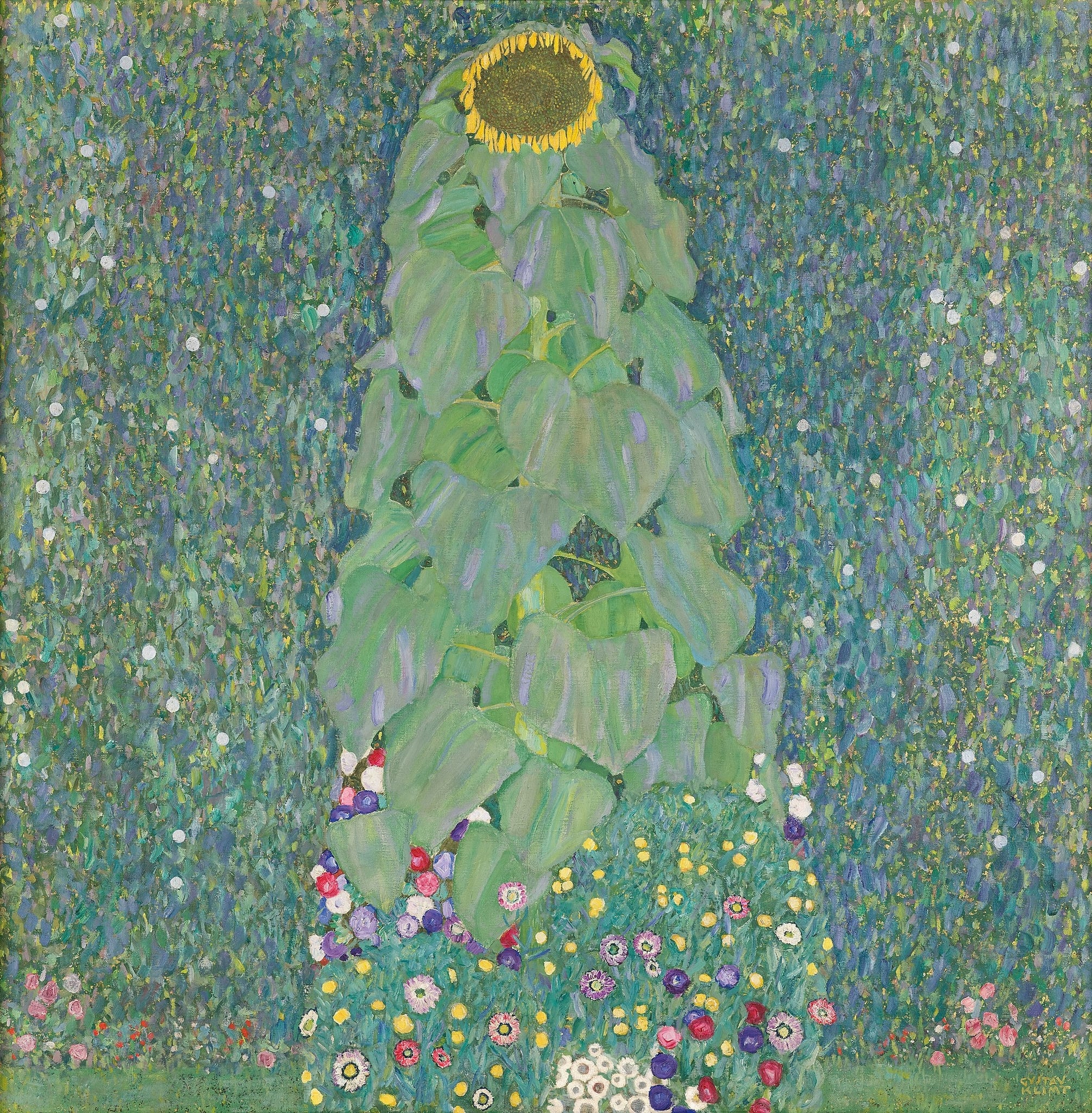
Gustav Klimt’s Sunflower turns a single bloom into a <strong>monumental, figure-like presence</strong>. A tapering stack of broad, drooping leaves rises from a <strong>mosaic-like carpet of round blossoms</strong>, crowned by a gold-flecked disc that glows against a cool, stippled field. The work fuses <strong>portrait, icon, and landscape</strong> into one emblem of vitality and quiet sanctity <sup>[1]</sup><sup>[2]</sup>.
Cottage Garden with Sunflowers by Gustav Klimt

Cottage Garden with Sunflowers

Gustav Klimt (1906–1907 (signed 1907))

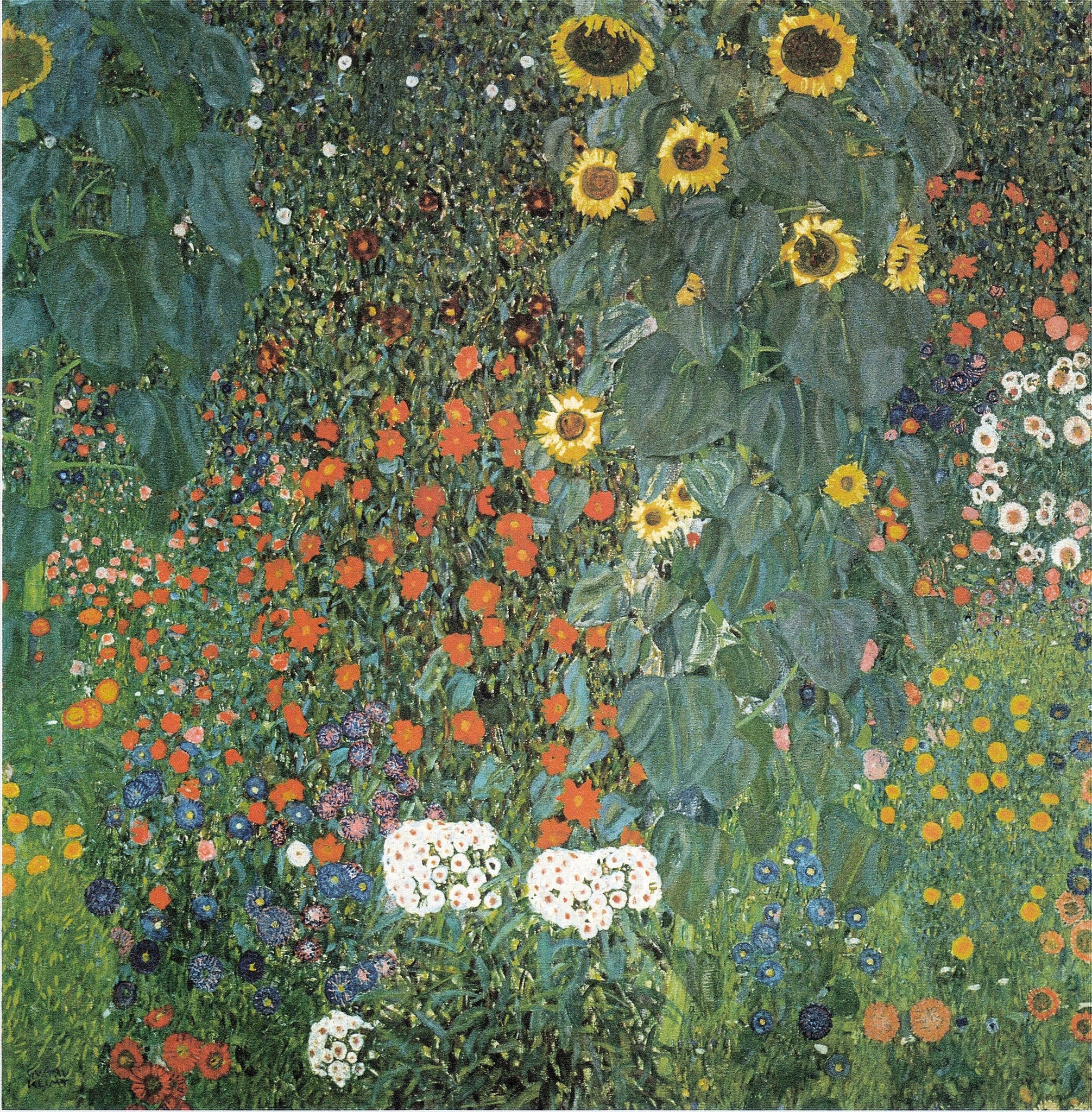
Cottage Garden with Sunflowers is a square, horizonless field of blooms where a vertical column of <strong>sunflowers</strong> anchors an all-over weave of color and pattern. Klimt fuses <strong>ornament and nature</strong>, turning a humble Litzlberg cottage plot into a radiant matrix of cyclical life and renewal <sup>[1]</sup><sup>[4]</sup><sup>[5]</sup>.
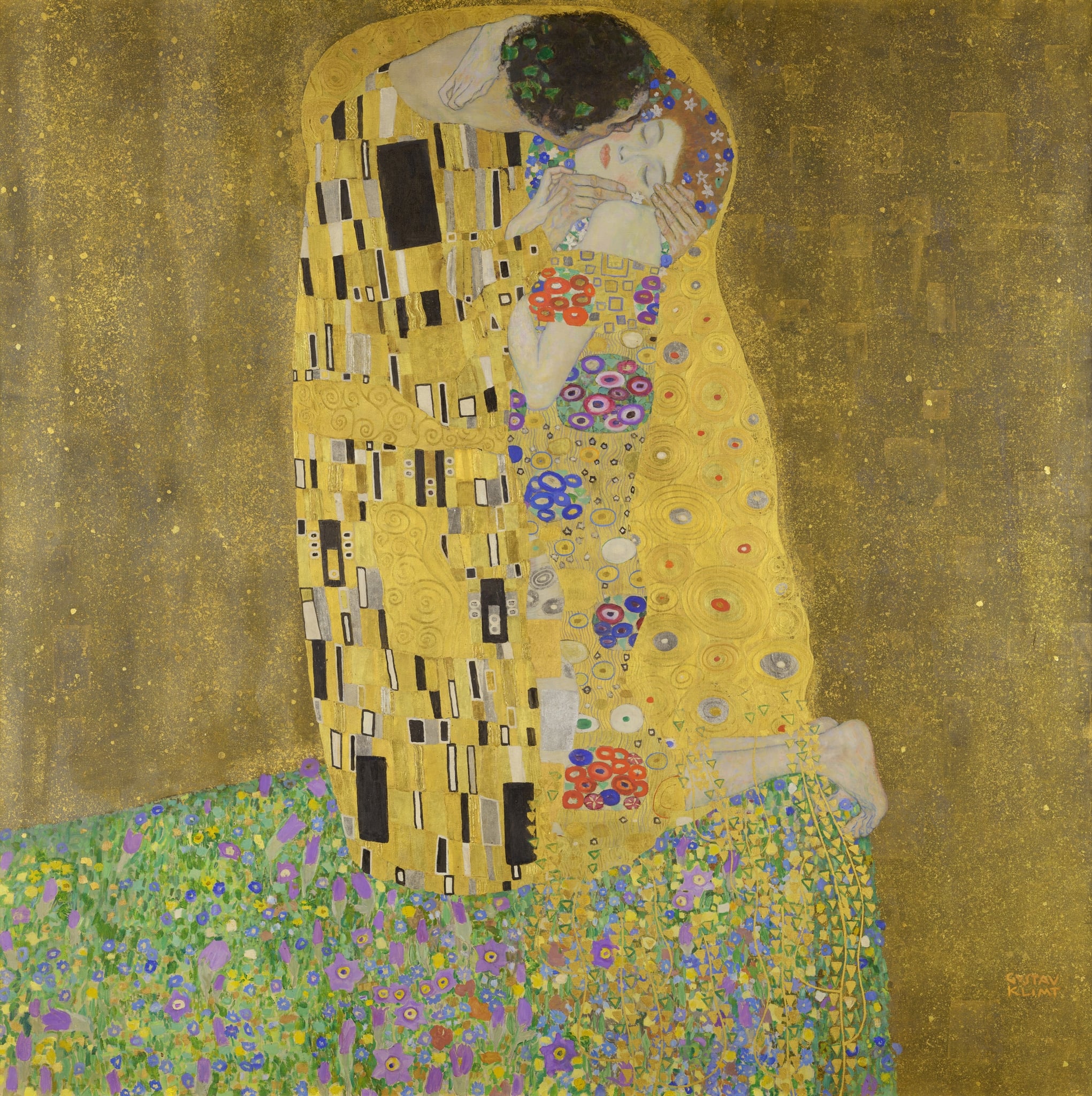
The Kiss by Gustav Klimt

The Kiss

Gustav Klimt (1908 (completed 1909))

The Kiss stages human love as a <strong>sacred union</strong>, fusing two figures into a single, gold-clad form against a timeless field. Klimt opposes <strong>masculine geometry</strong> (black-and-white rectangles) to <strong>feminine organic rhythm</strong> (spirals, circles, flowers), then resolves them in radiant harmony <sup>[1]</sup><sup>[2]</sup>.
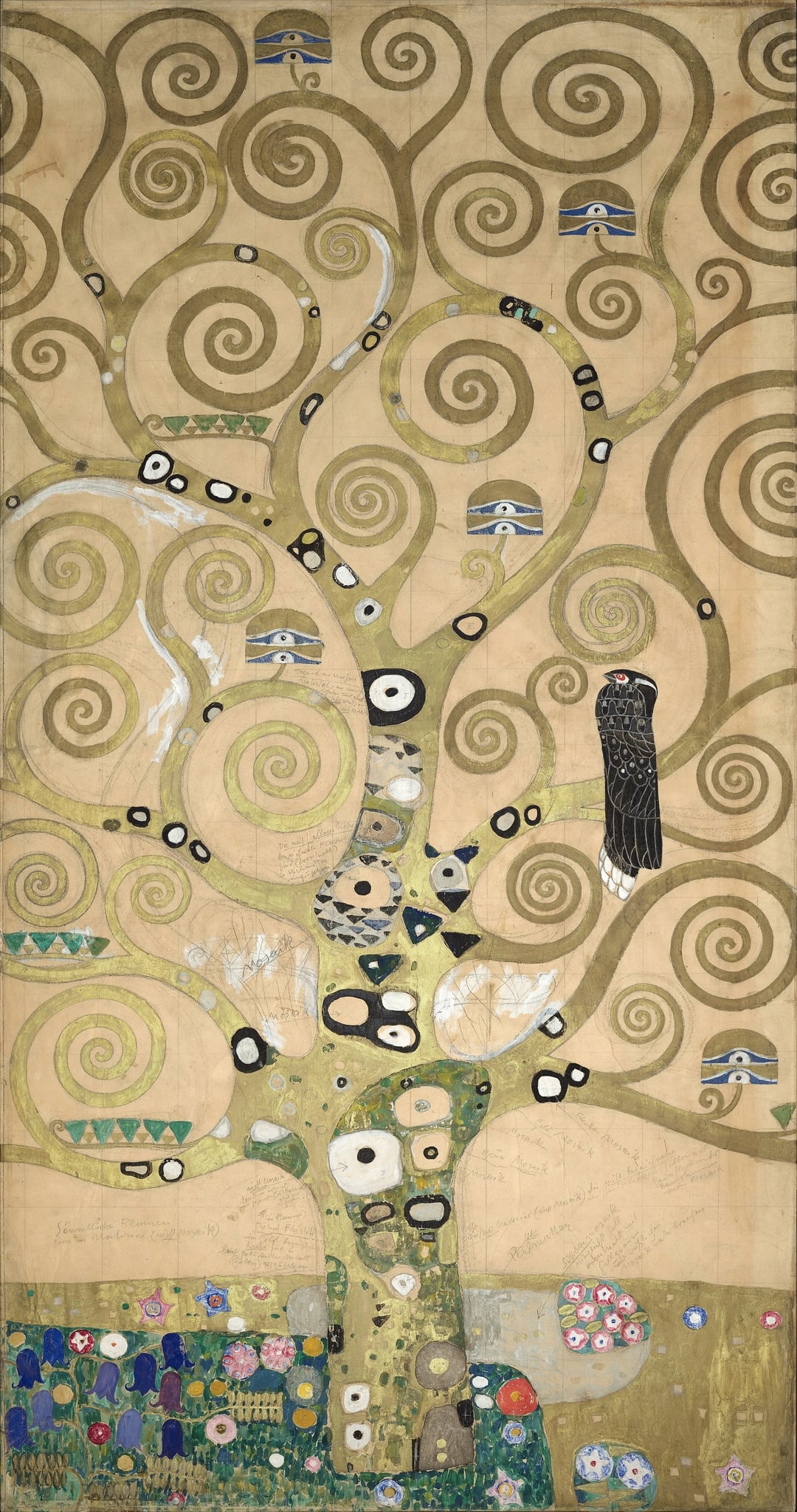
The Tree of Life by Gustav Klimt

The Tree of Life

Gustav Klimt (1910–1911 (design; mosaic installed 1911))

Gustav Klimt’s The Tree of Life crystallizes a <strong>cosmological axis</strong> in a gilded ornamental language: a rooted trunk erupts into <strong>endless spirals</strong>, embedded with <strong>eye-like rosettes</strong> and shadowed by a black, red‑eyed bird. Designed as part of the Stoclet dining‑room frieze, it fuses <strong>symbolism and luxury materials</strong> to link earthly abundance with timeless transcendence <sup>[1]</sup><sup>[2]</sup>.
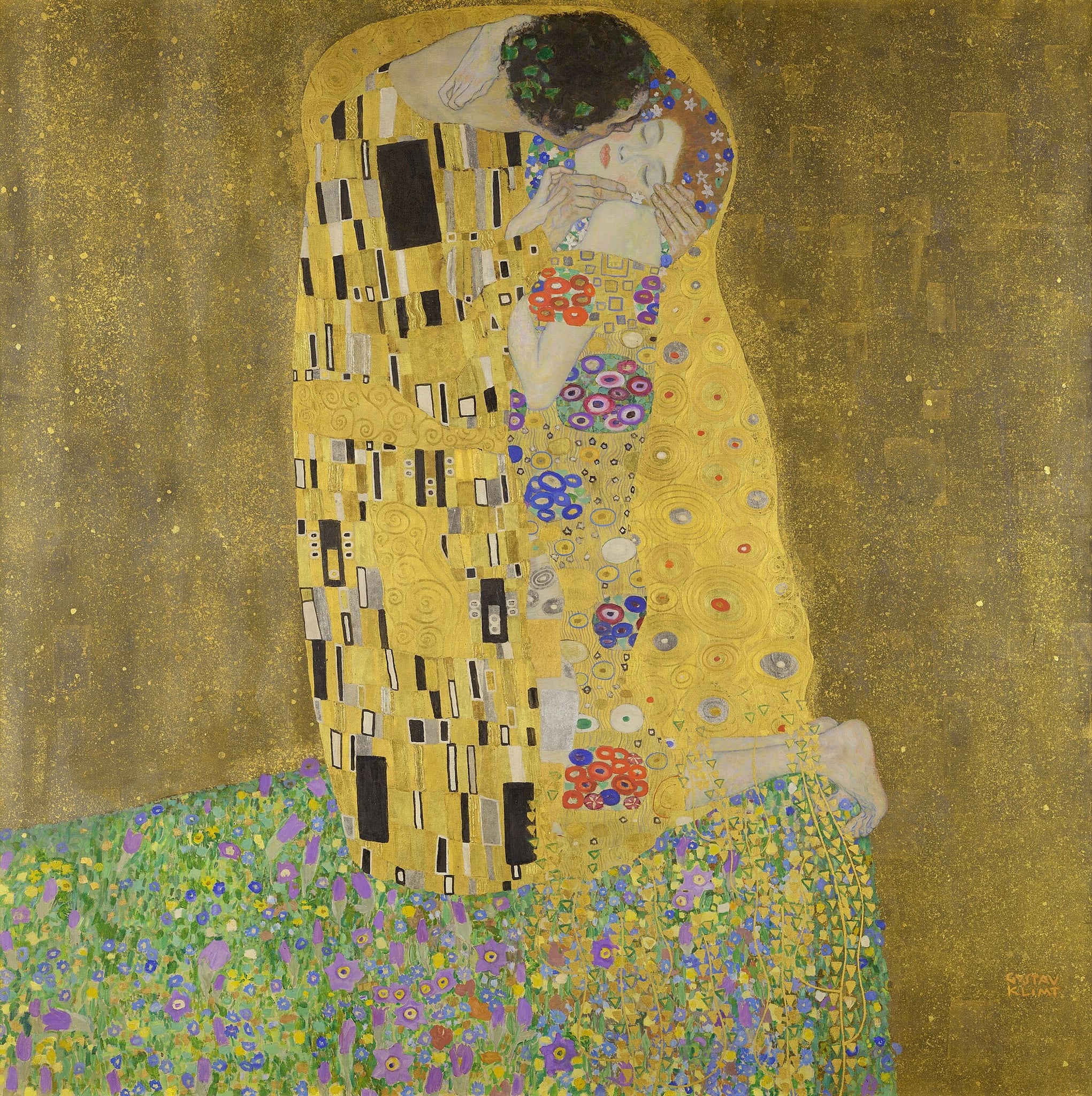
The Kiss (Lovers) by Gustav Klimt

The Kiss (Lovers)

Gustav Klimt (1907–1908 (Belvedere lists 1908/09))

The Kiss (Lovers) crystallizes Klimt’s <strong>Golden Period</strong> ideal: erotic union staged as a sacred vision. Two bodies fuse beneath a single golden mantle, poised on a flowered ledge at the brink of the unknown, where <strong>pattern becomes symbol</strong> and intimacy becomes icon.