The Black Bull

by Gustav Klimt

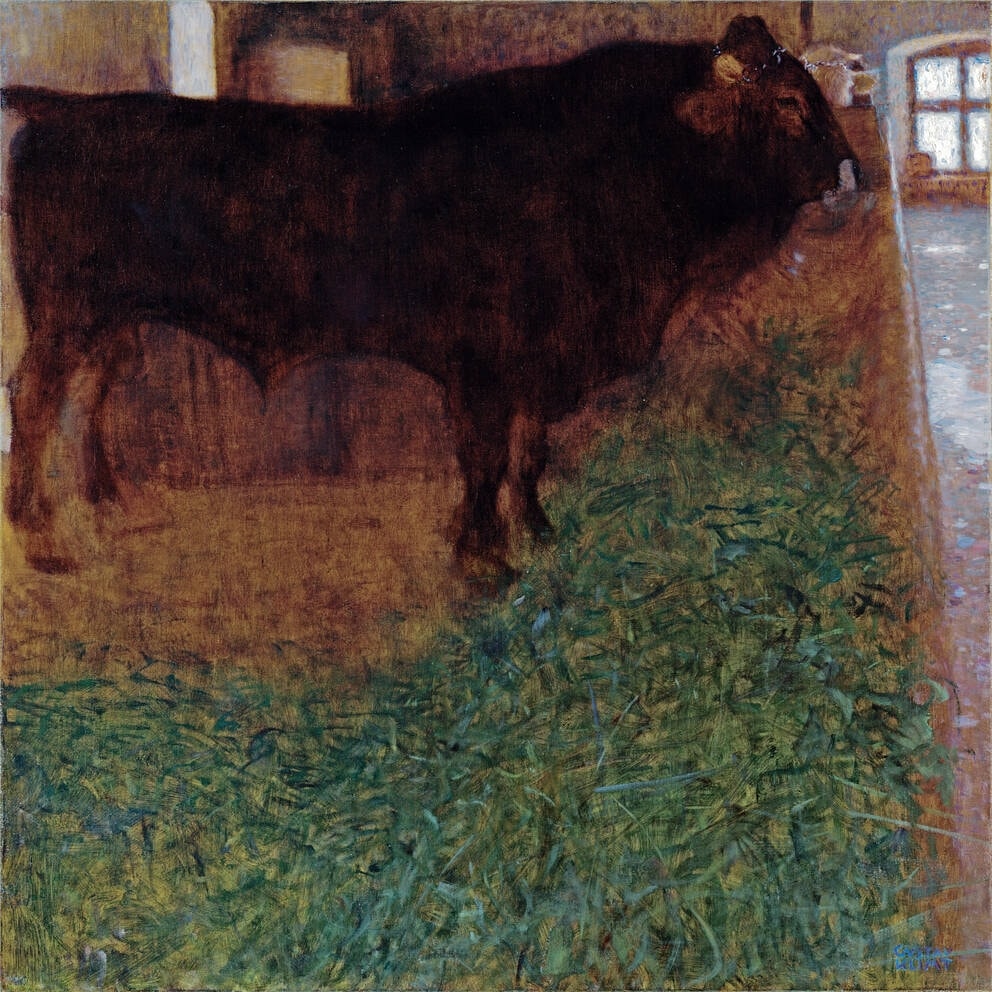
The Black Bull distills raw animal power into a near-monolithic presence, its dark mass occupying the square field while a cool window flare touches the snout and horn. Gustav Klimt transforms a stable interior into a drama of force and limit, the diagonal swath of green fodder channeling energy toward the tethered head. The work finds grandeur in a local motif from Klimt’s first Attersee summer, uniting tactile surface with psychological tension [1][4].
💰

Market Value

$10-18 million

How much is The Black Bull worth?

Study Print Studio

Create a personal study print

Build a companion study sheet around the part of this painting that speaks to you most. Choose a detail, shape an interpretation, and walk away with something personal and display-worthy.

Fast Facts

Year
1900 (1900–1901 also cited)
Medium
Oil on canvas
Dimensions
82 × 82 cm
Location
Leopold Museum, Vienna (on view; private collection loan)
See all Gustav Klimt paintings in Vienna
The Black Bull by Gustav Klimt (1900 (1900–1901 also cited)) featuring The bull’s dark mass, Horn and illuminated muzzle, Nose ring (tether), Diagonal green fodder

Click on any numbered symbol to learn more about its meaning

Meaning & Symbolism

Klimt composes the canvas as a confrontation with mass. The bull’s body, poured almost edge to edge into the square, reads as a single, dark plane whose contours dissolve into the stall’s brown tonality. Legs, flank, and back merge with the interior so thoroughly that only selected accents—horn, muzzle, the glint of a ring—declare the animal’s fact. A small window at right introduces a slant of cool light that grazes the snout and front horn, condensing attention where appetite meets restraint: the head pressed to the feeding ledge, the breath softening into pale highlights. Across the foreground, a diagonal wedge of green hay, worked in quick, flickering strokes, propels the eye to that illuminated contact point. Composition here is destiny: fodder draws the animal forward, the ledge stops it, the window isolates a moment of living sensation within a system of limits 1. Surface is Klimt’s instrument of meaning. The stall floor is rubbed with ochres, the hay scintillates in layered greens, and the body’s near-monochrome blackness absorbs light to the brink of illegibility, forcing viewers to “look sharply” for form and volume. This calibrated obscurity makes the creature feel colossal yet half-submerged, as if strength itself were being contained by atmosphere. The painting’s square format and reduced depth flatten the scene toward a decorative field, but Klimt resists pure pattern; he inserts tactile cues—the moist muzzle, the cold metal ring, the wiry edges of cut grass—to keep sensation immediate. In this balance between engulfing shadow and precise sensation, Klimt articulates a modern, unsentimental empathy: power is acknowledged, not mythologized; presence is felt, not explained 15. Context sharpens the stakes of this choice. Made during Klimt’s first summer at the Attersee, the picture records a specific animal—“Martin,” the Litzlberg brewery bull—in its actual stall. By pivoting from urban allegory to a provincial stable, Klimt declares that modern painting can arise from local, observed reality without forfeiting symbolic charge. The massed body signifies strength and fertility by cultural habit, but Klimt grounds those associations in immediate structure: the tether, the feed, the enclosing architecture. The result is a double image—raw vitality disciplined by human order—expressed not through emblems but through composition and light. Exhibited in Klimt’s 1903 Secession retrospective, the canvas stands with his early square-format explorations that would soon nourish his landscapes and, indirectly, the ornamental audacity of his so-called Golden phase. The Black Bull thus occupies a hinge in his practice, demonstrating how a rigorously seen motif can carry the weight of monumentality, and how control—spatial, human, painterly—can define the very shape of power in modern art 234.

Explore Deeper with AI

Ask questions about The Black Bull

Popular questions:

Powered by AI • Get instant insights about this artwork

💬 Ask questions about this artwork!

Interpretations

Historical Context: Secession Self-Curation and Rural Modernity

Showing The Black Bull in Klimt’s 1903 Secession retrospective was a curatorial act that reframed his avant-garde identity through a rural, observed motif. Placed alongside emerging square-format landscapes, the canvas announces a program of modernism grounded not in allegory but in site-specific seeing from the Attersee summers. The checklist’s 1901 date hints at an extended working process (1900–1901), situating the picture at a hinge between the Faculty-painting controversies and the ornamental breakthroughs soon to come. By self-selecting this work, Klimt signaled that monumentality could be earned by structure and tonality rather than narrative grandeur—a quiet manifesto aligning the Secession’s internationalist ambitions with the ordinary Litzlberg stable. In Vienna’s fractious art politics, this was a wager that local observation could bear cosmopolitan weight 213.

Source: Vienna Secession (1903 catalog); Leopold Museum; Klimt Foundation (Klimt Database)

Formal/Perceptual Analysis: Near-Monochrome as a Test of Looking

Klimt engineers a low-contrast field in which the bull’s mass nearly collapses into black, forcing viewers to assemble volume from scarce cues—horn, muzzle, ring, a slant of window light. This economy of highlights converts recognition into a phenomenology of scrutiny: to see the bull, one must “look sharply,” traversing thresholds between mimesis and abstraction. The square format and shallow depth compact figure and ground into a decorative plane while preserving tactile indices (moist muzzle, wiry hay) that arrest dissolution. The result is an oscillation—presence/near-absence, field/object—where perception becomes theme, and painterly surface becomes method. Klimt’s strategy anticipates later modernist inquiries into legibility, materiality, and the ethics of visibility within obscuring atmospheres 15.

Source: Leopold Museum; Onlinemerker (critical reception)

Everyday Life as Art: Anti-Allegory and the Claim of the Ordinary

Contrary to Klimt’s overt allegories, The Black Bull grounds meaning in documented particularity: the brewery bull “Martin,” in the Bräuhof stall at Litzlberg. This specificity—name, place, function—lets the image renounce symbolist coding while retaining symbolic charge through structure alone. By mobilizing the square canvas and compressed tonality on a humble subject, Klimt argues for a modern painting calibrated to proximate facts—light through a small window, fodder’s diagonal, a tether’s limit—rather than myth. Such local, observed reality was not a retreat but a proposition: that the ordinary rural scene could sustain monumentality, nourish later landscape innovations, and reorient Viennese modernism toward empirical seeing without forfeiting intensity 341.

Source: Klimt Foundation (Klimt Database); University of Vienna (Doppler-Wagner); Leopold Museum

Domestication and Power: Human Infrastructures on Animal Force

The canvas articulates domestication not as anecdote but as spatial law. Stall walls, feed ledge, tether, and the punctum of a small window bind the bull’s raw vitality into human order. The animal’s body reads as a monolithic plane, yet every advance (toward fodder, light) is arrested by enclosure—an image of managed power. Naming the bull and locating him in the brewery stable ties painterly mass to economic function: fertility, traction, and production. Klimt’s unsentimental empathy acknowledges strength while mapping its containment in architecture and apparatus. In this reading, the painting visualizes how control—spatial, human, painterly—shapes power, turning a stable into a diagram of modern governance over nature 41.

Source: University of Vienna (Doppler-Wagner); Leopold Museum

Format and Monumentality: The Square as Constraint-Engine

The square is not neutral; it is a constraint-engine that compels edge-to-edge massing and frontality. Klimt compresses recession, pressing the bull’s body into the plane so that figure nearly becomes field. This spatial pressure yields monumentality without scale—an 82 cm canvas reading with the gravity of mural form. The square also aligns with Klimt’s Attersee landscapes, where lateral rhythms and decorative flattening become laboratories for the later ornamental audacity of the Golden period. Here, however, he tempers pattern with indexical touches (ring, horn, hay), preserving bodily immediacy within a designed grid. The picture thus models a modern solution: achieve grandeur through format, tonality, and adjacency, not iconographic inflation 12.

Source: Leopold Museum; Vienna Secession (1903 catalog)

Socio-Economic Lens: Rural Labor, Productivity, and Use-Value

Identified as the brewery bull “Martin,” the subject anchors the painting in the economy of a working Bräuhof. Rather than heroic myth, we confront use-value: tether, feed, stall—devices that convert animal power into local production. Klimt’s compositional emphasis on the feeding ledge and the diagonal hay sutures appetite to labor, while the ring and horn glints operate as functional puncta, not trophies. In this register, the bull’s mass signifies not only strength but infrastructural capital, an animate resource under management. The painting thereby extends class and labor discourse into pictorial structure: architectures of work shape what and how we see, demonstrating how modern art can render the political economy of the ordinary visible without didactic signage 41.

Source: University of Vienna (Doppler-Wagner); Leopold Museum

Related Themes

About Gustav Klimt

Gustav Klimt (1862–1918), co-founder of the Vienna Secession, pivoted from controversial public commissions to a decorative-symbolist language in his Golden Period. Drawing on Byzantine mosaics and modern design, he fused opulent surfaces with psychological intensity. By 1908–09, he transformed scandal into canon, and The Kiss became Vienna’s emblem of modern love.
View all works by Gustav Klimt

More by Gustav Klimt

Portrait of Adele Bloch-Bauer I by Gustav Klimt

Portrait of Adele Bloch-Bauer I

Gustav Klimt (1907)

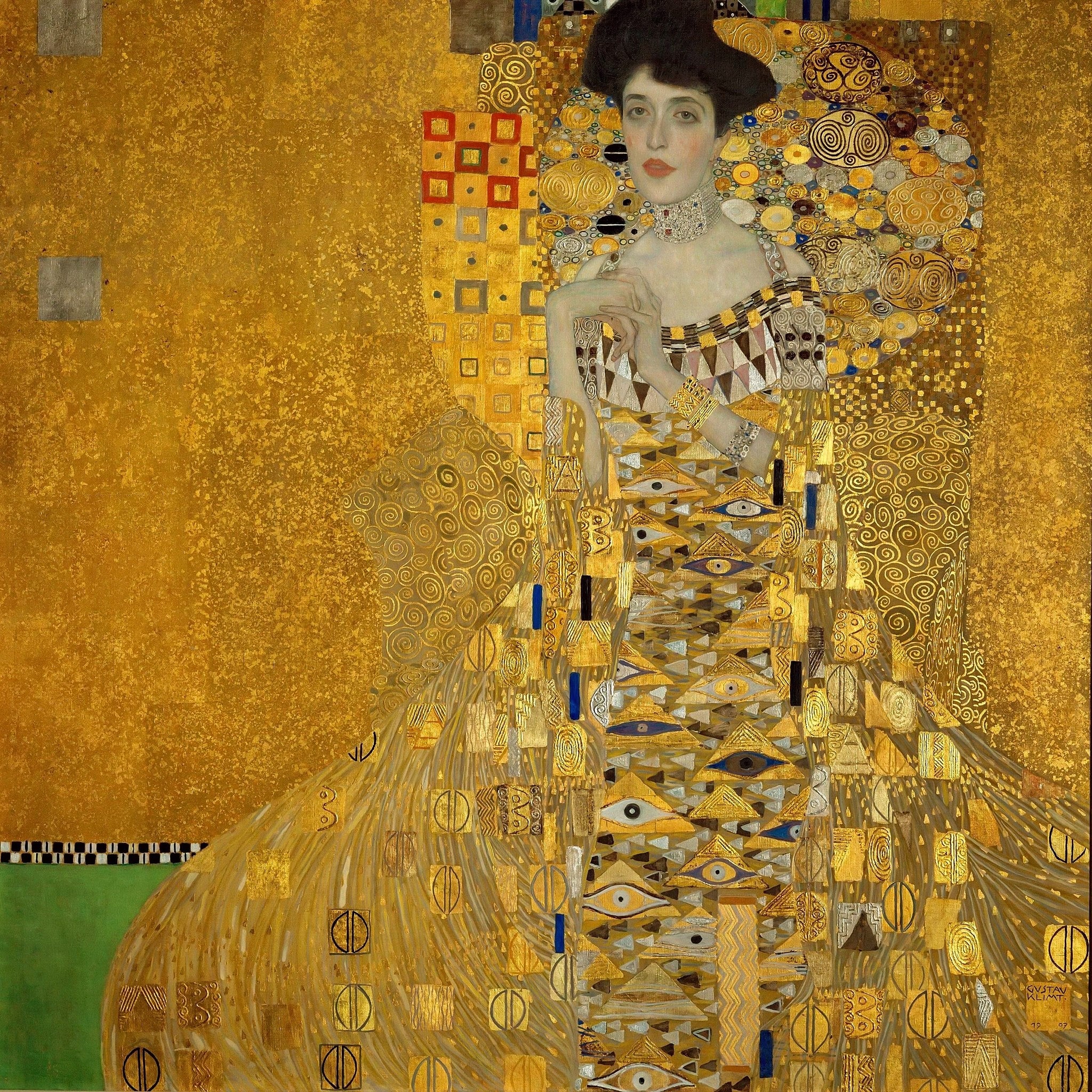
Gustav Klimt’s Portrait of Adele Bloch-Bauer I stages its sitter as a <strong>secular icon</strong>—a living presence suspended in a field of gold that converts space into <strong>pattern and power</strong>. The naturalistic face and hands emerge from a reliquary-like cascade of eyes, triangles, and tesserae, turning light, ornament, and status into the painting’s true subjects <sup>[1]</sup><sup>[2]</sup>.
Sunflower by Gustav Klimt

Sunflower

Gustav Klimt (1907/1908)

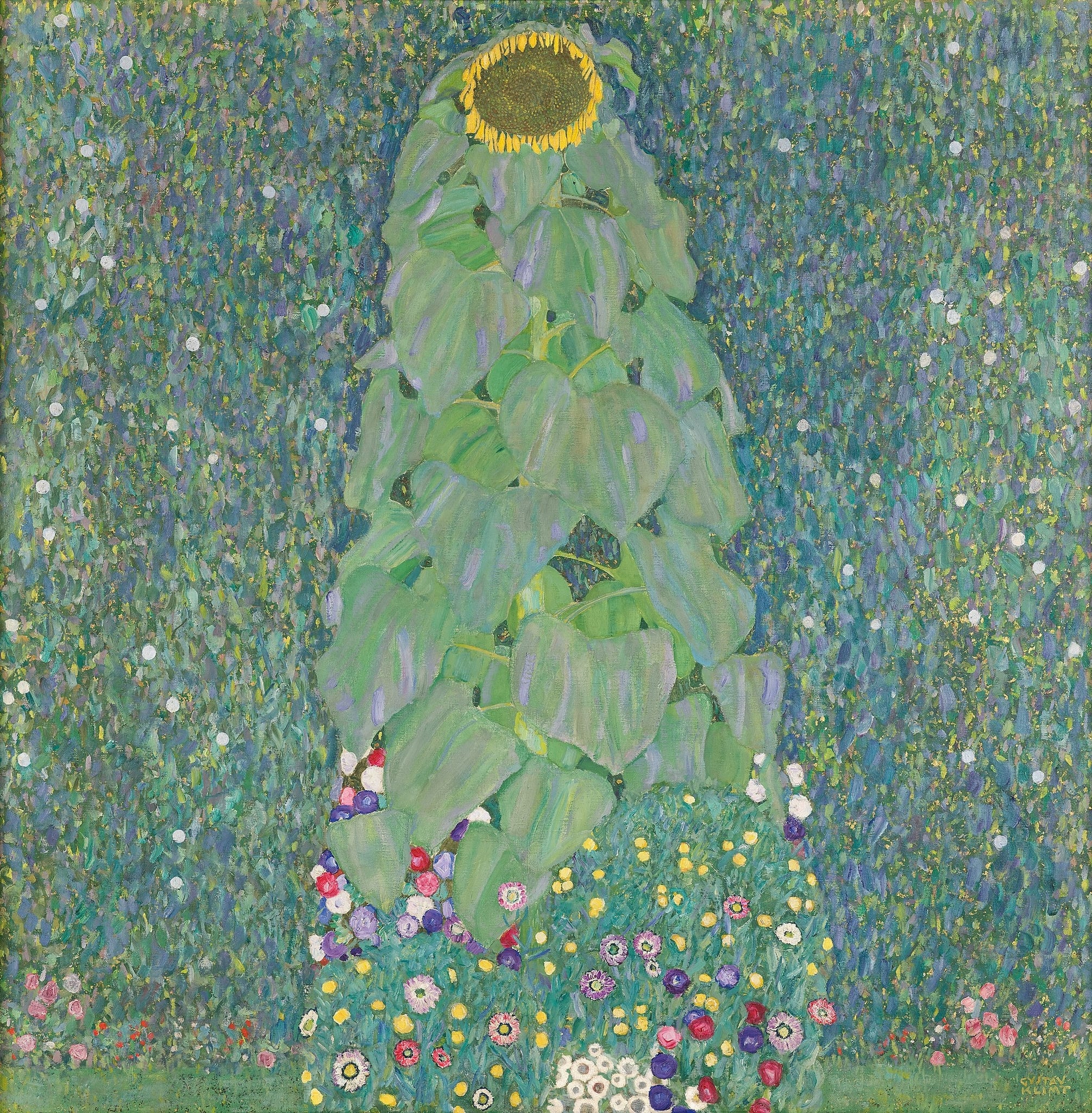
Gustav Klimt’s Sunflower turns a single bloom into a <strong>monumental, figure-like presence</strong>. A tapering stack of broad, drooping leaves rises from a <strong>mosaic-like carpet of round blossoms</strong>, crowned by a gold-flecked disc that glows against a cool, stippled field. The work fuses <strong>portrait, icon, and landscape</strong> into one emblem of vitality and quiet sanctity <sup>[1]</sup><sup>[2]</sup>.
Cottage Garden with Sunflowers by Gustav Klimt

Cottage Garden with Sunflowers

Gustav Klimt (1906–1907 (signed 1907))

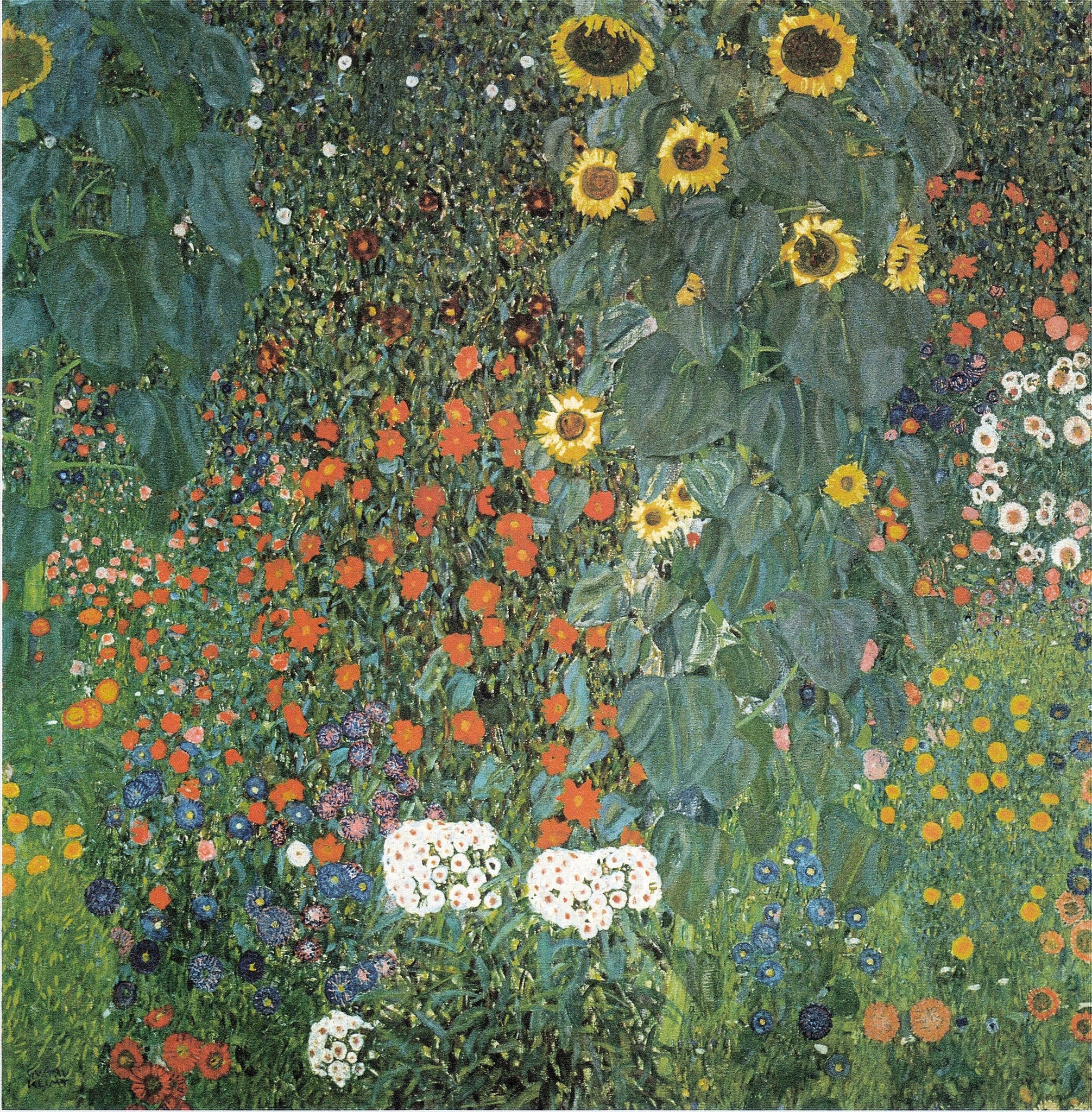
Cottage Garden with Sunflowers is a square, horizonless field of blooms where a vertical column of <strong>sunflowers</strong> anchors an all-over weave of color and pattern. Klimt fuses <strong>ornament and nature</strong>, turning a humble Litzlberg cottage plot into a radiant matrix of cyclical life and renewal <sup>[1]</sup><sup>[4]</sup><sup>[5]</sup>.
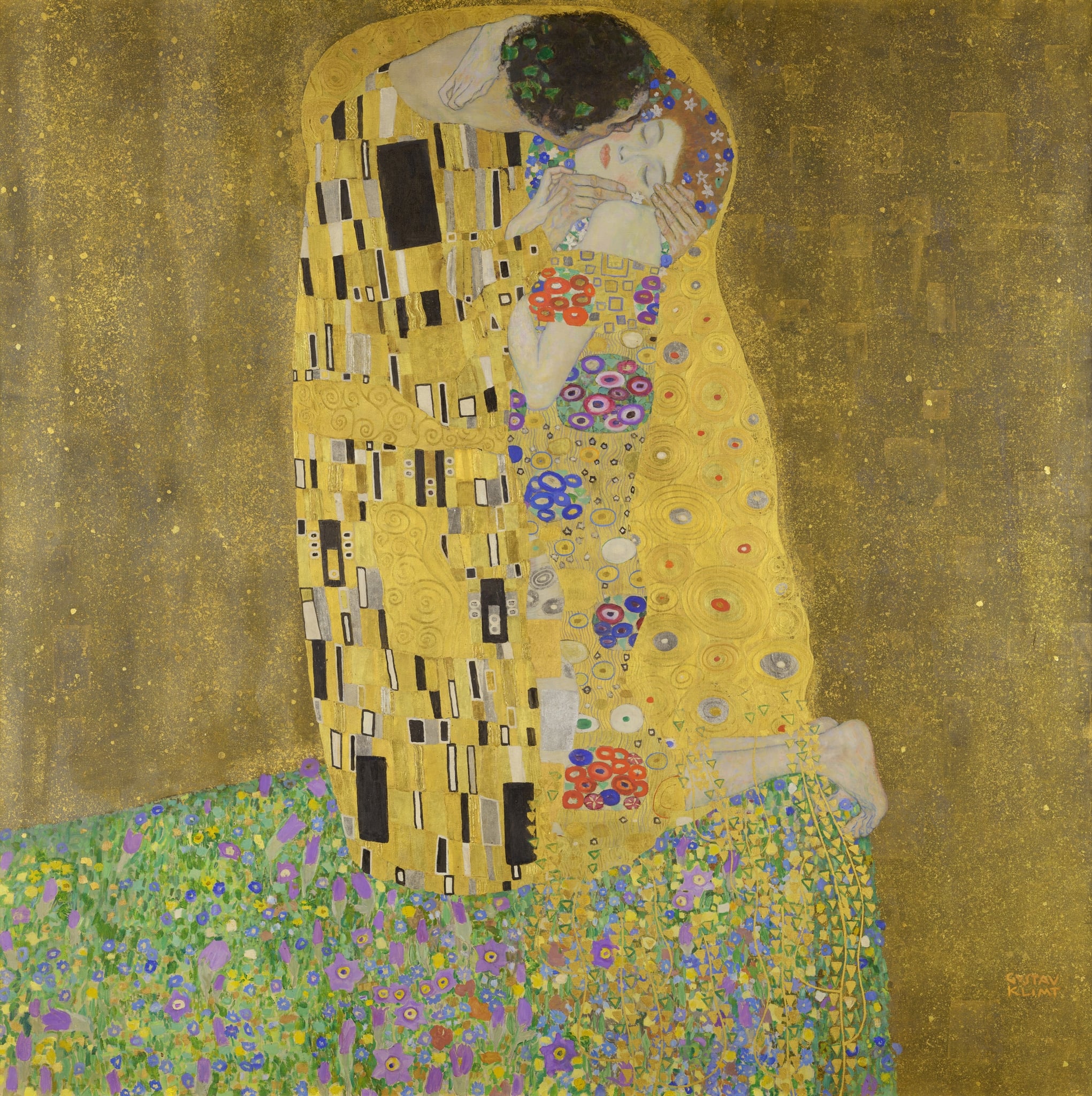
The Kiss by Gustav Klimt

The Kiss

Gustav Klimt (1908 (completed 1909))

The Kiss stages human love as a <strong>sacred union</strong>, fusing two figures into a single, gold-clad form against a timeless field. Klimt opposes <strong>masculine geometry</strong> (black-and-white rectangles) to <strong>feminine organic rhythm</strong> (spirals, circles, flowers), then resolves them in radiant harmony <sup>[1]</sup><sup>[2]</sup>.
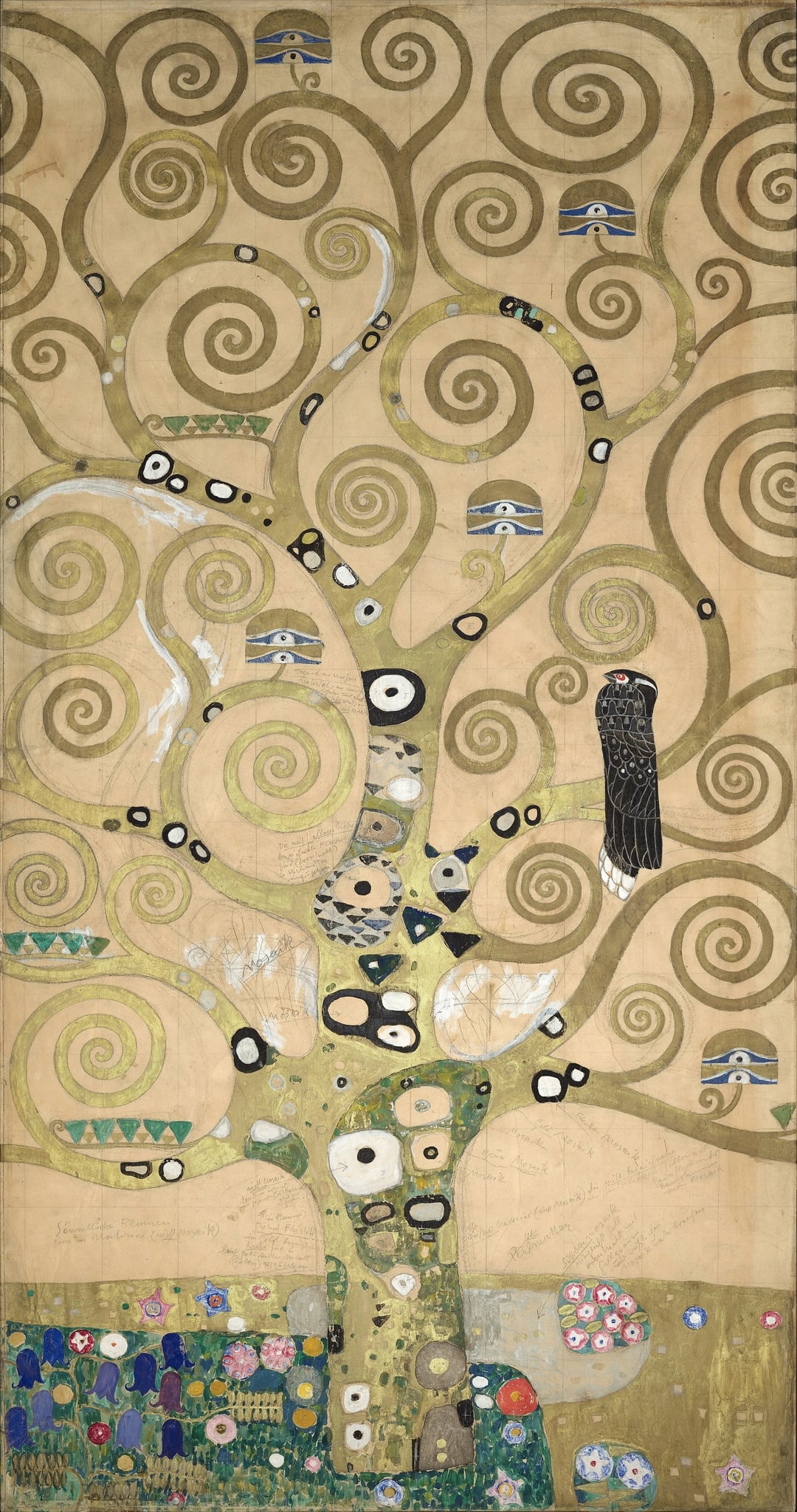
The Tree of Life by Gustav Klimt

The Tree of Life

Gustav Klimt (1910–1911 (design; mosaic installed 1911))

Gustav Klimt’s The Tree of Life crystallizes a <strong>cosmological axis</strong> in a gilded ornamental language: a rooted trunk erupts into <strong>endless spirals</strong>, embedded with <strong>eye-like rosettes</strong> and shadowed by a black, red‑eyed bird. Designed as part of the Stoclet dining‑room frieze, it fuses <strong>symbolism and luxury materials</strong> to link earthly abundance with timeless transcendence <sup>[1]</sup><sup>[2]</sup>.
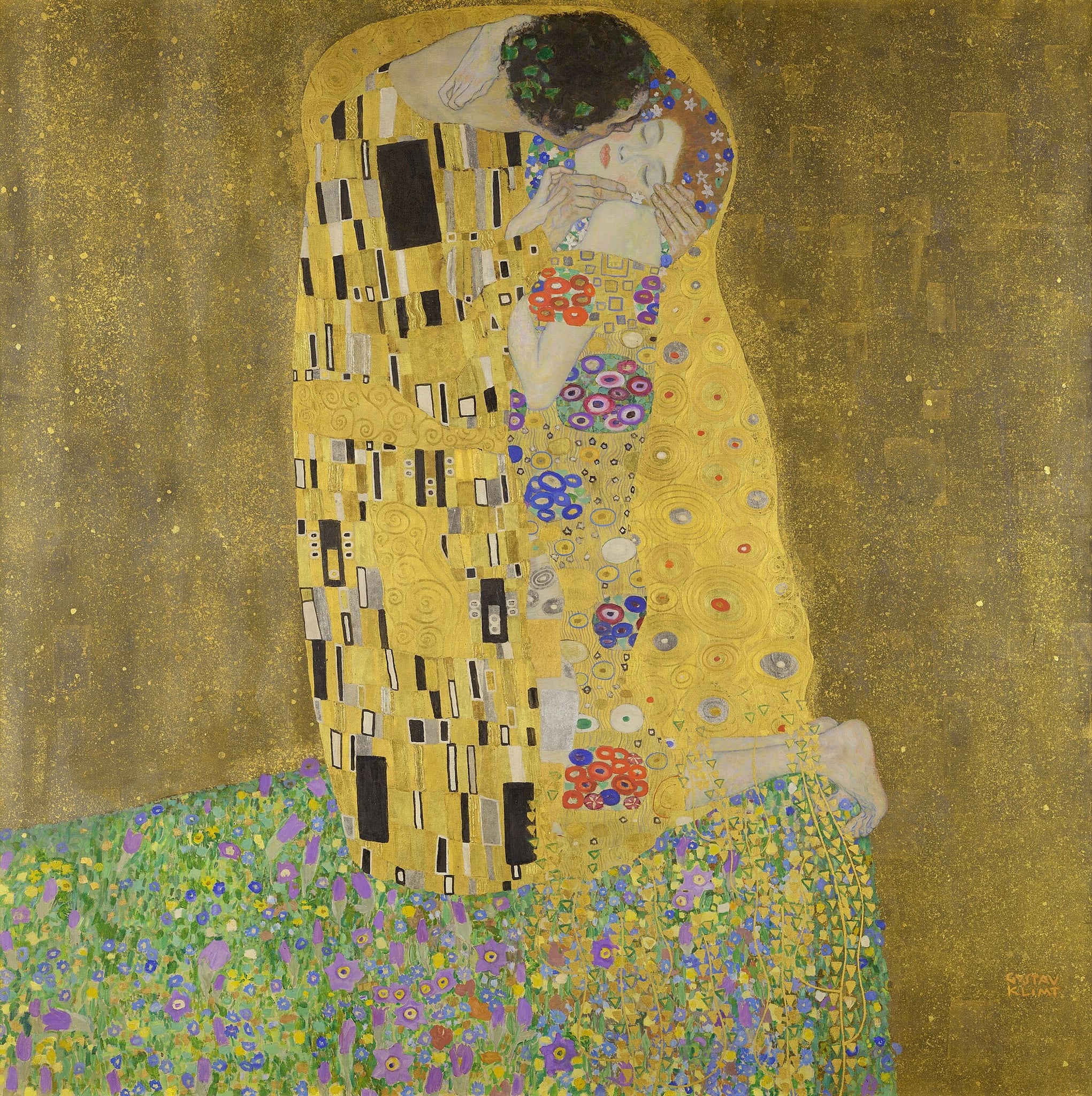
The Kiss (Lovers) by Gustav Klimt

The Kiss (Lovers)

Gustav Klimt (1907–1908 (Belvedere lists 1908/09))

The Kiss (Lovers) crystallizes Klimt’s <strong>Golden Period</strong> ideal: erotic union staged as a sacred vision. Two bodies fuse beneath a single golden mantle, poised on a flowered ledge at the brink of the unknown, where <strong>pattern becomes symbol</strong> and intimacy becomes icon.