Crucifix Symbolism
Christian salvation and hope beyond death
Common Themes
Artworks Featuring This Symbol
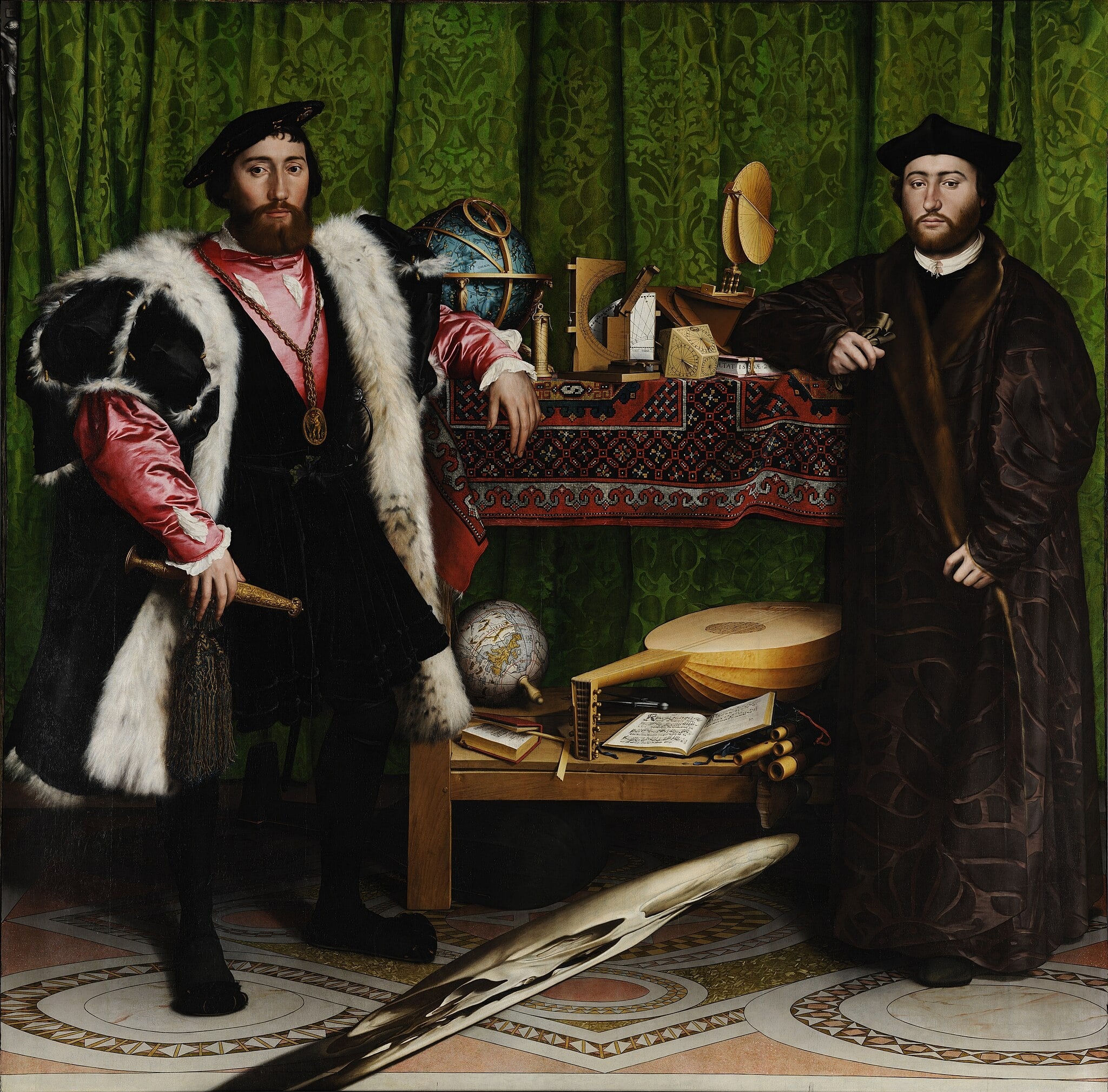
The Ambassadors
Hans Holbein the Younger (1533)
Holbein’s The Ambassadors is a double-portrait staged before a green curtain, where shelves of scientific instruments, books, and musical devices enact <strong>Renaissance learning</strong> while an anamorphic <strong>skull</strong> and a veiled <strong>crucifix</strong> counter it with mortality and salvation <sup>[1]</sup><sup>[2]</sup>. The work balances worldly status—fur, velvet, Oriental carpet—with a sober theology of limits amid the <strong>Reformation’s discord</strong> <sup>[1]</sup><sup>[2]</sup>.
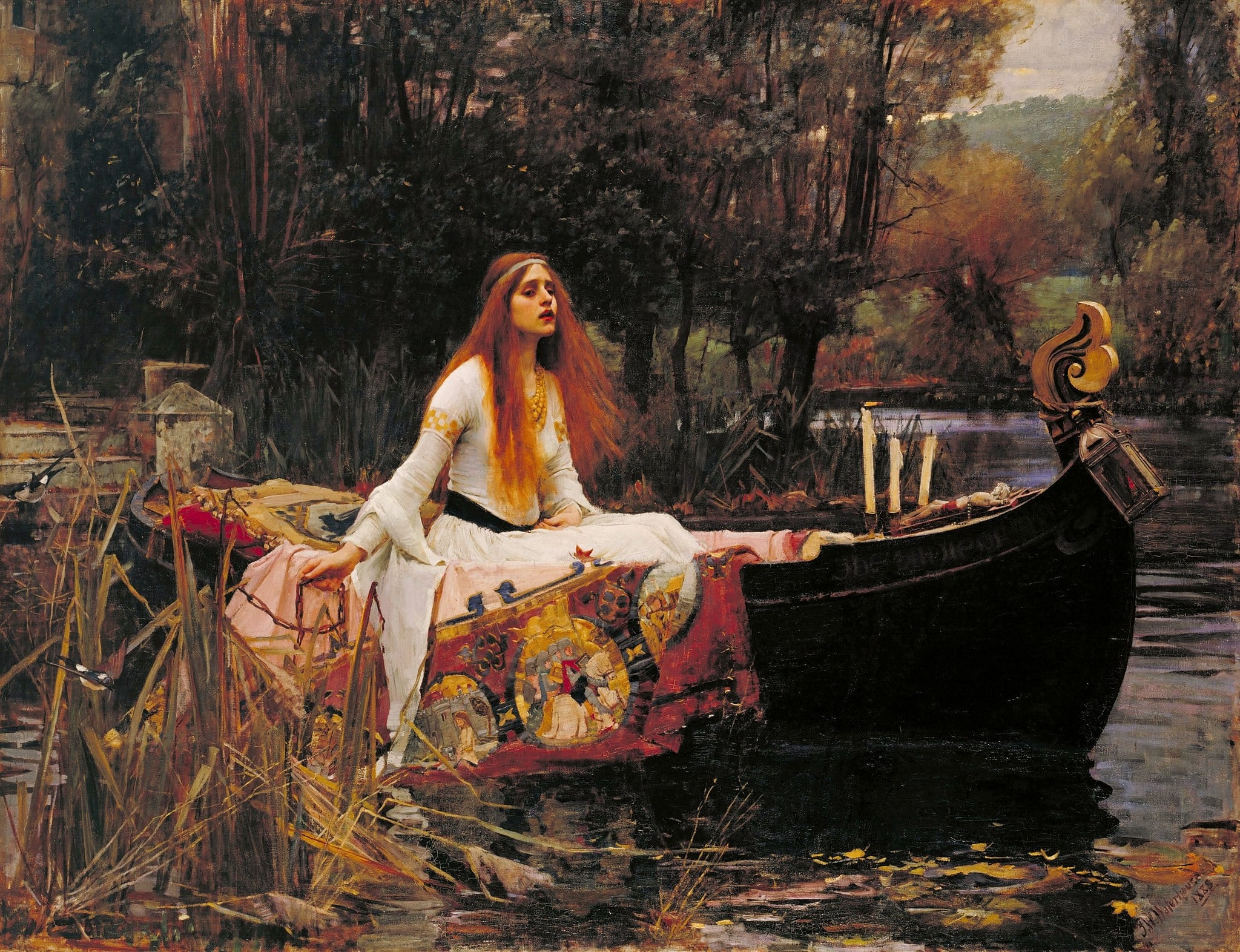
The Lady of Shalott
John William Waterhouse (1888)
John William Waterhouse’s The Lady of Shalott fixes the tragic instant when the cursed Lady chooses to loose her mooring and drift toward Camelot. The released <strong>chain</strong>, the guttering <strong>candles</strong>, and the tapestry spilling over the boat narrate a passage from sheltered artifice to fatal reality. Waterhouse fuses late <strong>Pre-Raphaelite</strong> symbolism with elegiac atmosphere to stage beauty caught between <strong>agency</strong> and <strong>doom</strong> <sup>[1]</sup><sup>[2]</sup><sup>[3]</sup>.
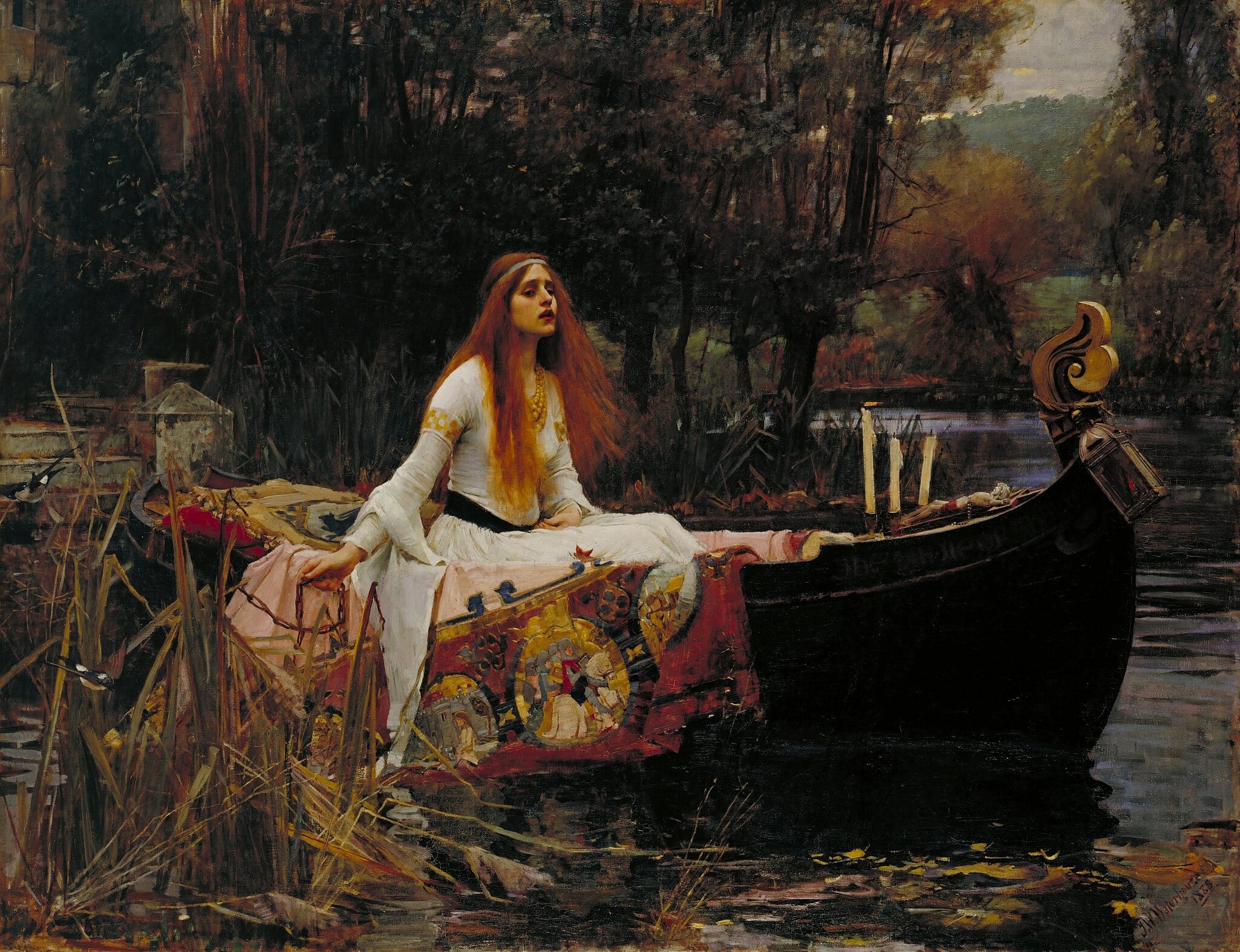
The Lady of Shallot
John William Waterhouse (1888)
John William Waterhouse’s The Lady of Shallot (1888) fixes on the instant the cursed heroine releases her chain and sets her black, coffinlike boat adrift. The extinguished candles, the small crucifix, and the tapestry trailing into the water stage a <strong>funerary voyage</strong> toward Camelot and a choice of <strong>experience over enclosure</strong> <sup>[1]</sup><sup>[2]</sup>.